3RD THEORY OF MEDIA MANAGEMENT
BEHAVIORAL MANAGEMENT THEORY
 The first theory of Behavioral and human relation
theory is the “Behavioral management theory.
 This theory consist of theories given by three
different types of psychologists.
1. Hugo Munsterberg
2. Douglas McGregor
3. Abraham Maslow
1. HUGO MUNSTERBERG
 Hugo Munsterberg was a German-American and
world’s first industrial psychologist. Munsterberg
suggests that psychology could be used in many
different industrial applications, including
management, vocational decisions, advertising, job
performance, and employee motivation. He
approached that in an organization the facilities
given to the labor and the managers should be
equal. He emphasized on understanding the
mentality of labor to increase your company’s
productivity.
2. DOUGLAS MCGREGOR
 McGregor was a social psychologist. McGregor’s
main theory is comprised of Theory X and Theory
Y.
 Both the theories are defined here:
THEORY OF “X”
Here are the postulates of this theory:
1. Human inheritably dislike doing work and it will
avoid doing it whenever its possible.
2. Man must be quested, controlled and directed in
order to achieve the goal of organization.
3. Man prefer to be directed and they lack ambition.
4. People seek security from the workplace.
THEORY OF “Y”
 Here are the postulates of this theory:
1. Work is natural for human being as they play and rest.
2. Men will exercise self-direction if they are committed to
the common objective.
3. Commitment to the objective is the function of rewards
associated with achievements.
4. People learn to accept and seek responsibilities.
5. Creativity and imagination are widely distributed
among the population. People are capable of using
these abilities to solve organizational problems.
6. People have potentials that are partially utilized.
3. ABRAHAM HAROLD MASLOW
 Abraham Harold Maslow was an American
clinical psychologist. He was best known for
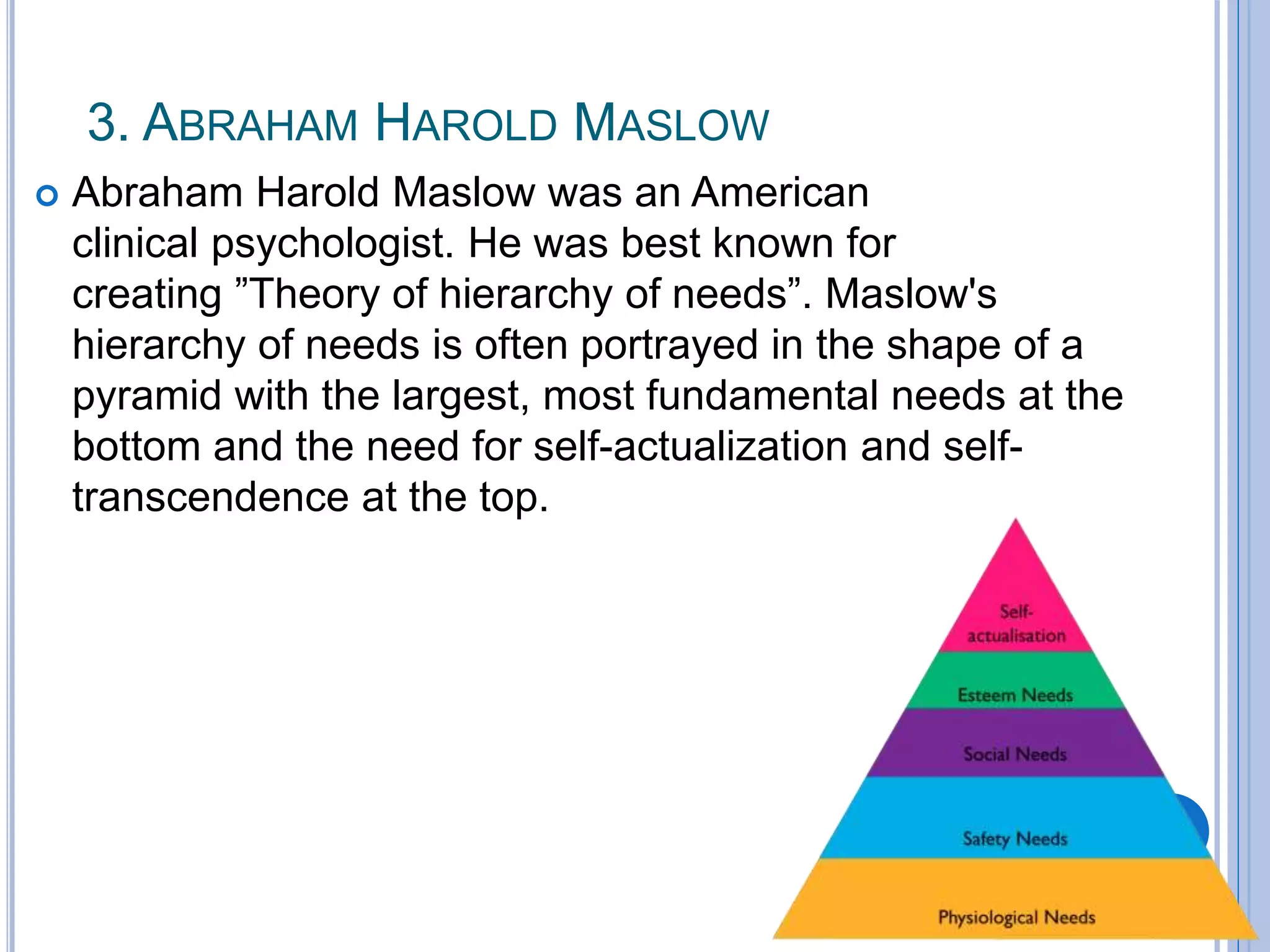
creating ”Theory of hierarchy of needs”. Maslow's
hierarchy of needs is often portrayed in the shape of a
pyramid with the largest, most fundamental needs at the
bottom and the need for self-actualization and self-
transcendence at the top.
THEORY OF HIERARCHY OF NEEDS
 The levels are as follows.
1. Self-actualization – includes morality, creativity,
problem solving, etc.
2. Esteem – includes confidence, self-esteem,
achievement, respect, etc.
3. Belongingness – includes love, friendship,
intimacy, family, etc.
4. Safety – includes security of environment,
employment, resources, health, property, etc.
5. Physiological – includes air, food, water, sex,
sleep, other factors towards homeostasis, etc.

3rd theory of media management

  • 1.
    3RD THEORY OFMEDIA MANAGEMENT
  • 2.
    BEHAVIORAL MANAGEMENT THEORY The first theory of Behavioral and human relation theory is the “Behavioral management theory.  This theory consist of theories given by three different types of psychologists. 1. Hugo Munsterberg 2. Douglas McGregor 3. Abraham Maslow
  • 3.
    1. HUGO MUNSTERBERG Hugo Munsterberg was a German-American and world’s first industrial psychologist. Munsterberg suggests that psychology could be used in many different industrial applications, including management, vocational decisions, advertising, job performance, and employee motivation. He approached that in an organization the facilities given to the labor and the managers should be equal. He emphasized on understanding the mentality of labor to increase your company’s productivity.
  • 4.
    2. DOUGLAS MCGREGOR McGregor was a social psychologist. McGregor’s main theory is comprised of Theory X and Theory Y.  Both the theories are defined here:
  • 5.
    THEORY OF “X” Hereare the postulates of this theory: 1. Human inheritably dislike doing work and it will avoid doing it whenever its possible. 2. Man must be quested, controlled and directed in order to achieve the goal of organization. 3. Man prefer to be directed and they lack ambition. 4. People seek security from the workplace.
  • 6.
    THEORY OF “Y” Here are the postulates of this theory: 1. Work is natural for human being as they play and rest. 2. Men will exercise self-direction if they are committed to the common objective. 3. Commitment to the objective is the function of rewards associated with achievements. 4. People learn to accept and seek responsibilities. 5. Creativity and imagination are widely distributed among the population. People are capable of using these abilities to solve organizational problems. 6. People have potentials that are partially utilized.
  • 7.
    3. ABRAHAM HAROLDMASLOW  Abraham Harold Maslow was an American clinical psychologist. He was best known for creating ”Theory of hierarchy of needs”. Maslow's hierarchy of needs is often portrayed in the shape of a pyramid with the largest, most fundamental needs at the bottom and the need for self-actualization and self- transcendence at the top.
  • 8.
    THEORY OF HIERARCHYOF NEEDS  The levels are as follows. 1. Self-actualization – includes morality, creativity, problem solving, etc. 2. Esteem – includes confidence, self-esteem, achievement, respect, etc. 3. Belongingness – includes love, friendship, intimacy, family, etc. 4. Safety – includes security of environment, employment, resources, health, property, etc. 5. Physiological – includes air, food, water, sex, sleep, other factors towards homeostasis, etc.