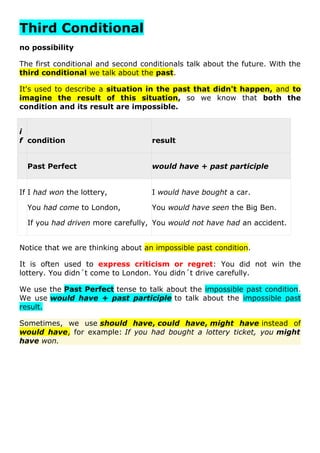
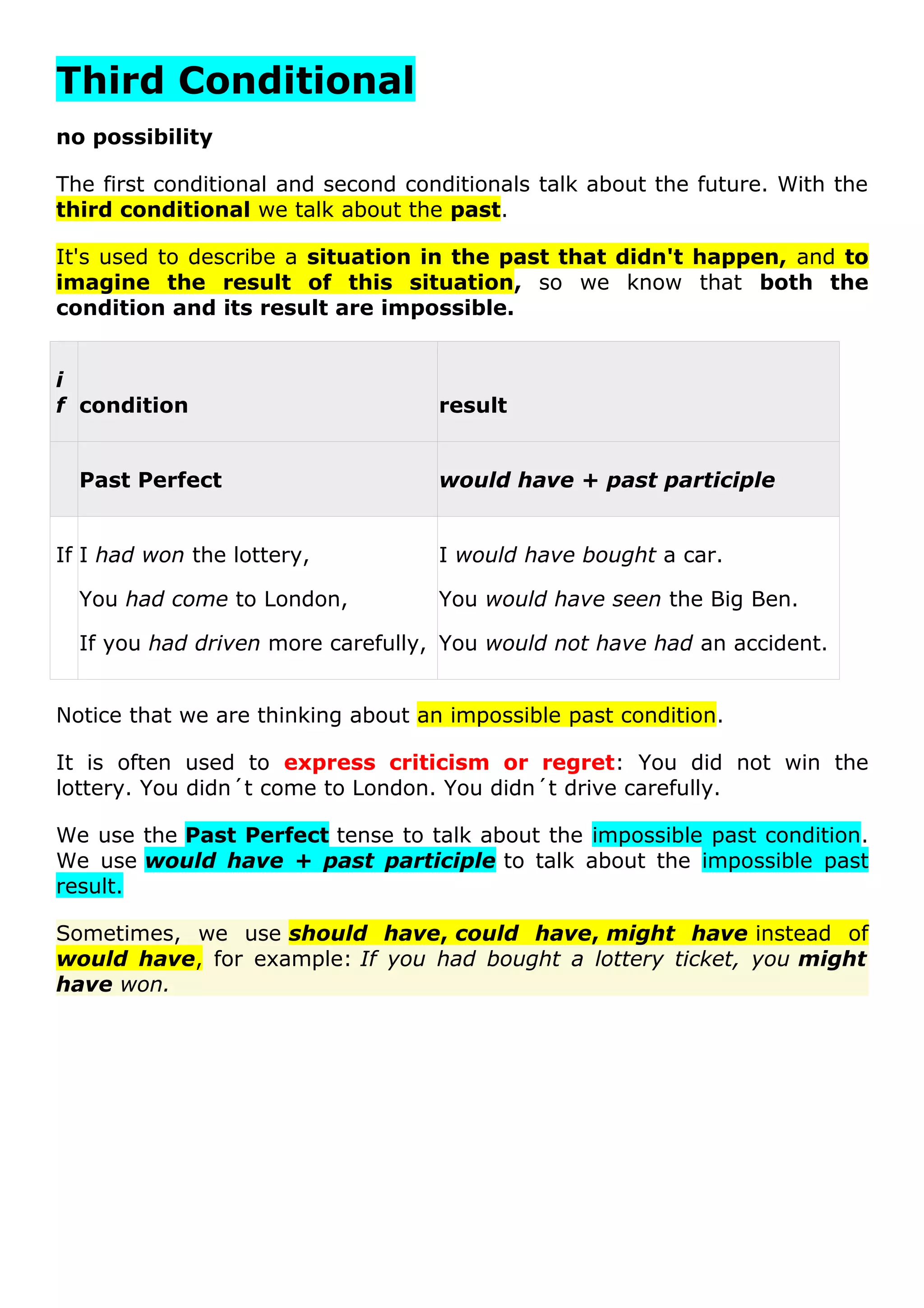
Third Conditional
no possibility
The first conditional and second conditionals talk about the future. With the
third conditional we talk about the past.
It's used to describe a situation in the past that didn't happen, and to
imagine the result of this situation, so we know that both the
condition and its result are impossible.
i
f condition result
Past Perfect would have + past participle
If I had won the lottery,
You had come to London,
If you had driven more carefully,
I would have bought a car.
You would have seen the Big Ben.
You would not have had an accident.
Notice that we are thinking about an impossible past condition.
It is often used to express criticism or regret: You did not win the
lottery. You didn´t come to London. You didn´t drive carefully.
We use the Past Perfect tense to talk about the impossible past condition.
We use would have + past participle to talk about the impossible past
result.
Sometimes, we use should have, could have, might have instead of
would have, for example: If you had bought a lottery ticket, you might
have won.
3rd conditional

3rd conditional

  • 1.
    Third Conditional no possibility Thefirst conditional and second conditionals talk about the future. With the third conditional we talk about the past. It's used to describe a situation in the past that didn't happen, and to imagine the result of this situation, so we know that both the condition and its result are impossible. i f condition result Past Perfect would have + past participle If I had won the lottery, You had come to London, If you had driven more carefully, I would have bought a car. You would have seen the Big Ben. You would not have had an accident. Notice that we are thinking about an impossible past condition. It is often used to express criticism or regret: You did not win the lottery. You didn´t come to London. You didn´t drive carefully. We use the Past Perfect tense to talk about the impossible past condition. We use would have + past participle to talk about the impossible past result. Sometimes, we use should have, could have, might have instead of would have, for example: If you had bought a lottery ticket, you might have won.