ZERO CONDITIONAL
FORM
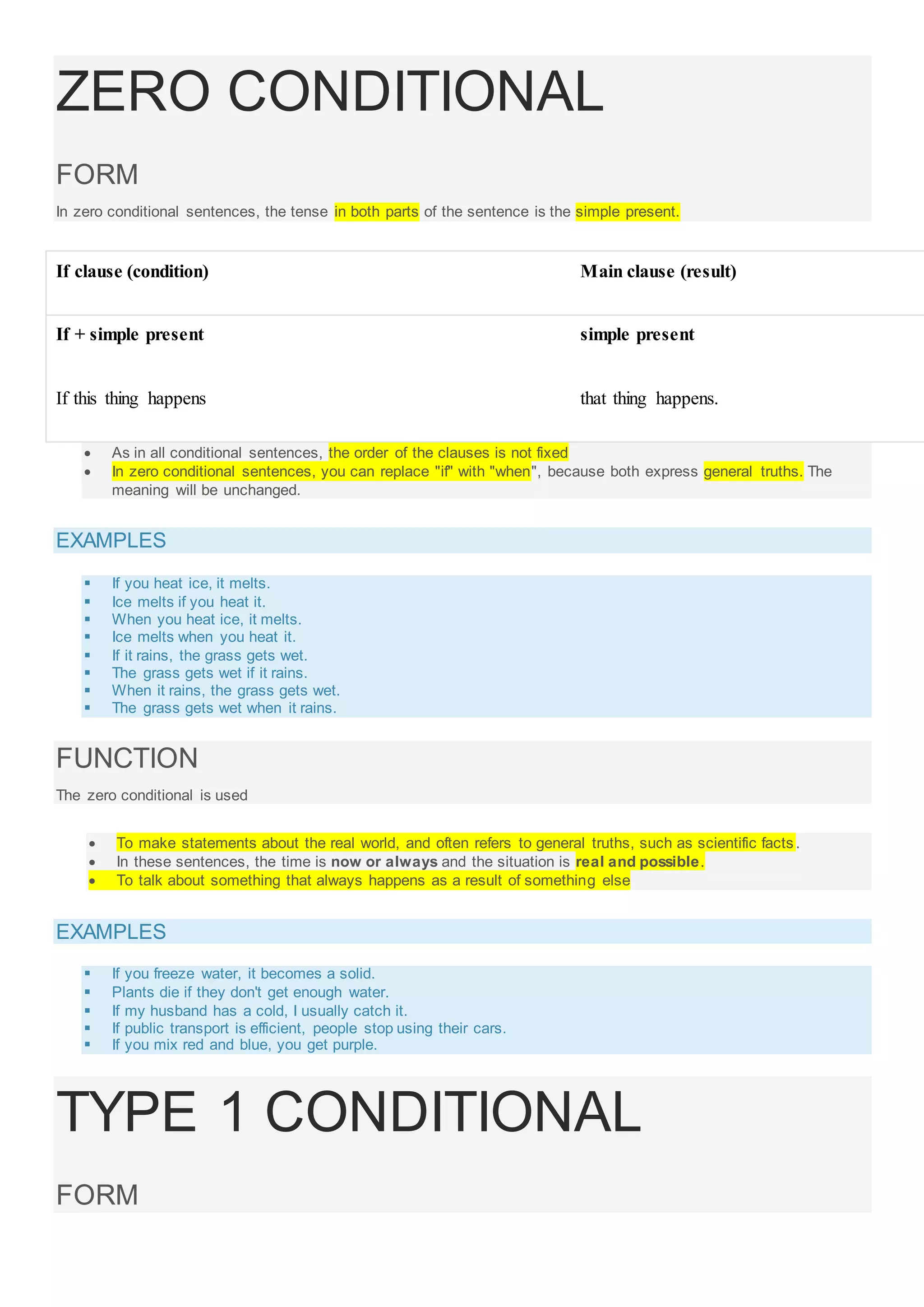
In zero conditional sentences, the tense in both parts of the sentence is the simple present.
If clause (condition) Main clause (result)
If + simple present simple present
If this thing happens that thing happens.
 As in all conditional sentences, the order of the clauses is not fixed
 In zero conditional sentences, you can replace "if" with "when", because both express general truths. The
meaning will be unchanged.
EXAMPLES
 If you heat ice, it melts.
 Ice melts if you heat it.
 When you heat ice, it melts.
 Ice melts when you heat it.
 If it rains, the grass gets wet.
 The grass gets wet if it rains.
 When it rains, the grass gets wet.
 The grass gets wet when it rains.
FUNCTION
The zero conditional is used
 To make statements about the real world, and often refers to general truths, such as scientific facts .
 In these sentences, the time is now or always and the situation is real and possible.
 To talk about something that always happens as a result of something else
EXAMPLES
 If you freeze water, it becomes a solid.
 Plants die if they don't get enough water.
 If my husband has a cold, I usually catch it.
 If public transport is efficient, people stop using their cars.
 If you mix red and blue, you get purple.
TYPE 1 CONDITIONAL
FORM
In a Type 1 conditional sentence, the tense in the 'if' clause is the simple present, and the tense in the main clause is
the simple future, a modal verb or imperative.
FUNCTION
The type 1 conditional refers to REAL FUTURE EVENTS THAT ARE VERY POSSIBLE
In type 1 conditional sentences, you can also use modals in the main clause instead of the future tense to express the
degree of certainty, permission, or a recommendation about the outcome.
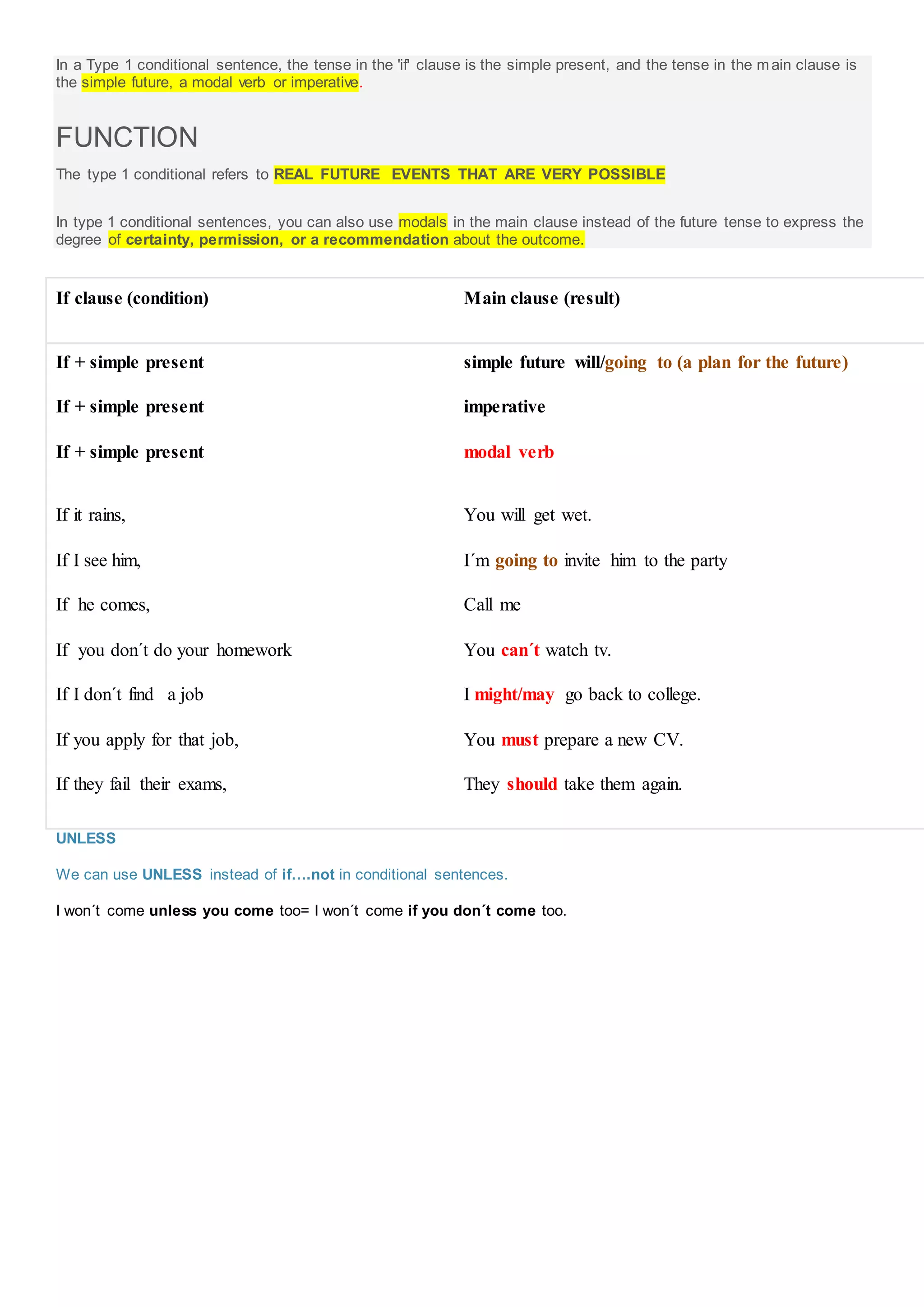
If clause (condition) Main clause (result)
If + simple present
If + simple present
If + simple present
simple future will/going to (a plan for the future)
imperative
modal verb
If it rains,
If I see him,
If he comes,
If you don´t do your homework
If I don´t find a job
If you apply for that job,
If they fail their exams,
You will get wet.
I´m going to invite him to the party
Call me
You can´t watch tv.
I might/may go back to college.
You must prepare a new CV.
They should take them again.
UNLESS
We can use UNLESS instead of if….not in conditional sentences.
I won´t come unless you come too= I won´t come if you don´t come too.

Zero and first conditional

  • 1.
    ZERO CONDITIONAL FORM In zeroconditional sentences, the tense in both parts of the sentence is the simple present. If clause (condition) Main clause (result) If + simple present simple present If this thing happens that thing happens.  As in all conditional sentences, the order of the clauses is not fixed  In zero conditional sentences, you can replace "if" with "when", because both express general truths. The meaning will be unchanged. EXAMPLES  If you heat ice, it melts.  Ice melts if you heat it.  When you heat ice, it melts.  Ice melts when you heat it.  If it rains, the grass gets wet.  The grass gets wet if it rains.  When it rains, the grass gets wet.  The grass gets wet when it rains. FUNCTION The zero conditional is used  To make statements about the real world, and often refers to general truths, such as scientific facts .  In these sentences, the time is now or always and the situation is real and possible.  To talk about something that always happens as a result of something else EXAMPLES  If you freeze water, it becomes a solid.  Plants die if they don't get enough water.  If my husband has a cold, I usually catch it.  If public transport is efficient, people stop using their cars.  If you mix red and blue, you get purple. TYPE 1 CONDITIONAL FORM
  • 2.
    In a Type1 conditional sentence, the tense in the 'if' clause is the simple present, and the tense in the main clause is the simple future, a modal verb or imperative. FUNCTION The type 1 conditional refers to REAL FUTURE EVENTS THAT ARE VERY POSSIBLE In type 1 conditional sentences, you can also use modals in the main clause instead of the future tense to express the degree of certainty, permission, or a recommendation about the outcome. If clause (condition) Main clause (result) If + simple present If + simple present If + simple present simple future will/going to (a plan for the future) imperative modal verb If it rains, If I see him, If he comes, If you don´t do your homework If I don´t find a job If you apply for that job, If they fail their exams, You will get wet. I´m going to invite him to the party Call me You can´t watch tv. I might/may go back to college. You must prepare a new CV. They should take them again. UNLESS We can use UNLESS instead of if….not in conditional sentences. I won´t come unless you come too= I won´t come if you don´t come too.