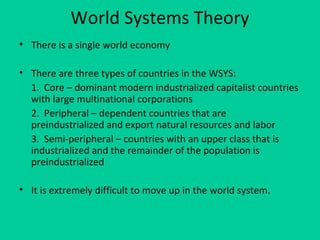
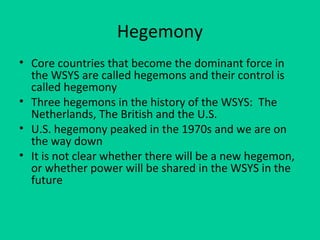
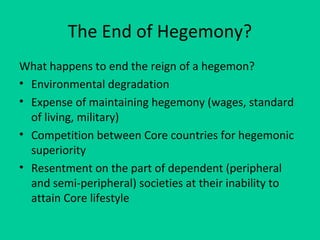
World Systems Theory views the global economy as consisting of three types of countries: core countries that are dominant industrial powers; peripheral countries that are dependent and export resources and labor; and semi-peripheral countries with some industry and dependence. Core countries maintain control over peripheral countries through colonialism, neocolonialism, and multinational corporations. The dominant core power is called the hegemon, with the Netherlands, Britain and the US historically filling this role. However, hegemony declines as the costs rise, other core countries compete, and resentment grows in dependent countries unable to achieve the core's standard of living. The current model of continuous growth also faces challenges from resource depletion.