
STUDY OF BIODEGRADABLE POLYMERS
FOR CONTROLLED RELEASE
K.SENTHIL KUMAR
Asst.Professor
Department of Pharmaceutics
QIS College Of Pharmacy,ongole,AP-523272.
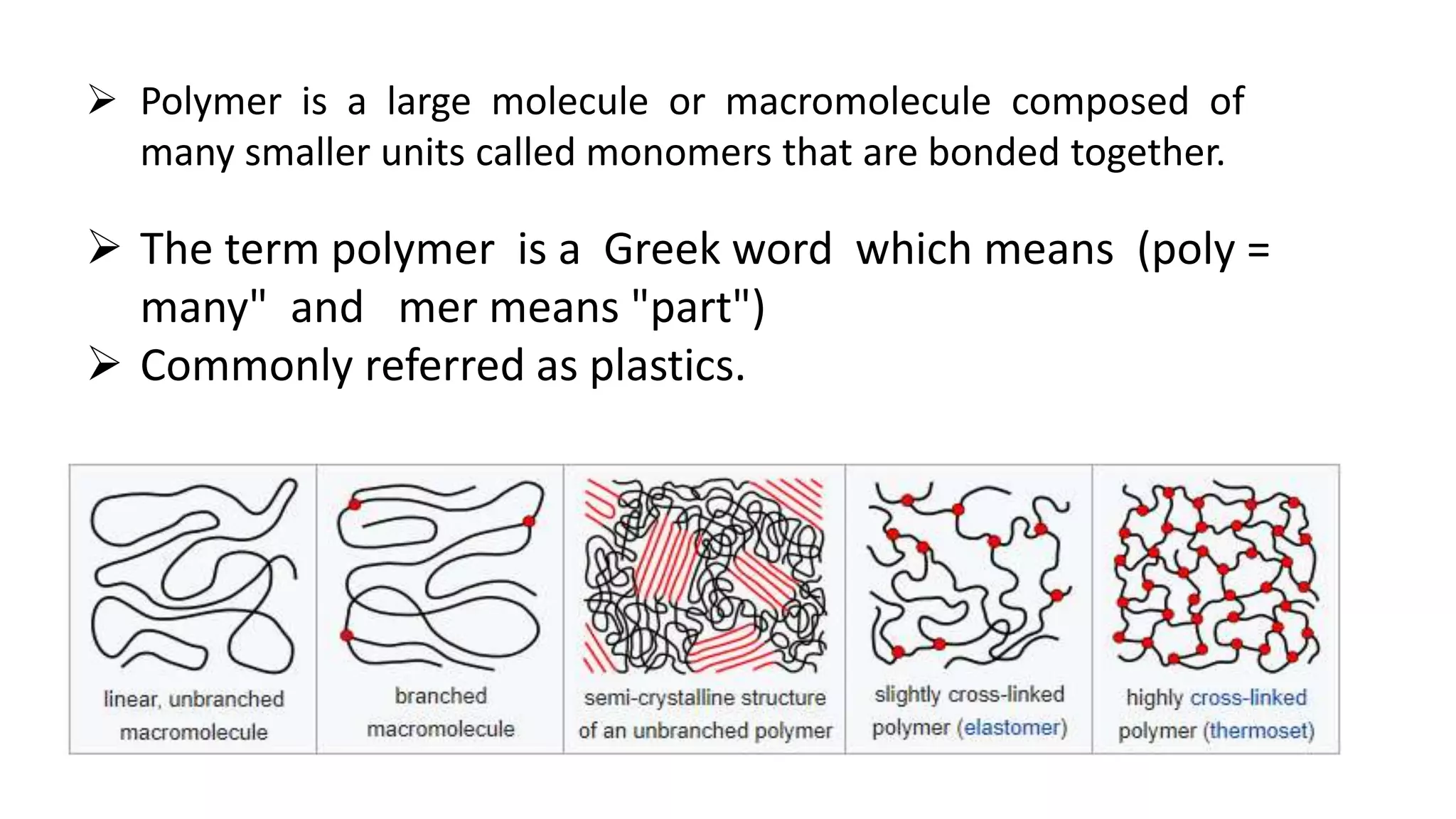
 Polymer is a large molecule or macromolecule composed of
many smaller units called monomers that are bonded together.
 The term polymer is a Greek word which means (poly =
many" and mer means "part")
 Commonly referred as plastics.
Polymer used as a pharmaceutical excipients in drug delivery
system
• Biodegradable polymers can be defined as polymers that are degradable in vivo, either
enzymatically or non-enzymatically, to produce biocompatible or nontoxic by-products.
• These polymers can be metabolized and excreted through normal physiological pathways.
• They are classified into three groups, namely synthetic, semi synthetic and natural,
based on their sources.
• Biodegradation is a natural process by which organic chemicals in the environment are
converted to simpler compounds, mineralized and redistributed through elemental cycles
such as the carbon(C), nitrogen (N) and sulphur (S) cycles.
• Polymers have been used as a main tool to control the drug release rate from the
formulations.
Characteristics of Ideal Polymer
• Should be inert and compatible with the environment.
• Should be non-toxic.
• Should be easily administered.
• Should be easy and inexpensive to fabricate.
• Should have good mechanical strength
Advantage of biodegradable polymers:
 It provides a drug at a constant rate of controlled
release
 Nontoxic
 Biocompatible
CLASSIFICATION OF BIODEGRADABLE POLYMERS
a) Natural Polymers :
i) Proteins
Ex : albumin, collagen and gelatin
ii) Polysaccharides
• Ex : dextran, starch,cyclodextrin,pullulan, Schizophyllan(produced by fungus of the
genus Schizophyllum),Xanthan gum ,guargum ,gellan gum
• Polysaccharides can be positively charged (chitosan) or negatively charged
(alginate,heparin, hyaluronic acid, pectin,.
SEMI-SYNTHETIC:
• Hydroxy Propyl Methyl Cellulose (HPMC),
• Methyl Cellulose (MC),
• Hydroxy Propyl Cellulose (HPC)
• Poly(methyl methacrylate)- PMMA
• Poly(vinyl alcohol)- PVA
• Poly(vinyl pyrrolidone)PVP
• Poly(acrylic acid)PAA
• Polyacrylamide. PA
• Poly(ethylene glycol).PEG
• Poly(methacrylic acid).PMA
• Polylactides (PLA).
• Polyglycolides (PGA)
• Poly(lactide-co-glycolides) (PLGA)
• Polyanhydrides
• Polyorthoesters
• Poly (E-caprolactone) PCL
SYNTHETIC BIODEGRADABLE POLYMERS
NON BIODEGRADABLE POLYMERS
• Polyethylene terephthalate, or PET
• Poly(ethylene)- PE
• Polypropylene -PP
Factors Influence the Polymer Degradation
• Chemical Structure and its Composition of polymer
• Distribution of Repeat Units in Multimers
• Molecular Weight of polymer
• Physiochemical factors of polymer (shape, size)
• Mechanism of Hydrolysis (enzymes vs water)
• Configurational Structure
• Sterilization process
• Site of implantation.
• Morphology (amorphous/semicrystalline).
• Processing conditions.
• Storage history
• Presents of ionic groups.
• Controlled drug delivery occurs when a polymer, whether natural or
synthetic, is judiciously combined with a drug or other active agent in
such a way that the active agent is released from the material in a
predesigned manner.
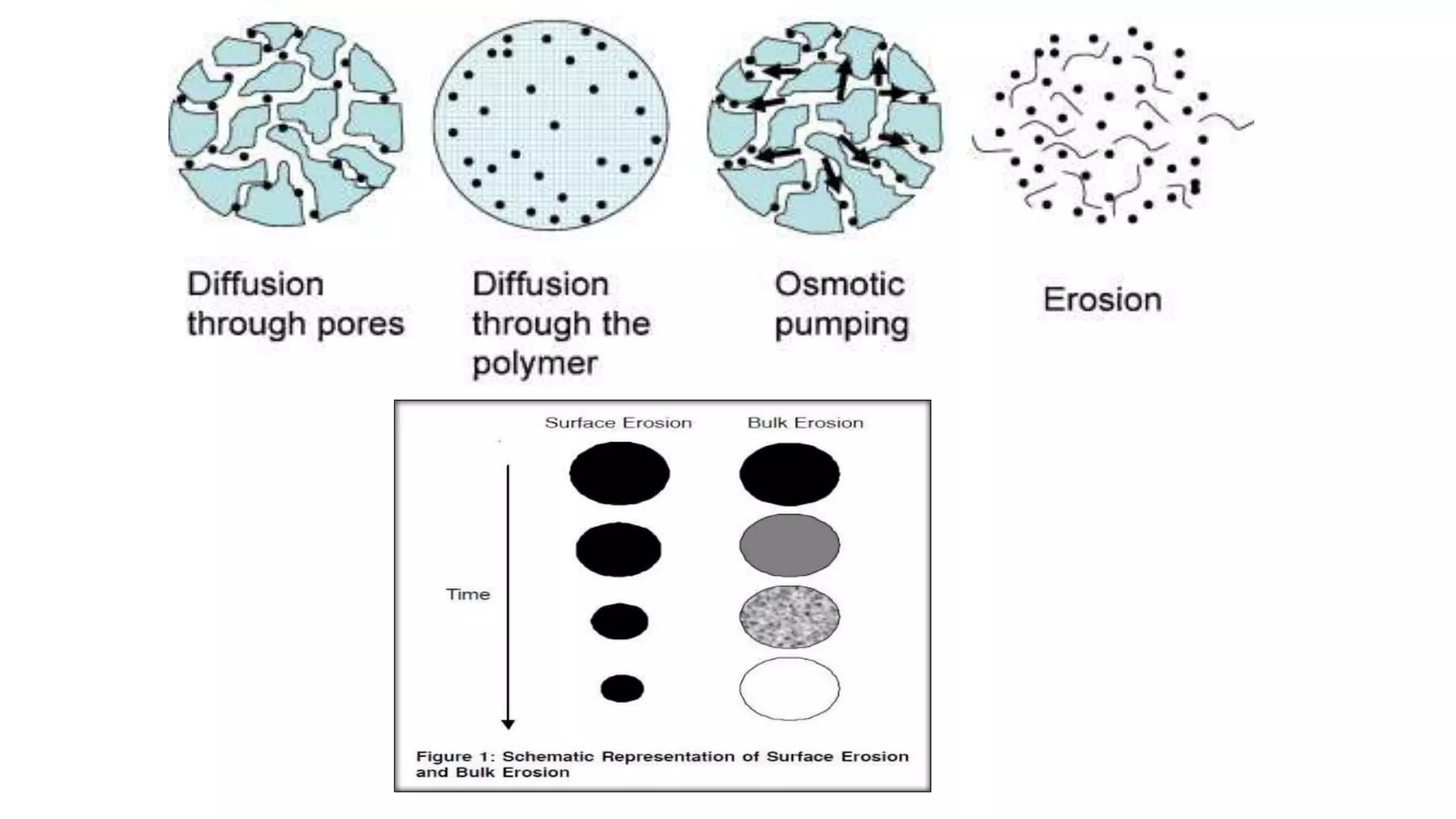
• Controlled-release methodologies can be classified on the basis of the
mechanism that controls the release of the active agent from the
delivery device diffusion, osmosis, or polymer erosion.
MECHANISM OF DRUG RELEASE FROM
POLYMERS
• Swelling mechanism
They are initially dry and when placed in the body will absorb water or other
body fluids and swell. The swelling increases the aqueous solvent content
within the formulation as well as the polymer mesh size, enabling the drug to
diffuse through the swollen network into the external environment.
• Erosion mechanism
The physical erosion mechanisms can be characterized as heterogeneous or homogeneous. In
heterogeneous erosion, also called as surface erosion, the polymer erodes only at the surface,
and maintains its physical integrity as it degrades. As a result drug kinetics is predictable, and
zero order release kinetics can be obtained. Most polymers undergo homogeneous erosion,
means the hydrolysis occurs at even rate throughout the polymeric matrix.
• Degradation -Most biodegradable polymers are designed to degrade
as a result of hydrolysis of the polymer chains into biologically
acceptable .
• Diffusion- occurs when a drug or other active agent passes through
the polymer that forms the controlled‐release device. Diffusion
occurs when the drug passes from the polymer matrix into the
external environment.
BIODEGRADABLE POLYMER APPLICATIONS
1. Coated tablet preparation
2. Capsules preparation(as diluents)
3. Disperse Systems
4. Gels,jellies,implant,ocusert,in situ gel, contact lense.
5. Transdermal Drug Delivery Systems (Patches)
6. Preparation of pellet ,Nanocarriers ,microparticle, taste masking
etc.
7. Buccal tablet,buccal patch,parenteral product,osmotic
tablet,floating tablet,colonic tablet,
• The perfection of such systems can be used to grow tissues and cells in
vitro or use a biodegradable scaffold to construct new structures and
organs in vitro.
• biodegradable polymers are being used orthopedic applications, such as
bone and joint replacement.(USED AS CEMENT)
• EG. hyaluronic acid have been used extensively in the repair of cartilage,
ligaments, and tendons
GENERAL APPLICATION OF BIODEGRADABLE POLYMERS
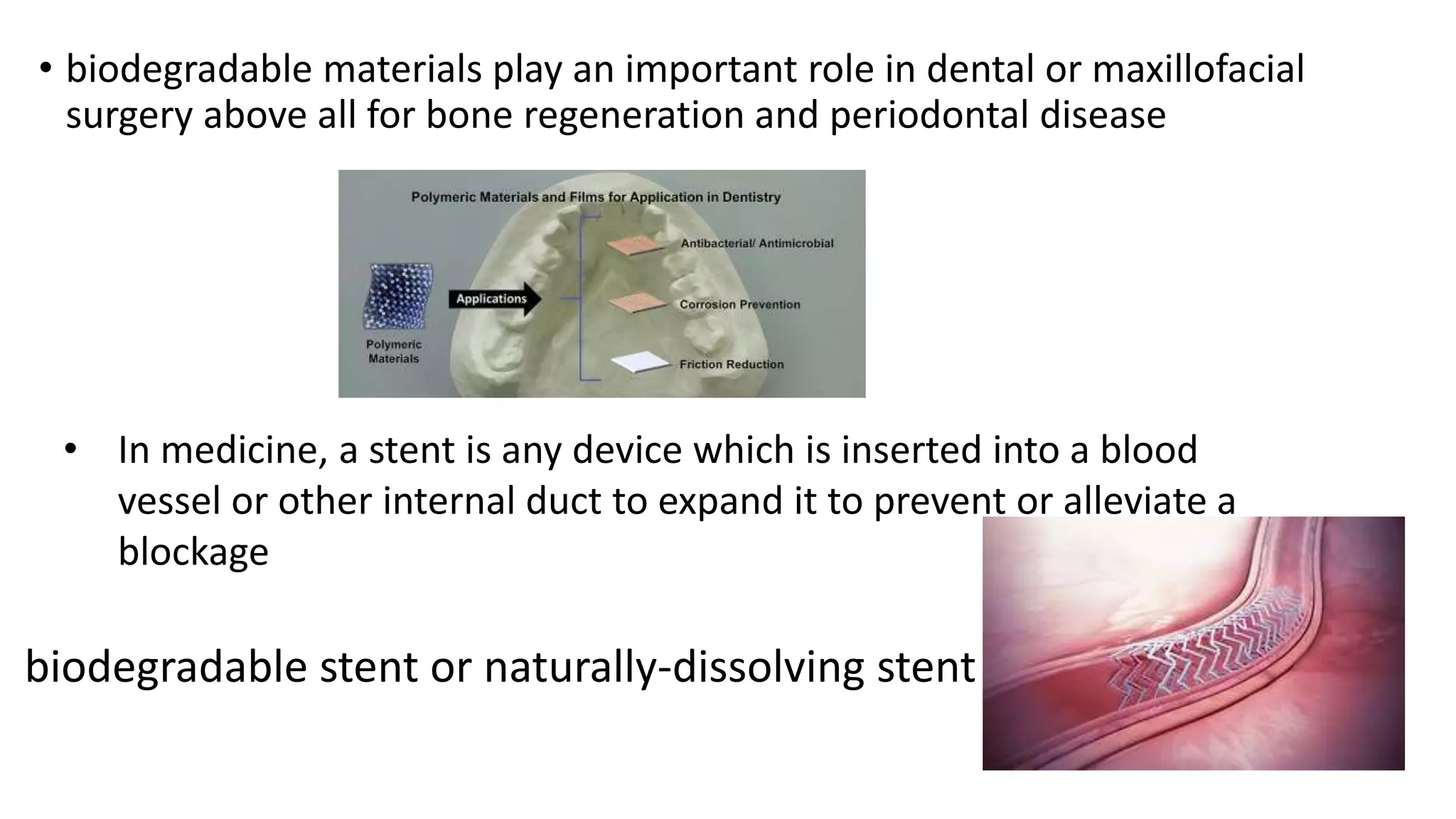
• biodegradable materials play an important role in dental or maxillofacial
surgery above all for bone regeneration and periodontal disease
• In medicine, a stent is any device which is inserted into a blood
vessel or other internal duct to expand it to prevent or alleviate a
blockage
biodegradable stent or naturally-dissolving stent
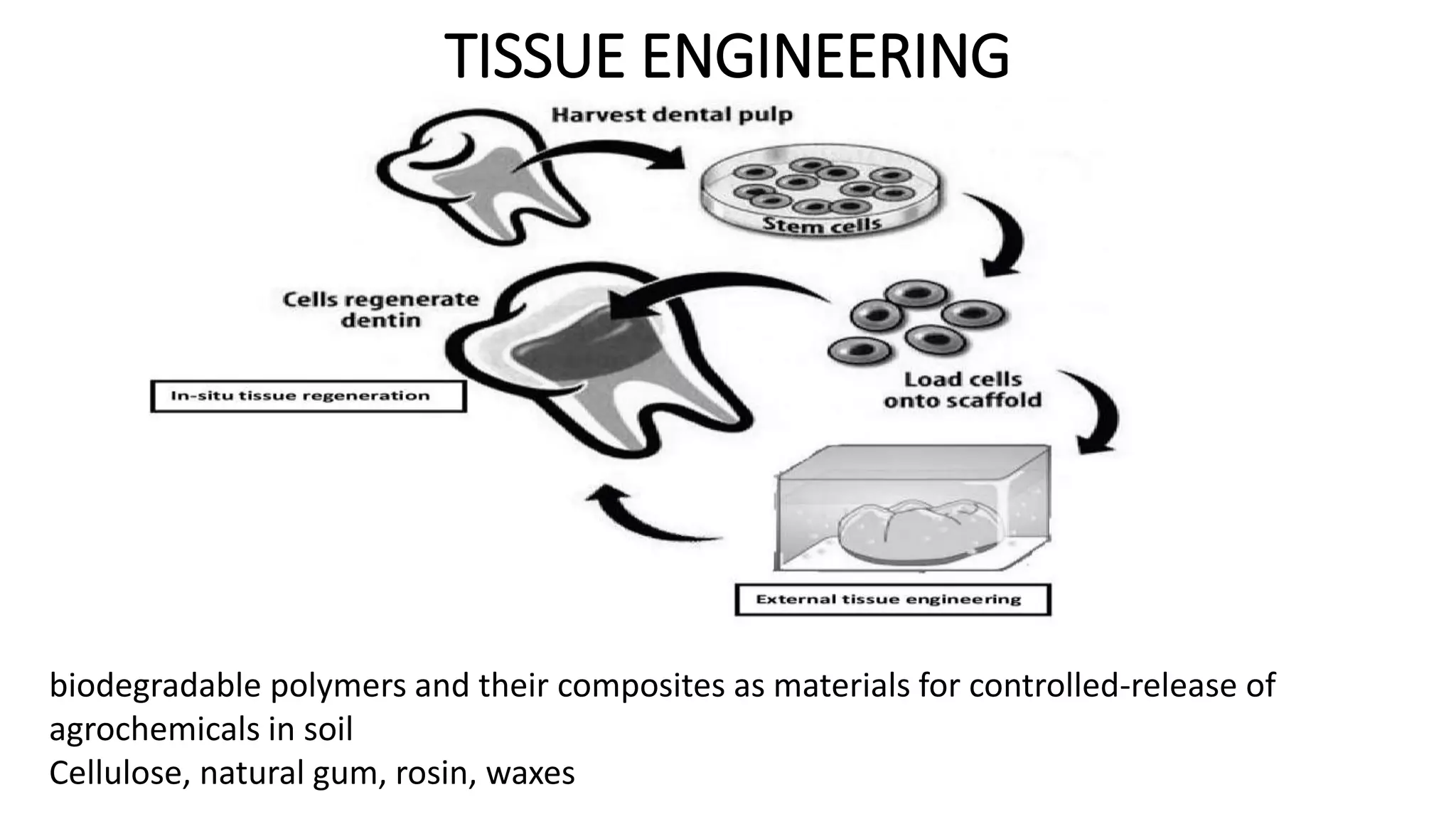
TISSUE ENGINEERING
biodegradable polymers and their composites as materials for controlled-release of
agrochemicals in soil
Cellulose, natural gum, rosin, waxes
.
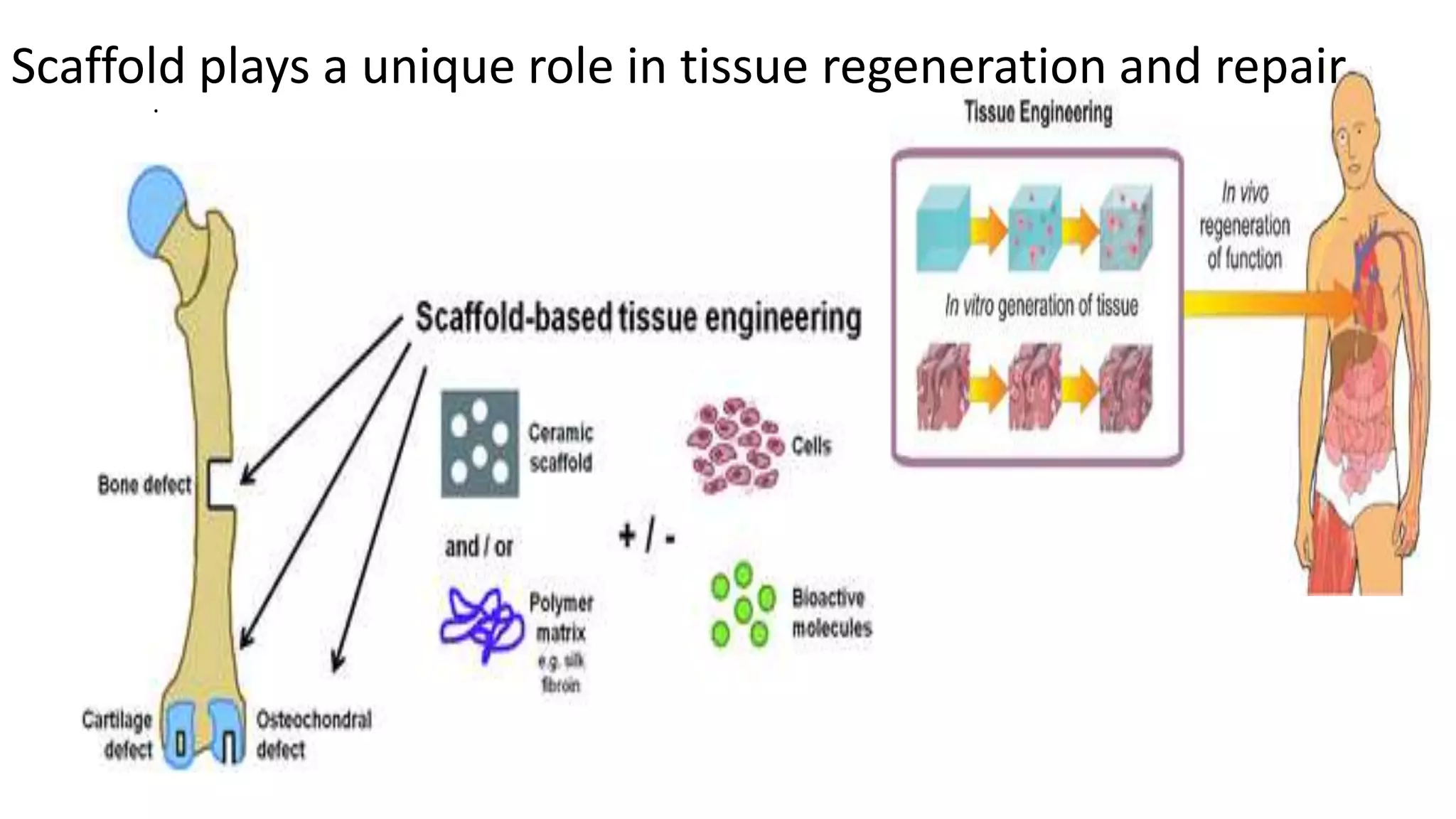
Scaffold plays a unique role in tissue regeneration and repair
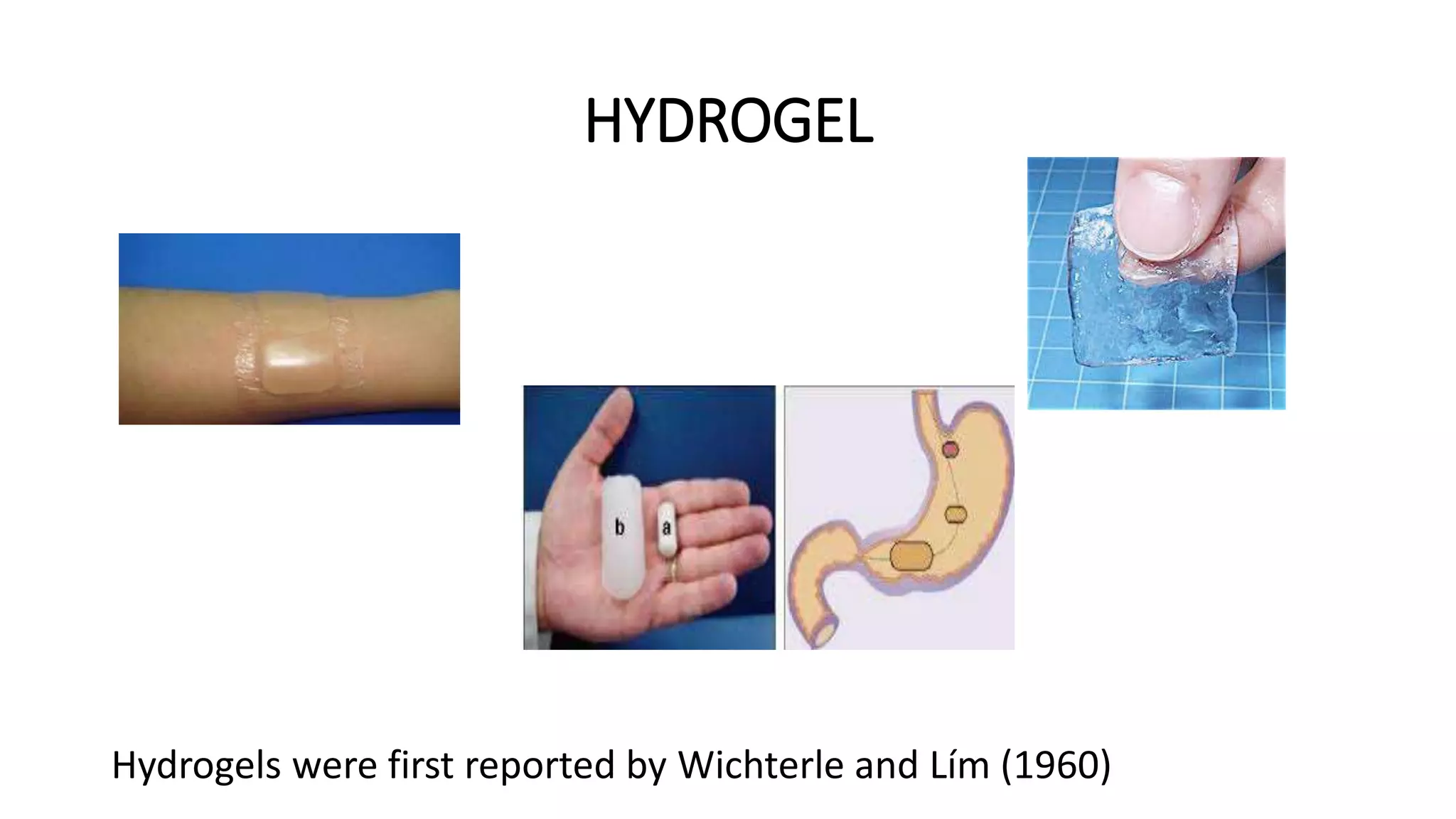
HYDROGEL
Hydrogels were first reported by Wichterle and Lím (1960)
A hydrogel is a three-dimensional (3D) network of hydrophilic polymers
that can swell in water and hold a large amount of water while
maintaining the structure due to chemical or physical cross-linking of
individual polymer chains.
 Hydrogels can be physical, chemical, or biochemical. Physical gels can undergo a
transition from liquid to a gel in response to a change in environmental conditions
such as temperature, ionic concentration, pH, or other conditions such as mixing of
two components.
 Chemical gels use covalent bonding that introduces mechanical integrity and
degradation resistance compared to other weak materials.
 In biochemical hydrogels, biological agents like enzymes or amino acids participate in
the gelation process.
• Hydrogels are polymeric materials that do not dissolve in water at
physiological temperature and PH but swell considerably in aqueous
medium.
• Hydrogels are of special interest in controlled release applications because
of their safe tissue biocompatibility, the case with which the drugs are
dispersed in the matrix and the high degree of control achieved by selecting
the physical and chemical properties of the polymer network.
HYDROGELS
HYDROGELS
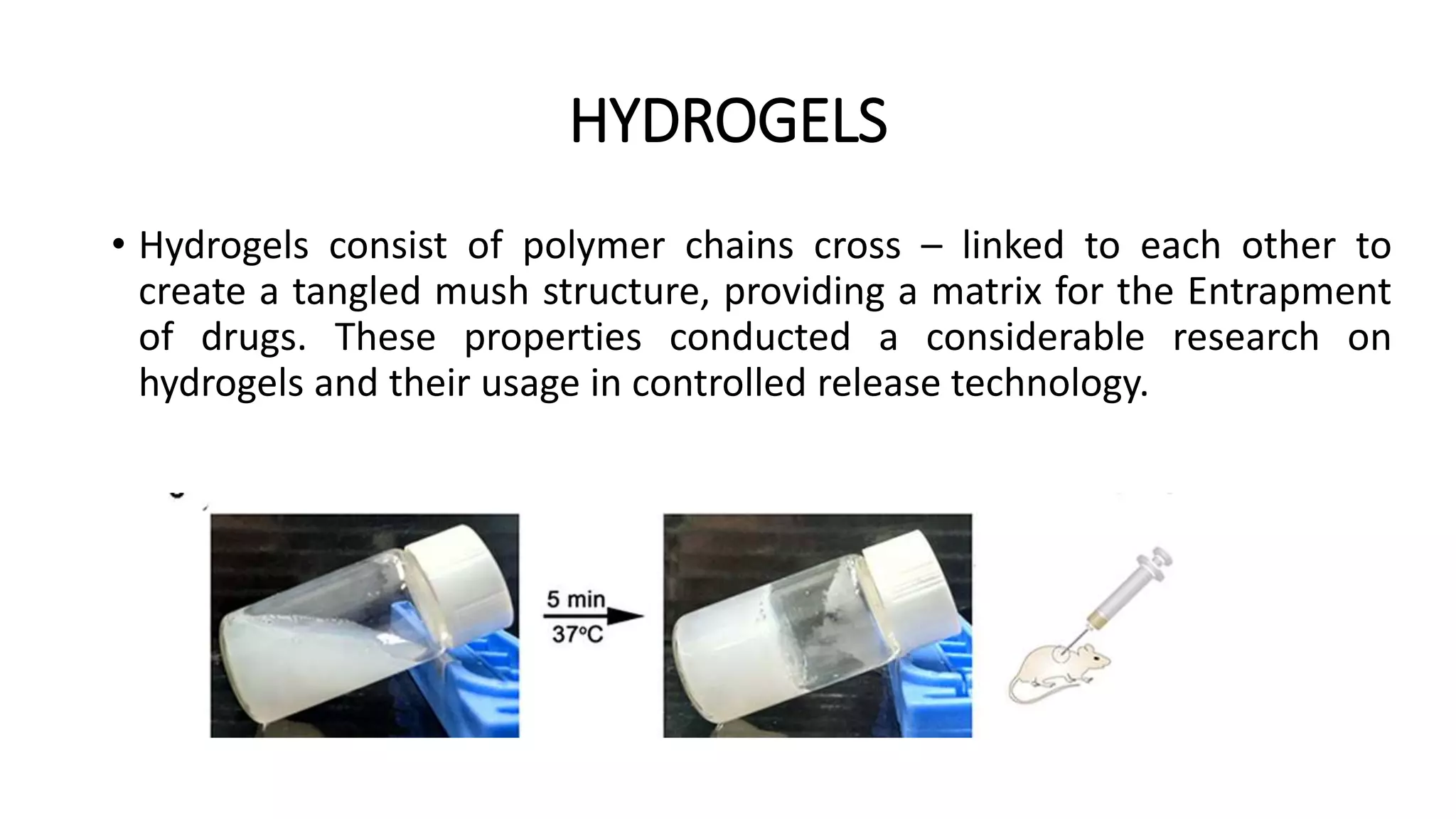
• Hydrogels consist of polymer chains cross – linked to each other to
create a tangled mush structure, providing a matrix for the Entrapment
of drugs. These properties conducted a considerable research on
hydrogels and their usage in controlled release technology.
Classification of hydrogels
On the basis of route of their synthesis
1. Homopolymer hydrogels (made up of only one type of
hydrophilic monomer)
2. Copolymer hydrogels or network gels (composed of two types
of monomers)
3. Mutipolymer hydrogels (made up of three types of monomers
or inter penetrating polymeric network)
on the basis of type of ionic charges present on polymer networks
•Anionic hydrogels (anionic thermos associative
carboxy methyl pullulanhydrogels )
•Cationic hydrogels (new thermos sensitive gel)
on the basis of physical structures hydrogels
• Amorphous hydrogels
• Semi crystalline hydrogels
On the basis of Smart Hydrogel
• pH Acidic or basic hydrogel Change in pH—swelling—release of drug
• Ionic Strength Ionic hydrogel Change in ionic strength—change in concentration of ions inside
the gel—
change in swelling—release of drug.
• Thermal Thermo-responsive hydrogel Change in temperature—change in polymer–polymer and
water–
polymer interactions—change in swelling—release of drug
POLYMERS USED FOR HYDROGEL PREPARATION
• Poly (lactic –glycolic acid)
• Hydroxyethyl cellulose
• Starch
• Chitosan
• Sodium alginate
• Xanthan gum, pectin
• Gellan gum ,locust gum
• Guargum
• Carbopol
APPLICATIONS OF HYDROGEL
• Colon Specific Hydrogels: Colon specific hydrogels of polysaccharide have
been specifically designed because of presence of high concentration of
polysaccharide enzymes in the colon region of GI.
• Drug delivery in GI tract - hydrogels delivers drugs to specific site in the
GIT.
• Modified Dosage Forms: An interesting research in the field of drug
delivery is of bio- macromolecules like insulin delivered to the site of
absorption with hydrogel
• Rectal Delivery – hydrogels showing bioadhesive properties are used for
rectal drug delivery.
• Protein drug delivery – hydrogels which show better complicance and form
in situ polymeric network and release protein slowly.
• Transdermal delivery – hydrogels can be used as controlled release devices
in the filed of wound dressing due to it swelling properties. Hydrogel based
formulations are being explored for transdermal iontophoresis to obtain
enhanced permeation of products
• Subcutaneous delivery – anticancer drugs are mainly used for the
subcutaneous delivery.
• Gene delivery – change in composition of hydrogels leads to effective
targeting and delivery of nuclei acids to specific cells for gene therapy.
• Tissue Engineering – micronized hydrogels are used to deliver
macromolecules into cytoplasm of antigen presenting cells.
Biodegradable  polymers  for  controlled release  & Hydrogel  classification,application.

Biodegradable polymers for controlled release & Hydrogel classification,application.

  • 1.
    STUDY OF BIODEGRADABLEPOLYMERS FOR CONTROLLED RELEASE K.SENTHIL KUMAR Asst.Professor Department of Pharmaceutics QIS College Of Pharmacy,ongole,AP-523272.
  • 2.
     Polymer isa large molecule or macromolecule composed of many smaller units called monomers that are bonded together.  The term polymer is a Greek word which means (poly = many" and mer means "part")  Commonly referred as plastics. Polymer used as a pharmaceutical excipients in drug delivery system
  • 3.
    • Biodegradable polymerscan be defined as polymers that are degradable in vivo, either enzymatically or non-enzymatically, to produce biocompatible or nontoxic by-products. • These polymers can be metabolized and excreted through normal physiological pathways. • They are classified into three groups, namely synthetic, semi synthetic and natural, based on their sources. • Biodegradation is a natural process by which organic chemicals in the environment are converted to simpler compounds, mineralized and redistributed through elemental cycles such as the carbon(C), nitrogen (N) and sulphur (S) cycles. • Polymers have been used as a main tool to control the drug release rate from the formulations.
  • 4.
    Characteristics of IdealPolymer • Should be inert and compatible with the environment. • Should be non-toxic. • Should be easily administered. • Should be easy and inexpensive to fabricate. • Should have good mechanical strength
  • 5.
    Advantage of biodegradablepolymers:  It provides a drug at a constant rate of controlled release  Nontoxic  Biocompatible
  • 6.
    CLASSIFICATION OF BIODEGRADABLEPOLYMERS a) Natural Polymers : i) Proteins Ex : albumin, collagen and gelatin ii) Polysaccharides • Ex : dextran, starch,cyclodextrin,pullulan, Schizophyllan(produced by fungus of the genus Schizophyllum),Xanthan gum ,guargum ,gellan gum • Polysaccharides can be positively charged (chitosan) or negatively charged (alginate,heparin, hyaluronic acid, pectin,.
  • 7.
    SEMI-SYNTHETIC: • Hydroxy PropylMethyl Cellulose (HPMC), • Methyl Cellulose (MC), • Hydroxy Propyl Cellulose (HPC)
  • 8.
    • Poly(methyl methacrylate)-PMMA • Poly(vinyl alcohol)- PVA • Poly(vinyl pyrrolidone)PVP • Poly(acrylic acid)PAA • Polyacrylamide. PA • Poly(ethylene glycol).PEG • Poly(methacrylic acid).PMA • Polylactides (PLA). • Polyglycolides (PGA) • Poly(lactide-co-glycolides) (PLGA) • Polyanhydrides • Polyorthoesters • Poly (E-caprolactone) PCL SYNTHETIC BIODEGRADABLE POLYMERS
  • 9.
    NON BIODEGRADABLE POLYMERS •Polyethylene terephthalate, or PET • Poly(ethylene)- PE • Polypropylene -PP
  • 10.
    Factors Influence thePolymer Degradation • Chemical Structure and its Composition of polymer • Distribution of Repeat Units in Multimers • Molecular Weight of polymer • Physiochemical factors of polymer (shape, size) • Mechanism of Hydrolysis (enzymes vs water) • Configurational Structure • Sterilization process • Site of implantation. • Morphology (amorphous/semicrystalline). • Processing conditions. • Storage history • Presents of ionic groups.
  • 11.
    • Controlled drugdelivery occurs when a polymer, whether natural or synthetic, is judiciously combined with a drug or other active agent in such a way that the active agent is released from the material in a predesigned manner. • Controlled-release methodologies can be classified on the basis of the mechanism that controls the release of the active agent from the delivery device diffusion, osmosis, or polymer erosion.
  • 12.
    MECHANISM OF DRUGRELEASE FROM POLYMERS • Swelling mechanism They are initially dry and when placed in the body will absorb water or other body fluids and swell. The swelling increases the aqueous solvent content within the formulation as well as the polymer mesh size, enabling the drug to diffuse through the swollen network into the external environment. • Erosion mechanism The physical erosion mechanisms can be characterized as heterogeneous or homogeneous. In heterogeneous erosion, also called as surface erosion, the polymer erodes only at the surface, and maintains its physical integrity as it degrades. As a result drug kinetics is predictable, and zero order release kinetics can be obtained. Most polymers undergo homogeneous erosion, means the hydrolysis occurs at even rate throughout the polymeric matrix.
  • 14.
    • Degradation -Mostbiodegradable polymers are designed to degrade as a result of hydrolysis of the polymer chains into biologically acceptable . • Diffusion- occurs when a drug or other active agent passes through the polymer that forms the controlled‐release device. Diffusion occurs when the drug passes from the polymer matrix into the external environment.
  • 15.
    BIODEGRADABLE POLYMER APPLICATIONS 1.Coated tablet preparation 2. Capsules preparation(as diluents) 3. Disperse Systems 4. Gels,jellies,implant,ocusert,in situ gel, contact lense. 5. Transdermal Drug Delivery Systems (Patches) 6. Preparation of pellet ,Nanocarriers ,microparticle, taste masking etc. 7. Buccal tablet,buccal patch,parenteral product,osmotic tablet,floating tablet,colonic tablet,
  • 16.
    • The perfectionof such systems can be used to grow tissues and cells in vitro or use a biodegradable scaffold to construct new structures and organs in vitro. • biodegradable polymers are being used orthopedic applications, such as bone and joint replacement.(USED AS CEMENT) • EG. hyaluronic acid have been used extensively in the repair of cartilage, ligaments, and tendons GENERAL APPLICATION OF BIODEGRADABLE POLYMERS
  • 17.
    • biodegradable materialsplay an important role in dental or maxillofacial surgery above all for bone regeneration and periodontal disease • In medicine, a stent is any device which is inserted into a blood vessel or other internal duct to expand it to prevent or alleviate a blockage biodegradable stent or naturally-dissolving stent
  • 18.
    TISSUE ENGINEERING biodegradable polymersand their composites as materials for controlled-release of agrochemicals in soil Cellulose, natural gum, rosin, waxes
  • 19.
    . Scaffold plays aunique role in tissue regeneration and repair
  • 20.
    HYDROGEL Hydrogels were firstreported by Wichterle and Lím (1960)
  • 21.
    A hydrogel isa three-dimensional (3D) network of hydrophilic polymers that can swell in water and hold a large amount of water while maintaining the structure due to chemical or physical cross-linking of individual polymer chains.  Hydrogels can be physical, chemical, or biochemical. Physical gels can undergo a transition from liquid to a gel in response to a change in environmental conditions such as temperature, ionic concentration, pH, or other conditions such as mixing of two components.  Chemical gels use covalent bonding that introduces mechanical integrity and degradation resistance compared to other weak materials.  In biochemical hydrogels, biological agents like enzymes or amino acids participate in the gelation process.
  • 22.
    • Hydrogels arepolymeric materials that do not dissolve in water at physiological temperature and PH but swell considerably in aqueous medium. • Hydrogels are of special interest in controlled release applications because of their safe tissue biocompatibility, the case with which the drugs are dispersed in the matrix and the high degree of control achieved by selecting the physical and chemical properties of the polymer network. HYDROGELS
  • 23.
    HYDROGELS • Hydrogels consistof polymer chains cross – linked to each other to create a tangled mush structure, providing a matrix for the Entrapment of drugs. These properties conducted a considerable research on hydrogels and their usage in controlled release technology.
  • 24.
    Classification of hydrogels Onthe basis of route of their synthesis 1. Homopolymer hydrogels (made up of only one type of hydrophilic monomer) 2. Copolymer hydrogels or network gels (composed of two types of monomers) 3. Mutipolymer hydrogels (made up of three types of monomers or inter penetrating polymeric network)
  • 25.
    on the basisof type of ionic charges present on polymer networks •Anionic hydrogels (anionic thermos associative carboxy methyl pullulanhydrogels ) •Cationic hydrogels (new thermos sensitive gel)
  • 26.
    on the basisof physical structures hydrogels • Amorphous hydrogels • Semi crystalline hydrogels On the basis of Smart Hydrogel • pH Acidic or basic hydrogel Change in pH—swelling—release of drug • Ionic Strength Ionic hydrogel Change in ionic strength—change in concentration of ions inside the gel— change in swelling—release of drug. • Thermal Thermo-responsive hydrogel Change in temperature—change in polymer–polymer and water– polymer interactions—change in swelling—release of drug
  • 27.
    POLYMERS USED FORHYDROGEL PREPARATION • Poly (lactic –glycolic acid) • Hydroxyethyl cellulose • Starch • Chitosan • Sodium alginate • Xanthan gum, pectin • Gellan gum ,locust gum • Guargum • Carbopol
  • 28.
    APPLICATIONS OF HYDROGEL •Colon Specific Hydrogels: Colon specific hydrogels of polysaccharide have been specifically designed because of presence of high concentration of polysaccharide enzymes in the colon region of GI. • Drug delivery in GI tract - hydrogels delivers drugs to specific site in the GIT. • Modified Dosage Forms: An interesting research in the field of drug delivery is of bio- macromolecules like insulin delivered to the site of absorption with hydrogel
  • 29.
    • Rectal Delivery– hydrogels showing bioadhesive properties are used for rectal drug delivery. • Protein drug delivery – hydrogels which show better complicance and form in situ polymeric network and release protein slowly. • Transdermal delivery – hydrogels can be used as controlled release devices in the filed of wound dressing due to it swelling properties. Hydrogel based formulations are being explored for transdermal iontophoresis to obtain enhanced permeation of products
  • 30.
    • Subcutaneous delivery– anticancer drugs are mainly used for the subcutaneous delivery. • Gene delivery – change in composition of hydrogels leads to effective targeting and delivery of nuclei acids to specific cells for gene therapy. • Tissue Engineering – micronized hydrogels are used to deliver macromolecules into cytoplasm of antigen presenting cells.