
Aristotle’s definition of tragedy
Name : Solanki Sardarsinh
Roll No : 29

Semester : 1

Year : 2013-14

Paper 3 : Literary Theory & Criticism

Submitted to:
Smt. S.B.Gardi
Department of English
M.K. Bhav. University
Aristotle’s Ideas about Tragedy
 Aristotle as a Philosopher
 A Philosopher looks from ideal form and
tries to explain the nature of reality

 His analysis of tragic Dramas
 His analysis of the ideal form of tragic plays
became a guideline for later playwrights in
civilization
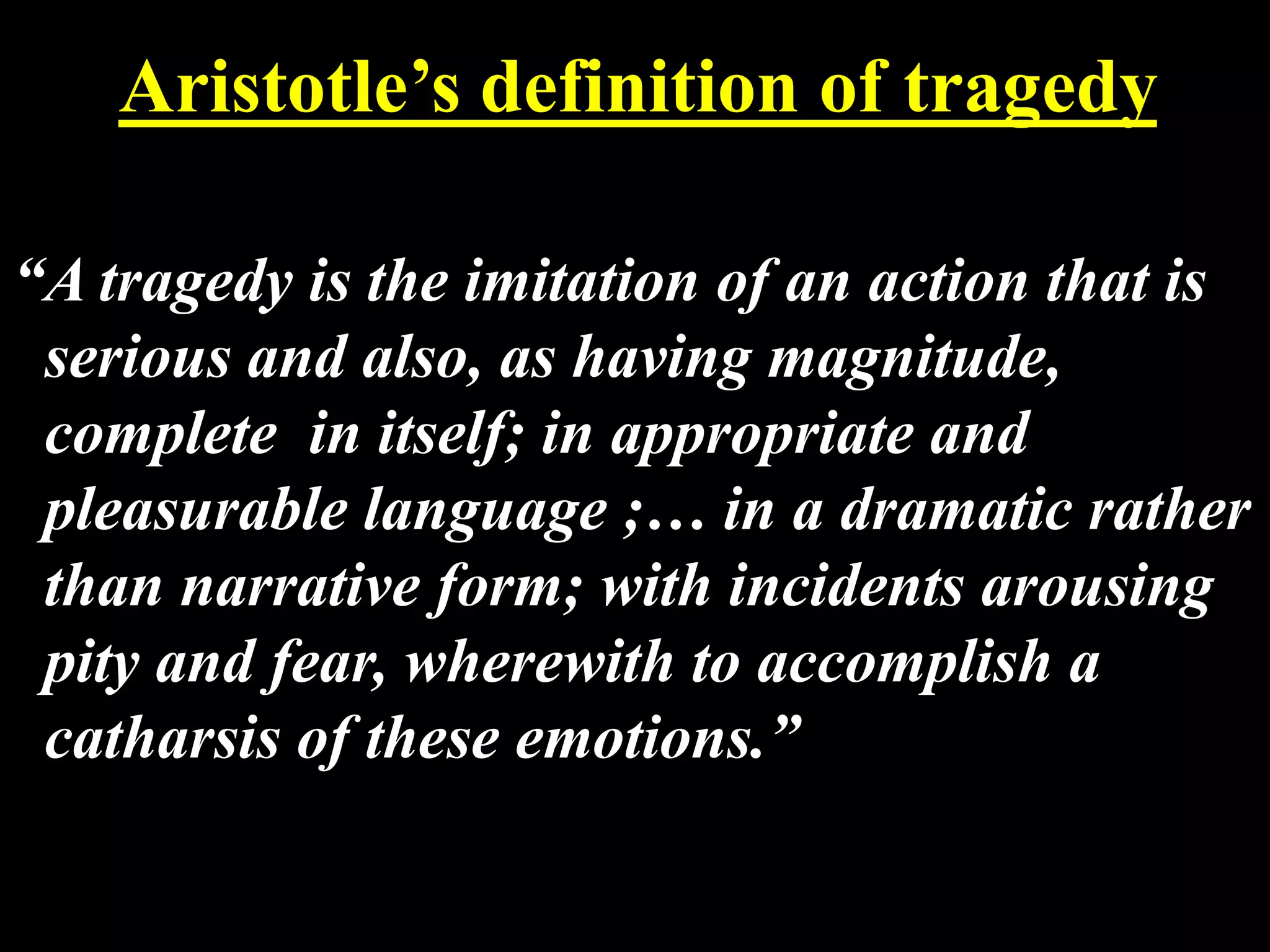
Aristotle’s definition of tragedy
“A tragedy is the imitation of an action that is
serious and also, as having magnitude,
complete in itself; in appropriate and
pleasurable language ;… in a dramatic rather
than narrative form; with incidents arousing
pity and fear, wherewith to accomplish a
catharsis of these emotions.”
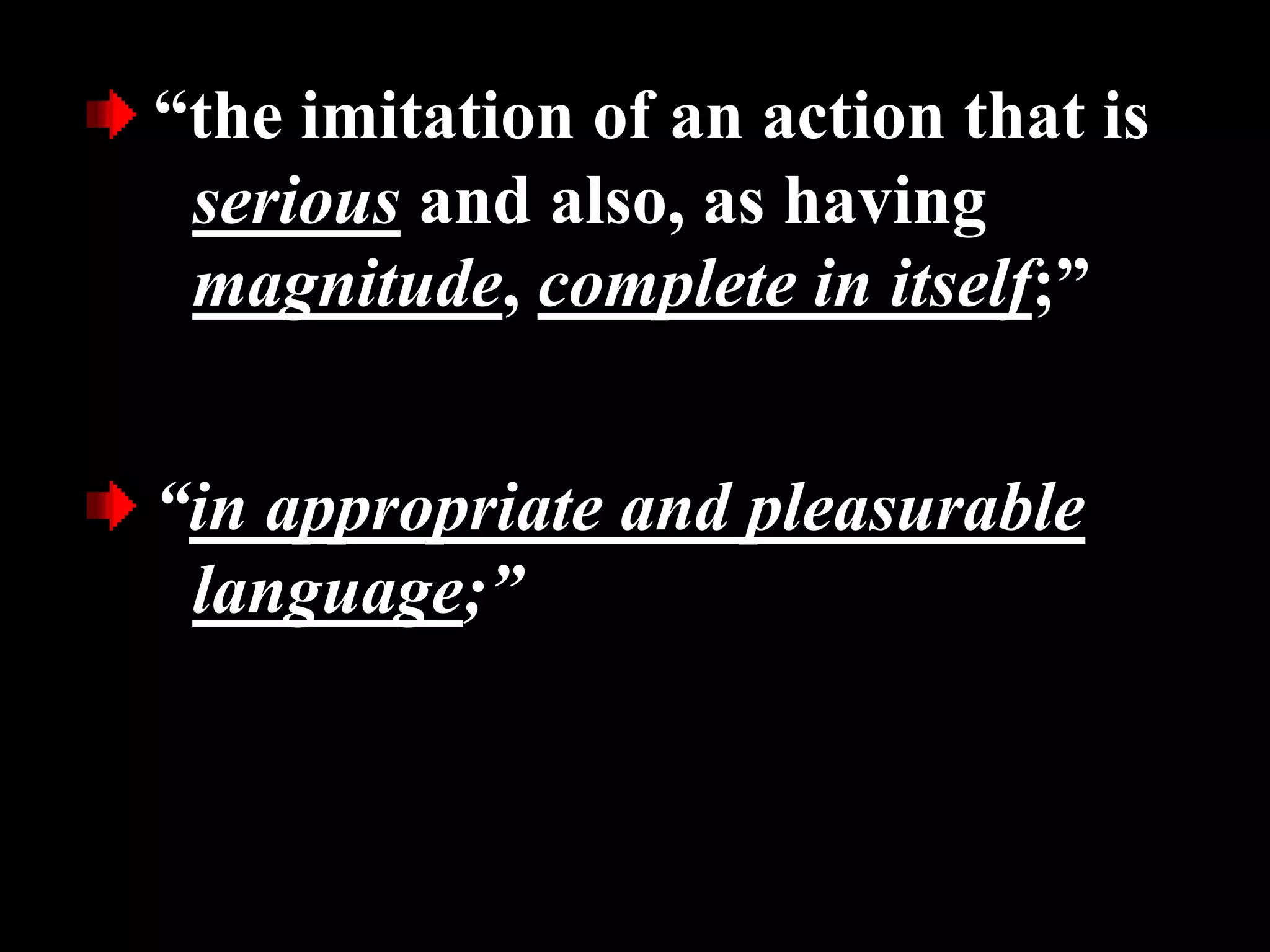
“the imitation of an action that is
serious and also, as having
magnitude, complete in itself;”
“in appropriate and pleasurable
language;”
“In a dramatic rather than
narrative form;”
“with incidents arousing
pity and fear,”
“wherewith to accomplish a catharsis
of these emotions.”
Catharsis : “A purifying of the emotions
that is brought about in the
audience of a tragic drama
through the evocation of
intense fear and pity.”
Aristotle's definition of tragedy

Aristotle's definition of tragedy

  • 1.
    Aristotle’s definition oftragedy Name : Solanki Sardarsinh Roll No : 29 Semester : 1 Year : 2013-14 Paper 3 : Literary Theory & Criticism Submitted to: Smt. S.B.Gardi Department of English M.K. Bhav. University
  • 2.
    Aristotle’s Ideas aboutTragedy  Aristotle as a Philosopher  A Philosopher looks from ideal form and tries to explain the nature of reality  His analysis of tragic Dramas  His analysis of the ideal form of tragic plays became a guideline for later playwrights in civilization
  • 3.
    Aristotle’s definition oftragedy “A tragedy is the imitation of an action that is serious and also, as having magnitude, complete in itself; in appropriate and pleasurable language ;… in a dramatic rather than narrative form; with incidents arousing pity and fear, wherewith to accomplish a catharsis of these emotions.”
  • 4.
    “the imitation ofan action that is serious and also, as having magnitude, complete in itself;” “in appropriate and pleasurable language;”
  • 5.
    “In a dramaticrather than narrative form;” “with incidents arousing pity and fear,”
  • 6.
    “wherewith to accomplisha catharsis of these emotions.” Catharsis : “A purifying of the emotions that is brought about in the audience of a tragic drama through the evocation of intense fear and pity.”