Greek Tragedy
Where does tragedy come from?
 The Greek
philosopher
Aristotle first
defined tragedy in
his book Poetics
written in about
330 BCE
Aristotle’s definition
 Aristotle defines tragedy as “the imitation of an action
which is serious, complete, of a certain magnitude,
couched in poetic language. It should be dramatic, with
incidents arousing pity and fear, which bring about a
purgation of these emotions.”
 Pity is aroused in the audience for the character(s), and
we fear lest the same misfortune happen to us.
Purgation/catharsis is a cleansing; a release of
emotions.
Aristotle’s definition of tragedy had SIX parts:
 Plot
 Character
 Thought
 Diction
 Spectacle
 Melody
Plot
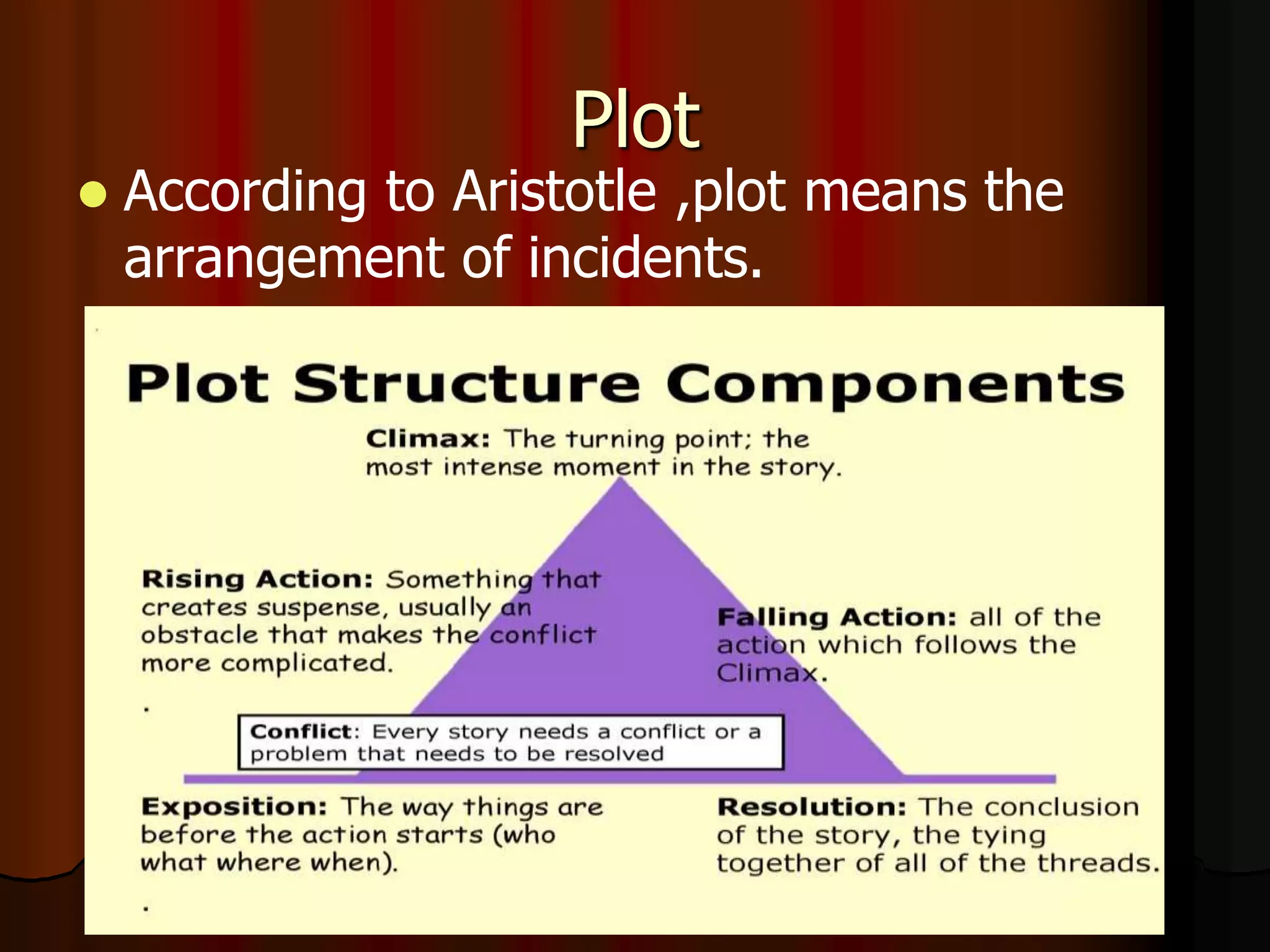
 According to Aristotle ,plot means the
arrangement of incidents.
Characters
 Characters are men and women who act
The tragic hero
Must be a noble King or Ruler
Must have a tragic flaw: Hamartia (Usually Hubris: Pride)
Downfall must be caused by his own actions and must be a result
of his tragic flaw
Aristotle's Six Elements of
Drama
Aristotle's Six Elements of
Drama
 Thought is insights into humanity and life
 Diction is the dialogue and poetry
 Spectacle is scenery and other visual
elements
 Melody is all sound
Dramatic Unities
 Time – 24 hours for the action of the play.
 Place – no change of scenery
 Action – no subplot (an action which
happens elsewhere is told by another
character)
Structure of Tragedy
1. Prologue the actor enters and gives the background the audience
need to know about the play.
2. Parados – entrance of chorus; and comment on the events
presented in the prologue.
3. Episodes –the characters speak to one another and develop the
central conflict.
4. Stasimon – the chorus comment on what happened in the
episodes.
5. Exodus – the final action of the play where the conflict is resoled
and the actors leave the stage.

Greek tragedy introduction

  • 1.
  • 2.
    Where does tragedycome from?  The Greek philosopher Aristotle first defined tragedy in his book Poetics written in about 330 BCE
  • 3.
    Aristotle’s definition  Aristotledefines tragedy as “the imitation of an action which is serious, complete, of a certain magnitude, couched in poetic language. It should be dramatic, with incidents arousing pity and fear, which bring about a purgation of these emotions.”  Pity is aroused in the audience for the character(s), and we fear lest the same misfortune happen to us. Purgation/catharsis is a cleansing; a release of emotions.
  • 4.
    Aristotle’s definition oftragedy had SIX parts:  Plot  Character  Thought  Diction  Spectacle  Melody
  • 5.
    Plot  According toAristotle ,plot means the arrangement of incidents.
  • 6.
    Characters  Characters aremen and women who act The tragic hero Must be a noble King or Ruler Must have a tragic flaw: Hamartia (Usually Hubris: Pride) Downfall must be caused by his own actions and must be a result of his tragic flaw Aristotle's Six Elements of Drama
  • 7.
    Aristotle's Six Elementsof Drama  Thought is insights into humanity and life  Diction is the dialogue and poetry  Spectacle is scenery and other visual elements  Melody is all sound
  • 8.
    Dramatic Unities  Time– 24 hours for the action of the play.  Place – no change of scenery  Action – no subplot (an action which happens elsewhere is told by another character)
  • 9.
    Structure of Tragedy 1.Prologue the actor enters and gives the background the audience need to know about the play. 2. Parados – entrance of chorus; and comment on the events presented in the prologue. 3. Episodes –the characters speak to one another and develop the central conflict. 4. Stasimon – the chorus comment on what happened in the episodes. 5. Exodus – the final action of the play where the conflict is resoled and the actors leave the stage.