2007 ACR Diagnostic Radiology In-Training Exam Rationales
Section IV Neuroradiology
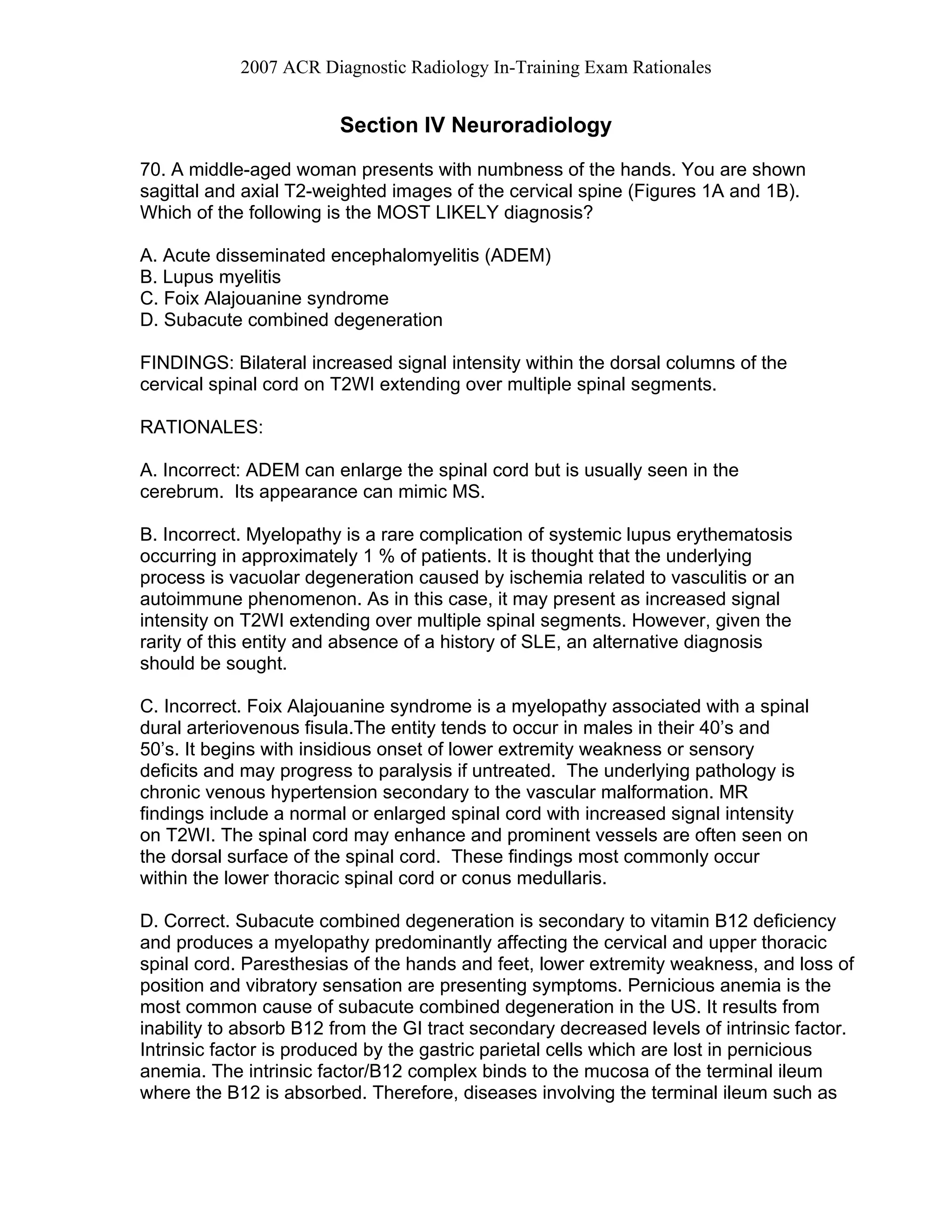
70. A middle-aged woman presents with numbness of the hands. You are shown
sagittal and axial T2-weighted images of the cervical spine (Figures 1A and 1B).
Which of the following is the MOST LIKELY diagnosis?
A. Acute disseminated encephalomyelitis (ADEM)
B. Lupus myelitis
C. Foix Alajouanine syndrome
D. Subacute combined degeneration
FINDINGS: Bilateral increased signal intensity within the dorsal columns of the
cervical spinal cord on T2WI extending over multiple spinal segments.
RATIONALES:
A. Incorrect: ADEM can enlarge the spinal cord but is usually seen in the
cerebrum. Its appearance can mimic MS.
B. Incorrect. Myelopathy is a rare complication of systemic lupus erythematosis
occurring in approximately 1 % of patients. It is thought that the underlying
process is vacuolar degeneration caused by ischemia related to vasculitis or an
autoimmune phenomenon. As in this case, it may present as increased signal
intensity on T2WI extending over multiple spinal segments. However, given the
rarity of this entity and absence of a history of SLE, an alternative diagnosis
should be sought.
C. Incorrect. Foix Alajouanine syndrome is a myelopathy associated with a spinal
dural arteriovenous fisula.The entity tends to occur in males in their 40’s and
50’s. It begins with insidious onset of lower extremity weakness or sensory
deficits and may progress to paralysis if untreated. The underlying pathology is
chronic venous hypertension secondary to the vascular malformation. MR
findings include a normal or enlarged spinal cord with increased signal intensity
on T2WI. The spinal cord may enhance and prominent vessels are often seen on
the dorsal surface of the spinal cord. These findings most commonly occur
within the lower thoracic spinal cord or conus medullaris.
D. Correct. Subacute combined degeneration is secondary to vitamin B12 deficiency
and produces a myelopathy predominantly affecting the cervical and upper thoracic
spinal cord. Paresthesias of the hands and feet, lower extremity weakness, and loss of
position and vibratory sensation are presenting symptoms. Pernicious anemia is the
most common cause of subacute combined degeneration in the US. It results from
inability to absorb B12 from the GI tract secondary decreased levels of intrinsic factor.
Intrinsic factor is produced by the gastric parietal cells which are lost in pernicious
anemia. The intrinsic factor/B12 complex binds to the mucosa of the terminal ileum
where the B12 is absorbed. Therefore, diseases involving the terminal ileum such as
2007 ACR Diagnostic Radiology In-Training Exam Rationales
Crohn’s disease and tropical sprue may also produce subacute combined degeneration.
Gastrectomy and resection of the terminal ileum are additional causes. The MR findings
are increased signal intensity within the dorsal columns bilaterally. Many entities may
produce increased signal intensity within the dorsal columns on T2WI but the history in
this case should lead to the correct diagnosis.
References: 1. Grossman and Yousem, Neuroradiology Requisites 2nd
edition,
Mosby, Phildaelphia 2003
2. Bowen, Case Review Spine Imaging, Mosby, Philadelphia 2001
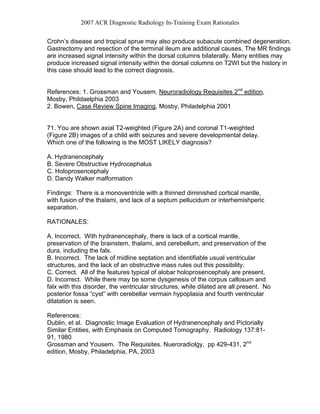
71. You are shown axial T2-weighted (Figure 2A) and coronal T1-weighted
(Figure 2B) images of a child with seizures and severe developmental delay.
Which one of the following is the MOST LIKELY diagnosis?
A. Hydranencephaly
B. Severe Obstructive Hydrocephalus
C. Holoprosencephaly
D. Dandy Walker malformation
Findings: There is a monoventricle with a thinned diminished cortical mantle,
with fusion of the thalami, and lack of a septum pellucidum or interhemishperic
separation.
RATIONALES:
A. Incorrect. With hydranencephaly, there is lack of a cortical mantle,
preservation of the brainstem, thalami, and cerebellum, and preservation of the
dura, including the falx.
B. Incorrect. The lack of midline septation and identifiable usual ventricular
structures, and the lack of an obstructive mass rules out this possibility.
C. Correct. All of the features typical of alobar holoprosencephaly are present.
D. Incorrect. While there may be some dysgenesis of the corpus callosum and
falx with this disorder, the ventricular structures, while dilated are all present. No
posterior fossa “cyst” with cerebellar vermain hypoplasia and fourth ventricular
dilatation is seen.
References:
Dublin, et al. Diagnostic Image Evaluation of Hydranencephaly and Pictorially
Similar Entities, with Emphasis on Computed Tomography. Radiology 137:81-
91, 1980
Grossman and Yousem. The Requisites. Nueroradiolgy. pp 429-431, 2nd
edition, Mosby, Philadelphia, PA, 2003
2007 ACR Diagnostic Radiology In-Training Exam Rationales
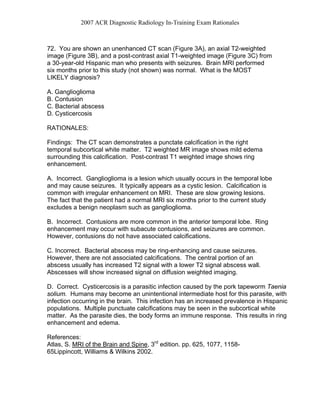
72. You are shown an unenhanced CT scan (Figure 3A), an axial T2-weighted
image (Figure 3B), and a post-contrast axial T1-weighted image (Figure 3C) from
a 30-year-old Hispanic man who presents with seizures. Brain MRI performed
six months prior to this study (not shown) was normal. What is the MOST
LIKELY diagnosis?
A. Ganglioglioma
B. Contusion
C. Bacterial abscess
D. Cysticercosis
RATIONALES:
Findings: The CT scan demonstrates a punctate calcification in the right
temporal subcortical white matter. T2 weighted MR image shows mild edema
surrounding this calcification. Post-contrast T1 weighted image shows ring
enhancement.
A. Incorrect. Ganglioglioma is a lesion which usually occurs in the temporal lobe
and may cause seizures. It typically appears as a cystic lesion. Calcification is
common with irregular enhancement on MRI. These are slow growing lesions.
The fact that the patient had a normal MRI six months prior to the current study
excludes a benign neoplasm such as ganglioglioma.
B. Incorrect. Contusions are more common in the anterior temporal lobe. Ring
enhancement may occur with subacute contusions, and seizures are common.
However, contusions do not have associated calcifications.
C. Incorrect. Bacterial abscess may be ring-enhancing and cause seizures.
However, there are not associated calcifications. The central portion of an
abscess usually has increased T2 signal with a lower T2 signal abscess wall.
Abscesses will show increased signal on diffusion weighted imaging.
D. Correct. Cysticercosis is a parasitic infection caused by the pork tapeworm Taenia
solium. Humans may become an unintentional intermediate host for this parasite, with
infection occurring in the brain. This infection has an increased prevalence in Hispanic
populations. Multiple punctuate calcifications may be seen in the subcortical white
matter. As the parasite dies, the body forms an immune response. This results in ring
enhancement and edema.
References:
Atlas, S. MRI of the Brain and Spine, 3rd
edition. pp. 625, 1077, 1158-
65Lippincott, Williams & Wilkins 2002.
2007 ACR Diagnostic Radiology In-Training Exam Rationales
“Diffusion-weighted MR imaging in the preoperative assessment of brain
abscesses.” Leuthardt EC, Wippold FJ 2nd, Oswood MC, Rich KM. Surg
Neurol. 2002 Dec;58(6):395-402.
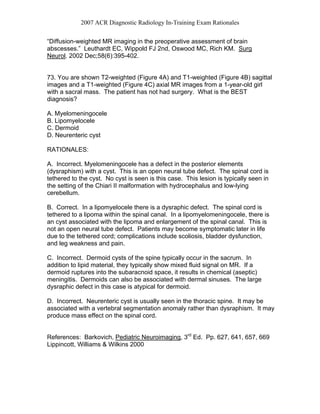
73. You are shown T2-weighted (Figure 4A) and T1-weighted (Figure 4B) sagittal
images and a T1-weighted (Figure 4C) axial MR images from a 1-year-old girl
with a sacral mass. The patient has not had surgery. What is the BEST
diagnosis?
A. Myelomeningocele
B. Lipomyelocele
C. Dermoid
D. Neurenteric cyst
RATIONALES:
A. Incorrect. Myelomeningocele has a defect in the posterior elements
(dysraphism) with a cyst. This is an open neural tube defect. The spinal cord is
tethered to the cyst. No cyst is seen is this case. This lesion is typically seen in
the setting of the Chiari II malformation with hydrocephalus and low-lying
cerebellum.
B. Correct. In a lipomyelocele there is a dysraphic defect. The spinal cord is
tethered to a lipoma within the spinal canal. In a lipomyelomeningocele, there is
an cyst associated with the lipoma and enlargement of the spinal canal. This is
not an open neural tube defect. Patients may become symptomatic later in life
due to the tethered cord; complications include scoliosis, bladder dysfunction,
and leg weakness and pain.
C. Incorrect. Dermoid cysts of the spine typically occur in the sacrum. In
addition to lipid material, they typically show mixed fluid signal on MR. If a
dermoid ruptures into the subaracnoid space, it results in chemical (aseptic)
meningitis. Dermoids can also be associated with dermal sinuses. The large
dysraphic defect in this case is atypical for dermoid.
D. Incorrect. Neurenteric cyst is usually seen in the thoracic spine. It may be
associated with a vertebral segmentation anomaly rather than dysraphism. It may
produce mass effect on the spinal cord.
References: Barkovich, Pediatric Neuroimaging, 3rd
Ed. Pp. 627, 641, 657, 669
Lippincott, Williams & Wilkins 2000
2007 ACR Diagnostic Radiology In-Training Exam Rationales
74. You are shown axial T2-weighted (Figure 5A) and pre-contrast (Figure 5B)
and post-contrast (Figure 5C) axial T1-weighted MR images from a 42–year-old
man with painless proptosis. What is the MOST LIKELY diagnosis?
A. Optic glioma
B. Hemangioma
C. Meningioma
D. Pseudotumor
RATIONALES:
A. Incorrect. Optic glioma is an astrocytoma of the optic nerves usually
associated with neurofibromatosis type I. This lesion is usually seen in
childhood. The mass in this case is separate from the optic nerve.
B. Correct. Cavernous hemangioma (venous vascular malformation) is the most
common intraconal tumor in adults. The mass shows increased T2 signal and
contrast enhancement, and has a lobulated appearance.
C. Incorrect. Meningioma of the orbit occurs in the optic nerve sheath. The
tumor will typically show a thickening of the optic nerve with linear peripheral
enhancement..
D. Incorrect. Inflammatory pseudotumor may affect the intraconal fat, extraocular
muscles, optic nerve or globe. This lesion may have a mass-like appearance.
However, pseudotumor is usually quite painful and responds rapidly to steroid therapy.
References: Harnsberger, Handbook of Head and Neck Imaging pp. 327, 329,
332, 2nd
Ed. 1995, Mosby.
2007 ACR Diagnostic Radiology In-Training Exam Rationales
75. An 8-year-old girl presents for evaluation of sensorineural hearing loss. You
are shown an axial CT image (Figure 6). Which of the following is the MOST
LIKELY diagnosis?
A. Cock’s deformity
B. Enlarged vestibular aqueduct syndrome
C. Michel’s aplasia
D. Mondini malformation
RATIONALES:
FINDINGS: Bilateral enlargement of the vestibular aqueduct.
A. Incorrect. Cock’s deformity is the second most common cohlear malformation
occurring at 4-5 weeks gestation. The cochlea and vestibule form a common
cavity. The semicircular canals may or may not be involved.
B. Correct. Enlarged vestibular aqueduct syndrome is the most common cause
of congenital sensorineural hearing loss. The midportion of the normal vestibular
aqueduct should measure 1.5mm or less in diameter. The incidence of
associated cohlear abnormality is near 100%. The condition is bilateral in
approximately 90% of cases.
C. Incorrect. Michel’s aplasia is used to describe total aplasia of inner structures.
This is due to a defect in otic placode development during the third gestational
week.
D. Incorrect. Mondini malformation is the most common cochlear congenital anomaly.
Occurring during the 7th
to 8th
gestational weeks, it consists of incomplete development
of the cochlea. While the basal turn is relatively normal, the middle and apical turns
often form a common cavity.
References: 1. Grossman and Yousem, Neuroradiology Requisites 2nd
edition,
Mosby, Phildaelphia 2003
2. Yousem and da Motta, Case Review Head and Neck Imaging, 2nd
edition,
Mosby, Philadelphia 2006
2007 ACR Diagnostic Radiology In-Training Exam Rationales
76. A series of single-slice axial CT images are acquired with 5 mm slice
thickness and 5 mm slice spacing. The study is repeated in a helical mode with
a 5mm slice thickness, 7.5 mm table motion per rotation, with reconstructed
images every 2 mm. What is the ratio of the average patient dose in the helical
study to that in the axial study?
A. 0.40
B. 0.67
C. 1.5
D. 2.5
RATIONALES:
A. Incorrect. See the explanation above
B. Correct. The pitch is 1.5 for the helical scan with 7.5 mm table motion per rotation
and 5 mm collimated slice. This is a gap-like technique and would result in a dose of
1/pitch or 1/(1.5) or 0.67 of that of a procedure with a pitch of one, or of an axial series
of contiguous slices.
C. Incorrect. Higher pitch implies reduced dose
D. Incorrect. Reconstructed slice spacing does not affect dose.
References:
Physics of Radiology, 2nd edition. Anthony Brinton Wolbarst, Medical Physics
Publishing, Madison WI (2005), Chap 40, p418.
2007 ACR Diagnostic Radiology In-Training Exam Rationales
77. Sturge-Weber syndrome is associated with which of the following?
A. Autosomal dominant inheritance
B. Neuronal migration anomalies
C. Lisch nodules
D. Dyke Davidoff Masson syndrome
RATIONALES:
A. Incorrect. Unlike most of the neurocutaneous syndromes, Sturge Weber
syndrome (SWS) occurs sporadically. There is an approximately equal male-
female distribution.
B. Incorrect. Neuronal migration anomalies are not a feature of SWS. They may
be seen in a variety of conditions including schizencephaly, holoprosencepahly,
and in utero CMV infection.
C. Incorrect. Lisch nodules (iris hamartomas) are a feature of NF1. The ocular
findings of SWS include choroidal angioma, glaucoma, and buphthalmos.
D. Correct. Dyke Davidoff Masson syndrome consists of unilateral calvarial thickening,
elevation of the ipsilateral petrous ridge and sphenoid wing and ipsilateral enlargement
of the frontal sinus. This is secondary to a cerebral insult that occurs in utero or early in
life. The leptomeningeal angiomatosis of SWS is associated with underlying cerebral
hemiatrophy and thus the association with Dyke Davidoff Masson syndrome.
References: Grossman and Yousem, Neuroradiology Requisites 2nd
edition, Mosby,
Phildaelphia 2003
2007 ACR Diagnostic Radiology In-Training Exam Rationales
78. Intrauterine CMV infection is MOST often associated with:
A. septooptic dysplasia
B. subcortical calcifications
C. subcortical tubers
D. periventricular calcifications
RATIONALES:
A. Incorrect. Septooptic dysplasia is not associated with congenital infections. It
is probably best thought of as a very mild form of holoprosencephaly. It consists
of complete or partial absence of the septum pellucidum. The optic nerves and
chiasm are usually small. Schizencephaly and neuronal migrational anomalies
are frequently associated with septooptic dysplasia.
B. Incorrect. Although congenital CMV infection can produce subcortical
calcifications, the periventricular location is more common.
C. Incorrect. These lesions are the hallmark of Tuberosclerosis.
D. Correct. The most common congenital CNS infection, CMV can produce
calcifications in a variety of parenchymal locations. However, the periventricular location
is most common. Neuronal migration anomalies and subependymal cysts may also be
seen.
References: Grossman and Yousem, Neuroradiology Requisites 2nd
edition,
Mosby, Phildaelphia 2003
2007 ACR Diagnostic Radiology In-Training Exam Rationales
79. Malignant otitis externa is associated with which of the following?
A. Poorly controlled diabetes
B. Nasopharyngeal carcinoma
C. Grisel syndrome
D. Squamous cell carcinoma
RATIONALES:
A. Correct. Malignant otitis externa is a Pseudomonas aeruginosa infection of the
external auditory canal seen most frequently in elderly poorly controlled
diabetics. The infection is typically very aggressive and difficult to control.
Extension to involve the skull base, nasopharyngeal masticator space, middle
ear cavity and adjacent structures is common. Lower cranial nerve palsies and
venous sinus thrombosis may also be seen.
B. Incorrect. Nasopharyngeal carcinoma is unrelated to malignant otitis eterna.
There are three types of nasopharyngeal carcinoma: squamous cell,
nonkeratinizing, and undifferentiated. The nonkeratinizing and undifferentiated
types are the most common and account for the majority of cases.
Undifferentiated nasopharyngeal carcinoma is especially prevalent in young
Southeast Asian adults and persons of Southeast Asian descent. Non Asian
nasopharyngeal carcinoma patients tend to be older (40-60 years) and have a
higher incidence of nonkeratinizing and squamous cell carcinomas.
C. Incorrect. Grisel syndrome is C1-2 rotary subluxation associated with recent
head and neck surgery or upper respiratory tract infection. The mechanism is
controversial.
D. Incorrect. Squamous cell carcinoma is unrelated to malignant otitis externa but can
occur in the external auditory canal. Squamous cell carcinoma of the external auditory
canal is usually preceded by chronic ear infection. It occurs most commonly in females
and has a mortality rate of approximately 50%.
References: 1. Grossman and Yousem, Neuroradiology Requisites 2nd
edition,
Mosby, Phildaelphia 2003
2. Som and Curtin, Head and Neck Imaging 3rd
edition, Mosby, Phil
2007 ACR Diagnostic Radiology In-Training Exam Rationales
80. Tolosa-Hunt syndrome is MOST closely related to:
A. orbital pseudotumor
B. Wegener’s granulomatosis
C. posttransplant lymphoproliferative disorder
D. sarcoidosis
RATIONALES:
A. Correct. Tolosa Hunt syndrome is an idiopathic inflammatory process involving
the orbital apex and/or the cavernous sinus. It is histologically identical to orbital
pseudotumor. Commonly presenting with retroorbital pain and multiple cavernous
sinus cranial nerve palsies, it is rapidly responsive to steroid therapy.
B. Incorrect. Wegener’s granulomatosis is a necrotizing granulomatous
inflammatory process which may involve the orbit and paranasal sinuses. It is
either transiently responsive or nonresponsive to steroid therapy. Antineutrophil
cytoplasmic antibodies (ANCA) are sensitive indicators of the entity.
C. Incorrect. Posttransplant lymphoproliferative disorder occurs in a small
percentage of patients following organ transplantation. It likely is incited by
Ebstein Barr virus infection which leads to a proliferation of the B cell population.
In these immunosuppressed patients, this proliferation is unopposed secondary
to a deficiency in the T cell population. A spectrum of disease results which
ranges from adenopathy and lymphoid tissue hypertrophy to lymphoma.
D. Incorrect. Sarcoidosis is a granulomatous disease of unknown etiology. CNS
involvement occurs in a minority of cases. It can present in a number of ways including
dural based mass, leptomeningeal mass/enhancement, and intraaxial mass. Orbital
involvement including uveitis and orbital masses can also occur.
References: 1. Grossman and Yousem, Neuroradiology Requisites 2nd
edition,
Mosby, Phildaelphia 2003
2. Som and Curtin, Head and Neck Imaging 3rd
edition, Mosby, Philadelphia
1996
2007 ACR Diagnostic Radiology In-Training Exam Rationales
81. Which of the following may be a complication of prior radiation therapy?
A. Arteriovenous malformation
B. Cavernous malformation
C. Hemangioblastoma
D. Medulloblastoma
RATIONALES:
A. Incorrect. Although some vascular malformations may develop as a result of
prior radiation therapy, true arteriovenous malformations are not a known
complication of radiation therapy.
B. Correct. The development of cavernous angiomas and/or capillary
telangiectasias is a known delayed complication of radiation therapy.
Development of venous angiomas and arteriovenous malformations is not known
to be a complication of prior radiation therapy.
C. Incorrect. Development of hemangioblastoma is not a known complication of
radiation therapy. However, development of neoplasms is a known late delayed
complication of radiation therapy. Meningioma, sarcoma, and astrocytoma are
the most common of the radiation induced neoplasms.
D. Incorrect. Development of medulloblastoma is not a known complication of radiation
therapy.
References: 1. Rajan et al Radiation induced cavernomas of the brain AJNR
26:1158-1162
2. Kado et al Radiation induced meningioma evaluated with positron
emission tomography with fludeoxyglucose F 18 AJNR 17:937-938
2007 ACR Diagnostic Radiology In-Training Exam Rationales
82. Concerning persistent trigeminal artery, which of the following is TRUE?
A. Less common than a persistent hypoglossal artery
B. Associated with intracranial aneurysms
C. Occurs in 5% of the population
D. Passes through foramen rotundum
RATIONALES:
A. Incorrect. Persistent trigeminal artery is the most common persistent carotid-
basilar anastomosis. Persistent hypoglossal artery is the second most common
persistent carotid-basilar anastomosis with a prevalence of 0.027% to 0.26%.
B. Correct. Persistent trigeminal artery is associated with an increased incidence
of other vascular anomalies including aneurysms. Intracranial aneurysms are
found in approximately 14% of cases of persistent trigeminal artery.
C. Incorrect. Persistent trigeminal artery occurs in 0.02% to 0.6% of cerebral
angiograms.
D. Incorrect. Persistent trigeminal artery arises from the cavernous segment of the
internal carotid artery and courses posteriorly following either a parasellar or intrasellar
course anastomosing with the basilar artery.
References:
Osborn, Diagnostic Cerebral Angiography, Lippincott Williams and Wilkins,
Philadelphia 1999
83. Regarding sinonasal mucoceles, which of the following is TRUE?
A. Mucoceles are most commonly found in the sphenoid sinus
B. Mucoceles may have an enhancing rim rather than interior enhancement, the
latter more typical of a neoplasm.
C. Mucoceles may vary in MRI signal, but commonly have decreased signal on
T1WI and T2WI.
D. Mucoceles are the result of chronic infection; therefore the size of the sinus is
smaller than normal.
RATIONALES:
A. Incorrect:Frontal and Ethmoid Sinuses are more common
B. Correct: Mucoceles have an enhancing rim whereas tumors have more
solid enhancement.
C. Incorrect: Mucoceles typically have increased T1 signal on MR
D. Incorrect: Mucoceles are associated with an expanded enlarged sinus
2007 ACR Diagnostic Radiology In-Training Exam Rationales
:
Grossman and Yousem. The Requisites. Neuroradiology, pp 510, 628, 2nd
edition, Mosby, Philadelphia, PA, 2003.
84. Regarding Chiari I malformations, which of the following is TRUE?
A. Tonsilar position more than one mm below the foramen magnum is suspicious
for Chiari I malformation.
B. There is an association with Klippel-Feil syndrome.
C. The incidence of syringomyelia in symptomatic patients with greater than 5mm
of tonsillar ectopia is 5%.
D. Meningomyelocele is a common association
RATIONALES:
A. Incorrect. The accepted measurement for Chiari I malformation in the average
adult is tonsillar ectopia of greater than 5 mm below the foramen magnum.
B. Correct. This is a correct statement
C. Incorrect. The incidence of syringomyelia in these patients is much higher, as
much as 53%
D. Incorrect. Meningomelocele is a feature of Chiari II not Chiari I
References: Grossman and Yousem. The Requisites. Neuroradiology. pp 436,
2nd
edition, Mosby, Philadelphia, PA, 2003.
2007 ACR Diagnostic Radiology In-Training Exam Rationales
85. Regarding Diffuse Axonal Injury, which of the following statements is TRUE?
A. It is responsible for coma and poor outcomes in head trauma patients.
B. CT is the diagnostic test of choice.
C. Involvement of the corpus callosum is unusual.
D. A “honeymoon” period of lucidity is encountered at the time of initial
presentation.
Rationales
A. Correct. As stated in the question, DAI is associated with axonal disruption
leading to coma and poor outcome
B. Incorrect. MR is the test of choice to evaluate the White matter as CT can
miss non hemorrhagic and subtle hemorrhagic shear injuries
C. Incorrect. Involvement of the corpus callosum is common
D. Incorrect. This describes patients with epidural hematomas not DAI
References: Grossman and Yousem. The Requisites. Neuroradiology. pp 257-
258, 2nd
edition, Mosby, Philadelphia, PA 2003.
86. Regarding Dandy-Walker malformation:
A. the vermis is intact.
B. associated supratentorial anomalies are common.
C. a good prognosis is frequently encountered.
D. the falx cerebelli is present.
RATIONALES:
A. Incorrect. The vermis is always absent or very hypoplastic with Dandy-
Walker.
B. Correct. Supratentorial anomalies are common.
C. Incorrect. The prognosis is poor with this malformation.
D. Incorrect. The falx cerebelli is absent.
References: Grossman and Yousem. The Requisites. Neuroradiology. pp 432-
434, 2nd
edition, Mosby, Philadelphia, PA 2003.
2007 ACR Diagnostic Radiology In-Training Exam Rationales
87. Which of the following is the most common type of vascular malformation
involving the spine?
A. Dural arteriovenous fistula
B. Glomus arteriovenous malformation
C. Juvenile arteriovenous malformation
D. Aneurysm
RATIONALES:
A. Correct.This is the most common vascular malformation in the spine. These
lesions typically present with paraplegia. MR shows spinal cord edema, with
variable visualization of enlarged vessels. Angiography demonstrates an
enlarged draining vein on the surface of the cord. Patients present with
progressive lower extremity weakness due to venous hypertension.
B. Incorrect.These uncommon lesions are similar to parenchymal AVM’s seen in
the brain. They usually present after hemorrhage.
C. Incorrect.These unusual lesions are extensive AVM’s which are both intra
and extra dural. They are extensive lesions which involve skin, muscle and bone
in addition to spinal cord.
D. Incorrect. Aneurysms are rare in the spine, with only scattered case reports.
References: “Modified classification of spinal cord vascular lesions.” Spetzler, et
al. J Neurosurg. 2002 Mar;96(2 Suppl):145-56.
2007 ACR Diagnostic Radiology In-Training Exam Rationales
88. Devic’s disease is characterized by demyelinating lesions in which anatomic
locations?
A. Periventricular white matter and cerebellum
B. Periaqueductal gray matter and corpus callosum
C. Midbrain and pons
D. Optic nerves and spinal cord
RATIONALES:
A. Incorrect. This is the classic pattern for multiple sclerosis. Flame shaped
lesions (Dawson’s fingers) are seen in the periventricular white matter of the
cerebral hemispheres. Spinal cord involvement and optic neuritis may also
occur, but the cerebral white matter disease is dominant in most cases.
B. Incorrect. This is also a classic pattern for multiple sclerosis.
C. Incorrect. The brainstem is spared in Devic’s disease. This is the pattern
seen in osmotic demyelination (central pontine myelinolysis) related to rapid
correction of hyponatremia.
D. Correct. Devic’s disease involves optic neuritis and transverse myelitis. Lesions
may occur simultaneously or separated in time. Demyelinating lesions are not found in
the cerebral white matter. CSF does not demonstrate the monoclonal bands typical of
MS.
References: Atlas, S. MRI of the Brain and Spine, 3rd
edition. pp. 466, 473, 504
Lippincott, Williams & Wilkins 2002.
2007 ACR Diagnostic Radiology In-Training Exam Rationales
89. The MOST common location of chordomas is the:
A. clivus
B. sacrum
C. cervical Spine
D. lumbar Spine
RATIONALES:
A. Incorrect: This is the second most common location at about 35%
B. Correct: This is the most common location at 50%
C. Incorrect: Third most common location at 15%
D. Incorrect: The least common of those mentioned.
References: Bowen, Brian: Case Review, Spine Imaging; Mosby, Philadelphia,
Pa. 2001 p.172
2007 ACR Diagnostic Radiology In-Training Exam Rationales
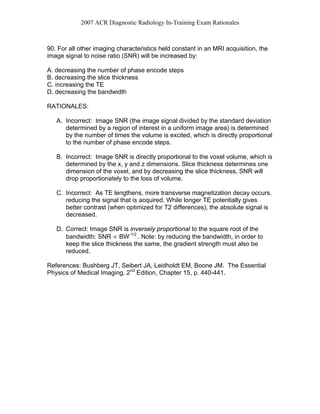
90. For all other imaging characteristics held constant in an MRI acquisition, the
image signal to noise ratio (SNR) will be increased by:
A. decreasing the number of phase encode steps
B. decreasing the slice thickness
C. increasing the TE
D. decreasing the bandwidth
RATIONALES:
A. Incorrect: Image SNR (the image signal divided by the standard deviation
determined by a region of interest in a uniform image area) is determined
by the number of times the volume is excited, which is directly proportional
to the number of phase encode steps.
B. Incorrect: Image SNR is directly proportional to the voxel volume, which is
determined by the x, y and z dimensions. Slice thickness determines one
dimension of the voxel, and by decreasing the slice thickness, SNR will
drop proportionately to the loss of volume.
C. Incorrect: As TE lengthens, more transverse magnetization decay occurs,
reducing the signal that is acquired. While longer TE potentially gives
better contrast (when optimized for T2 differences), the absolute signal is
decreased.
D. Correct: Image SNR is inversely proportional to the square root of the
bandwidth: SNR ∝ BW-1/2
. Note: by reducing the bandwidth, in order to
keep the slice thickness the same, the gradient strength must also be
reduced.
References: Bushberg JT, Seibert JA, Leidholdt EM, Boone JM. The Essential
Physics of Medical Imaging, 2nd
Edition, Chapter 15, p. 440-441.
2007 ACR Diagnostic Radiology In-Training Exam Rationales
91. Regarding MR Spectroscopy of intracranial lesions, which of the following is
TRUE?
A. An elevated choline to creatine ratio is suspicious for tumor.
B. An elevated myo-nositol peak is consistent with a high-grade neoplasm.
C. The presence of lactate favors low-grade over high-grade tumors.
D. A decreased NAA peak is seen in Canavan’s disease.
RATIONALES:
A. Correct. An eleveated choline to creatine ratio is a marker for tumor. It is an
indicator of high membrane turnover.
B. Incorrect. Myonositol is not elevated in high grade tumors. Isolated reports
exist of elevated Myonositol with low grade tumors
C. Incorrect. Lactate is a marker of necrosis which is an indicator of a higher
grade leaion
D. Incorrect. A markedly elevated NAA,IS SEEN IN CANAVAN’S DISEASE
References:Brandao, Laura;MR Spectroscopy of the Brain
Lippincott 2004
92. Regarding retinoblastoma, which of the following is TRUE?
A. Occular calcification is seen in 50% of patients.
B. Signal on MR is increased on T1WI and increased on T2WI.
C. The involved globe is smaller than normal.
D. It is the most common ocular malignancy of infancy.
RATIONALES:
A. Incorrect: Calcifications are seen in greater than 90% of patients
B. Incorrect: Signal on MR is increased on T1 and decreased on T2
C. Incorrect: The involved globe is normal in size. This helps differentiate
retinoblastoma from other entities that involve calcification of the globe including
retinopathy of prematurity, Coat’s disease and phthisis bulbi which are all
associated with a small globe.
D. Correct: Retinoblastomas are the most common ocular malignancy of infancy
2007 ACR Diagnostic Radiology In-Training Exam Rationales
References: Yousem, David M., Da Motta, Ana Carolina: Head and Neck
Imaging Case Review Series, Mosby, Philadelphia, PA 2006 p. 109

23205056

  • 1.
    2007 ACR DiagnosticRadiology In-Training Exam Rationales Section IV Neuroradiology 70. A middle-aged woman presents with numbness of the hands. You are shown sagittal and axial T2-weighted images of the cervical spine (Figures 1A and 1B). Which of the following is the MOST LIKELY diagnosis? A. Acute disseminated encephalomyelitis (ADEM) B. Lupus myelitis C. Foix Alajouanine syndrome D. Subacute combined degeneration FINDINGS: Bilateral increased signal intensity within the dorsal columns of the cervical spinal cord on T2WI extending over multiple spinal segments. RATIONALES: A. Incorrect: ADEM can enlarge the spinal cord but is usually seen in the cerebrum. Its appearance can mimic MS. B. Incorrect. Myelopathy is a rare complication of systemic lupus erythematosis occurring in approximately 1 % of patients. It is thought that the underlying process is vacuolar degeneration caused by ischemia related to vasculitis or an autoimmune phenomenon. As in this case, it may present as increased signal intensity on T2WI extending over multiple spinal segments. However, given the rarity of this entity and absence of a history of SLE, an alternative diagnosis should be sought. C. Incorrect. Foix Alajouanine syndrome is a myelopathy associated with a spinal dural arteriovenous fisula.The entity tends to occur in males in their 40’s and 50’s. It begins with insidious onset of lower extremity weakness or sensory deficits and may progress to paralysis if untreated. The underlying pathology is chronic venous hypertension secondary to the vascular malformation. MR findings include a normal or enlarged spinal cord with increased signal intensity on T2WI. The spinal cord may enhance and prominent vessels are often seen on the dorsal surface of the spinal cord. These findings most commonly occur within the lower thoracic spinal cord or conus medullaris. D. Correct. Subacute combined degeneration is secondary to vitamin B12 deficiency and produces a myelopathy predominantly affecting the cervical and upper thoracic spinal cord. Paresthesias of the hands and feet, lower extremity weakness, and loss of position and vibratory sensation are presenting symptoms. Pernicious anemia is the most common cause of subacute combined degeneration in the US. It results from inability to absorb B12 from the GI tract secondary decreased levels of intrinsic factor. Intrinsic factor is produced by the gastric parietal cells which are lost in pernicious anemia. The intrinsic factor/B12 complex binds to the mucosa of the terminal ileum where the B12 is absorbed. Therefore, diseases involving the terminal ileum such as
  • 2.
    2007 ACR DiagnosticRadiology In-Training Exam Rationales Crohn’s disease and tropical sprue may also produce subacute combined degeneration. Gastrectomy and resection of the terminal ileum are additional causes. The MR findings are increased signal intensity within the dorsal columns bilaterally. Many entities may produce increased signal intensity within the dorsal columns on T2WI but the history in this case should lead to the correct diagnosis. References: 1. Grossman and Yousem, Neuroradiology Requisites 2nd edition, Mosby, Phildaelphia 2003 2. Bowen, Case Review Spine Imaging, Mosby, Philadelphia 2001 71. You are shown axial T2-weighted (Figure 2A) and coronal T1-weighted (Figure 2B) images of a child with seizures and severe developmental delay. Which one of the following is the MOST LIKELY diagnosis? A. Hydranencephaly B. Severe Obstructive Hydrocephalus C. Holoprosencephaly D. Dandy Walker malformation Findings: There is a monoventricle with a thinned diminished cortical mantle, with fusion of the thalami, and lack of a septum pellucidum or interhemishperic separation. RATIONALES: A. Incorrect. With hydranencephaly, there is lack of a cortical mantle, preservation of the brainstem, thalami, and cerebellum, and preservation of the dura, including the falx. B. Incorrect. The lack of midline septation and identifiable usual ventricular structures, and the lack of an obstructive mass rules out this possibility. C. Correct. All of the features typical of alobar holoprosencephaly are present. D. Incorrect. While there may be some dysgenesis of the corpus callosum and falx with this disorder, the ventricular structures, while dilated are all present. No posterior fossa “cyst” with cerebellar vermain hypoplasia and fourth ventricular dilatation is seen. References: Dublin, et al. Diagnostic Image Evaluation of Hydranencephaly and Pictorially Similar Entities, with Emphasis on Computed Tomography. Radiology 137:81- 91, 1980 Grossman and Yousem. The Requisites. Nueroradiolgy. pp 429-431, 2nd edition, Mosby, Philadelphia, PA, 2003
  • 3.
    2007 ACR DiagnosticRadiology In-Training Exam Rationales 72. You are shown an unenhanced CT scan (Figure 3A), an axial T2-weighted image (Figure 3B), and a post-contrast axial T1-weighted image (Figure 3C) from a 30-year-old Hispanic man who presents with seizures. Brain MRI performed six months prior to this study (not shown) was normal. What is the MOST LIKELY diagnosis? A. Ganglioglioma B. Contusion C. Bacterial abscess D. Cysticercosis RATIONALES: Findings: The CT scan demonstrates a punctate calcification in the right temporal subcortical white matter. T2 weighted MR image shows mild edema surrounding this calcification. Post-contrast T1 weighted image shows ring enhancement. A. Incorrect. Ganglioglioma is a lesion which usually occurs in the temporal lobe and may cause seizures. It typically appears as a cystic lesion. Calcification is common with irregular enhancement on MRI. These are slow growing lesions. The fact that the patient had a normal MRI six months prior to the current study excludes a benign neoplasm such as ganglioglioma. B. Incorrect. Contusions are more common in the anterior temporal lobe. Ring enhancement may occur with subacute contusions, and seizures are common. However, contusions do not have associated calcifications. C. Incorrect. Bacterial abscess may be ring-enhancing and cause seizures. However, there are not associated calcifications. The central portion of an abscess usually has increased T2 signal with a lower T2 signal abscess wall. Abscesses will show increased signal on diffusion weighted imaging. D. Correct. Cysticercosis is a parasitic infection caused by the pork tapeworm Taenia solium. Humans may become an unintentional intermediate host for this parasite, with infection occurring in the brain. This infection has an increased prevalence in Hispanic populations. Multiple punctuate calcifications may be seen in the subcortical white matter. As the parasite dies, the body forms an immune response. This results in ring enhancement and edema. References: Atlas, S. MRI of the Brain and Spine, 3rd edition. pp. 625, 1077, 1158- 65Lippincott, Williams & Wilkins 2002.
  • 4.
    2007 ACR DiagnosticRadiology In-Training Exam Rationales “Diffusion-weighted MR imaging in the preoperative assessment of brain abscesses.” Leuthardt EC, Wippold FJ 2nd, Oswood MC, Rich KM. Surg Neurol. 2002 Dec;58(6):395-402. 73. You are shown T2-weighted (Figure 4A) and T1-weighted (Figure 4B) sagittal images and a T1-weighted (Figure 4C) axial MR images from a 1-year-old girl with a sacral mass. The patient has not had surgery. What is the BEST diagnosis? A. Myelomeningocele B. Lipomyelocele C. Dermoid D. Neurenteric cyst RATIONALES: A. Incorrect. Myelomeningocele has a defect in the posterior elements (dysraphism) with a cyst. This is an open neural tube defect. The spinal cord is tethered to the cyst. No cyst is seen is this case. This lesion is typically seen in the setting of the Chiari II malformation with hydrocephalus and low-lying cerebellum. B. Correct. In a lipomyelocele there is a dysraphic defect. The spinal cord is tethered to a lipoma within the spinal canal. In a lipomyelomeningocele, there is an cyst associated with the lipoma and enlargement of the spinal canal. This is not an open neural tube defect. Patients may become symptomatic later in life due to the tethered cord; complications include scoliosis, bladder dysfunction, and leg weakness and pain. C. Incorrect. Dermoid cysts of the spine typically occur in the sacrum. In addition to lipid material, they typically show mixed fluid signal on MR. If a dermoid ruptures into the subaracnoid space, it results in chemical (aseptic) meningitis. Dermoids can also be associated with dermal sinuses. The large dysraphic defect in this case is atypical for dermoid. D. Incorrect. Neurenteric cyst is usually seen in the thoracic spine. It may be associated with a vertebral segmentation anomaly rather than dysraphism. It may produce mass effect on the spinal cord. References: Barkovich, Pediatric Neuroimaging, 3rd Ed. Pp. 627, 641, 657, 669 Lippincott, Williams & Wilkins 2000
  • 5.
    2007 ACR DiagnosticRadiology In-Training Exam Rationales 74. You are shown axial T2-weighted (Figure 5A) and pre-contrast (Figure 5B) and post-contrast (Figure 5C) axial T1-weighted MR images from a 42–year-old man with painless proptosis. What is the MOST LIKELY diagnosis? A. Optic glioma B. Hemangioma C. Meningioma D. Pseudotumor RATIONALES: A. Incorrect. Optic glioma is an astrocytoma of the optic nerves usually associated with neurofibromatosis type I. This lesion is usually seen in childhood. The mass in this case is separate from the optic nerve. B. Correct. Cavernous hemangioma (venous vascular malformation) is the most common intraconal tumor in adults. The mass shows increased T2 signal and contrast enhancement, and has a lobulated appearance. C. Incorrect. Meningioma of the orbit occurs in the optic nerve sheath. The tumor will typically show a thickening of the optic nerve with linear peripheral enhancement.. D. Incorrect. Inflammatory pseudotumor may affect the intraconal fat, extraocular muscles, optic nerve or globe. This lesion may have a mass-like appearance. However, pseudotumor is usually quite painful and responds rapidly to steroid therapy. References: Harnsberger, Handbook of Head and Neck Imaging pp. 327, 329, 332, 2nd Ed. 1995, Mosby.
  • 6.
    2007 ACR DiagnosticRadiology In-Training Exam Rationales 75. An 8-year-old girl presents for evaluation of sensorineural hearing loss. You are shown an axial CT image (Figure 6). Which of the following is the MOST LIKELY diagnosis? A. Cock’s deformity B. Enlarged vestibular aqueduct syndrome C. Michel’s aplasia D. Mondini malformation RATIONALES: FINDINGS: Bilateral enlargement of the vestibular aqueduct. A. Incorrect. Cock’s deformity is the second most common cohlear malformation occurring at 4-5 weeks gestation. The cochlea and vestibule form a common cavity. The semicircular canals may or may not be involved. B. Correct. Enlarged vestibular aqueduct syndrome is the most common cause of congenital sensorineural hearing loss. The midportion of the normal vestibular aqueduct should measure 1.5mm or less in diameter. The incidence of associated cohlear abnormality is near 100%. The condition is bilateral in approximately 90% of cases. C. Incorrect. Michel’s aplasia is used to describe total aplasia of inner structures. This is due to a defect in otic placode development during the third gestational week. D. Incorrect. Mondini malformation is the most common cochlear congenital anomaly. Occurring during the 7th to 8th gestational weeks, it consists of incomplete development of the cochlea. While the basal turn is relatively normal, the middle and apical turns often form a common cavity. References: 1. Grossman and Yousem, Neuroradiology Requisites 2nd edition, Mosby, Phildaelphia 2003 2. Yousem and da Motta, Case Review Head and Neck Imaging, 2nd edition, Mosby, Philadelphia 2006
  • 7.
    2007 ACR DiagnosticRadiology In-Training Exam Rationales 76. A series of single-slice axial CT images are acquired with 5 mm slice thickness and 5 mm slice spacing. The study is repeated in a helical mode with a 5mm slice thickness, 7.5 mm table motion per rotation, with reconstructed images every 2 mm. What is the ratio of the average patient dose in the helical study to that in the axial study? A. 0.40 B. 0.67 C. 1.5 D. 2.5 RATIONALES: A. Incorrect. See the explanation above B. Correct. The pitch is 1.5 for the helical scan with 7.5 mm table motion per rotation and 5 mm collimated slice. This is a gap-like technique and would result in a dose of 1/pitch or 1/(1.5) or 0.67 of that of a procedure with a pitch of one, or of an axial series of contiguous slices. C. Incorrect. Higher pitch implies reduced dose D. Incorrect. Reconstructed slice spacing does not affect dose. References: Physics of Radiology, 2nd edition. Anthony Brinton Wolbarst, Medical Physics Publishing, Madison WI (2005), Chap 40, p418.
  • 8.
    2007 ACR DiagnosticRadiology In-Training Exam Rationales 77. Sturge-Weber syndrome is associated with which of the following? A. Autosomal dominant inheritance B. Neuronal migration anomalies C. Lisch nodules D. Dyke Davidoff Masson syndrome RATIONALES: A. Incorrect. Unlike most of the neurocutaneous syndromes, Sturge Weber syndrome (SWS) occurs sporadically. There is an approximately equal male- female distribution. B. Incorrect. Neuronal migration anomalies are not a feature of SWS. They may be seen in a variety of conditions including schizencephaly, holoprosencepahly, and in utero CMV infection. C. Incorrect. Lisch nodules (iris hamartomas) are a feature of NF1. The ocular findings of SWS include choroidal angioma, glaucoma, and buphthalmos. D. Correct. Dyke Davidoff Masson syndrome consists of unilateral calvarial thickening, elevation of the ipsilateral petrous ridge and sphenoid wing and ipsilateral enlargement of the frontal sinus. This is secondary to a cerebral insult that occurs in utero or early in life. The leptomeningeal angiomatosis of SWS is associated with underlying cerebral hemiatrophy and thus the association with Dyke Davidoff Masson syndrome. References: Grossman and Yousem, Neuroradiology Requisites 2nd edition, Mosby, Phildaelphia 2003
  • 9.
    2007 ACR DiagnosticRadiology In-Training Exam Rationales 78. Intrauterine CMV infection is MOST often associated with: A. septooptic dysplasia B. subcortical calcifications C. subcortical tubers D. periventricular calcifications RATIONALES: A. Incorrect. Septooptic dysplasia is not associated with congenital infections. It is probably best thought of as a very mild form of holoprosencephaly. It consists of complete or partial absence of the septum pellucidum. The optic nerves and chiasm are usually small. Schizencephaly and neuronal migrational anomalies are frequently associated with septooptic dysplasia. B. Incorrect. Although congenital CMV infection can produce subcortical calcifications, the periventricular location is more common. C. Incorrect. These lesions are the hallmark of Tuberosclerosis. D. Correct. The most common congenital CNS infection, CMV can produce calcifications in a variety of parenchymal locations. However, the periventricular location is most common. Neuronal migration anomalies and subependymal cysts may also be seen. References: Grossman and Yousem, Neuroradiology Requisites 2nd edition, Mosby, Phildaelphia 2003
  • 10.
    2007 ACR DiagnosticRadiology In-Training Exam Rationales 79. Malignant otitis externa is associated with which of the following? A. Poorly controlled diabetes B. Nasopharyngeal carcinoma C. Grisel syndrome D. Squamous cell carcinoma RATIONALES: A. Correct. Malignant otitis externa is a Pseudomonas aeruginosa infection of the external auditory canal seen most frequently in elderly poorly controlled diabetics. The infection is typically very aggressive and difficult to control. Extension to involve the skull base, nasopharyngeal masticator space, middle ear cavity and adjacent structures is common. Lower cranial nerve palsies and venous sinus thrombosis may also be seen. B. Incorrect. Nasopharyngeal carcinoma is unrelated to malignant otitis eterna. There are three types of nasopharyngeal carcinoma: squamous cell, nonkeratinizing, and undifferentiated. The nonkeratinizing and undifferentiated types are the most common and account for the majority of cases. Undifferentiated nasopharyngeal carcinoma is especially prevalent in young Southeast Asian adults and persons of Southeast Asian descent. Non Asian nasopharyngeal carcinoma patients tend to be older (40-60 years) and have a higher incidence of nonkeratinizing and squamous cell carcinomas. C. Incorrect. Grisel syndrome is C1-2 rotary subluxation associated with recent head and neck surgery or upper respiratory tract infection. The mechanism is controversial. D. Incorrect. Squamous cell carcinoma is unrelated to malignant otitis externa but can occur in the external auditory canal. Squamous cell carcinoma of the external auditory canal is usually preceded by chronic ear infection. It occurs most commonly in females and has a mortality rate of approximately 50%. References: 1. Grossman and Yousem, Neuroradiology Requisites 2nd edition, Mosby, Phildaelphia 2003 2. Som and Curtin, Head and Neck Imaging 3rd edition, Mosby, Phil
  • 11.
    2007 ACR DiagnosticRadiology In-Training Exam Rationales 80. Tolosa-Hunt syndrome is MOST closely related to: A. orbital pseudotumor B. Wegener’s granulomatosis C. posttransplant lymphoproliferative disorder D. sarcoidosis RATIONALES: A. Correct. Tolosa Hunt syndrome is an idiopathic inflammatory process involving the orbital apex and/or the cavernous sinus. It is histologically identical to orbital pseudotumor. Commonly presenting with retroorbital pain and multiple cavernous sinus cranial nerve palsies, it is rapidly responsive to steroid therapy. B. Incorrect. Wegener’s granulomatosis is a necrotizing granulomatous inflammatory process which may involve the orbit and paranasal sinuses. It is either transiently responsive or nonresponsive to steroid therapy. Antineutrophil cytoplasmic antibodies (ANCA) are sensitive indicators of the entity. C. Incorrect. Posttransplant lymphoproliferative disorder occurs in a small percentage of patients following organ transplantation. It likely is incited by Ebstein Barr virus infection which leads to a proliferation of the B cell population. In these immunosuppressed patients, this proliferation is unopposed secondary to a deficiency in the T cell population. A spectrum of disease results which ranges from adenopathy and lymphoid tissue hypertrophy to lymphoma. D. Incorrect. Sarcoidosis is a granulomatous disease of unknown etiology. CNS involvement occurs in a minority of cases. It can present in a number of ways including dural based mass, leptomeningeal mass/enhancement, and intraaxial mass. Orbital involvement including uveitis and orbital masses can also occur. References: 1. Grossman and Yousem, Neuroradiology Requisites 2nd edition, Mosby, Phildaelphia 2003 2. Som and Curtin, Head and Neck Imaging 3rd edition, Mosby, Philadelphia 1996
  • 12.
    2007 ACR DiagnosticRadiology In-Training Exam Rationales 81. Which of the following may be a complication of prior radiation therapy? A. Arteriovenous malformation B. Cavernous malformation C. Hemangioblastoma D. Medulloblastoma RATIONALES: A. Incorrect. Although some vascular malformations may develop as a result of prior radiation therapy, true arteriovenous malformations are not a known complication of radiation therapy. B. Correct. The development of cavernous angiomas and/or capillary telangiectasias is a known delayed complication of radiation therapy. Development of venous angiomas and arteriovenous malformations is not known to be a complication of prior radiation therapy. C. Incorrect. Development of hemangioblastoma is not a known complication of radiation therapy. However, development of neoplasms is a known late delayed complication of radiation therapy. Meningioma, sarcoma, and astrocytoma are the most common of the radiation induced neoplasms. D. Incorrect. Development of medulloblastoma is not a known complication of radiation therapy. References: 1. Rajan et al Radiation induced cavernomas of the brain AJNR 26:1158-1162 2. Kado et al Radiation induced meningioma evaluated with positron emission tomography with fludeoxyglucose F 18 AJNR 17:937-938
  • 13.
    2007 ACR DiagnosticRadiology In-Training Exam Rationales 82. Concerning persistent trigeminal artery, which of the following is TRUE? A. Less common than a persistent hypoglossal artery B. Associated with intracranial aneurysms C. Occurs in 5% of the population D. Passes through foramen rotundum RATIONALES: A. Incorrect. Persistent trigeminal artery is the most common persistent carotid- basilar anastomosis. Persistent hypoglossal artery is the second most common persistent carotid-basilar anastomosis with a prevalence of 0.027% to 0.26%. B. Correct. Persistent trigeminal artery is associated with an increased incidence of other vascular anomalies including aneurysms. Intracranial aneurysms are found in approximately 14% of cases of persistent trigeminal artery. C. Incorrect. Persistent trigeminal artery occurs in 0.02% to 0.6% of cerebral angiograms. D. Incorrect. Persistent trigeminal artery arises from the cavernous segment of the internal carotid artery and courses posteriorly following either a parasellar or intrasellar course anastomosing with the basilar artery. References: Osborn, Diagnostic Cerebral Angiography, Lippincott Williams and Wilkins, Philadelphia 1999 83. Regarding sinonasal mucoceles, which of the following is TRUE? A. Mucoceles are most commonly found in the sphenoid sinus B. Mucoceles may have an enhancing rim rather than interior enhancement, the latter more typical of a neoplasm. C. Mucoceles may vary in MRI signal, but commonly have decreased signal on T1WI and T2WI. D. Mucoceles are the result of chronic infection; therefore the size of the sinus is smaller than normal. RATIONALES: A. Incorrect:Frontal and Ethmoid Sinuses are more common B. Correct: Mucoceles have an enhancing rim whereas tumors have more solid enhancement. C. Incorrect: Mucoceles typically have increased T1 signal on MR D. Incorrect: Mucoceles are associated with an expanded enlarged sinus
  • 14.
    2007 ACR DiagnosticRadiology In-Training Exam Rationales : Grossman and Yousem. The Requisites. Neuroradiology, pp 510, 628, 2nd edition, Mosby, Philadelphia, PA, 2003. 84. Regarding Chiari I malformations, which of the following is TRUE? A. Tonsilar position more than one mm below the foramen magnum is suspicious for Chiari I malformation. B. There is an association with Klippel-Feil syndrome. C. The incidence of syringomyelia in symptomatic patients with greater than 5mm of tonsillar ectopia is 5%. D. Meningomyelocele is a common association RATIONALES: A. Incorrect. The accepted measurement for Chiari I malformation in the average adult is tonsillar ectopia of greater than 5 mm below the foramen magnum. B. Correct. This is a correct statement C. Incorrect. The incidence of syringomyelia in these patients is much higher, as much as 53% D. Incorrect. Meningomelocele is a feature of Chiari II not Chiari I References: Grossman and Yousem. The Requisites. Neuroradiology. pp 436, 2nd edition, Mosby, Philadelphia, PA, 2003.
  • 15.
    2007 ACR DiagnosticRadiology In-Training Exam Rationales 85. Regarding Diffuse Axonal Injury, which of the following statements is TRUE? A. It is responsible for coma and poor outcomes in head trauma patients. B. CT is the diagnostic test of choice. C. Involvement of the corpus callosum is unusual. D. A “honeymoon” period of lucidity is encountered at the time of initial presentation. Rationales A. Correct. As stated in the question, DAI is associated with axonal disruption leading to coma and poor outcome B. Incorrect. MR is the test of choice to evaluate the White matter as CT can miss non hemorrhagic and subtle hemorrhagic shear injuries C. Incorrect. Involvement of the corpus callosum is common D. Incorrect. This describes patients with epidural hematomas not DAI References: Grossman and Yousem. The Requisites. Neuroradiology. pp 257- 258, 2nd edition, Mosby, Philadelphia, PA 2003. 86. Regarding Dandy-Walker malformation: A. the vermis is intact. B. associated supratentorial anomalies are common. C. a good prognosis is frequently encountered. D. the falx cerebelli is present. RATIONALES: A. Incorrect. The vermis is always absent or very hypoplastic with Dandy- Walker. B. Correct. Supratentorial anomalies are common. C. Incorrect. The prognosis is poor with this malformation. D. Incorrect. The falx cerebelli is absent. References: Grossman and Yousem. The Requisites. Neuroradiology. pp 432- 434, 2nd edition, Mosby, Philadelphia, PA 2003.
  • 16.
    2007 ACR DiagnosticRadiology In-Training Exam Rationales 87. Which of the following is the most common type of vascular malformation involving the spine? A. Dural arteriovenous fistula B. Glomus arteriovenous malformation C. Juvenile arteriovenous malformation D. Aneurysm RATIONALES: A. Correct.This is the most common vascular malformation in the spine. These lesions typically present with paraplegia. MR shows spinal cord edema, with variable visualization of enlarged vessels. Angiography demonstrates an enlarged draining vein on the surface of the cord. Patients present with progressive lower extremity weakness due to venous hypertension. B. Incorrect.These uncommon lesions are similar to parenchymal AVM’s seen in the brain. They usually present after hemorrhage. C. Incorrect.These unusual lesions are extensive AVM’s which are both intra and extra dural. They are extensive lesions which involve skin, muscle and bone in addition to spinal cord. D. Incorrect. Aneurysms are rare in the spine, with only scattered case reports. References: “Modified classification of spinal cord vascular lesions.” Spetzler, et al. J Neurosurg. 2002 Mar;96(2 Suppl):145-56.
  • 17.
    2007 ACR DiagnosticRadiology In-Training Exam Rationales 88. Devic’s disease is characterized by demyelinating lesions in which anatomic locations? A. Periventricular white matter and cerebellum B. Periaqueductal gray matter and corpus callosum C. Midbrain and pons D. Optic nerves and spinal cord RATIONALES: A. Incorrect. This is the classic pattern for multiple sclerosis. Flame shaped lesions (Dawson’s fingers) are seen in the periventricular white matter of the cerebral hemispheres. Spinal cord involvement and optic neuritis may also occur, but the cerebral white matter disease is dominant in most cases. B. Incorrect. This is also a classic pattern for multiple sclerosis. C. Incorrect. The brainstem is spared in Devic’s disease. This is the pattern seen in osmotic demyelination (central pontine myelinolysis) related to rapid correction of hyponatremia. D. Correct. Devic’s disease involves optic neuritis and transverse myelitis. Lesions may occur simultaneously or separated in time. Demyelinating lesions are not found in the cerebral white matter. CSF does not demonstrate the monoclonal bands typical of MS. References: Atlas, S. MRI of the Brain and Spine, 3rd edition. pp. 466, 473, 504 Lippincott, Williams & Wilkins 2002.
  • 18.
    2007 ACR DiagnosticRadiology In-Training Exam Rationales 89. The MOST common location of chordomas is the: A. clivus B. sacrum C. cervical Spine D. lumbar Spine RATIONALES: A. Incorrect: This is the second most common location at about 35% B. Correct: This is the most common location at 50% C. Incorrect: Third most common location at 15% D. Incorrect: The least common of those mentioned. References: Bowen, Brian: Case Review, Spine Imaging; Mosby, Philadelphia, Pa. 2001 p.172
  • 19.
    2007 ACR DiagnosticRadiology In-Training Exam Rationales 90. For all other imaging characteristics held constant in an MRI acquisition, the image signal to noise ratio (SNR) will be increased by: A. decreasing the number of phase encode steps B. decreasing the slice thickness C. increasing the TE D. decreasing the bandwidth RATIONALES: A. Incorrect: Image SNR (the image signal divided by the standard deviation determined by a region of interest in a uniform image area) is determined by the number of times the volume is excited, which is directly proportional to the number of phase encode steps. B. Incorrect: Image SNR is directly proportional to the voxel volume, which is determined by the x, y and z dimensions. Slice thickness determines one dimension of the voxel, and by decreasing the slice thickness, SNR will drop proportionately to the loss of volume. C. Incorrect: As TE lengthens, more transverse magnetization decay occurs, reducing the signal that is acquired. While longer TE potentially gives better contrast (when optimized for T2 differences), the absolute signal is decreased. D. Correct: Image SNR is inversely proportional to the square root of the bandwidth: SNR ∝ BW-1/2 . Note: by reducing the bandwidth, in order to keep the slice thickness the same, the gradient strength must also be reduced. References: Bushberg JT, Seibert JA, Leidholdt EM, Boone JM. The Essential Physics of Medical Imaging, 2nd Edition, Chapter 15, p. 440-441.
  • 20.
    2007 ACR DiagnosticRadiology In-Training Exam Rationales 91. Regarding MR Spectroscopy of intracranial lesions, which of the following is TRUE? A. An elevated choline to creatine ratio is suspicious for tumor. B. An elevated myo-nositol peak is consistent with a high-grade neoplasm. C. The presence of lactate favors low-grade over high-grade tumors. D. A decreased NAA peak is seen in Canavan’s disease. RATIONALES: A. Correct. An eleveated choline to creatine ratio is a marker for tumor. It is an indicator of high membrane turnover. B. Incorrect. Myonositol is not elevated in high grade tumors. Isolated reports exist of elevated Myonositol with low grade tumors C. Incorrect. Lactate is a marker of necrosis which is an indicator of a higher grade leaion D. Incorrect. A markedly elevated NAA,IS SEEN IN CANAVAN’S DISEASE References:Brandao, Laura;MR Spectroscopy of the Brain Lippincott 2004 92. Regarding retinoblastoma, which of the following is TRUE? A. Occular calcification is seen in 50% of patients. B. Signal on MR is increased on T1WI and increased on T2WI. C. The involved globe is smaller than normal. D. It is the most common ocular malignancy of infancy. RATIONALES: A. Incorrect: Calcifications are seen in greater than 90% of patients B. Incorrect: Signal on MR is increased on T1 and decreased on T2 C. Incorrect: The involved globe is normal in size. This helps differentiate retinoblastoma from other entities that involve calcification of the globe including retinopathy of prematurity, Coat’s disease and phthisis bulbi which are all associated with a small globe. D. Correct: Retinoblastomas are the most common ocular malignancy of infancy
  • 21.
    2007 ACR DiagnosticRadiology In-Training Exam Rationales References: Yousem, David M., Da Motta, Ana Carolina: Head and Neck Imaging Case Review Series, Mosby, Philadelphia, PA 2006 p. 109