Sustainable Economic Development of the Sudurnes
                 region, Iceland


       Introduction Project Cycle Management

             JOSE MATEOS MORENO
               Ásbrú, January 2012
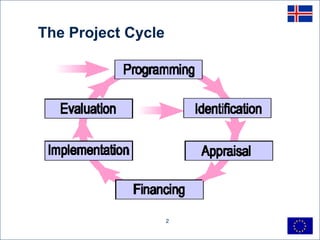
The Project Cycle


                    2
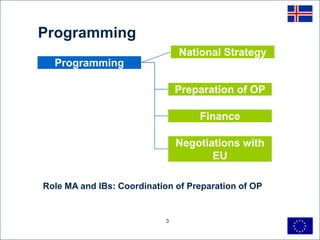
Programming
                                National Strategy
  Programming

                                Preparation of OP

                                    Finance

                                Negotiations with
                                       EU

Role MA and IBs: Coordination of Preparation of OP


                            3
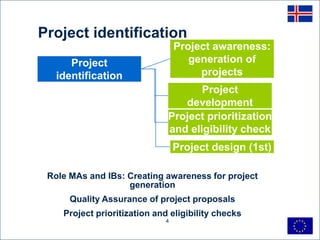
Project identification
                                 Project awareness:
      Project                       generation of
   identification                     projects
                                     Project
                                 development
                              Project prioritization
                              and eligibility check
                                 Project design (1st)

 Role MAs and IBs: Creating awareness for project
                   generation
      Quality Assurance of project proposals
    Project prioritization and eligibility checks
                             4
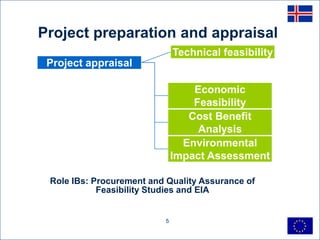
Project preparation and appraisal
                               Technical feasibility
 Project appraisal

                                   Economic
                                   Feasibility
                                  Cost Benefit
                                    Analysis
                                 Environmental
                               Impact Assessment

 Role IBs: Procurement and Quality Assurance of
            Feasibility Studies and EIA


                           5
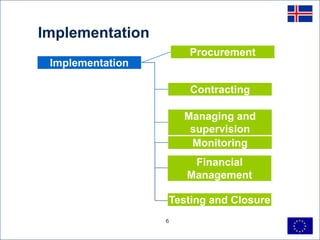
Implementation
                      Procurement
 Implementation

                      Contracting

                      Managing and
                       supervision
                       Monitoring
                       Financial
                      Management

                  Testing and Closure
                  6
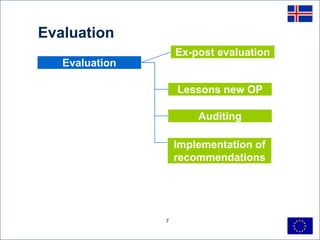
Evaluation
                    Ex-post evaluation
   Evaluation

                    Lessons new OP

                        Auditing

                    Implementation of
                    recommendations


                7
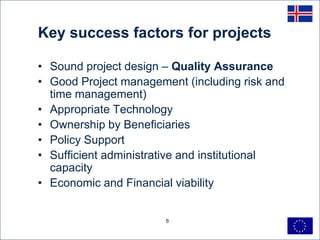
Key success factors for projects

• Sound project design – Quality Assurance
• Good Project management (including risk and
  time management)
• Appropriate Technology
• Ownership by Beneficiaries
• Policy Support
• Sufficient administrative and institutional
  capacity
• Economic and Financial viability


                       8
Key elements of PCM

Quality Assurance:
• Sound project design with use of LFA approach
  (with problem and objective tree, assumptions,
  indicators)
• Clear focus on project purpose for the target group
• Good quality key documents for each phase in
  PCM
• Consulting and involving all relevant stakeholders
• Use of analytical tools/studies to achieve good
  quality projects
Risk Management: a strategy to minimize
  problems/risks
Time Management: clear timetables
                           9
Factors for Quality Assurance and Risk
Management: MAs and IBs

• Quality appraisal for project proposals
• Project prioritization and eligibility checks
• Feasilibility studies/ CBA and EIA
• Administrative capacity assessment and
  Human Resources policies
• Monitoring and risk management strategies
• Internal Control and Audits
• Providing Systems and Tools (procedures,
  guidelines, checklists, MIS etc)

                         10
Factors for Sound Time Management in
Project Cycle Management (a)

  • Prepare good planning charts including
    each task in the relevant PCM stage
  • Identify the key deadlines
  • Identify the key risk factors influencing the
    achievement of those deadlines
  • Use a systematic approach to identify the
    critical path


                          11
Factors for Sound Time Management in
Project Cycle Management (b)

  • Allocate clear responsibilities for
    managing time, particularly for activities on
    the critical path
  • Allow time for Quality Assurance,
    agreement and decision making
  • Commitment / ownership of stakeholders
    to deadlines
  • Have a Risk Management Strategy to
    prevent or minimise delays
                         12

2.1 pcm

  • 1.
    Sustainable Economic Developmentof the Sudurnes region, Iceland Introduction Project Cycle Management JOSE MATEOS MORENO Ásbrú, January 2012
  • 2.
  • 3.
    Programming National Strategy Programming Preparation of OP Finance Negotiations with EU Role MA and IBs: Coordination of Preparation of OP 3
  • 4.
    Project identification Project awareness: Project generation of identification projects Project development Project prioritization and eligibility check Project design (1st) Role MAs and IBs: Creating awareness for project generation Quality Assurance of project proposals Project prioritization and eligibility checks 4
  • 5.
    Project preparation andappraisal Technical feasibility Project appraisal Economic Feasibility Cost Benefit Analysis Environmental Impact Assessment Role IBs: Procurement and Quality Assurance of Feasibility Studies and EIA 5
  • 6.
    Implementation Procurement Implementation Contracting Managing and supervision Monitoring Financial Management Testing and Closure 6
  • 7.
    Evaluation Ex-post evaluation Evaluation Lessons new OP Auditing Implementation of recommendations 7
  • 8.
    Key success factorsfor projects • Sound project design – Quality Assurance • Good Project management (including risk and time management) • Appropriate Technology • Ownership by Beneficiaries • Policy Support • Sufficient administrative and institutional capacity • Economic and Financial viability 8
  • 9.
    Key elements ofPCM Quality Assurance: • Sound project design with use of LFA approach (with problem and objective tree, assumptions, indicators) • Clear focus on project purpose for the target group • Good quality key documents for each phase in PCM • Consulting and involving all relevant stakeholders • Use of analytical tools/studies to achieve good quality projects Risk Management: a strategy to minimize problems/risks Time Management: clear timetables 9
  • 10.
    Factors for QualityAssurance and Risk Management: MAs and IBs • Quality appraisal for project proposals • Project prioritization and eligibility checks • Feasilibility studies/ CBA and EIA • Administrative capacity assessment and Human Resources policies • Monitoring and risk management strategies • Internal Control and Audits • Providing Systems and Tools (procedures, guidelines, checklists, MIS etc) 10
  • 11.
    Factors for SoundTime Management in Project Cycle Management (a) • Prepare good planning charts including each task in the relevant PCM stage • Identify the key deadlines • Identify the key risk factors influencing the achievement of those deadlines • Use a systematic approach to identify the critical path 11
  • 12.
    Factors for SoundTime Management in Project Cycle Management (b) • Allocate clear responsibilities for managing time, particularly for activities on the critical path • Allow time for Quality Assurance, agreement and decision making • Commitment / ownership of stakeholders to deadlines • Have a Risk Management Strategy to prevent or minimise delays 12