Sustainable Economic Development of the Sudurnes
                 region, Iceland


      SWOT Analysis and Needs Assessment


             JOSE MATEOS MORENO

               Ásbrú, January 2012
Content

1. SWOT

2. Needs assessment


                      2
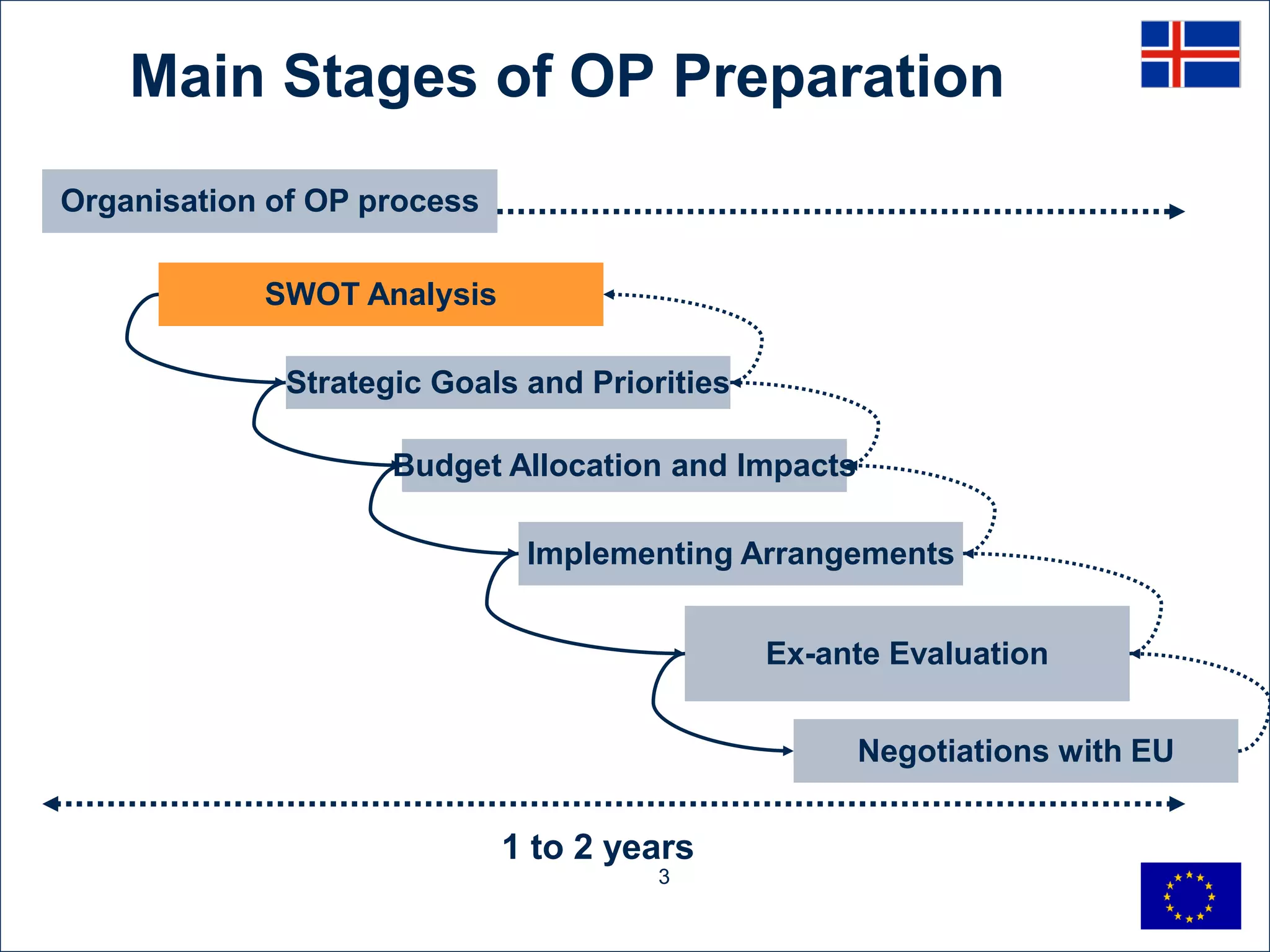
Main Stages of OP Preparation
Organisation of OP process

            SWOT Analysis

             Strategic Goals and Priorities

                    Budget Allocation and Impacts

                              Implementing Arrangements


                                              Ex-ante Evaluation


                                                    Negotiations with EU


                             1 to 2 years
                                      3
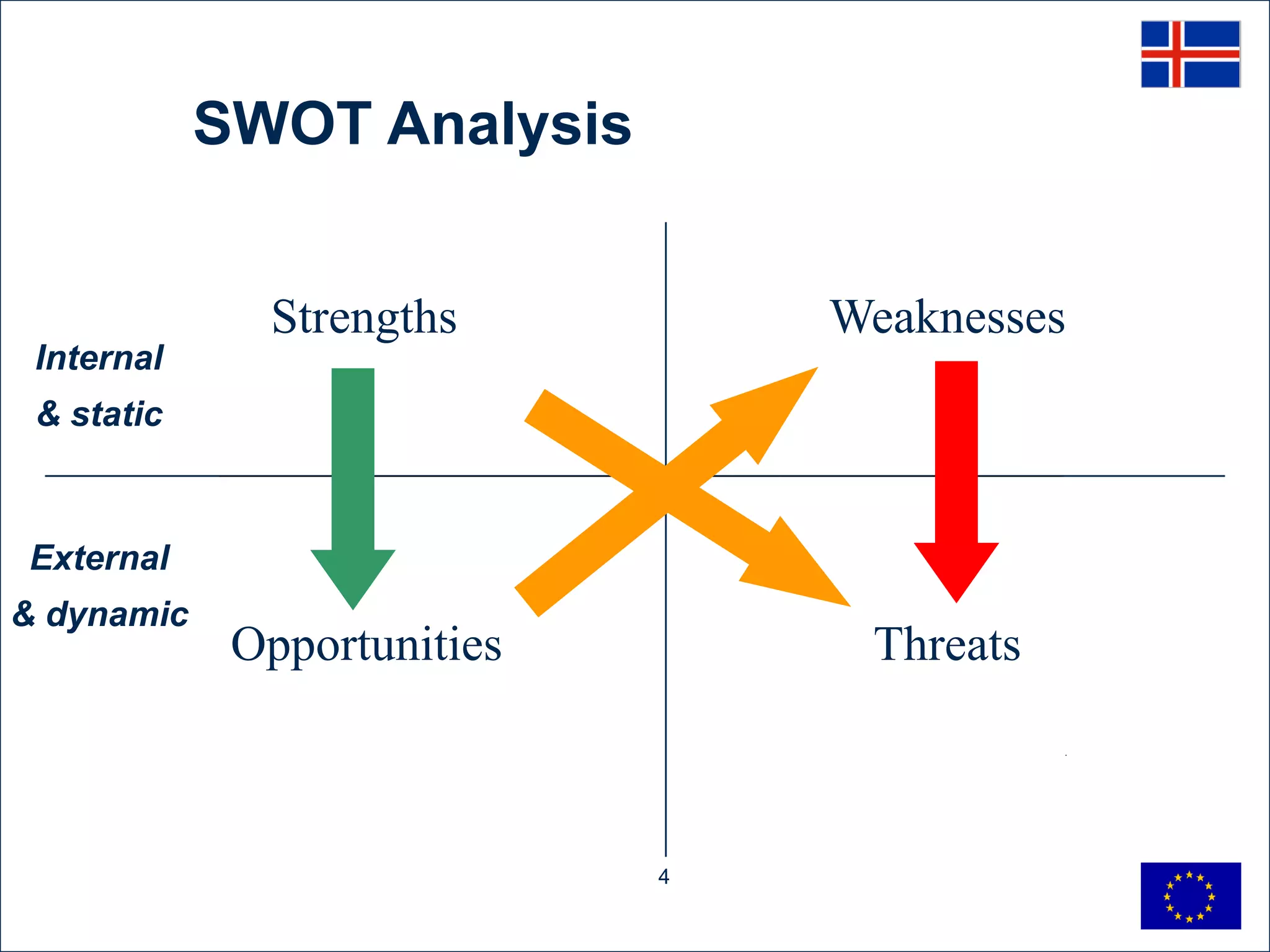
SWOT Analysis


              Strengths          Weaknesses
 Internal
 & static


External
& dynamic
             Opportunities        Threats


                             4
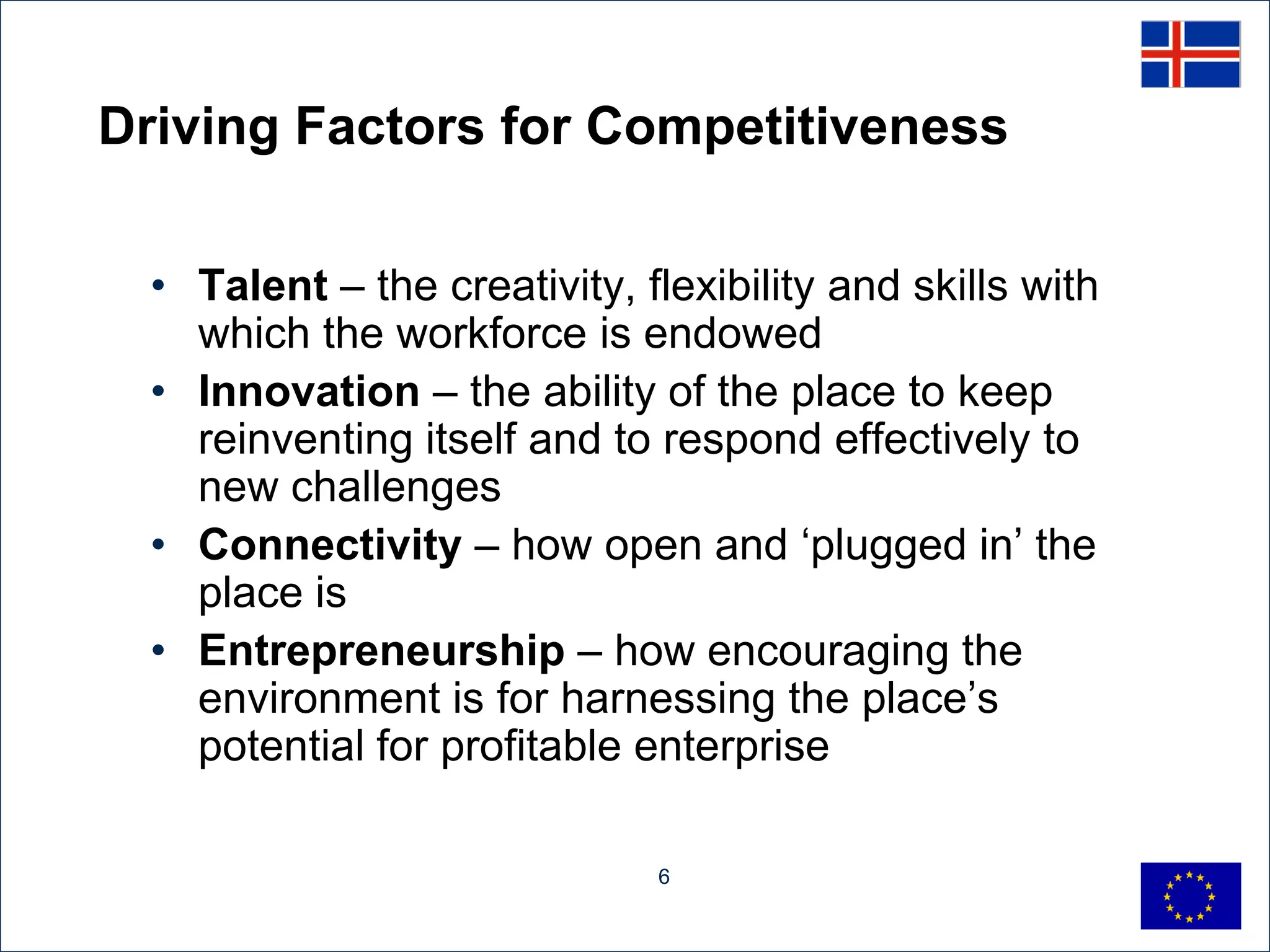
SWOT Rules

• Formulate in terms relative to the current situation
• Keep it simple and realistic
• It is subjective: which point of view?
• Avoid:
   – Intention or wish as opportunity
   – Objective as threat or weakness
   – Internal versus external

                           5
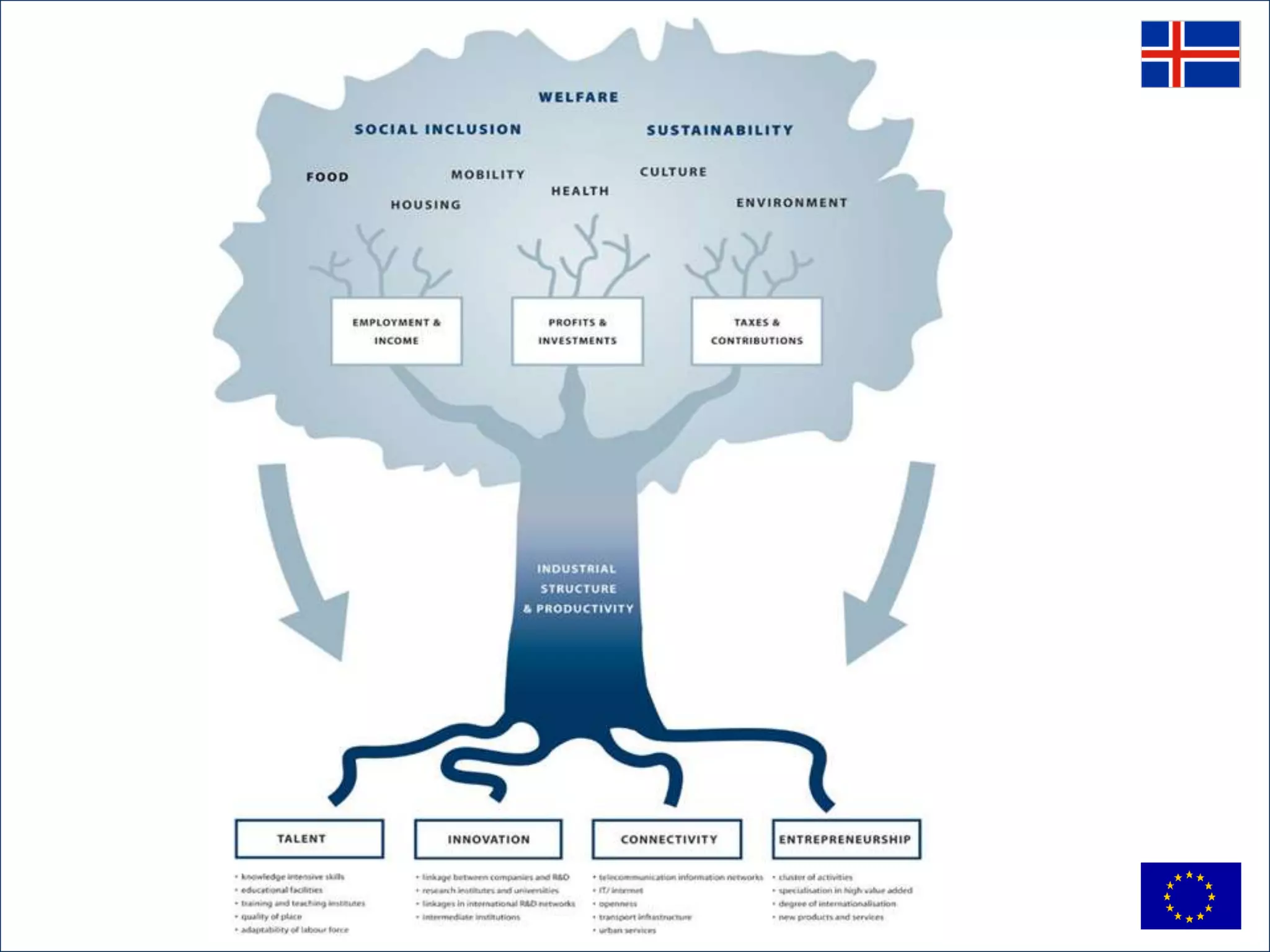
Driving Factors for Competitiveness

  • Talent – the creativity, flexibility and skills with
    which the workforce is endowed
  • Innovation – the ability of the place to keep
    reinventing itself and to respond effectively to
    new challenges
  • Connectivity – how open and „plugged in‟ the
    place is
  • Entrepreneurship – how encouraging the
    environment is for harnessing the place‟s
    potential for profitable enterprise

                              6
7
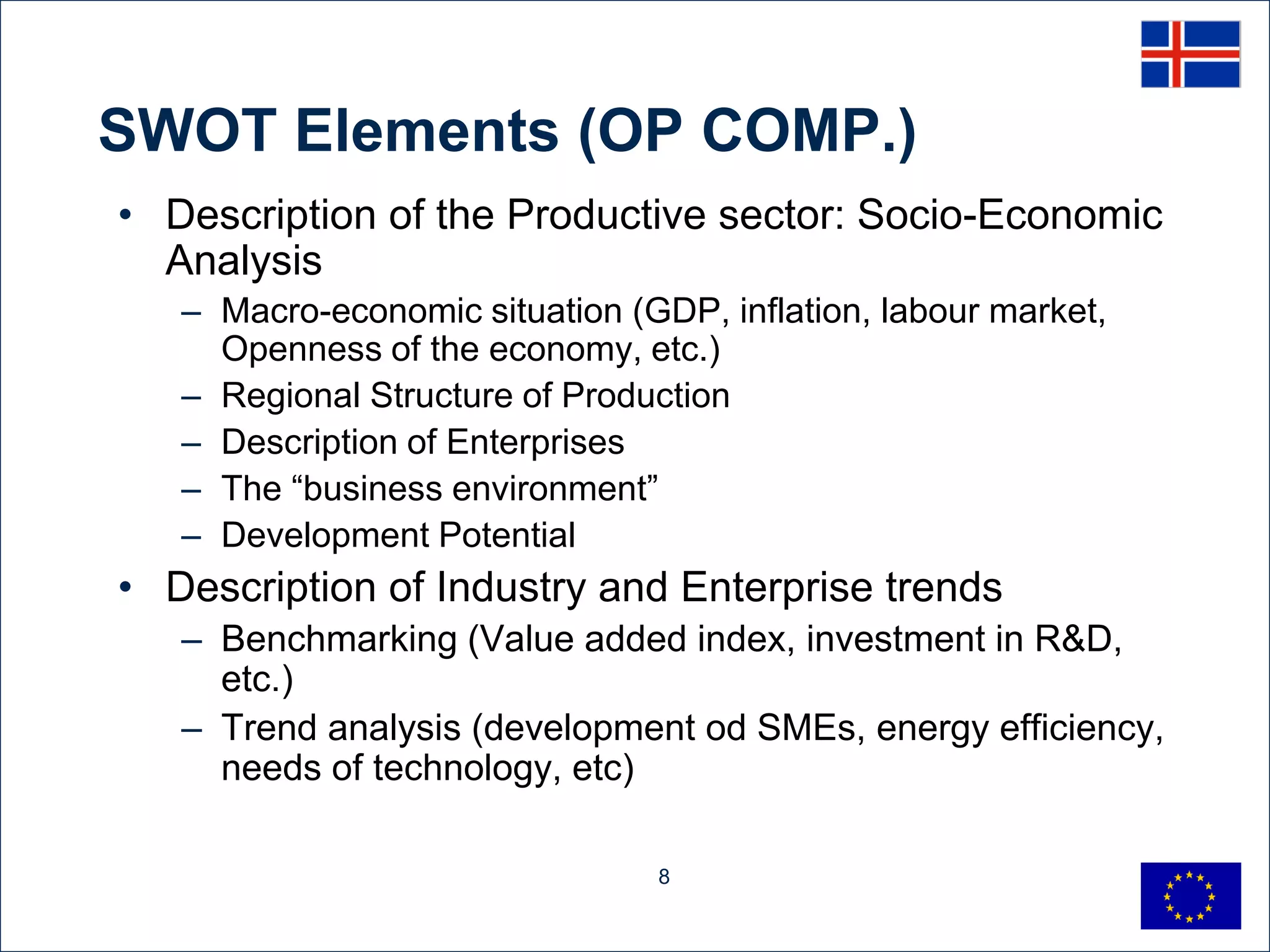
SWOT Elements (OP COMP.)
• Description of the Productive sector: Socio-Economic
  Analysis
   – Macro-economic situation (GDP, inflation, labour market,
     Openness of the economy, etc.)
   – Regional Structure of Production
   – Description of Enterprises
   – The “business environment”
   – Development Potential
• Description of Industry and Enterprise trends
   – Benchmarking (Value added index, investment in R&D,
     etc.)
   – Trend analysis (development od SMEs, energy efficiency,
     needs of technology, etc)

                                8
Needs Assessment (1)

• Based on SWOT
  – Establish future socio-economic scenarios
  – Estimate future needs or competitiveness
    problems
  – Translate needs forecast in physical and
    financial needs
     • Identification of future bottlenecks (e.g. lack of
       investment in R&D)
     • Identification possible solutions


                             9
Needs Assessment (2)

• Tools
  – Desk research
  – Literature study (e.g. relationship between
    regional competitiveness and information
    society)
  – (Baseline) surveys (e.g. SMEs creation
    monitoring, industry reports)
  – Forecasts of Industry development


                        10
Practical Exercise: work in teams.

• Design a SWOT Analysis for Sudurnes
  Region.


                   11
Practical Exercise: work in teams.

  STRENGTHS
  – International Airport
  – Natural Resources (Water, Air, Geothermal)
  – Plenty of Land
  – Young Population
  – Fish Industry
  – Good Infrastructure


                      12
Practical Exercise: work in teams.

  WEAKNESSES
  – Educational level of work force low. Lack of
    opportunities for educated work force.
  – Lack of culture for innovation and initiative
    (entrepreneurship).
  – Need for a better connection with capital
    area.
  – Too small & too many local authorities
  – Distance to the capital. Competition for
    resources or projects.
                        13
Practical Exercise: work in teams.

  OPPORTUNITIES
  – International airport Development
  – Better use of natural resources
  – Flexible labour market
  – Close location to capital area.
  – Cooperation with other regions.
  – Changes in national law (contribution to
    investment, tax reductions).
  – Opening of north pole and Artic areas.
  – Tourism development.  14

  – New demand for use of empty buildings.
Practical Exercise: work in teams.
 THREATS
 – Lack of coordination and coherence.
   Loosing opportunities.
 – Unemployment could Increase.
 – Loosing employment opportunities because
   of low skills level of population.
 – Weak social capital. Departure of Nato
   base.
 – “Lost generation” (16 to 20 years old) of
   unemployed people.
 – Changes in Fisheries Policy.
 – Proximity to capital area.
                           15


 – Families & Financial crisis

1.4 swot and needs assessment

  • 1.
    Sustainable Economic Developmentof the Sudurnes region, Iceland SWOT Analysis and Needs Assessment JOSE MATEOS MORENO Ásbrú, January 2012
  • 2.
  • 3.
    Main Stages ofOP Preparation Organisation of OP process SWOT Analysis Strategic Goals and Priorities Budget Allocation and Impacts Implementing Arrangements Ex-ante Evaluation Negotiations with EU 1 to 2 years 3
  • 4.
    SWOT Analysis Strengths Weaknesses Internal & static External & dynamic Opportunities Threats 4
  • 5.
    SWOT Rules • Formulatein terms relative to the current situation • Keep it simple and realistic • It is subjective: which point of view? • Avoid: – Intention or wish as opportunity – Objective as threat or weakness – Internal versus external 5
  • 6.
    Driving Factors forCompetitiveness • Talent – the creativity, flexibility and skills with which the workforce is endowed • Innovation – the ability of the place to keep reinventing itself and to respond effectively to new challenges • Connectivity – how open and „plugged in‟ the place is • Entrepreneurship – how encouraging the environment is for harnessing the place‟s potential for profitable enterprise 6
  • 7.
  • 8.
    SWOT Elements (OPCOMP.) • Description of the Productive sector: Socio-Economic Analysis – Macro-economic situation (GDP, inflation, labour market, Openness of the economy, etc.) – Regional Structure of Production – Description of Enterprises – The “business environment” – Development Potential • Description of Industry and Enterprise trends – Benchmarking (Value added index, investment in R&D, etc.) – Trend analysis (development od SMEs, energy efficiency, needs of technology, etc) 8
  • 9.
    Needs Assessment (1) •Based on SWOT – Establish future socio-economic scenarios – Estimate future needs or competitiveness problems – Translate needs forecast in physical and financial needs • Identification of future bottlenecks (e.g. lack of investment in R&D) • Identification possible solutions 9
  • 10.
    Needs Assessment (2) •Tools – Desk research – Literature study (e.g. relationship between regional competitiveness and information society) – (Baseline) surveys (e.g. SMEs creation monitoring, industry reports) – Forecasts of Industry development 10
  • 11.
    Practical Exercise: workin teams. • Design a SWOT Analysis for Sudurnes Region. 11
  • 12.
    Practical Exercise: workin teams. STRENGTHS – International Airport – Natural Resources (Water, Air, Geothermal) – Plenty of Land – Young Population – Fish Industry – Good Infrastructure 12
  • 13.
    Practical Exercise: workin teams. WEAKNESSES – Educational level of work force low. Lack of opportunities for educated work force. – Lack of culture for innovation and initiative (entrepreneurship). – Need for a better connection with capital area. – Too small & too many local authorities – Distance to the capital. Competition for resources or projects. 13
  • 14.
    Practical Exercise: workin teams. OPPORTUNITIES – International airport Development – Better use of natural resources – Flexible labour market – Close location to capital area. – Cooperation with other regions. – Changes in national law (contribution to investment, tax reductions). – Opening of north pole and Artic areas. – Tourism development. 14 – New demand for use of empty buildings.
  • 15.
    Practical Exercise: workin teams. THREATS – Lack of coordination and coherence. Loosing opportunities. – Unemployment could Increase. – Loosing employment opportunities because of low skills level of population. – Weak social capital. Departure of Nato base. – “Lost generation” (16 to 20 years old) of unemployed people. – Changes in Fisheries Policy. – Proximity to capital area. 15 – Families & Financial crisis