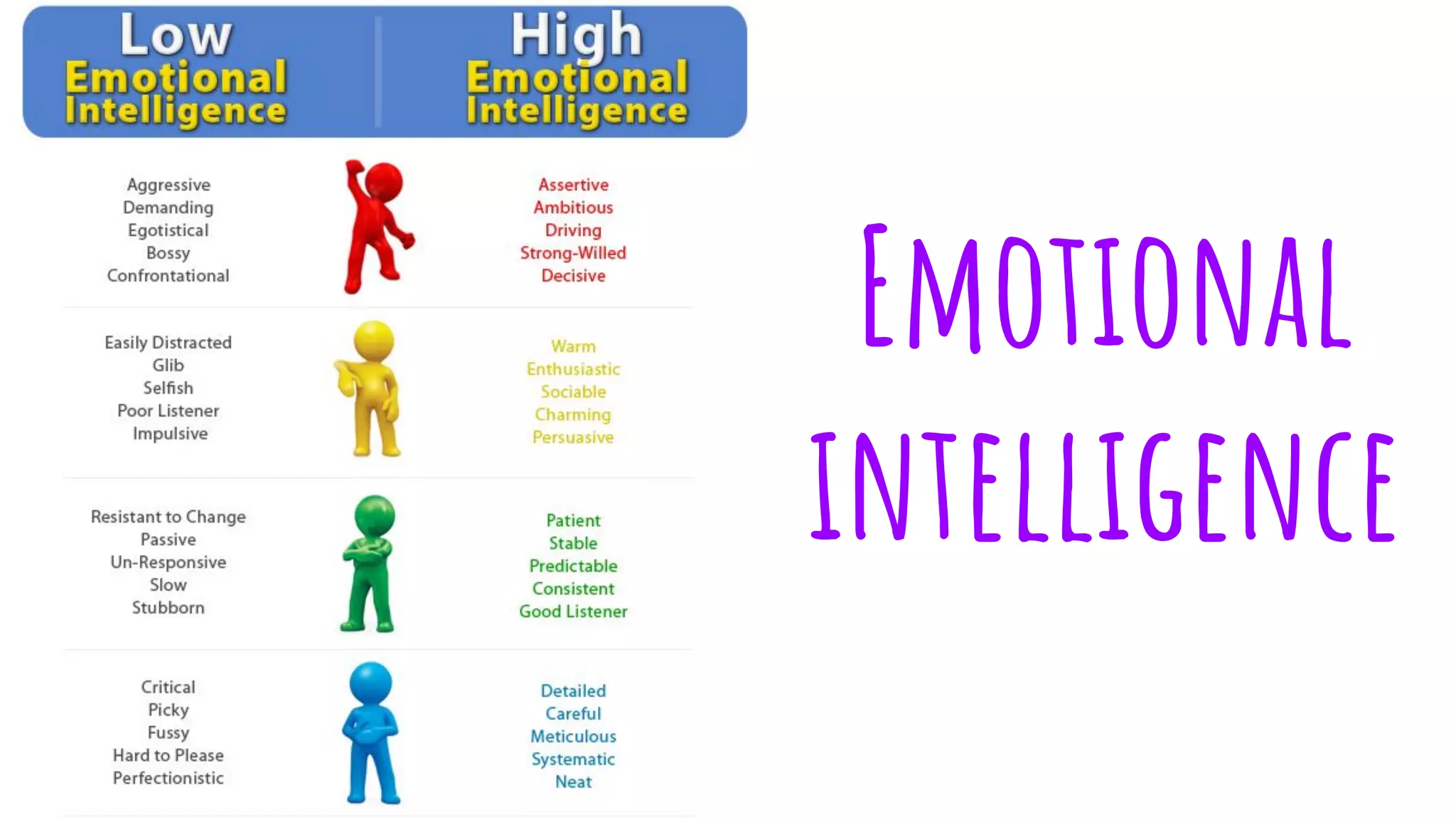
Emotional
intelligence
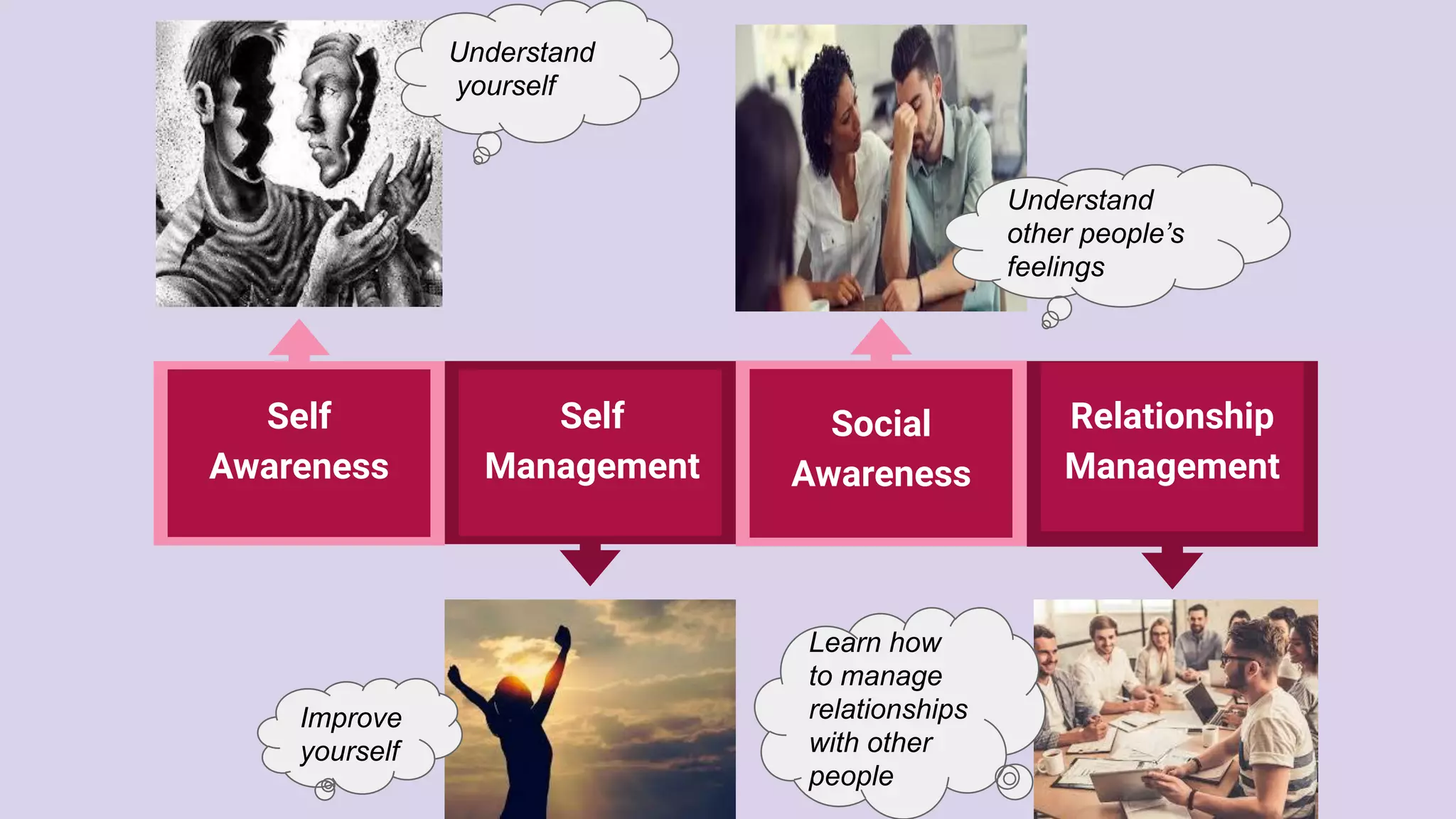
Self
Management
Social
Awareness
Relationship
Management
Self
Awareness
Understand
yourself
Understand
other people’s
feelings
Improve
yourself
Learn how
to manage
relationships
with other
people
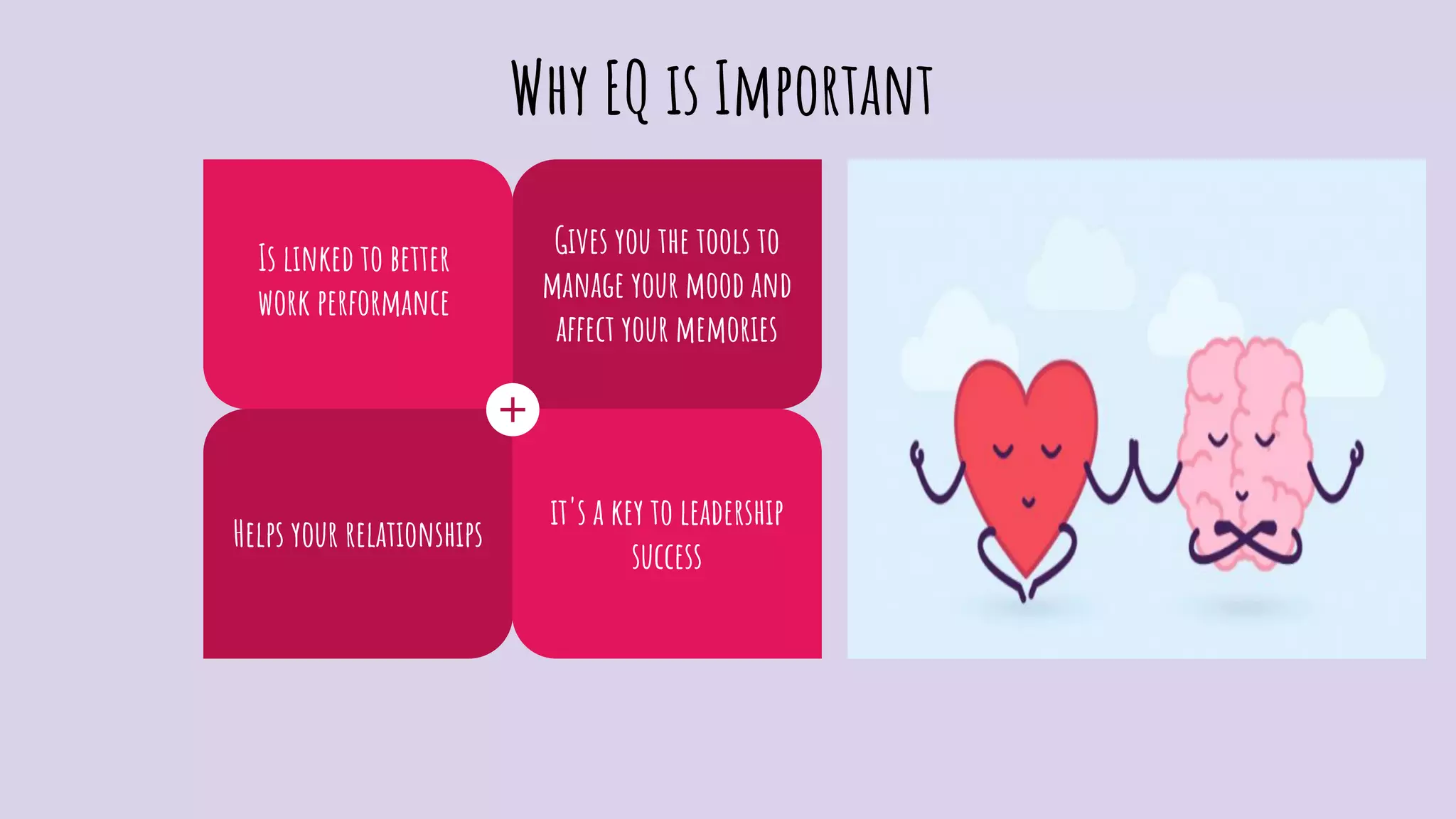
Gives you the tools to
manage your mood and
affect your memories
Helps your relationships
it's a key to leadership
success
Is linked to better
work performance
Why EQ is Important
How emotions affect the brain
Angel Brain
or Neocortex03
Is responsible for the development
of human language, abstract
thought, imagination and
consciousness.
Mammal Brain
or Limbic System02
Supports a variety of functions
including emotions, behavior,
motivation, memory and human
senses
Reptile brain01
Controls the body’s vital
functions [heart rate, breathing,
body temperature and balance]
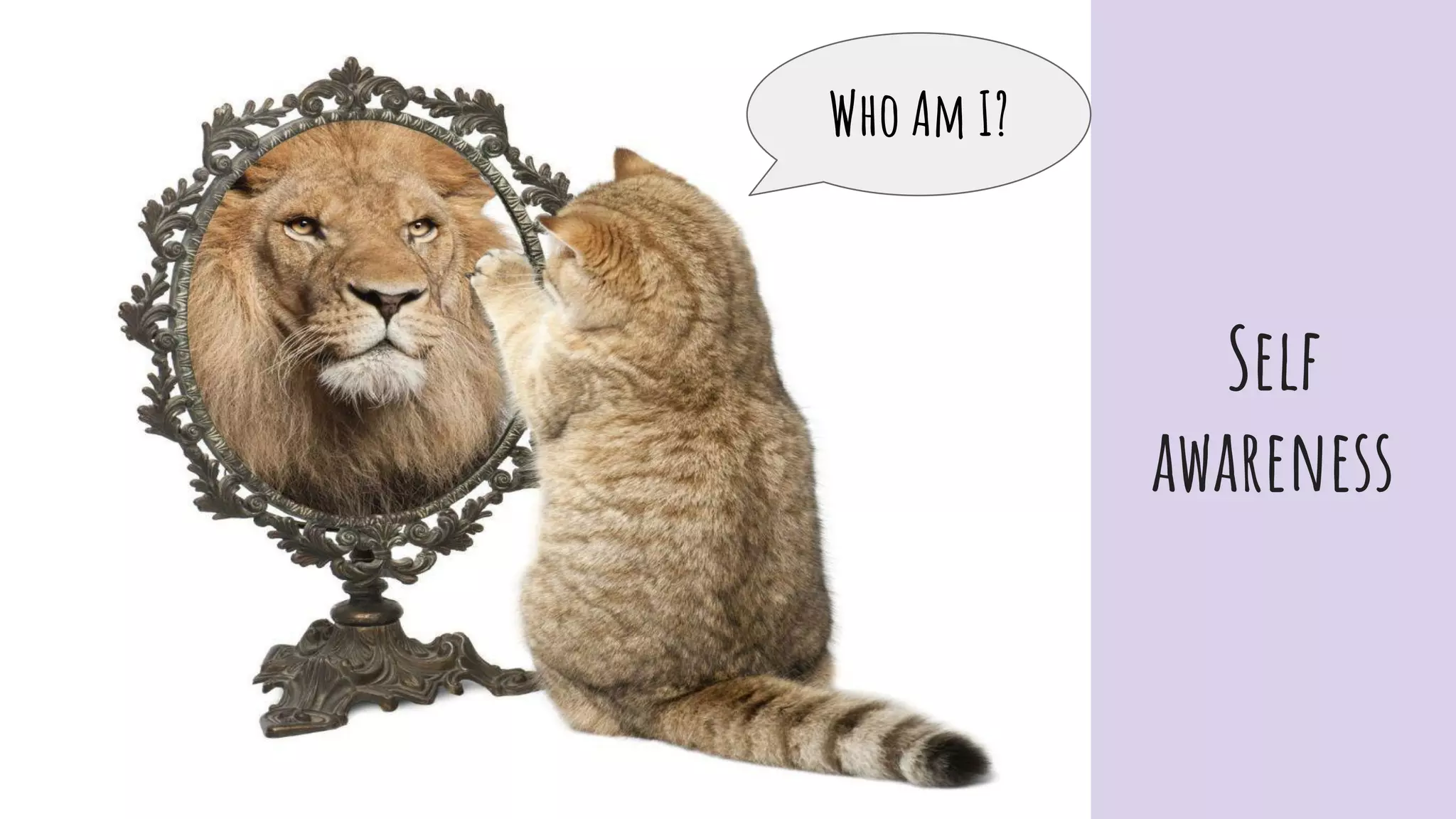
Self
awareness
Who Am I?
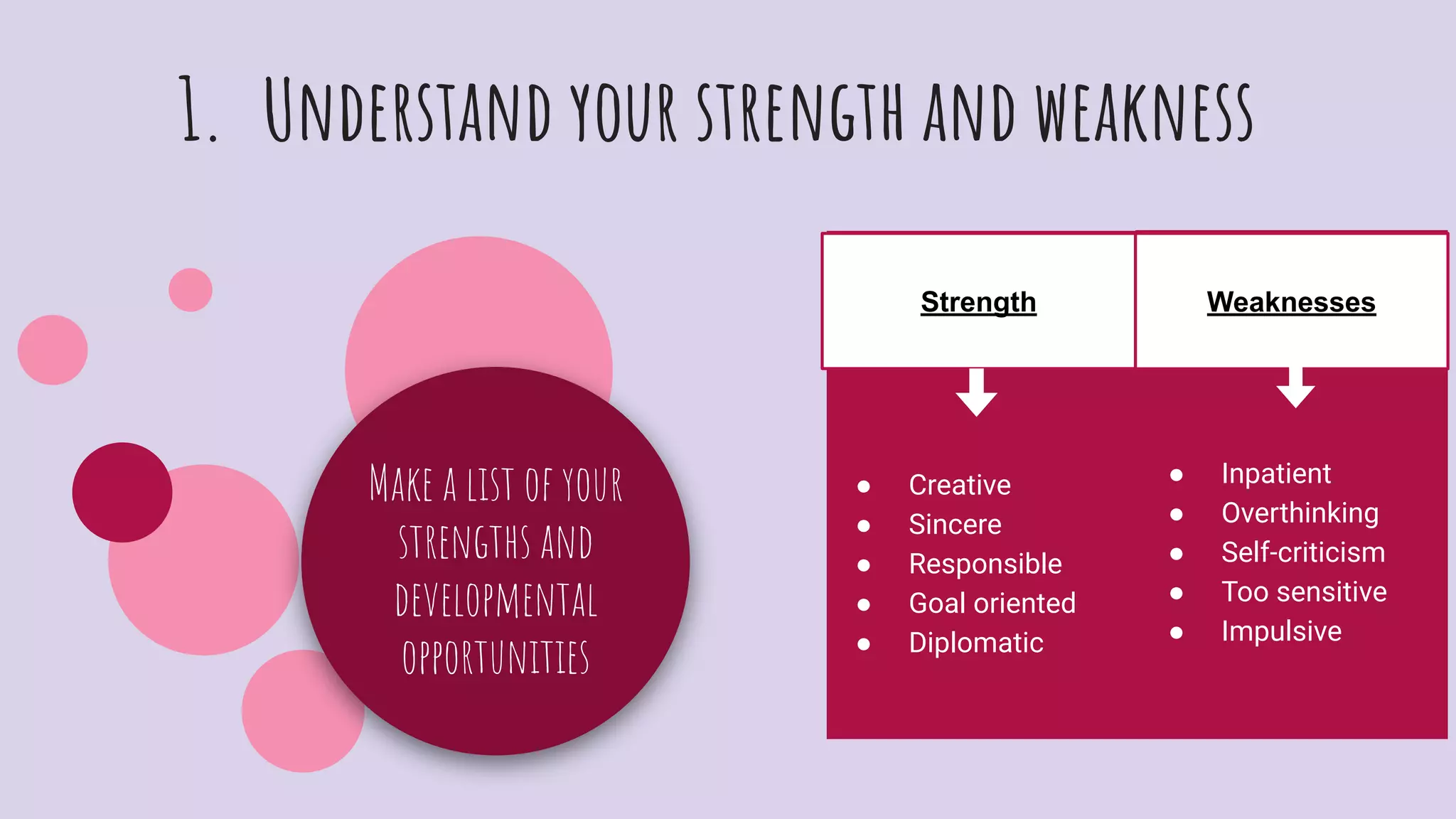
1. Understand your strength and weakness
Make a list of your
strengths and
developmental
opportunities
Strength
● Creative
● Sincere
● Responsible
● Goal oriented
● Diplomatic
Weaknesses
● Inpatient
● Overthinking
● Self-criticism
● Too sensitive
● Impulsive
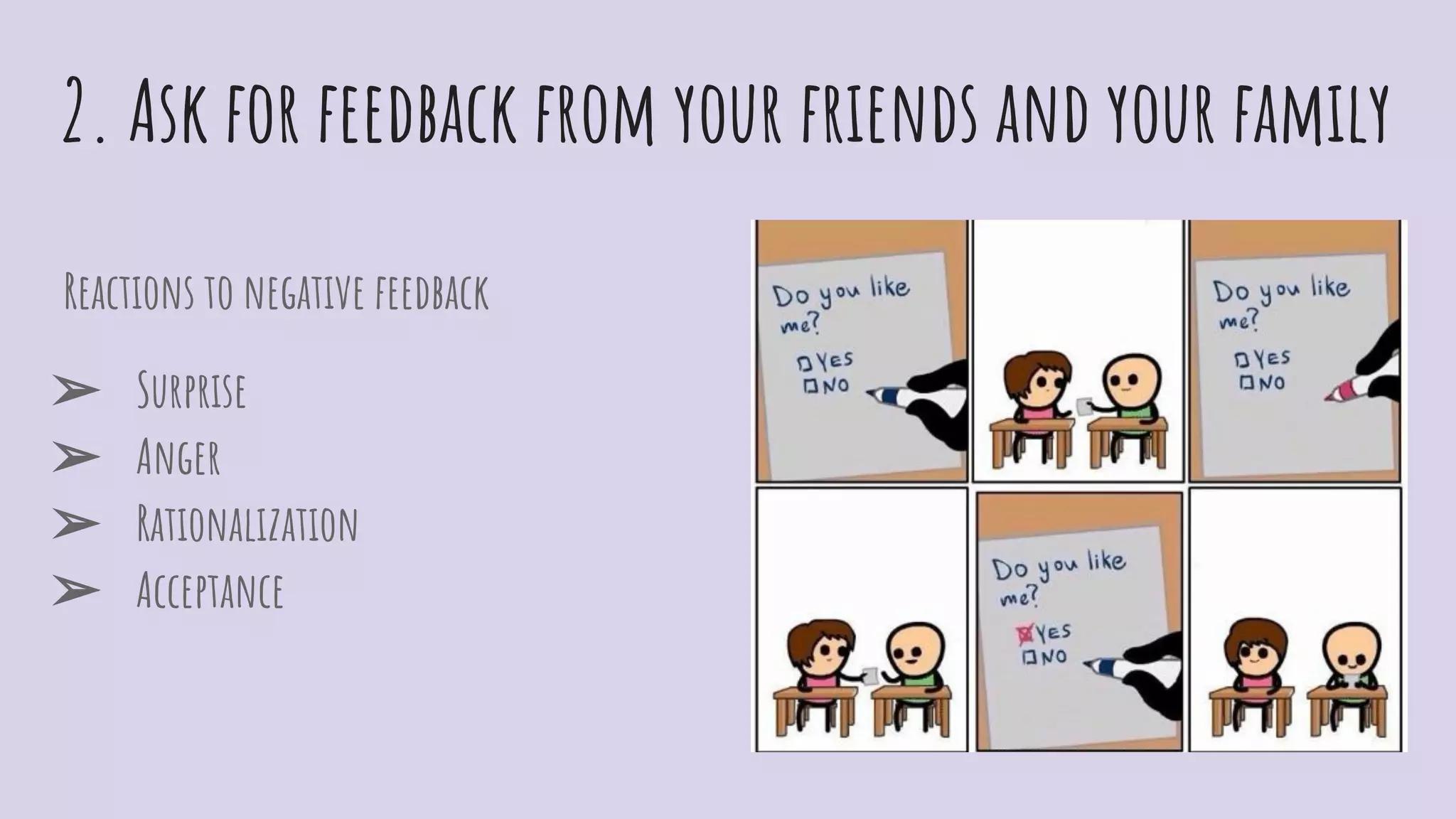
2. Ask for feedback from your friends and your family
Reactions to negative feedback
➢ Surprise
➢ Anger
➢ Rationalization
➢ Acceptance
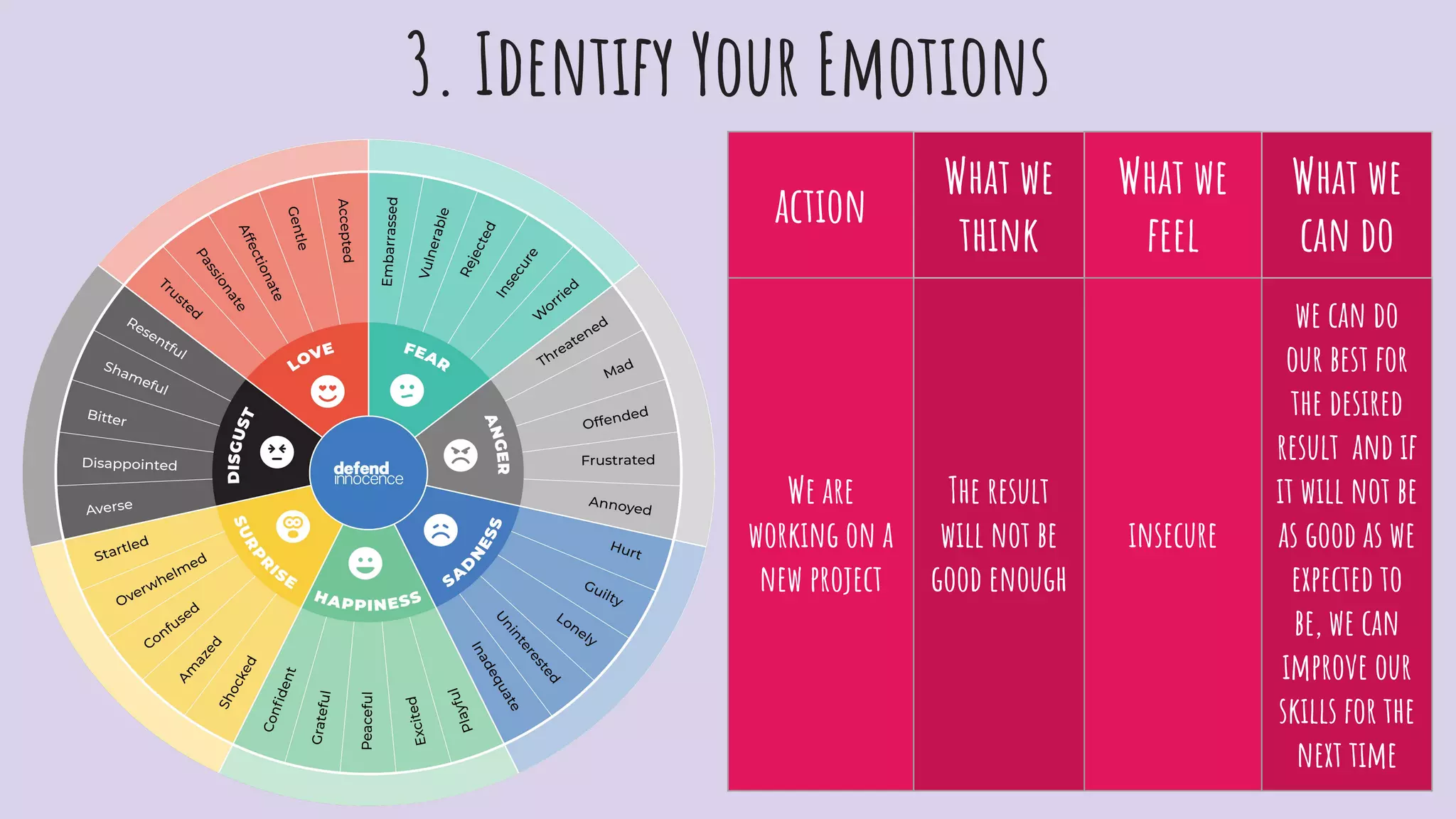
3. Identify Your Emotions
action
What we
think
What we
feel
What we
can do
We are
working on a
new project
The result
will not be
good enough
insecure
we can do
our best for
the desired
result and if
it will not be
as good as we
expected to
be, we can
improve our
skills for the
next time
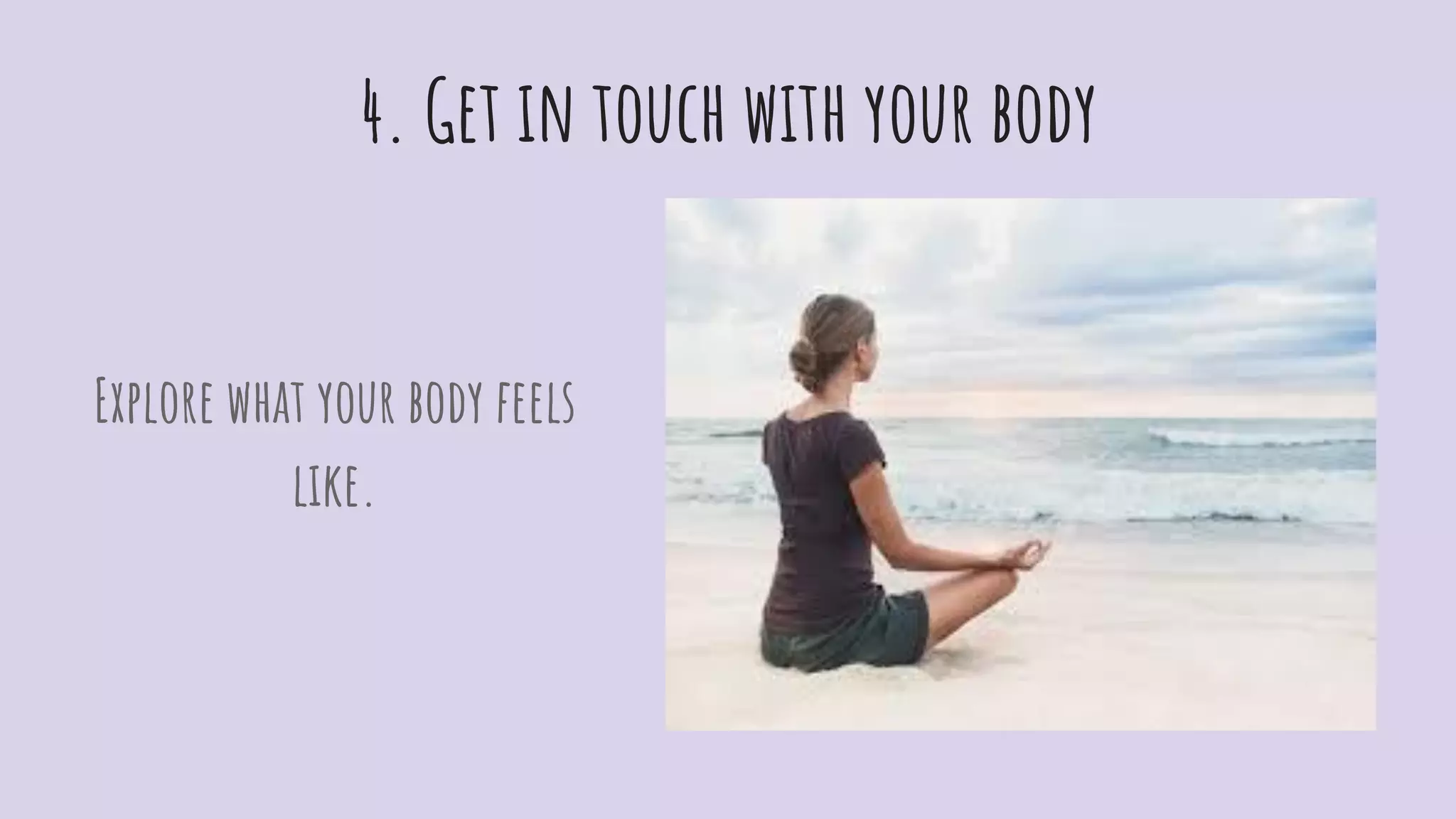
4. Get in touch with your body
Explore what your body feels
like.
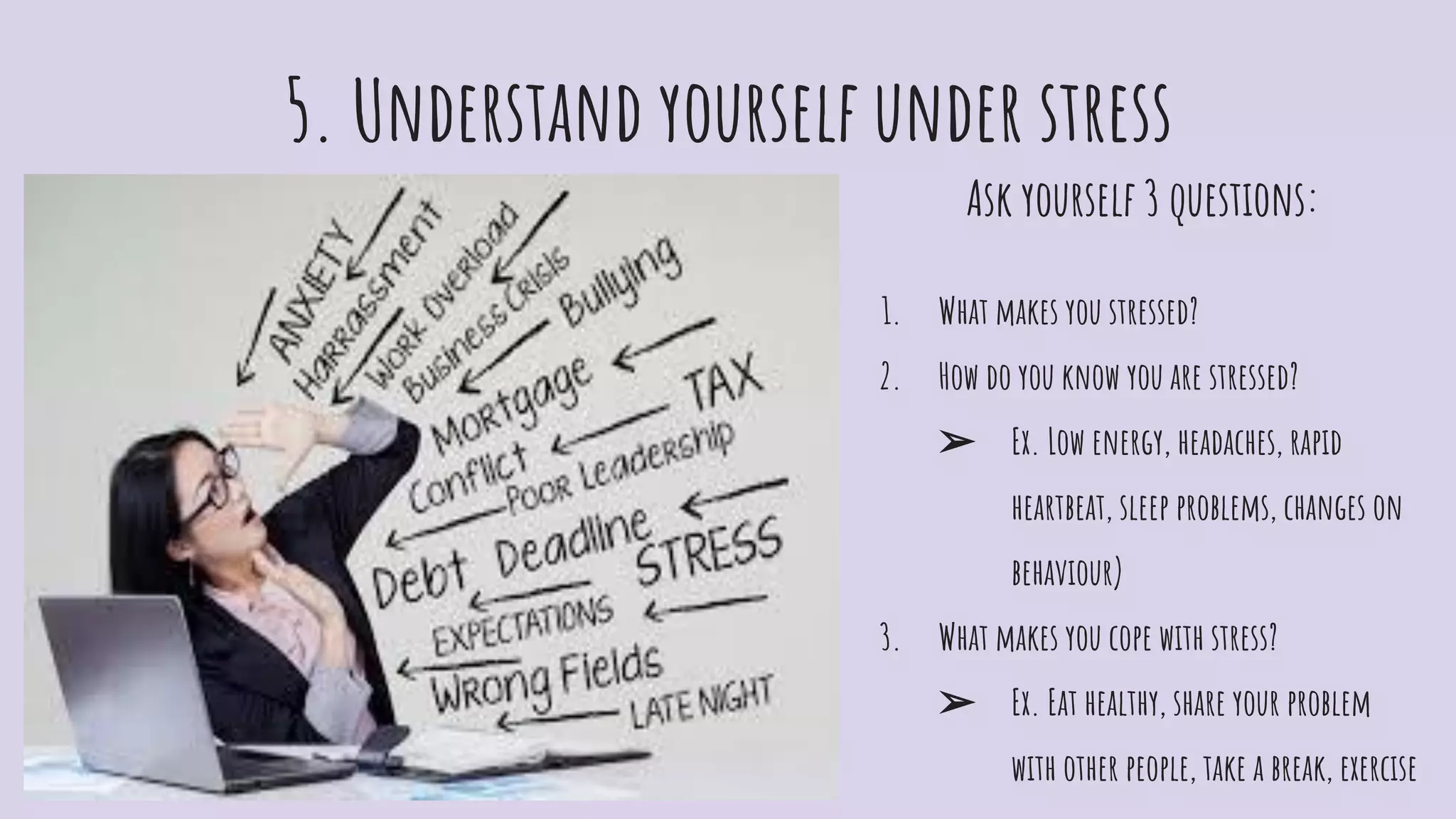
5. Understand yourself under stress
Ask yourself 3 questions:
1. What makes you stressed?
2. How do you know you are stressed?
➢ Ex. Low energy, headaches, rapid
heartbeat, sleep problems, changes on
behaviour)
3. What makes you cope with stress?
➢ Ex. Eat healthy, share your problem
with other people, take a break, exercise
Self
management
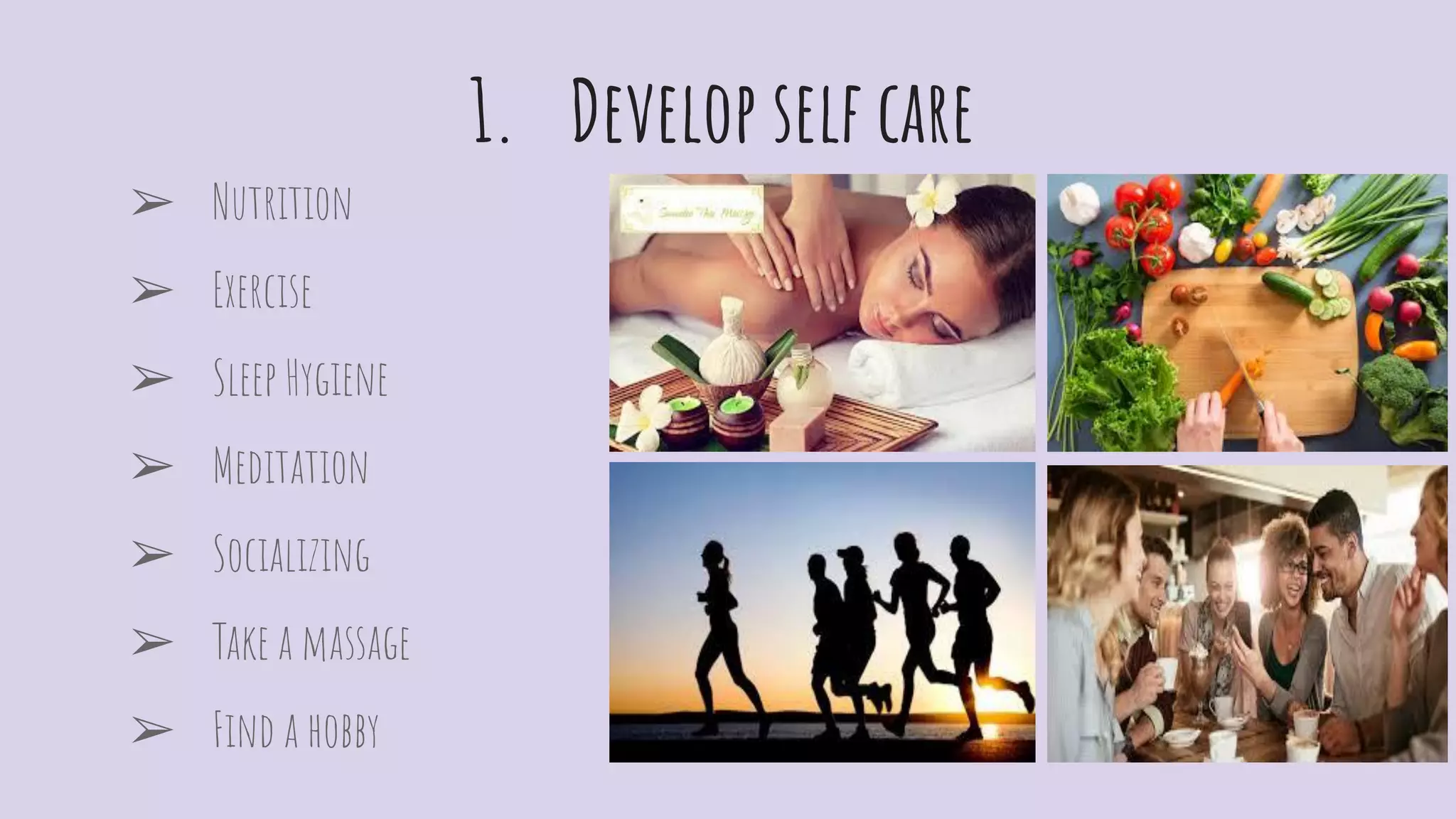
1. Develop self care
➢ Nutrition
➢ Exercise
➢ Sleep Hygiene
➢ Meditation
➢ Socializing
➢ Take a massage
➢ Find a hobby
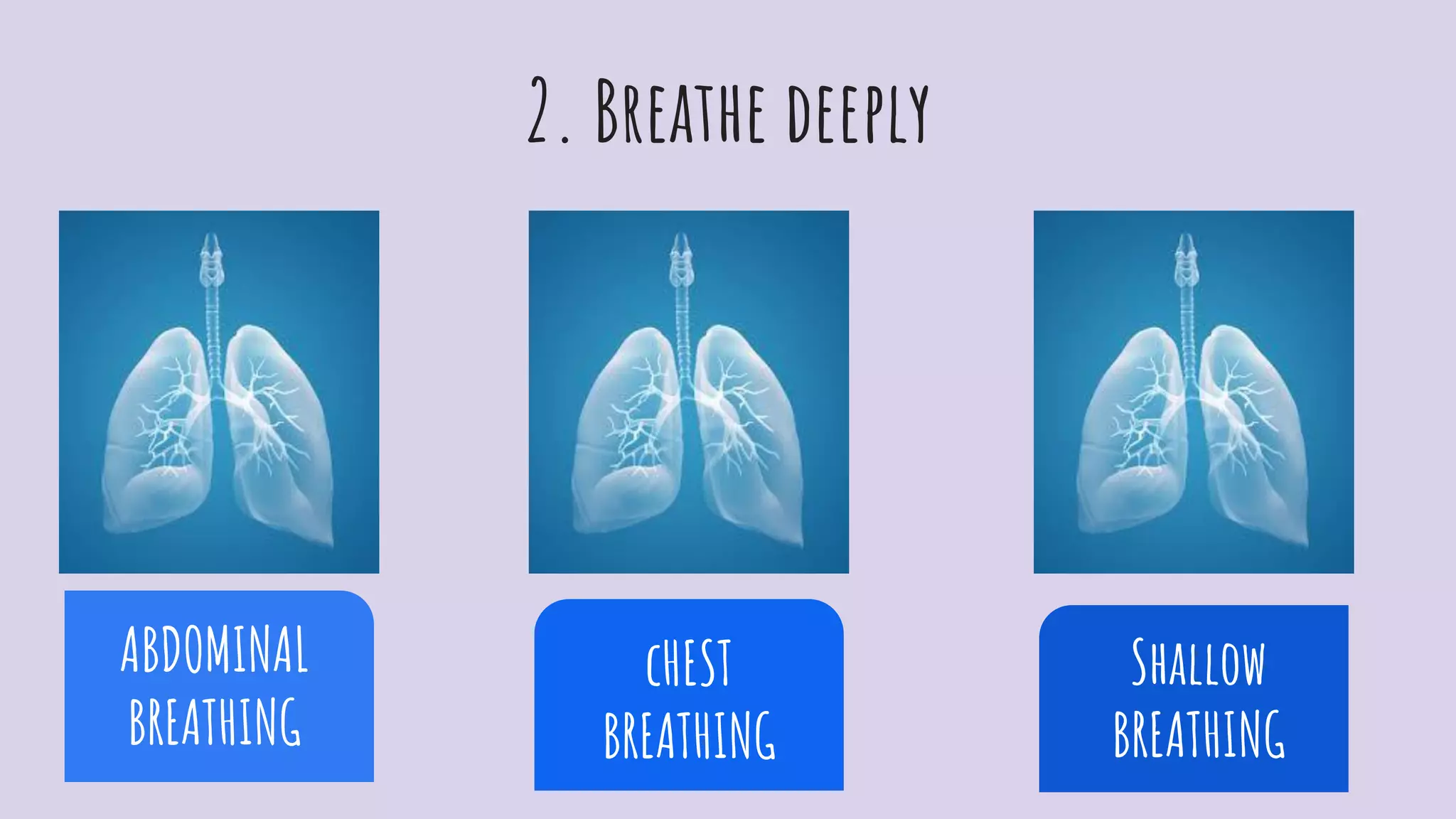
2. Breathe deeply
ABDOMINAL
BREATHING
cHEST
BREATHING
Shallow
BREATHING
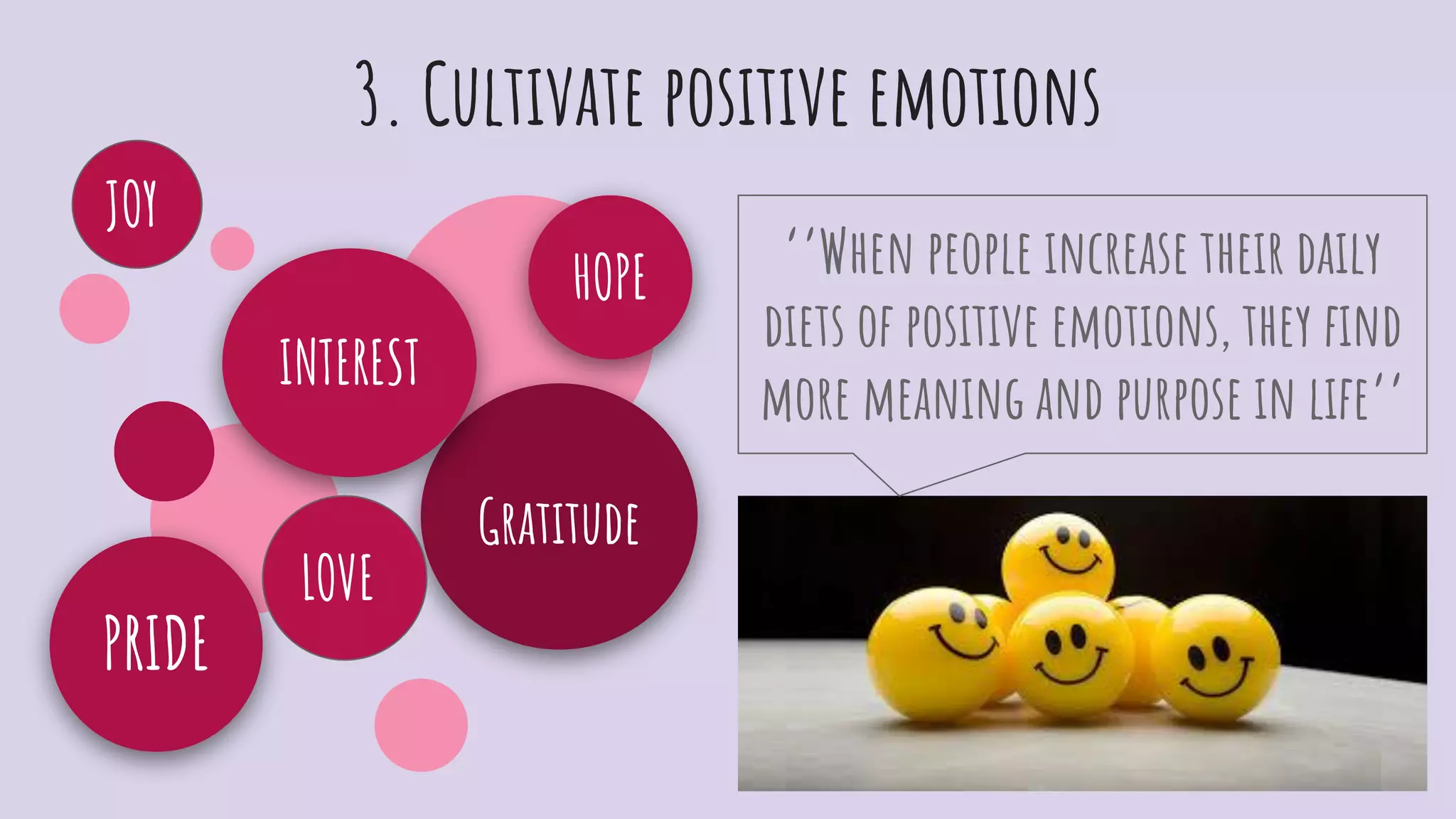
3. Cultivate positive emotions
Gratitude
INTEREST
PRIDE
HOPE
LOVE
JOY
‘’When people increase their daily
diets of positive emotions, they find
more meaning and purpose in life’’
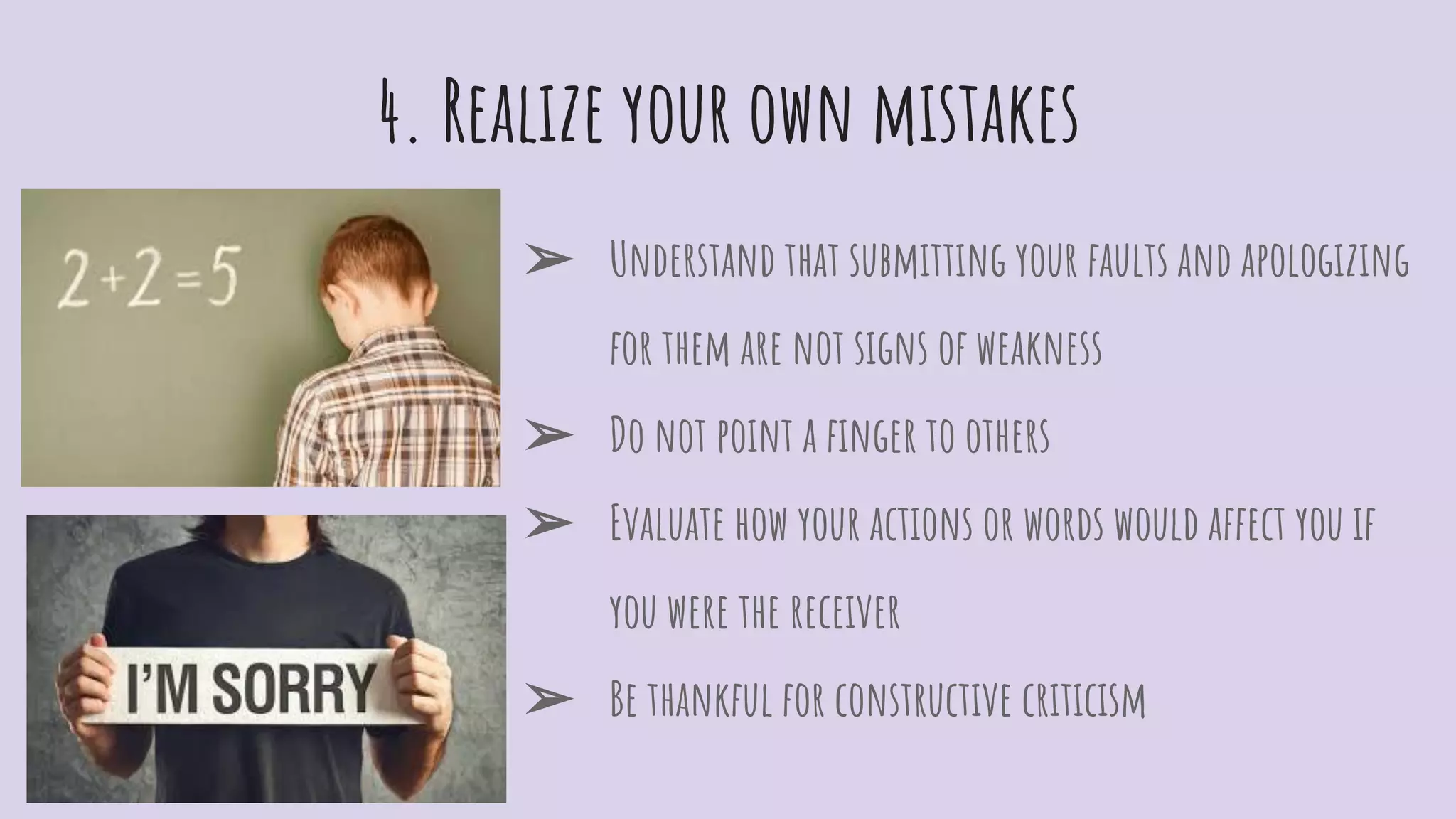
4. Realize your own mistakes
➢ Understand that submitting your faults and apologizing
for them are not signs of weakness
➢ Do not point a finger to others
➢ Evaluate how your actions or words would affect you if
you were the receiver
➢ Be thankful for constructive criticism
Social
awareness
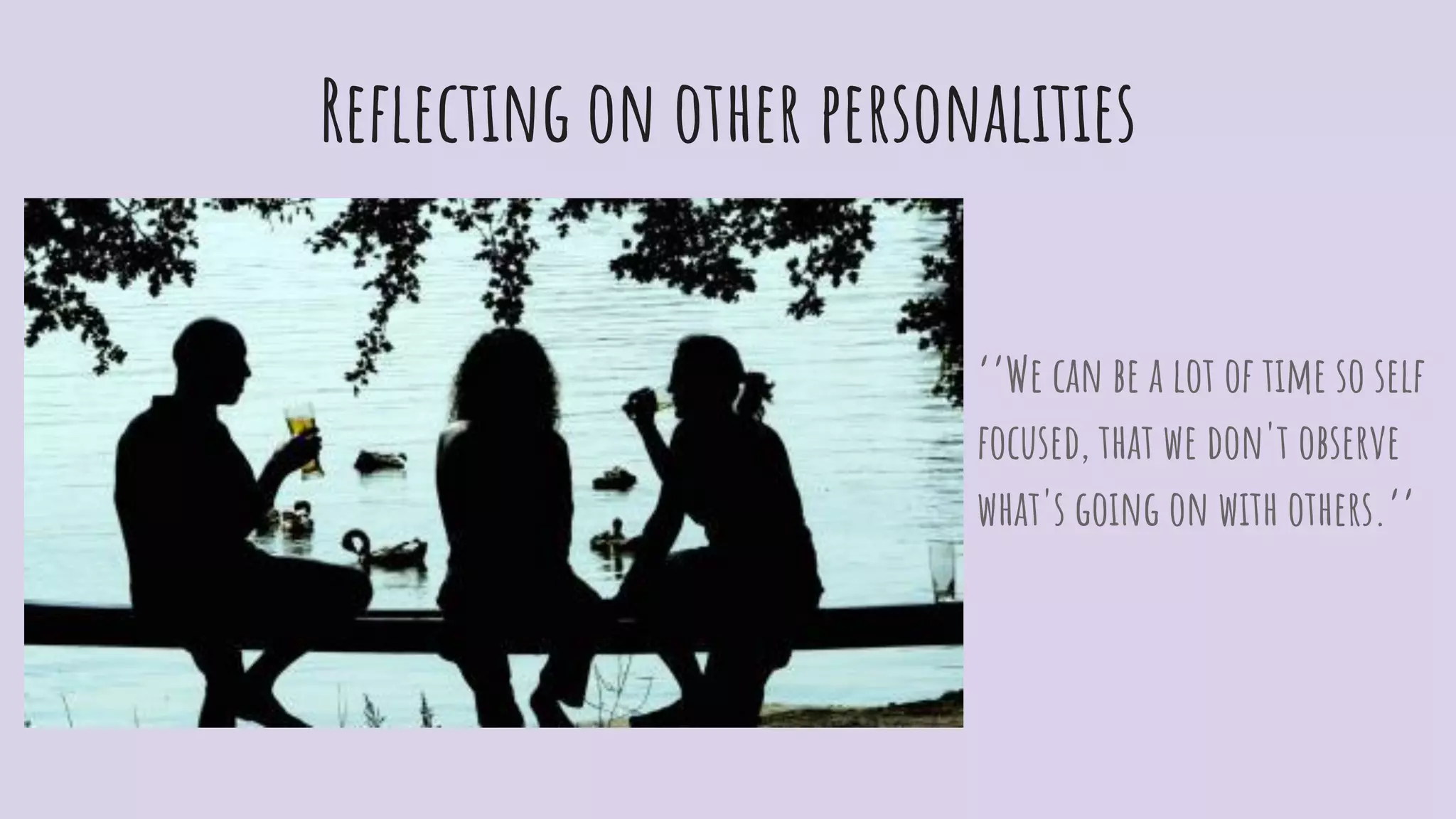
Reflecting on other personalities
‘’We can be a lot of time so self
focused, that we don't observe
what's going on with others.’’
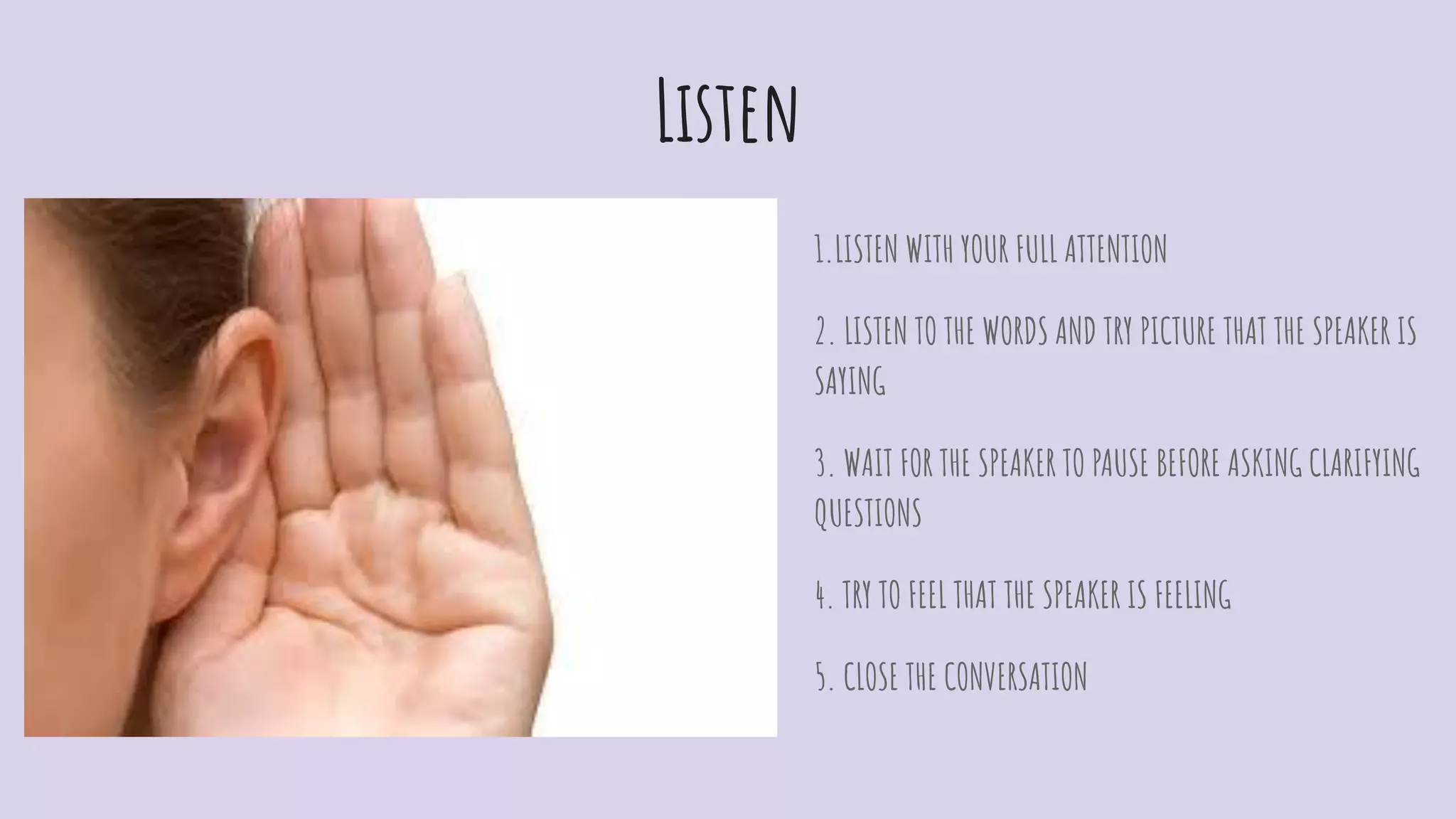
Listen
1.LISTEN WITH YOUR FULL ATTENTION
2. LISTEN TO THE WORDS AND TRY PICTURE THAT THE SPEAKER IS
SAYING
3. WAIT FOR THE SPEAKER TO PAUSE BEFORE ASKING CLARIFYING
QUESTIONS
4. TRY TO FEEL THAT THE SPEAKER IS FEELING
5. CLOSE THE CONVERSATION
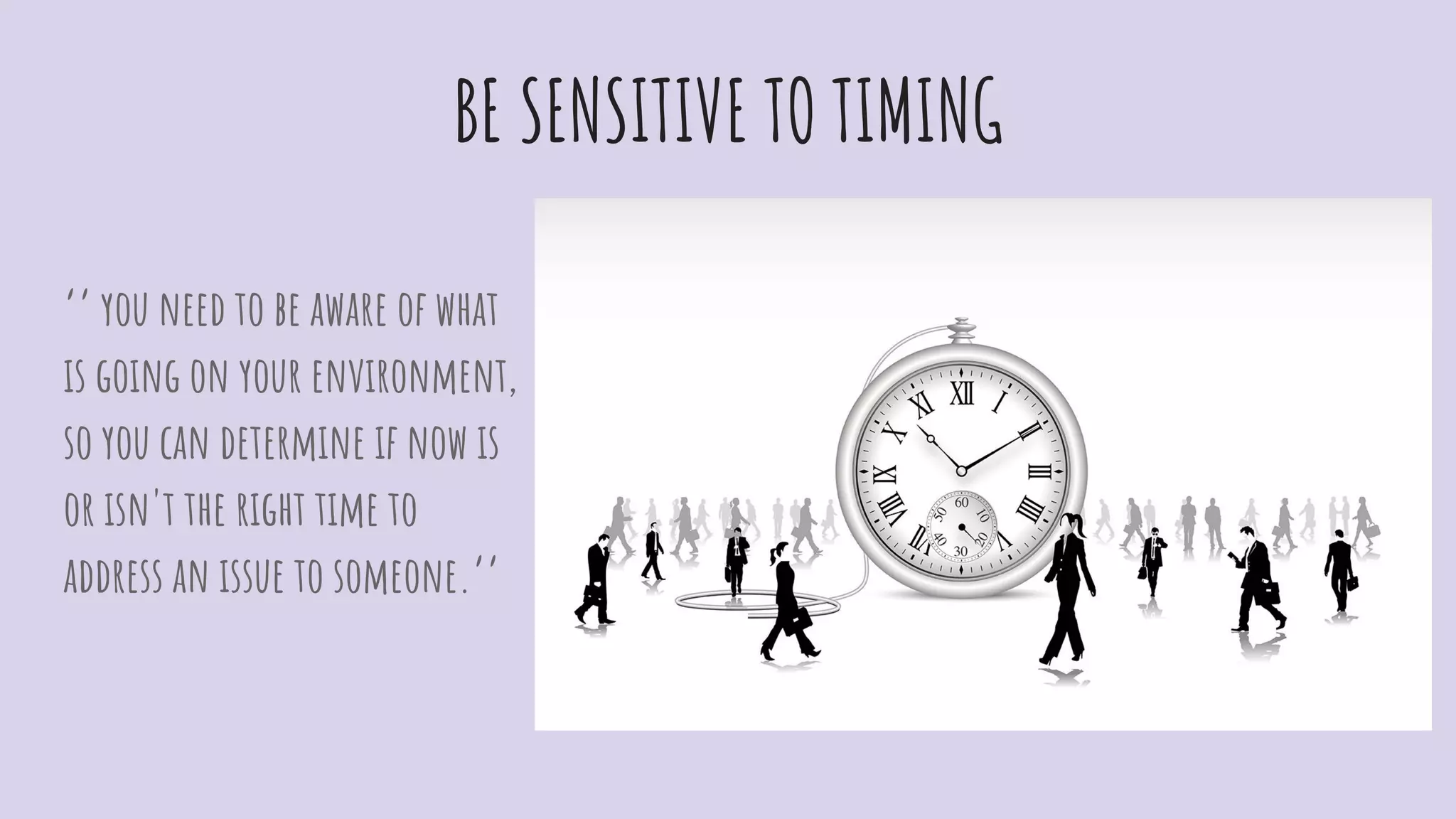
BE SENSITIVE TO TIMING
‘’ you need to be aware of what
is going on your environment,
so you can determine if now is
or isn't the right time to
address an issue to someone.’’
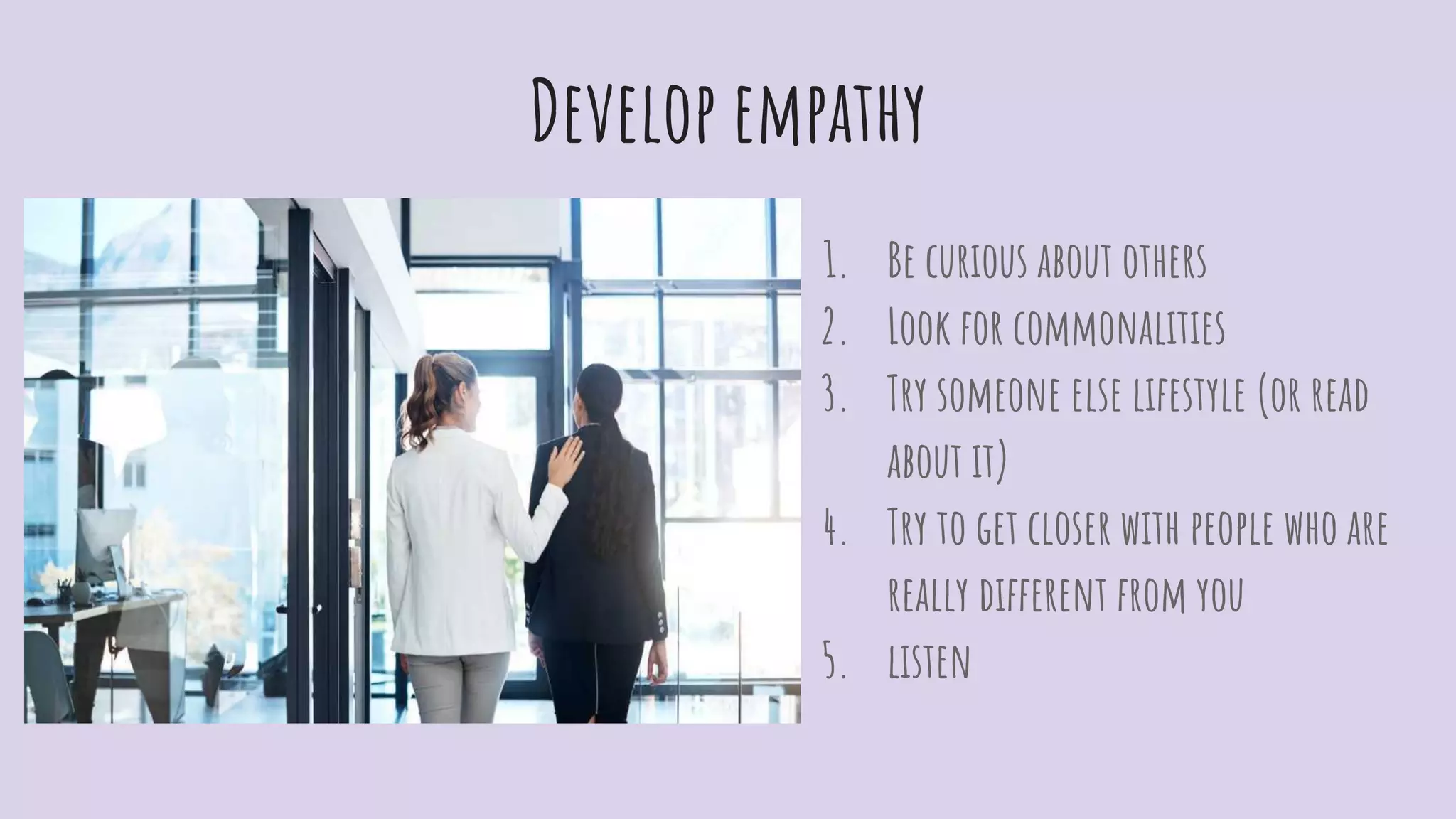
Develop empathy
1. Be curious about others
2. Look for commonalities
3. Try someone else lifestyle (or read
about it)
4. Try to get closer with people who are
really different from you
5. listen
Relationship
management
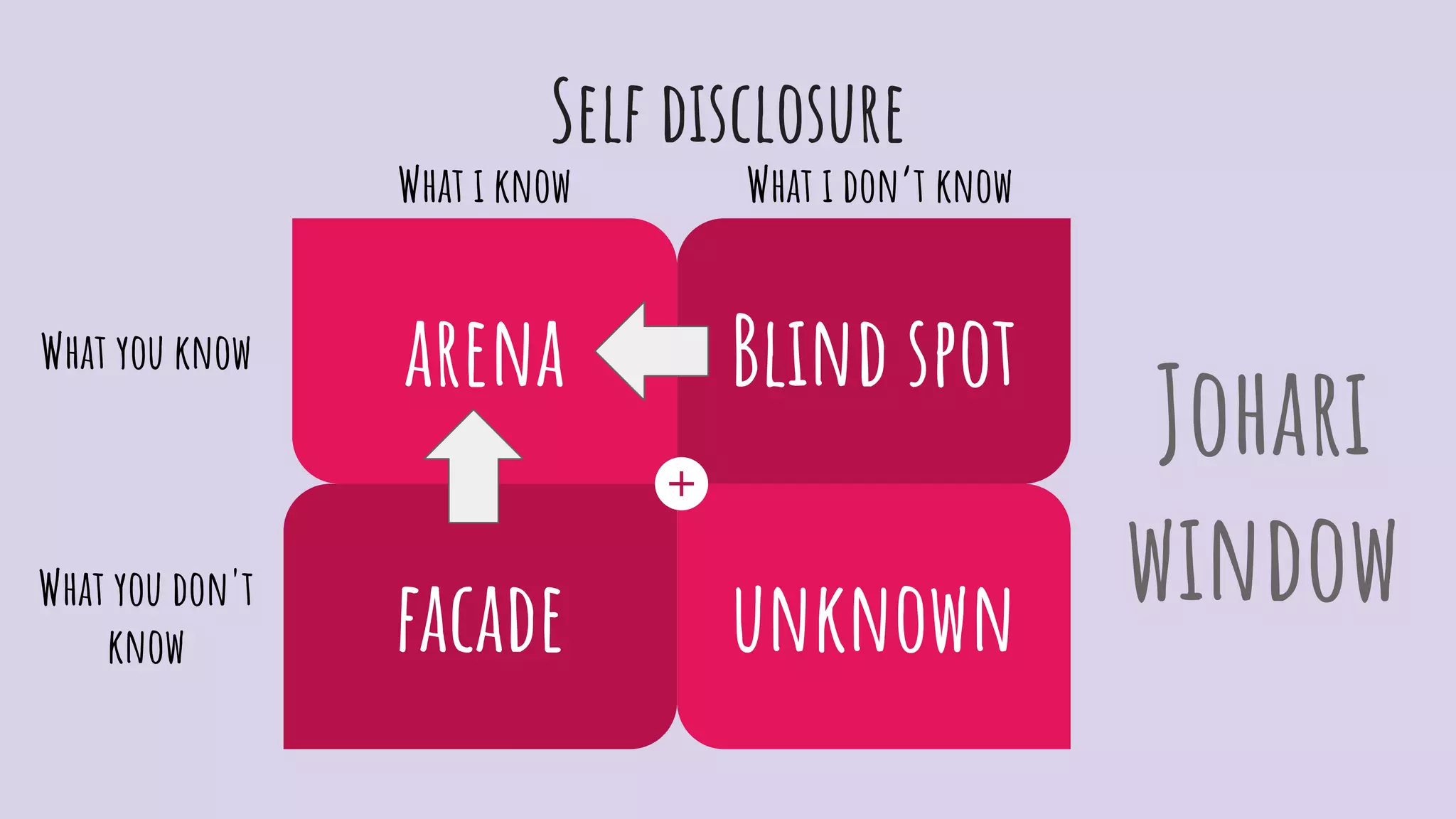
Self disclosure
Blind spotarena
facade unknown
What i know What i don’t know
What you know
What you don't
know
Johari
window
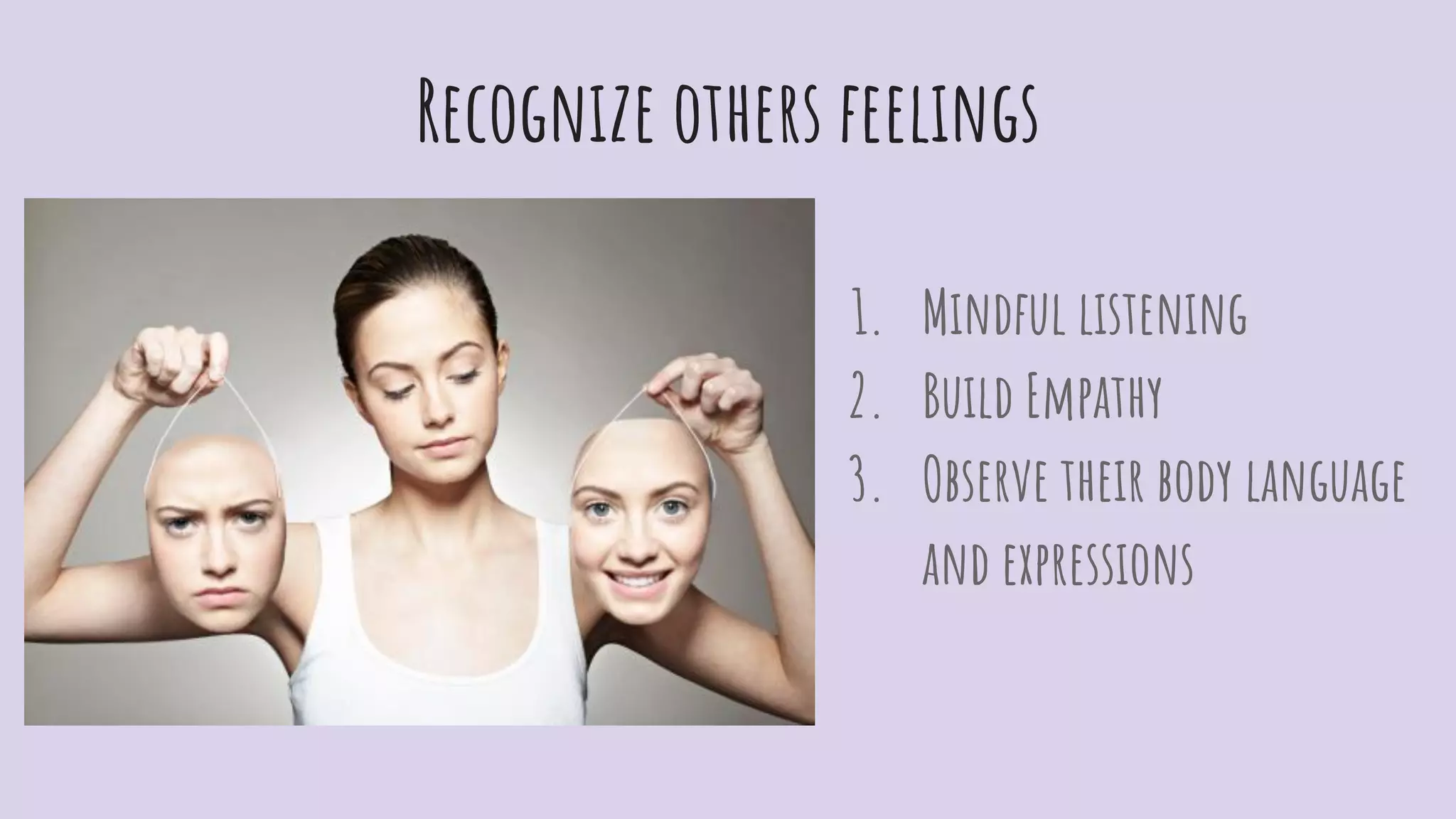
Recognize others feelings
1. Mindful listening
2. Build Empathy
3. Observe their body language
and expressions
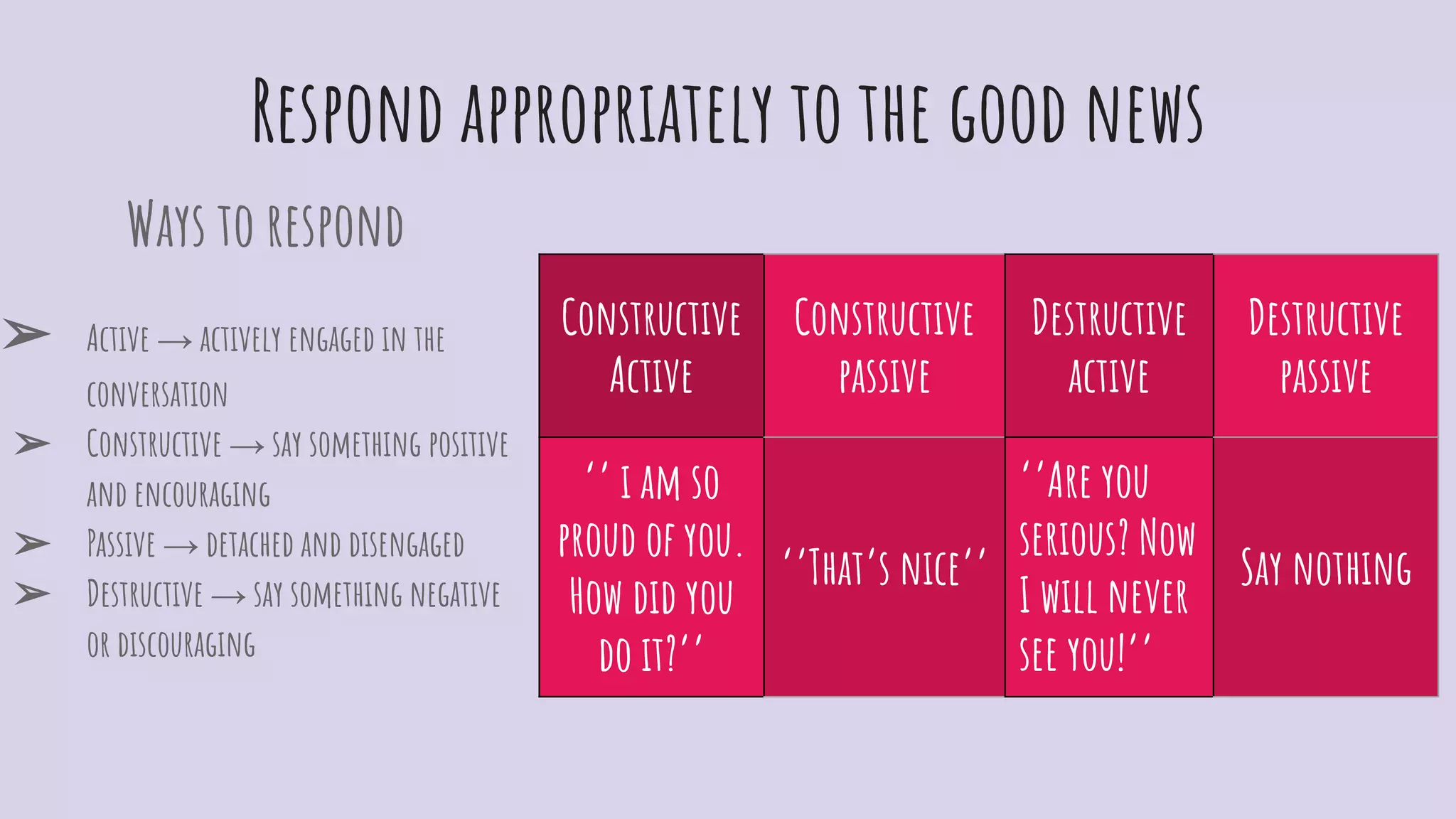
Respond appropriately to the good news
Ways to respond
➢ Active → actively engaged in the
conversation
➢ Constructive → say something positive
and encouraging
➢ Passive → detached and disengaged
➢ Destructive → say something negative
or discouraging
Constructive
Active
Constructive
passive
Destructive
active
Destructive
passive
‘’ i am so
proud of you.
How did you
do it?’’
‘’That’s nice’’
‘’Are you
serious? Now
I will never
see you!’’
Say nothing
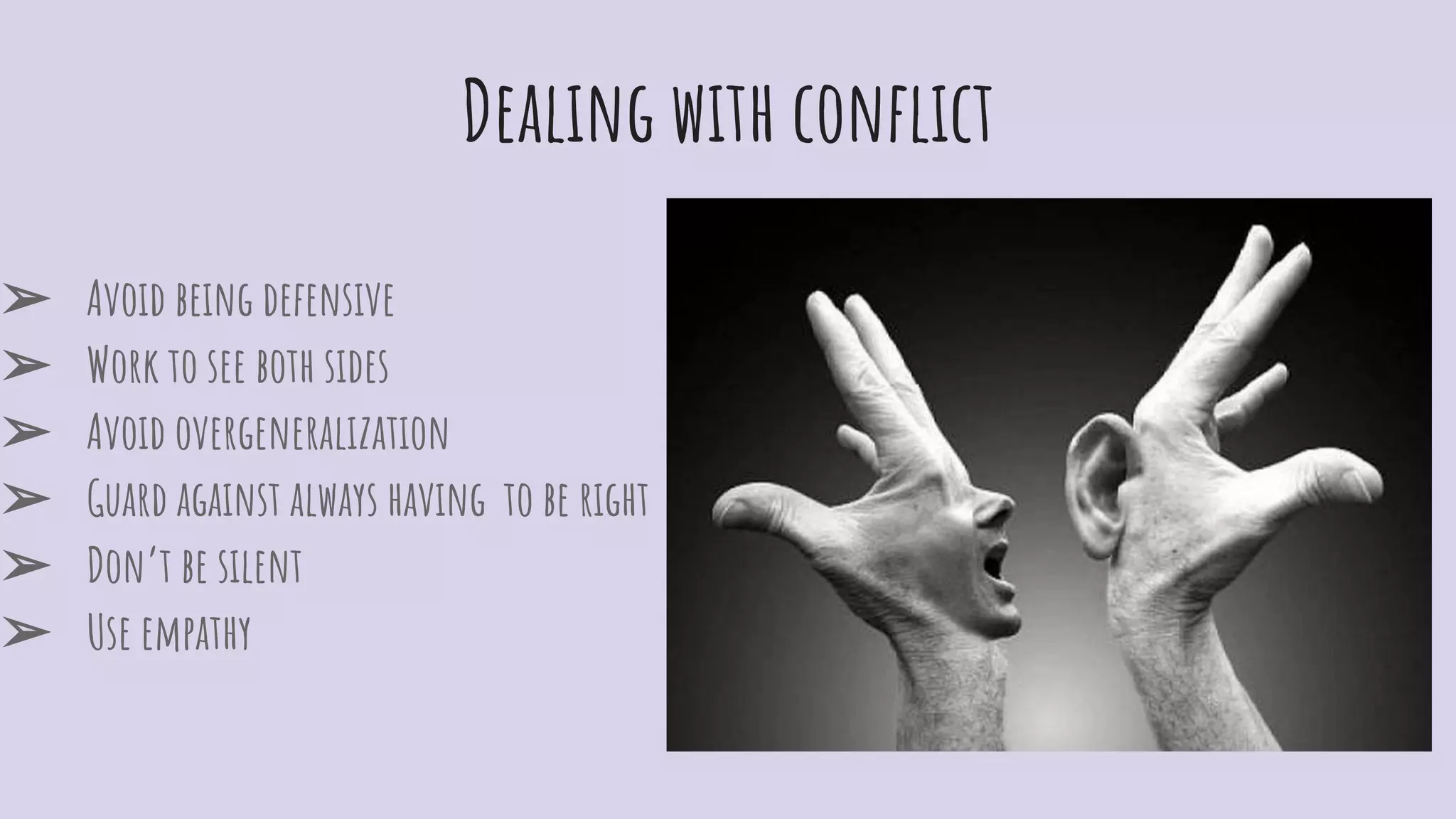
Dealing with conflict
➢ Avoid being defensive
➢ Work to see both sides
➢ Avoid overgeneralization
➢ Guard against always having to be right
➢ Don’t be silent
➢ Use empathy
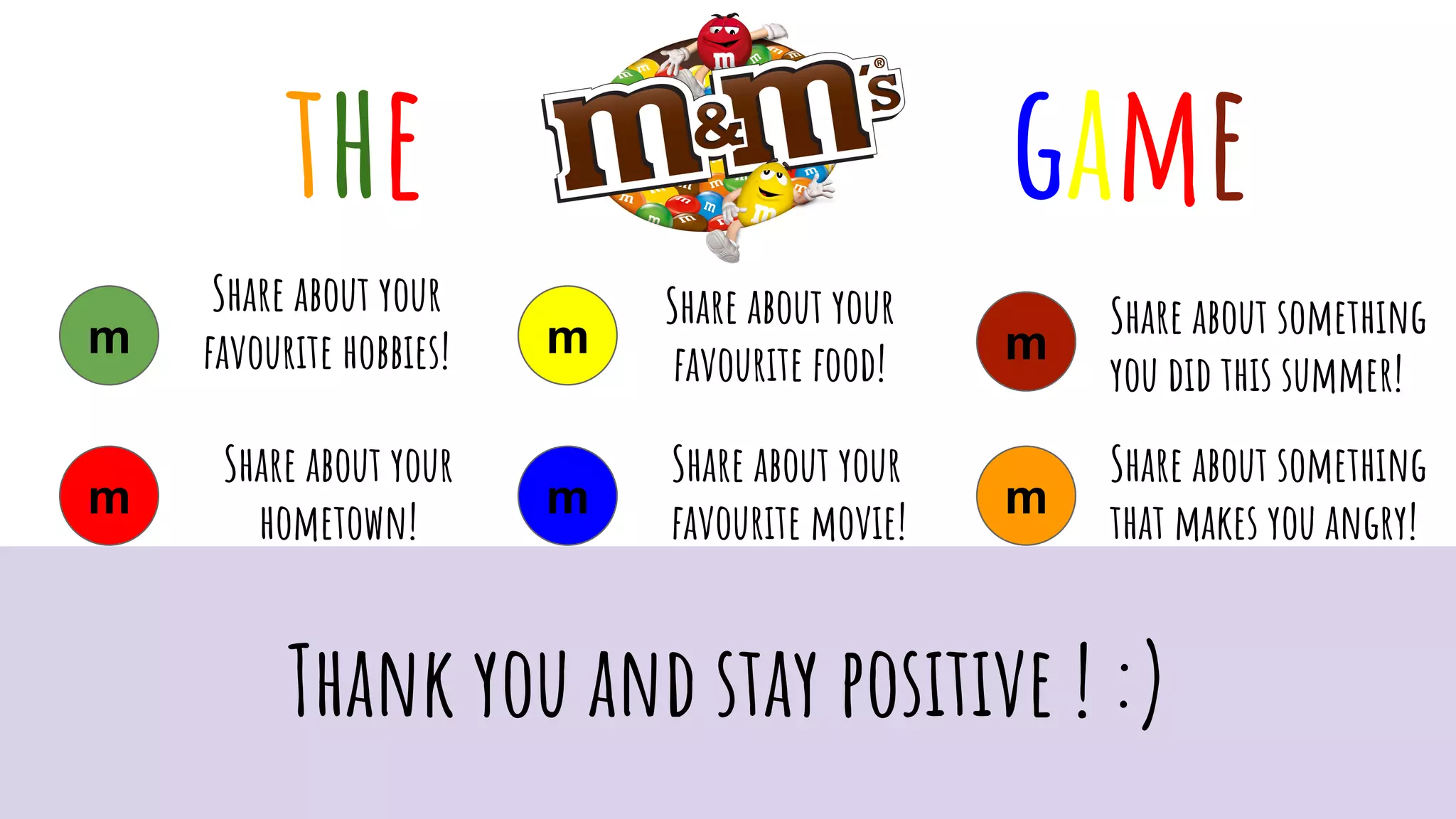
gamethe
m
m
m
m
m
m
Share about your
favourite hobbies!
Share about your
hometown!
Share about your
favourite food!
Share about your
favourite movie!
Share about something
you did this summer!
Share about something
that makes you angry!
Thank you and stay positive ! :)

2020 02 emotional_intelligence_rapidbounce_presentation_by_elena

  • 1.
  • 2.
  • 3.
    Gives you thetools to manage your mood and affect your memories Helps your relationships it's a key to leadership success Is linked to better work performance Why EQ is Important
  • 4.
    How emotions affectthe brain Angel Brain or Neocortex03 Is responsible for the development of human language, abstract thought, imagination and consciousness. Mammal Brain or Limbic System02 Supports a variety of functions including emotions, behavior, motivation, memory and human senses Reptile brain01 Controls the body’s vital functions [heart rate, breathing, body temperature and balance]
  • 5.
  • 6.
    1. Understand yourstrength and weakness Make a list of your strengths and developmental opportunities Strength ● Creative ● Sincere ● Responsible ● Goal oriented ● Diplomatic Weaknesses ● Inpatient ● Overthinking ● Self-criticism ● Too sensitive ● Impulsive
  • 7.
    2. Ask forfeedback from your friends and your family Reactions to negative feedback ➢ Surprise ➢ Anger ➢ Rationalization ➢ Acceptance
  • 8.
    3. Identify YourEmotions action What we think What we feel What we can do We are working on a new project The result will not be good enough insecure we can do our best for the desired result and if it will not be as good as we expected to be, we can improve our skills for the next time
  • 9.
    4. Get intouch with your body Explore what your body feels like.
  • 10.
    5. Understand yourselfunder stress Ask yourself 3 questions: 1. What makes you stressed? 2. How do you know you are stressed? ➢ Ex. Low energy, headaches, rapid heartbeat, sleep problems, changes on behaviour) 3. What makes you cope with stress? ➢ Ex. Eat healthy, share your problem with other people, take a break, exercise
  • 11.
  • 12.
    1. Develop selfcare ➢ Nutrition ➢ Exercise ➢ Sleep Hygiene ➢ Meditation ➢ Socializing ➢ Take a massage ➢ Find a hobby
  • 13.
  • 14.
    3. Cultivate positiveemotions Gratitude INTEREST PRIDE HOPE LOVE JOY ‘’When people increase their daily diets of positive emotions, they find more meaning and purpose in life’’
  • 15.
    4. Realize yourown mistakes ➢ Understand that submitting your faults and apologizing for them are not signs of weakness ➢ Do not point a finger to others ➢ Evaluate how your actions or words would affect you if you were the receiver ➢ Be thankful for constructive criticism
  • 16.
  • 17.
    Reflecting on otherpersonalities ‘’We can be a lot of time so self focused, that we don't observe what's going on with others.’’
  • 18.
    Listen 1.LISTEN WITH YOURFULL ATTENTION 2. LISTEN TO THE WORDS AND TRY PICTURE THAT THE SPEAKER IS SAYING 3. WAIT FOR THE SPEAKER TO PAUSE BEFORE ASKING CLARIFYING QUESTIONS 4. TRY TO FEEL THAT THE SPEAKER IS FEELING 5. CLOSE THE CONVERSATION
  • 19.
    BE SENSITIVE TOTIMING ‘’ you need to be aware of what is going on your environment, so you can determine if now is or isn't the right time to address an issue to someone.’’
  • 20.
    Develop empathy 1. Becurious about others 2. Look for commonalities 3. Try someone else lifestyle (or read about it) 4. Try to get closer with people who are really different from you 5. listen
  • 21.
  • 22.
    Self disclosure Blind spotarena facadeunknown What i know What i don’t know What you know What you don't know Johari window
  • 23.
    Recognize others feelings 1.Mindful listening 2. Build Empathy 3. Observe their body language and expressions
  • 24.
    Respond appropriately tothe good news Ways to respond ➢ Active → actively engaged in the conversation ➢ Constructive → say something positive and encouraging ➢ Passive → detached and disengaged ➢ Destructive → say something negative or discouraging Constructive Active Constructive passive Destructive active Destructive passive ‘’ i am so proud of you. How did you do it?’’ ‘’That’s nice’’ ‘’Are you serious? Now I will never see you!’’ Say nothing
  • 25.
    Dealing with conflict ➢Avoid being defensive ➢ Work to see both sides ➢ Avoid overgeneralization ➢ Guard against always having to be right ➢ Don’t be silent ➢ Use empathy
  • 26.
    gamethe m m m m m m Share about your favouritehobbies! Share about your hometown! Share about your favourite food! Share about your favourite movie! Share about something you did this summer! Share about something that makes you angry! Thank you and stay positive ! :)