Practical Emotional Intelligence
Volume 17:
Personality Type 7:
‘The Optimist’
(part 1 of 2)
Adopted from the book ‘Stop Being
Your Self’ by Ronan Gallagher
Type 7: General Unconscious Behaviours
Type 7: Basic Desire In Life
Type 7: Self-Image
Type 7: Childhood
Type 7: Result of Imbalanced Personality
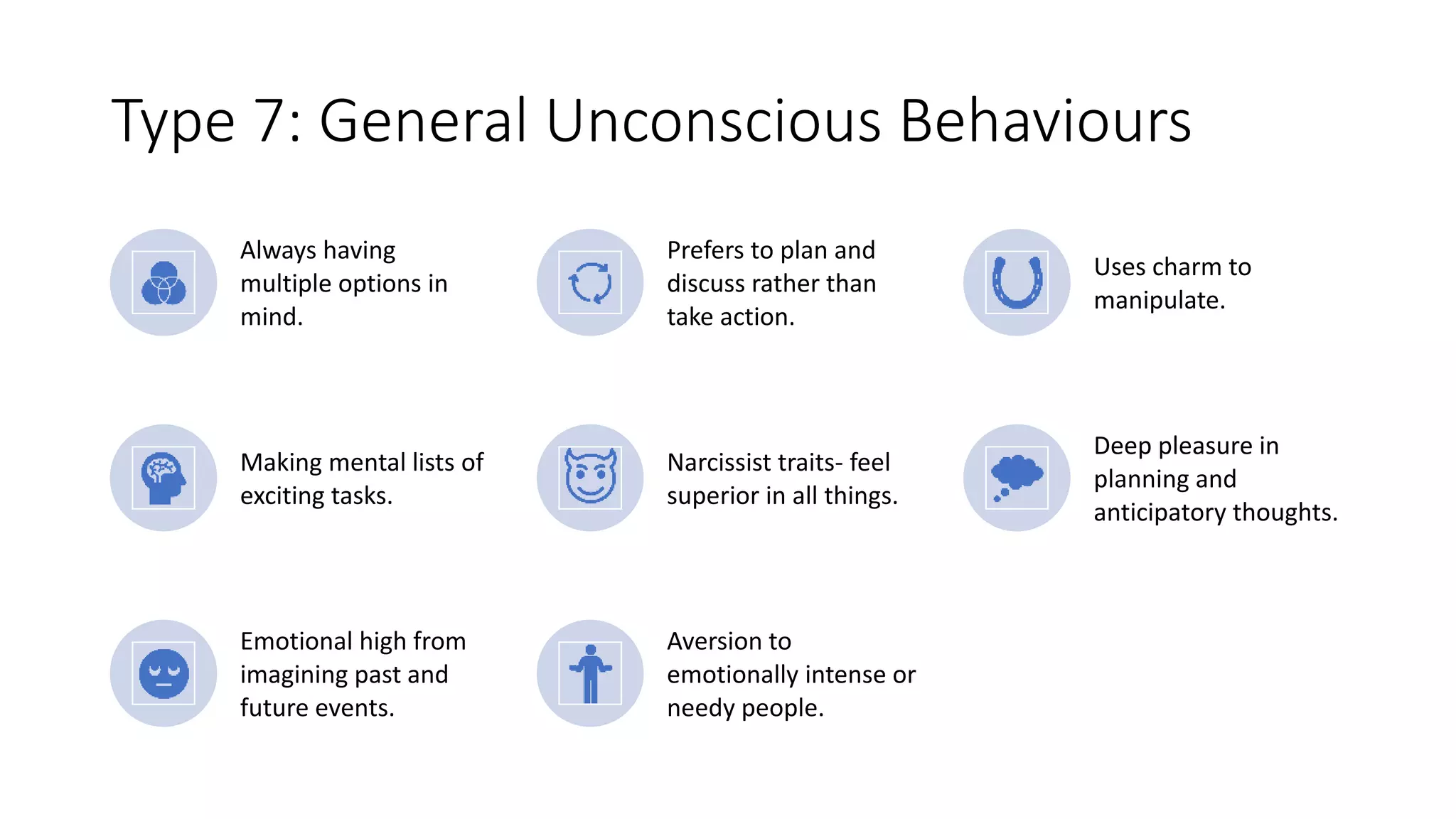
Type 7: General Unconscious Behaviours
Always having
multiple options in
mind.
Prefers to plan and
discuss rather than
take action.
Uses charm to
manipulate.
Making mental lists of
exciting tasks.
Narcissist traits- feel
superior in all things.
Deep pleasure in
planning and
anticipatory thoughts.
Emotional high from
imagining past and
future events.
Aversion to
emotionally intense or
needy people.
Type 7:
Basic
Desire in
Life
The Desire to be happy.
The Desire to be happy results in a
constant escaping into pleasurable
thoughts of past and future events. The
emotional high blocks any potential
emotional pain.
Type 7: Self-Image
An enthusiastic, positive and outgoing
individual, with an ability to lift people’s
mood.
Someone with natural abilities at any
chosen pursuit, and a proud problem
solver.
An individual with an incredible
imagination and creative, intuitive
thoughts.
Type 7: Childhood
• Feel that they were disconnected from the nurturing
figure in their childhood. The disconnection led to
frustration and anxiety.
• There can be many reasons for this break in
nurturance- a new sibling and trauma or illness in
mother’s life.
• They decided at some point that they would look
after their own needs- that is be their own nurturer.
This sets them up for a lifetime of focusing on
positive thoughts and experiences to nurture
themselves, or keep anxiety at bay.
Type 7: Result of Imbalanced Personality
They have an insatiable desire for positive, exciting and stimulating thoughts, ideas
and activities.
Residing so much in your mind, with attractive thoughts, leads to problems with
focus, follow-through and completion of tasks. Can seem scattered.
Constantly blocking negative thoughts and concerns with positive and idyllic counter
thoughts misses out on an opportunity for growth. Tolerating emotional pain leads to
resolving it permanently and to enjoying positive emotions more fully.
Thank you very much for reading!
Would love to hear your
thoughts or comments! Part 2
coming next week.

Practical emotional intelligence volume 17

  • 1.
    Practical Emotional Intelligence Volume17: Personality Type 7: ‘The Optimist’ (part 1 of 2) Adopted from the book ‘Stop Being Your Self’ by Ronan Gallagher
  • 2.
    Type 7: GeneralUnconscious Behaviours Type 7: Basic Desire In Life Type 7: Self-Image Type 7: Childhood Type 7: Result of Imbalanced Personality
  • 3.
    Type 7: GeneralUnconscious Behaviours Always having multiple options in mind. Prefers to plan and discuss rather than take action. Uses charm to manipulate. Making mental lists of exciting tasks. Narcissist traits- feel superior in all things. Deep pleasure in planning and anticipatory thoughts. Emotional high from imagining past and future events. Aversion to emotionally intense or needy people.
  • 4.
    Type 7: Basic Desire in Life TheDesire to be happy. The Desire to be happy results in a constant escaping into pleasurable thoughts of past and future events. The emotional high blocks any potential emotional pain.
  • 5.
    Type 7: Self-Image Anenthusiastic, positive and outgoing individual, with an ability to lift people’s mood. Someone with natural abilities at any chosen pursuit, and a proud problem solver. An individual with an incredible imagination and creative, intuitive thoughts.
  • 6.
    Type 7: Childhood •Feel that they were disconnected from the nurturing figure in their childhood. The disconnection led to frustration and anxiety. • There can be many reasons for this break in nurturance- a new sibling and trauma or illness in mother’s life. • They decided at some point that they would look after their own needs- that is be their own nurturer. This sets them up for a lifetime of focusing on positive thoughts and experiences to nurture themselves, or keep anxiety at bay.
  • 7.
    Type 7: Resultof Imbalanced Personality They have an insatiable desire for positive, exciting and stimulating thoughts, ideas and activities. Residing so much in your mind, with attractive thoughts, leads to problems with focus, follow-through and completion of tasks. Can seem scattered. Constantly blocking negative thoughts and concerns with positive and idyllic counter thoughts misses out on an opportunity for growth. Tolerating emotional pain leads to resolving it permanently and to enjoying positive emotions more fully.
  • 8.
    Thank you verymuch for reading! Would love to hear your thoughts or comments! Part 2 coming next week.