Matthew Rosenquist
Cybersecurity Strategist
February 2017
“We manage security through
Leadership and Preparation,
otherwise we face Crisis and
Desperation”
2
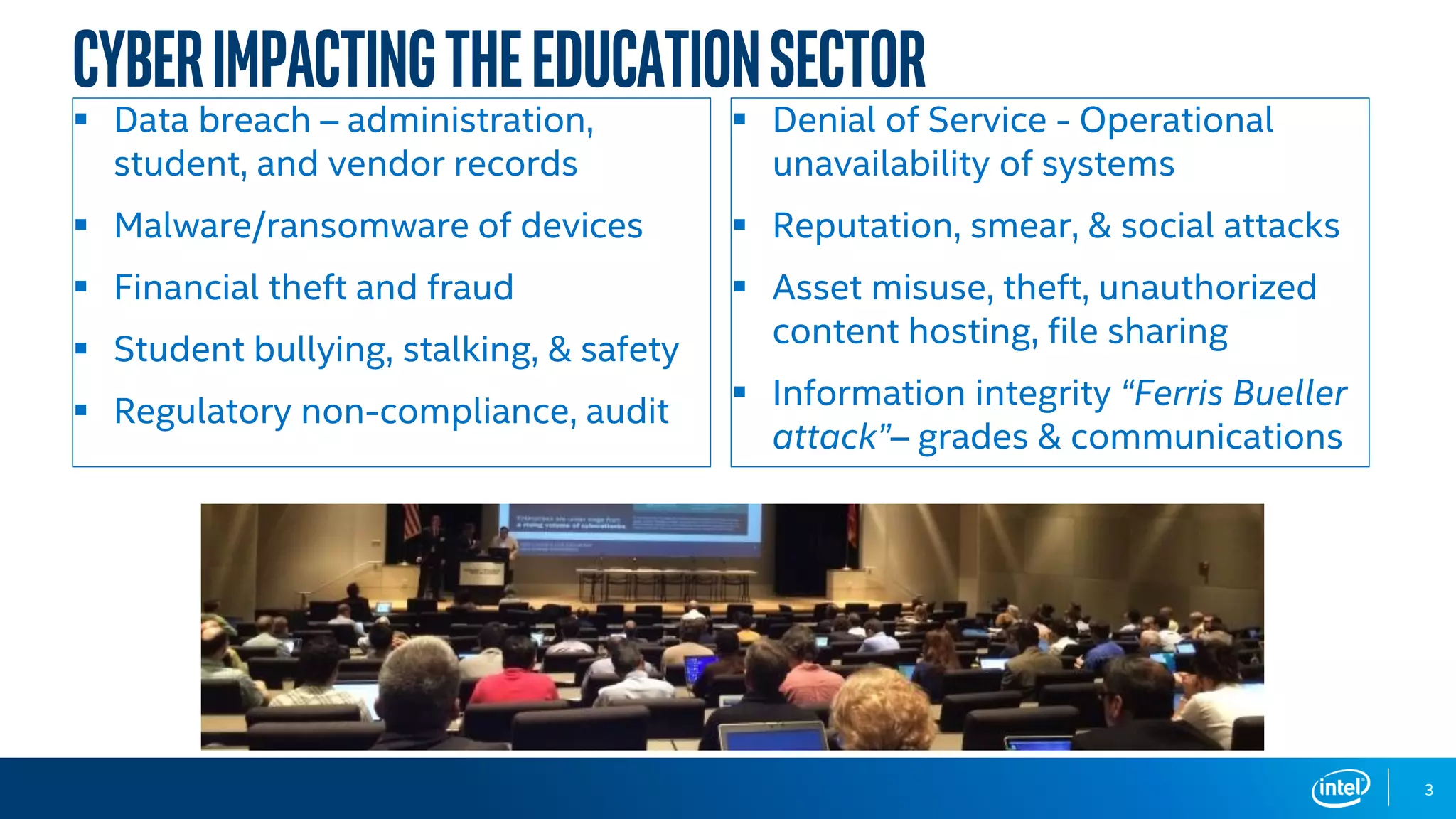
 Data breach – administration,
student, and vendor records
 Malware/ransomware of devices
 Financial theft and fraud
 Student bullying, stalking, & safety
 Regulatory non-compliance, audit
 Denial of Service - Operational
unavailability of systems
 Reputation, smear, & social attacks
 Asset misuse, theft, unauthorized
content hosting, file sharing
 Information integrity “Ferris Bueller
attack”– grades & communications
CyberImpactingtheeducationsector
3
Threats&TechnologyLandscape
4
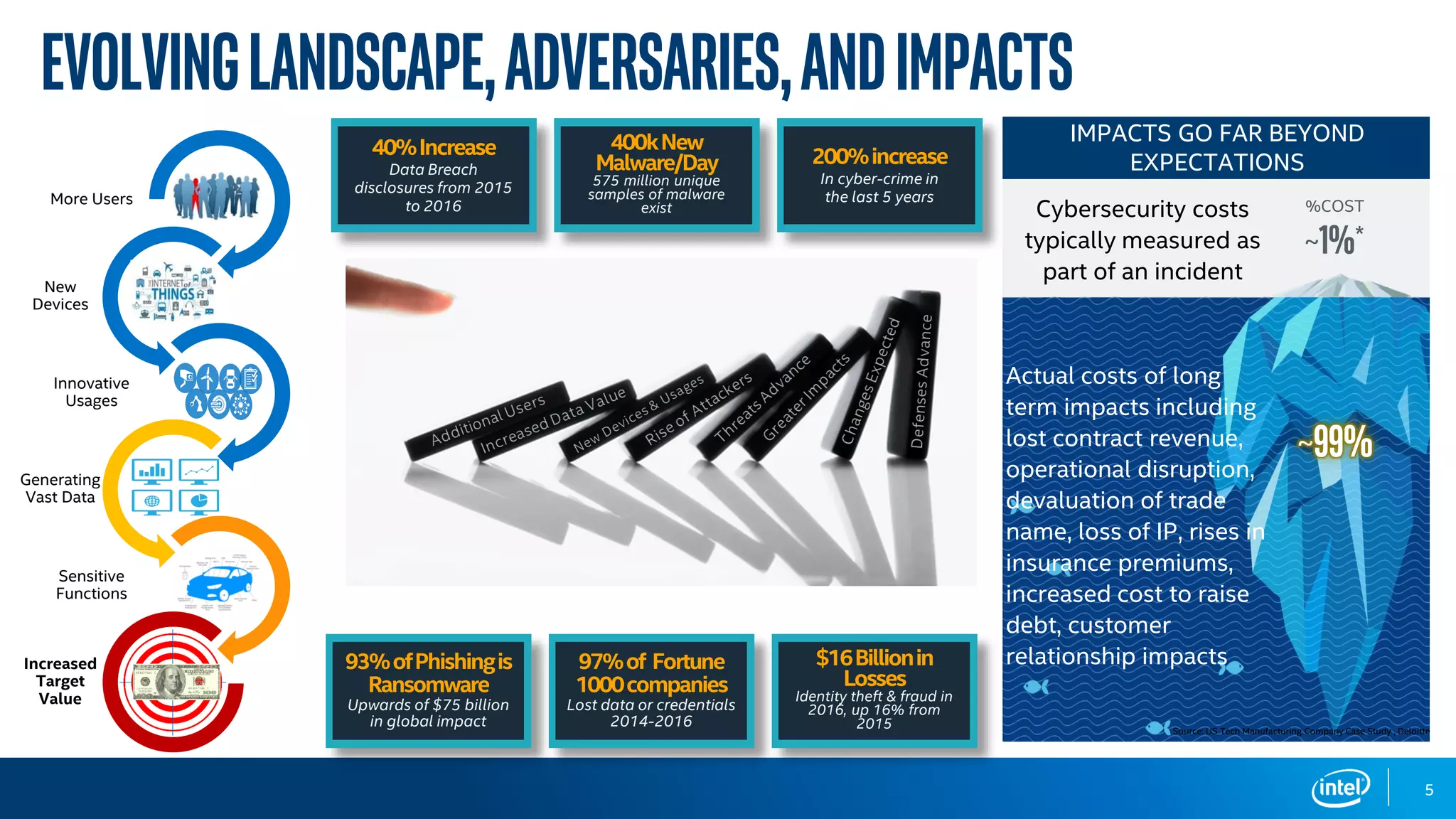
EvolvingLandscape,Adversaries,andimpacts
i
93%ofPhishingis
Ransomware
Upwards of $75 billion
in global impact
i
97%of Fortune
1000companies
Lost data or credentials
2014-2016
i
$16Billionin
Losses
Identity theft & fraud in
2016, up 16% from
2015
IMPACTS GO FAR BEYOND
EXPECTATIONS
Cybersecurity costs
typically measured as
part of an incident
Actual costs of long
term impacts including
lost contract revenue,
operational disruption,
devaluation of trade
name, loss of IP, rises in
insurance premiums,
increased cost to raise
debt, customer
relationship impacts
%COST
~1%*
Source: US Tech Manufacturing Company Case Study , Deloitte
~99%
5
More Users
New
Devices
Innovative
Usages
Generating
Vast Data
Sensitive
Functions
Increased
Target
Value
i
40%Increase
Data Breach
disclosures from 2015
to 2016
i
400kNew
Malware/Day
575 million unique
samples of malware
exist
i
200%increase
In cyber-crime in
the last 5 years
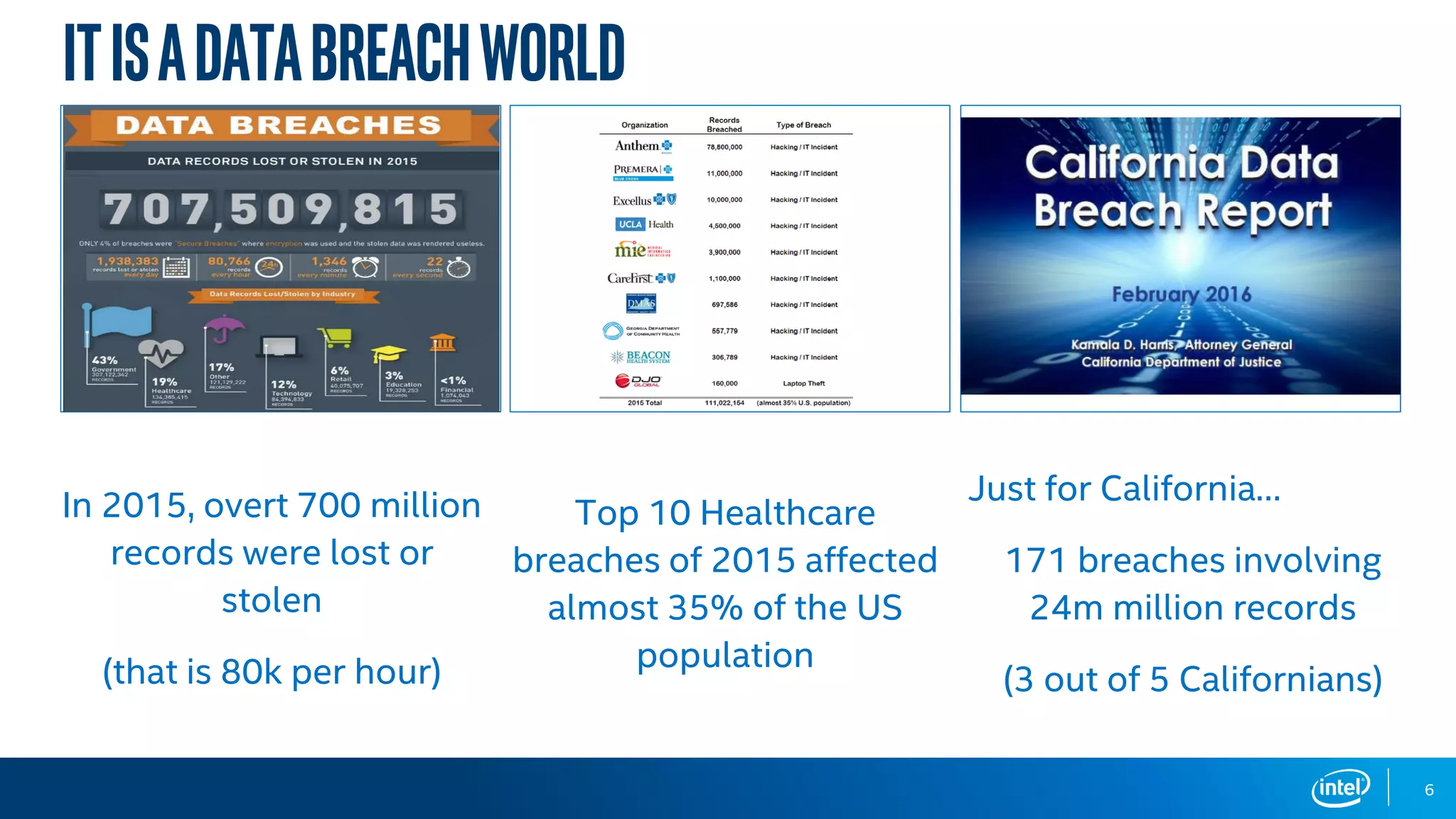
ItisaDataBreachWorld
a
Top 10 Healthcare
breaches of 2015 affected
almost 35% of the US
population
Just for California…
171 breaches involving
24m million records
(3 out of 5 Californians)
In 2015, overt 700 million
records were lost or
stolen
(that is 80k per hour)
6
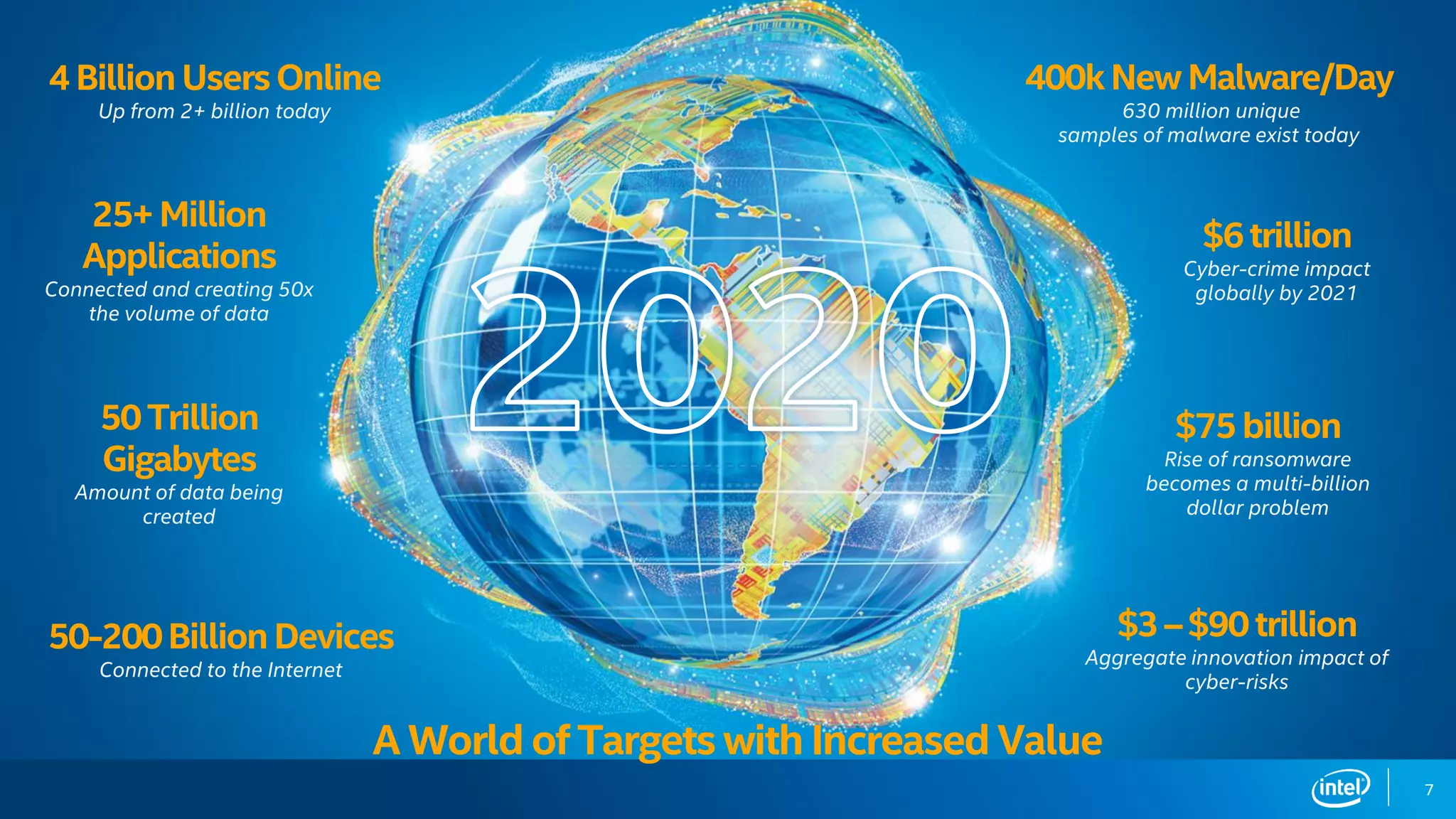
25+Million
Applications
Connected and creating 50x
the volume of data
50-200BillionDevices
Connected to the Internet
$6trillion
Cyber-crime impact
globally by 2021
$3–$90trillion
Aggregate innovation impact of
cyber-risks
400kNew Malware/Day
630 million unique
samples of malware exist today
$75billion
Rise of ransomware
becomes a multi-billion
dollar problem
4 BillionUsersOnline
Up from 2+ billion today
50Trillion
Gigabytes
Amount of data being
created
A World of Targets with Increased Value
7
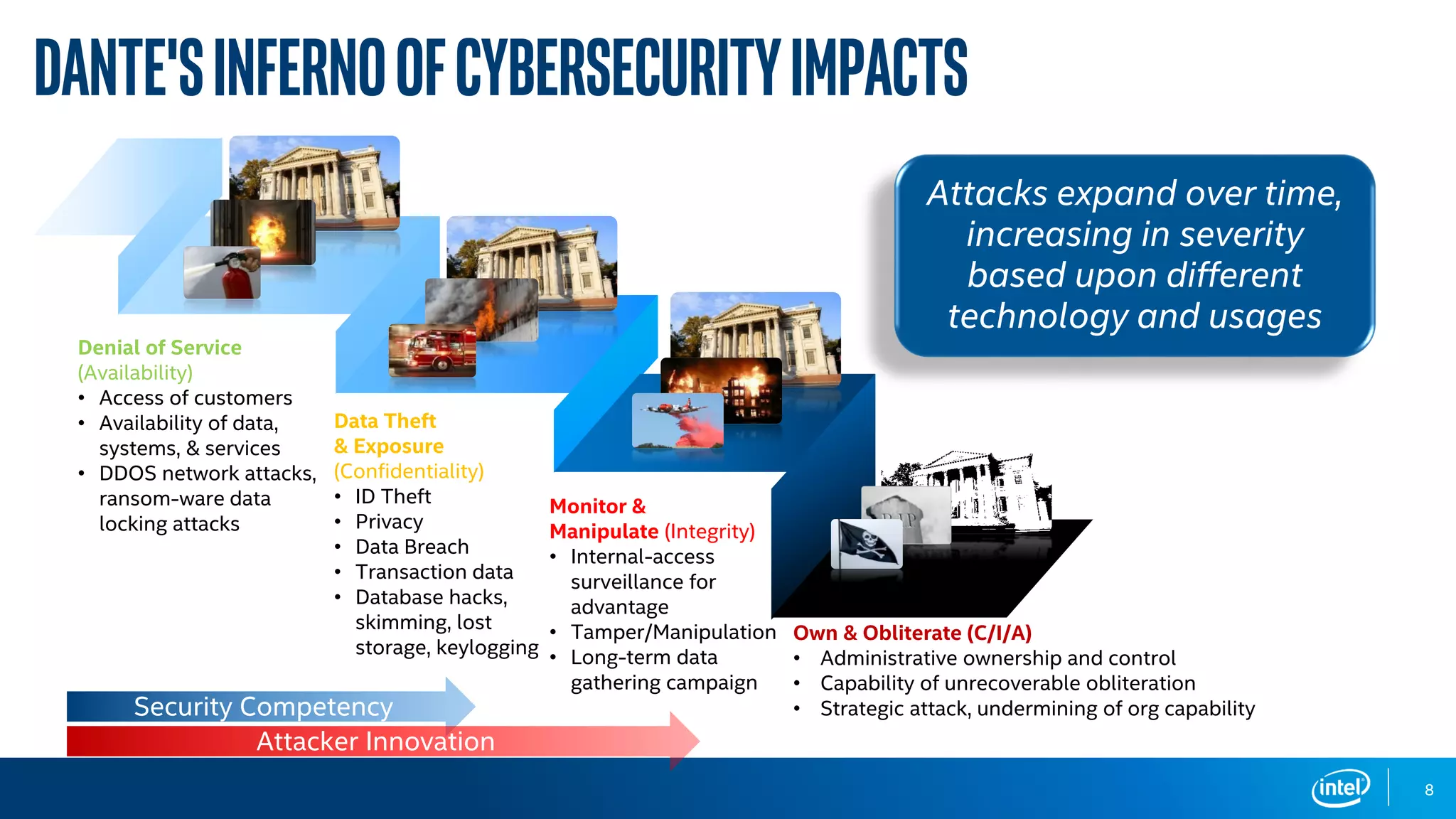
Dante'sInfernoofCybersecurityImpacts
Denial of Service
(Availability)
• Access of customers
• Availability of data,
systems, & services
• DDOS network attacks,
ransom-ware data
locking attacks
Data Theft
& Exposure
(Confidentiality)
• ID Theft
• Privacy
• Data Breach
• Transaction data
• Database hacks,
skimming, lost
storage, keylogging
Monitor &
Manipulate (Integrity)
• Internal-access
surveillance for
advantage
• Tamper/Manipulation
• Long-term data
gathering campaign
Security Competency
Attacker Innovation
Attacks expand over time,
increasing in severity
based upon different
technology and usages
Own & Obliterate (C/I/A)
• Administrative ownership and control
• Capability of unrecoverable obliteration
• Strategic attack, undermining of org capability
8
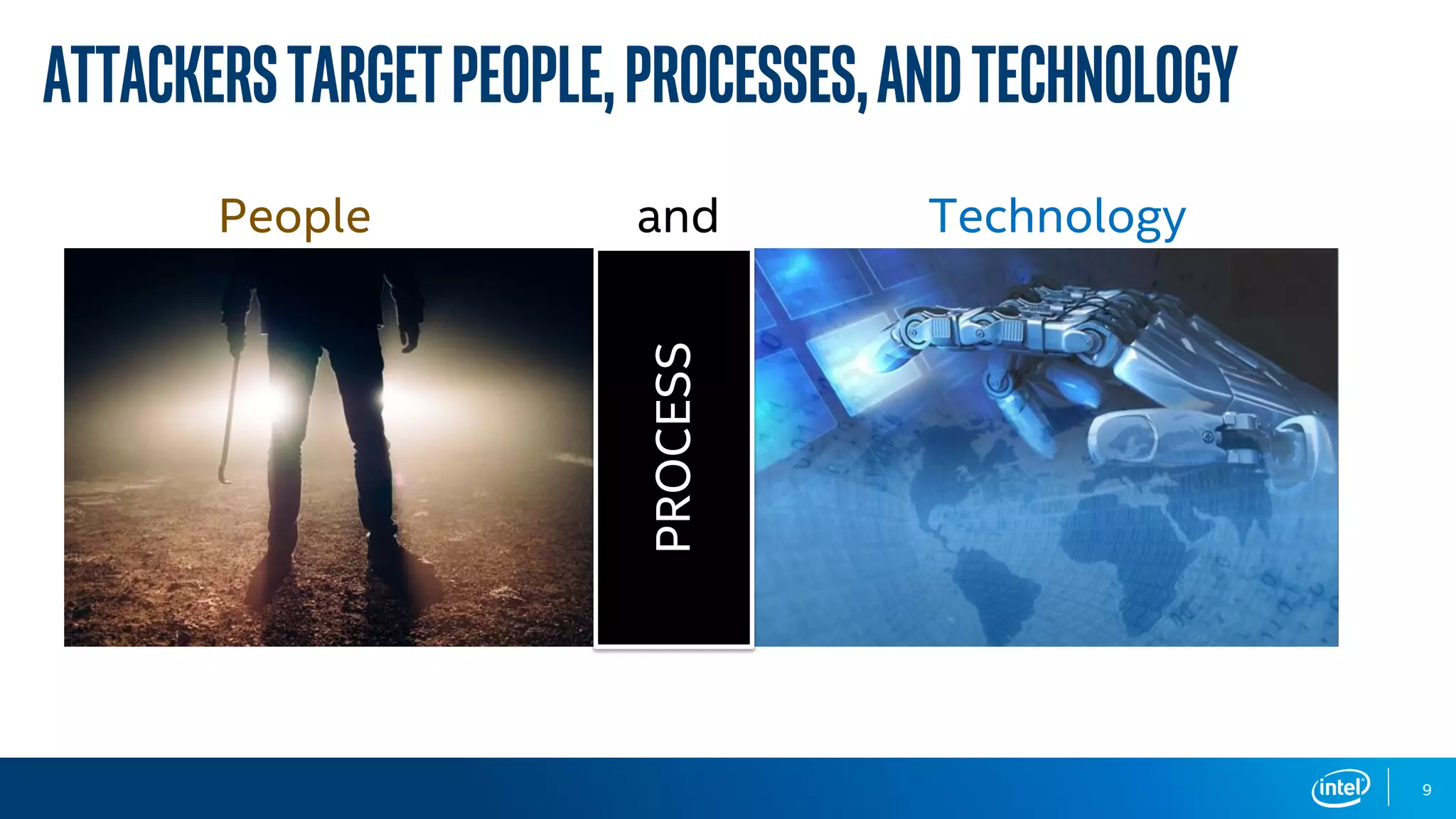
PROCESS
People and Technology
Attackerstargetpeople,processes,andtechnology
9
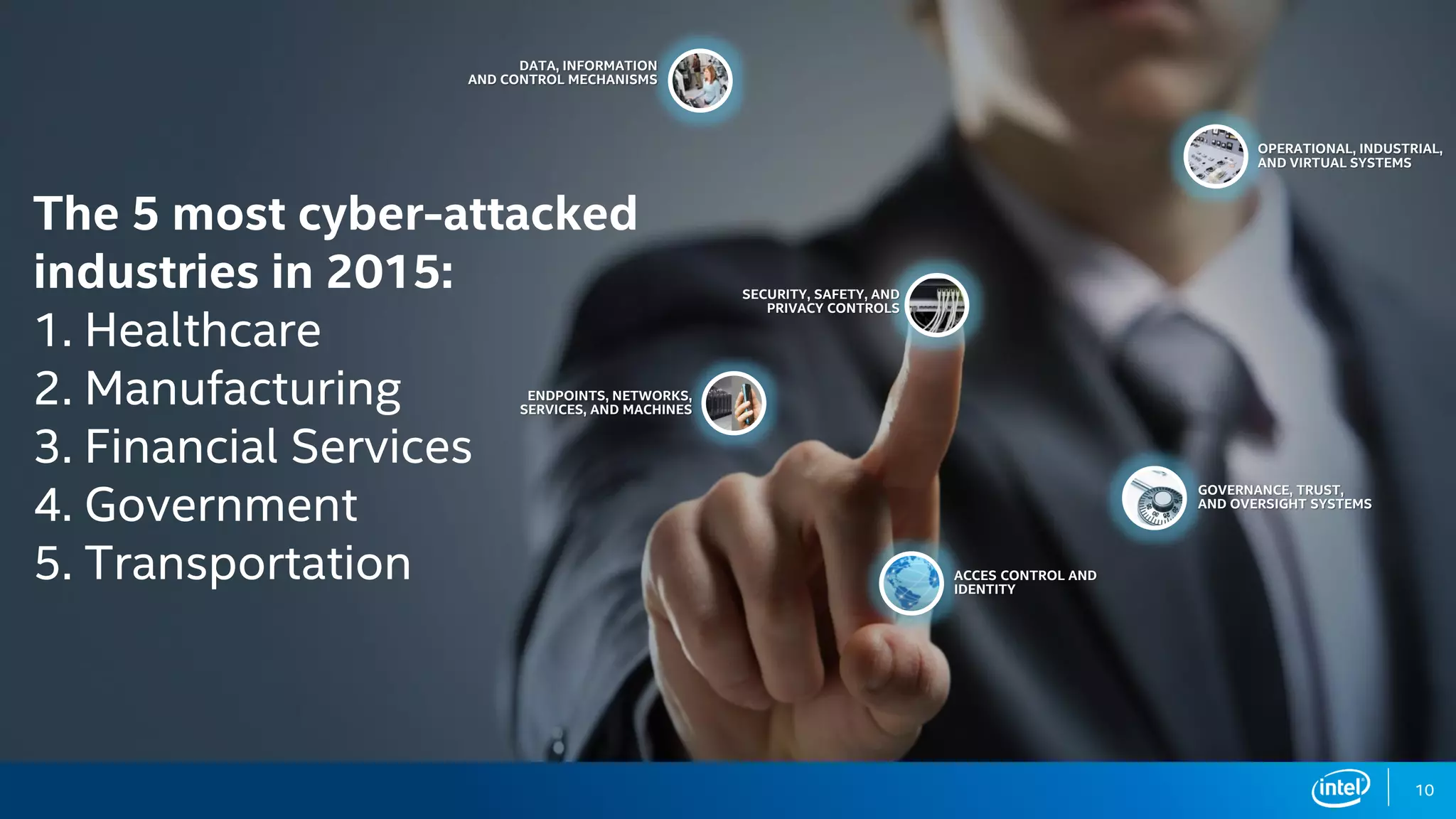
OPERATIONAL, INDUSTRIAL,
AND VIRTUAL SYSTEMS
GOVERNANCE, TRUST,
AND OVERSIGHT SYSTEMS
DATA, INFORMATION
AND CONTROL MECHANISMS
ENDPOINTS, NETWORKS,
SERVICES, AND MACHINES
ACCES CONTROL AND
IDENTITY
SECURITY, SAFETY, AND
PRIVACY CONTROLS
The 5 most cyber-attacked
industries in 2015:
1. Healthcare
2. Manufacturing
3. Financial Services
4. Government
5. Transportation
10
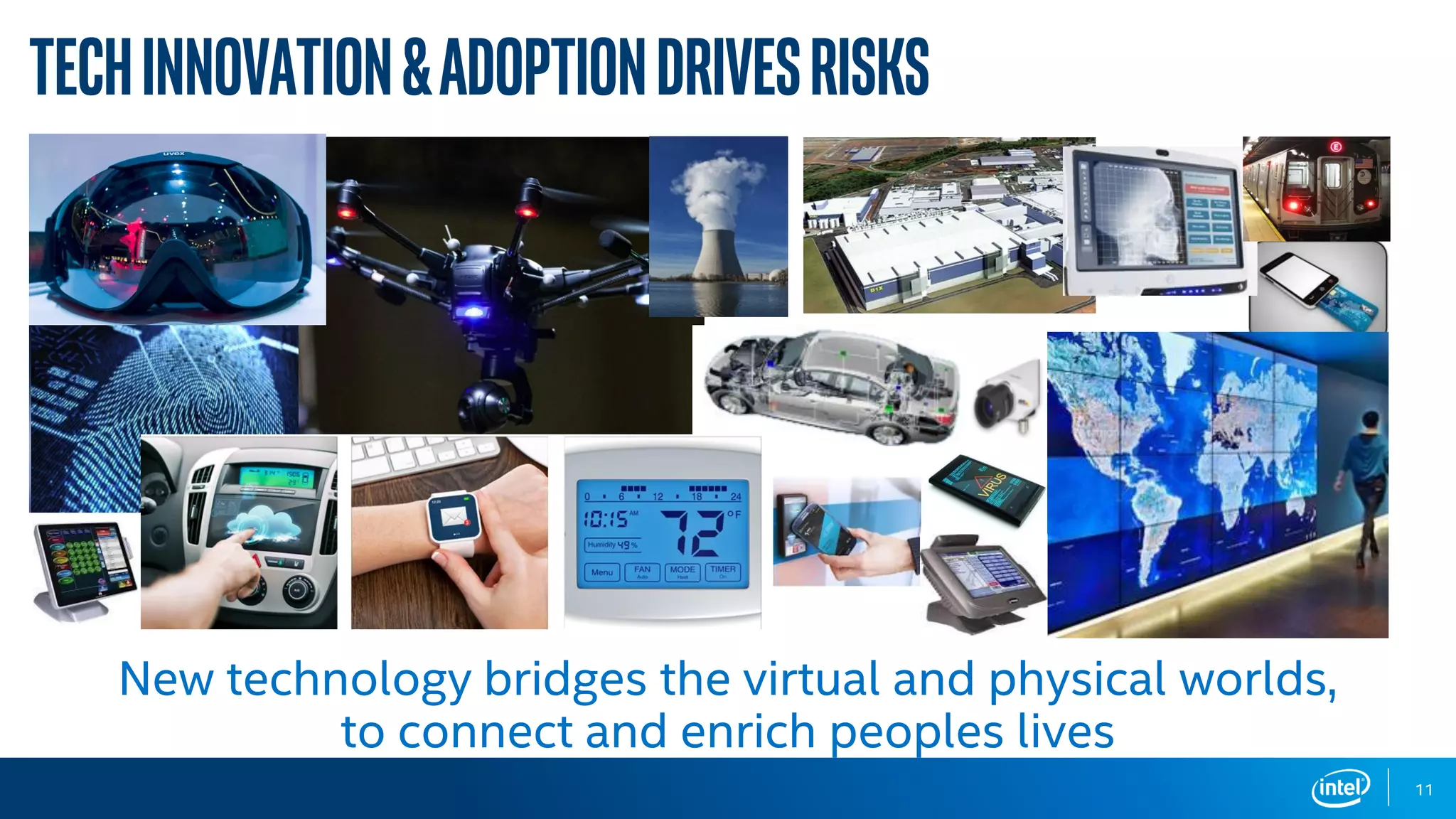
TechInnovation&AdoptionDrivesRisks
New technology bridges the virtual and physical worlds,
to connect and enrich peoples lives
11
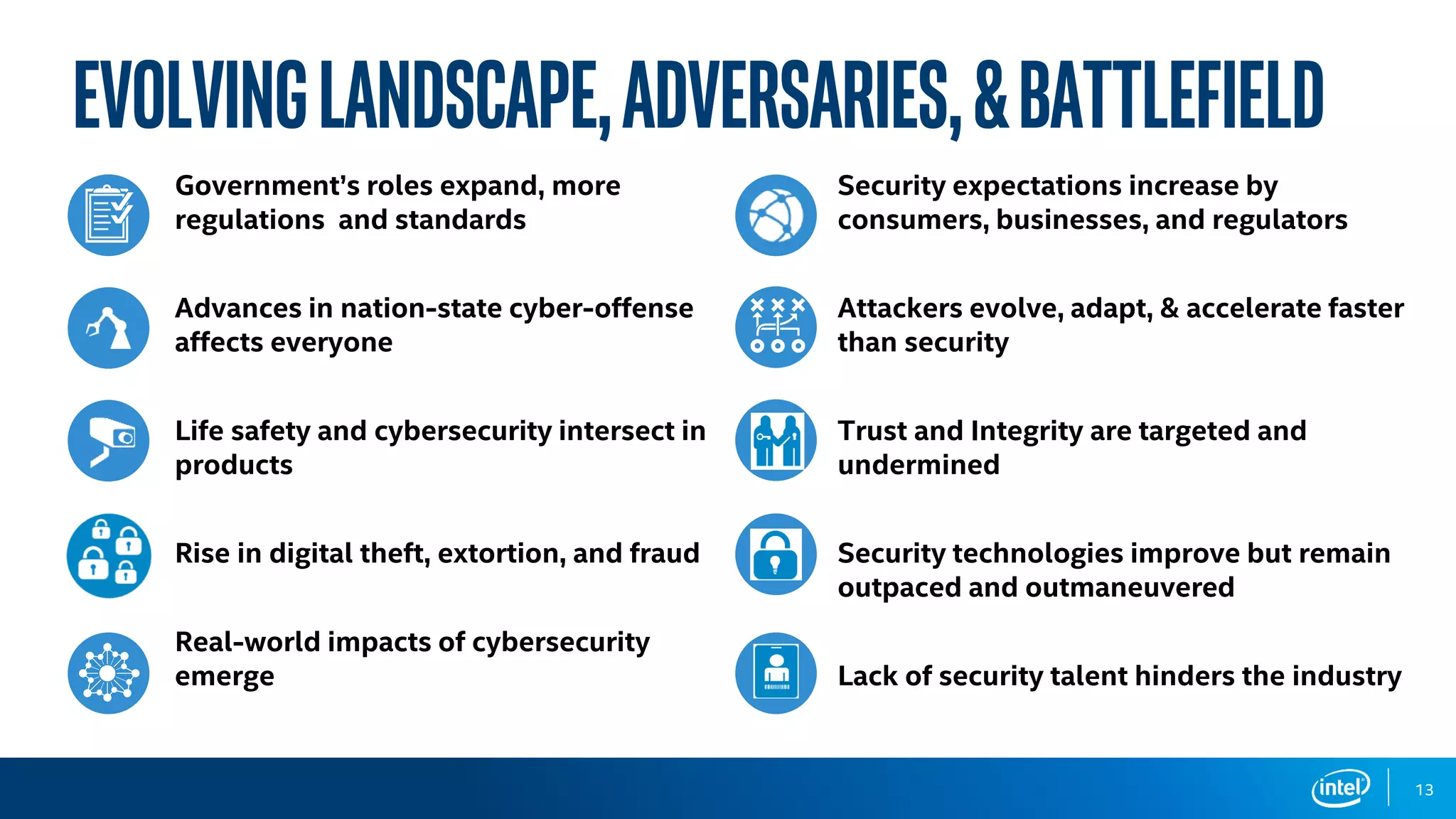
Government’s roles expand, more
regulations and standards
Advances in nation-state cyber-offense
affects everyone
Life safety and cybersecurity intersect in
products
Rise in digital theft, extortion, and fraud
Real-world impacts of cybersecurity
emerge
Security expectations increase by
consumers, businesses, and regulators
Attackers evolve, adapt, & accelerate faster
than security
Trust and Integrity are targeted and
undermined
Security technologies improve but remain
outpaced and outmaneuvered
Lack of security talent hinders the industry
EvolvingLandscape,Adversaries,&Battlefield
13
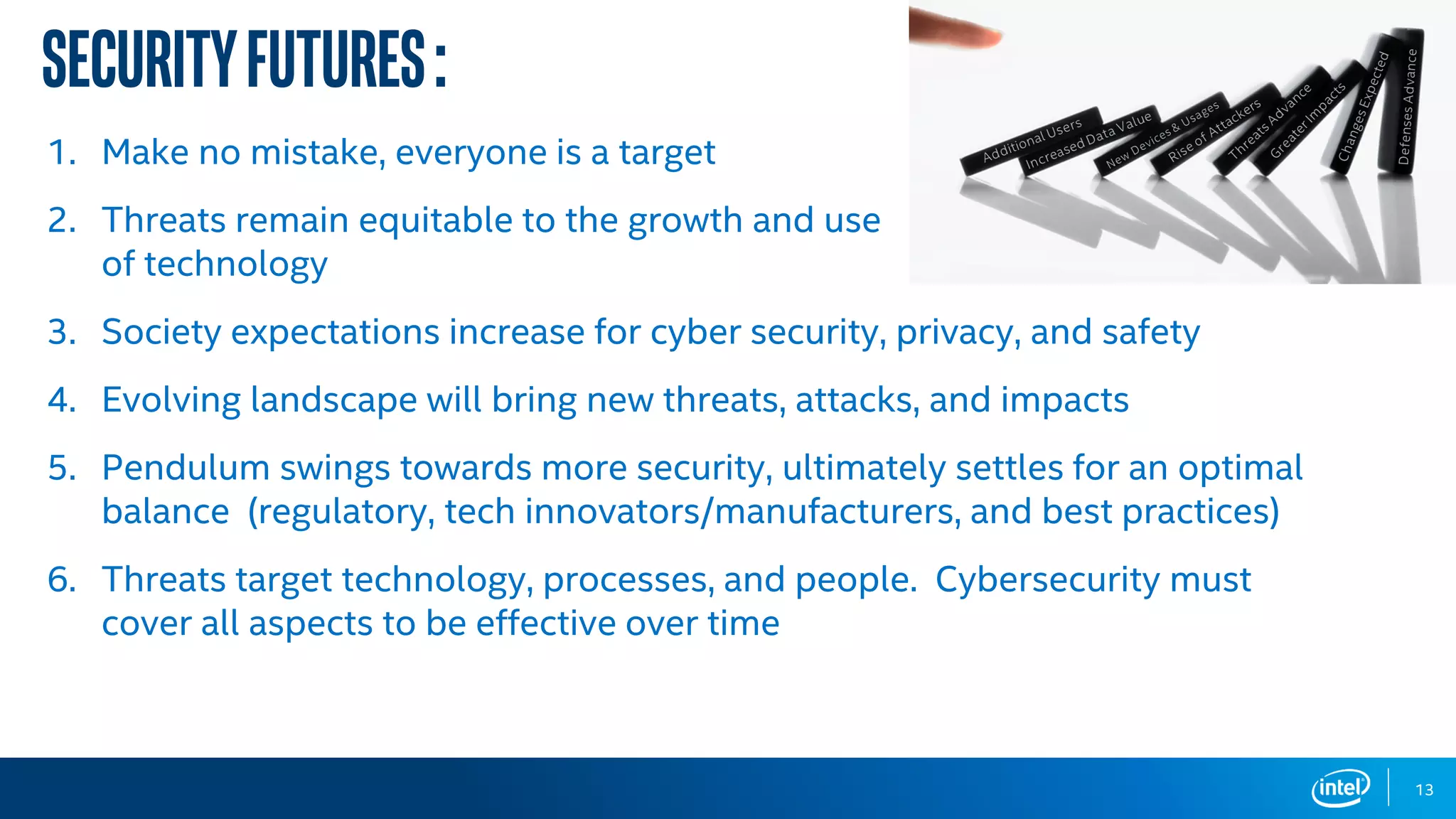
SecurityFutures:
13
1. Make no mistake, everyone is a target
2. Threats remain equitable to the growth and use
of technology
3. Society expectations increase for cyber security, privacy, and safety
4. Evolving landscape will bring new threats, attacks, and impacts
5. Pendulum swings towards more security, ultimately settles for an optimal
balance (regulatory, tech innovators/manufacturers, and best practices)
6. Threats target technology, processes, and people. Cybersecurity must
cover all aspects to be effective over time
IndustryBestPractices&Perspectives
14
“Two types of victims exist:
Those who are easy targets and
those with something of value”
- Don’t be an easy target, and
protect your valuables.
15
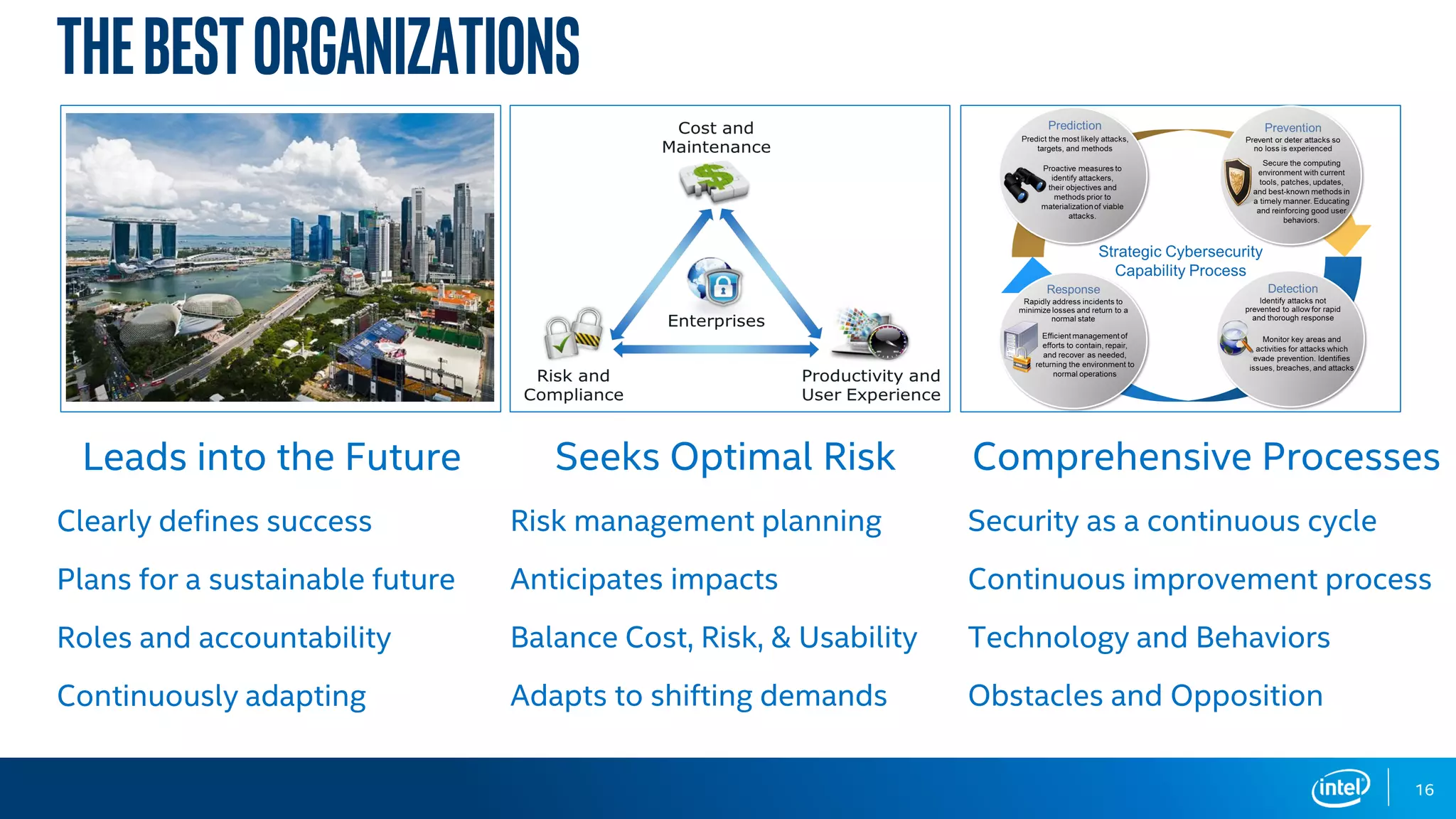
TheBestOrganizations
a
Seeks Optimal Risk
Risk management planning
Anticipates impacts
Balance Cost, Risk, & Usability
Adapts to shifting demands
Comprehensive Processes
Security as a continuous cycle
Continuous improvement process
Technology and Behaviors
Obstacles and Opposition
Leads into the Future
Clearly defines success
Plans for a sustainable future
Roles and accountability
Continuously adapting
16
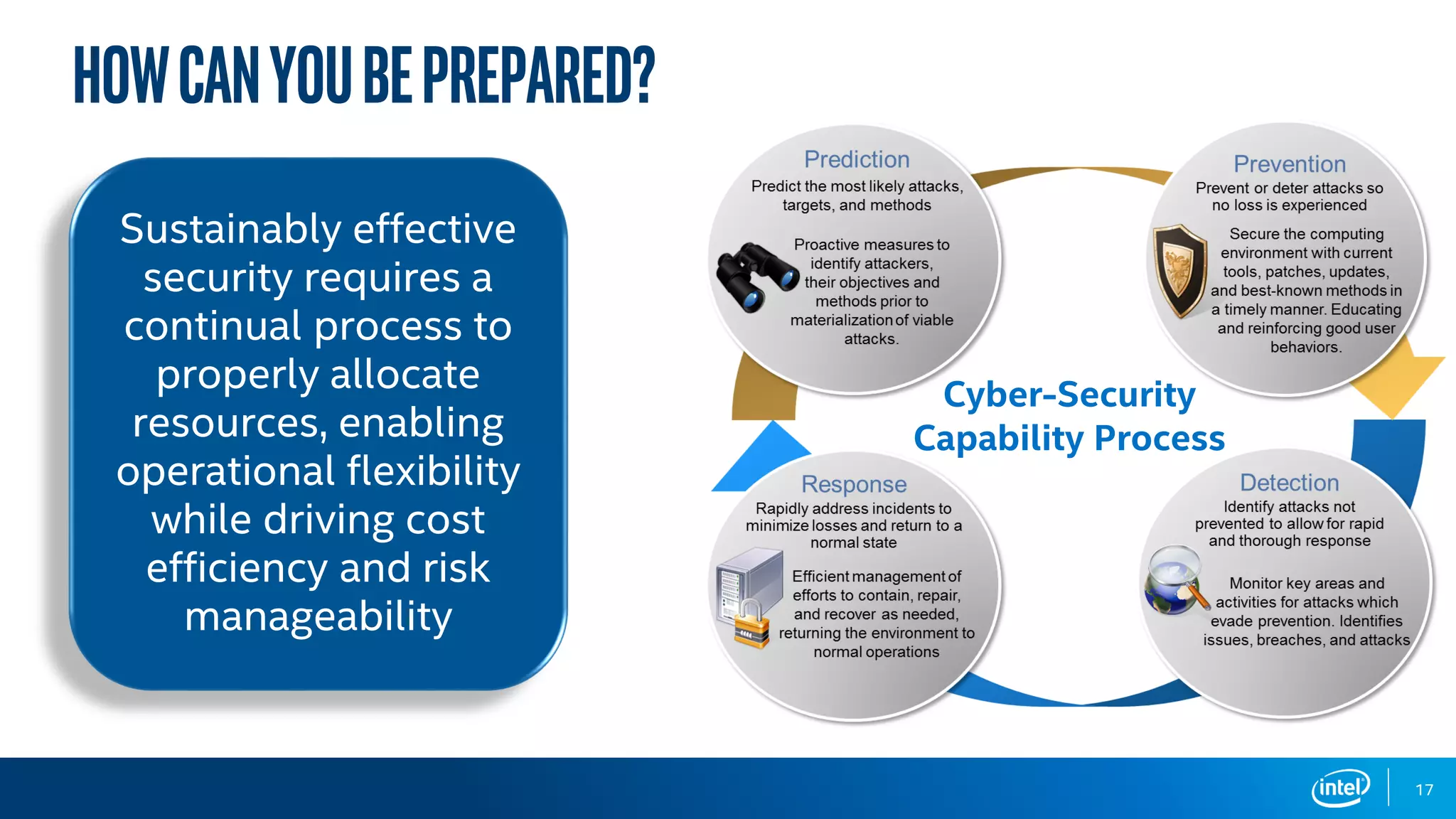
HowCanYouBePrepared?
Cyber-Security
Capability Process
17
Sustainably effective
security requires a
continual process to
properly allocate
resources, enabling
operational flexibility
while driving cost
efficiency and risk
manageability
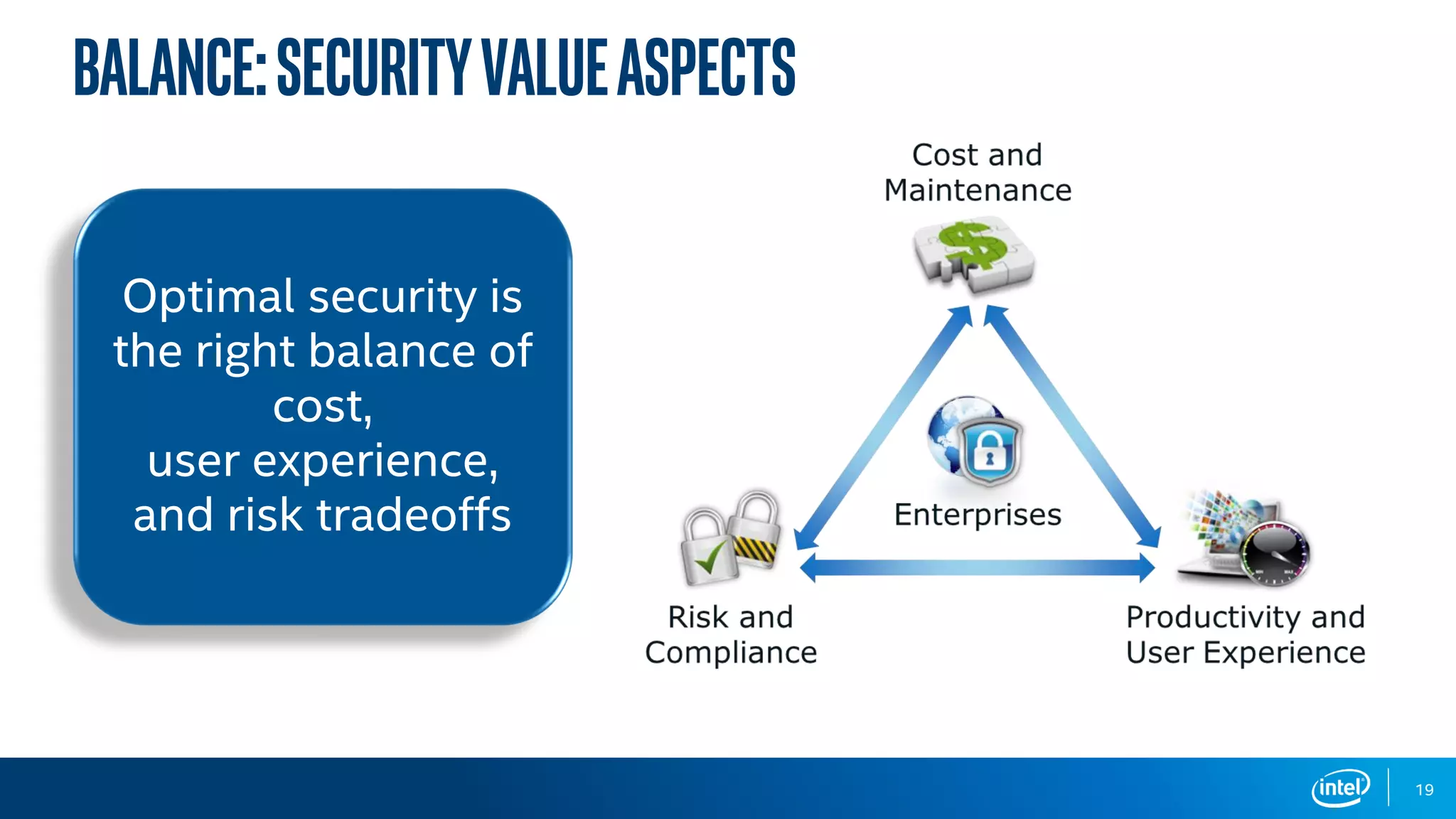
Balance:SecurityValueAspects
Optimal security is
the right balance of
cost,
user experience,
and risk tradeoffs
Optimal security is
the right balance of
cost,
user experience,
and risk tradeoffs
19
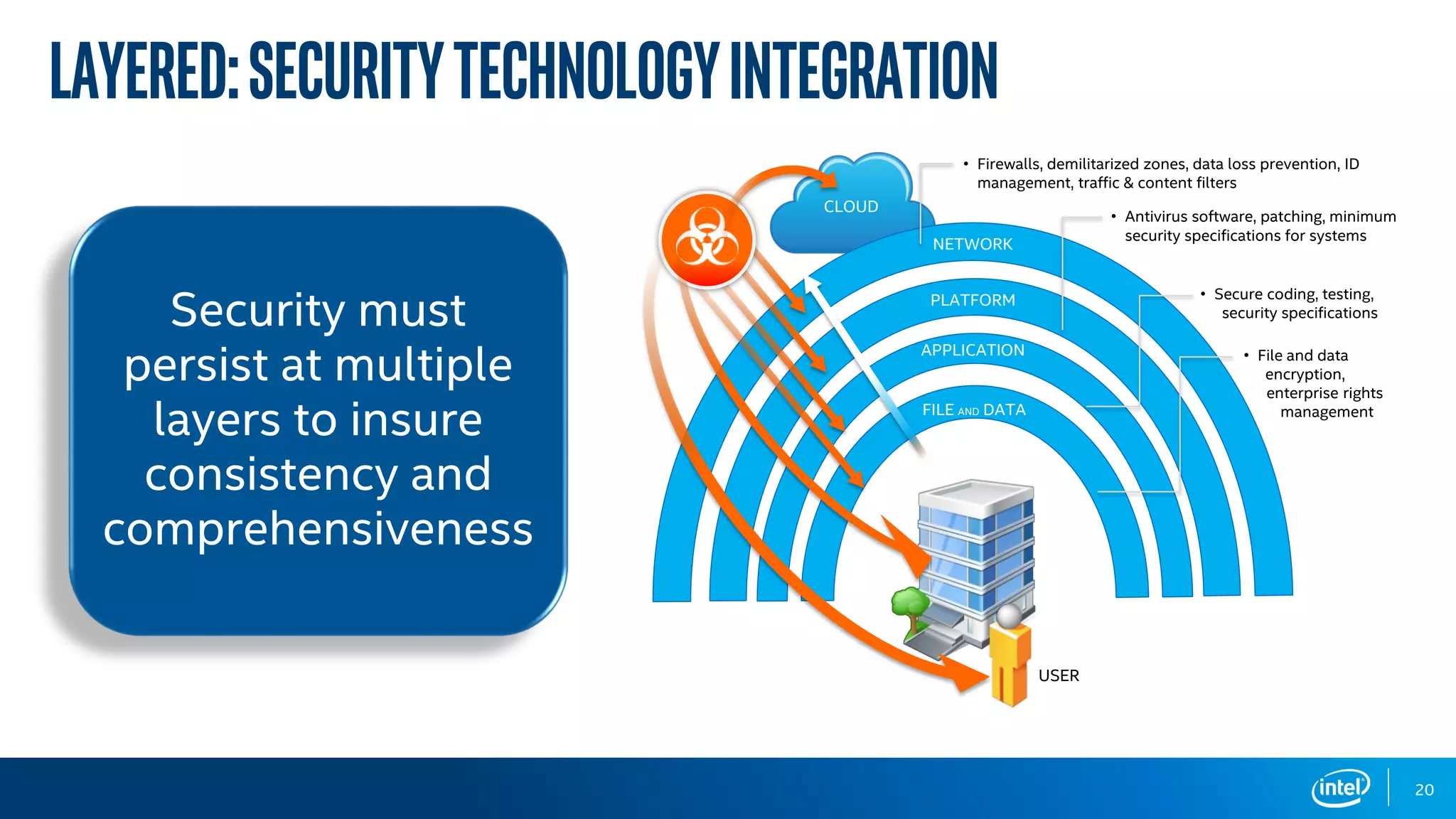
Layered:SecurityTechnologyIntegration
NETWORK
• Firewalls, demilitarized zones, data loss prevention, ID
management, traffic & content filters
PLATFORM
• Antivirus software, patching, minimum
security specifications for systems
APPLICATION
• Secure coding, testing,
security specifications
FILE AND DATA
• File and data
encryption,
enterprise rights
management
CLOUD
USER
Security must
persist at multiple
layers to insure
consistency and
comprehensiveness
20
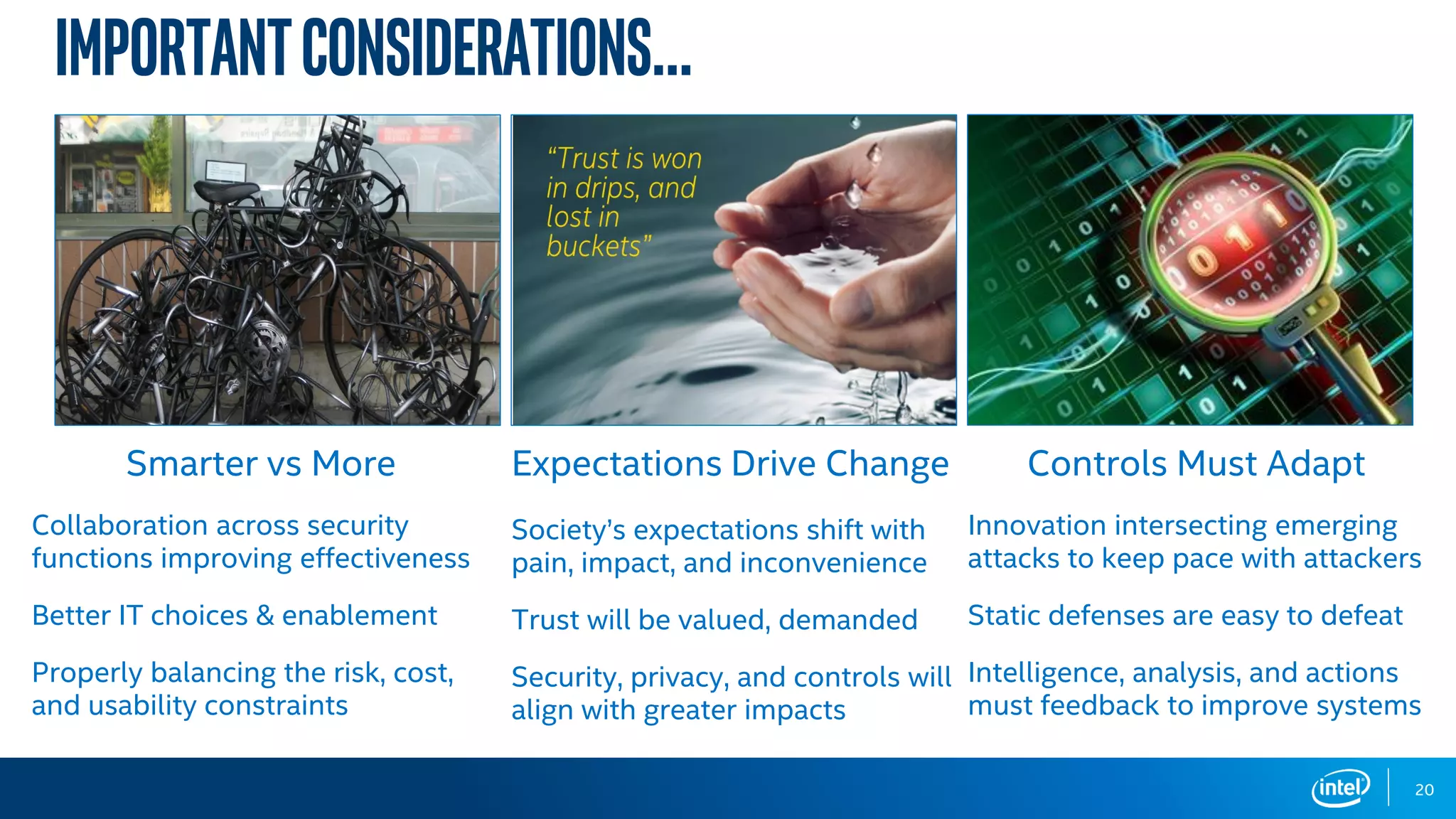
ImportantConsiderations…
20
Smarter vs More
Collaboration across security
functions improving effectiveness
Better IT choices & enablement
Properly balancing the risk, cost,
and usability constraints
Expectations Drive Change
Society’s expectations shift with
pain, impact, and inconvenience
Trust will be valued, demanded
Security, privacy, and controls will
align with greater impacts
Controls Must Adapt
Innovation intersecting emerging
attacks to keep pace with attackers
Static defenses are easy to defeat
Intelligence, analysis, and actions
must feedback to improve systems
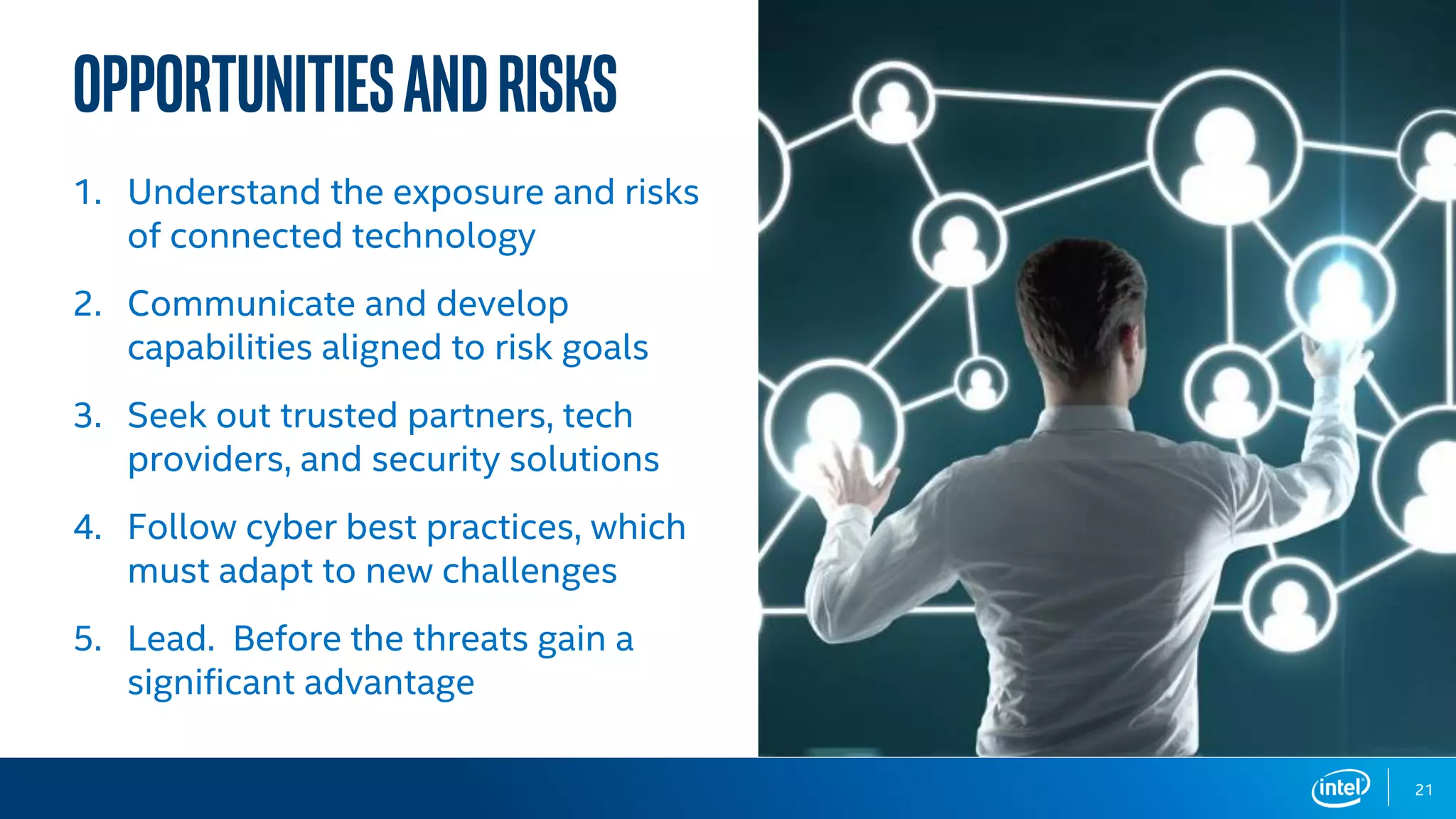
OpportunitiesandRisks
21
1. Understand the exposure and risks
of connected technology
2. Communicate and develop
capabilities aligned to risk goals
3. Seek out trusted partners, tech
providers, and security solutions
4. Follow cyber best practices, which
must adapt to new challenges
5. Lead. Before the threats gain a
significant advantage
Conclusions
Cyber threats pose significant risks to security,
safety, and privacy
Cyber will continue to have an ever greater impact
on educational environments
New threat vectors will emerge as advanced
technology is integrated
The rise of cyber represents risks and opportunities
Leaders with insights to the future have the best
opportunity to align resources and be prepared
22
“We manage security through
Leadership and Preparation,
otherwise we face Crisis and
Desperation”
…Areyouprepared?
2017 K12 Educators Security Briefing - Matthew Rosenquist

2017 K12 Educators Security Briefing - Matthew Rosenquist

  • 1.
  • 2.
    “We manage securitythrough Leadership and Preparation, otherwise we face Crisis and Desperation” 2
  • 3.
     Data breach– administration, student, and vendor records  Malware/ransomware of devices  Financial theft and fraud  Student bullying, stalking, & safety  Regulatory non-compliance, audit  Denial of Service - Operational unavailability of systems  Reputation, smear, & social attacks  Asset misuse, theft, unauthorized content hosting, file sharing  Information integrity “Ferris Bueller attack”– grades & communications CyberImpactingtheeducationsector 3
  • 4.
  • 5.
    EvolvingLandscape,Adversaries,andimpacts i 93%ofPhishingis Ransomware Upwards of $75billion in global impact i 97%of Fortune 1000companies Lost data or credentials 2014-2016 i $16Billionin Losses Identity theft & fraud in 2016, up 16% from 2015 IMPACTS GO FAR BEYOND EXPECTATIONS Cybersecurity costs typically measured as part of an incident Actual costs of long term impacts including lost contract revenue, operational disruption, devaluation of trade name, loss of IP, rises in insurance premiums, increased cost to raise debt, customer relationship impacts %COST ~1%* Source: US Tech Manufacturing Company Case Study , Deloitte ~99% 5 More Users New Devices Innovative Usages Generating Vast Data Sensitive Functions Increased Target Value i 40%Increase Data Breach disclosures from 2015 to 2016 i 400kNew Malware/Day 575 million unique samples of malware exist i 200%increase In cyber-crime in the last 5 years
  • 6.
    ItisaDataBreachWorld a Top 10 Healthcare breachesof 2015 affected almost 35% of the US population Just for California… 171 breaches involving 24m million records (3 out of 5 Californians) In 2015, overt 700 million records were lost or stolen (that is 80k per hour) 6
  • 7.
    25+Million Applications Connected and creating50x the volume of data 50-200BillionDevices Connected to the Internet $6trillion Cyber-crime impact globally by 2021 $3–$90trillion Aggregate innovation impact of cyber-risks 400kNew Malware/Day 630 million unique samples of malware exist today $75billion Rise of ransomware becomes a multi-billion dollar problem 4 BillionUsersOnline Up from 2+ billion today 50Trillion Gigabytes Amount of data being created A World of Targets with Increased Value 7
  • 8.
    Dante'sInfernoofCybersecurityImpacts Denial of Service (Availability) •Access of customers • Availability of data, systems, & services • DDOS network attacks, ransom-ware data locking attacks Data Theft & Exposure (Confidentiality) • ID Theft • Privacy • Data Breach • Transaction data • Database hacks, skimming, lost storage, keylogging Monitor & Manipulate (Integrity) • Internal-access surveillance for advantage • Tamper/Manipulation • Long-term data gathering campaign Security Competency Attacker Innovation Attacks expand over time, increasing in severity based upon different technology and usages Own & Obliterate (C/I/A) • Administrative ownership and control • Capability of unrecoverable obliteration • Strategic attack, undermining of org capability 8
  • 9.
  • 10.
    OPERATIONAL, INDUSTRIAL, AND VIRTUALSYSTEMS GOVERNANCE, TRUST, AND OVERSIGHT SYSTEMS DATA, INFORMATION AND CONTROL MECHANISMS ENDPOINTS, NETWORKS, SERVICES, AND MACHINES ACCES CONTROL AND IDENTITY SECURITY, SAFETY, AND PRIVACY CONTROLS The 5 most cyber-attacked industries in 2015: 1. Healthcare 2. Manufacturing 3. Financial Services 4. Government 5. Transportation 10
  • 11.
    TechInnovation&AdoptionDrivesRisks New technology bridgesthe virtual and physical worlds, to connect and enrich peoples lives 11
  • 12.
    Government’s roles expand,more regulations and standards Advances in nation-state cyber-offense affects everyone Life safety and cybersecurity intersect in products Rise in digital theft, extortion, and fraud Real-world impacts of cybersecurity emerge Security expectations increase by consumers, businesses, and regulators Attackers evolve, adapt, & accelerate faster than security Trust and Integrity are targeted and undermined Security technologies improve but remain outpaced and outmaneuvered Lack of security talent hinders the industry EvolvingLandscape,Adversaries,&Battlefield 13
  • 13.
    SecurityFutures: 13 1. Make nomistake, everyone is a target 2. Threats remain equitable to the growth and use of technology 3. Society expectations increase for cyber security, privacy, and safety 4. Evolving landscape will bring new threats, attacks, and impacts 5. Pendulum swings towards more security, ultimately settles for an optimal balance (regulatory, tech innovators/manufacturers, and best practices) 6. Threats target technology, processes, and people. Cybersecurity must cover all aspects to be effective over time
  • 14.
  • 15.
    “Two types ofvictims exist: Those who are easy targets and those with something of value” - Don’t be an easy target, and protect your valuables. 15
  • 16.
    TheBestOrganizations a Seeks Optimal Risk Riskmanagement planning Anticipates impacts Balance Cost, Risk, & Usability Adapts to shifting demands Comprehensive Processes Security as a continuous cycle Continuous improvement process Technology and Behaviors Obstacles and Opposition Leads into the Future Clearly defines success Plans for a sustainable future Roles and accountability Continuously adapting 16
  • 17.
    HowCanYouBePrepared? Cyber-Security Capability Process 17 Sustainably effective securityrequires a continual process to properly allocate resources, enabling operational flexibility while driving cost efficiency and risk manageability
  • 18.
    Balance:SecurityValueAspects Optimal security is theright balance of cost, user experience, and risk tradeoffs Optimal security is the right balance of cost, user experience, and risk tradeoffs 19
  • 19.
    Layered:SecurityTechnologyIntegration NETWORK • Firewalls, demilitarizedzones, data loss prevention, ID management, traffic & content filters PLATFORM • Antivirus software, patching, minimum security specifications for systems APPLICATION • Secure coding, testing, security specifications FILE AND DATA • File and data encryption, enterprise rights management CLOUD USER Security must persist at multiple layers to insure consistency and comprehensiveness 20
  • 20.
    ImportantConsiderations… 20 Smarter vs More Collaborationacross security functions improving effectiveness Better IT choices & enablement Properly balancing the risk, cost, and usability constraints Expectations Drive Change Society’s expectations shift with pain, impact, and inconvenience Trust will be valued, demanded Security, privacy, and controls will align with greater impacts Controls Must Adapt Innovation intersecting emerging attacks to keep pace with attackers Static defenses are easy to defeat Intelligence, analysis, and actions must feedback to improve systems
  • 21.
    OpportunitiesandRisks 21 1. Understand theexposure and risks of connected technology 2. Communicate and develop capabilities aligned to risk goals 3. Seek out trusted partners, tech providers, and security solutions 4. Follow cyber best practices, which must adapt to new challenges 5. Lead. Before the threats gain a significant advantage
  • 22.
    Conclusions Cyber threats posesignificant risks to security, safety, and privacy Cyber will continue to have an ever greater impact on educational environments New threat vectors will emerge as advanced technology is integrated The rise of cyber represents risks and opportunities Leaders with insights to the future have the best opportunity to align resources and be prepared 22
  • 23.
    “We manage securitythrough Leadership and Preparation, otherwise we face Crisis and Desperation” …Areyouprepared?