ACCESS AND EGRESS
ISOLUX INGENERIA S.A. TOWER ERECTION TRAINING
Safe Ladder Usage
Presented By: Victor Momanyi
Designation: QHSE Assistant
Date: _ _ / _ _ / 2016
Contents
 Definition
 Types of Ladders
• Step ladder
• Single Ladder
• Extension Ladder
• Trestle Ladder
 Safe use of Ladders
Definition
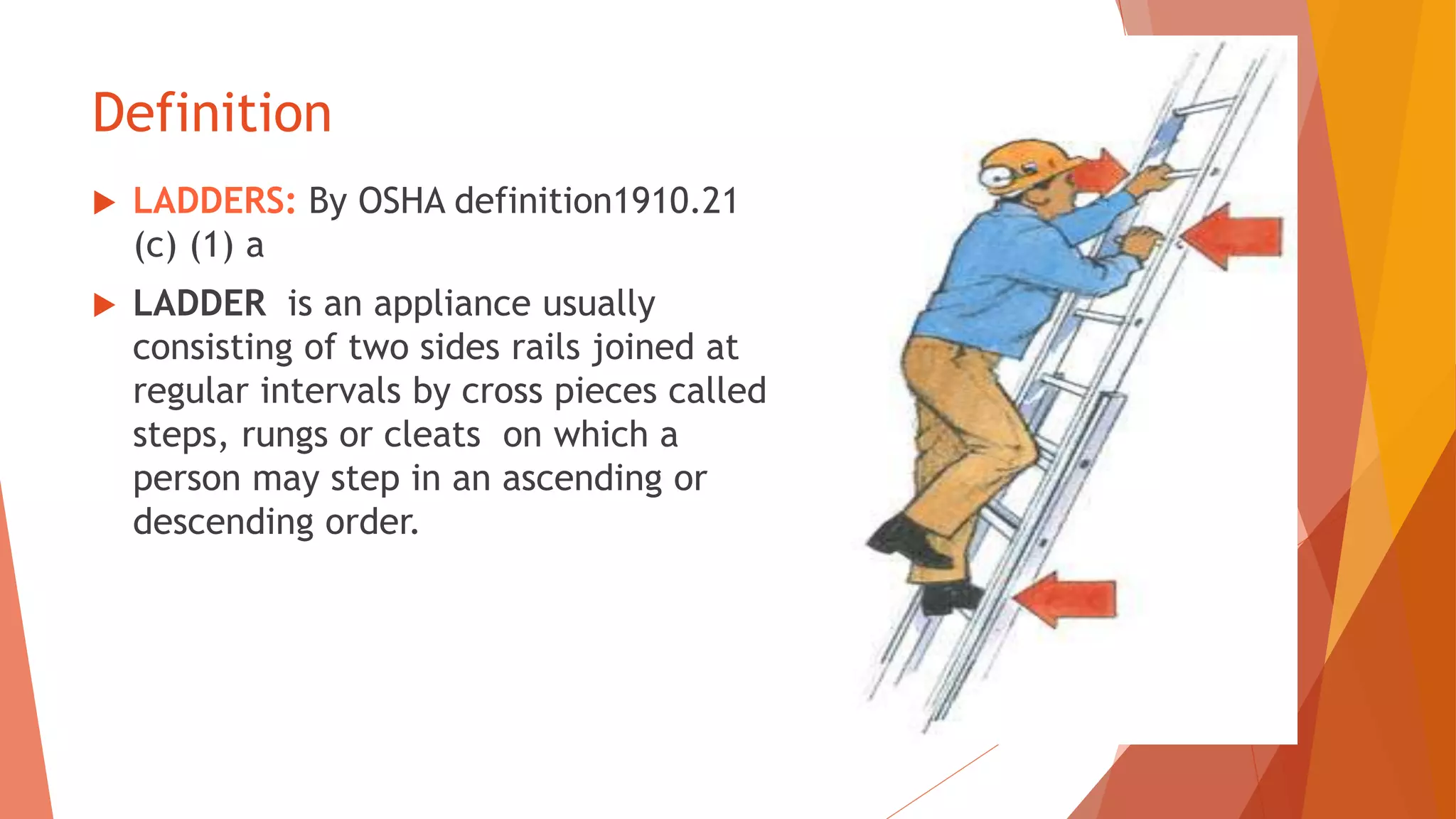
 LADDERS: By OSHA definition1910.21
(c) (1) a
 LADDER is an appliance usually
consisting of two sides rails joined at
regular intervals by cross pieces called
steps, rungs or cleats on which a
person may step in an ascending or
descending order.
Types of Ladders
 STEP LADDER
- It’s a self supporting portable ladder, non-
adjustable in length, having flat steps and a hinged
back.
 SINGLE LADDER
-It’s a non-self supporting portable ladder, Non-
adjustable in length, consisting of but one section.
Types of Ladders cont’d
 SINGLE LADDER
-It’s a non-self supporting portable ladder, Non-
adjustable in length, consisting of but one section.
- The base of a ladder’s side rails must rest on a
firm, level foundation. Ensure Anti-slip safety
shoe/foot is secured.
Types of Ladders cont’d
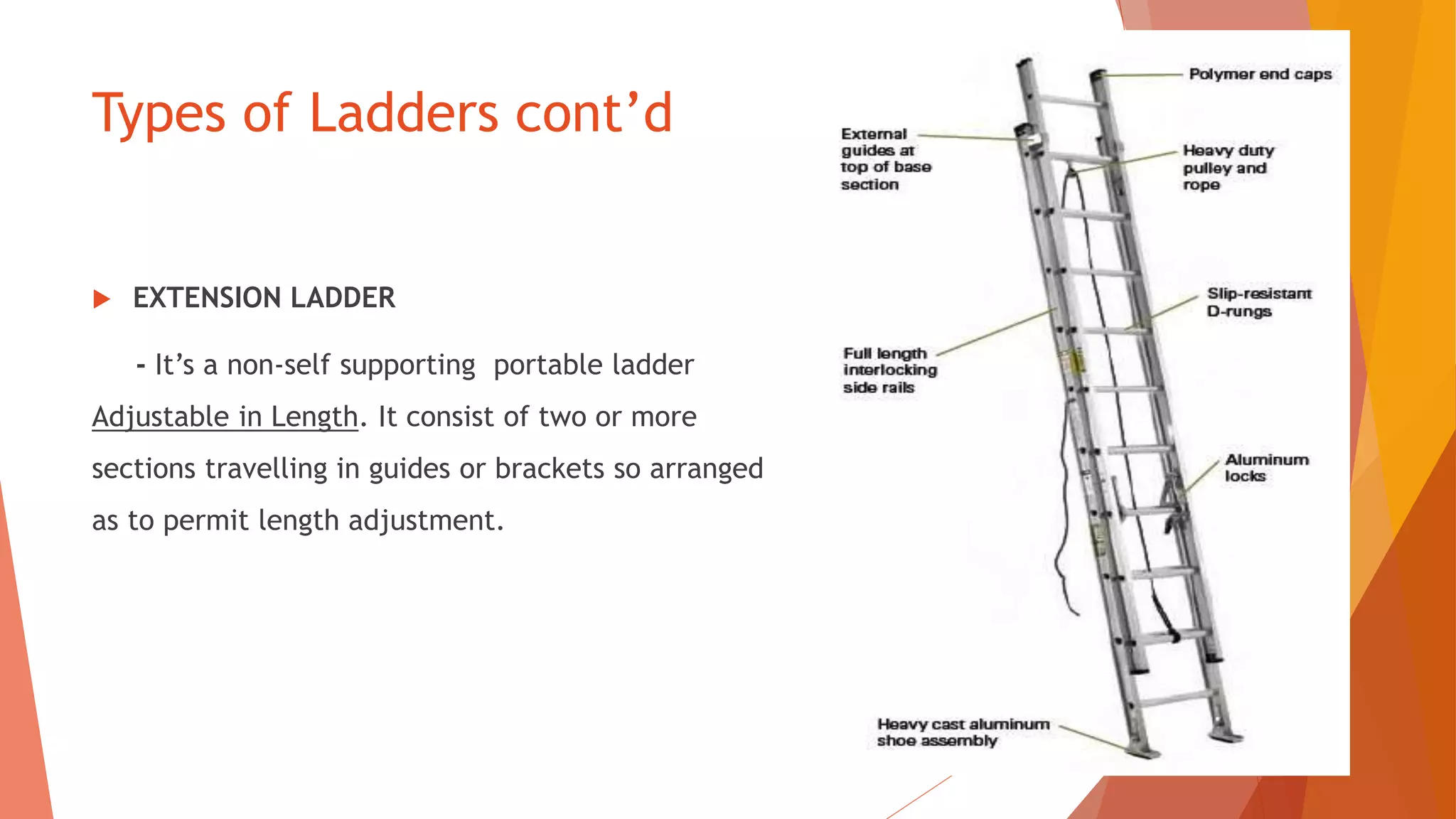
 EXTENSION LADDER
- It’s a non-self supporting portable ladder
Adjustable in Length. It consist of two or more
sections travelling in guides or brackets so arranged
as to permit length adjustment.
Types of Ladders cont’d
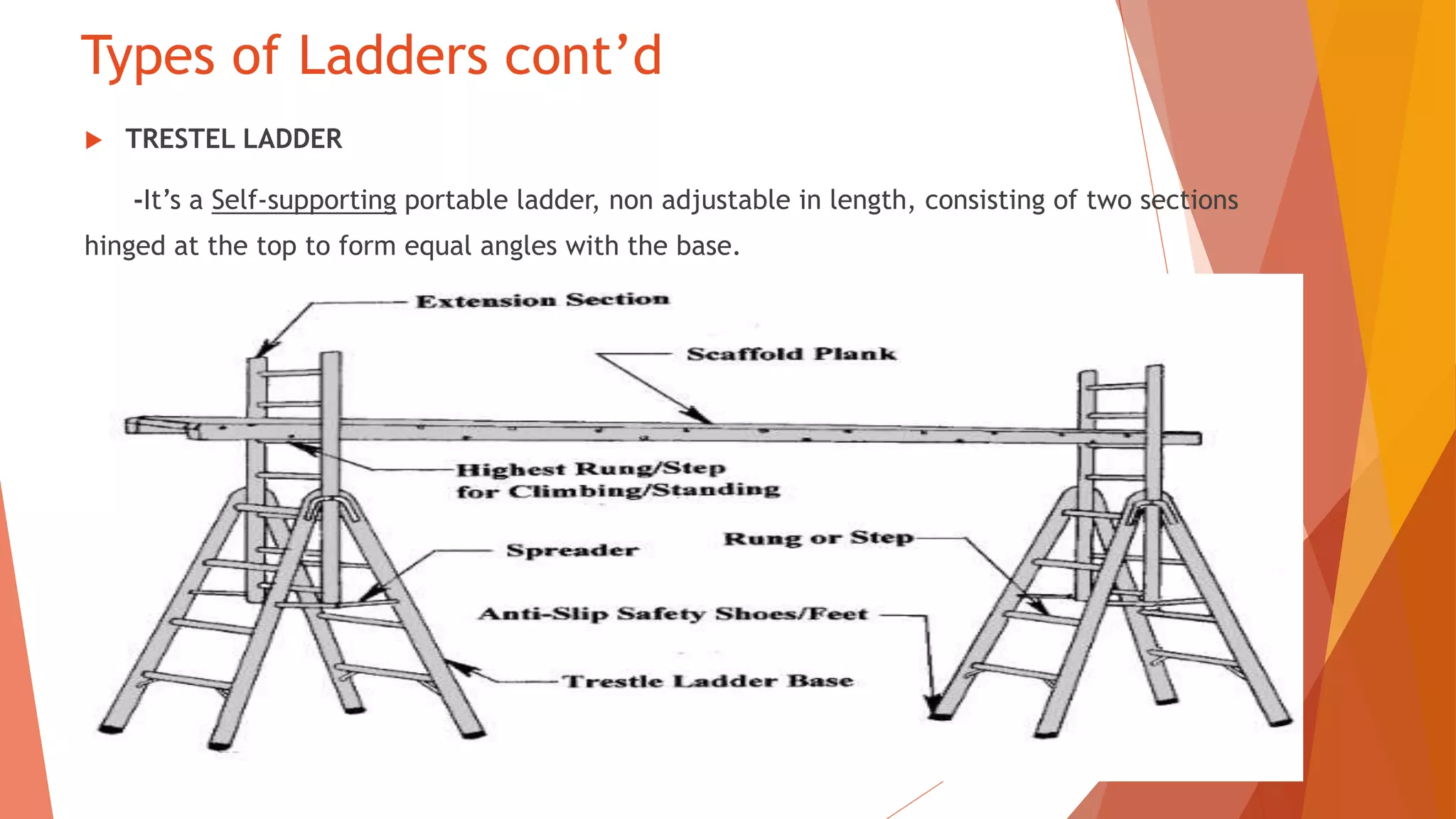
 TRESTEL LADDER
-It’s a Self-supporting portable ladder, non adjustable in length, consisting of two sections
hinged at the top to form equal angles with the base.
Safe use of Ladders
 When climbing up or down, workers should:
• Always face the ladder.
• Use a three-point contact climbing method
(two hands and one foot or one hand and two
feet).
 Only one worker at a time is allowed on a
single-width ladder.
Safe Ladder use cont’d
 Heavy, bulky, or hazardous materials must not be
carried when climbing ladders.
 Suitable hoisting equipment must be used for this
purpose.
 Workers must not work from the top two rungs of a
ladder.
Setting Up a Ladder
 Inspect each ladder before use. Ladders with
loose, broken, or missing rungs, split or bent side
rails, or other defects must be identified and
removed from service.
 Ladder tops must rest against a firm structure.
Setting Up a Ladder cont’d
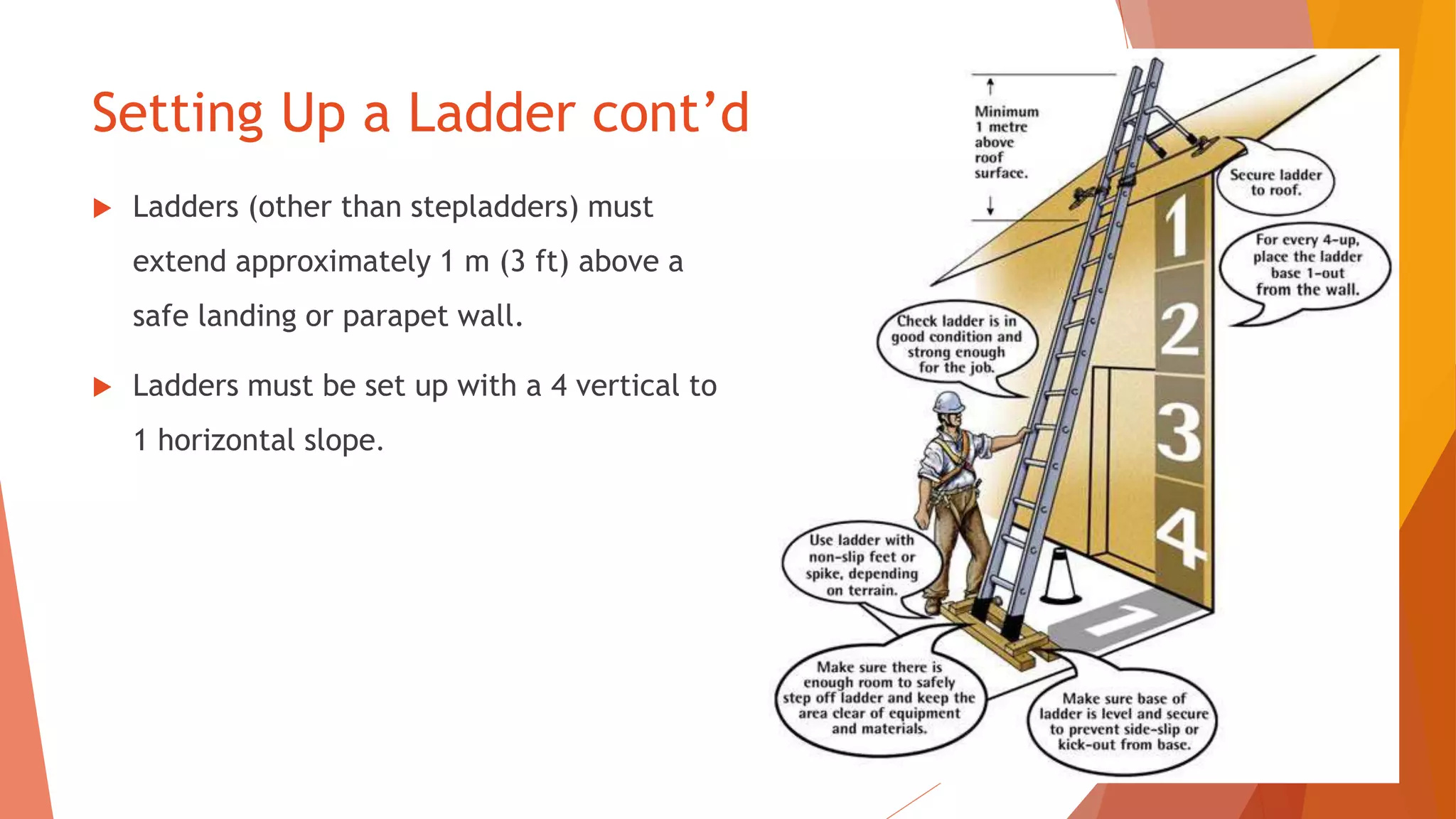
 Ladders (other than stepladders) must
extend approximately 1 m (3 ft) above a
safe landing or parapet wall.
 Ladders must be set up with a 4 vertical to
1 horizontal slope.
Setting Up a Ladder cont’d
 Ladders must be tied, blocked, or otherwise secured to prevent them from
slipping.
 Watch for overhead power lines before erecting a ladder.
 Metal, including wire-reinforced wooden ladders, must not be used near
energized electrical conductors.
Step Ladders Use; Do’s & Don'ts
 DO Fully open step ladder and lock spreaders
in place
 DO Maintain an three point contact while on
a ladder
 DO If possible Brace yourself with your free
hand
 DON’T step on the last two rungs or the
shelf of a ladder
 DON’T climb or stand on the rare part of a
step ladder
 DON’T Use a step ladder folded up & leaning
against the wall.
Extension Ladder Use
 NB: METAL Ladders conduct electricity KEEP
away from power lines and energized
equipment's.
 Be sure the two sections of the ladder overlap
according to the mft’s instructions.
 Check all Locks on the Ladder are properly
engaged
 Ladders MUST always be placed against stable
surfaces.
Thank You

Safe ladder usage

  • 1.
    ACCESS AND EGRESS ISOLUXINGENERIA S.A. TOWER ERECTION TRAINING Safe Ladder Usage Presented By: Victor Momanyi Designation: QHSE Assistant Date: _ _ / _ _ / 2016
  • 2.
    Contents  Definition  Typesof Ladders • Step ladder • Single Ladder • Extension Ladder • Trestle Ladder  Safe use of Ladders
  • 3.
    Definition  LADDERS: ByOSHA definition1910.21 (c) (1) a  LADDER is an appliance usually consisting of two sides rails joined at regular intervals by cross pieces called steps, rungs or cleats on which a person may step in an ascending or descending order.
  • 4.
    Types of Ladders STEP LADDER - It’s a self supporting portable ladder, non- adjustable in length, having flat steps and a hinged back.  SINGLE LADDER -It’s a non-self supporting portable ladder, Non- adjustable in length, consisting of but one section.
  • 5.
    Types of Ladderscont’d  SINGLE LADDER -It’s a non-self supporting portable ladder, Non- adjustable in length, consisting of but one section. - The base of a ladder’s side rails must rest on a firm, level foundation. Ensure Anti-slip safety shoe/foot is secured.
  • 6.
    Types of Ladderscont’d  EXTENSION LADDER - It’s a non-self supporting portable ladder Adjustable in Length. It consist of two or more sections travelling in guides or brackets so arranged as to permit length adjustment.
  • 7.
    Types of Ladderscont’d  TRESTEL LADDER -It’s a Self-supporting portable ladder, non adjustable in length, consisting of two sections hinged at the top to form equal angles with the base.
  • 8.
    Safe use ofLadders  When climbing up or down, workers should: • Always face the ladder. • Use a three-point contact climbing method (two hands and one foot or one hand and two feet).  Only one worker at a time is allowed on a single-width ladder.
  • 9.
    Safe Ladder usecont’d  Heavy, bulky, or hazardous materials must not be carried when climbing ladders.  Suitable hoisting equipment must be used for this purpose.  Workers must not work from the top two rungs of a ladder.
  • 10.
    Setting Up aLadder  Inspect each ladder before use. Ladders with loose, broken, or missing rungs, split or bent side rails, or other defects must be identified and removed from service.  Ladder tops must rest against a firm structure.
  • 11.
    Setting Up aLadder cont’d  Ladders (other than stepladders) must extend approximately 1 m (3 ft) above a safe landing or parapet wall.  Ladders must be set up with a 4 vertical to 1 horizontal slope.
  • 12.
    Setting Up aLadder cont’d  Ladders must be tied, blocked, or otherwise secured to prevent them from slipping.  Watch for overhead power lines before erecting a ladder.  Metal, including wire-reinforced wooden ladders, must not be used near energized electrical conductors.
  • 13.
    Step Ladders Use;Do’s & Don'ts  DO Fully open step ladder and lock spreaders in place  DO Maintain an three point contact while on a ladder  DO If possible Brace yourself with your free hand  DON’T step on the last two rungs or the shelf of a ladder  DON’T climb or stand on the rare part of a step ladder  DON’T Use a step ladder folded up & leaning against the wall.
  • 14.
    Extension Ladder Use NB: METAL Ladders conduct electricity KEEP away from power lines and energized equipment's.  Be sure the two sections of the ladder overlap according to the mft’s instructions.  Check all Locks on the Ladder are properly engaged  Ladders MUST always be placed against stable surfaces.
  • 15.