
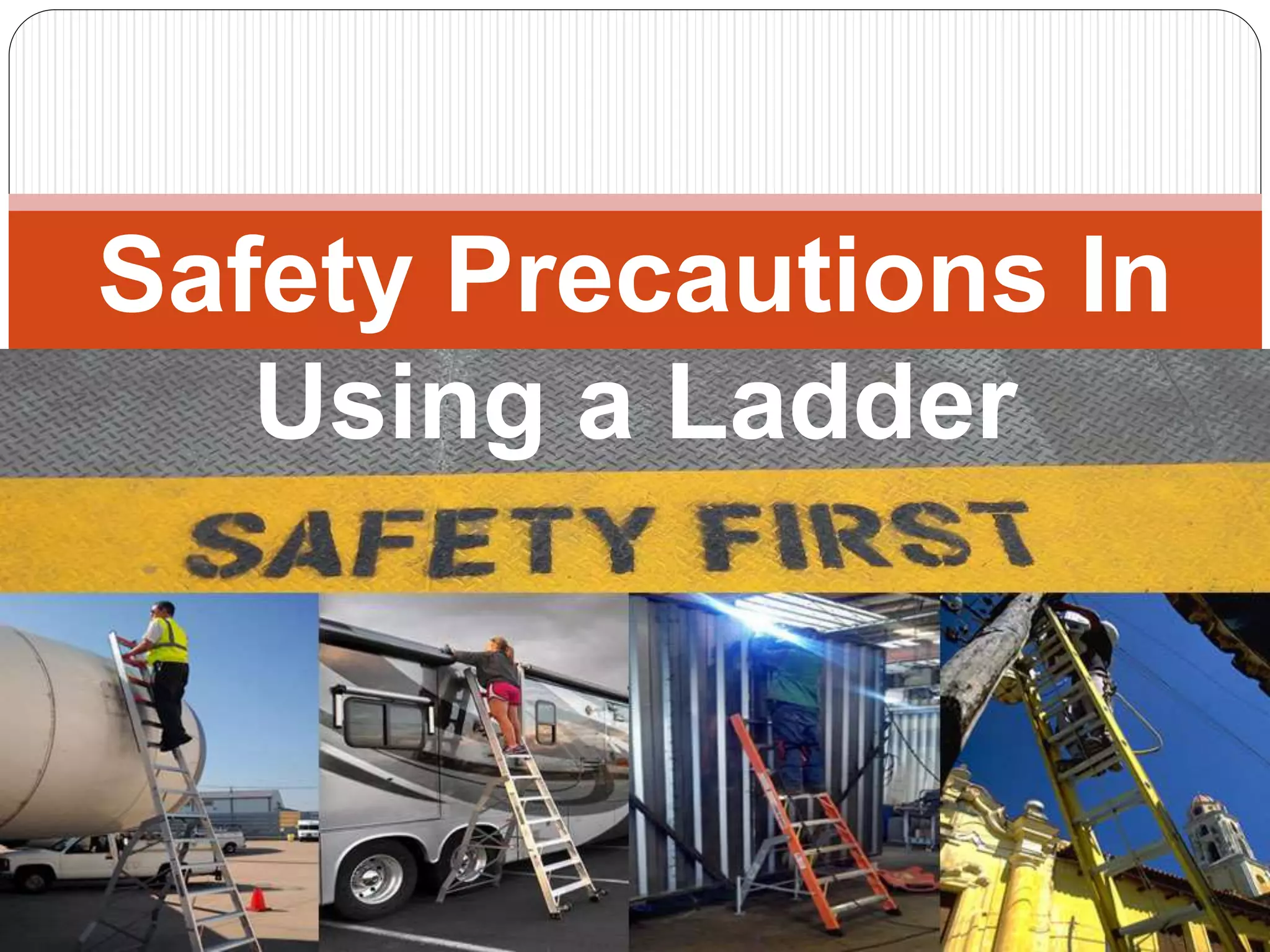


Safety Precautions In
Using a Ladder
Sadly, the number of
ladder accident or
ladder related injuries
showed some
surprising statistics in
United States.
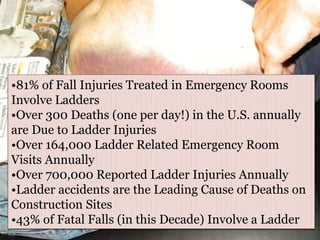
•81% of Fall Injuries Treated in Emergency Rooms
Involve Ladders
•Over 300 Deaths (one per day!) in the U.S. annually
are Due to Ladder Injuries
•Over 164,000 Ladder Related Emergency Room
Visits Annually
•Over 700,000 Reported Ladder Injuries Annually
•Ladder accidents are the Leading Cause of Deaths on
Construction Sites
•43% of Fatal Falls (in this Decade) Involve a Ladder
To avoid these sort of
ladder accidents or
ladder related injuries,
here are some ladder
safety precautions:
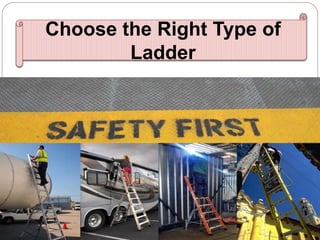
Choose the Right Type of
Ladder
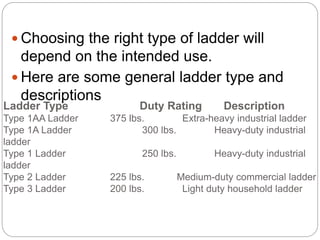
Ladder Type Duty Rating Description
Type 1AA Ladder 375 lbs. Extra-heavy industrial ladder
Type 1A Ladder 300 lbs. Heavy-duty industrial
ladder
Type 1 Ladder 250 lbs. Heavy-duty industrial
ladder
Type 2 Ladder 225 lbs. Medium-duty commercial ladder
Type 3 Ladder 200 lbs. Light duty household ladder
 Choosing the right type of ladder will
depend on the intended use.
 Here are some general ladder type and
descriptions
Height of a ladder, weight of the
person (climber) and the weight of the
things you will be carrying will matter
the most. Because specific ladder can
only carry specific weights, if the
climber and equipment exceeds the
maximum weight capacity a ladder
could break causing serious injury.
Aluminum ladder should never
be used around electrical
equipment or for repairs or
maintenance. Aluminum is a
conductor of electricity. Always
use a fiberglass ladder around
electrical equipment of any
type.
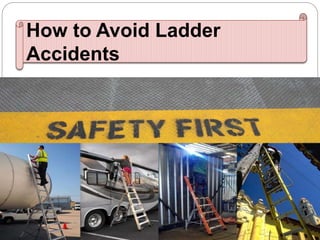
How to Avoid Ladder
Accidents
 Before using a ladder, make it a habit to
assess and inspect the ladder for
defects like missing screws, loose
components, breaks, cracks, or any
damaged parts.
 When the ladder is set-up for use, it
must be placed on firm level ground and
without any type of slippery condition
present at either the base or top support
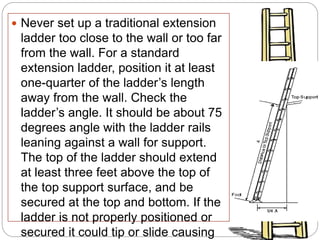
 Never set up a traditional extension
ladder too close to the wall or too far
from the wall. For a standard
extension ladder, position it at least
one-quarter of the ladder’s length
away from the wall. Check the
ladder’s angle. It should be about 75
degrees angle with the ladder rails
leaning against a wall for support.
The top of the ladder should extend
at least three feet above the top of
the top support surface, and be
secured at the top and bottom. If the
ladder is not properly positioned or
secured it could tip or slide causing
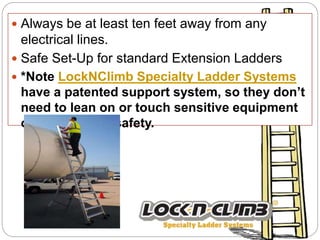
 Always be at least ten feet away from any
electrical lines.
 Safe Set-Up for standard Extension Ladders
 *Note LockNClimb Specialty Ladder Systems
have a patented support system, so they don’t
need to lean on or touch sensitive equipment
or surfaces for safety.
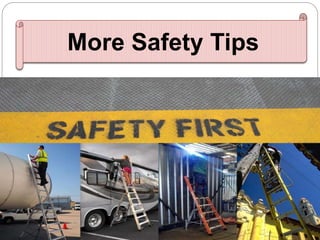
More Safety Tips
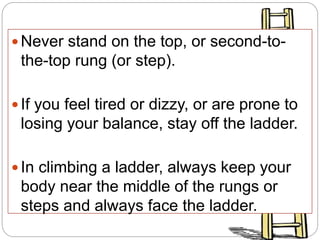
 Never stand on the top, or second-to-
the-top rung (or step).
 If you feel tired or dizzy, or are prone to
losing your balance, stay off the ladder.
 In climbing a ladder, always keep your
body near the middle of the rungs or
steps and always face the ladder.
 Never use ladders in high winds or storms.
 Always wear clean slip-resistant
shoes. Shoes with leather soles are not
appropriate for ladder use since they are
not considered sufficiently slip resistant.
 The ladder you select must be the right
size for the job. The Duty Rating of the
ladder must be greater than the total
weight of the climber, tools, supplies and
 The length of the ladder must be sufficient
so that the climber does not have to stand
on the top, or second-to-the top, rung or
step.
 Never have more than one person at a
time on a ladder, unless the ladder is
specifically designed for more than one
climber.
 Ladders must not be placed in front of
 Always Read the safety information labels
on the ladder. The on-product safety
information is specific to the particular type
of ladder on which it appears. The climber
is not considered qualified or adequately
trained to use the ladder until familiar with
this information.
 Use only a proven OSHA and ANSI
standard and a ladder safety products or
tools.
And . . . always remember, when
using a ladder: An ounce of
prevention is worth a pound of
cure.
Benjamin Franklin
Okay, okay, he probably wasn’t
referring to using a ladder, but
you get the point, we hope!

Safety Precautions in Using Ladders

  • 1.
  • 5.
    Sadly, the numberof ladder accident or ladder related injuries showed some surprising statistics in United States.
  • 6.
    •81% of FallInjuries Treated in Emergency Rooms Involve Ladders •Over 300 Deaths (one per day!) in the U.S. annually are Due to Ladder Injuries •Over 164,000 Ladder Related Emergency Room Visits Annually •Over 700,000 Reported Ladder Injuries Annually •Ladder accidents are the Leading Cause of Deaths on Construction Sites •43% of Fatal Falls (in this Decade) Involve a Ladder
  • 7.
    To avoid thesesort of ladder accidents or ladder related injuries, here are some ladder safety precautions:
  • 8.
    Choose the RightType of Ladder
  • 9.
    Ladder Type DutyRating Description Type 1AA Ladder 375 lbs. Extra-heavy industrial ladder Type 1A Ladder 300 lbs. Heavy-duty industrial ladder Type 1 Ladder 250 lbs. Heavy-duty industrial ladder Type 2 Ladder 225 lbs. Medium-duty commercial ladder Type 3 Ladder 200 lbs. Light duty household ladder  Choosing the right type of ladder will depend on the intended use.  Here are some general ladder type and descriptions
  • 10.
    Height of aladder, weight of the person (climber) and the weight of the things you will be carrying will matter the most. Because specific ladder can only carry specific weights, if the climber and equipment exceeds the maximum weight capacity a ladder could break causing serious injury.
  • 11.
    Aluminum ladder shouldnever be used around electrical equipment or for repairs or maintenance. Aluminum is a conductor of electricity. Always use a fiberglass ladder around electrical equipment of any type.
  • 12.
    How to AvoidLadder Accidents
  • 13.
     Before usinga ladder, make it a habit to assess and inspect the ladder for defects like missing screws, loose components, breaks, cracks, or any damaged parts.  When the ladder is set-up for use, it must be placed on firm level ground and without any type of slippery condition present at either the base or top support
  • 14.
     Never setup a traditional extension ladder too close to the wall or too far from the wall. For a standard extension ladder, position it at least one-quarter of the ladder’s length away from the wall. Check the ladder’s angle. It should be about 75 degrees angle with the ladder rails leaning against a wall for support. The top of the ladder should extend at least three feet above the top of the top support surface, and be secured at the top and bottom. If the ladder is not properly positioned or secured it could tip or slide causing
  • 15.
     Always beat least ten feet away from any electrical lines.  Safe Set-Up for standard Extension Ladders  *Note LockNClimb Specialty Ladder Systems have a patented support system, so they don’t need to lean on or touch sensitive equipment or surfaces for safety.
  • 16.
  • 17.
     Never standon the top, or second-to- the-top rung (or step).  If you feel tired or dizzy, or are prone to losing your balance, stay off the ladder.  In climbing a ladder, always keep your body near the middle of the rungs or steps and always face the ladder.
  • 18.
     Never useladders in high winds or storms.  Always wear clean slip-resistant shoes. Shoes with leather soles are not appropriate for ladder use since they are not considered sufficiently slip resistant.  The ladder you select must be the right size for the job. The Duty Rating of the ladder must be greater than the total weight of the climber, tools, supplies and
  • 19.
     The lengthof the ladder must be sufficient so that the climber does not have to stand on the top, or second-to-the top, rung or step.  Never have more than one person at a time on a ladder, unless the ladder is specifically designed for more than one climber.  Ladders must not be placed in front of
  • 20.
     Always Readthe safety information labels on the ladder. The on-product safety information is specific to the particular type of ladder on which it appears. The climber is not considered qualified or adequately trained to use the ladder until familiar with this information.  Use only a proven OSHA and ANSI standard and a ladder safety products or tools.
  • 21.
    And . .. always remember, when using a ladder: An ounce of prevention is worth a pound of cure. Benjamin Franklin Okay, okay, he probably wasn’t referring to using a ladder, but you get the point, we hope!