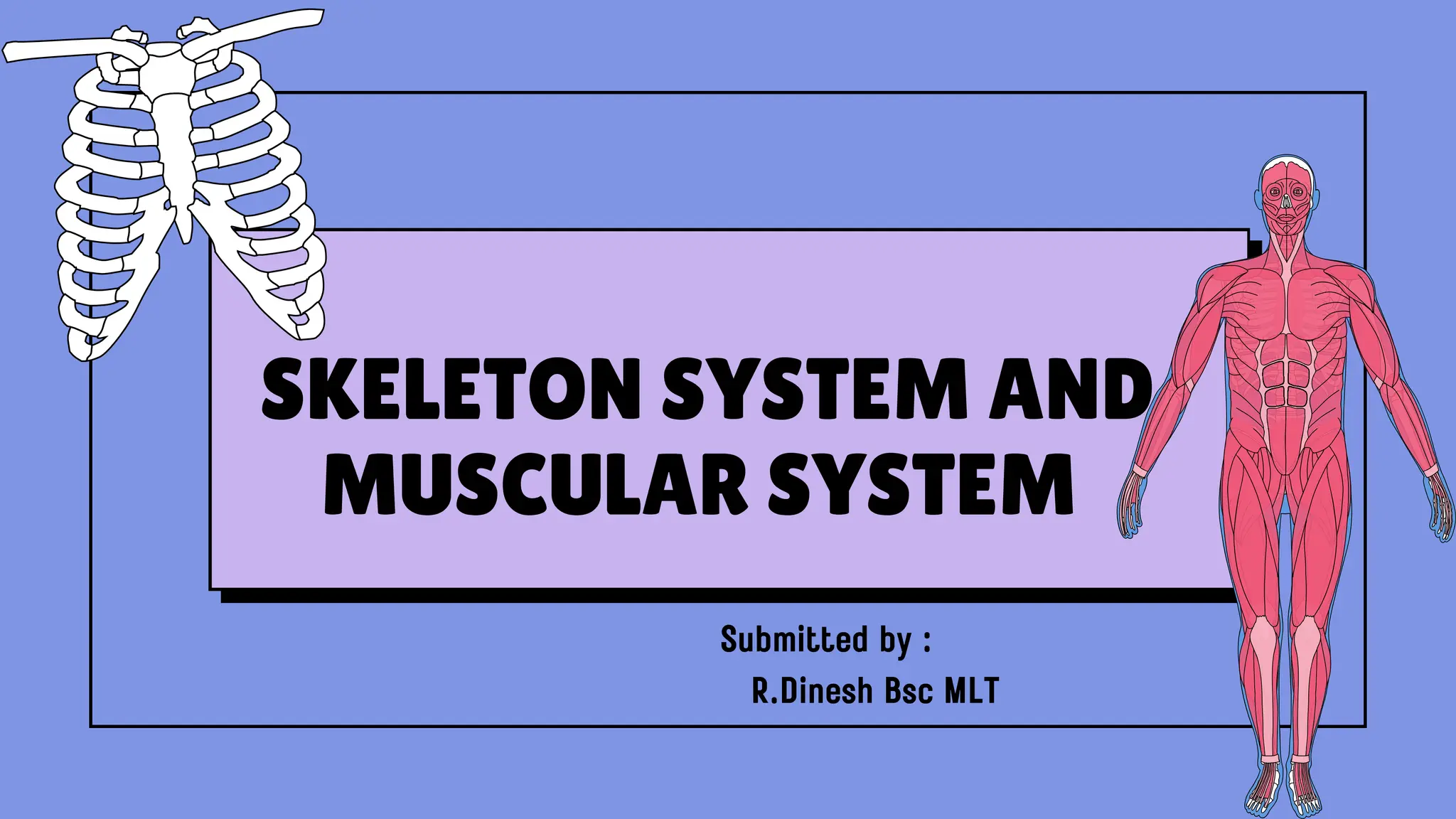
SKELETON SYSTEM AND
MUSCULAR SYSTEM
Submitted by :
R.Dinesh Bsc MLT
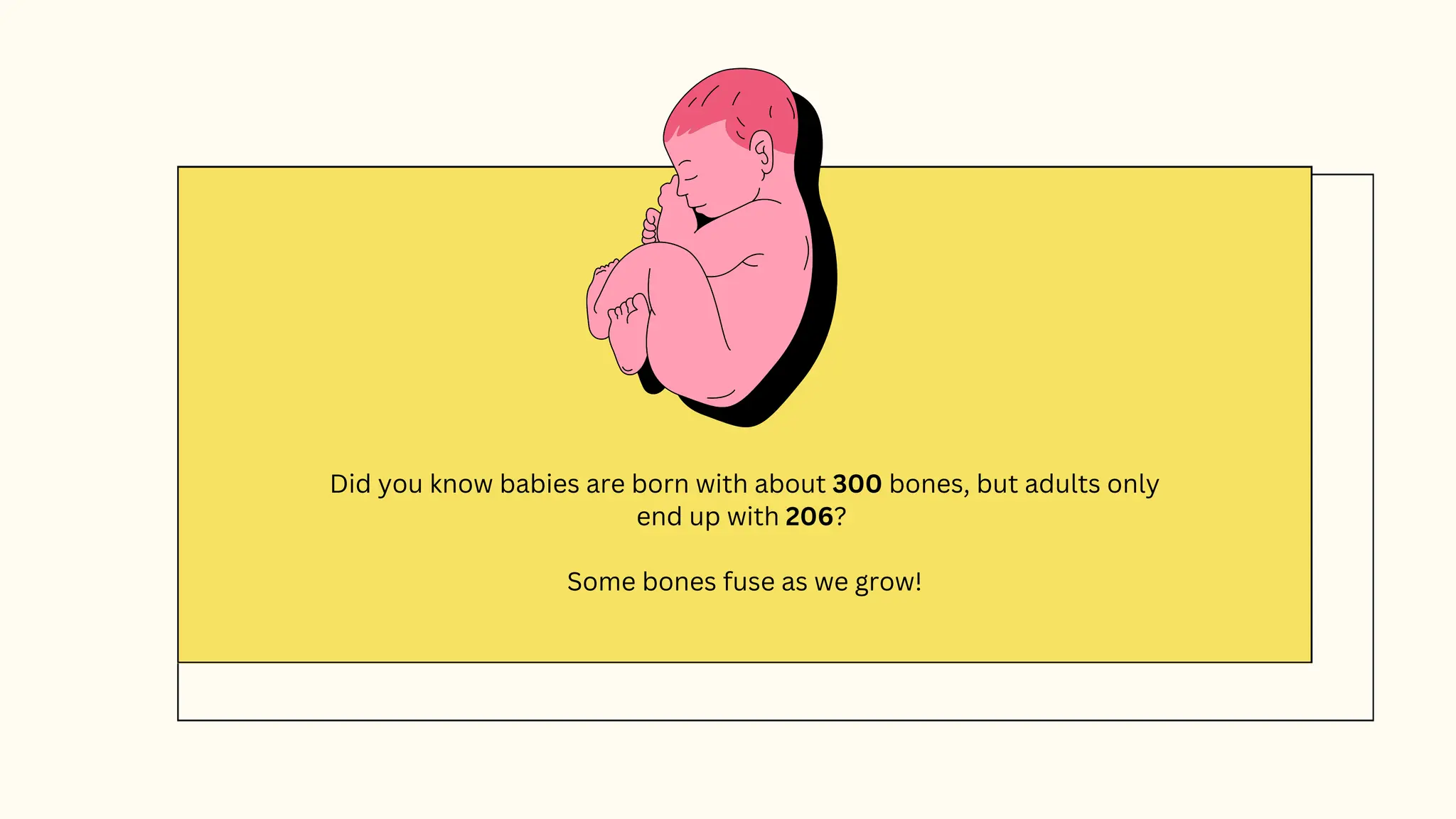
Did you know babies are born with about 300 bones, but adults only
end up with 206?
Some bones fuse as we grow!
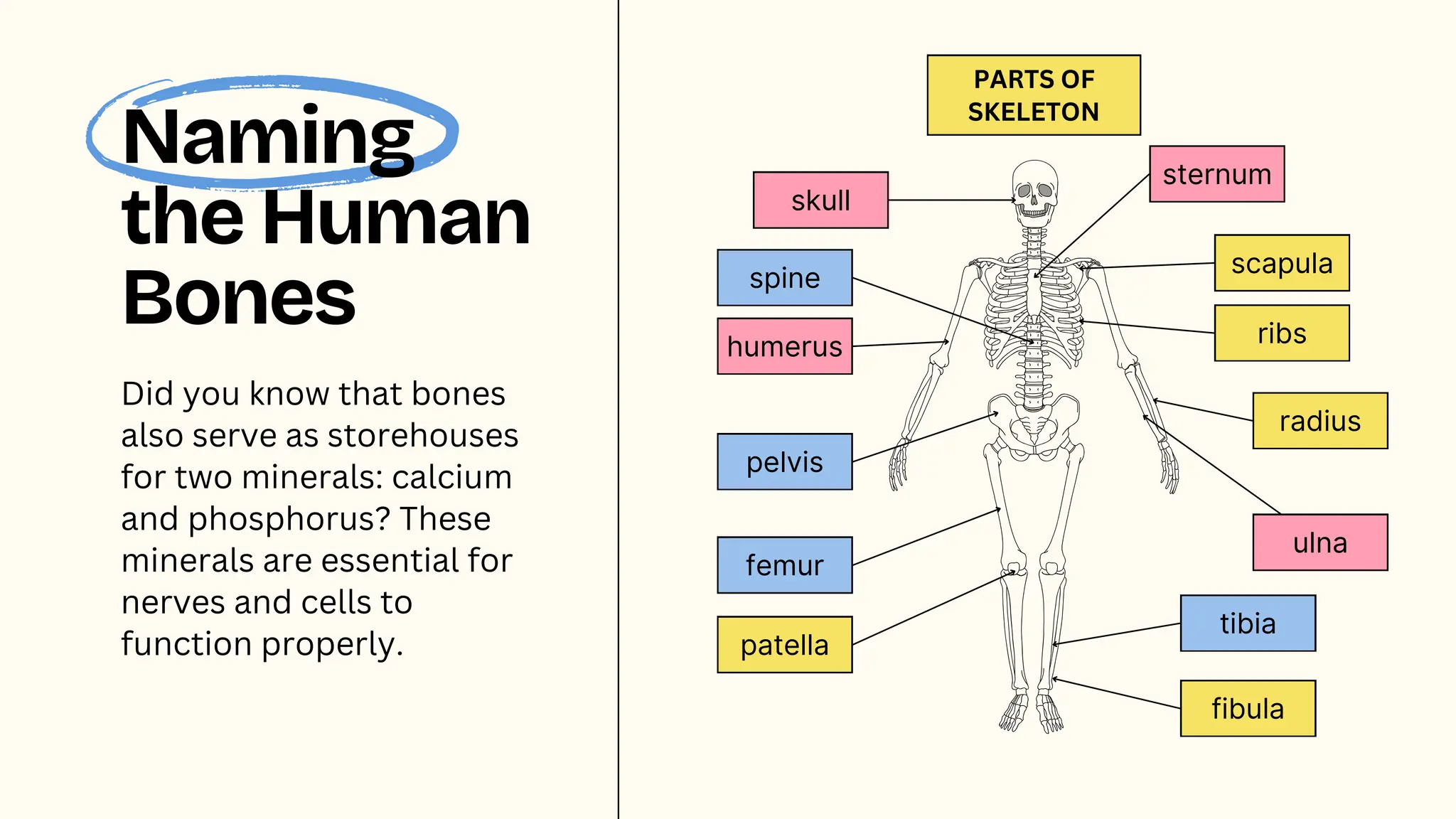
skull
PARTS OF
SKELETON
spine
humerus
pelvis
femur
patella
sternum
scapula
ribs
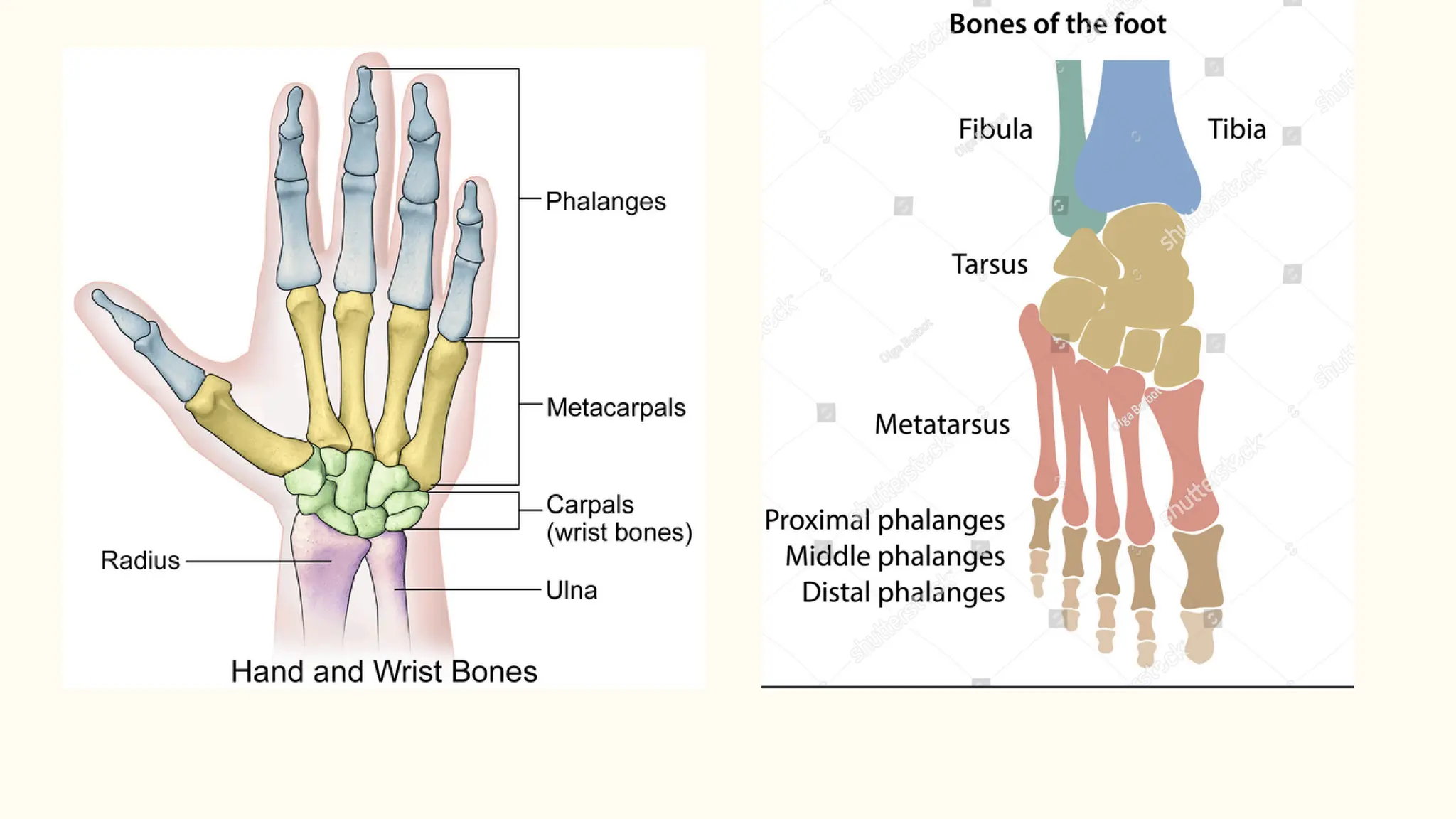
radius
ulna
tibia
fibula
Naming
the Human
Bones
Did you know that bones
also serve as storehouses
for two minerals: calcium
and phosphorus? These
minerals are essential for
nerves and cells to
function properly.
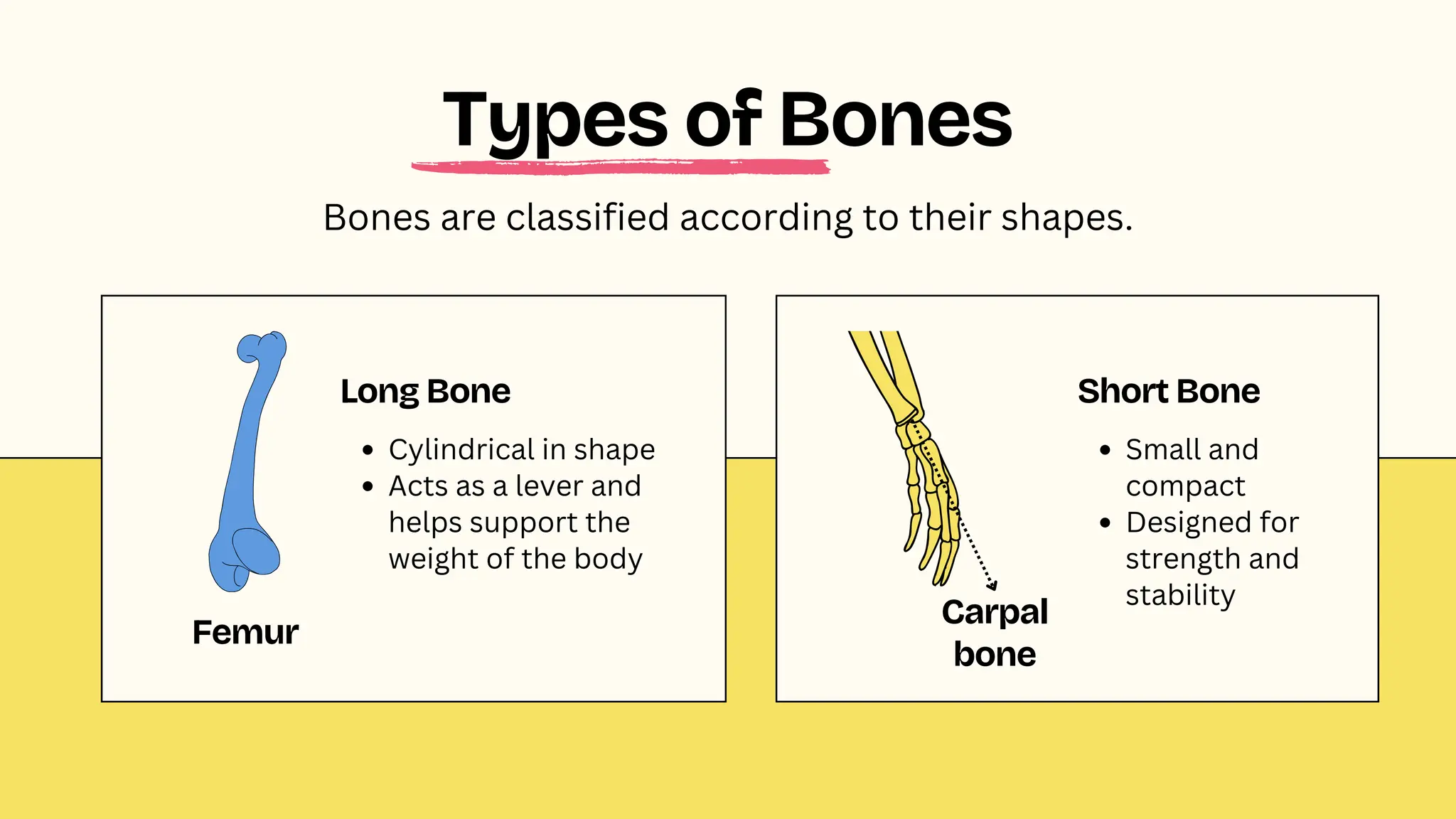
Carpal
bone
Femur
Long Bone
Cylindrical in shape
Acts as a lever and
helps support the
weight of the body
Short Bone
Small and
compact
Designed for
strength and
stability
Bones are classified according to their shapes.
Types of Bones
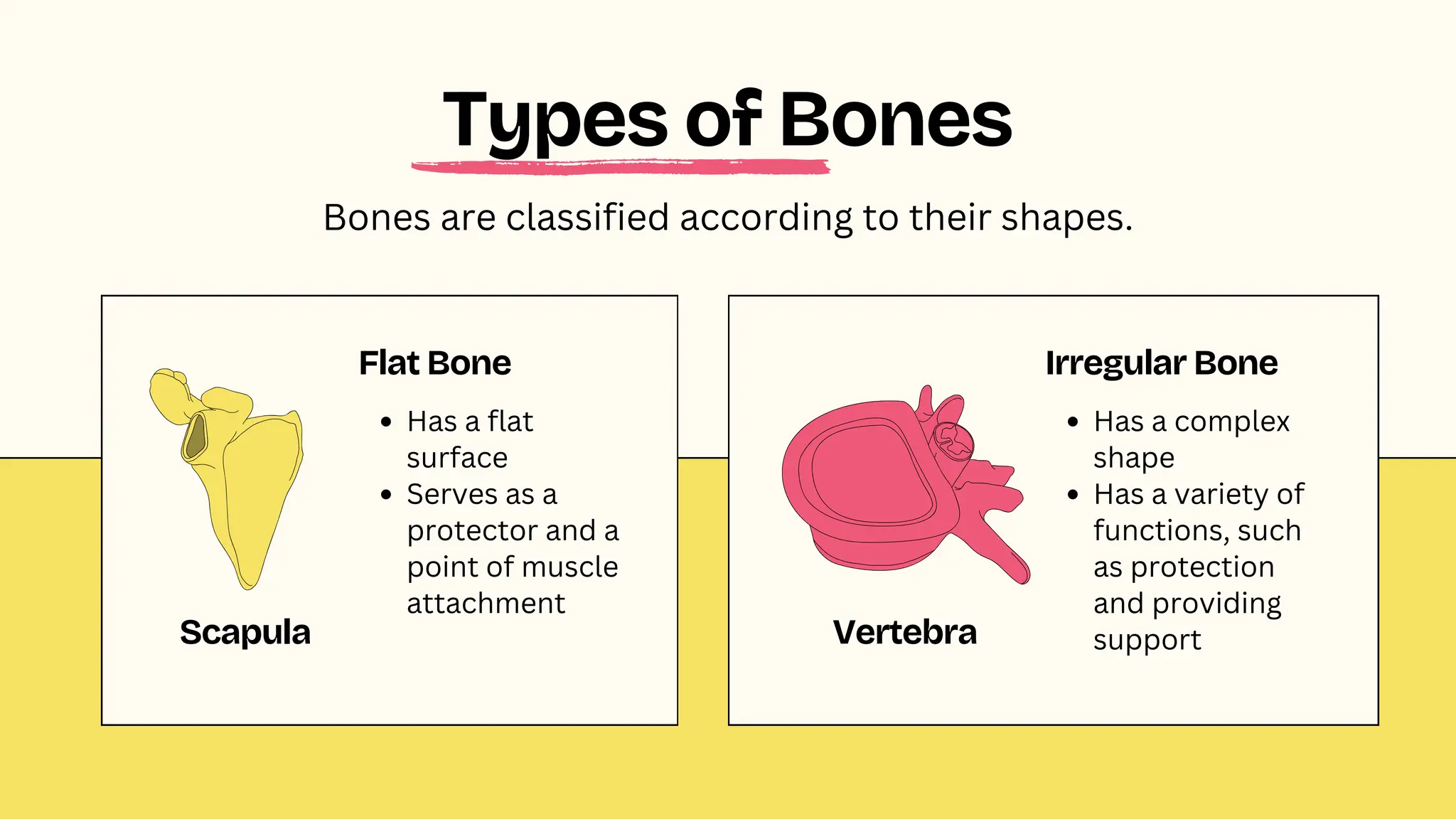
Scapula Vertebra
Flat Bone
Has a flat
surface
Serves as a
protector and a
point of muscle
attachment
Irregular Bone
Has a complex
shape
Has a variety of
functions, such
as protection
and providing
support
Bones are classified according to their shapes.
Types of Bones
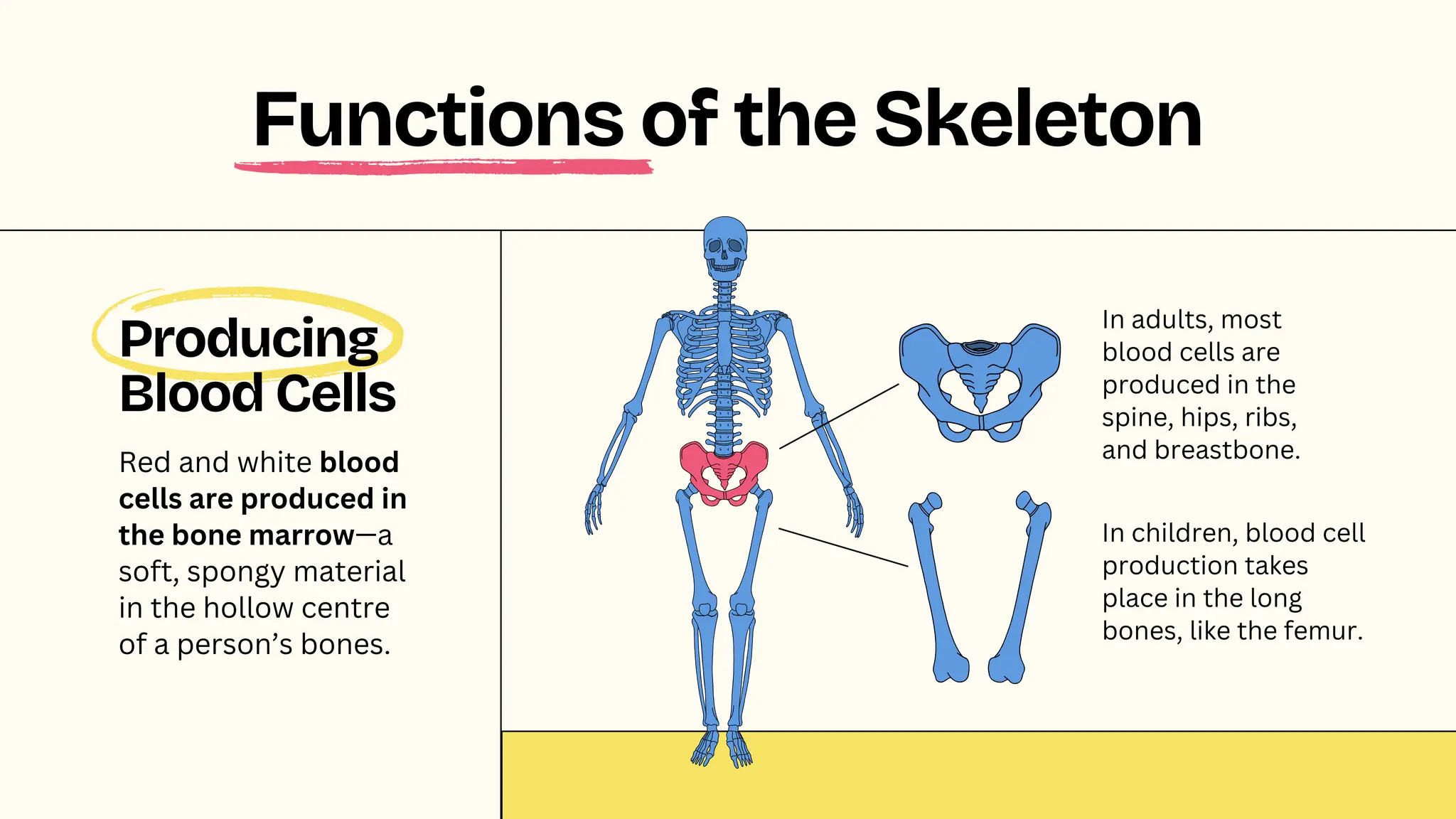
Producing
Blood Cells
Red and white blood
cells are produced in
the bone marrow—a
soft, spongy material
in the hollow centre
of a person’s bones.
Functions of the Skeleton
In adults, most
blood cells are
produced in the
spine, hips, ribs,
and breastbone.
In children, blood cell
production takes
place in the long
bones, like the femur.
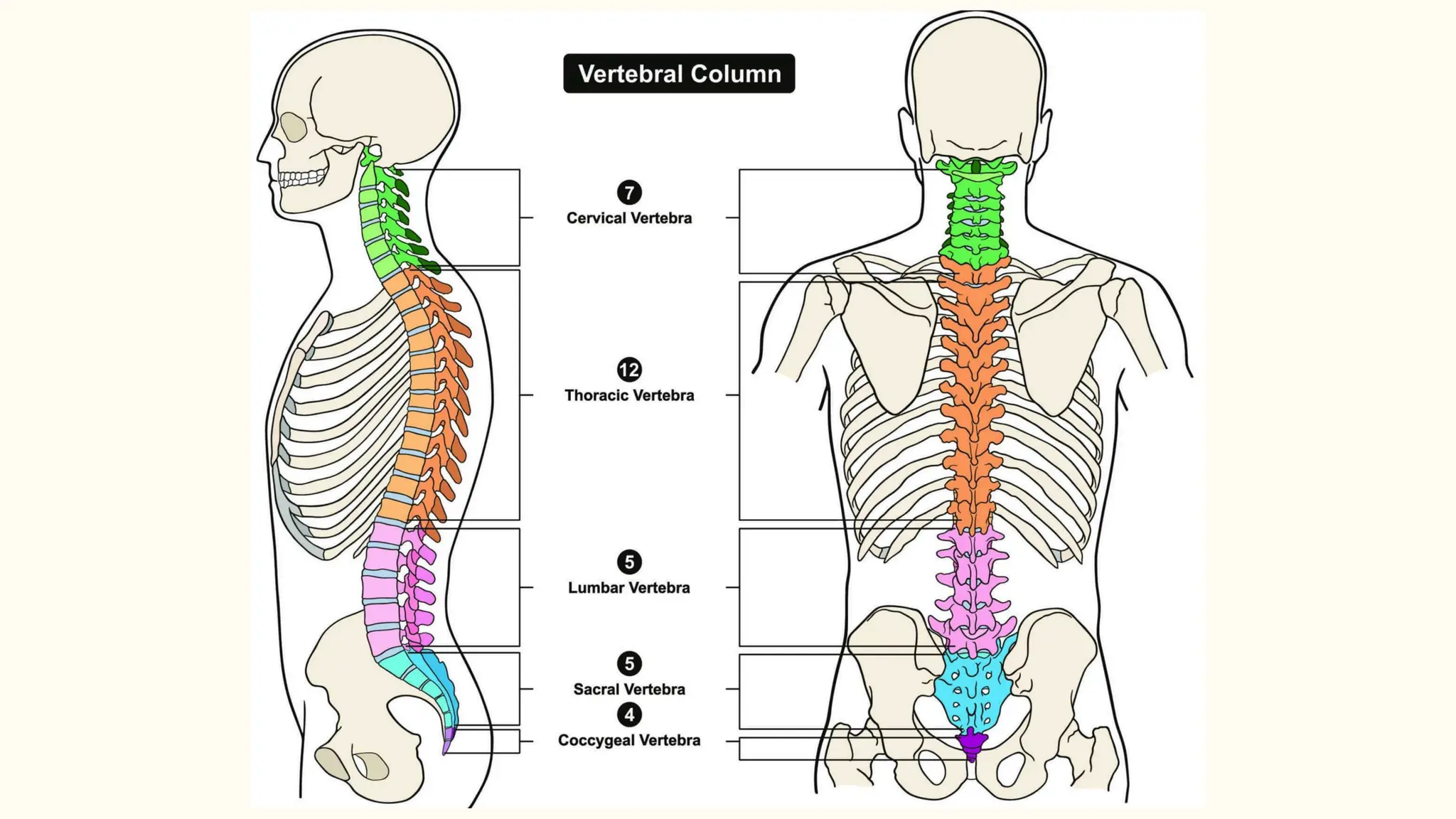
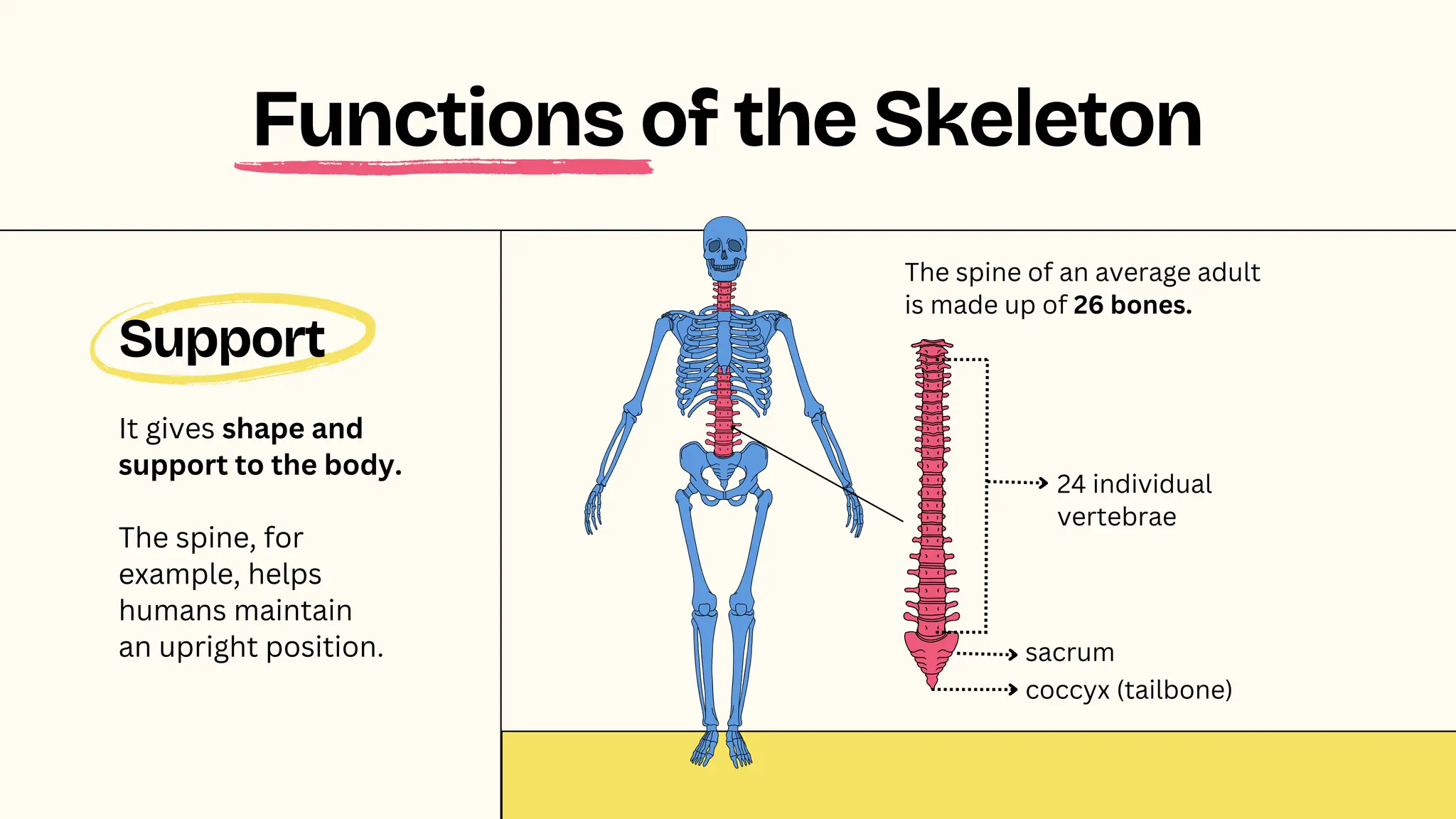
The spine of an average adult
is made up of 26 bones.
coccyx (tailbone)
sacrum
24 individual
vertebrae
Support
It gives shape and
support to the body.
The spine, for
example, helps
humans maintain
an upright position.
Functions of the Skeleton
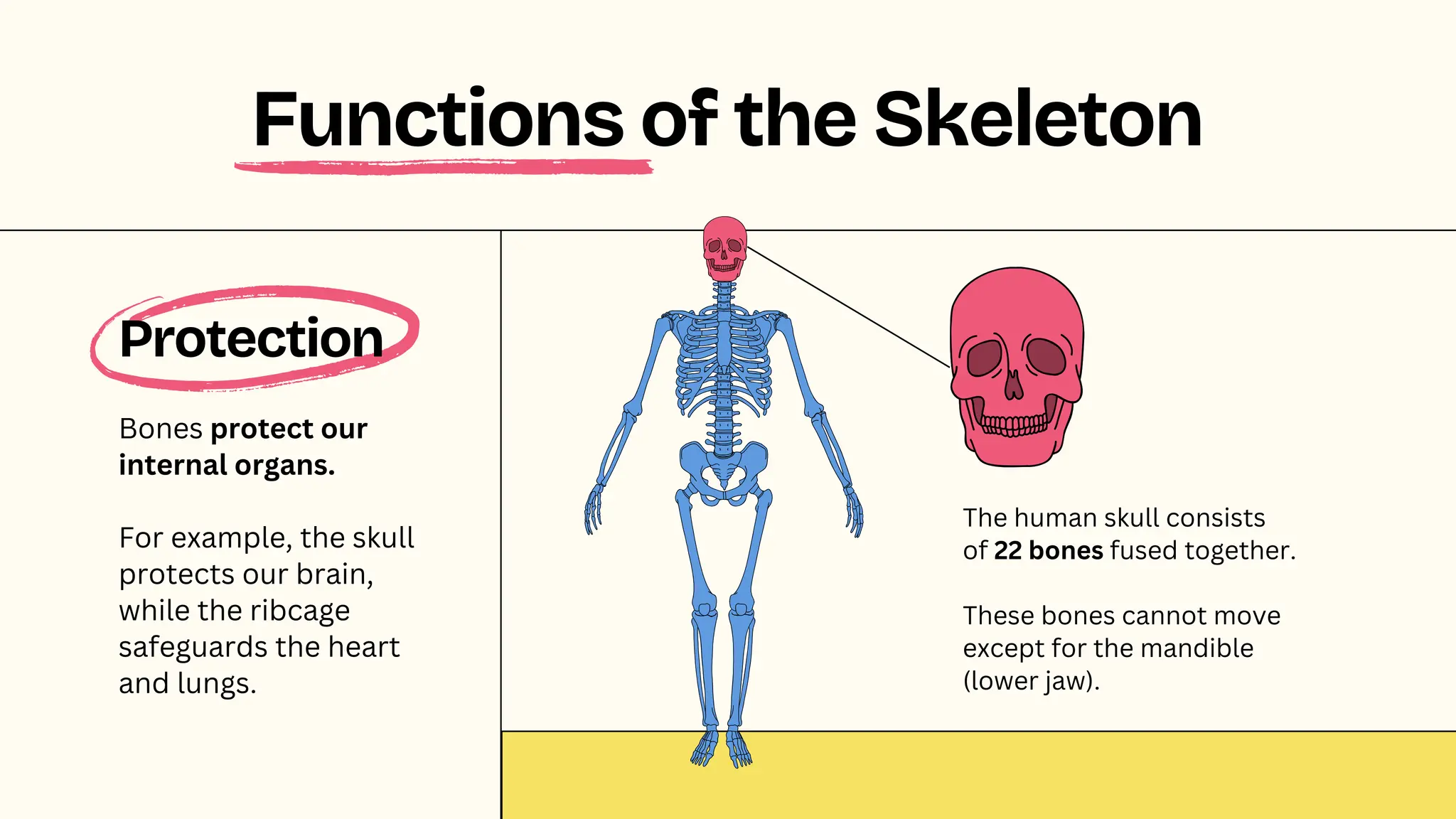
Protection
Bones protect our
internal organs.
For example, the skull
protects our brain,
while the ribcage
safeguards the heart
and lungs.
Functions of the Skeleton
The human skull consists
of 22 bones fused together.
These bones cannot move
except for the mandible
(lower jaw).
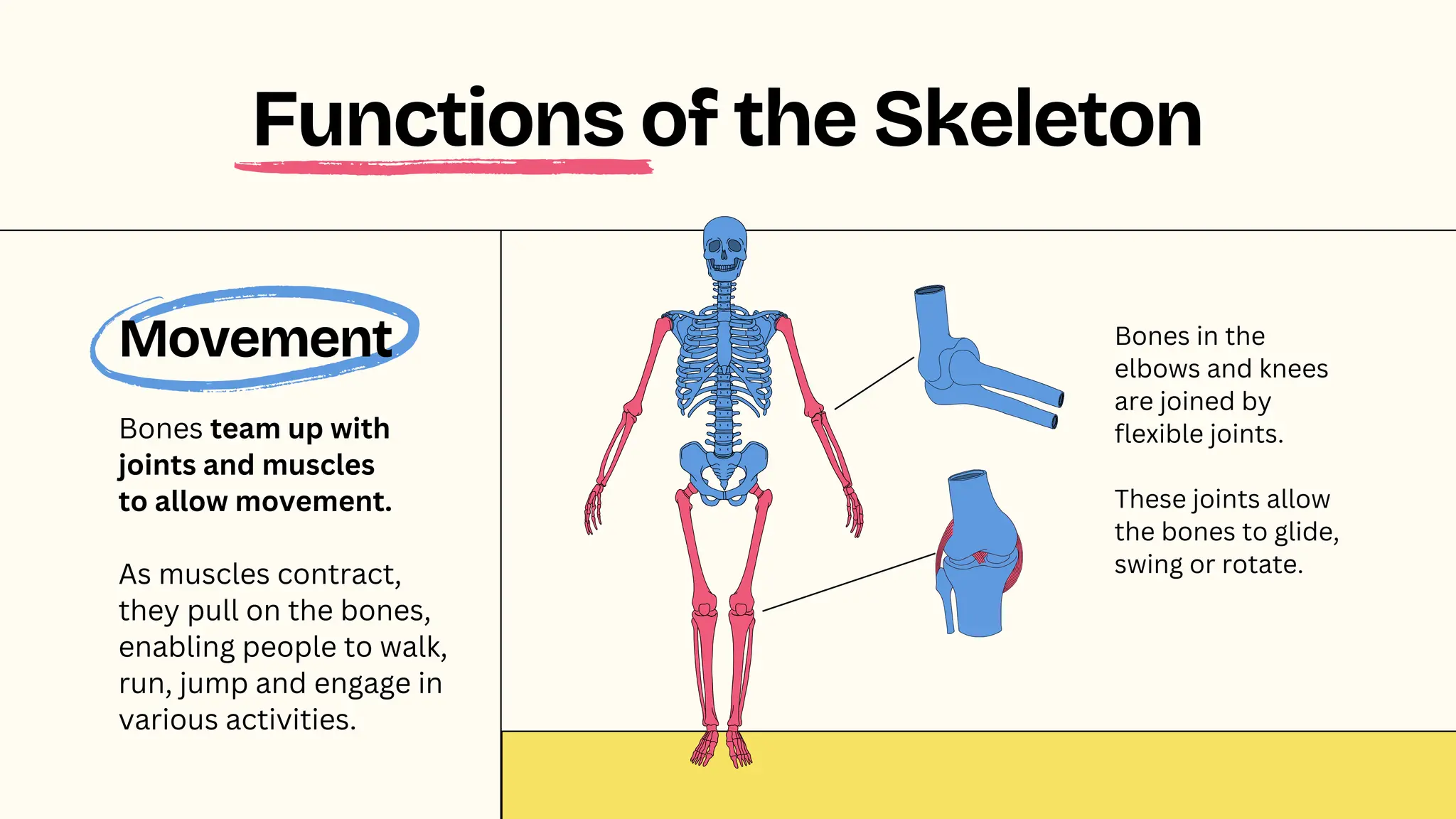
Movement
Bones team up with
joints and muscles
to allow movement.
As muscles contract,
they pull on the bones,
enabling people to walk,
run, jump and engage in
various activities.
Functions of the Skeleton
Bones in the
elbows and knees
are joined by
flexible joints.
These joints allow
the bones to glide,
swing or rotate.
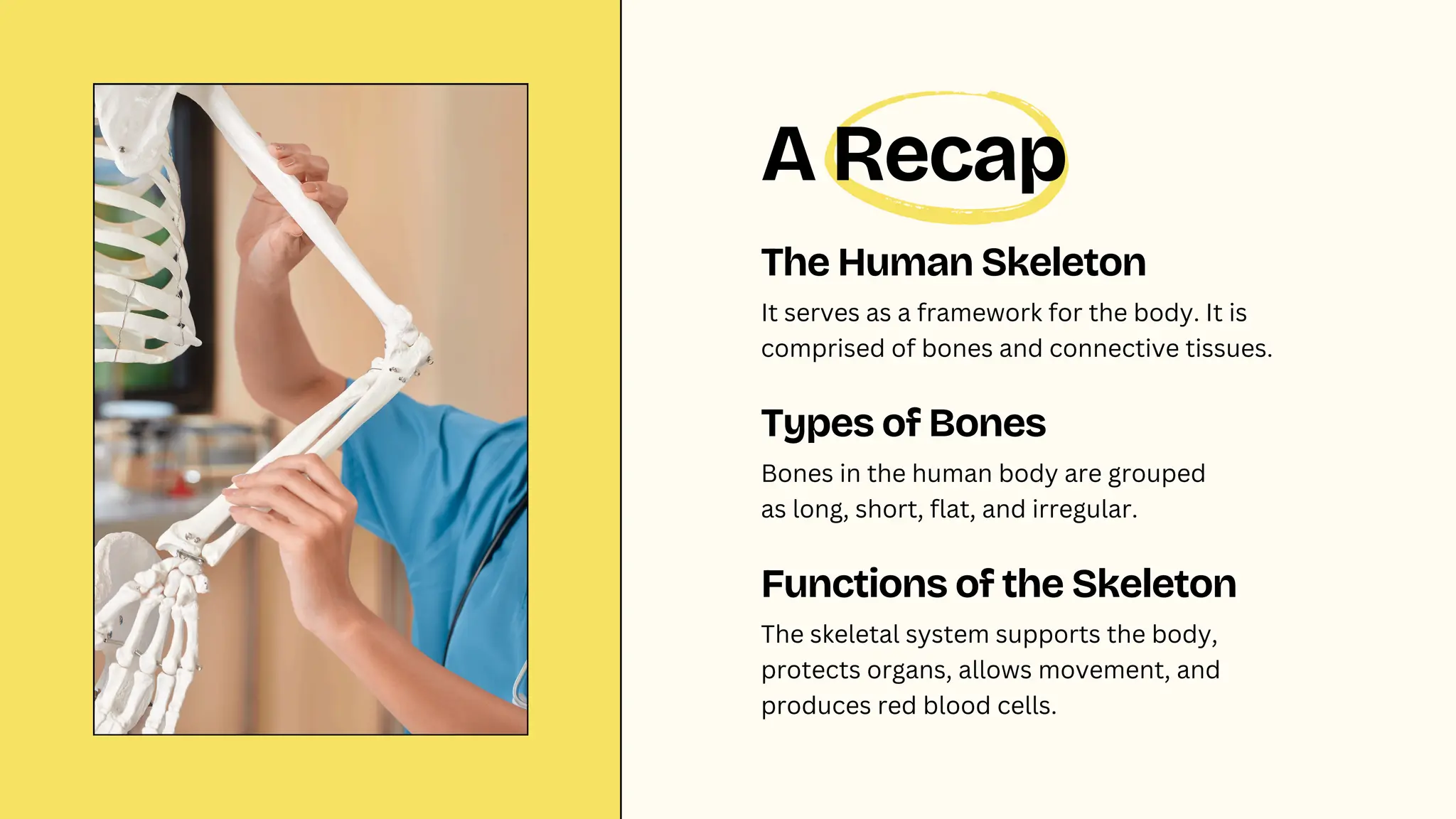
It serves as a framework for the body. It is
comprised of bones and connective tissues.
The Human Skeleton
Bones in the human body are grouped
as long, short, flat, and irregular.
Types of Bones
The skeletal system supports the body,
protects organs, allows movement, and
produces red blood cells.
Functions of the Skeleton
A Recap
MUSCULAR SYSTEM
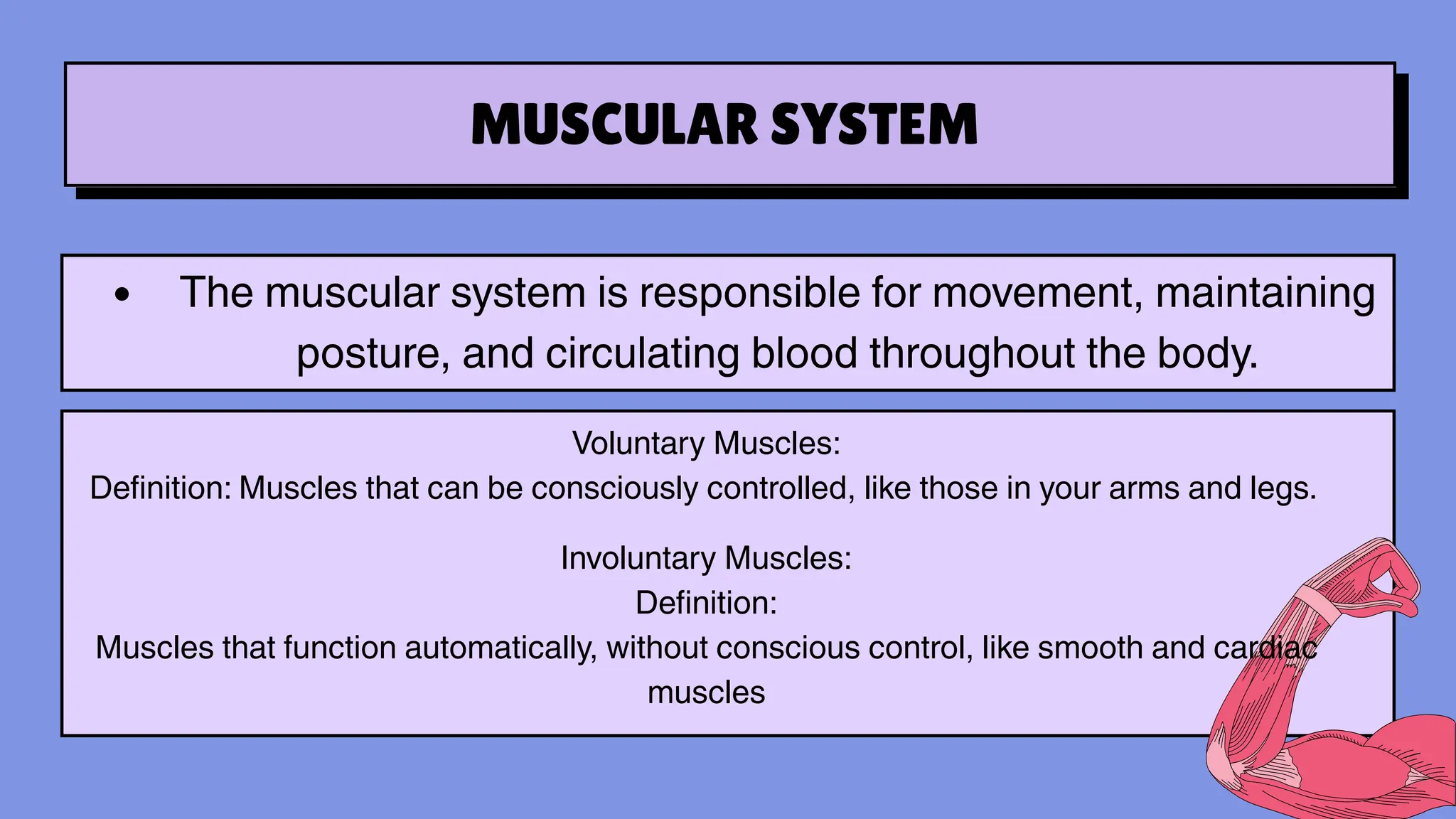
The muscular system is responsible for movement, maintaining
posture, and circulating blood throughout the body.
Voluntary Muscles:
Definition: Muscles that can be consciously controlled, like those in your arms and legs.
Involuntary Muscles:
Definition:
Muscles that function automatically, without conscious control, like smooth and cardiac
muscles
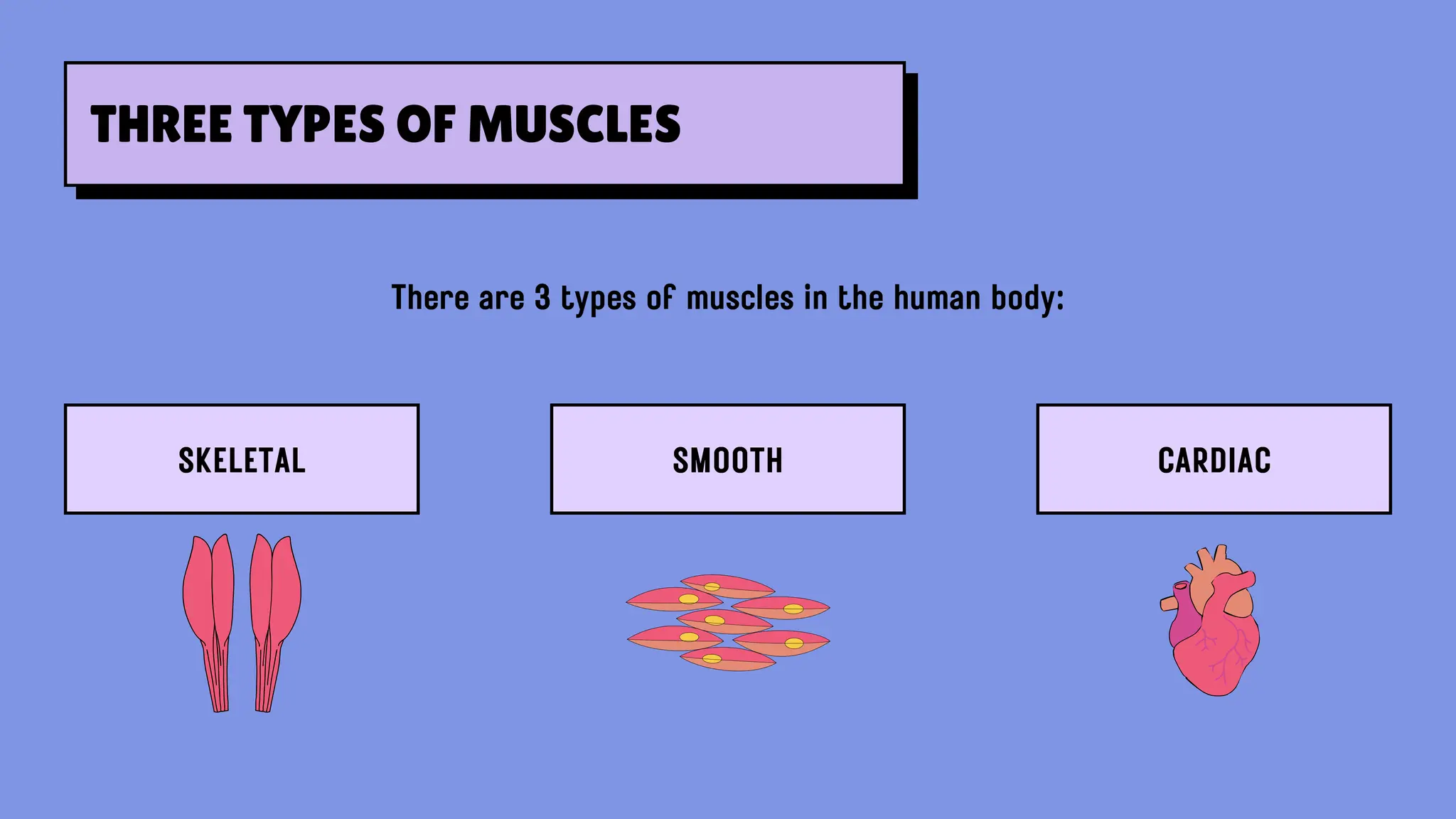
SKELETAL SMOOTH CARDIAC
There are 3 types of muscles in the human body:
THREE TYPES OF MUSCLES
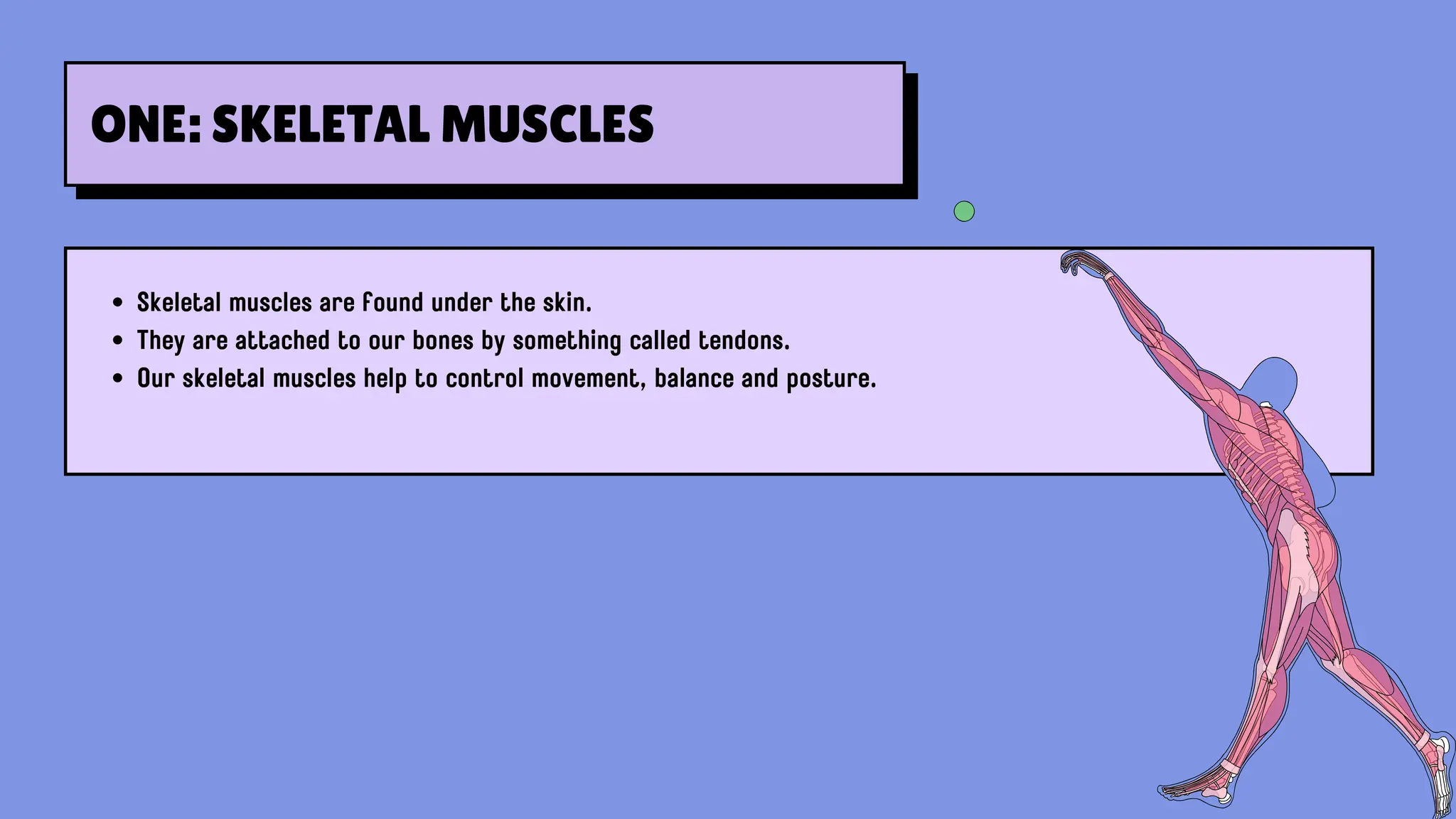
Skeletal muscles are found under the skin.
They are attached to our bones by something called tendons.
Our skeletal muscles help to control movement, balance and posture.
ONE: SKELETAL MUSCLES
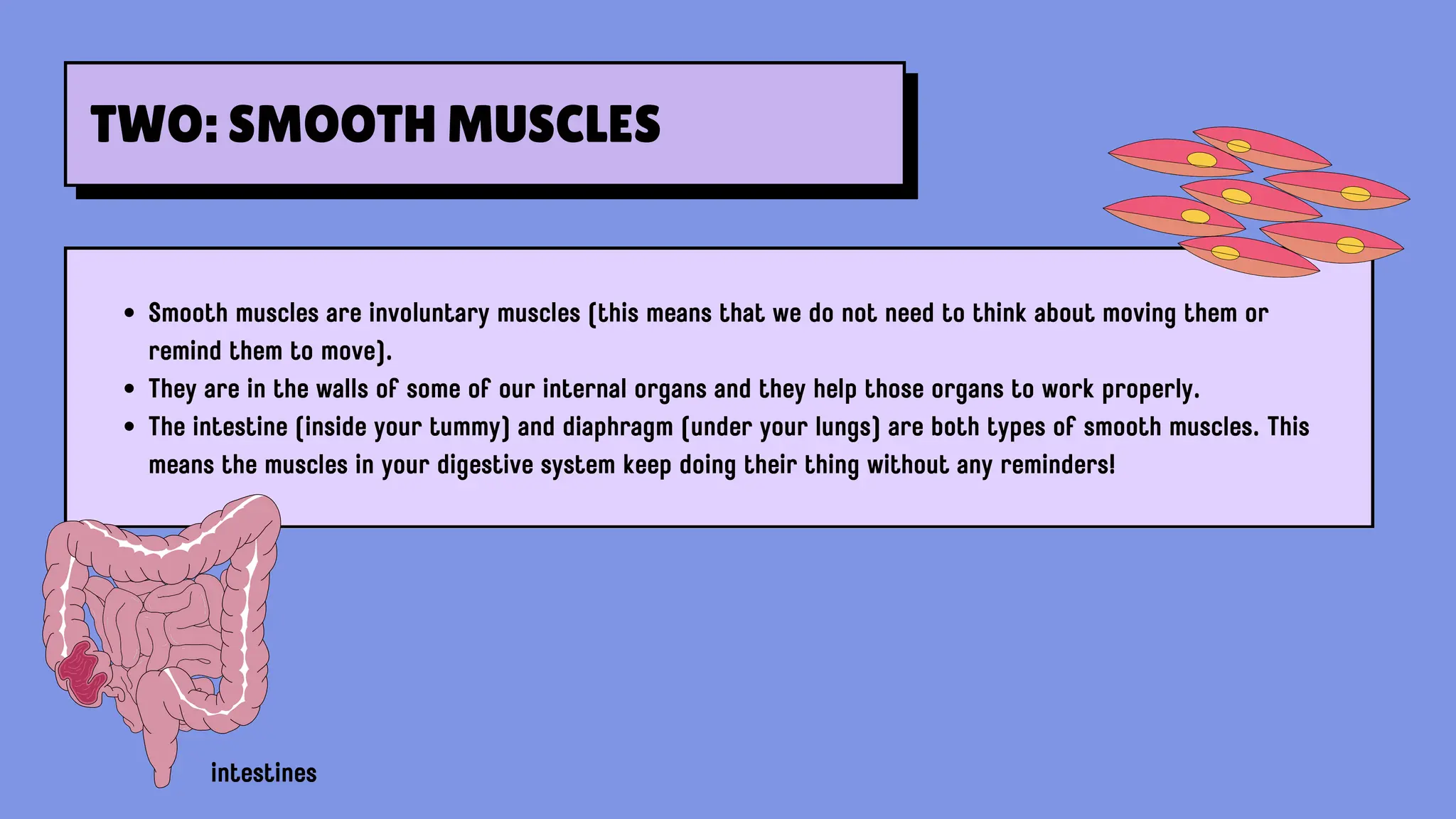
Smooth muscles are involuntary muscles (this means that we do not need to think about moving them or
remind them to move).
They are in the walls of some of our internal organs and they help those organs to work properly.
The intestine (inside your tummy) and diaphragm (under your lungs) are both types of smooth muscles. This
means the muscles in your digestive system keep doing their thing without any reminders!
intestines
TWO: SMOOTH MUSCLES
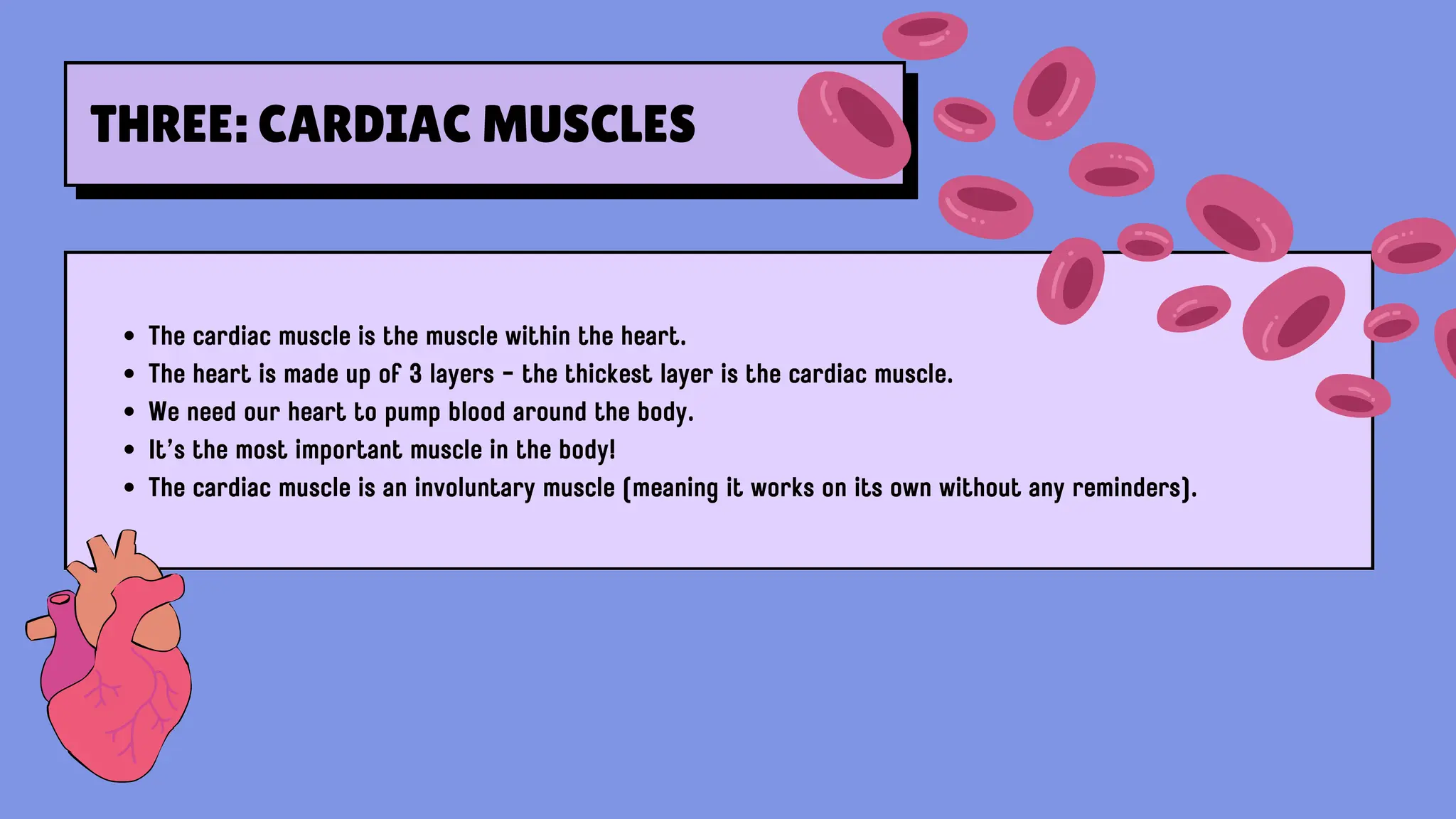
The cardiac muscle is the muscle within the heart.
The heart is made up of 3 layers - the thickest layer is the cardiac muscle.
We need our heart to pump blood around the body.
It’s the most important muscle in the body!
The cardiac muscle is an involuntary muscle (meaning it works on its own without any reminders).
THREE: CARDIAC MUSCLES
THANKYOU

Skeleton system and muscular system of human

  • 1.
    SKELETON SYSTEM AND MUSCULARSYSTEM Submitted by : R.Dinesh Bsc MLT
  • 2.
    Did you knowbabies are born with about 300 bones, but adults only end up with 206? Some bones fuse as we grow!
  • 3.
    skull PARTS OF SKELETON spine humerus pelvis femur patella sternum scapula ribs radius ulna tibia fibula Naming the Human Bones Didyou know that bones also serve as storehouses for two minerals: calcium and phosphorus? These minerals are essential for nerves and cells to function properly.
  • 4.
    Carpal bone Femur Long Bone Cylindrical inshape Acts as a lever and helps support the weight of the body Short Bone Small and compact Designed for strength and stability Bones are classified according to their shapes. Types of Bones
  • 5.
    Scapula Vertebra Flat Bone Hasa flat surface Serves as a protector and a point of muscle attachment Irregular Bone Has a complex shape Has a variety of functions, such as protection and providing support Bones are classified according to their shapes. Types of Bones
  • 8.
    Producing Blood Cells Red andwhite blood cells are produced in the bone marrow—a soft, spongy material in the hollow centre of a person’s bones. Functions of the Skeleton In adults, most blood cells are produced in the spine, hips, ribs, and breastbone. In children, blood cell production takes place in the long bones, like the femur.
  • 9.
    The spine ofan average adult is made up of 26 bones. coccyx (tailbone) sacrum 24 individual vertebrae Support It gives shape and support to the body. The spine, for example, helps humans maintain an upright position. Functions of the Skeleton
  • 10.
    Protection Bones protect our internalorgans. For example, the skull protects our brain, while the ribcage safeguards the heart and lungs. Functions of the Skeleton The human skull consists of 22 bones fused together. These bones cannot move except for the mandible (lower jaw).
  • 11.
    Movement Bones team upwith joints and muscles to allow movement. As muscles contract, they pull on the bones, enabling people to walk, run, jump and engage in various activities. Functions of the Skeleton Bones in the elbows and knees are joined by flexible joints. These joints allow the bones to glide, swing or rotate.
  • 12.
    It serves asa framework for the body. It is comprised of bones and connective tissues. The Human Skeleton Bones in the human body are grouped as long, short, flat, and irregular. Types of Bones The skeletal system supports the body, protects organs, allows movement, and produces red blood cells. Functions of the Skeleton A Recap
  • 13.
    MUSCULAR SYSTEM The muscularsystem is responsible for movement, maintaining posture, and circulating blood throughout the body. Voluntary Muscles: Definition: Muscles that can be consciously controlled, like those in your arms and legs. Involuntary Muscles: Definition: Muscles that function automatically, without conscious control, like smooth and cardiac muscles
  • 14.
    SKELETAL SMOOTH CARDIAC Thereare 3 types of muscles in the human body: THREE TYPES OF MUSCLES
  • 15.
    Skeletal muscles arefound under the skin. They are attached to our bones by something called tendons. Our skeletal muscles help to control movement, balance and posture. ONE: SKELETAL MUSCLES
  • 16.
    Smooth muscles areinvoluntary muscles (this means that we do not need to think about moving them or remind them to move). They are in the walls of some of our internal organs and they help those organs to work properly. The intestine (inside your tummy) and diaphragm (under your lungs) are both types of smooth muscles. This means the muscles in your digestive system keep doing their thing without any reminders! intestines TWO: SMOOTH MUSCLES
  • 17.
    The cardiac muscleis the muscle within the heart. The heart is made up of 3 layers - the thickest layer is the cardiac muscle. We need our heart to pump blood around the body. It’s the most important muscle in the body! The cardiac muscle is an involuntary muscle (meaning it works on its own without any reminders). THREE: CARDIAC MUSCLES
  • 18.