


Scott Dodson
 COO, Product Owner
Bobber Interactive, Inc.
Me   Me
Me
   Chronic Entrepreneur
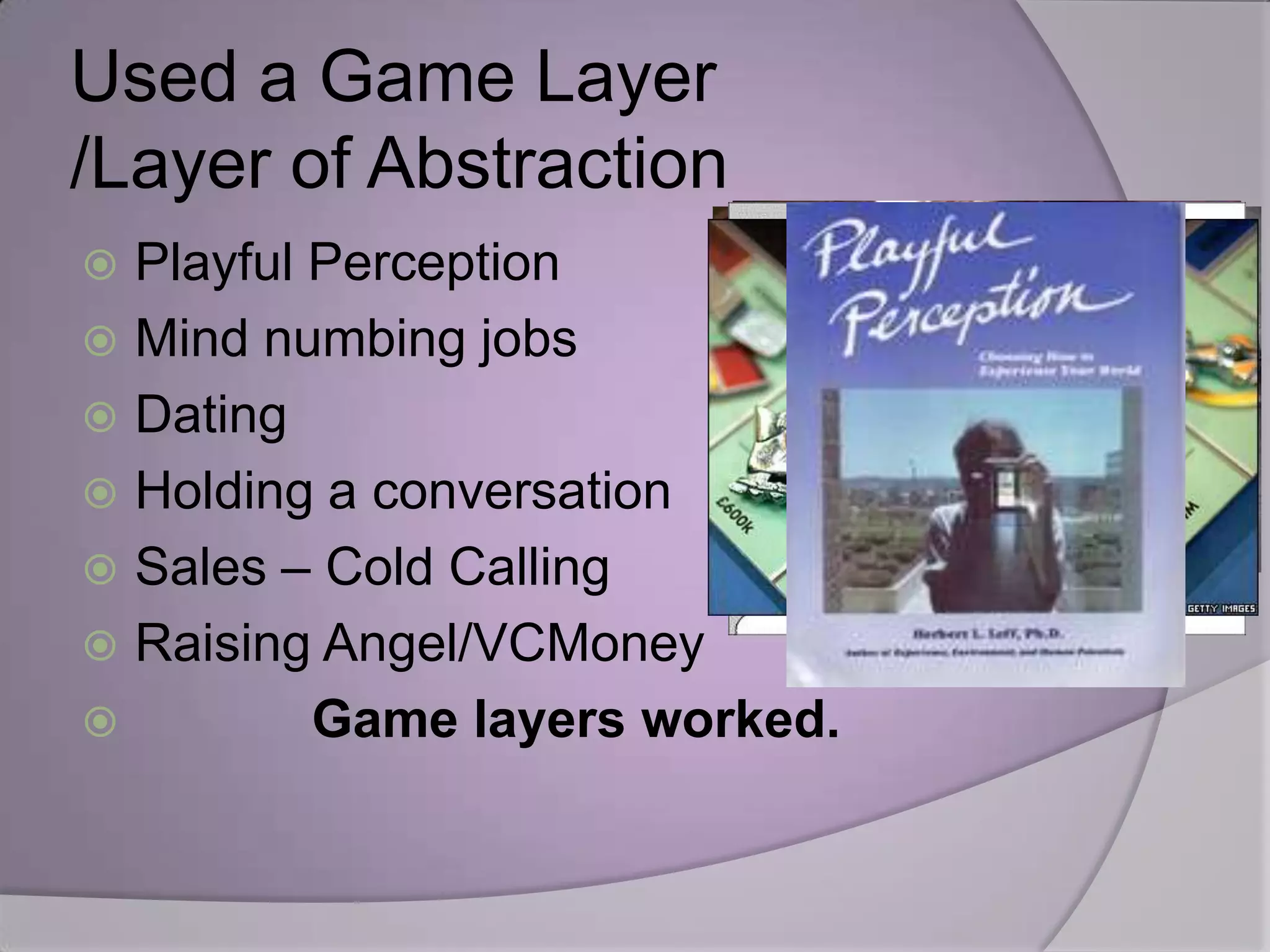
Used a Game Layer
/Layer of Abstraction
 Playful Perception
 Mind numbing jobs
 Dating
 Holding a conversation
 Sales – Cold Calling
 Raising Angel/VCMoney
         Game layers worked.
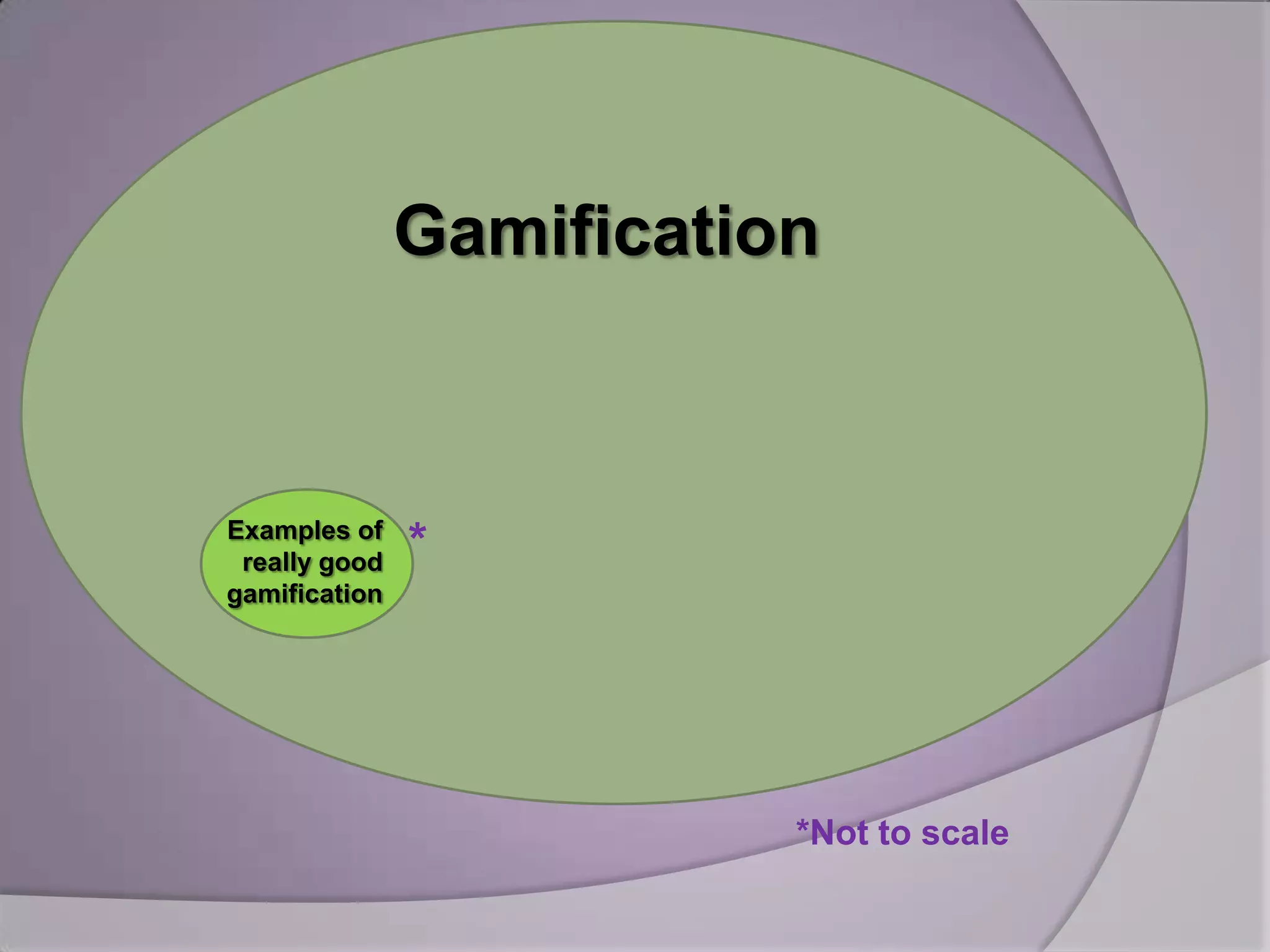
Gamification


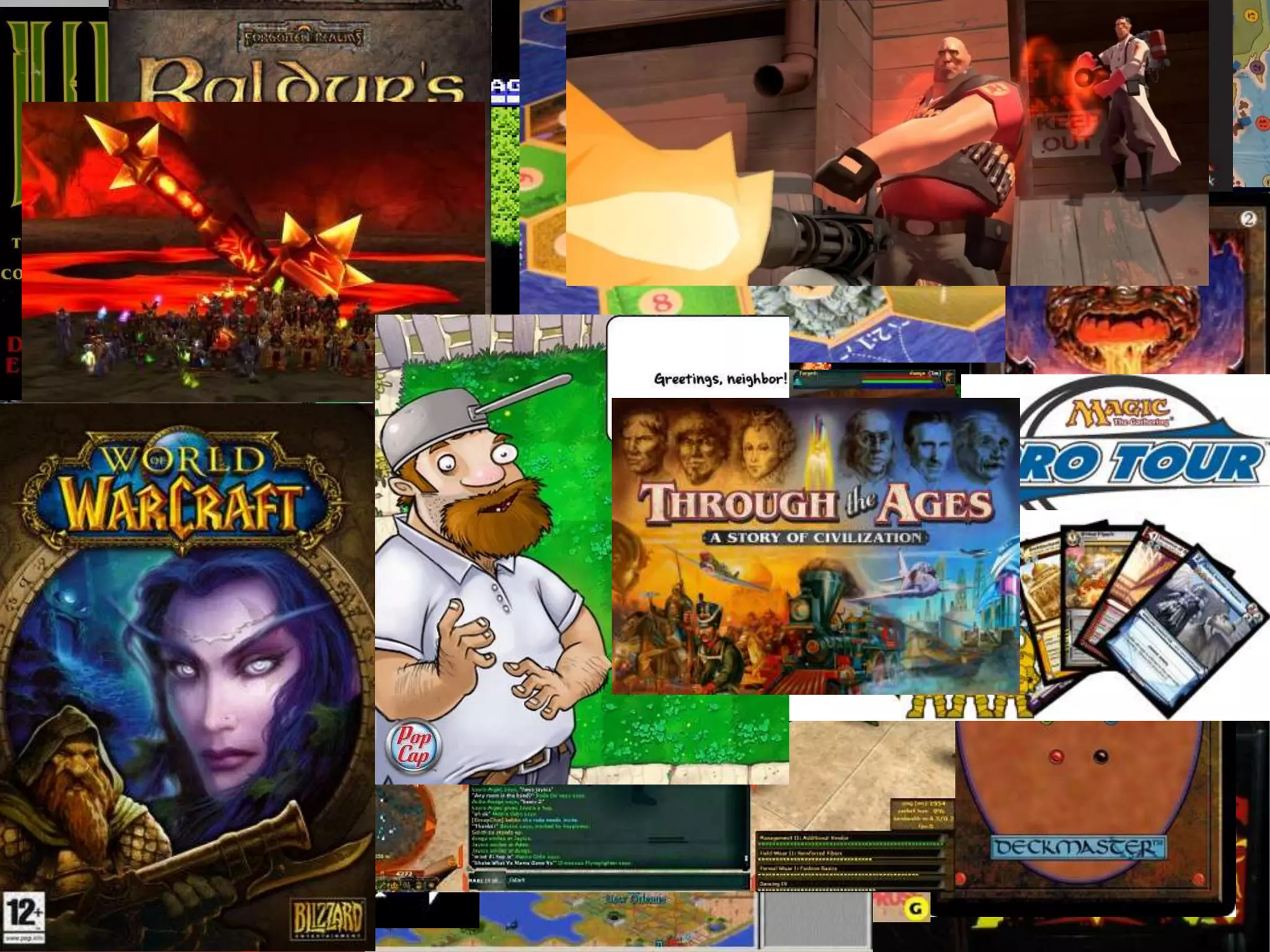
Examples of
 really good   *
gamification


                          *Not to scale
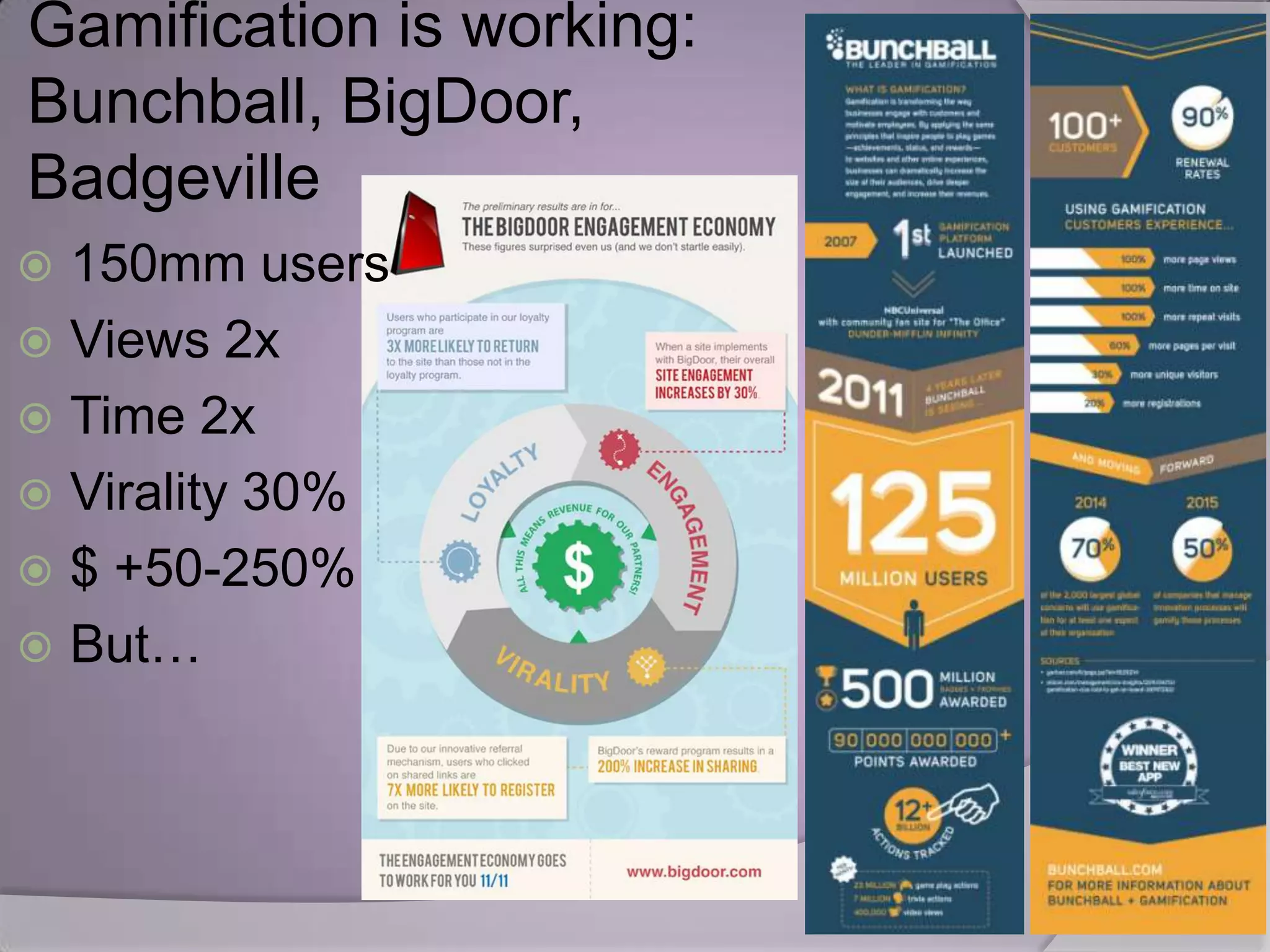
Gamification is working:
Bunchball, BigDoor,
Badgeville
 150mm users
 Views 2x
 Time 2x
 Virality 30%
 $ +50-250%
 But…
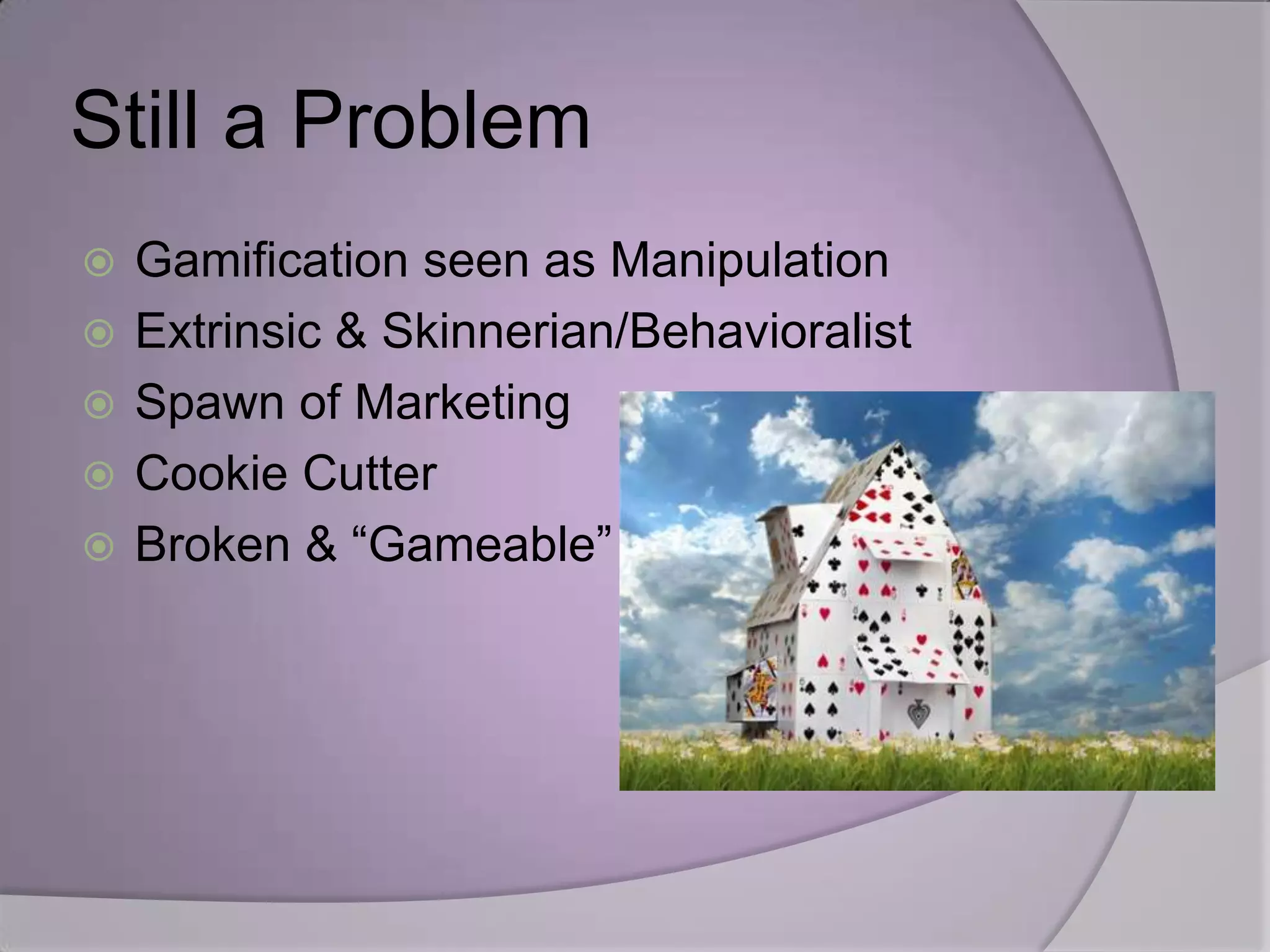
Still a Problem
   Gamification seen as Manipulation
   Extrinsic & Skinnerian/Behavioralist
   Spawn of Marketing
   Cookie Cutter
   Broken & “Gameable”
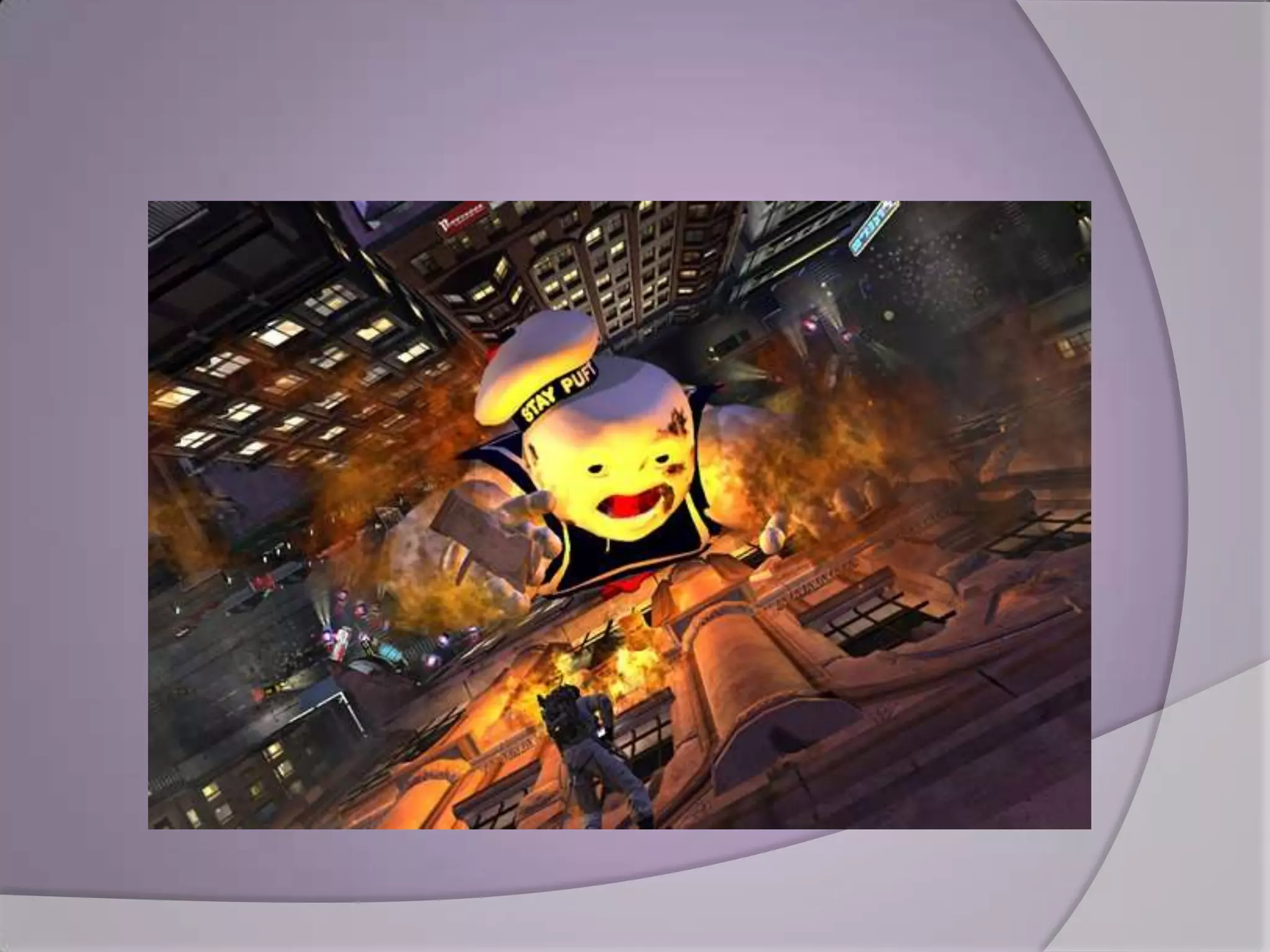
OMFG
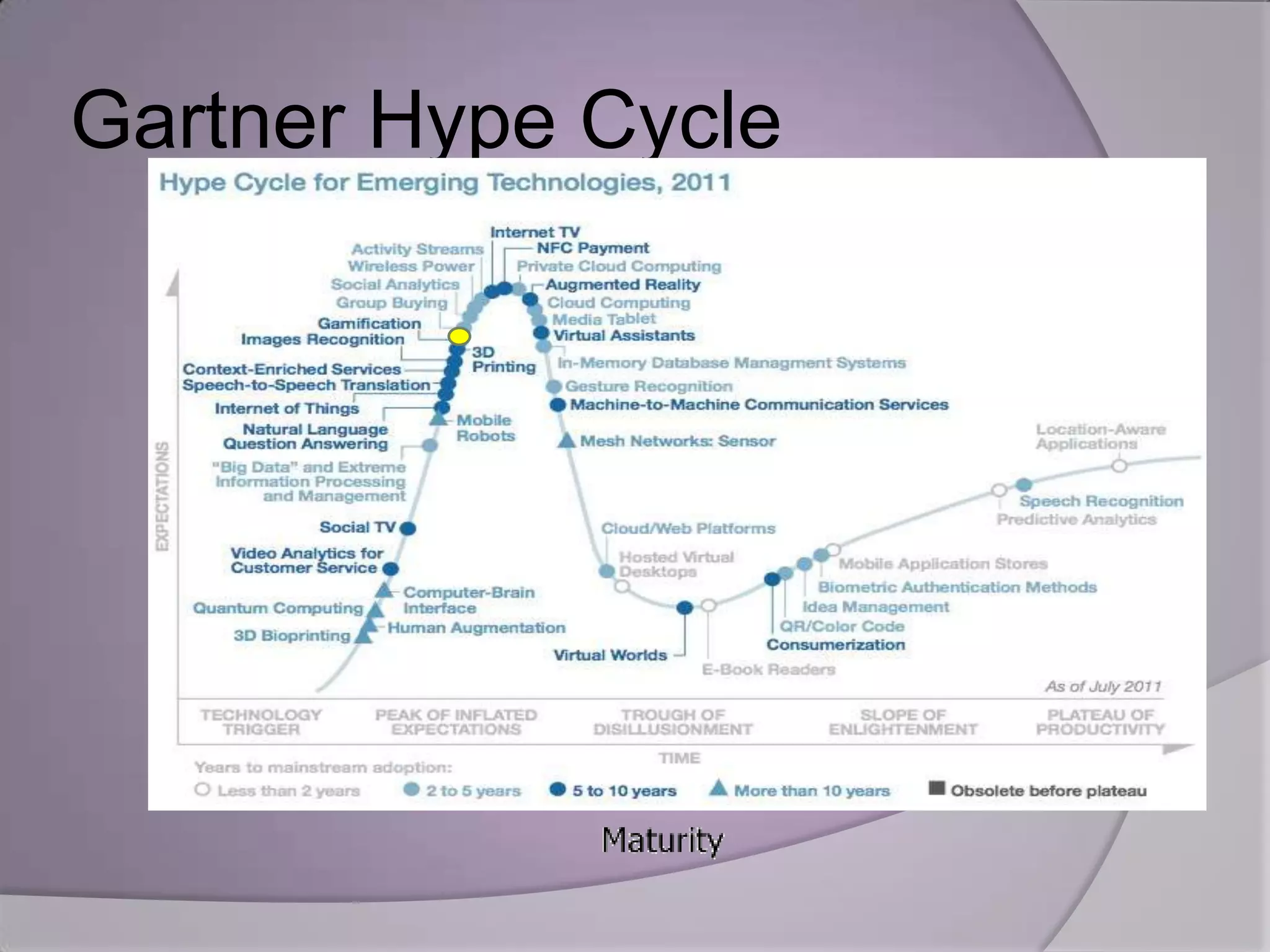
Gartner Hype Cycle
     We are
     here
The Right Road…
To get to the Plateau of
Productivity…
     Good Gamification is not about:
       Extrinsic rewards
       Manipulation
       Outer “shell” of game: Points, Levels,
       Badges
     It’s about creating Sustained
      Engagement
The Challenge
   Great games are hard enough:
     Only 4% of games that go into production are
     profitable
   Add a “real world” activity and you
    multiply the difficulty of success
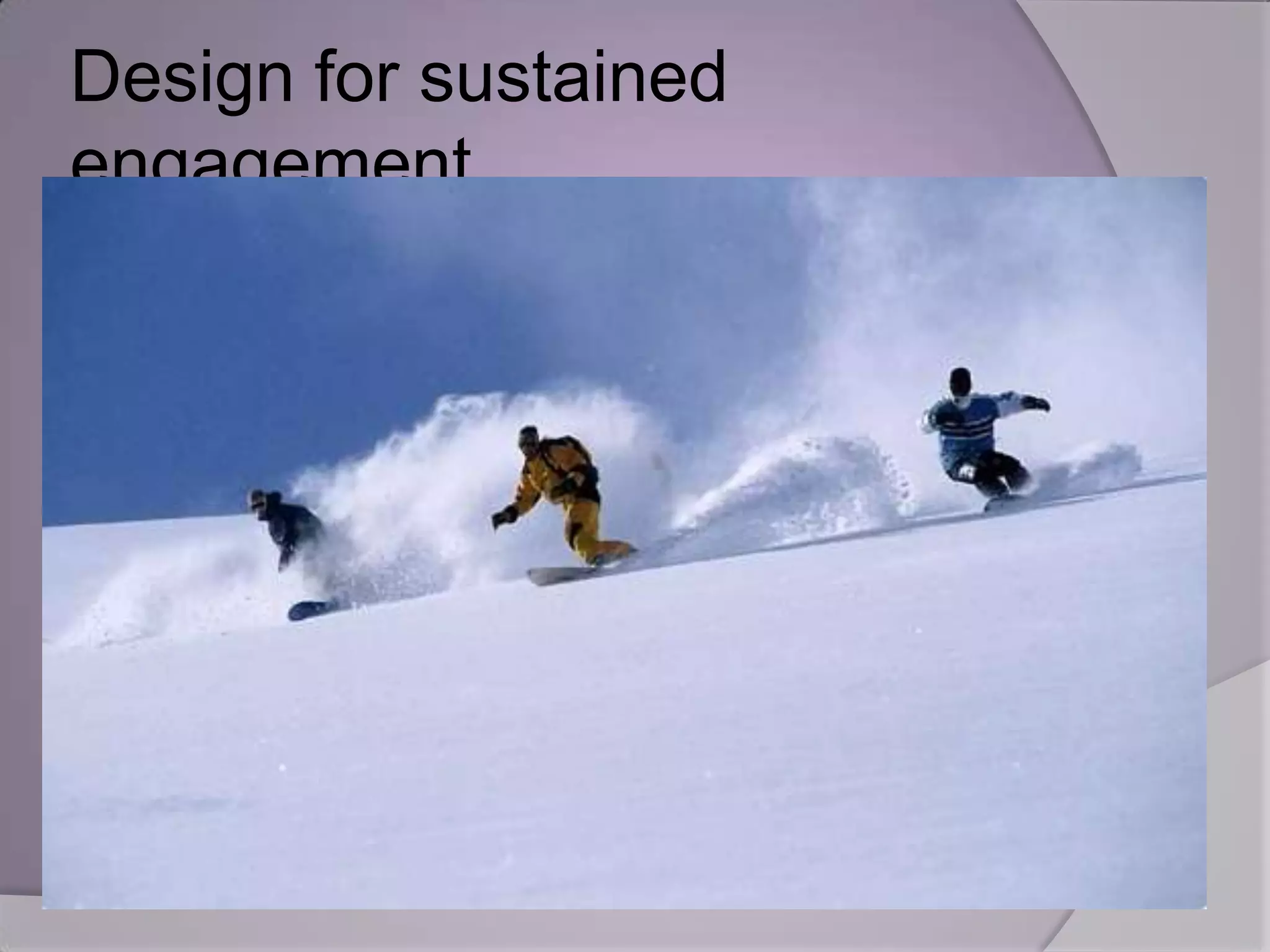
Design for sustained
engagement
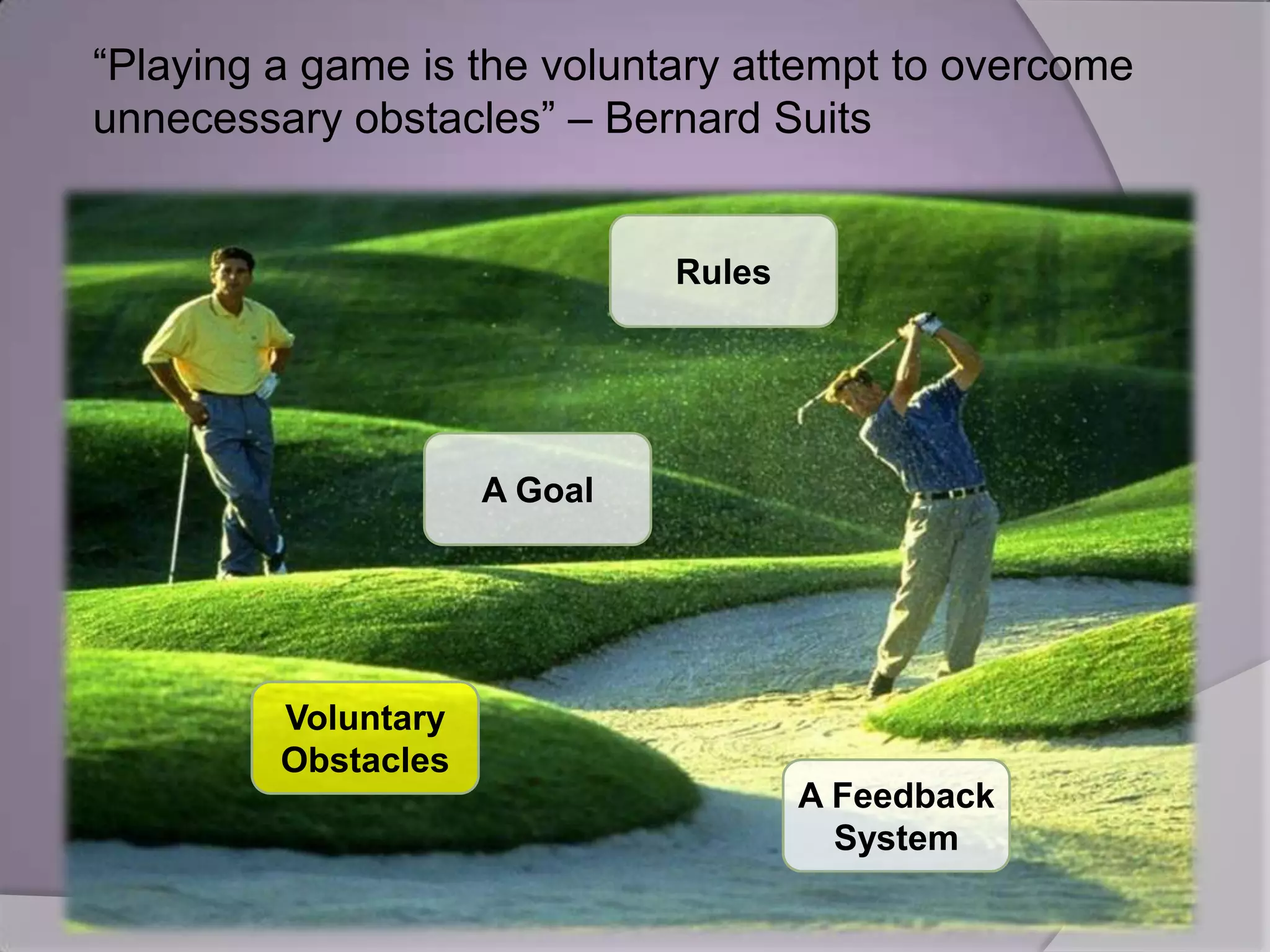
“Playing a game is the voluntary attempt to overcome
unnecessary obstacles” – Bernard Suits


                              Rules


                     A Goal


         Voluntary
         Obstacles
                                      A Feedback
                                        System
Designing for Sustained
Engagement
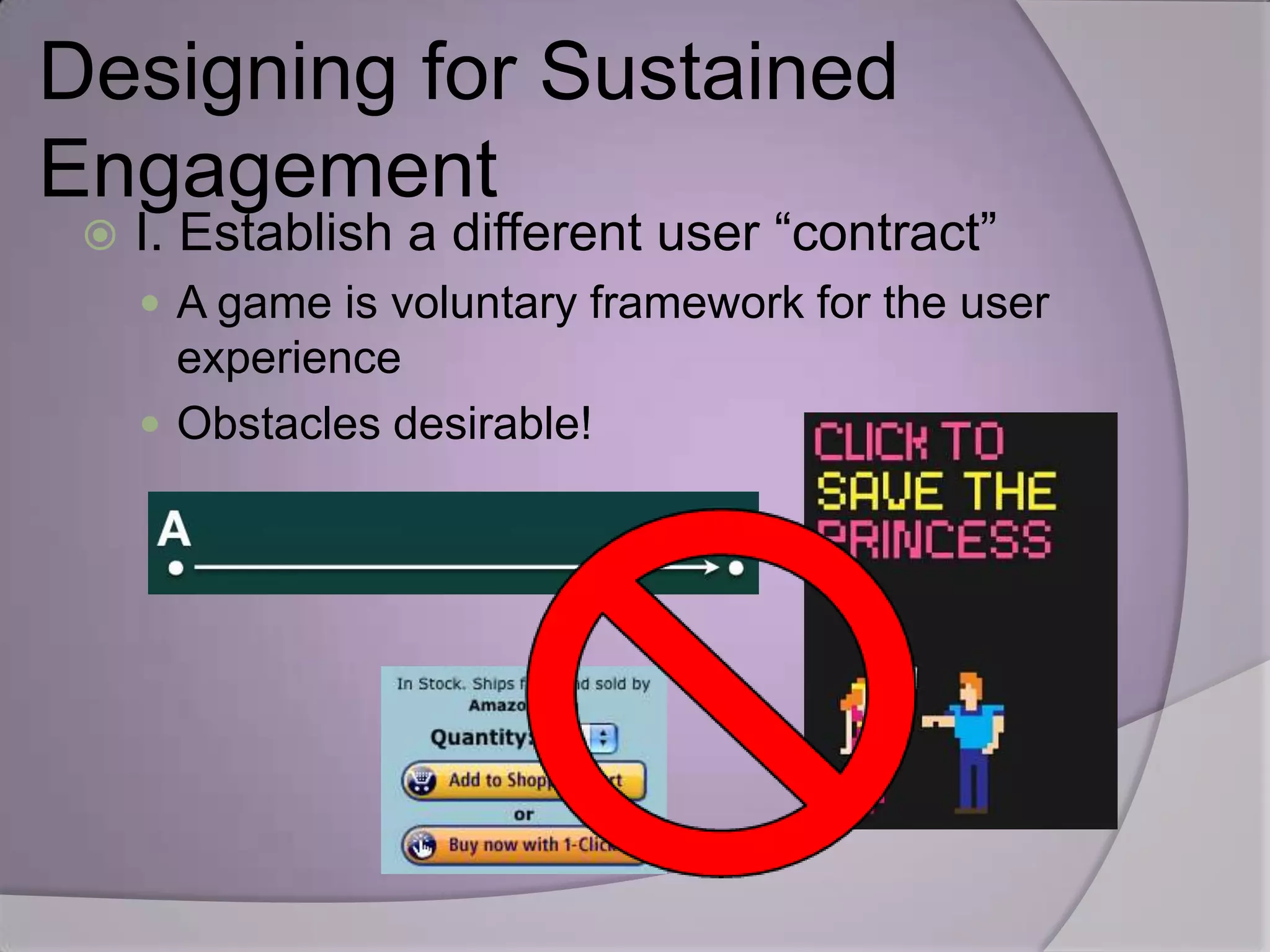
    I. Establish a different user “contract”
      A game is voluntary framework for the user
       experience
      Obstacles desirable!
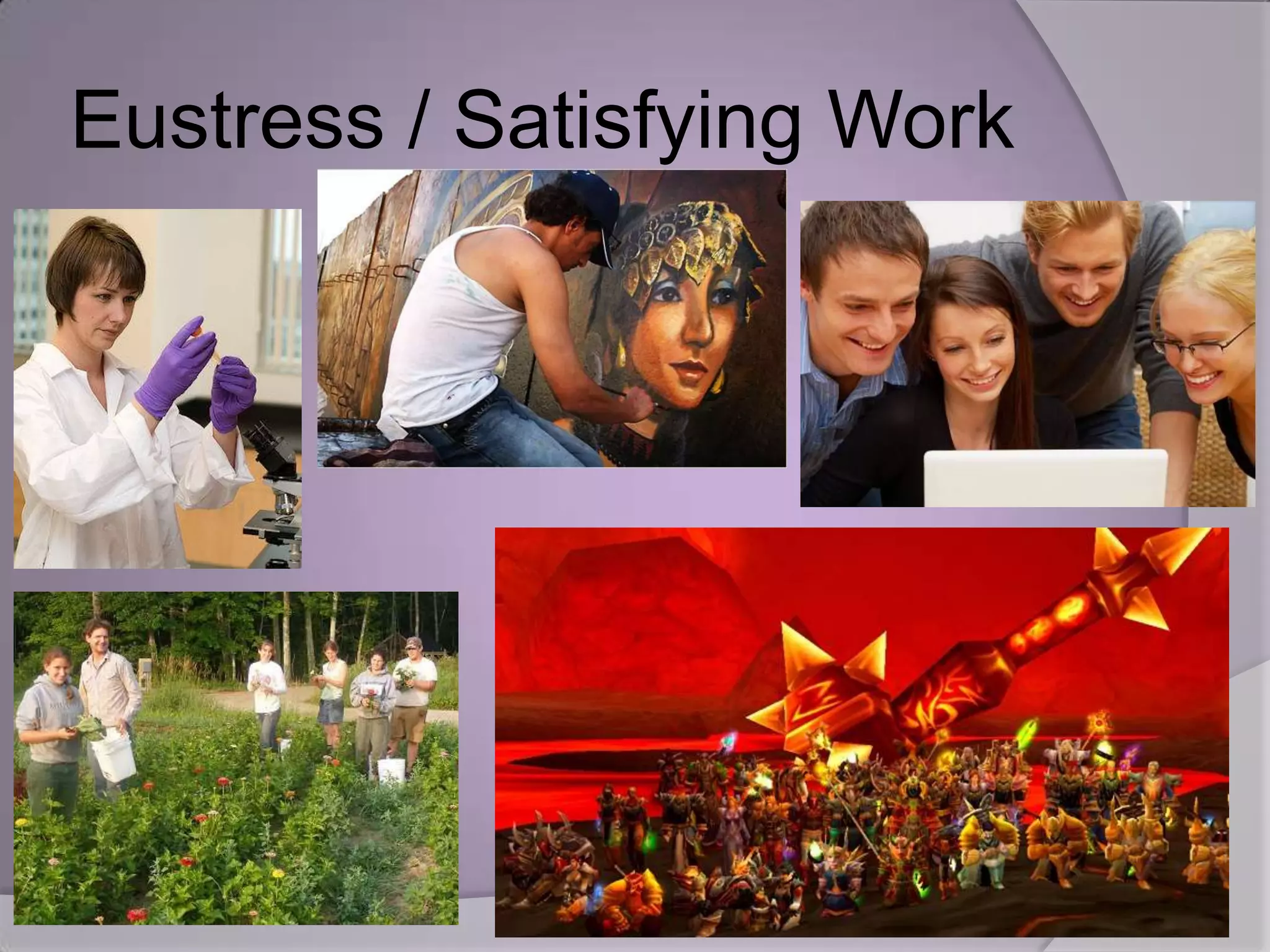
Eustress / Satisfying Work
Designing for Sustained
Engagement
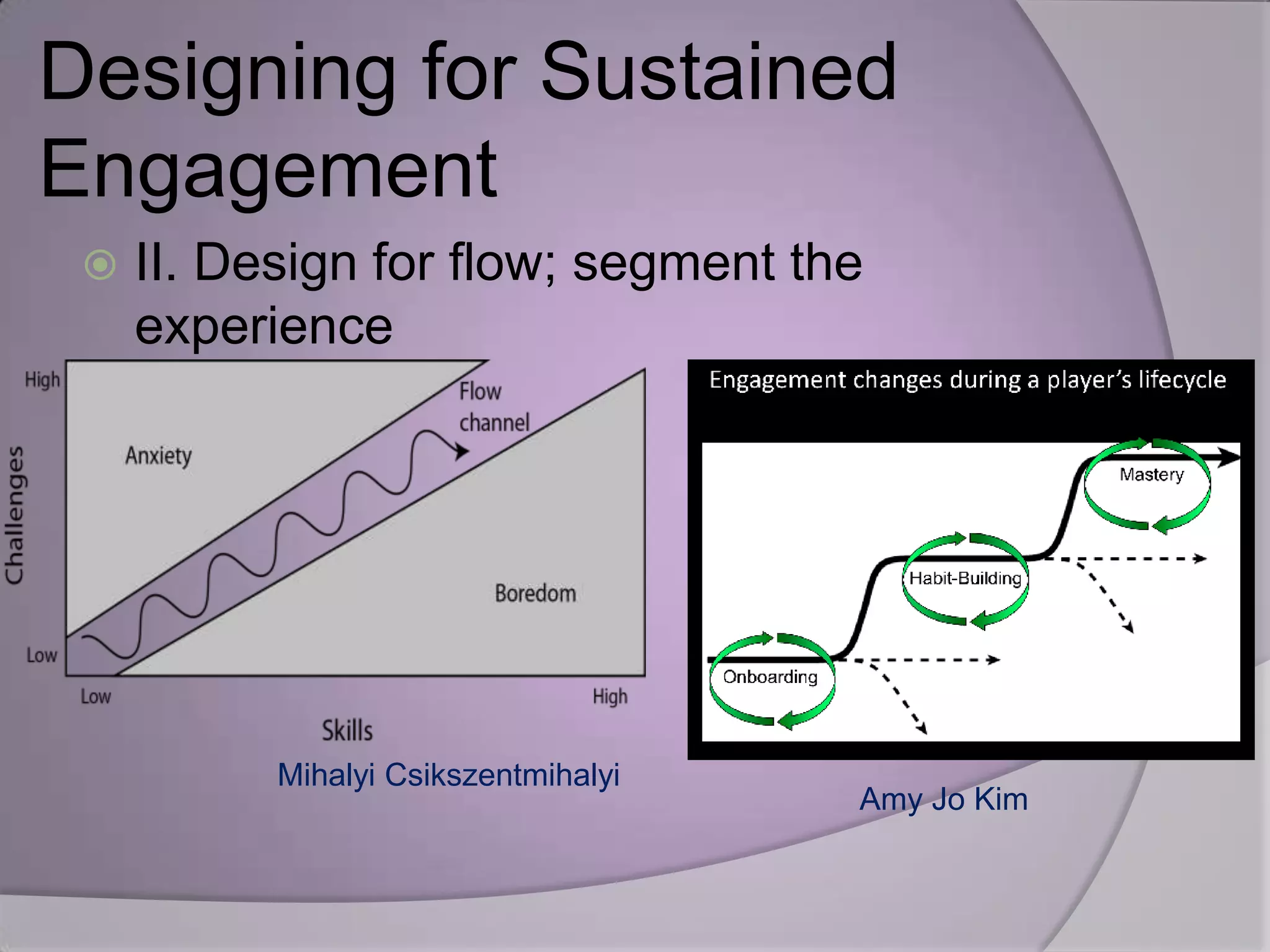
    II. Design for flow; segment the
     experience


           Mihalyi Csikszentmihalyi
                                      Amy Jo Kim
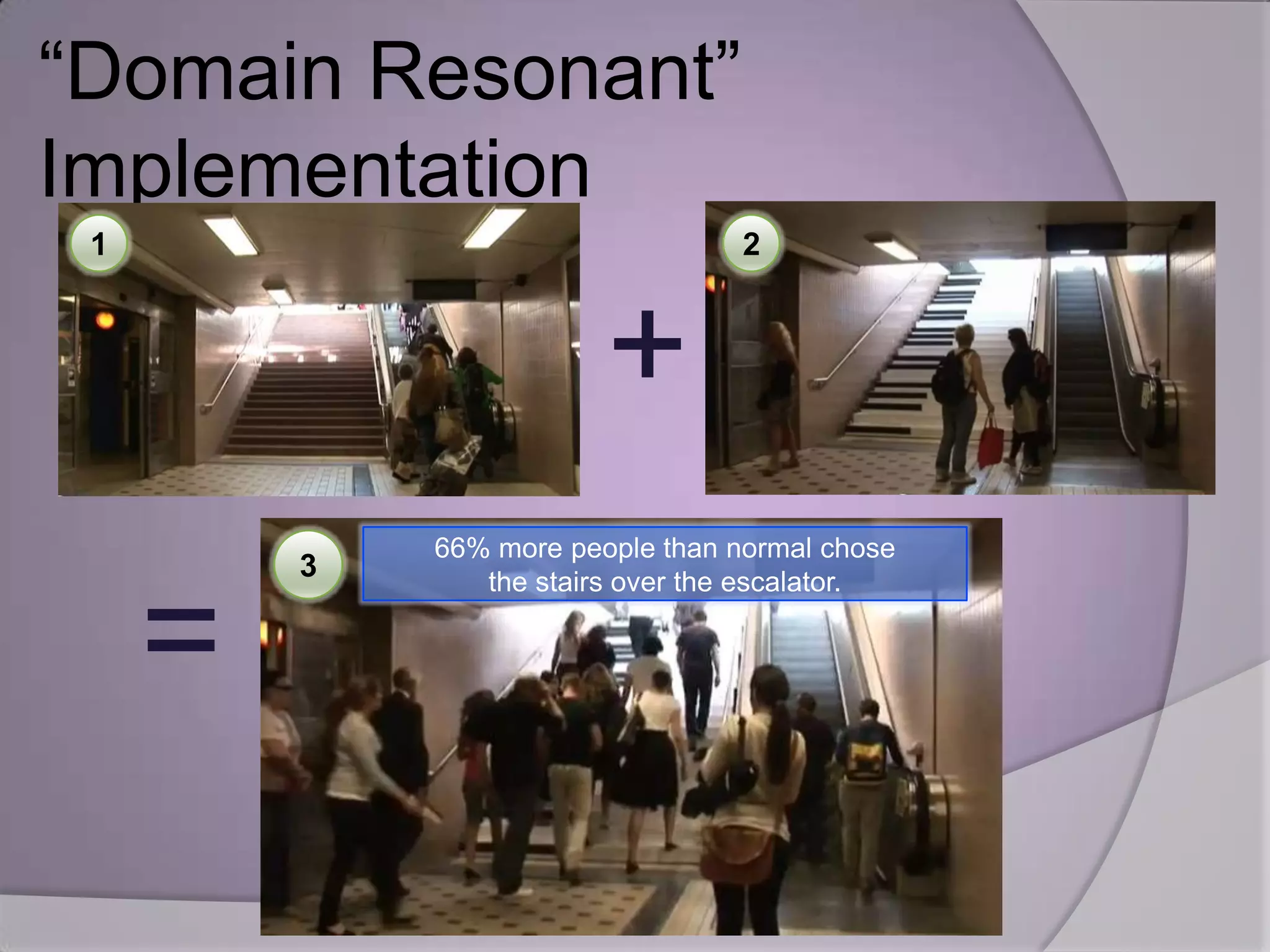
“Domain Resonant”
Implementation
 1                                 2


                         +
             66% more people than normal chose
         3      the stairs over the escalator.


     =
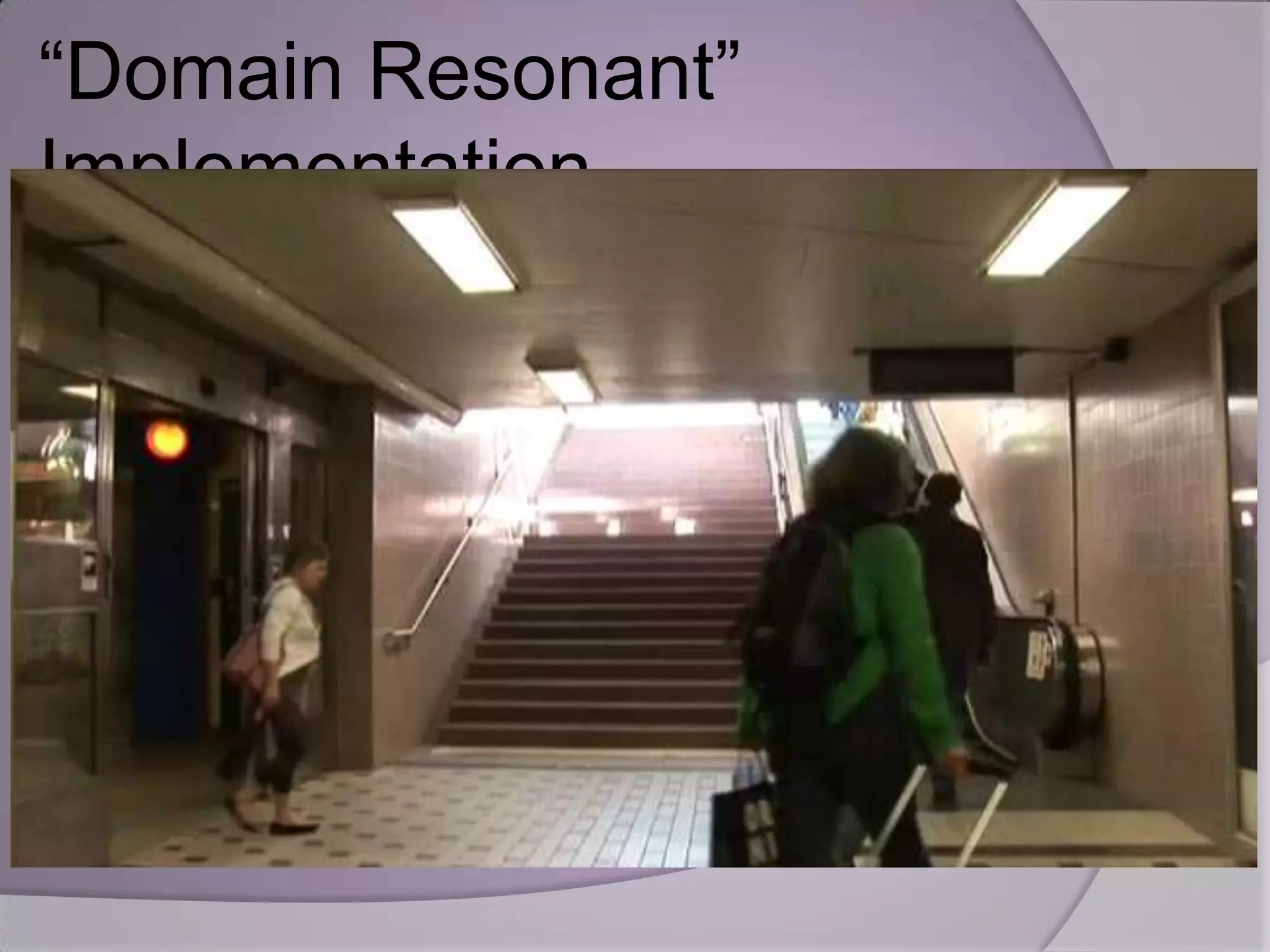
“Domain Resonant”
Implementation
Designing for Sustained
Engagement
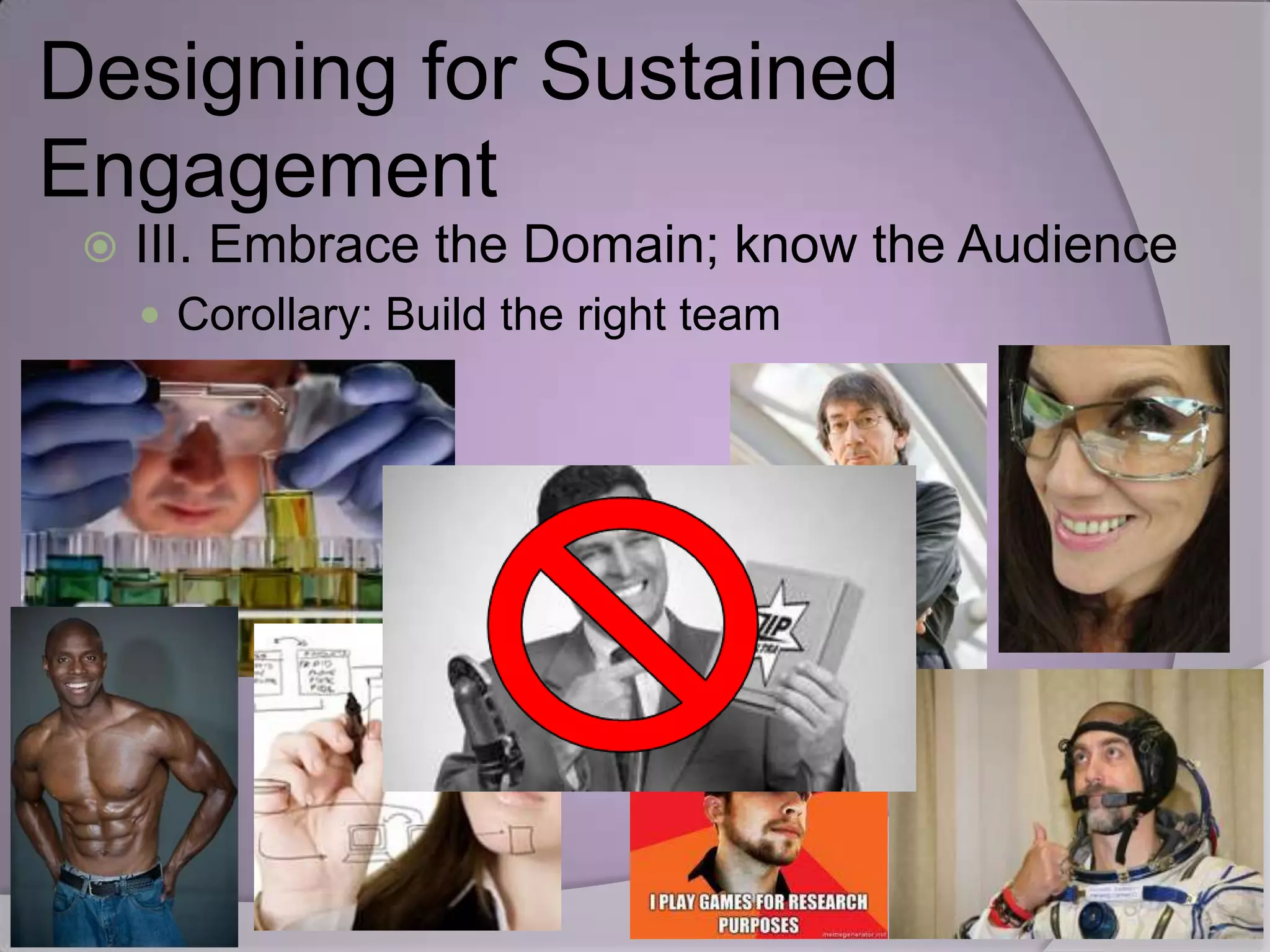
    III. Embrace the Domain; know the Audience
      Corollary: Build the right team
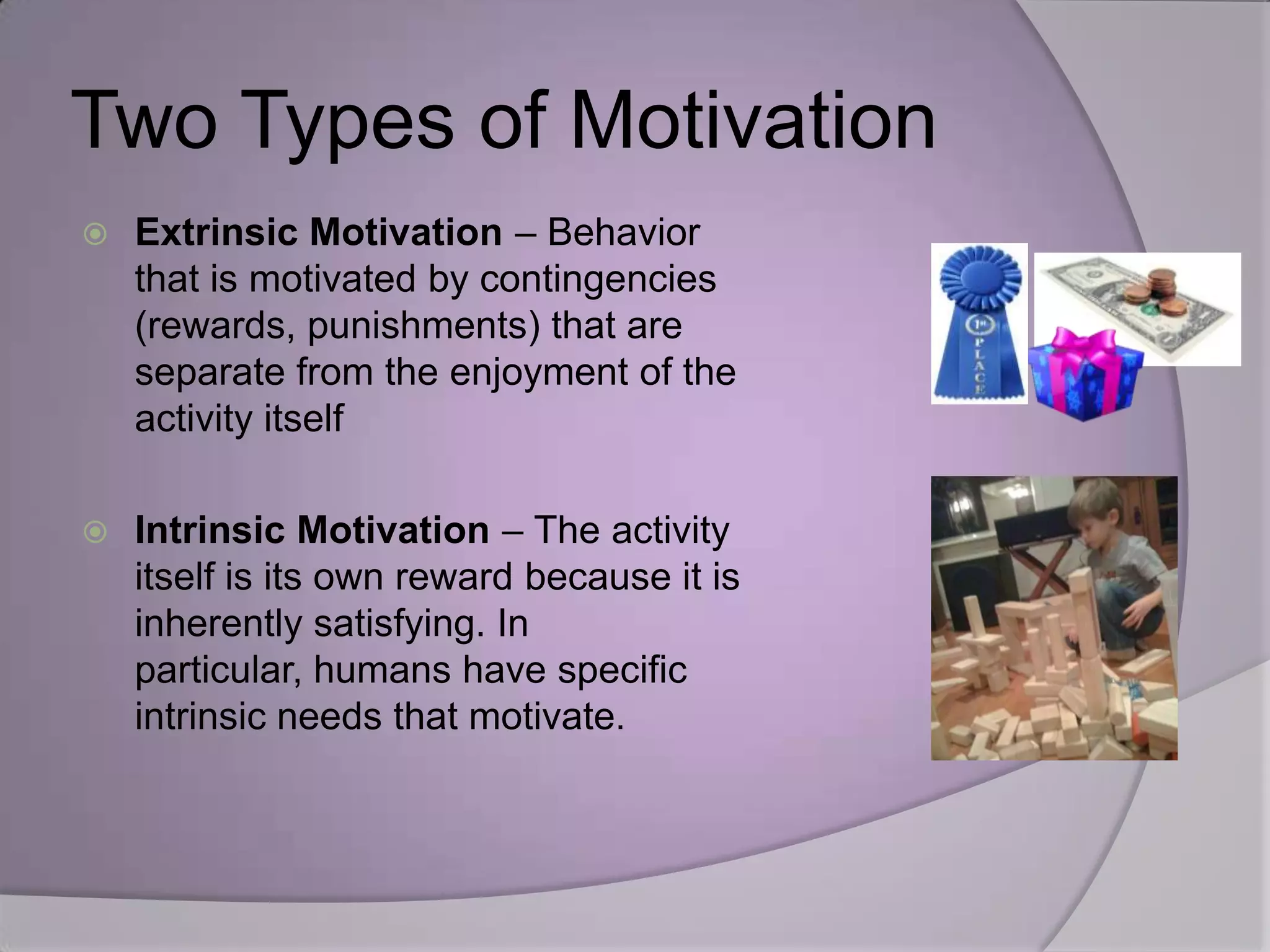
Two Types of Motivation
   Extrinsic Motivation – Behavior
    that is motivated by contingencies
    (rewards, punishments) that are
    separate from the enjoyment of the
    activity itself

   Intrinsic Motivation – The activity
    itself is its own reward because it is
    inherently satisfying. In
    particular, humans have specific
    intrinsic needs that motivate.
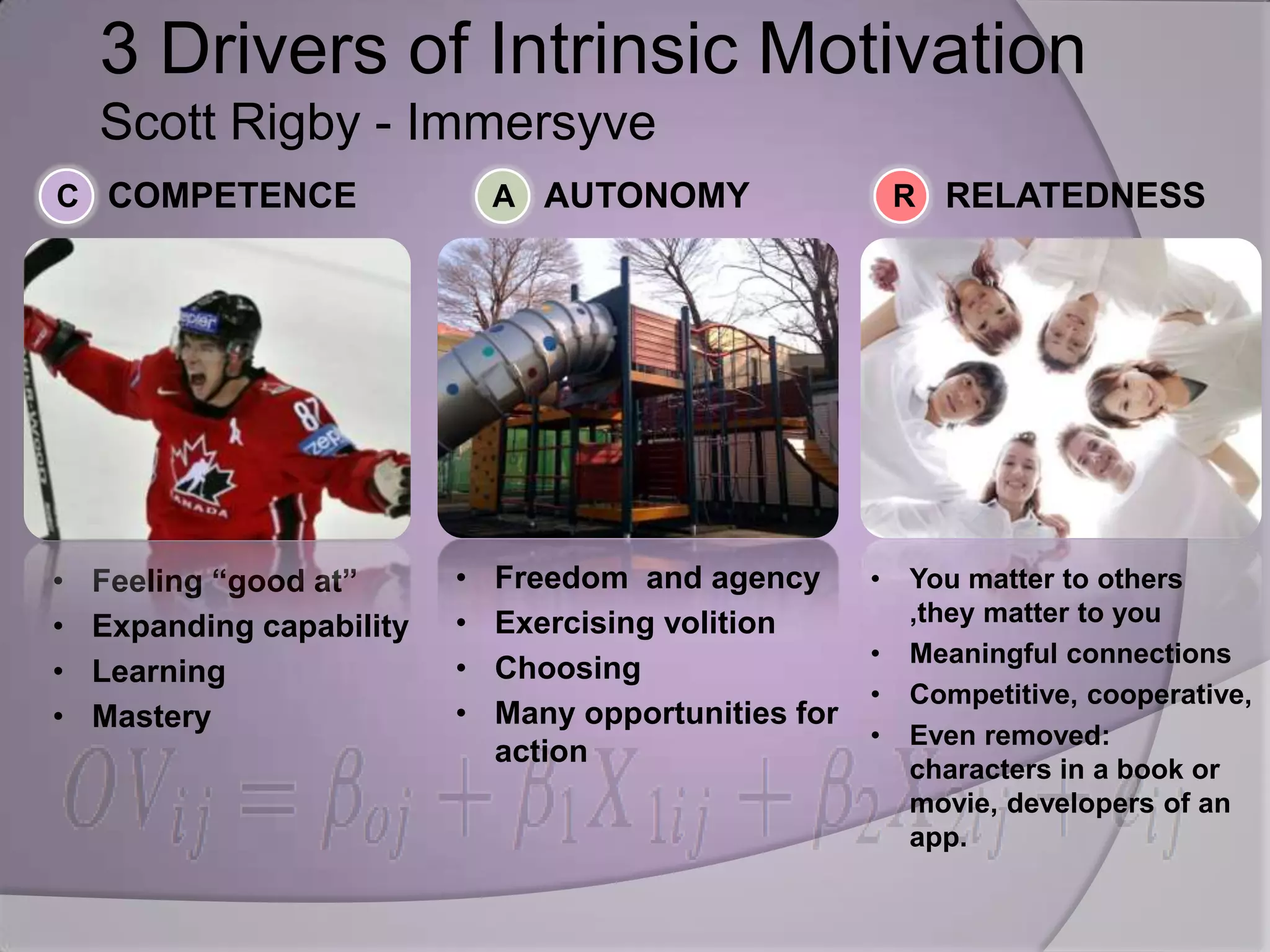
3 Drivers of Intrinsic Motivation
    Scott Rigby - Immersyve
C COMPETENCE                   A AUTONOMY                   R RELATEDNESS


•   Feeling “good at”      •   Freedom and agency       •   You matter to others
                           •                                ,they matter to you
•   Expanding capability       Exercising volition
                                                        •   Meaningful connections
•   Learning               •   Choosing
                                                        •   Competitive, cooperative,
•   Mastery                •   Many opportunities for
                                                        •   Even removed:
                               action
                                                            characters in a book or
                                                            movie, developers of an
                                                            app.
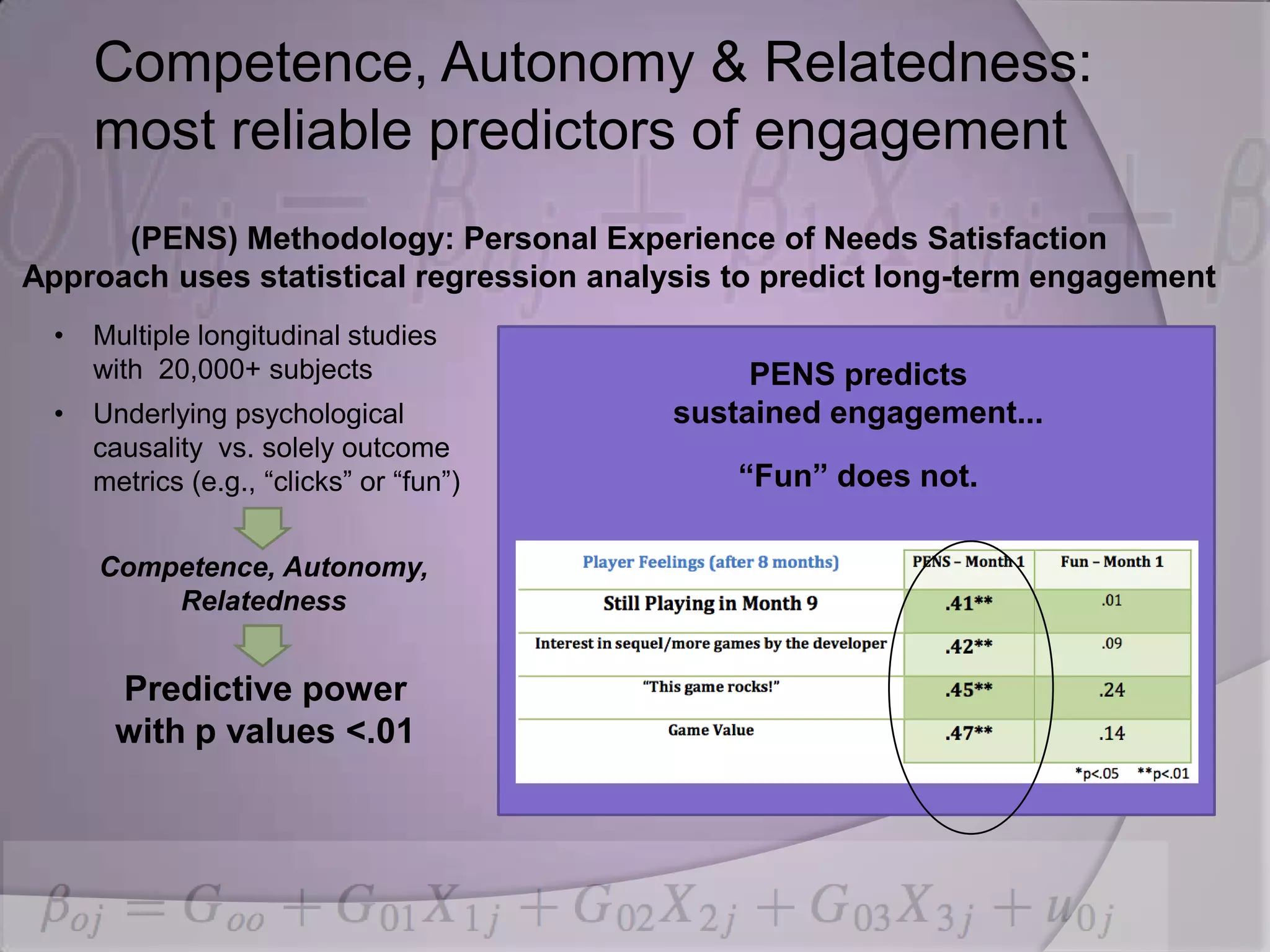
Competence, Autonomy & Relatedness:
      most reliable predictors of engagement
      (PENS) Methodology: Personal Experience of Needs Satisfaction
Approach uses statistical regression analysis to predict long-term engagement
  •   Multiple longitudinal studies
      with 20,000+ subjects                    PENS predicts
  •   Underlying psychological            sustained engagement...
      causality vs. solely outcome
      metrics (e.g., “clicks” or “fun”)       “Fun” does not.

      Competence, Autonomy,
          Relatedness


       Predictive power
       with p values <.01
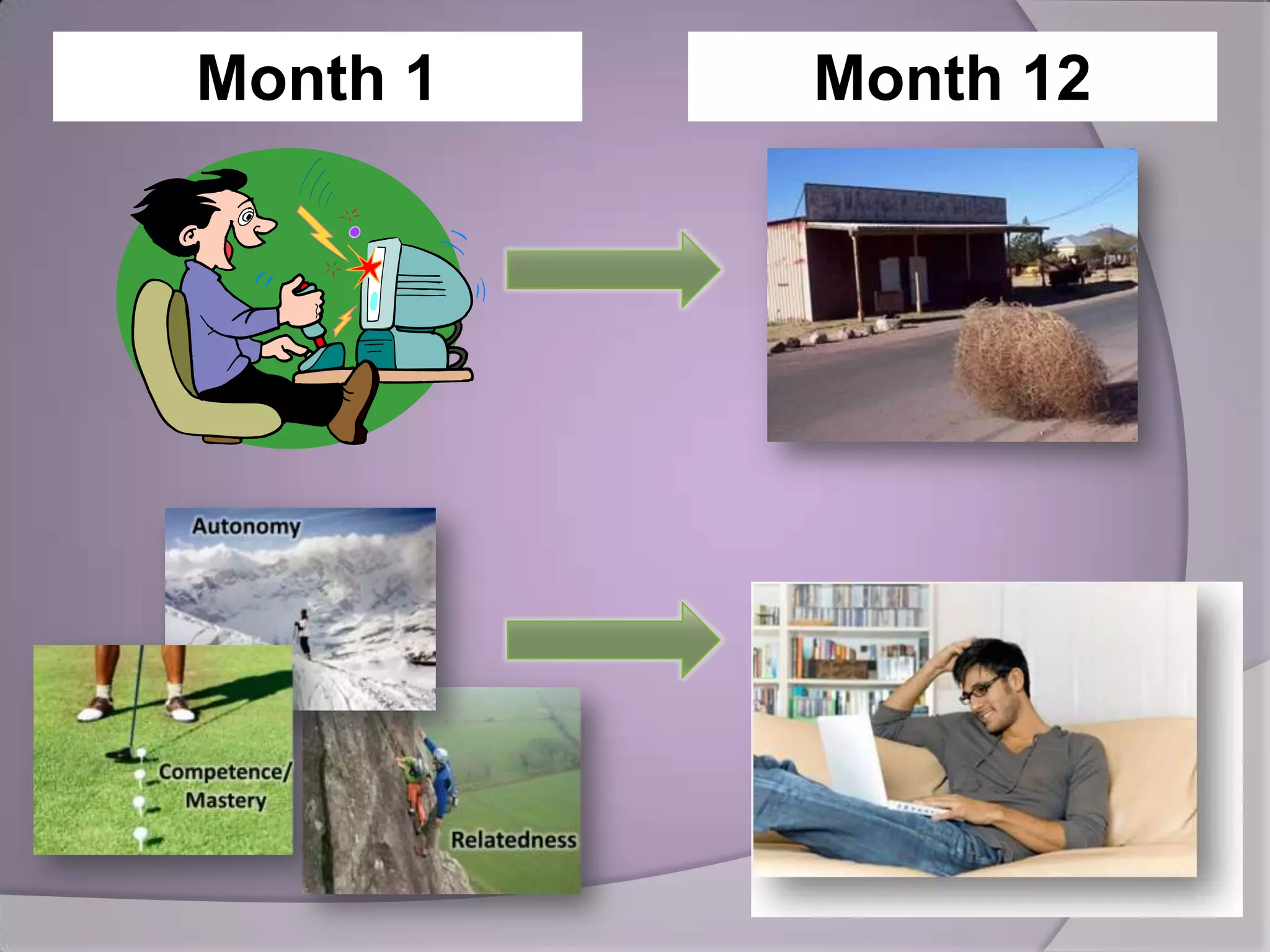
Month 1   Month 12
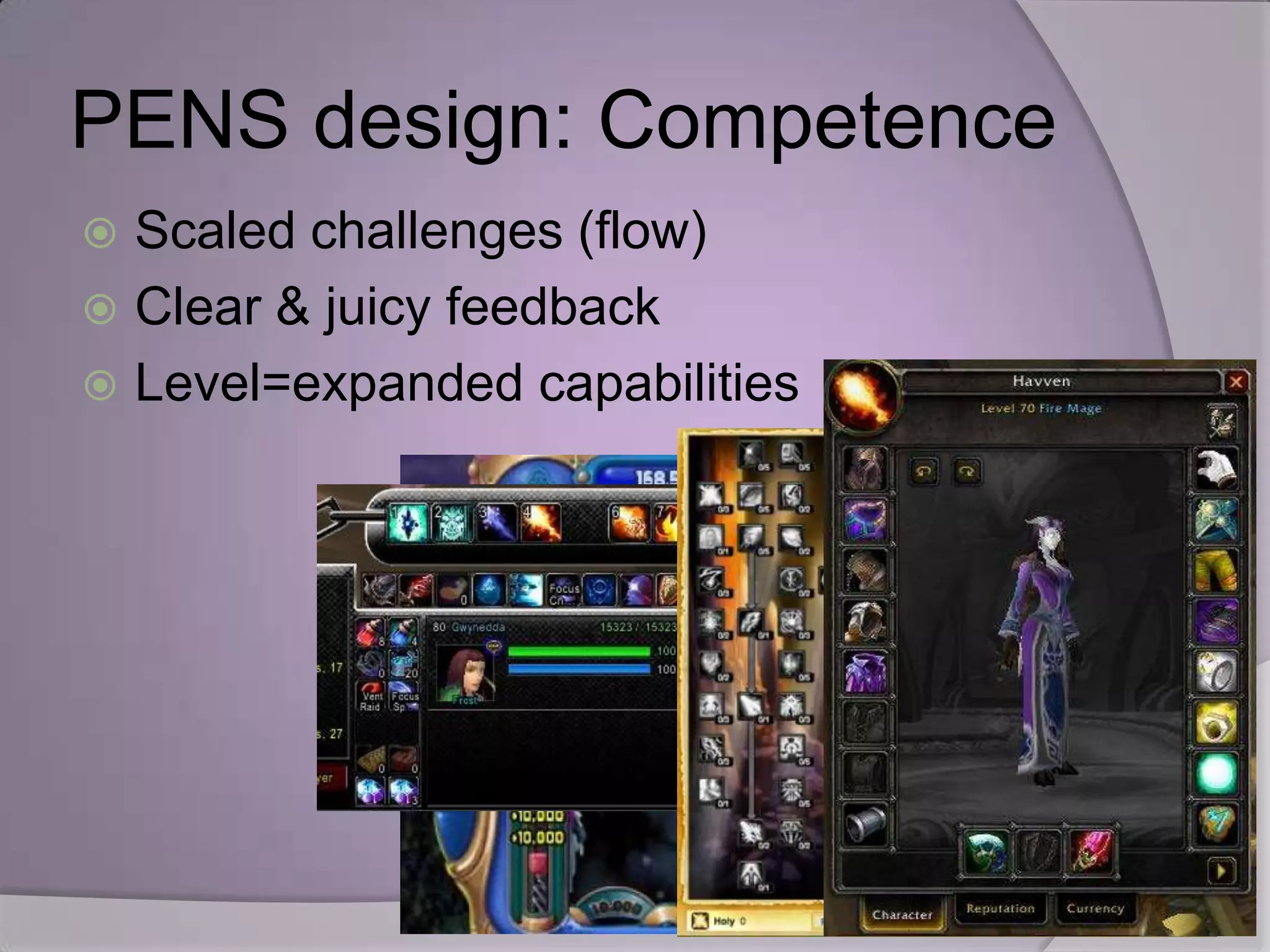
PENS design: Competence
 Scaled challenges (flow)
 Clear & juicy feedback
 Level=expanded capabilities
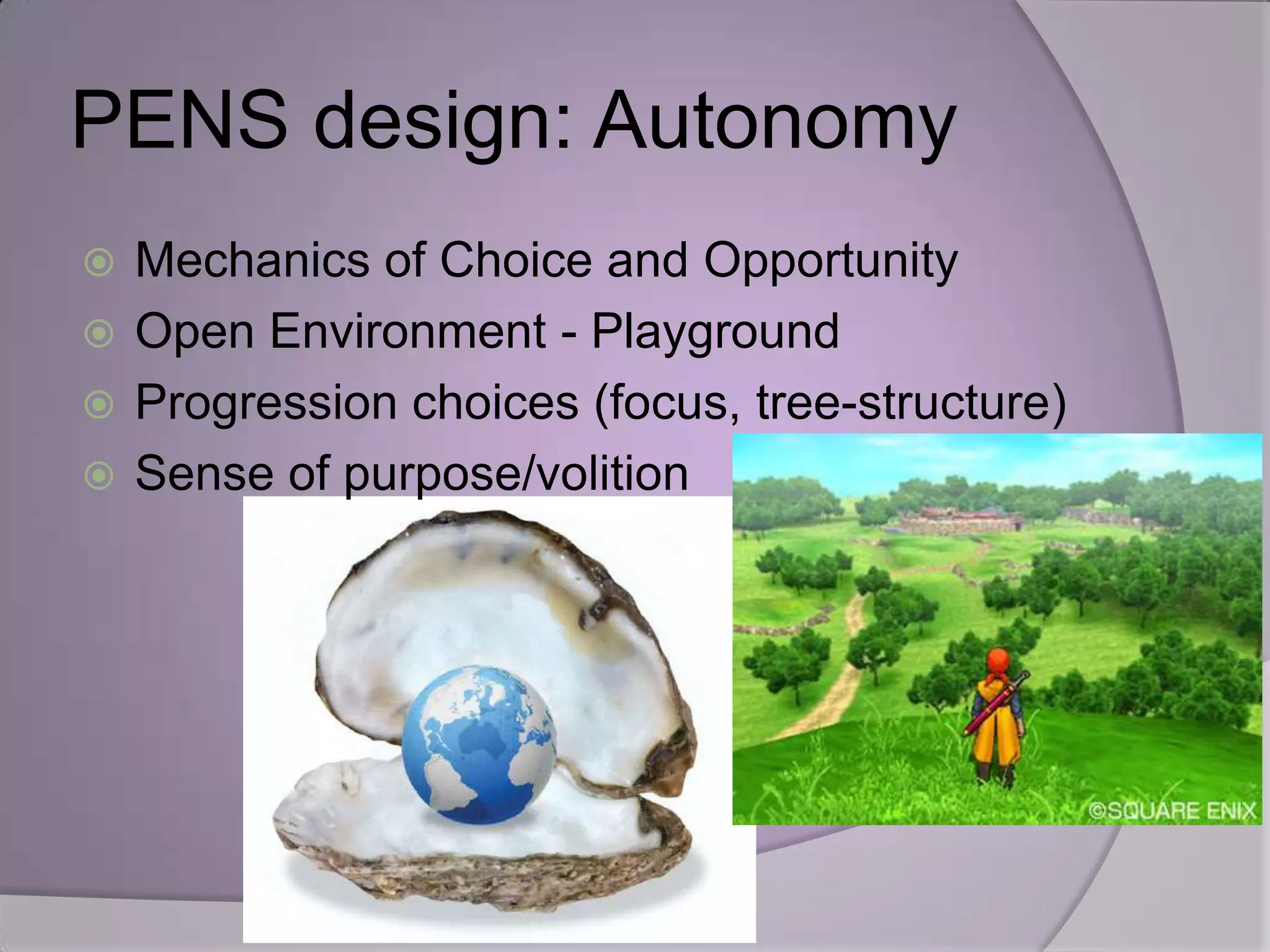
PENS design: Autonomy
 Mechanics of Choice and Opportunity
 Open Environment - Playground
 Progression choices (focus, tree-structure)
 Sense of purpose/volition
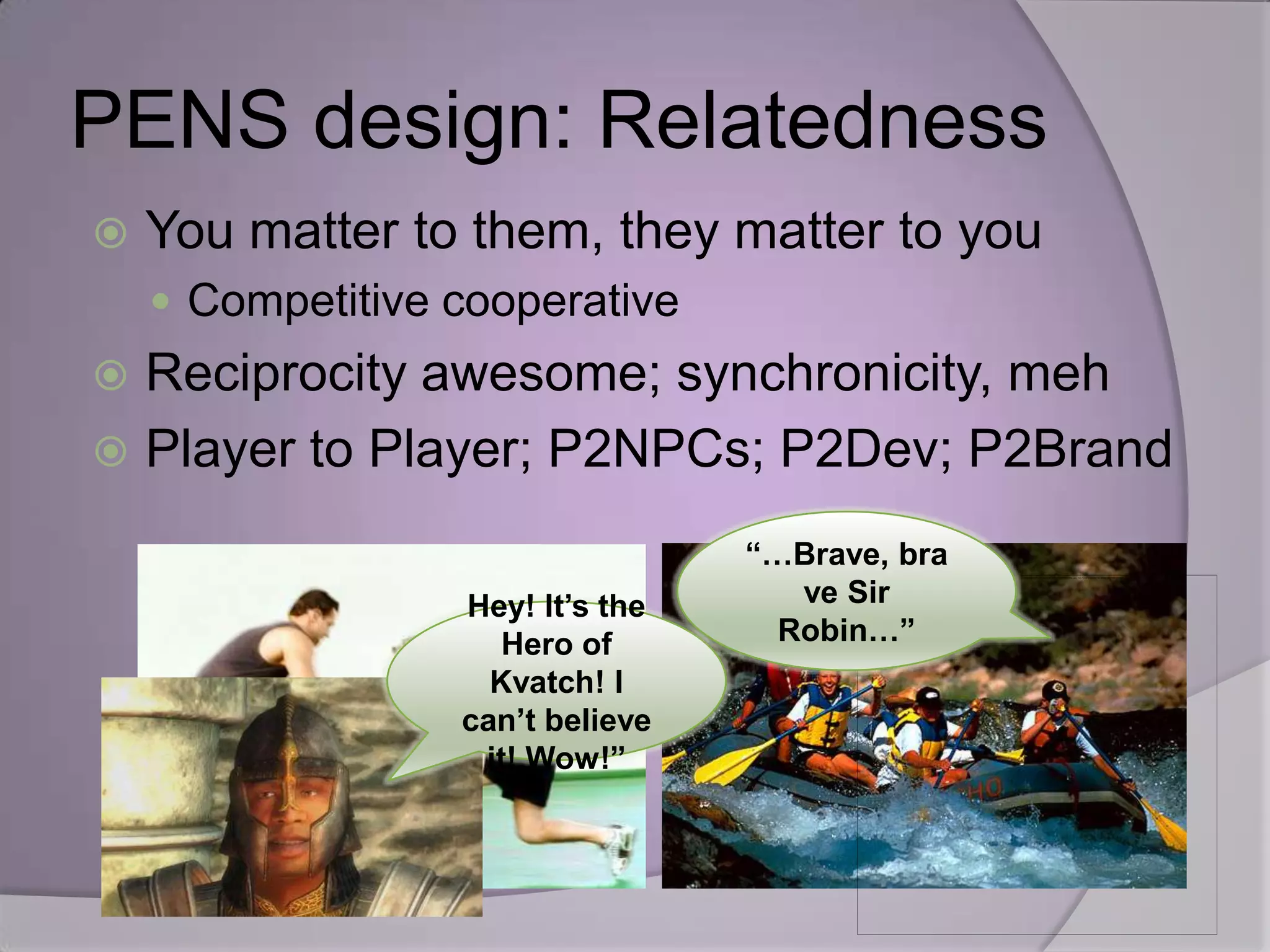
PENS design: Relatedness
   You matter to them, they matter to you
     Competitive cooperative
 Reciprocity awesome; synchronicity, meh
 Player to Player; P2NPCs; P2Dev; P2Brand

                                  “…Brave, bra
                  Hey! It’s the      ve Sir
                     Hero of        Robin…”
                    Kvatch! I
                  can’t believe
                   it! Wow!”
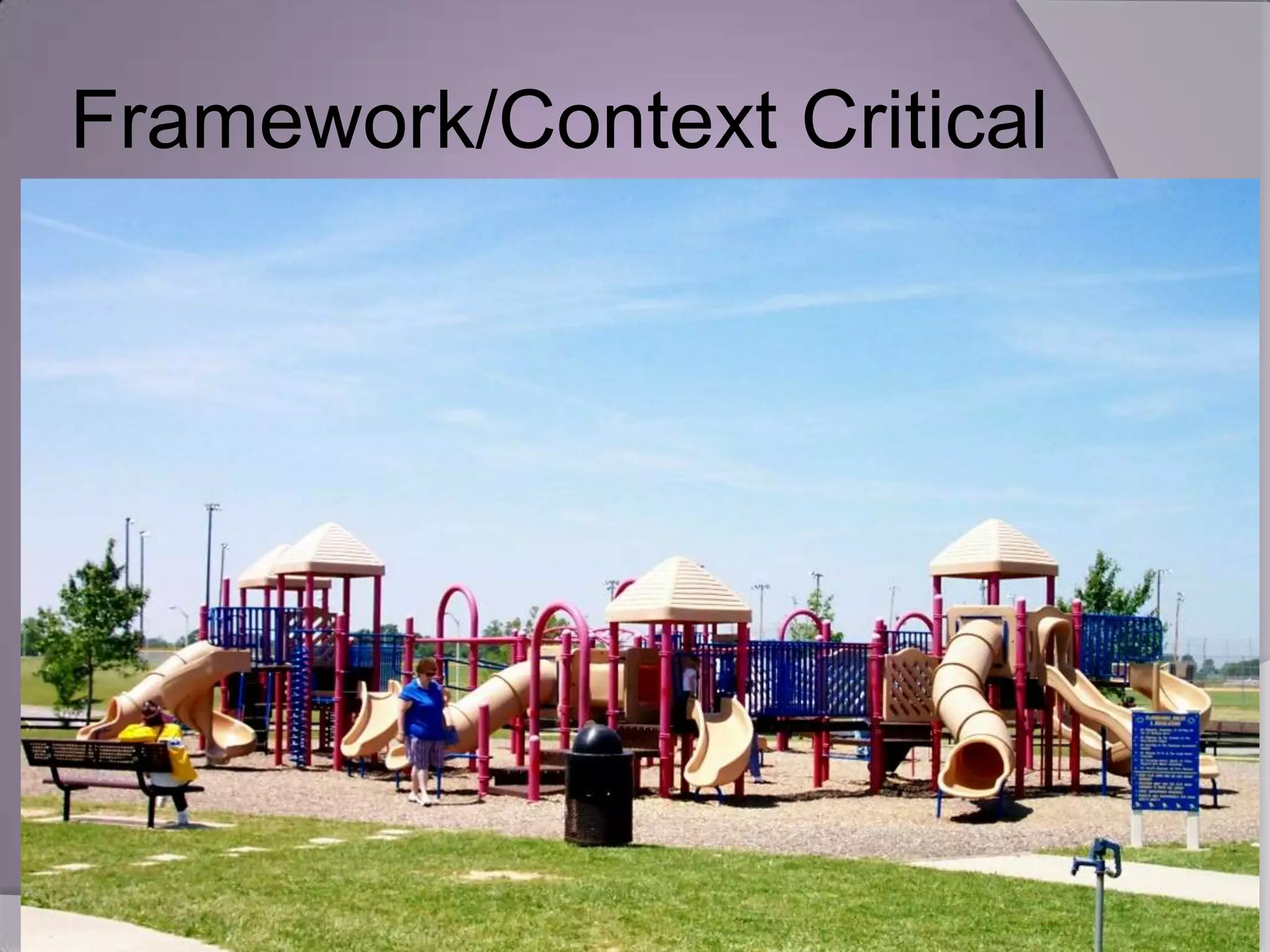
Framework/Context Critical
Designing for Sustained
Engagement
    IV. Motivational Psychology Critical
      Intrinsic needs satisfaction
Summary
 I. Establish “Game” as the user framework
  (voluntary)
 II. Design for Eustress & flow; segment the
  experience
 III. Game designer must embrace the domain
 IV. Focus on satisfying Intrinsic needs
 Gamification = engagement
through intrinsic needs
satisfaction
  ARGS
 Geocaching
 Nike+
 Stack Overflow
 Priceline
 GreatWolf Lodge / MagicQuest
 Slot Machines
 Playboy- Miss Social
 Disney/Oscars
 Starbucks
Thank You!
   /scottcdodson
 First Name at bobberinteractive.com
 @Gamebiz
Credits
   Scott Rigby- CEO Immersyve, author, Glued to Games (with Richard Ryan)
   Jane McGonigal-Creative Director, Social Chocolate, author, Reality Is Broken, Ph.D. Berkeley
   Sebastian Deterding-PhD at the Research Center for Media and Communication at Hamburg
    University
   Mihaly Csikszentmihalyi, Claremont Graduate University, former head of psychology at
    the University of Chicago
   Amy Jo Kim- designer of social gaming systems, PHD University of Washington
   Wanda Meloni, M2 Research: http://slidesha.re/gg49nb
   Dr. Byron Reeves of the Department of Communication at Stanford &
    J. Leighton Read, Executive Chairman, Seriosity, Inc., authors of Total Engagement
   David Edery Principal, Fuzbi co-author with Ethan Mollick of Changing the Game: How Video
    Games Are Transforming the Future of Business
   Gabe Zichermann and Joselin Linder authors of Game Based Marketing
    http://gamebasedmarketing.com/
   James Currier of Ooga Labs who also credits Clay Shirky and Bret Terrill
   David Helgason CEO of Unity
   Jesse Schell, Professor of Entertainment Technology CMU, CEO Schell Games. Jesse’s talk from
    DICE: http://tiny.cc/TebRw
   Rajat Paharia Founder of Bunchball , building gamified, meta-game experiences for clients such as
    WB, Hasbro, NBC Universal, Victoria’s Secret, Comcast
   Keith Smith, CEO Big Door.
   Kyle Findlay & Kristy Alberts, tnsglobal.com
   My sincere apologies to anyone on this list or otherwise who feels they were not properly
    credited. Kindly point out my error and I will edit accordingly.
More Domain Specificity
More from thefuntheory.com
Thanks again!
   /scottcdodson
 First Name at bobberinteractive.com
 @Gamebiz

2011’s HOT BUTTON TOPIC: ENGAGEMENT THROUGH GAMIFICATION.

  • 1.
    Scott Dodson COO,Product Owner Bobber Interactive, Inc.
  • 2.
    Me Me
  • 3.
    Me  Chronic Entrepreneur
  • 4.
    Used a GameLayer /Layer of Abstraction  Playful Perception  Mind numbing jobs  Dating  Holding a conversation  Sales – Cold Calling  Raising Angel/VCMoney  Game layers worked.
  • 5.
    Gamification Examples of reallygood * gamification *Not to scale
  • 6.
    Gamification is working: Bunchball,BigDoor, Badgeville  150mm users  Views 2x  Time 2x  Virality 30%  $ +50-250%  But…
  • 7.
    Still a Problem  Gamification seen as Manipulation  Extrinsic & Skinnerian/Behavioralist  Spawn of Marketing  Cookie Cutter  Broken & “Gameable”
  • 8.
  • 9.
  • 13.
  • 14.
    To get tothe Plateau of Productivity…  Good Gamification is not about:  Extrinsic rewards  Manipulation  Outer “shell” of game: Points, Levels, Badges  It’s about creating Sustained Engagement
  • 15.
    The Challenge  Great games are hard enough:  Only 4% of games that go into production are profitable  Add a “real world” activity and you multiply the difficulty of success
  • 16.
  • 17.
    “Playing a gameis the voluntary attempt to overcome unnecessary obstacles” – Bernard Suits Rules A Goal Voluntary Obstacles A Feedback System
  • 18.
    Designing for Sustained Engagement  I. Establish a different user “contract”  A game is voluntary framework for the user experience  Obstacles desirable!
  • 19.
  • 20.
    Designing for Sustained Engagement  II. Design for flow; segment the experience Mihalyi Csikszentmihalyi Amy Jo Kim
  • 21.
    “Domain Resonant” Implementation 1 2 + 66% more people than normal chose 3 the stairs over the escalator. =
  • 22.
  • 23.
    Designing for Sustained Engagement  III. Embrace the Domain; know the Audience  Corollary: Build the right team
  • 24.
    Two Types ofMotivation  Extrinsic Motivation – Behavior that is motivated by contingencies (rewards, punishments) that are separate from the enjoyment of the activity itself  Intrinsic Motivation – The activity itself is its own reward because it is inherently satisfying. In particular, humans have specific intrinsic needs that motivate.
  • 25.
    3 Drivers ofIntrinsic Motivation Scott Rigby - Immersyve C COMPETENCE A AUTONOMY R RELATEDNESS • Feeling “good at” • Freedom and agency • You matter to others • ,they matter to you • Expanding capability Exercising volition • Meaningful connections • Learning • Choosing • Competitive, cooperative, • Mastery • Many opportunities for • Even removed: action characters in a book or movie, developers of an app.
  • 26.
    Competence, Autonomy &Relatedness: most reliable predictors of engagement (PENS) Methodology: Personal Experience of Needs Satisfaction Approach uses statistical regression analysis to predict long-term engagement • Multiple longitudinal studies with 20,000+ subjects PENS predicts • Underlying psychological sustained engagement... causality vs. solely outcome metrics (e.g., “clicks” or “fun”) “Fun” does not. Competence, Autonomy, Relatedness Predictive power with p values <.01
  • 27.
    Month 1 Month 12
  • 28.
    PENS design: Competence Scaled challenges (flow)  Clear & juicy feedback  Level=expanded capabilities
  • 29.
    PENS design: Autonomy Mechanics of Choice and Opportunity  Open Environment - Playground  Progression choices (focus, tree-structure)  Sense of purpose/volition
  • 30.
    PENS design: Relatedness  You matter to them, they matter to you  Competitive cooperative  Reciprocity awesome; synchronicity, meh  Player to Player; P2NPCs; P2Dev; P2Brand “…Brave, bra Hey! It’s the ve Sir Hero of Robin…” Kvatch! I can’t believe it! Wow!”
  • 31.
  • 32.
    Designing for Sustained Engagement  IV. Motivational Psychology Critical  Intrinsic needs satisfaction
  • 33.
    Summary  I. Establish“Game” as the user framework (voluntary)  II. Design for Eustress & flow; segment the experience  III. Game designer must embrace the domain  IV. Focus on satisfying Intrinsic needs
  • 34.
     Gamification =engagement through intrinsic needs satisfaction  ARGS  Geocaching  Nike+  Stack Overflow  Priceline  GreatWolf Lodge / MagicQuest  Slot Machines  Playboy- Miss Social  Disney/Oscars  Starbucks
  • 35.
    Thank You!  /scottcdodson  First Name at bobberinteractive.com  @Gamebiz
  • 36.
    Credits  Scott Rigby- CEO Immersyve, author, Glued to Games (with Richard Ryan)  Jane McGonigal-Creative Director, Social Chocolate, author, Reality Is Broken, Ph.D. Berkeley  Sebastian Deterding-PhD at the Research Center for Media and Communication at Hamburg University  Mihaly Csikszentmihalyi, Claremont Graduate University, former head of psychology at the University of Chicago  Amy Jo Kim- designer of social gaming systems, PHD University of Washington  Wanda Meloni, M2 Research: http://slidesha.re/gg49nb  Dr. Byron Reeves of the Department of Communication at Stanford & J. Leighton Read, Executive Chairman, Seriosity, Inc., authors of Total Engagement  David Edery Principal, Fuzbi co-author with Ethan Mollick of Changing the Game: How Video Games Are Transforming the Future of Business  Gabe Zichermann and Joselin Linder authors of Game Based Marketing http://gamebasedmarketing.com/  James Currier of Ooga Labs who also credits Clay Shirky and Bret Terrill  David Helgason CEO of Unity  Jesse Schell, Professor of Entertainment Technology CMU, CEO Schell Games. Jesse’s talk from DICE: http://tiny.cc/TebRw  Rajat Paharia Founder of Bunchball , building gamified, meta-game experiences for clients such as WB, Hasbro, NBC Universal, Victoria’s Secret, Comcast  Keith Smith, CEO Big Door.  Kyle Findlay & Kristy Alberts, tnsglobal.com  My sincere apologies to anyone on this list or otherwise who feels they were not properly credited. Kindly point out my error and I will edit accordingly.
  • 37.
  • 38.
  • 39.
    Thanks again!  /scottcdodson  First Name at bobberinteractive.com  @Gamebiz

Editor's Notes

  • #4 Lifelong GamerEngineering,Psychology &amp; ArtChronic Entrepreneur Run my own business since 1994. Sold two of them.Raised $3 ½ mmAdvertising &amp; Marketing Collectible card game that we launched free to play before anyone knew what that meantMMO RTSGamifying Finance @ Bobber Interactive MONTAGE!!!!
  • #5 Highly motivating and successful, &amp; a year ago I was excited!
  • #8 Rewards not equal to happiness. Actually its satisfying work!
  • #9 Ultimate Irony was watching Brian Reynolds &amp; Jesse Schell @ DICE about the distinction between Social games and Gamification, and Bryan saying: &quot;Gamification is where you use game elements to try to get people to do stuff they don&apos;t want to do. That&apos;s my working definition. Zynga is an entertainment company, and we try to create an experience that is fun and social, then get players to pay for it.&quot;
  • #20 EducationTrainingFinanceFitness
  • #24 Domain Experts and Asskickers on one side and Game Designers &amp; Designer ?astronauts