BIO-PROSPECTING OF MARINE
ALGAL NATURAL PRODUCTS AND
THEIR BENEFITS
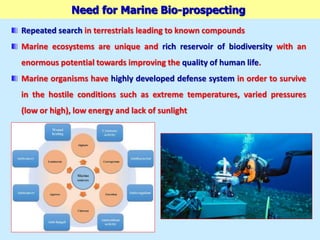
Need for Marine Bio-prospecting
Repeated search in terrestrials leading to known compounds
Marine ecosystems are unique and rich reservoir of biodiversity with an
enormous potential towards improving the quality of human life.
Marine organisms have highly developed defense system in order to survive
in the hostile conditions such as extreme temperatures, varied pressures
(low or high), low energy and lack of sunlight
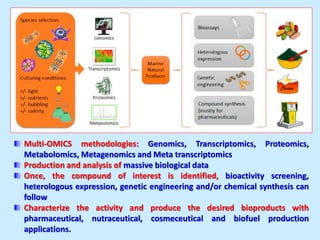
Multi-OMICS methodologies: Genomics, Transcriptomics, Proteomics,
Metabolomics, Metagenomics and Meta transcriptomics
Production and analysis of massive biological data
Once, the compound of interest is identified, bioactivity screening,
heterologous expression, genetic engineering and/or chemical synthesis can
follow
Characterize the activity and produce the desired bioproducts with
pharmaceutical, nutraceutical, cosmeceutical and biofuel production
applications.
ALGAE IN THE WORLD
Sea, rivers and lakes, on soil and walls, in animal and plants
Symbiosis with plants, animals, bacteria and Marine organisms
Macro algae (seaweeds) occupy the littoral zone, which included green,
brown and red algae
Micro algae are found in both benthic and littoral habitats and also
throughout the ocean waters as called phytoplankton
MICRO ALGAE
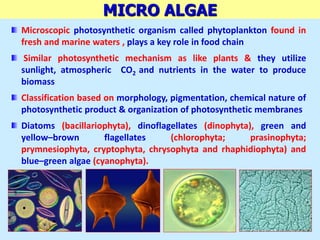
Microscopic photosynthetic organism called phytoplankton found in
fresh and marine waters , plays a key role in food chain
Similar photosynthetic mechanism as like plants & they utilize
sunlight, atmospheric CO2 and nutrients in the water to produce
biomass
Classification based on morphology, pigmentation, chemical nature of
photosynthetic product & organization of photosynthetic membranes
Diatoms (bacillariophyta), dinoflagellates (dinophyta), green and
yellow–brown flagellates (chlorophyta; prasinophyta;
prymnesiophyta, cryptophyta, chrysophyta and rhaphidiophyta) and
blue–green algae (cyanophyta).
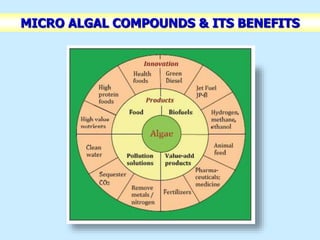
MICRO ALGAL COMPOUNDS & ITS BENEFITS
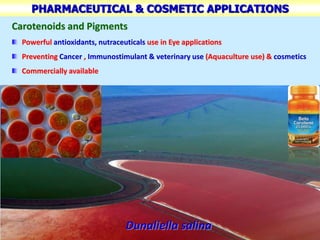
PHARMACEUTICAL & COSMETIC APPLICATIONS
Carotenoids and Pigments
Powerful antioxidants, nutraceuticals use in Eye applications
Preventing Cancer , Immunostimulant & veterinary use (Aquaculture use) & cosmetics
Commercially available
Dunaliella salina
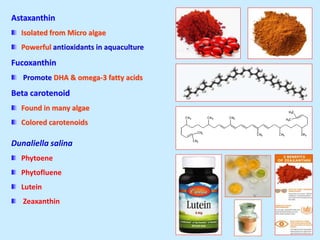
Astaxanthin
Isolated from Micro algae
Powerful antioxidants in aquaculture
Fucoxanthin
Promote DHA & omega-3 fatty acids
Beta carotenoid
Found in many algae
Colored carotenoids
Dunaliella salina
Phytoene
Phytofluene
Lutein
Zeaxanthin
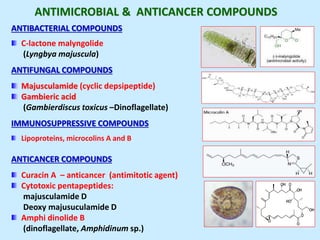
ANTIBACTERIAL COMPOUNDS
C-lactone malyngolide
(Lyngbya majuscula)
ANTIFUNGAL COMPOUNDS
Majusculamide (cyclic depsipeptide)
Gambieric acid
(Gambierdiscus toxicus –Dinoflagellate)
IMMUNOSUPPRESSIVE COMPOUNDS
Lipoproteins, microcolins A and B
ANTICANCER COMPOUNDS
Curacin A – anticancer (antimitotic agent)
Cytotoxic pentapeptides:
majusculamide D
Deoxy majusuculamide D
Amphi dinolide B
(dinoflagellate, Amphidinum sp.)
ANTIMICROBIAL & ANTICANCER COMPOUNDS
FATTY ACIDS AND HIGH VALUE OILS
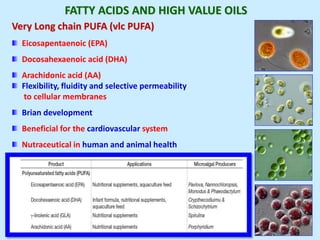
Very Long chain PUFA (vlc PUFA)
Eicosapentaenoic (EPA)
Docosahexaenoic acid (DHA)
Arachidonic acid (AA)
Flexibility, fluidity and selective permeability
to cellular membranes
Brian development
Beneficial for the cardiovascular system
Nutraceutical in human and animal health
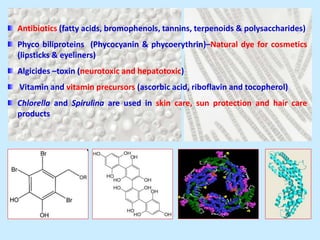
Antibiotics (fatty acids, bromophenols, tannins, terpenoids & polysaccharides)
Phyco biliproteins (Phycocyanin & phycoerythrin)–Natural dye for cosmetics
(lipsticks & eyeliners)
Algicides –toxin (neurotoxic and hepatotoxic)
Vitamin and vitamin precursors (ascorbic acid, riboflavin and tocopherol)
Chlorella and Spirulina are used in skin care, sun protection and hair care
products
ALGAL SMALL MOLECULES
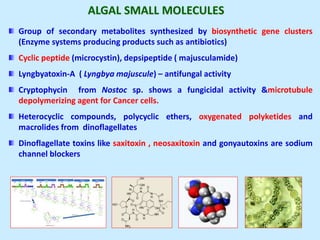
Group of secondary metabolites synthesized by biosynthetic gene clusters
(Enzyme systems producing products such as antibiotics)
Cyclic peptide (microcystin), depsipeptide ( majusculamide)
Lyngbyatoxin-A ( Lyngbya majuscule) – antifungal activity
Cryptophycin from Nostoc sp. shows a fungicidal activity &microtubule
depolymerizing agent for Cancer cells.
Heterocyclic compounds, polycyclic ethers, oxygenated polyketides and
macrolides from dinoflagellates
Dinoflagellate toxins like saxitoxin , neosaxitoxin and gonyautoxins are sodium
channel blockers
ALGAL BIOSURFACTANTS
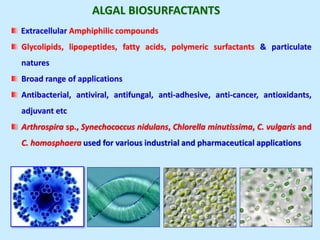
Extracellular Amphiphilic compounds
Glycolipids, lipopeptides, fatty acids, polymeric surfactants & particulate
natures
Broad range of applications
Antibacterial, antiviral, antifungal, anti-adhesive, anti-cancer, antioxidants,
adjuvant etc
Arthrospira sp., Synechococcus nidulans, Chlorella minutissima, C. vulgaris and
C. homosphaera used for various industrial and pharmaceutical applications
ALGAL BIO POLYMERS AND BIOPLASTICS
Typically, long chain polymers, present in the algae lipids are used for making
bioplastics
Algae is attractive for bioplastics because of its high growth rate and high protein
content.
The plastics market is worth more than $400 billion and has grown at an average of
3.5% per year over the last two decades.
Naturally occurring polymer have many applications in medical, pharmaceutical and
food industries
Biodegradable Poly hydroxy alkanoates (PHA) are promising biopolymer which can be
alternative to petroleum based polymer
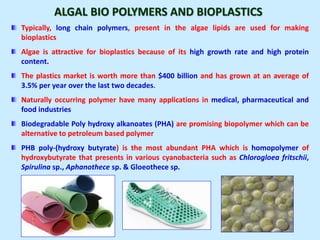
PHB poly-(hydroxy butyrate) is the most abundant PHA which is homopolymer of
hydroxybutyrate that presents in various cyanobacteria such as Chlorogloea fritschii,
Spirulina sp., Aphanothece sp. & Gloeothece sp.
MICRO ALGAE AS FOOD
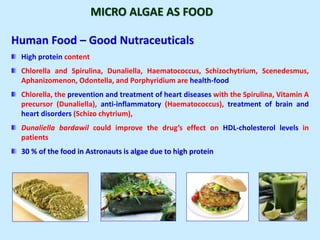
Human Food – Good Nutraceuticals
High protein content
Chlorella and Spirulina, Dunaliella, Haematococcus, Schizochytrium, Scenedesmus,
Aphanizomenon, Odontella, and Porphyridium are health-food
Chlorella, the prevention and treatment of heart diseases with the Spirulina, Vitamin A
precursor (Dunaliella), anti-inflammatory (Haematococcus), treatment of brain and
heart disorders (Schizo chytrium),
Dunaliella bardawil could improve the drug’s effect on HDL-cholesterol levels in
patients
30 % of the food in Astronauts is algae due to high protein
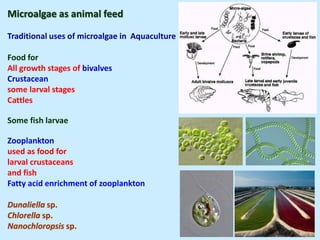
Microalgae as animal feed
Traditional uses of microalgae in Aquaculture
Food for
All growth stages of bivalves
Crustacean
some larval stages
Cattles
Some fish larvae
Zooplankton
used as food for
larval crustaceans
and fish
Fatty acid enrichment of zooplankton
Dunaliella sp.
Chlorella sp.
Nanochloropsis sp.
MICRO ALGAE IN SPACE RESEARCH
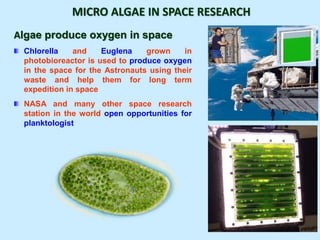
Algae produce oxygen in space
Chlorella and Euglena grown in
photobioreactor is used to produce oxygen
in the space for the Astronauts using their
waste and help them for long term
expedition in space
NASA and many other space research
station in the world open opportunities for
planktologist
ENERGY PRODUCTION
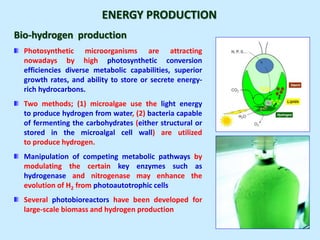
Bio-hydrogen production
Photosynthetic microorganisms are attracting
nowadays by high photosynthetic conversion
efficiencies diverse metabolic capabilities, superior
growth rates, and ability to store or secrete energy-
rich hydrocarbons.
Two methods; (1) microalgae use the light energy
to produce hydrogen from water, (2) bacteria capable
of fermenting the carbohydrates (either structural or
stored in the microalgal cell wall) are utilized
to produce hydrogen.
Manipulation of competing metabolic pathways by
modulating the certain key enzymes such as
hydrogenase and nitrogenase may enhance the
evolution of H2 from photoautotrophic cells
Several photobioreactors have been developed for
large-scale biomass and hydrogen production
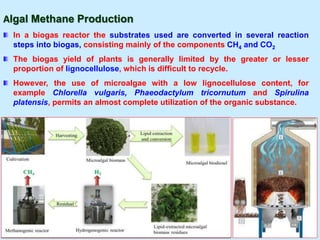
Algal Methane Production
In a biogas reactor the substrates used are converted in several reaction
steps into biogas, consisting mainly of the components CH4 and CO2
The biogas yield of plants is generally limited by the greater or lesser
proportion of lignocellulose, which is difficult to recycle.
However, the use of microalgae with a low lignocellulose content, for
example Chlorella vulgaris, Phaeodactylum tricornutum and Spirulina
platensis, permits an almost complete utilization of the organic substance.
.
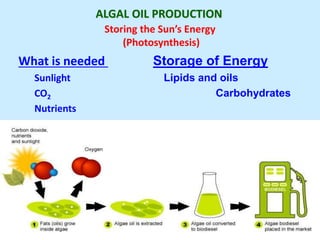
ALGAL OIL PRODUCTION
Storing the Sun’s Energy
(Photosynthesis)
What is needed Storage of Energy
Sunlight Lipids and oils
CO2 Carbohydrates
Nutrients
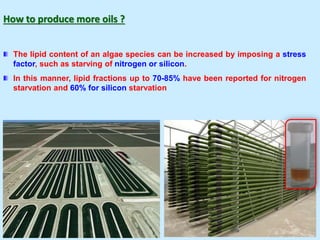
How to produce more oils ?
The lipid content of an algae species can be increased by imposing a stress
factor, such as starving of nitrogen or silicon.
In this manner, lipid fractions up to 70-85% have been reported for nitrogen
starvation and 60% for silicon starvation
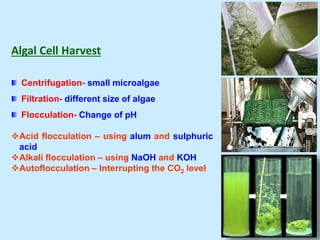
Algal Cell Harvest
Centrifugation- small microalgae
Filtration- different size of algae
Flocculation- Change of pH
Acid flocculation – using alum and sulphuric
acid
Alkali flocculation – using NaOH and KOH
Autoflocculation – Interrupting the CO2 level
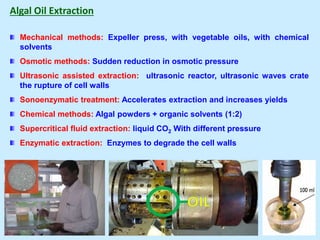
Algal Oil Extraction
Mechanical methods: Expeller press, with vegetable oils, with chemical
solvents
Osmotic methods: Sudden reduction in osmotic pressure
Ultrasonic assisted extraction: ultrasonic reactor, ultrasonic waves crate
the rupture of cell walls
Sonoenzymatic treatment: Accelerates extraction and increases yields
Chemical methods: Algal powders + organic solvents (1:2)
Supercritical fluid extraction: liquid CO2 With different pressure
Enzymatic extraction: Enzymes to degrade the cell walls
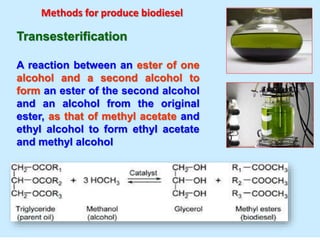
Transesterification
A reaction between an ester of one
alcohol and a second alcohol to
form an ester of the second alcohol
and an alcohol from the original
ester, as that of methyl acetate and
ethyl alcohol to form ethyl acetate
and methyl alcohol
Methods for produce biodiesel
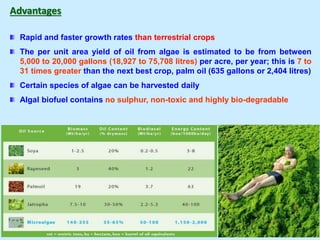
Advantages
Rapid and faster growth rates than terrestrial crops
The per unit area yield of oil from algae is estimated to be from between
5,000 to 20,000 gallons (18,927 to 75,708 litres) per acre, per year; this is 7 to
31 times greater than the next best crop, palm oil (635 gallons or 2,404 litres)
Certain species of algae can be harvested daily
Algal biofuel contains no sulphur, non-toxic and highly bio-degradable
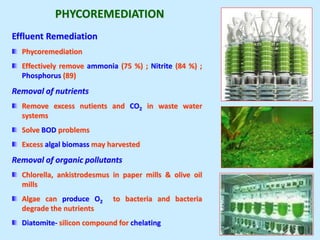
Effluent Remediation
Phycoremediation
Effectively remove ammonia (75 %) ; Nitrite (84 %) ;
Phosphorus (89)
Removal of nutrients
Remove excess nutients and CO2 in waste water
systems
Solve BOD problems
Excess algal biomass may harvested
Removal of organic pollutants
Chlorella, ankistrodesmus in paper mills & olive oil
mills
Algae can produce O2 to bacteria and bacteria
degrade the nutrients
Diatomite- silicon compound for chelating
PHYCOREMEDIATION
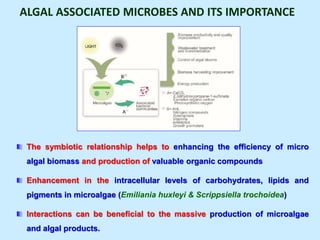
ALGAL ASSOCIATED MICROBES AND ITS IMPORTANCE
The symbiotic relationship helps to enhancing the efficiency of micro
algal biomass and production of valuable organic compounds
Enhancement in the intracellular levels of carbohydrates, lipids and
pigments in microalgae (Emiliania huxleyi & Scrippsiella trochoidea)
Interactions can be beneficial to the massive production of microalgae
and algal products.
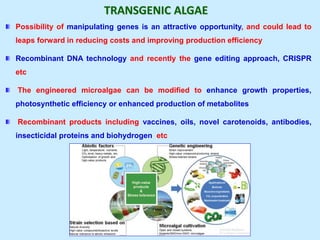
TRANSGENIC ALGAE
Possibility of manipulating genes is an attractive opportunity, and could lead to
leaps forward in reducing costs and improving production efficiency
Recombinant DNA technology and recently the gene editing approach, CRISPR
etc
The engineered microalgae can be modified to enhance growth properties,
photosynthetic efficiency or enhanced production of metabolites
Recombinant products including vaccines, oils, novel carotenoids, antibodies,
insecticidal proteins and biohydrogen etc
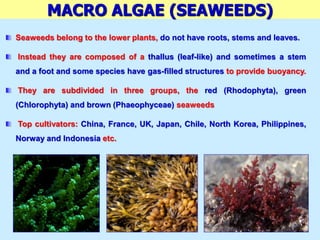
MACRO ALGAE (SEAWEEDS)
Seaweeds belong to the lower plants, do not have roots, stems and leaves.
Instead they are composed of a thallus (leaf-like) and sometimes a stem
and a foot and some species have gas-filled structures to provide buoyancy.
They are subdivided in three groups, the red (Rhodophyta), green
(Chlorophyta) and brown (Phaeophyceae) seaweeds
Top cultivators: China, France, UK, Japan, Chile, North Korea, Philippines,
Norway and Indonesia etc.
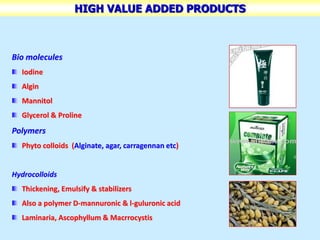
HIGH VALUE ADDED PRODUCTS
Bio molecules
Iodine
Algin
Mannitol
Glycerol & Proline
Polymers
Phyto colloids (Alginate, agar, carragennan etc)
Hydrocolloids
Thickening, Emulsify & stabilizers
Also a polymer D-mannuronic & l-guluronic acid
Laminaria, Ascophyllum & Macrrocystis
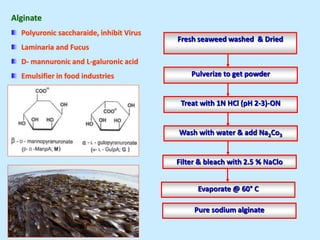
Alginate
Polyuronic saccharaide, inhibit Virus
Laminaria and Fucus
D- mannuronic and L-galuronic acid
Emulsifier in food industries
Fresh seaweed washed & Dried
Pulverize to get powder
Treat with 1N HCl (pH 2-3)-ON
Wash with water & add Na2Co3
Filter & bleach with 2.5 % NaClo
Evaporate @ 60° C
Pure sodium alginate
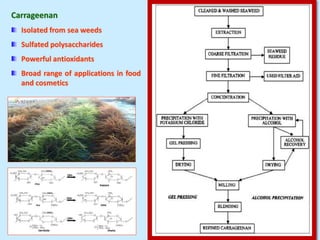
Carrageenan
Isolated from sea weeds
Sulfated polysaccharides
Powerful antioxidants
Broad range of applications in food
and cosmetics
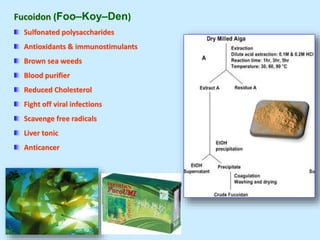
Fucoidon (Foo–Koy–Den)
Sulfonated polysaccharides
Antioxidants & immunostimulants
Brown sea weeds
Blood purifier
Reduced Cholesterol
Fight off viral infections
Scavenge free radicals
Liver tonic
Anticancer
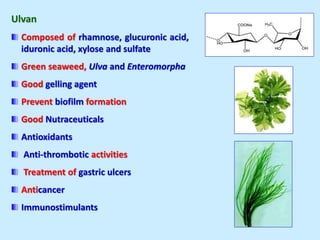
Ulvan
Composed of rhamnose, glucuronic acid,
iduronic acid, xylose and sulfate
Green seaweed, Ulva and Enteromorpha
Good gelling agent
Prevent biofilm formation
Good Nutraceuticals
Antioxidants
Anti-thrombotic activities
Treatment of gastric ulcers
Anticancer
Immunostimulants
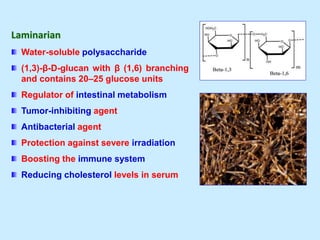
Laminarian
Water-soluble polysaccharide
(1,3)-β-D-glucan with β (1,6) branching
and contains 20–25 glucose units
Regulator of intestinal metabolism
Tumor-inhibiting agent
Antibacterial agent
Protection against severe irradiation
Boosting the immune system
Reducing cholesterol levels in serum
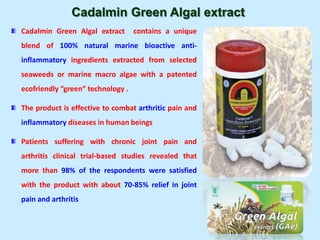
Cadalmin Green Algal extract
Cadalmin Green Algal extract contains a unique
blend of 100% natural marine bioactive anti-
inflammatory ingredients extracted from selected
seaweeds or marine macro algae with a patented
ecofriendly “green” technology .
The product is effective to combat arthritic pain and
inflammatory diseases in human beings
Patients suffering with chronic joint pain and
arthritis clinical trial-based studies revealed that
more than 98% of the respondents were satisfied
with the product with about 70-85% relief in joint
pain and arthritis
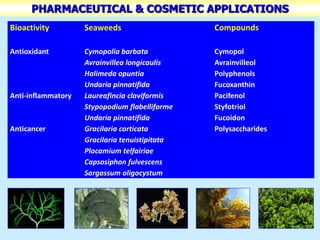
PHARMACEUTICAL & COSMETIC APPLICATIONS
Bioactivity Seaweeds Compounds
Antioxidant Cymopolia barbata Cymopol
Avrainvillea longicaulis Avrainvilleol
Halimeda opuntia Polyphenols
Undaria pinnatifida Fucoxanthin
Anti-inflammatory Laureafincia claviformis Pacifenol
Stypopodium flabelliforme Styfotriol
Undaria pinnatifida Fucoidon
Anticancer Gracilaria corticata Polysaccharides
Gracilaria tenuistipitata
Plocamium telfairiae
Capsosiphon fulvescens
Sargassum oligocystum
TOP TEN MEDICAL APPLICATIONS
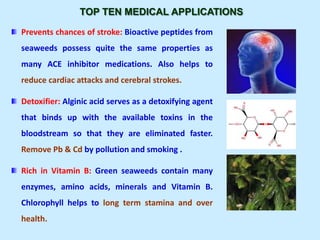
Prevents chances of stroke: Bioactive peptides from
seaweeds possess quite the same properties as
many ACE inhibitor medications. Also helps to
reduce cardiac attacks and cerebral strokes.
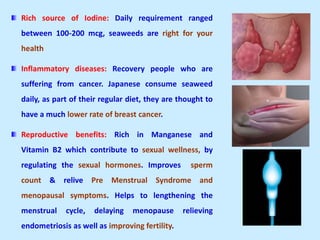
Detoxifier: Alginic acid serves as a detoxifying agent
that binds up with the available toxins in the
bloodstream so that they are eliminated faster.
Remove Pb & Cd by pollution and smoking .
Rich in Vitamin B: Green seaweeds contain many
enzymes, amino acids, minerals and Vitamin B.
Chlorophyll helps to long term stamina and over
health.
Rich source of Iodine: Daily requirement ranged
between 100-200 mcg, seaweeds are right for your
health
Inflammatory diseases: Recovery people who are
suffering from cancer. Japanese consume seaweed
daily, as part of their regular diet, they are thought to
have a much lower rate of breast cancer.
Reproductive benefits: Rich in Manganese and
Vitamin B2 which contribute to sexual wellness, by
regulating the sexual hormones. Improves sperm
count & relive Pre Menstrual Syndrome and
menopausal symptoms. Helps to lengthening the
menstrual cycle, delaying menopause relieving
endometriosis as well as improving fertility.
Dental health: Preventing gingivitis & formation
of cavities enhance salivation and resists oral
tissue damage. Alginate used to make the molds
of false teeth, derives from the seaweed based
alginic acid.
Enhances skin quality: Antioxidants, vitamins and
minerals helps to relieving the aging of skin;
relieving dry skin and to straighten out wrinkles.
Energy Booster: Soups as tonics for curing hang
over, respiratory ailments, colds & fever.
Strengthen hair: Seaweed based shampoos helps
to stimulate the re-growth & quality of hairs
FOOD APPLICATIONS
Human Consumption
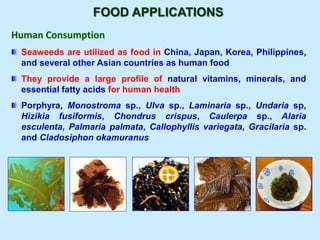
Seaweeds are utilized as food in China, Japan, Korea, Philippines,
and several other Asian countries as human food
They provide a large profile of natural vitamins, minerals, and
essential fatty acids for human health
Porphyra, Monostroma sp., Ulva sp., Laminaria sp., Undaria sp,
Hizikia fusiformis, Chondrus crispus, Caulerpa sp., Alaria
esculenta, Palmaria palmata, Callophyllis variegata, Gracilaria sp.
and Cladosiphon okamuranus
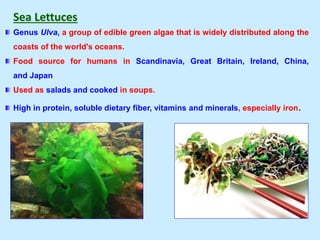
Sea Lettuces
Genus Ulva, a group of edible green algae that is widely distributed along the
coasts of the world's oceans.
Food source for humans in Scandinavia, Great Britain, Ireland, China,
and Japan
Used as salads and cooked in soups.
High in protein, soluble dietary fiber, vitamins and minerals, especially iron.
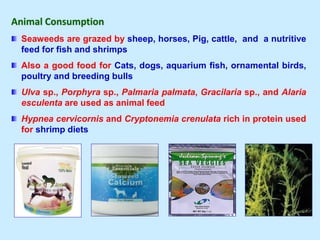
Animal Consumption
Seaweeds are grazed by sheep, horses, Pig, cattle, and a nutritive
feed for fish and shrimps
Also a good food for Cats, dogs, aquarium fish, ornamental birds,
poultry and breeding bulls
Ulva sp., Porphyra sp., Palmaria palmata, Gracilaria sp., and Alaria
esculenta are used as animal feed
Hypnea cervicornis and Cryptonemia crenulata rich in protein used
for shrimp diets
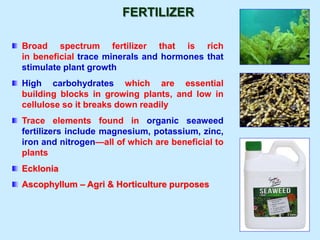
FERTILIZER
Broad spectrum fertilizer that is rich
in beneficial trace minerals and hormones that
stimulate plant growth
High carbohydrates which are essential
building blocks in growing plants, and low in
cellulose so it breaks down readily
Trace elements found in organic seaweed
fertilizers include magnesium, potassium, zinc,
iron and nitrogen—all of which are beneficial to
plants
Ecklonia
Ascophyllum – Agri & Horticulture purposes
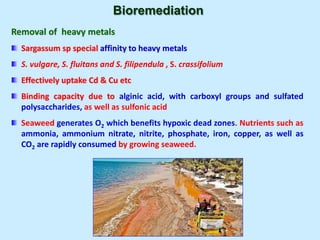
Bioremediation
Removal of heavy metals
Sargassum sp special affinity to heavy metals
S. vulgare, S. fluitans and S. filipendula , S. crassifolium
Effectively uptake Cd & Cu etc
Binding capacity due to alginic acid, with carboxyl groups and sulfated
polysaccharides, as well as sulfonic acid
Seaweed generates O2 which benefits hypoxic dead zones. Nutrients such as
ammonia, ammonium nitrate, nitrite, phosphate, iron, copper, as well as
CO2 are rapidly consumed by growing seaweed.
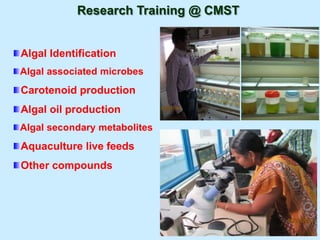
Algal Identification
Algal associated microbes
Carotenoid production
Algal oil production
Algal secondary metabolites
Aquaculture live feeds
Other compounds
Research Training @ CMST
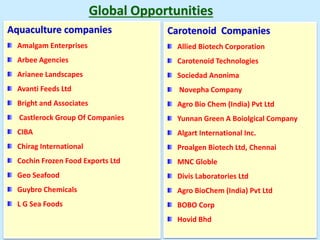
Aquaculture companies
Amalgam Enterprises
Arbee Agencies
Arianee Landscapes
Avanti Feeds Ltd
Bright and Associates
Castlerock Group Of Companies
CIBA
Chirag International
Cochin Frozen Food Exports Ltd
Geo Seafood
Guybro Chemicals
L G Sea Foods
Carotenoid Companies
Allied Biotech Corporation
Carotenoid Technologies
Sociedad Anonima
Novepha Company
Agro Bio Chem (India) Pvt Ltd
Yunnan Green A Boiolgical Company
Algart International Inc.
Proalgen Biotech Ltd, Chennai
MNC Globle
Divis Laboratories Ltd
Agro BioChem (India) Pvt Ltd
BOBO Corp
Hovid Bhd
Global Opportunities
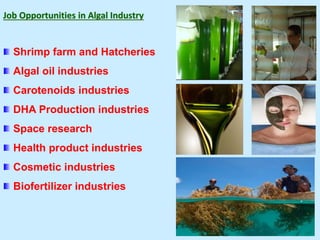
Job Opportunities in Algal Industry
Shrimp farm and Hatcheries
Algal oil industries
Carotenoids industries
DHA Production industries
Space research
Health product industries
Cosmetic industries
Biofertilizer industries
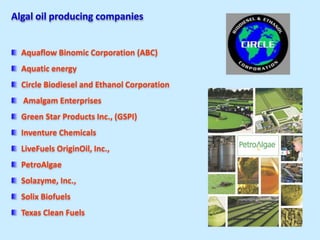
Algal oil producing companies
Aquaflow Binomic Corporation (ABC)
Aquatic energy
Circle Biodiesel and Ethanol Corporation
Amalgam Enterprises
Green Star Products Inc., (GSPI)
Inventure Chemicals
LiveFuels OriginOil, Inc.,
PetroAlgae
Solazyme, Inc.,
Solix Biofuels
Texas Clean Fuels
CONCLUSIONS & FUTURE DIRECTIONS
Marine Algal derived compounds provide a novel and rich source of
chemical diversity that can contribute to design and development of new
and potentially useful pharmaceutical agents.
Algal genomics provided good opportunities to identify and characterize
high-value bioactive compounds derived from marine microalgae.
Utilizing our salt lakes and coastal area , the production of macro and
micro algal may increased. This approach help to more income generation
to our country.
Consumption of Seaweed foods helps to improve our health status and
also act as good nutraceuticals for many diseases.
A proactive interaction between researchers, the pharmaceutical marine
biotech sector and government regulating agencies is crucial to the
incorporation of this challenging new tool in clinical medicine.
THANK YOU

Citarasu holycross

  • 2.
    BIO-PROSPECTING OF MARINE ALGALNATURAL PRODUCTS AND THEIR BENEFITS
  • 3.
    Need for MarineBio-prospecting Repeated search in terrestrials leading to known compounds Marine ecosystems are unique and rich reservoir of biodiversity with an enormous potential towards improving the quality of human life. Marine organisms have highly developed defense system in order to survive in the hostile conditions such as extreme temperatures, varied pressures (low or high), low energy and lack of sunlight
  • 4.
    Multi-OMICS methodologies: Genomics,Transcriptomics, Proteomics, Metabolomics, Metagenomics and Meta transcriptomics Production and analysis of massive biological data Once, the compound of interest is identified, bioactivity screening, heterologous expression, genetic engineering and/or chemical synthesis can follow Characterize the activity and produce the desired bioproducts with pharmaceutical, nutraceutical, cosmeceutical and biofuel production applications.
  • 5.
    ALGAE IN THEWORLD Sea, rivers and lakes, on soil and walls, in animal and plants Symbiosis with plants, animals, bacteria and Marine organisms Macro algae (seaweeds) occupy the littoral zone, which included green, brown and red algae Micro algae are found in both benthic and littoral habitats and also throughout the ocean waters as called phytoplankton
  • 6.
    MICRO ALGAE Microscopic photosyntheticorganism called phytoplankton found in fresh and marine waters , plays a key role in food chain Similar photosynthetic mechanism as like plants & they utilize sunlight, atmospheric CO2 and nutrients in the water to produce biomass Classification based on morphology, pigmentation, chemical nature of photosynthetic product & organization of photosynthetic membranes Diatoms (bacillariophyta), dinoflagellates (dinophyta), green and yellow–brown flagellates (chlorophyta; prasinophyta; prymnesiophyta, cryptophyta, chrysophyta and rhaphidiophyta) and blue–green algae (cyanophyta).
  • 7.
    MICRO ALGAL COMPOUNDS& ITS BENEFITS
  • 8.
    PHARMACEUTICAL & COSMETICAPPLICATIONS Carotenoids and Pigments Powerful antioxidants, nutraceuticals use in Eye applications Preventing Cancer , Immunostimulant & veterinary use (Aquaculture use) & cosmetics Commercially available Dunaliella salina
  • 9.
    Astaxanthin Isolated from Microalgae Powerful antioxidants in aquaculture Fucoxanthin Promote DHA & omega-3 fatty acids Beta carotenoid Found in many algae Colored carotenoids Dunaliella salina Phytoene Phytofluene Lutein Zeaxanthin
  • 10.
    ANTIBACTERIAL COMPOUNDS C-lactone malyngolide (Lyngbyamajuscula) ANTIFUNGAL COMPOUNDS Majusculamide (cyclic depsipeptide) Gambieric acid (Gambierdiscus toxicus –Dinoflagellate) IMMUNOSUPPRESSIVE COMPOUNDS Lipoproteins, microcolins A and B ANTICANCER COMPOUNDS Curacin A – anticancer (antimitotic agent) Cytotoxic pentapeptides: majusculamide D Deoxy majusuculamide D Amphi dinolide B (dinoflagellate, Amphidinum sp.) ANTIMICROBIAL & ANTICANCER COMPOUNDS
  • 11.
    FATTY ACIDS ANDHIGH VALUE OILS Very Long chain PUFA (vlc PUFA) Eicosapentaenoic (EPA) Docosahexaenoic acid (DHA) Arachidonic acid (AA) Flexibility, fluidity and selective permeability to cellular membranes Brian development Beneficial for the cardiovascular system Nutraceutical in human and animal health
  • 13.
    Antibiotics (fatty acids,bromophenols, tannins, terpenoids & polysaccharides) Phyco biliproteins (Phycocyanin & phycoerythrin)–Natural dye for cosmetics (lipsticks & eyeliners) Algicides –toxin (neurotoxic and hepatotoxic) Vitamin and vitamin precursors (ascorbic acid, riboflavin and tocopherol) Chlorella and Spirulina are used in skin care, sun protection and hair care products
  • 14.
    ALGAL SMALL MOLECULES Groupof secondary metabolites synthesized by biosynthetic gene clusters (Enzyme systems producing products such as antibiotics) Cyclic peptide (microcystin), depsipeptide ( majusculamide) Lyngbyatoxin-A ( Lyngbya majuscule) – antifungal activity Cryptophycin from Nostoc sp. shows a fungicidal activity &microtubule depolymerizing agent for Cancer cells. Heterocyclic compounds, polycyclic ethers, oxygenated polyketides and macrolides from dinoflagellates Dinoflagellate toxins like saxitoxin , neosaxitoxin and gonyautoxins are sodium channel blockers
  • 15.
    ALGAL BIOSURFACTANTS Extracellular Amphiphiliccompounds Glycolipids, lipopeptides, fatty acids, polymeric surfactants & particulate natures Broad range of applications Antibacterial, antiviral, antifungal, anti-adhesive, anti-cancer, antioxidants, adjuvant etc Arthrospira sp., Synechococcus nidulans, Chlorella minutissima, C. vulgaris and C. homosphaera used for various industrial and pharmaceutical applications
  • 16.
    ALGAL BIO POLYMERSAND BIOPLASTICS Typically, long chain polymers, present in the algae lipids are used for making bioplastics Algae is attractive for bioplastics because of its high growth rate and high protein content. The plastics market is worth more than $400 billion and has grown at an average of 3.5% per year over the last two decades. Naturally occurring polymer have many applications in medical, pharmaceutical and food industries Biodegradable Poly hydroxy alkanoates (PHA) are promising biopolymer which can be alternative to petroleum based polymer PHB poly-(hydroxy butyrate) is the most abundant PHA which is homopolymer of hydroxybutyrate that presents in various cyanobacteria such as Chlorogloea fritschii, Spirulina sp., Aphanothece sp. & Gloeothece sp.
  • 17.
    MICRO ALGAE ASFOOD Human Food – Good Nutraceuticals High protein content Chlorella and Spirulina, Dunaliella, Haematococcus, Schizochytrium, Scenedesmus, Aphanizomenon, Odontella, and Porphyridium are health-food Chlorella, the prevention and treatment of heart diseases with the Spirulina, Vitamin A precursor (Dunaliella), anti-inflammatory (Haematococcus), treatment of brain and heart disorders (Schizo chytrium), Dunaliella bardawil could improve the drug’s effect on HDL-cholesterol levels in patients 30 % of the food in Astronauts is algae due to high protein
  • 18.
    Microalgae as animalfeed Traditional uses of microalgae in Aquaculture Food for All growth stages of bivalves Crustacean some larval stages Cattles Some fish larvae Zooplankton used as food for larval crustaceans and fish Fatty acid enrichment of zooplankton Dunaliella sp. Chlorella sp. Nanochloropsis sp.
  • 19.
    MICRO ALGAE INSPACE RESEARCH Algae produce oxygen in space Chlorella and Euglena grown in photobioreactor is used to produce oxygen in the space for the Astronauts using their waste and help them for long term expedition in space NASA and many other space research station in the world open opportunities for planktologist
  • 20.
    ENERGY PRODUCTION Bio-hydrogen production Photosyntheticmicroorganisms are attracting nowadays by high photosynthetic conversion efficiencies diverse metabolic capabilities, superior growth rates, and ability to store or secrete energy- rich hydrocarbons. Two methods; (1) microalgae use the light energy to produce hydrogen from water, (2) bacteria capable of fermenting the carbohydrates (either structural or stored in the microalgal cell wall) are utilized to produce hydrogen. Manipulation of competing metabolic pathways by modulating the certain key enzymes such as hydrogenase and nitrogenase may enhance the evolution of H2 from photoautotrophic cells Several photobioreactors have been developed for large-scale biomass and hydrogen production
  • 21.
    Algal Methane Production Ina biogas reactor the substrates used are converted in several reaction steps into biogas, consisting mainly of the components CH4 and CO2 The biogas yield of plants is generally limited by the greater or lesser proportion of lignocellulose, which is difficult to recycle. However, the use of microalgae with a low lignocellulose content, for example Chlorella vulgaris, Phaeodactylum tricornutum and Spirulina platensis, permits an almost complete utilization of the organic substance. .
  • 22.
    ALGAL OIL PRODUCTION Storingthe Sun’s Energy (Photosynthesis) What is needed Storage of Energy Sunlight Lipids and oils CO2 Carbohydrates Nutrients
  • 23.
    How to producemore oils ? The lipid content of an algae species can be increased by imposing a stress factor, such as starving of nitrogen or silicon. In this manner, lipid fractions up to 70-85% have been reported for nitrogen starvation and 60% for silicon starvation
  • 24.
    Algal Cell Harvest Centrifugation-small microalgae Filtration- different size of algae Flocculation- Change of pH Acid flocculation – using alum and sulphuric acid Alkali flocculation – using NaOH and KOH Autoflocculation – Interrupting the CO2 level
  • 25.
    Algal Oil Extraction Mechanicalmethods: Expeller press, with vegetable oils, with chemical solvents Osmotic methods: Sudden reduction in osmotic pressure Ultrasonic assisted extraction: ultrasonic reactor, ultrasonic waves crate the rupture of cell walls Sonoenzymatic treatment: Accelerates extraction and increases yields Chemical methods: Algal powders + organic solvents (1:2) Supercritical fluid extraction: liquid CO2 With different pressure Enzymatic extraction: Enzymes to degrade the cell walls
  • 26.
    Transesterification A reaction betweenan ester of one alcohol and a second alcohol to form an ester of the second alcohol and an alcohol from the original ester, as that of methyl acetate and ethyl alcohol to form ethyl acetate and methyl alcohol Methods for produce biodiesel
  • 27.
    Advantages Rapid and fastergrowth rates than terrestrial crops The per unit area yield of oil from algae is estimated to be from between 5,000 to 20,000 gallons (18,927 to 75,708 litres) per acre, per year; this is 7 to 31 times greater than the next best crop, palm oil (635 gallons or 2,404 litres) Certain species of algae can be harvested daily Algal biofuel contains no sulphur, non-toxic and highly bio-degradable
  • 29.
    Effluent Remediation Phycoremediation Effectively removeammonia (75 %) ; Nitrite (84 %) ; Phosphorus (89) Removal of nutrients Remove excess nutients and CO2 in waste water systems Solve BOD problems Excess algal biomass may harvested Removal of organic pollutants Chlorella, ankistrodesmus in paper mills & olive oil mills Algae can produce O2 to bacteria and bacteria degrade the nutrients Diatomite- silicon compound for chelating PHYCOREMEDIATION
  • 30.
    ALGAL ASSOCIATED MICROBESAND ITS IMPORTANCE The symbiotic relationship helps to enhancing the efficiency of micro algal biomass and production of valuable organic compounds Enhancement in the intracellular levels of carbohydrates, lipids and pigments in microalgae (Emiliania huxleyi & Scrippsiella trochoidea) Interactions can be beneficial to the massive production of microalgae and algal products.
  • 31.
    TRANSGENIC ALGAE Possibility ofmanipulating genes is an attractive opportunity, and could lead to leaps forward in reducing costs and improving production efficiency Recombinant DNA technology and recently the gene editing approach, CRISPR etc The engineered microalgae can be modified to enhance growth properties, photosynthetic efficiency or enhanced production of metabolites Recombinant products including vaccines, oils, novel carotenoids, antibodies, insecticidal proteins and biohydrogen etc
  • 32.
    MACRO ALGAE (SEAWEEDS) Seaweedsbelong to the lower plants, do not have roots, stems and leaves. Instead they are composed of a thallus (leaf-like) and sometimes a stem and a foot and some species have gas-filled structures to provide buoyancy. They are subdivided in three groups, the red (Rhodophyta), green (Chlorophyta) and brown (Phaeophyceae) seaweeds Top cultivators: China, France, UK, Japan, Chile, North Korea, Philippines, Norway and Indonesia etc.
  • 33.
    HIGH VALUE ADDEDPRODUCTS Bio molecules Iodine Algin Mannitol Glycerol & Proline Polymers Phyto colloids (Alginate, agar, carragennan etc) Hydrocolloids Thickening, Emulsify & stabilizers Also a polymer D-mannuronic & l-guluronic acid Laminaria, Ascophyllum & Macrrocystis
  • 34.
    Alginate Polyuronic saccharaide, inhibitVirus Laminaria and Fucus D- mannuronic and L-galuronic acid Emulsifier in food industries Fresh seaweed washed & Dried Pulverize to get powder Treat with 1N HCl (pH 2-3)-ON Wash with water & add Na2Co3 Filter & bleach with 2.5 % NaClo Evaporate @ 60° C Pure sodium alginate
  • 35.
    Carrageenan Isolated from seaweeds Sulfated polysaccharides Powerful antioxidants Broad range of applications in food and cosmetics
  • 36.
    Fucoidon (Foo–Koy–Den) Sulfonated polysaccharides Antioxidants& immunostimulants Brown sea weeds Blood purifier Reduced Cholesterol Fight off viral infections Scavenge free radicals Liver tonic Anticancer
  • 37.
    Ulvan Composed of rhamnose,glucuronic acid, iduronic acid, xylose and sulfate Green seaweed, Ulva and Enteromorpha Good gelling agent Prevent biofilm formation Good Nutraceuticals Antioxidants Anti-thrombotic activities Treatment of gastric ulcers Anticancer Immunostimulants
  • 38.
    Laminarian Water-soluble polysaccharide (1,3)-β-D-glucan withβ (1,6) branching and contains 20–25 glucose units Regulator of intestinal metabolism Tumor-inhibiting agent Antibacterial agent Protection against severe irradiation Boosting the immune system Reducing cholesterol levels in serum
  • 39.
    Cadalmin Green Algalextract Cadalmin Green Algal extract contains a unique blend of 100% natural marine bioactive anti- inflammatory ingredients extracted from selected seaweeds or marine macro algae with a patented ecofriendly “green” technology . The product is effective to combat arthritic pain and inflammatory diseases in human beings Patients suffering with chronic joint pain and arthritis clinical trial-based studies revealed that more than 98% of the respondents were satisfied with the product with about 70-85% relief in joint pain and arthritis
  • 40.
    PHARMACEUTICAL & COSMETICAPPLICATIONS Bioactivity Seaweeds Compounds Antioxidant Cymopolia barbata Cymopol Avrainvillea longicaulis Avrainvilleol Halimeda opuntia Polyphenols Undaria pinnatifida Fucoxanthin Anti-inflammatory Laureafincia claviformis Pacifenol Stypopodium flabelliforme Styfotriol Undaria pinnatifida Fucoidon Anticancer Gracilaria corticata Polysaccharides Gracilaria tenuistipitata Plocamium telfairiae Capsosiphon fulvescens Sargassum oligocystum
  • 41.
    TOP TEN MEDICALAPPLICATIONS Prevents chances of stroke: Bioactive peptides from seaweeds possess quite the same properties as many ACE inhibitor medications. Also helps to reduce cardiac attacks and cerebral strokes. Detoxifier: Alginic acid serves as a detoxifying agent that binds up with the available toxins in the bloodstream so that they are eliminated faster. Remove Pb & Cd by pollution and smoking . Rich in Vitamin B: Green seaweeds contain many enzymes, amino acids, minerals and Vitamin B. Chlorophyll helps to long term stamina and over health.
  • 42.
    Rich source ofIodine: Daily requirement ranged between 100-200 mcg, seaweeds are right for your health Inflammatory diseases: Recovery people who are suffering from cancer. Japanese consume seaweed daily, as part of their regular diet, they are thought to have a much lower rate of breast cancer. Reproductive benefits: Rich in Manganese and Vitamin B2 which contribute to sexual wellness, by regulating the sexual hormones. Improves sperm count & relive Pre Menstrual Syndrome and menopausal symptoms. Helps to lengthening the menstrual cycle, delaying menopause relieving endometriosis as well as improving fertility.
  • 43.
    Dental health: Preventinggingivitis & formation of cavities enhance salivation and resists oral tissue damage. Alginate used to make the molds of false teeth, derives from the seaweed based alginic acid. Enhances skin quality: Antioxidants, vitamins and minerals helps to relieving the aging of skin; relieving dry skin and to straighten out wrinkles. Energy Booster: Soups as tonics for curing hang over, respiratory ailments, colds & fever. Strengthen hair: Seaweed based shampoos helps to stimulate the re-growth & quality of hairs
  • 44.
    FOOD APPLICATIONS Human Consumption Seaweedsare utilized as food in China, Japan, Korea, Philippines, and several other Asian countries as human food They provide a large profile of natural vitamins, minerals, and essential fatty acids for human health Porphyra, Monostroma sp., Ulva sp., Laminaria sp., Undaria sp, Hizikia fusiformis, Chondrus crispus, Caulerpa sp., Alaria esculenta, Palmaria palmata, Callophyllis variegata, Gracilaria sp. and Cladosiphon okamuranus
  • 45.
    Sea Lettuces Genus Ulva,a group of edible green algae that is widely distributed along the coasts of the world's oceans. Food source for humans in Scandinavia, Great Britain, Ireland, China, and Japan Used as salads and cooked in soups. High in protein, soluble dietary fiber, vitamins and minerals, especially iron.
  • 46.
    Animal Consumption Seaweeds aregrazed by sheep, horses, Pig, cattle, and a nutritive feed for fish and shrimps Also a good food for Cats, dogs, aquarium fish, ornamental birds, poultry and breeding bulls Ulva sp., Porphyra sp., Palmaria palmata, Gracilaria sp., and Alaria esculenta are used as animal feed Hypnea cervicornis and Cryptonemia crenulata rich in protein used for shrimp diets
  • 47.
    FERTILIZER Broad spectrum fertilizerthat is rich in beneficial trace minerals and hormones that stimulate plant growth High carbohydrates which are essential building blocks in growing plants, and low in cellulose so it breaks down readily Trace elements found in organic seaweed fertilizers include magnesium, potassium, zinc, iron and nitrogen—all of which are beneficial to plants Ecklonia Ascophyllum – Agri & Horticulture purposes
  • 48.
    Bioremediation Removal of heavymetals Sargassum sp special affinity to heavy metals S. vulgare, S. fluitans and S. filipendula , S. crassifolium Effectively uptake Cd & Cu etc Binding capacity due to alginic acid, with carboxyl groups and sulfated polysaccharides, as well as sulfonic acid Seaweed generates O2 which benefits hypoxic dead zones. Nutrients such as ammonia, ammonium nitrate, nitrite, phosphate, iron, copper, as well as CO2 are rapidly consumed by growing seaweed.
  • 49.
    Algal Identification Algal associatedmicrobes Carotenoid production Algal oil production Algal secondary metabolites Aquaculture live feeds Other compounds Research Training @ CMST
  • 50.
    Aquaculture companies Amalgam Enterprises ArbeeAgencies Arianee Landscapes Avanti Feeds Ltd Bright and Associates Castlerock Group Of Companies CIBA Chirag International Cochin Frozen Food Exports Ltd Geo Seafood Guybro Chemicals L G Sea Foods Carotenoid Companies Allied Biotech Corporation Carotenoid Technologies Sociedad Anonima Novepha Company Agro Bio Chem (India) Pvt Ltd Yunnan Green A Boiolgical Company Algart International Inc. Proalgen Biotech Ltd, Chennai MNC Globle Divis Laboratories Ltd Agro BioChem (India) Pvt Ltd BOBO Corp Hovid Bhd Global Opportunities
  • 51.
    Job Opportunities inAlgal Industry Shrimp farm and Hatcheries Algal oil industries Carotenoids industries DHA Production industries Space research Health product industries Cosmetic industries Biofertilizer industries
  • 52.
    Algal oil producingcompanies Aquaflow Binomic Corporation (ABC) Aquatic energy Circle Biodiesel and Ethanol Corporation Amalgam Enterprises Green Star Products Inc., (GSPI) Inventure Chemicals LiveFuels OriginOil, Inc., PetroAlgae Solazyme, Inc., Solix Biofuels Texas Clean Fuels
  • 53.
  • 54.
    Marine Algal derivedcompounds provide a novel and rich source of chemical diversity that can contribute to design and development of new and potentially useful pharmaceutical agents. Algal genomics provided good opportunities to identify and characterize high-value bioactive compounds derived from marine microalgae. Utilizing our salt lakes and coastal area , the production of macro and micro algal may increased. This approach help to more income generation to our country. Consumption of Seaweed foods helps to improve our health status and also act as good nutraceuticals for many diseases. A proactive interaction between researchers, the pharmaceutical marine biotech sector and government regulating agencies is crucial to the incorporation of this challenging new tool in clinical medicine.
  • 55.