BY LOUIS KAHN
 The Art Gallery of Yale University
was the first major commission for
Louis Kahn and is considered his
first masterpiece.
 The architect designed it during their stay at
the School of Architecture at the university,
which had been invited as a critic.
 This building was the first of three art
museums that Kahn would design
throughout his career .
 Opposite the British Art Center. (one of
the last buildings of Kahn)
 1111 Chapel Street, New Haven,
Connecticut, USA.
With theYale Art Gallery, Louis Kahn
sets new concepts such as,
Symmetry
Clear separation between space and
space
A new vocabulary based on the triangle
and the circle.
The triangle as a figure appears on the
stairs and as structural concept in the
construction forged rosettes
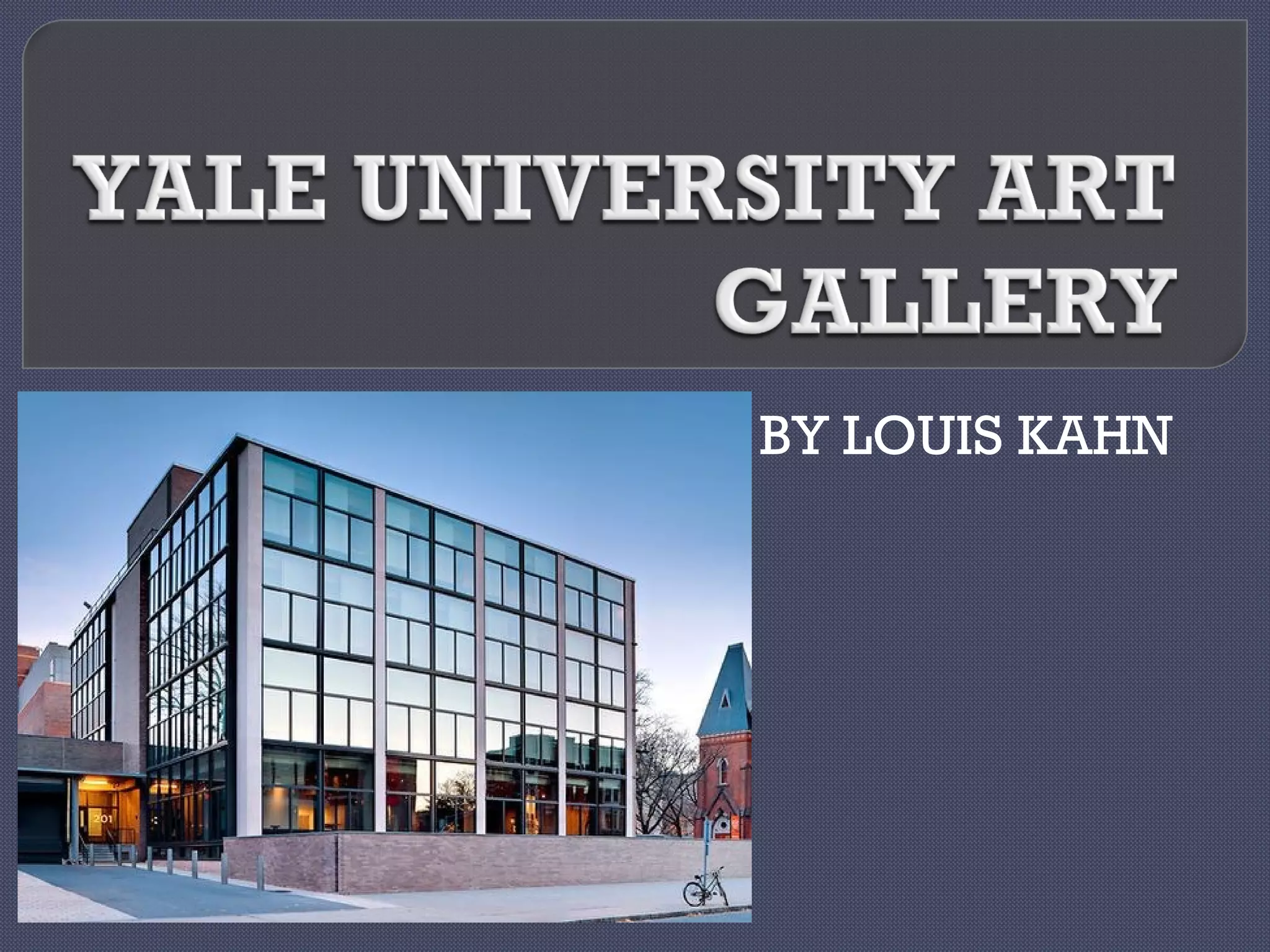
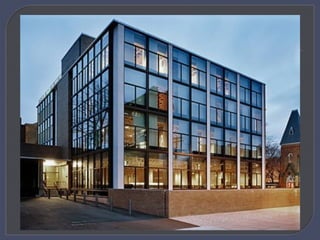
 The building is constructed of brick, concrete, glass and
steel became a significant departure from neo-gothic style.
 Dominant in the Campus of the University.
 From the street, the building is perceived as a facade of
brick, windowless, monolithic, is the southwest facade.
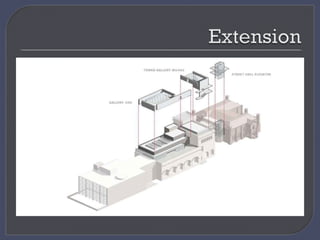
 It was the extension of an existing building in an empty
corner is connected with the old building through the
alignment of facades.
 The glass front entrance and make a style utterly opposed to
the existing architecture.
 It is in the walls facing the northeast and northwest where
several pieces are rectangular glass curtain wall.
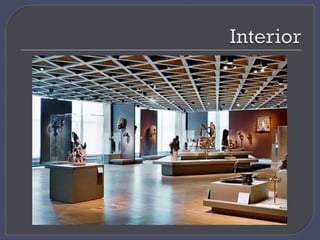
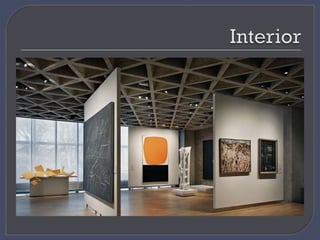
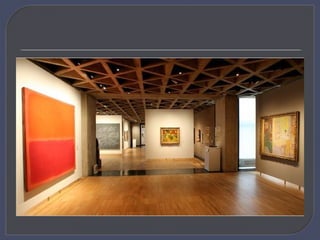
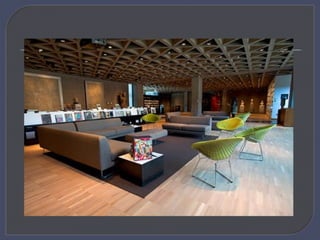
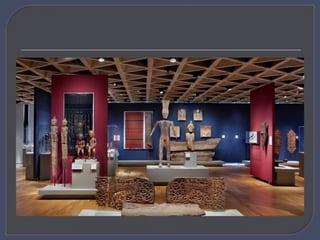
 The building's interior is characterized
by a system of precast concrete roof that
houses the gallery lighting and
ventilation.
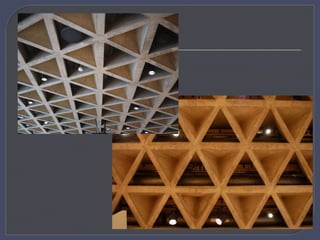
 The roof, at the time, was an innovative
structural engineering hollow concrete
tetrahedrons, which combine a number
of functions and give the interior a rich
and changing quality
 It was conceived as a unique, modular,
consisting of two prismatic,
 Two rectangles of 43x25 meters the
highest.
 Two areas served by a central core where
there are facilities, elevators and stairs,
spaces servants.
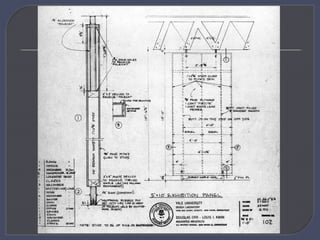
 The exhibition rooms are created using
modular panels that subdivide the space
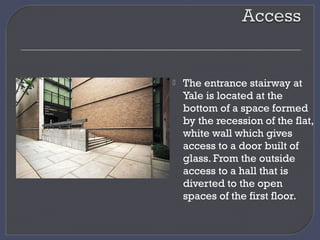
 The entrance stairway at
Yale is located at the
bottom of a space formed
by the recession of the flat,
white wall which gives
access to a door built of
glass. From the outside
access to a hall that is
diverted to the open
spaces of the first floor.
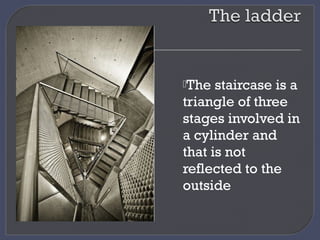
The staircase is a
triangle of three
stages involved in
a cylinder and
that is not
reflected to the
outside
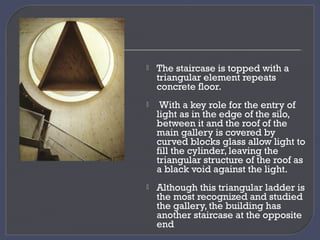
 The staircase is topped with a
triangular element repeats
concrete floor.
 With a key role for the entry of
light as in the edge of the silo,
between it and the roof of the
main gallery is covered by
curved blocks glass allow light to
fill the cylinder, leaving the
triangular structure of the roof as
a black void against the light.
 Although this triangular ladder is
the most recognized and studied
the gallery, the building has
another staircase at the opposite
end
 Modulated rectangular structure of concrete
that is not only supporting but also
contributes to the image of the building
 The Art Gallery of Yale University, was first
used concrete roof structure consists of a
tetrahedron with special armor that exposes
the light fixtures and duct air conditioning. It
also reduces the height of the floor-to-floor,
channeling the air through the structure.
 The concrete structure is seen on the roof
making a hollow triangles solution, which
eliminates the false ceiling.
 The enclosure is made through brick
walls and curtain walls, glass and steel.
 The amounts of these curtains of glass-
cage form a pattern that descend from
the cornices of the terrace to ground
level being locked inside the formwork
 Inside most raw materials are no longer
calling attention to the concrete walls
where they hang the works of art.
 The horizontal bands on the brick
facades are limestone.
YALE ART GALLERY-LOUIS KAHN

YALE ART GALLERY-LOUIS KAHN

  • 1.
  • 2.
     The ArtGallery of Yale University was the first major commission for Louis Kahn and is considered his first masterpiece.  The architect designed it during their stay at the School of Architecture at the university, which had been invited as a critic.  This building was the first of three art museums that Kahn would design throughout his career .
  • 3.
     Opposite theBritish Art Center. (one of the last buildings of Kahn)  1111 Chapel Street, New Haven, Connecticut, USA.
  • 4.
    With theYale ArtGallery, Louis Kahn sets new concepts such as, Symmetry Clear separation between space and space A new vocabulary based on the triangle and the circle. The triangle as a figure appears on the stairs and as structural concept in the construction forged rosettes
  • 5.
     The buildingis constructed of brick, concrete, glass and steel became a significant departure from neo-gothic style.  Dominant in the Campus of the University.  From the street, the building is perceived as a facade of brick, windowless, monolithic, is the southwest facade.  It was the extension of an existing building in an empty corner is connected with the old building through the alignment of facades.  The glass front entrance and make a style utterly opposed to the existing architecture.  It is in the walls facing the northeast and northwest where several pieces are rectangular glass curtain wall.
  • 7.
     The building'sinterior is characterized by a system of precast concrete roof that houses the gallery lighting and ventilation.  The roof, at the time, was an innovative structural engineering hollow concrete tetrahedrons, which combine a number of functions and give the interior a rich and changing quality
  • 9.
     It wasconceived as a unique, modular, consisting of two prismatic,  Two rectangles of 43x25 meters the highest.  Two areas served by a central core where there are facilities, elevators and stairs, spaces servants.  The exhibition rooms are created using modular panels that subdivide the space
  • 10.
     The entrancestairway at Yale is located at the bottom of a space formed by the recession of the flat, white wall which gives access to a door built of glass. From the outside access to a hall that is diverted to the open spaces of the first floor.
  • 11.
    The staircase isa triangle of three stages involved in a cylinder and that is not reflected to the outside
  • 12.
     The staircaseis topped with a triangular element repeats concrete floor.  With a key role for the entry of light as in the edge of the silo, between it and the roof of the main gallery is covered by curved blocks glass allow light to fill the cylinder, leaving the triangular structure of the roof as a black void against the light.  Although this triangular ladder is the most recognized and studied the gallery, the building has another staircase at the opposite end
  • 13.
     Modulated rectangularstructure of concrete that is not only supporting but also contributes to the image of the building  The Art Gallery of Yale University, was first used concrete roof structure consists of a tetrahedron with special armor that exposes the light fixtures and duct air conditioning. It also reduces the height of the floor-to-floor, channeling the air through the structure.
  • 14.
     The concretestructure is seen on the roof making a hollow triangles solution, which eliminates the false ceiling.  The enclosure is made through brick walls and curtain walls, glass and steel.  The amounts of these curtains of glass- cage form a pattern that descend from the cornices of the terrace to ground level being locked inside the formwork
  • 15.
     Inside mostraw materials are no longer calling attention to the concrete walls where they hang the works of art.  The horizontal bands on the brick facades are limestone.