DESCRIPTION:
-Baglike organ made of muscles, found in the upper
left of the abdomen.
-Food stays for three to four hours
FUNCTIONS:
-Digestion takes place (process of mixing,
mashing, and turning the food into soupy
substance which then released to the small
intestine).
-Not all food eaten can be digested, undigested
food goes to the large intestine as waste product.
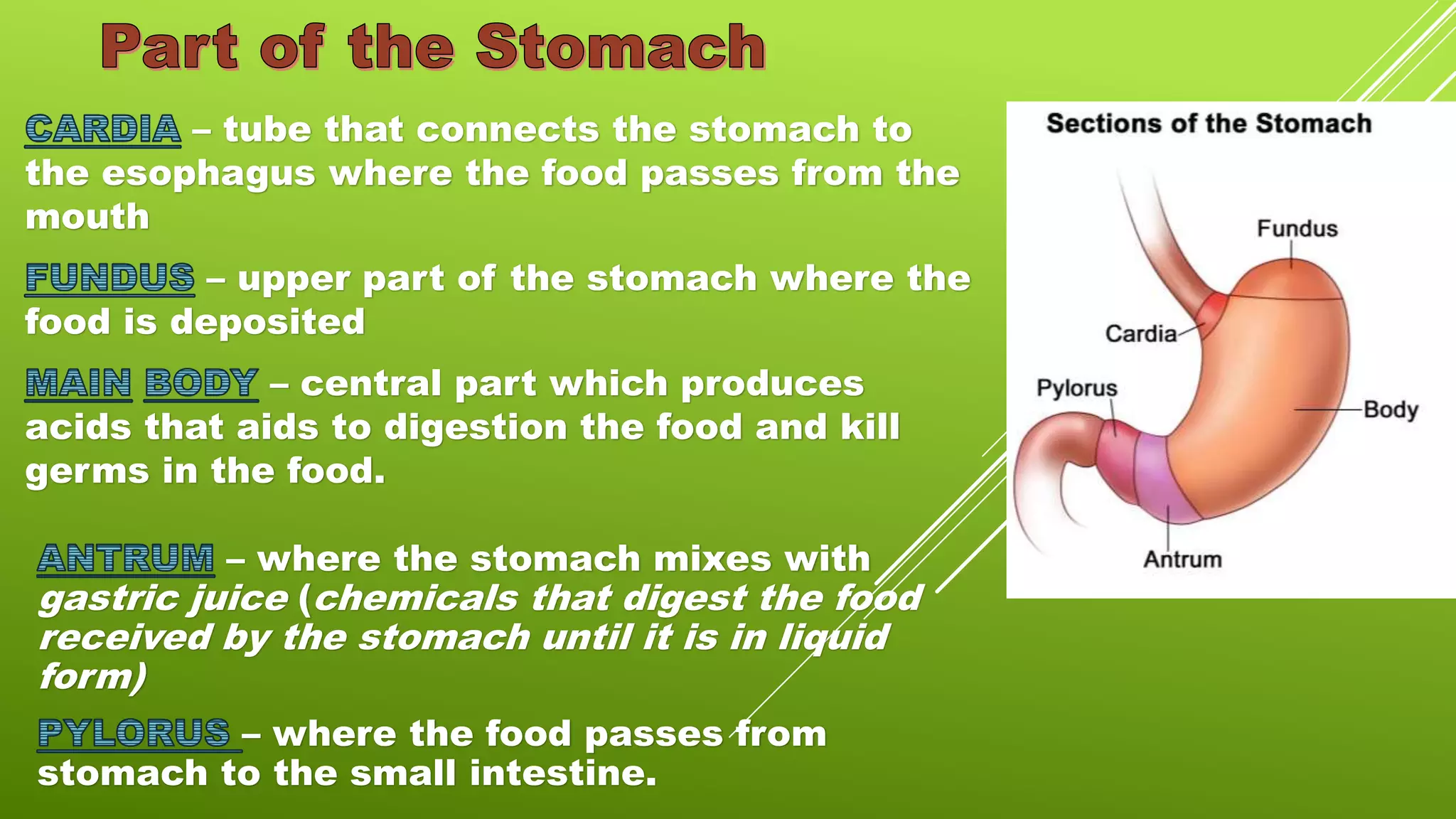
– tube that connects the stomach to
the esophagus where the food passes from the
mouth
– upper part of the stomach where the
food is deposited
– central part which produces
acids that aids to digestion the food and kill
germs in the food.
– where the stomach mixes with
gastric juice (chemicals that digest the food
received by the stomach until it is in liquid
form)
– where the food passes from
stomach to the small intestine.
DISEASES OF THE STOMACH & DUODENUM
- is when the stomach lining becomes inflamed or
swollen.
and
- refers to a sudden onset of inflammation of the
stomach lining, called the gastric mucosa.
Chronic Gastritis
is a common problem wherein
patients suffer from indigestion and other symptoms suggestive of
an ulcer, but no abnormality is found on investigation. For this
reason, we refer to NUD as a disorder.
- is a disease in which the stomach cannot empty
itself of food in a normal fashion. Symptoms include
. Treatments
include medications and possibly surgery.
are open sores that develop on the inside
lining of your stomach and the upper portion of your small
intestine.
. Peptic ulcers include: Gastric ulcers that occur
on the inside of the stomach.
1.Do not rush your food. Take the time to eat slowly.
2.Do not overeat.
3.Eat regularly and try not to skip meals.
4.Avoid eating a big meal just before you go to bed.
5.Make sure you have plenty of water to drink.

2 les 3 sci 4

  • 2.
    DESCRIPTION: -Baglike organ madeof muscles, found in the upper left of the abdomen. -Food stays for three to four hours FUNCTIONS: -Digestion takes place (process of mixing, mashing, and turning the food into soupy substance which then released to the small intestine). -Not all food eaten can be digested, undigested food goes to the large intestine as waste product.
  • 3.
    – tube thatconnects the stomach to the esophagus where the food passes from the mouth – upper part of the stomach where the food is deposited – central part which produces acids that aids to digestion the food and kill germs in the food. – where the stomach mixes with gastric juice (chemicals that digest the food received by the stomach until it is in liquid form) – where the food passes from stomach to the small intestine.
  • 4.
    DISEASES OF THESTOMACH & DUODENUM - is when the stomach lining becomes inflamed or swollen. and - refers to a sudden onset of inflammation of the stomach lining, called the gastric mucosa. Chronic Gastritis is a common problem wherein patients suffer from indigestion and other symptoms suggestive of an ulcer, but no abnormality is found on investigation. For this reason, we refer to NUD as a disorder.
  • 5.
    - is adisease in which the stomach cannot empty itself of food in a normal fashion. Symptoms include . Treatments include medications and possibly surgery. are open sores that develop on the inside lining of your stomach and the upper portion of your small intestine. . Peptic ulcers include: Gastric ulcers that occur on the inside of the stomach.
  • 6.
    1.Do not rushyour food. Take the time to eat slowly. 2.Do not overeat. 3.Eat regularly and try not to skip meals. 4.Avoid eating a big meal just before you go to bed. 5.Make sure you have plenty of water to drink.