Vertebrates
Chapter
Animal Kingdom

Invertebrates

Vertebrates

Animals
without a
Backbone or
Spinal Column

Animals with a
Backbone or
Spinal Column
Invertebrates

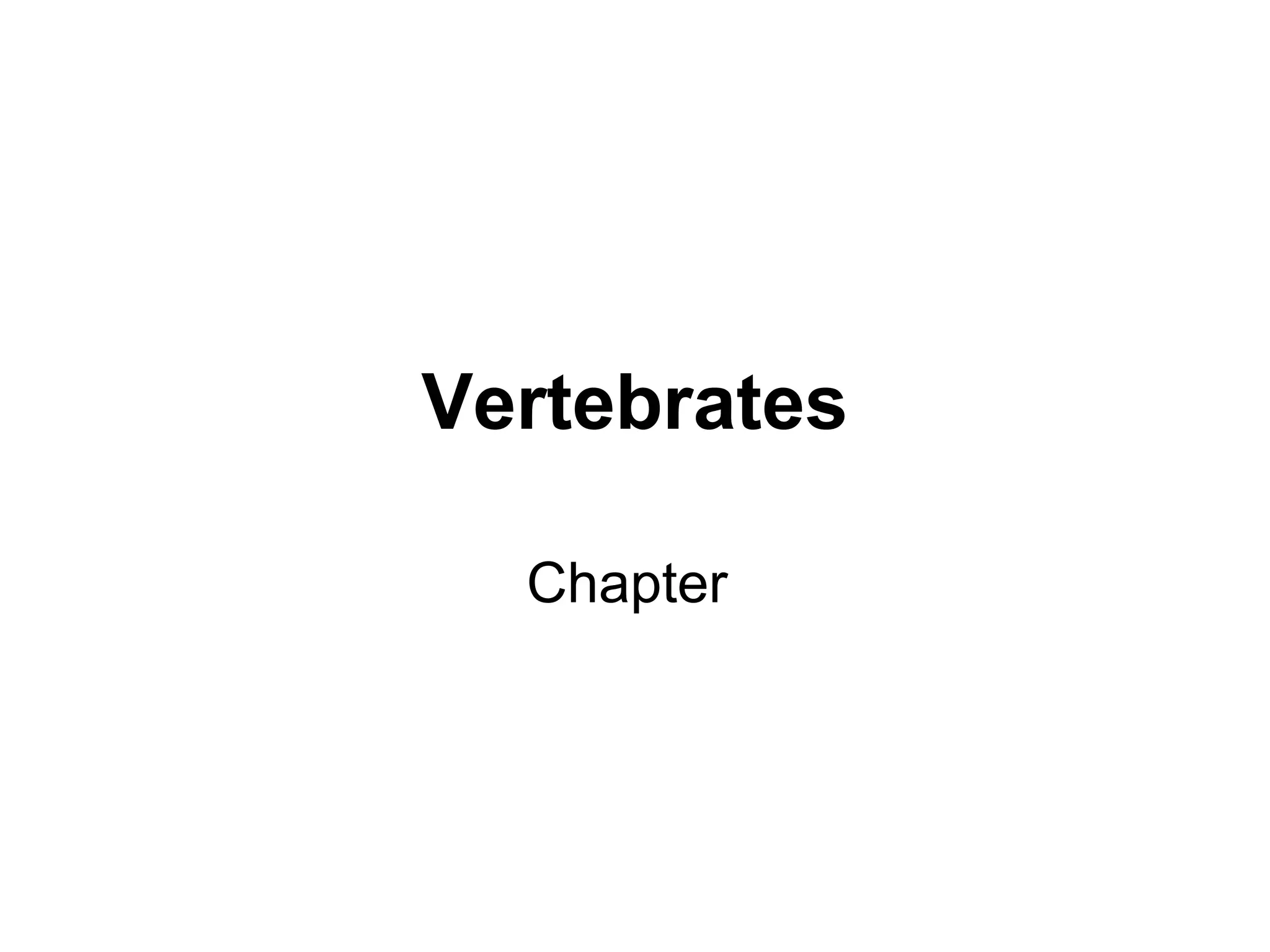
Jellyfish

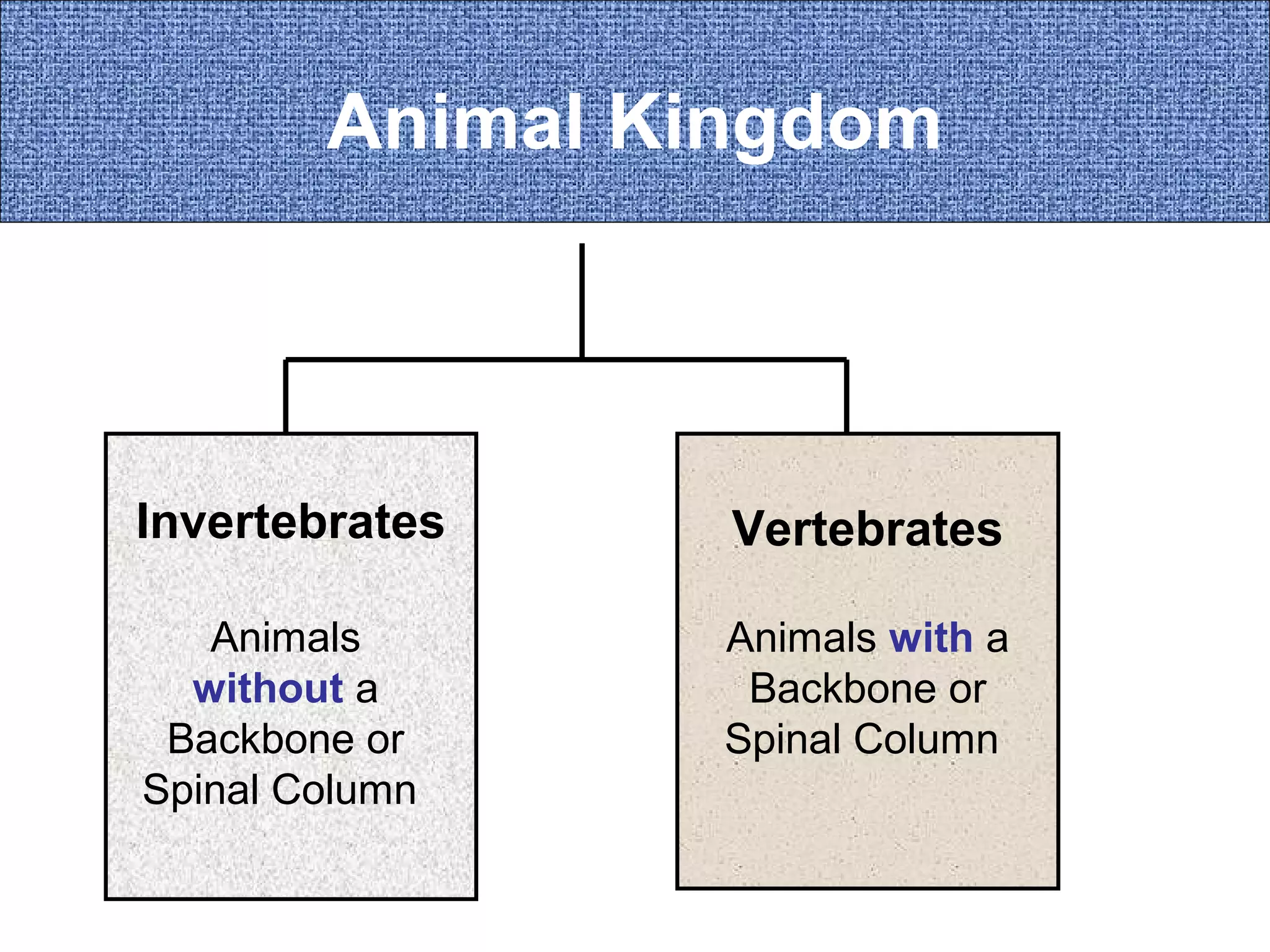
Snail
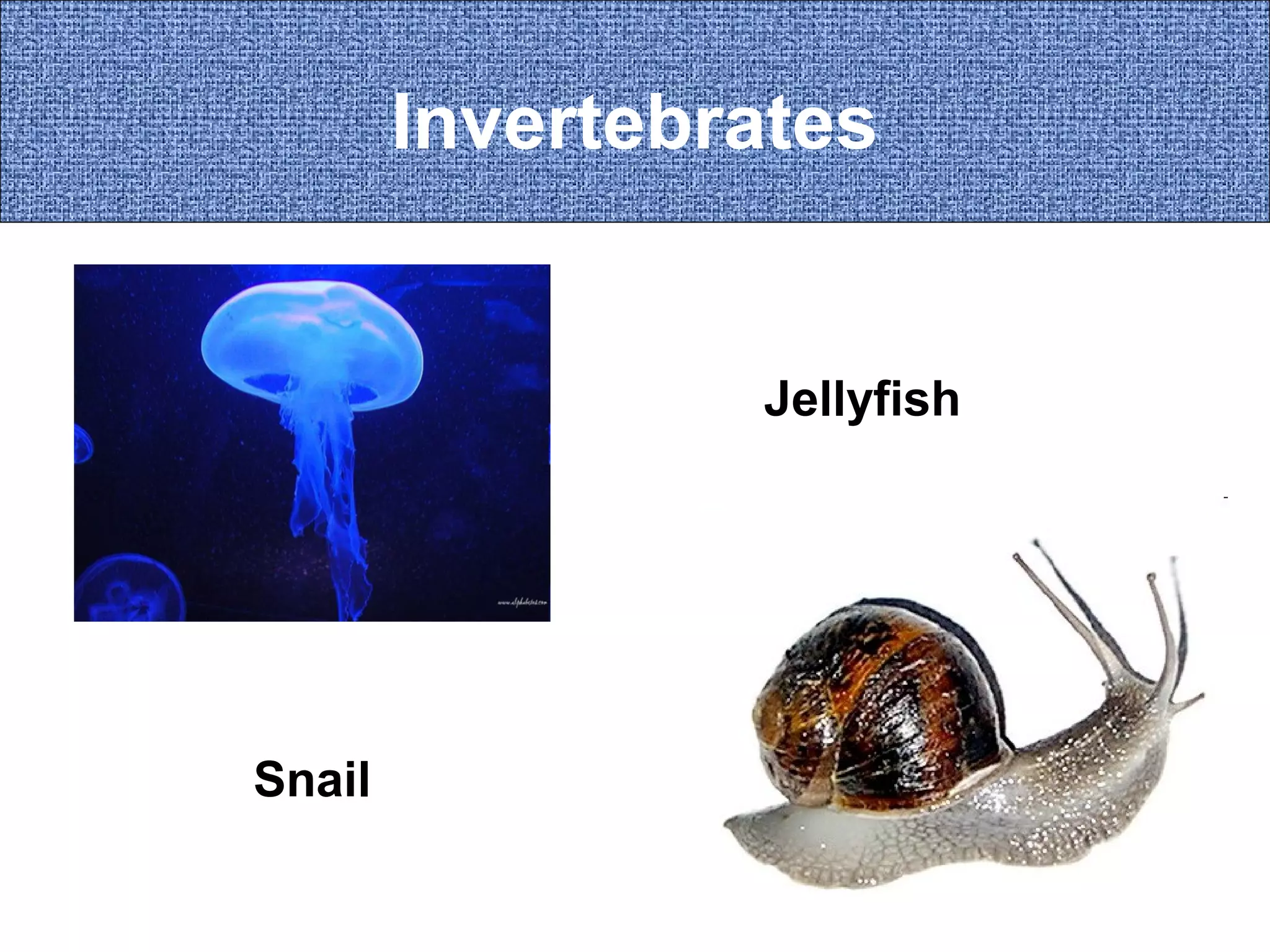
Butterfly

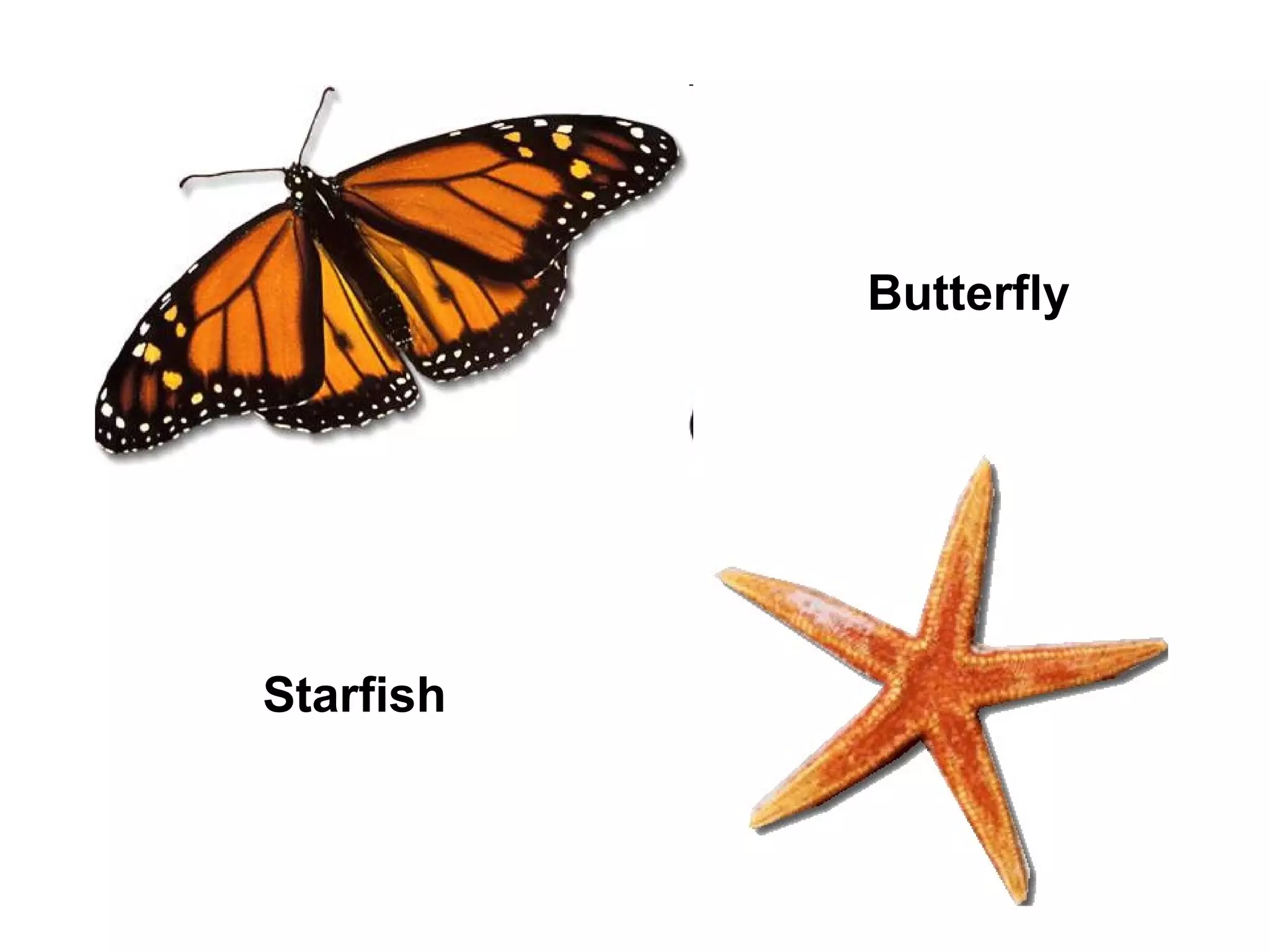
Starfish
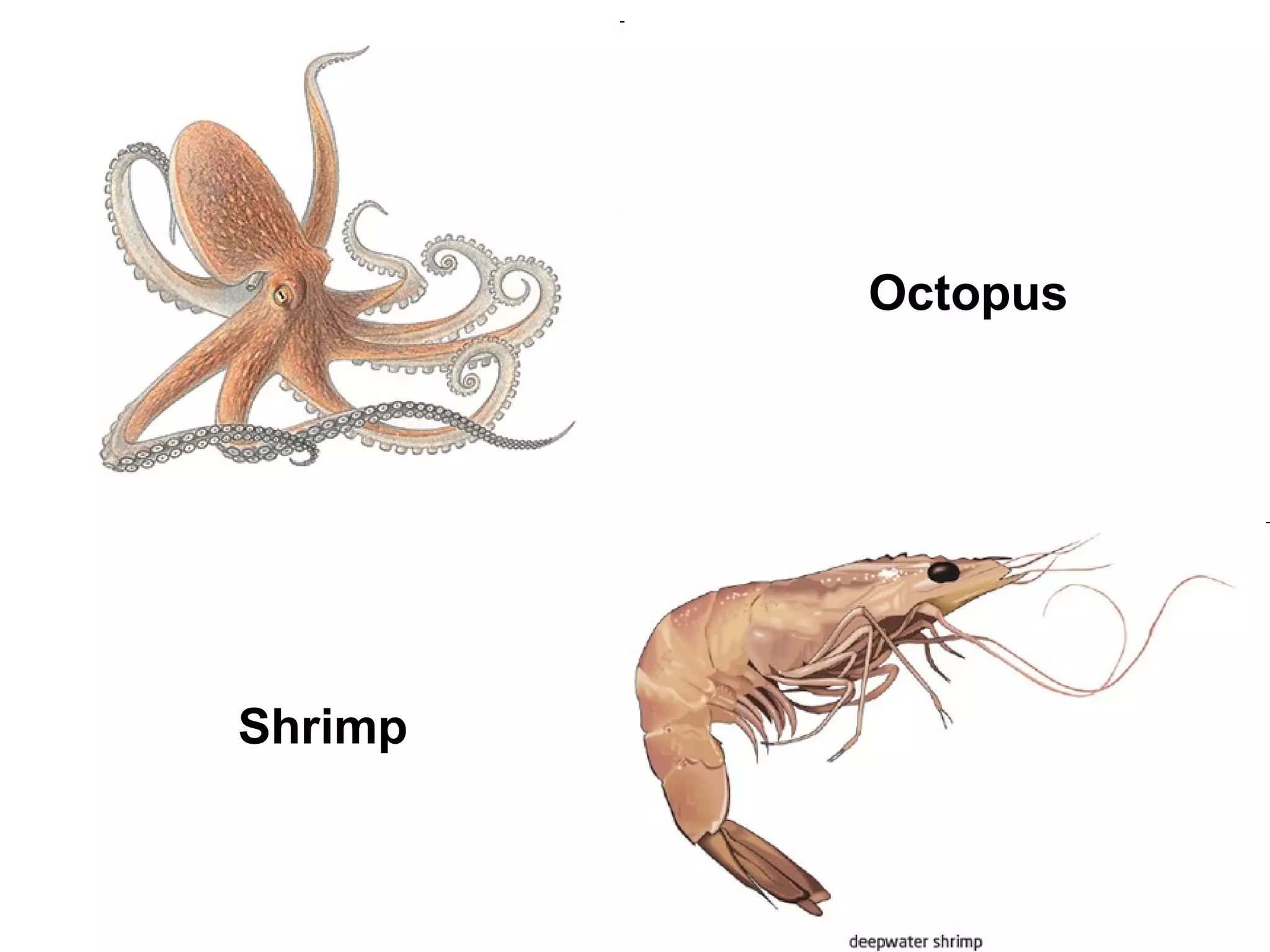
Octopus

Shrimp
Cold-blooded Animals
• They take on the temperature of their
surroundings
• They are hot when their environment is
hot and cold when their environment is
cold
• In hot environments  can have blood
that is much warmer than warm-blooded
animals
• In warm environment  more active
• In cold environment  sluggish and lazy
– This is because their muscle activity
depends on chemical reactions which run
quickly when it is hot and slowly when it is
cold. Period of inactivity is called
aestivation (hibernation)
Warm-blooded Animals
• Try to keep the inside of their bodies at a
constant temperature.
– In a cooler environment  by generating their
own heat
– In a hotter environment  by cooling
themselves when they are hot.

• To generate heat, warm-blooded animals
convert the food that they eat into energy.
Types of Food-eating Animals
• Carnivorous  Animals that eat other
animals
• Herbivorous  only eat vegetables
• Omnivorous  eat both meat and plants
Vertebrates
Vertebrates are further divided into five main
groups:
– Pisces  Fish
– Amphibia  Amphibians
– Reptilia  Reptiles
– Aves  Birds
– Mammalia  Mammals
Pisces

• They are aquatic and live in
different habitats
– Fresh water, Salt water, Ocean,
Rivers
– Except Dead Sea

• Fish are cold-blooded
• Skin  Scales
• Means of locomotion  fins
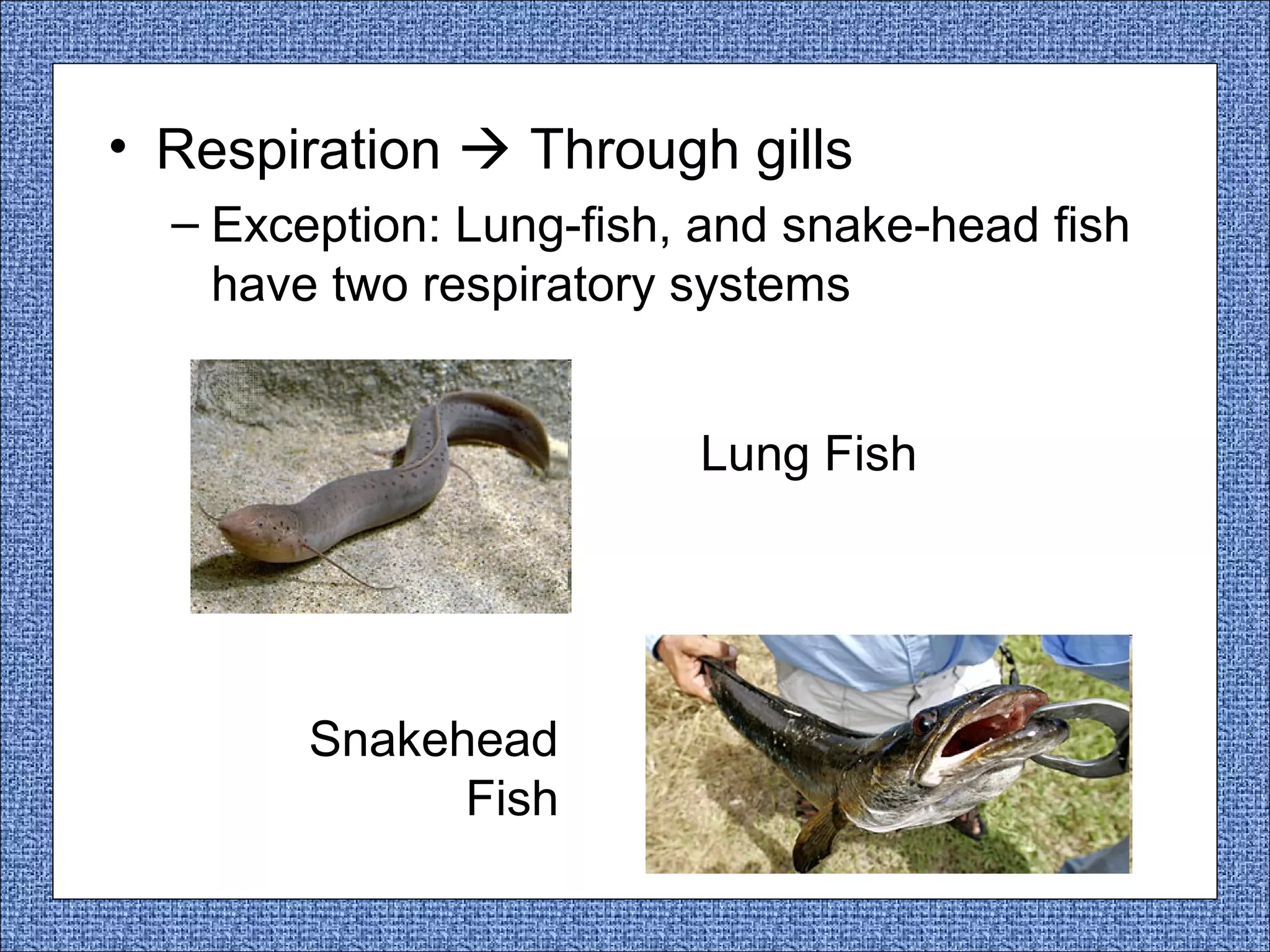
• Respiration  Through gills
– Exception: Lung-fish, and snake-head fish
have two respiratory systems
Lung Fish

Snakehead
Fish
• Eating habit
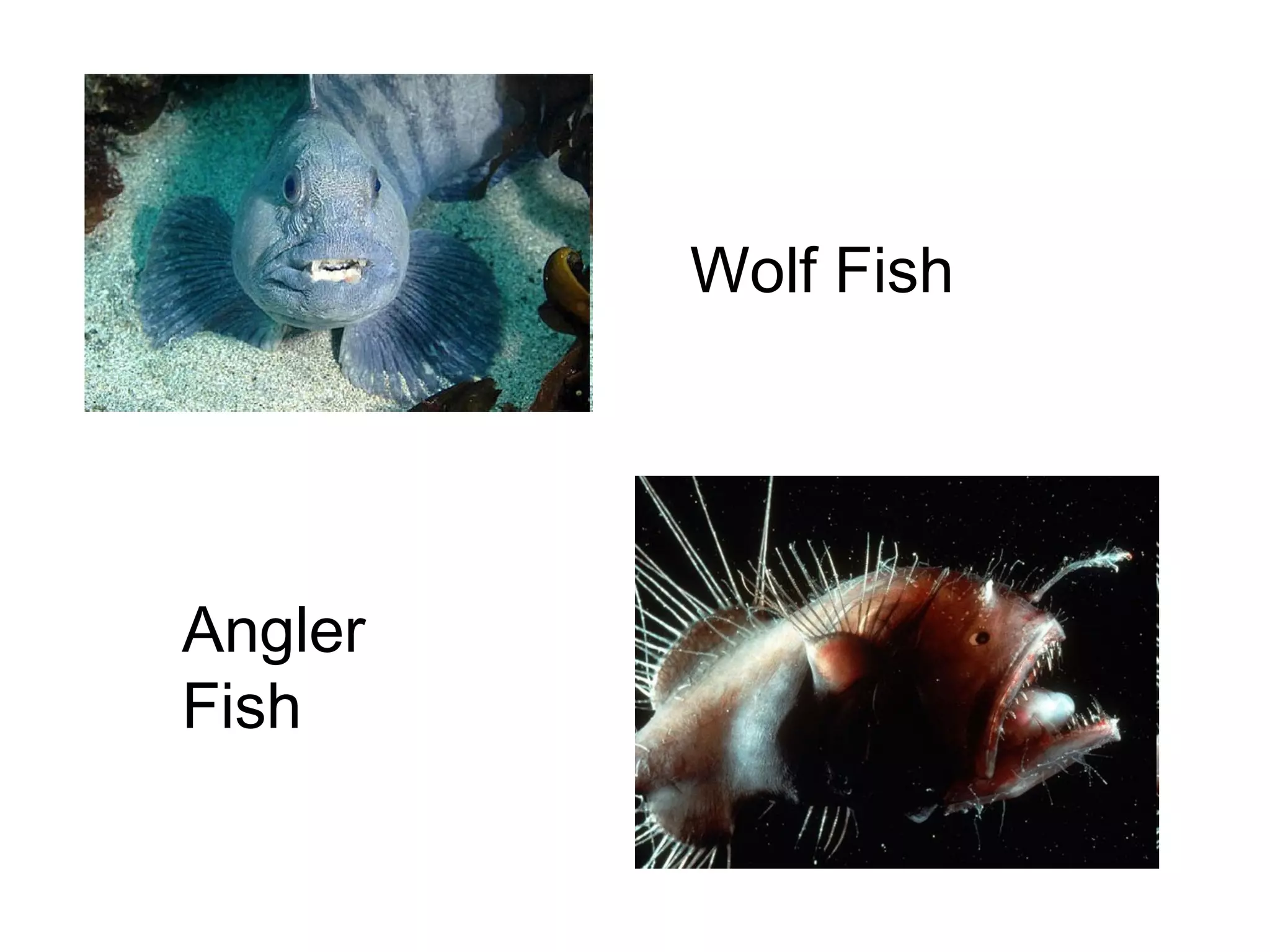
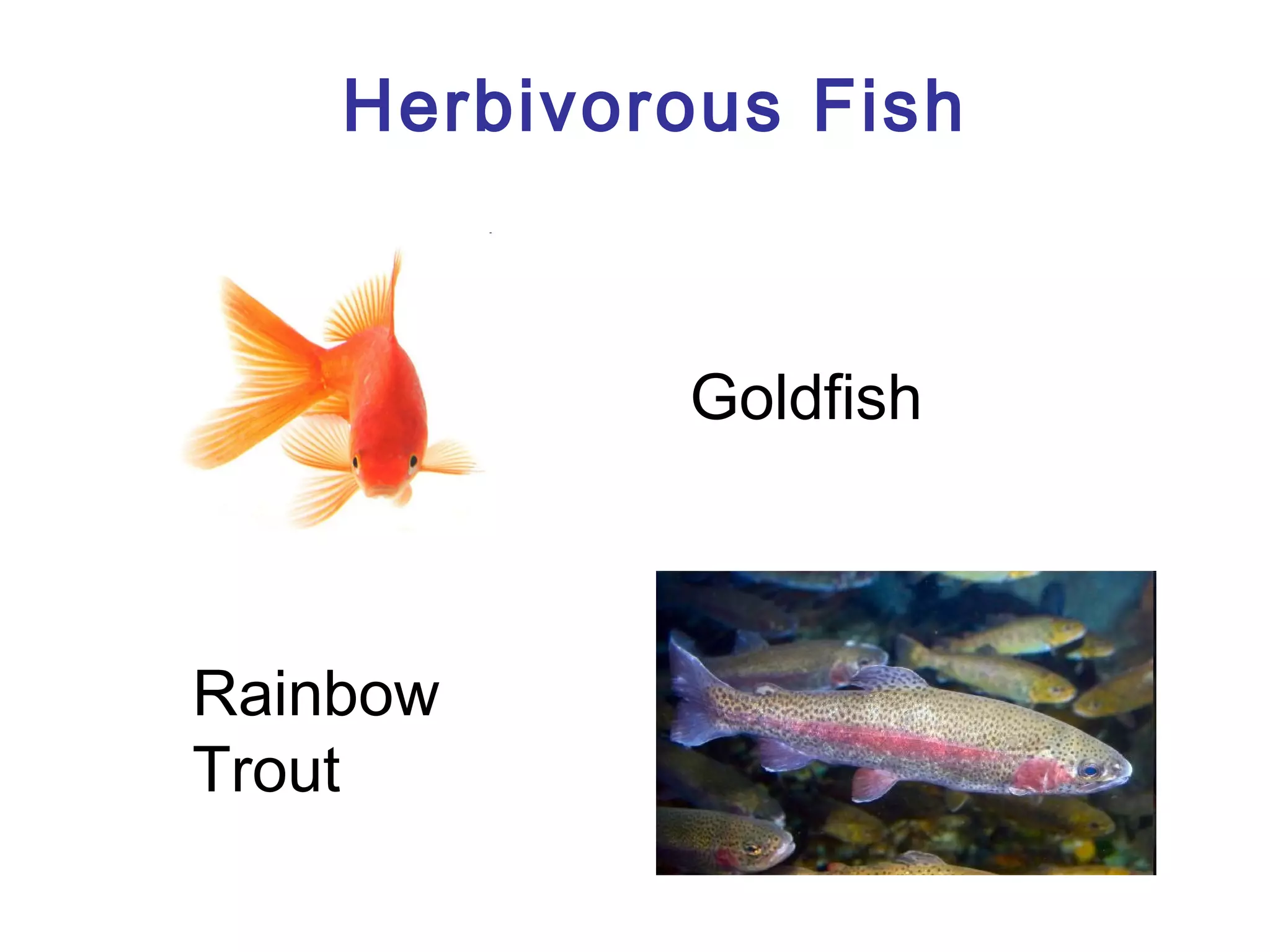
– Carnivorous  Angler fish, Shark, Wolf
fish, Catfish, Snakehead
– Herbivorous  Trout, Goldfish, Scat,
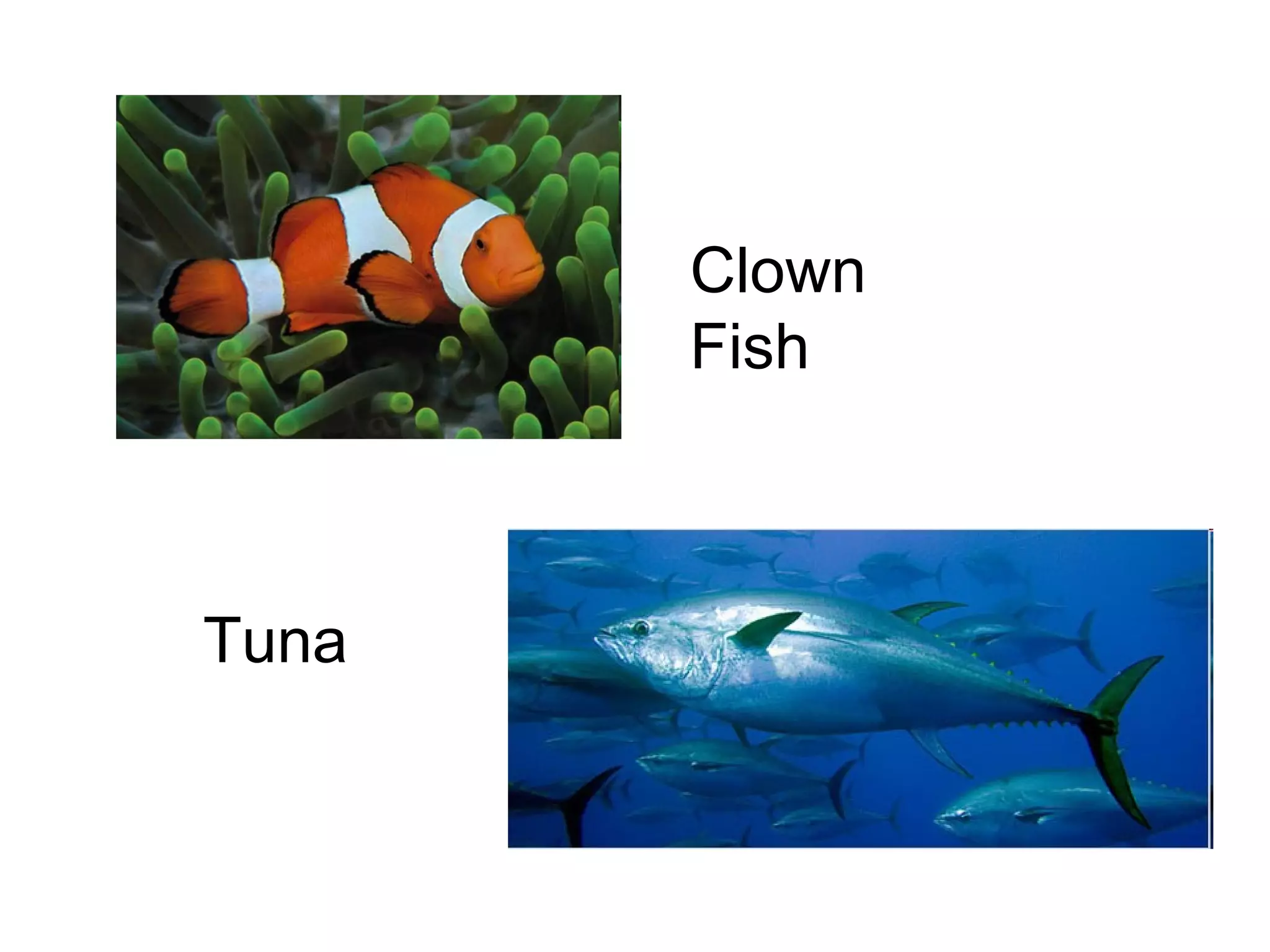
Pacu, Clown fish
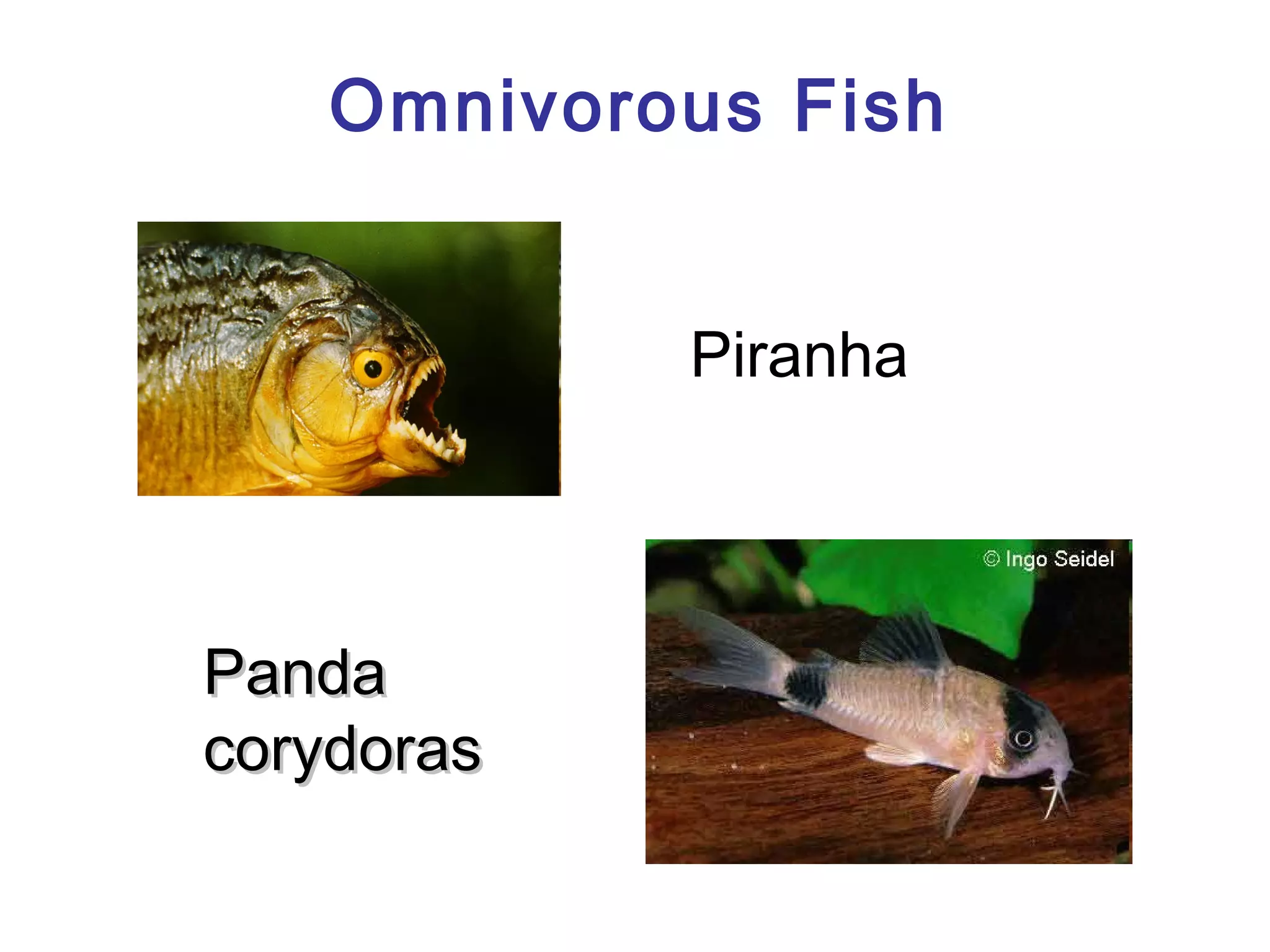
– Omnivorous  Panda corydoras,
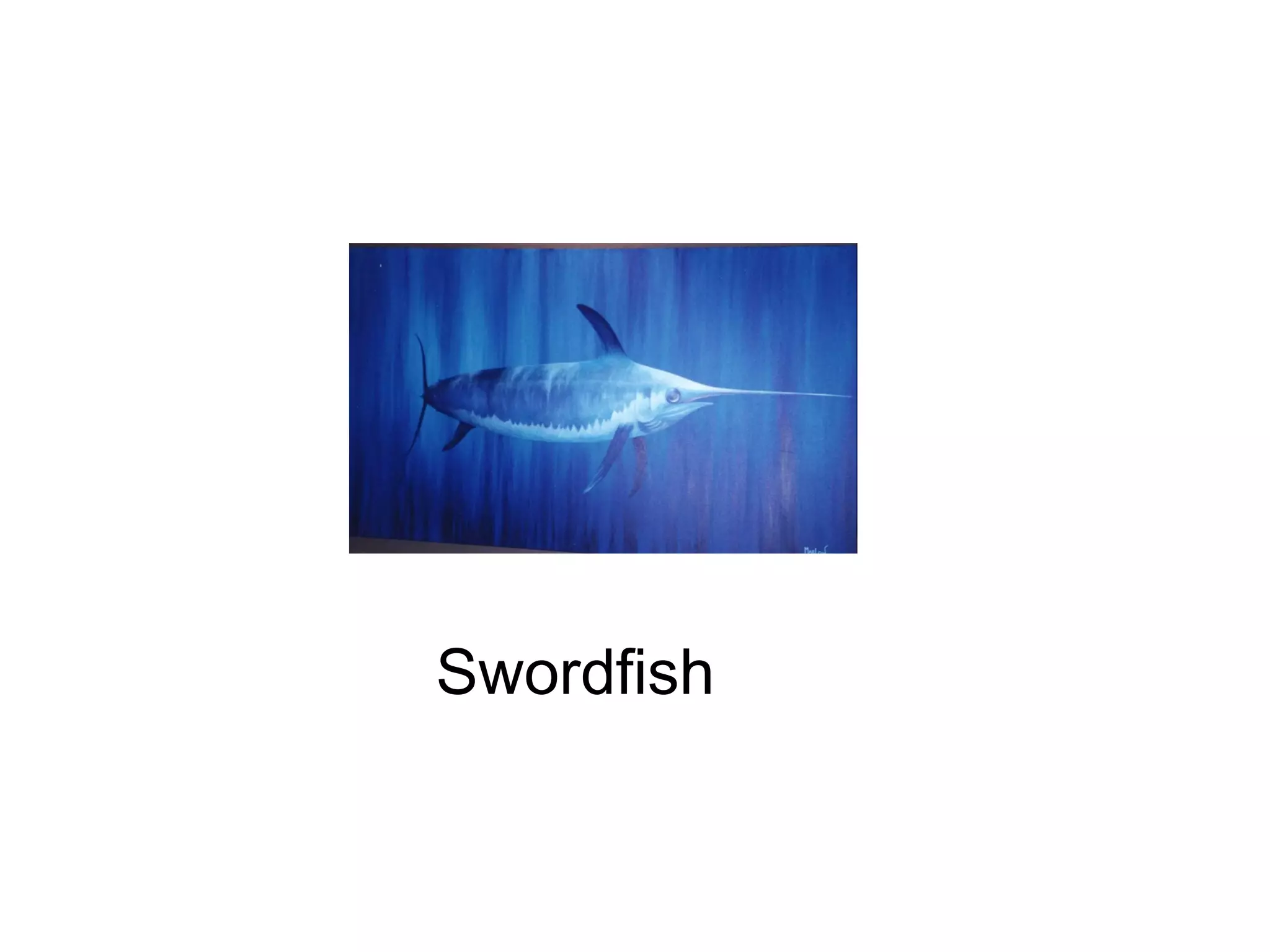
Swordfish, Piranha
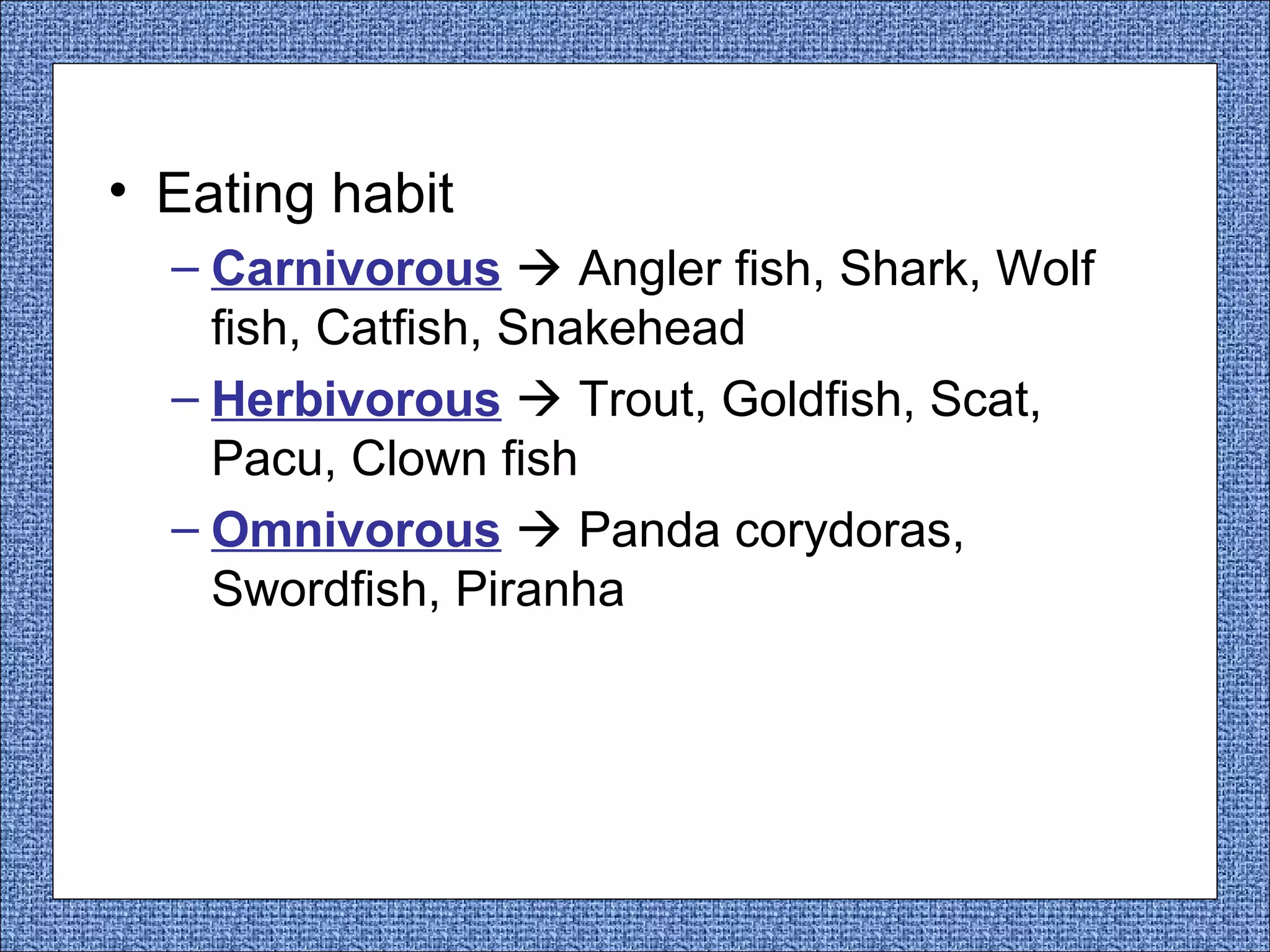
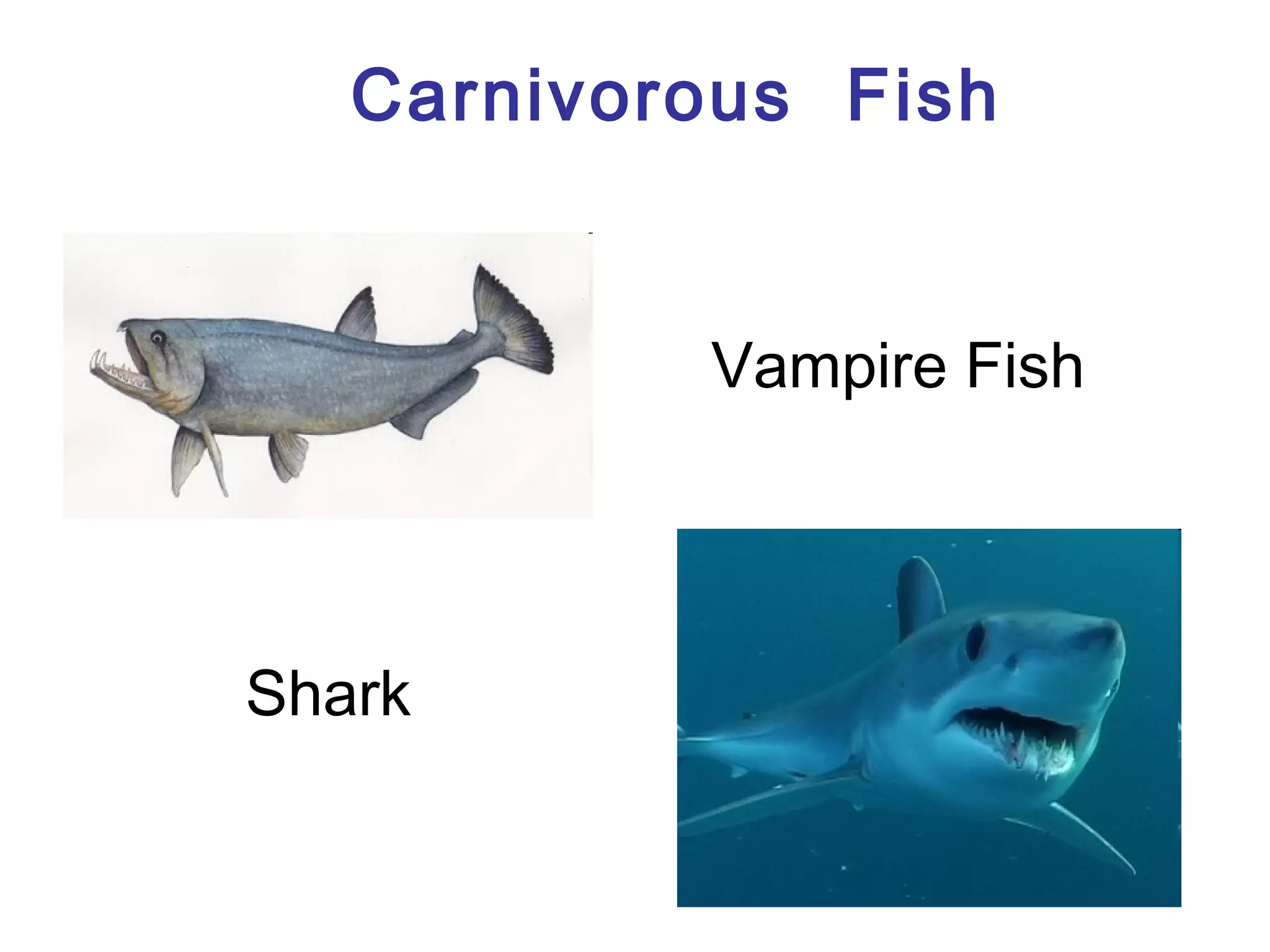
Carnivorous Fish

Vampire Fish

Shark
Wolf Fish

Angler
Fish
Herbivorous Fish

Goldfish

Rainbow
Trout
Clown
Fish

Tuna
Omnivorous Fish
Piranha

Panda
corydoras
Swordfish
• Live both on land and water

Amphibians

• Cold-blooded
• Egg-lying
– Immature life in water  Gills
– Adults live on land  Lungs and
absorption through skin

• Slimy skin  absorb moisture and
oxygen through skin
– Without moist conditions, their skin
dries out and they die.
• Habitat
– Mostly often found near ponds,
marshlands, swamps, and other areas
where freshwater is available

• Locomotive organs
– Young ones  tail
– Adult  Legs

• Examples
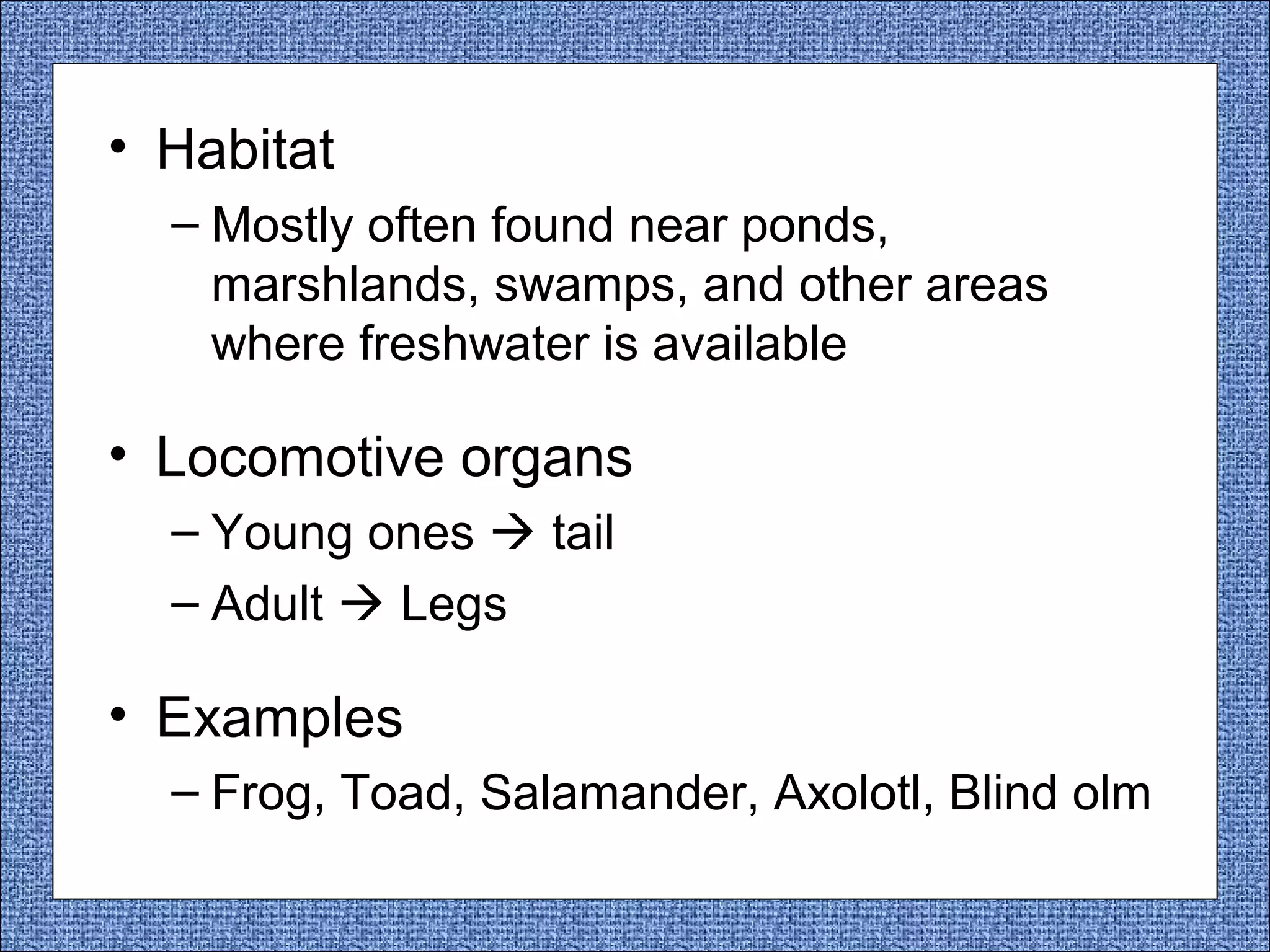
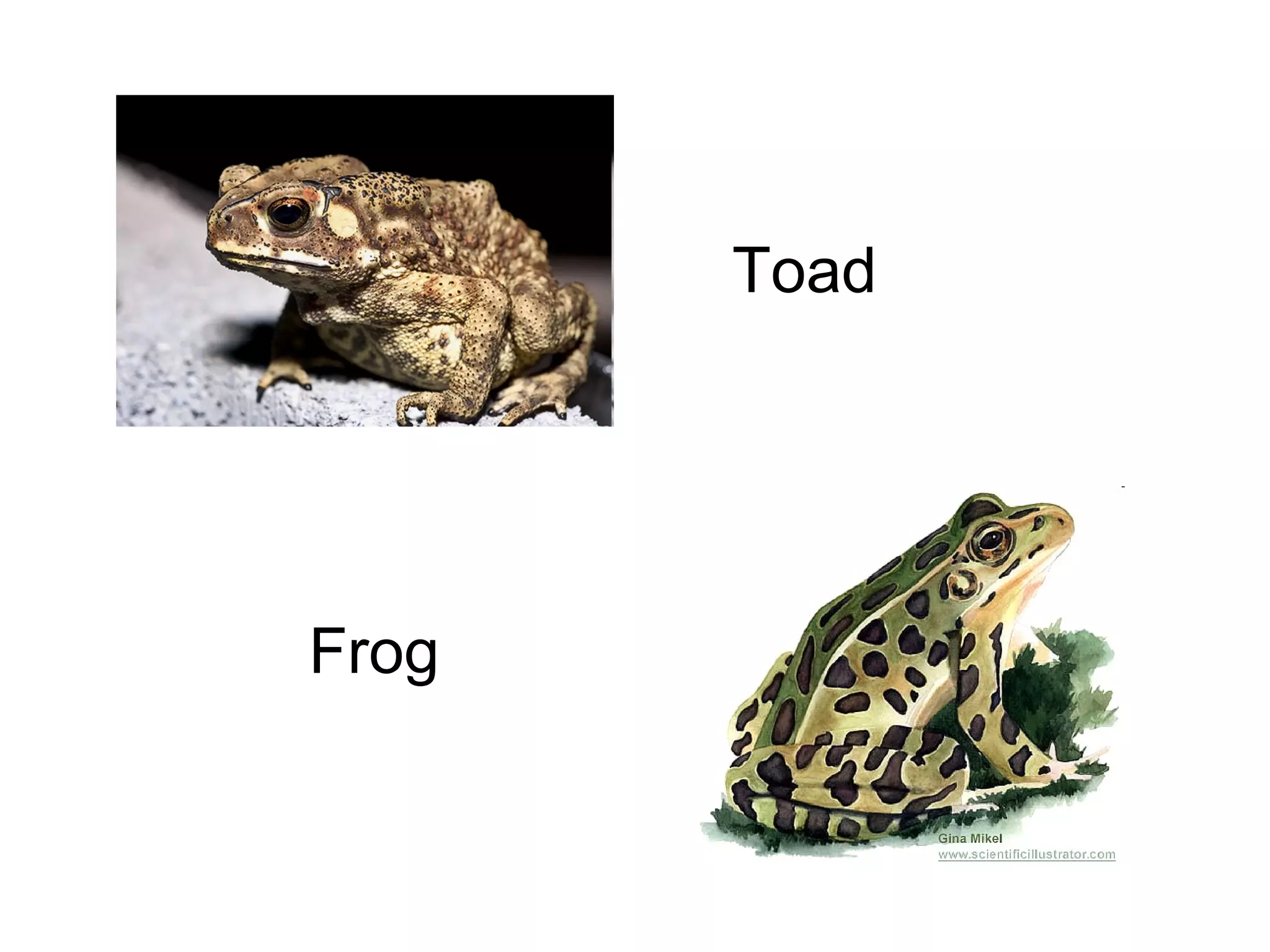
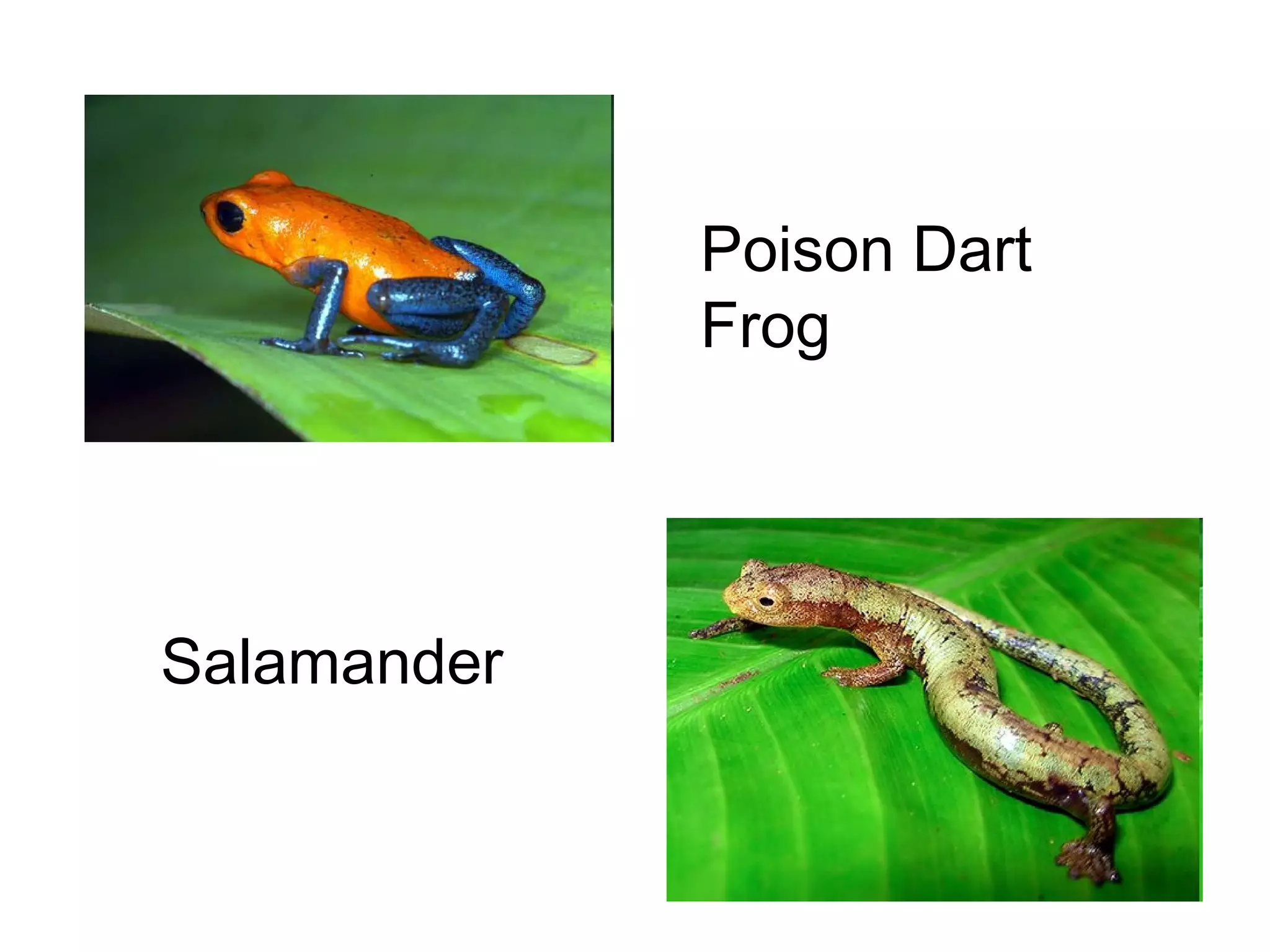
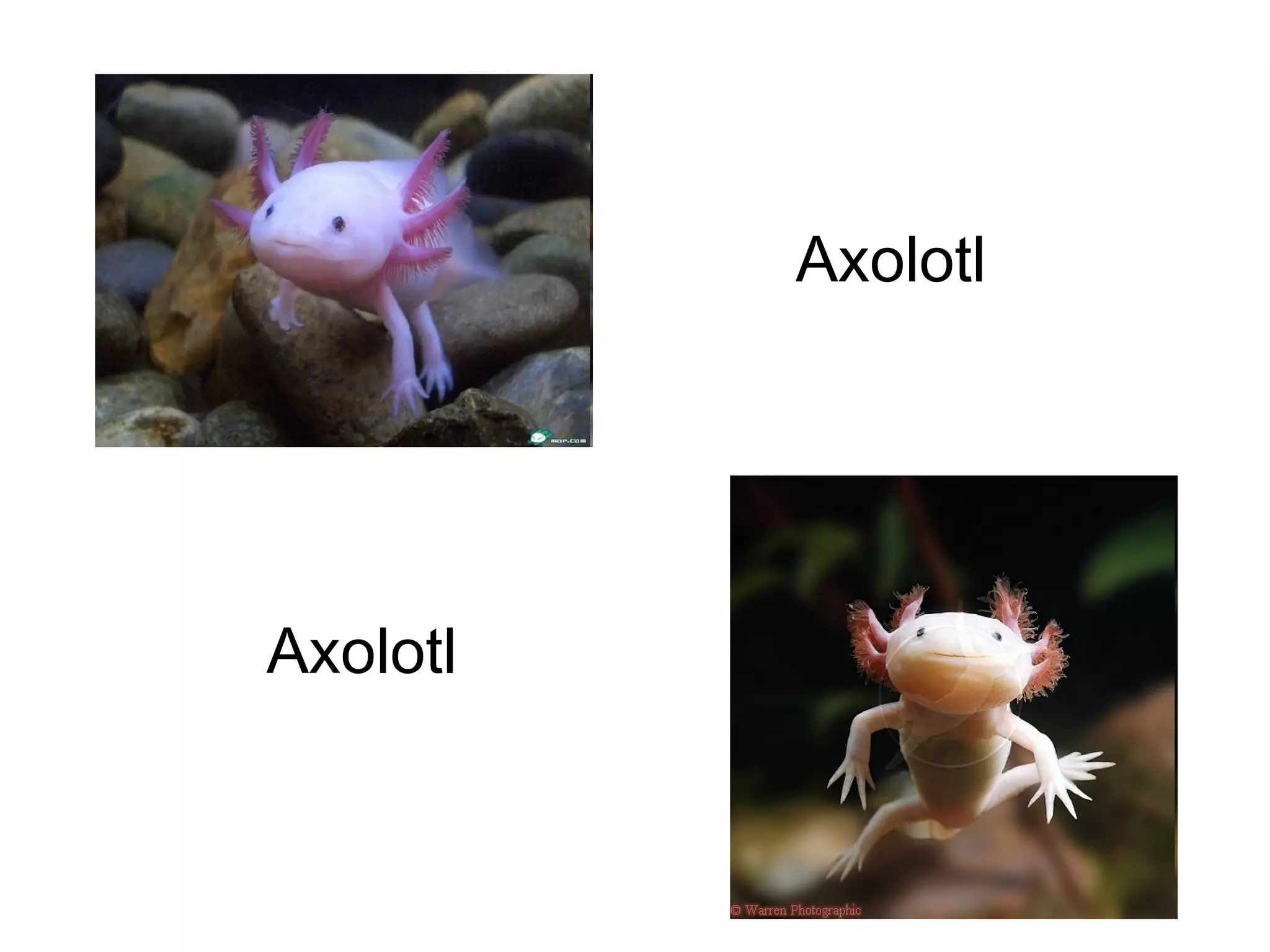
– Frog, Toad, Salamander, Axolotl, Blind olm
Toad

Frog
Poison Dart
Frog

Salamander
Axolotl

Axolotl
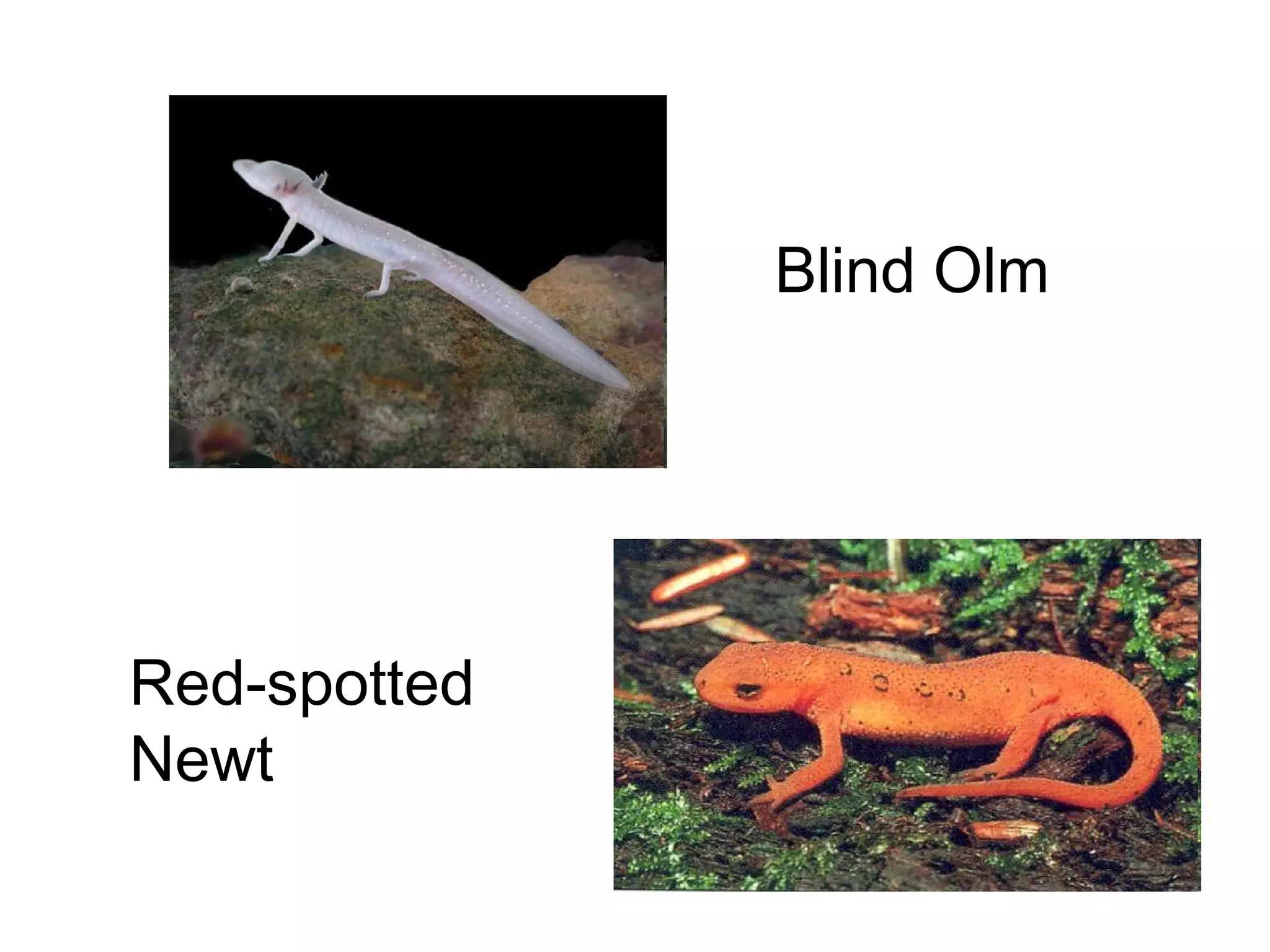
Blind Olm

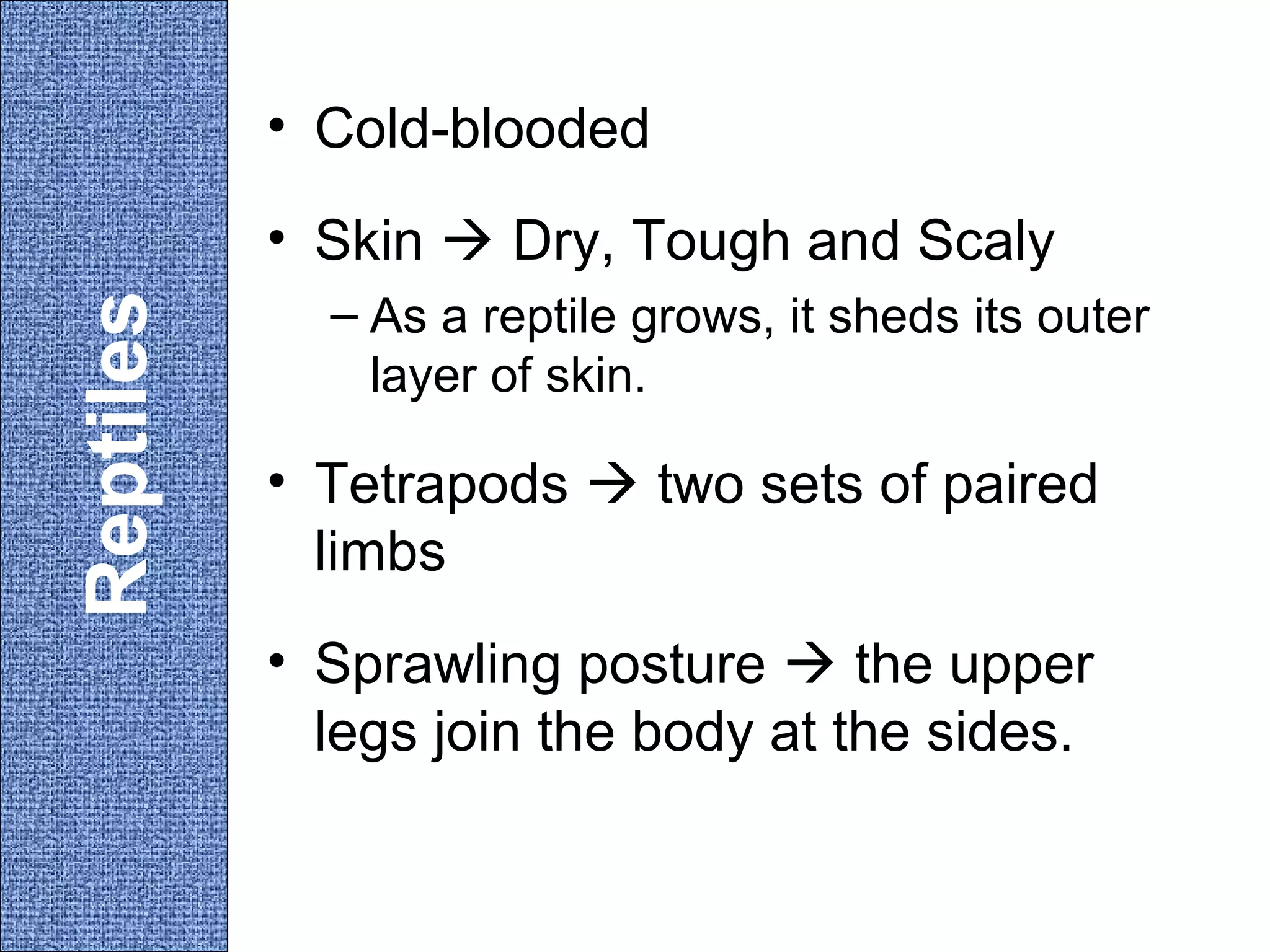
Red-spotted
Newt
• Cold-blooded

Reptiles

• Skin  Dry, Tough and Scaly
– As a reptile grows, it sheds its outer
layer of skin.

• Tetrapods  two sets of paired
limbs
• Sprawling posture  the upper
legs join the body at the sides.
• Respiration  Lungs
• Hearing organs
– Lack outer ears
– Inner ear  respond to vibrations

• Capable of regeneration
– Lizard

• Longevity
– Tortoise and turtles live up to 150 years
– Crocodiles can live up to 100 years
Herbivorous
Reptiles
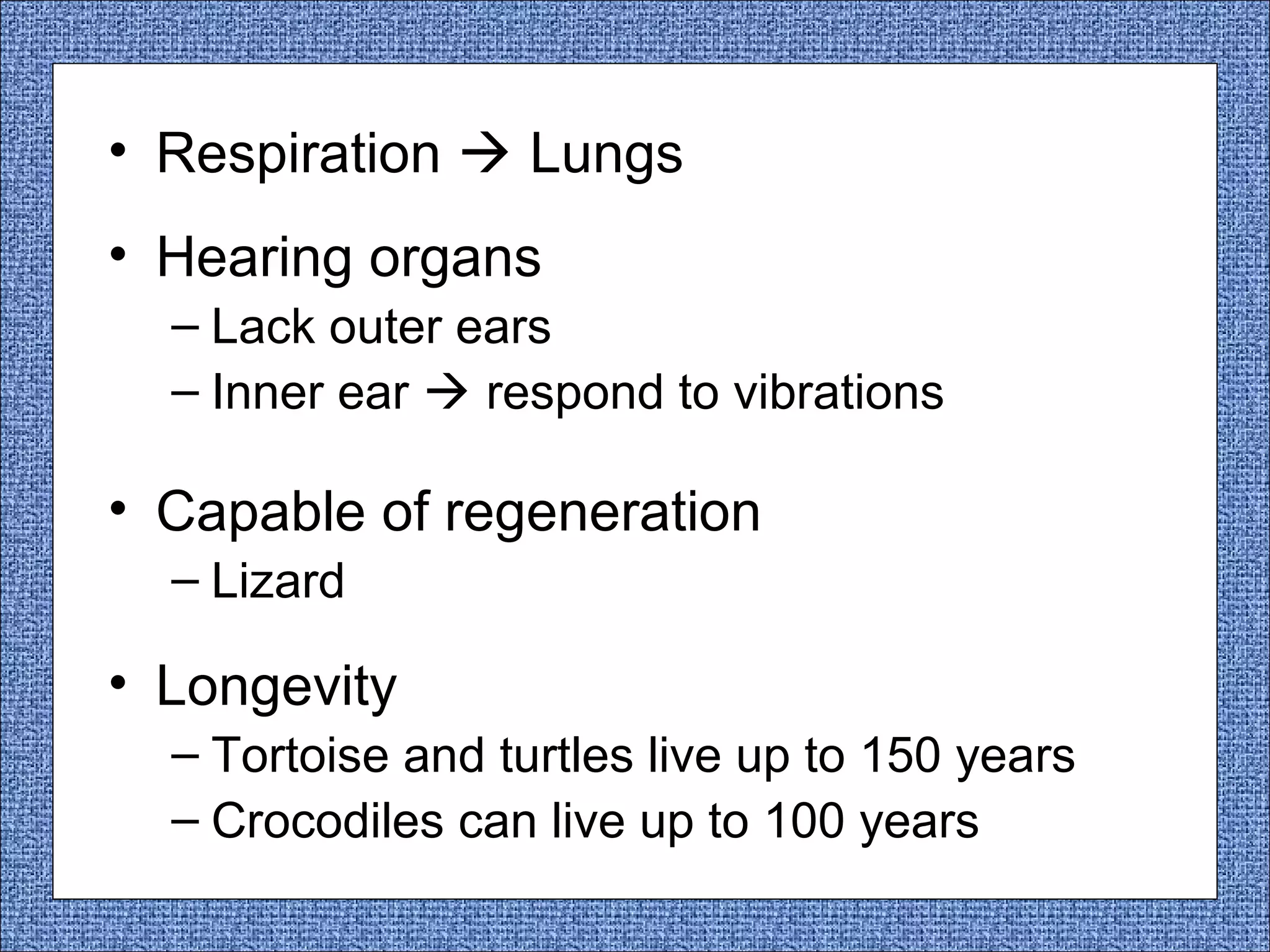
Tortois
e

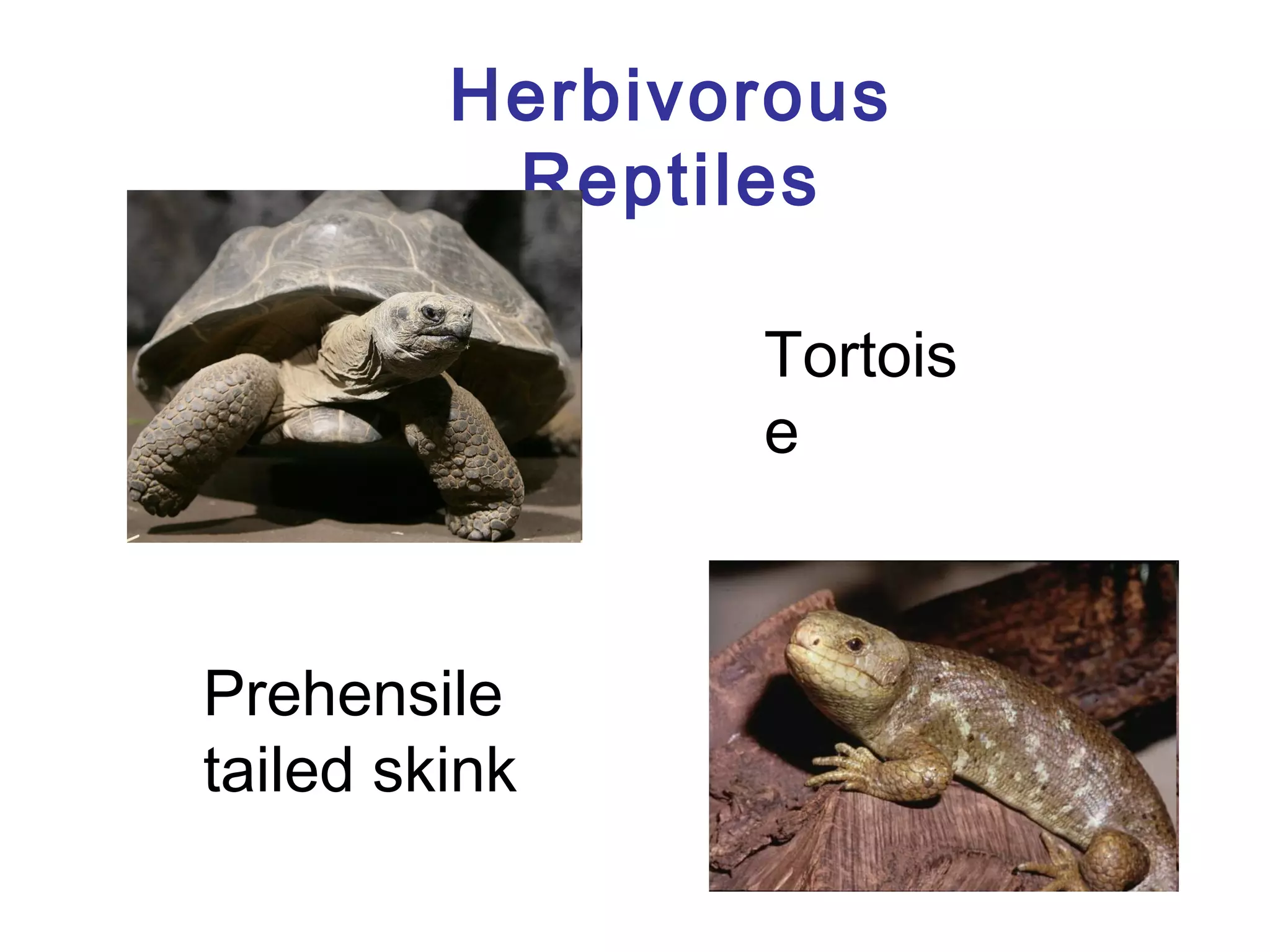
Prehensile
tailed skink
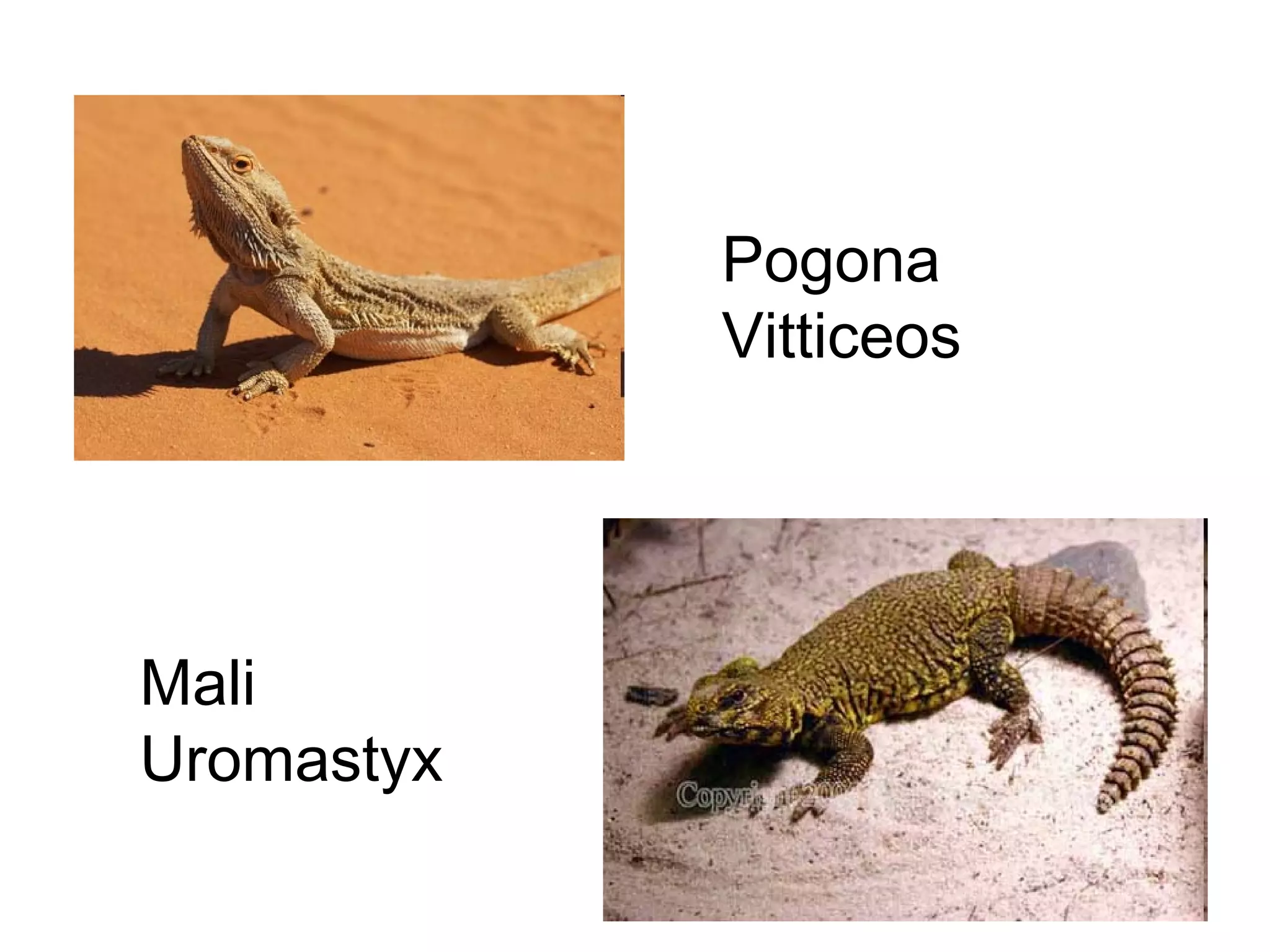
Pogona
Vitticeos

Mali
Uromastyx
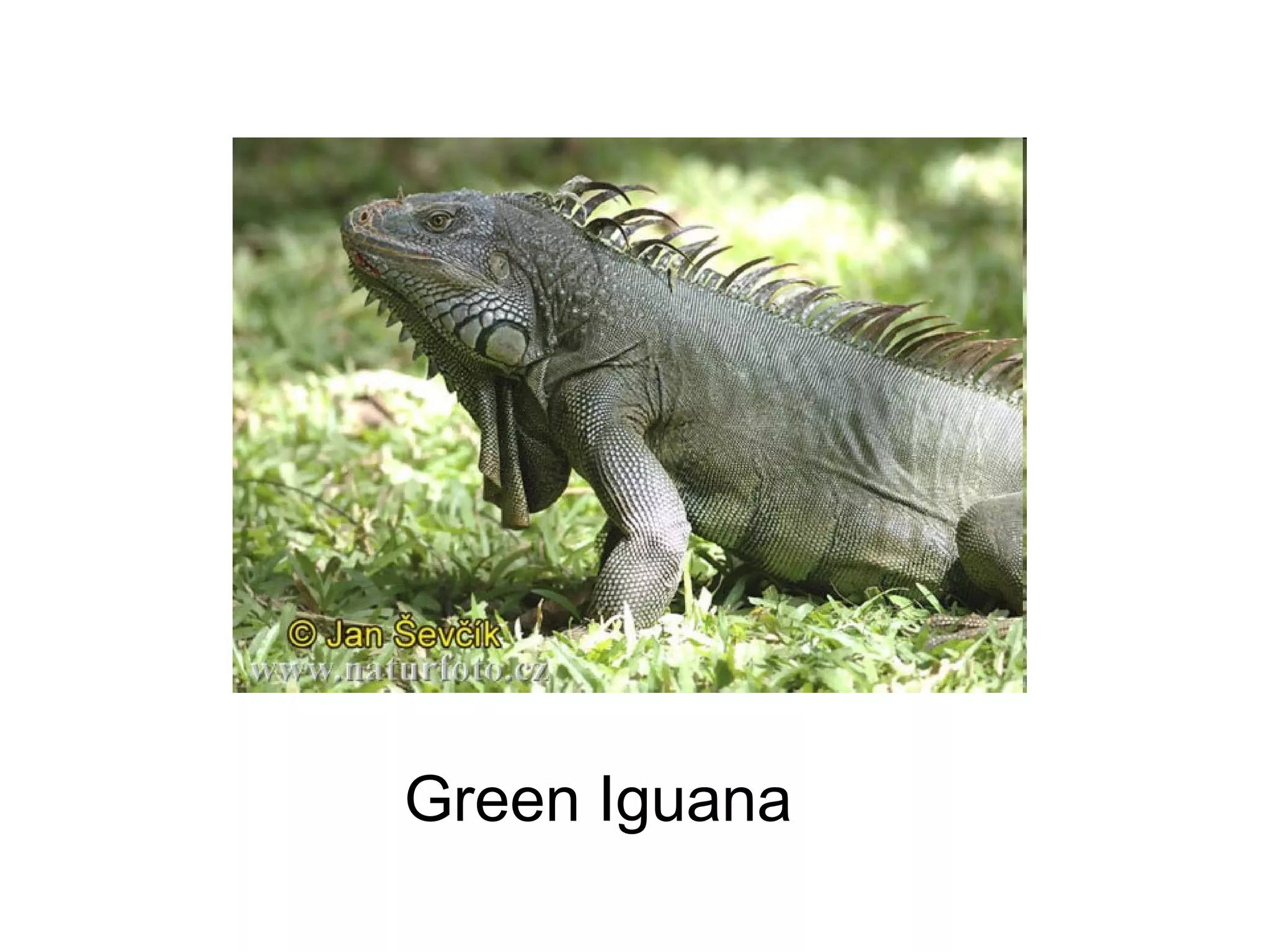
Green Iguana
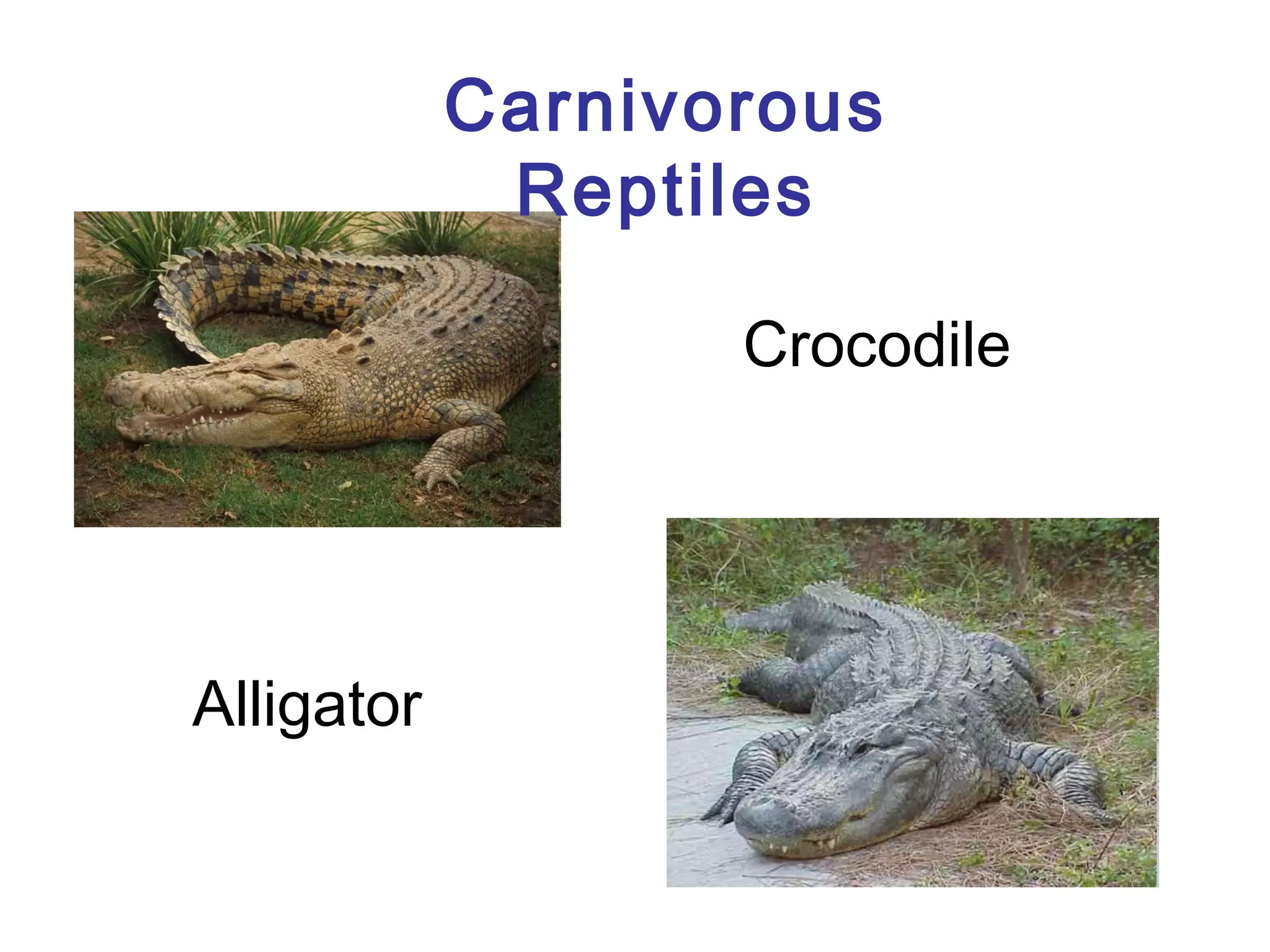
Carnivorous
Reptiles
Crocodile

Alligator
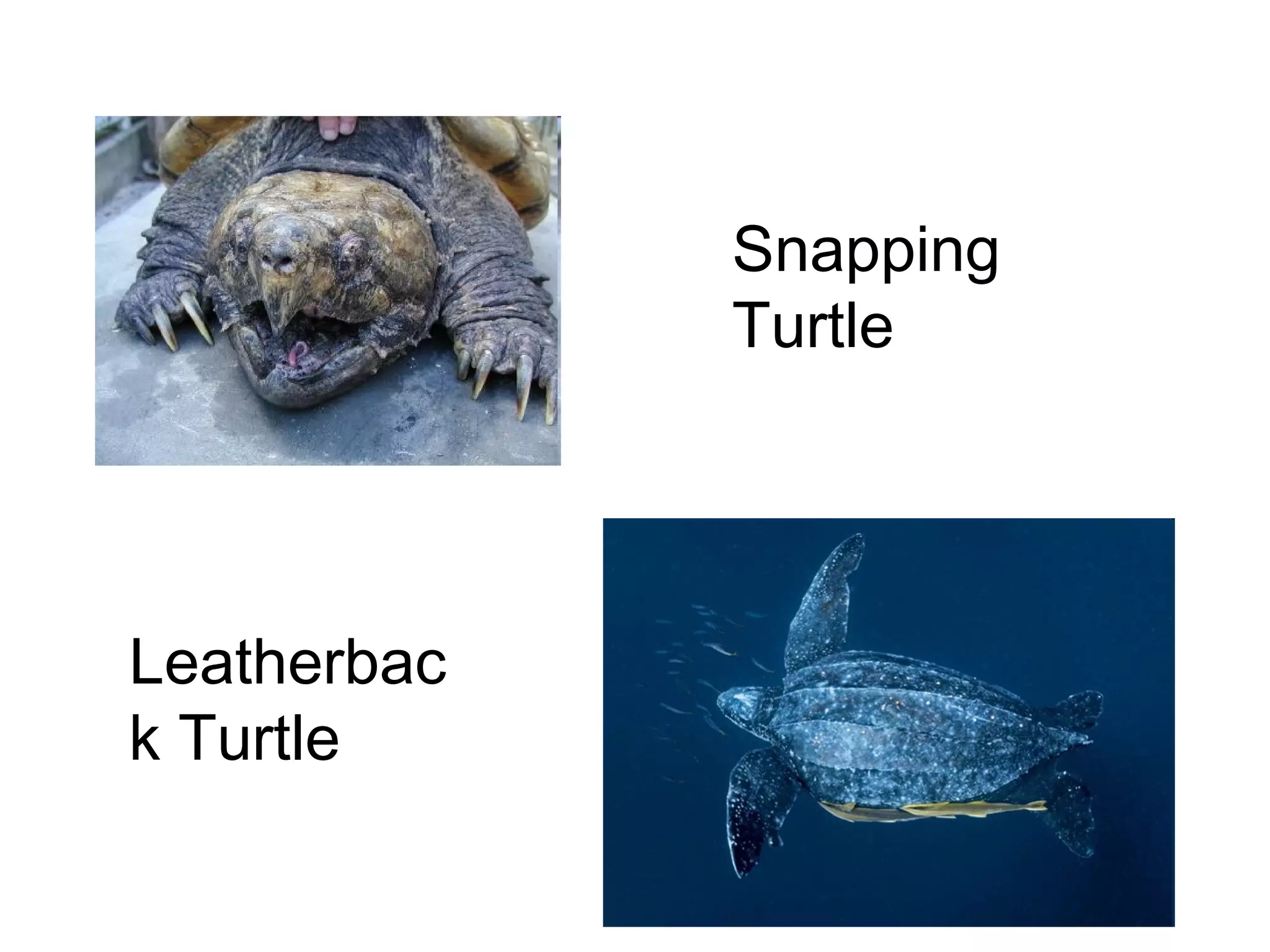
Snapping
Turtle

Leatherbac
k Turtle
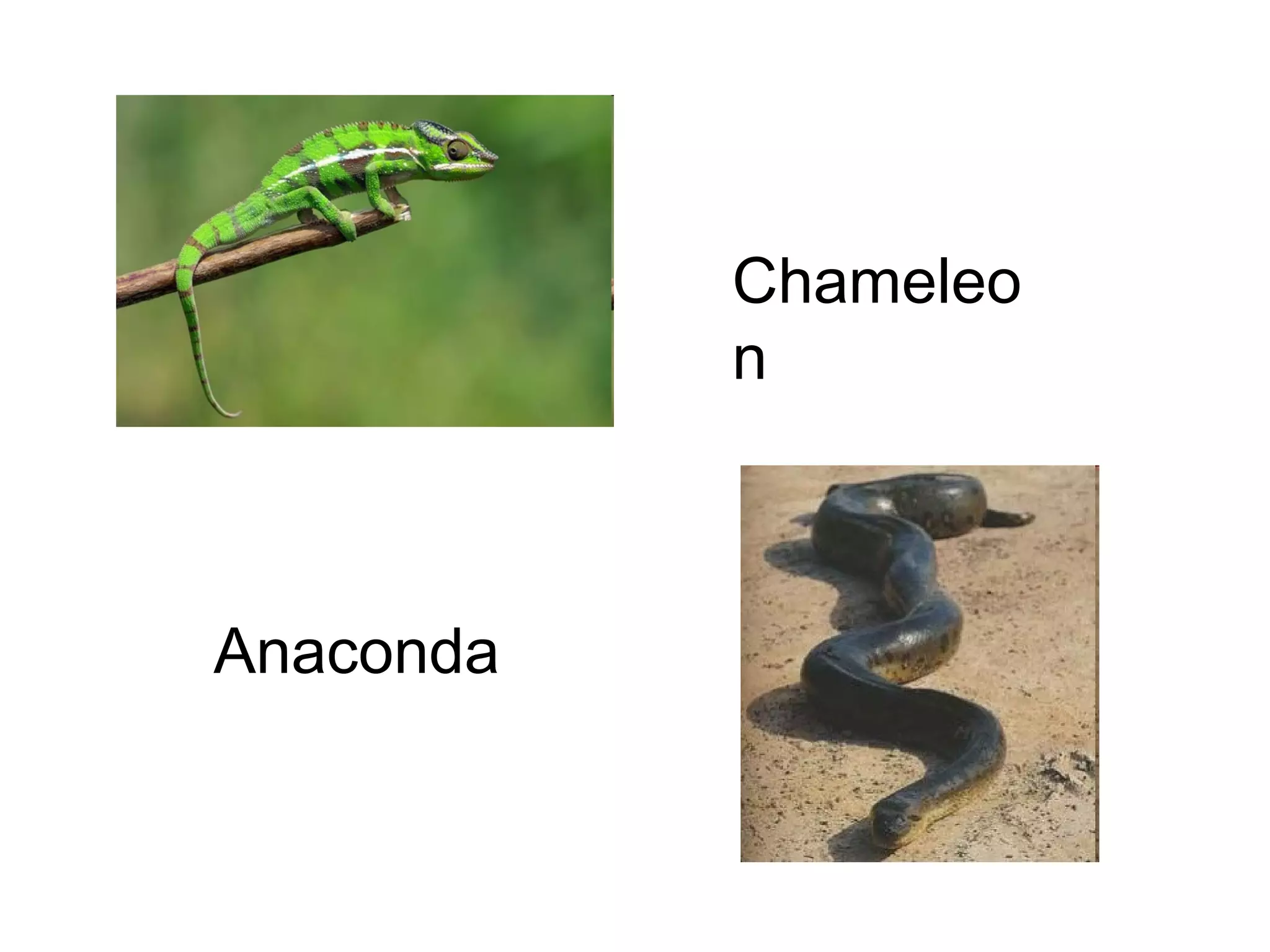
Chameleo
n

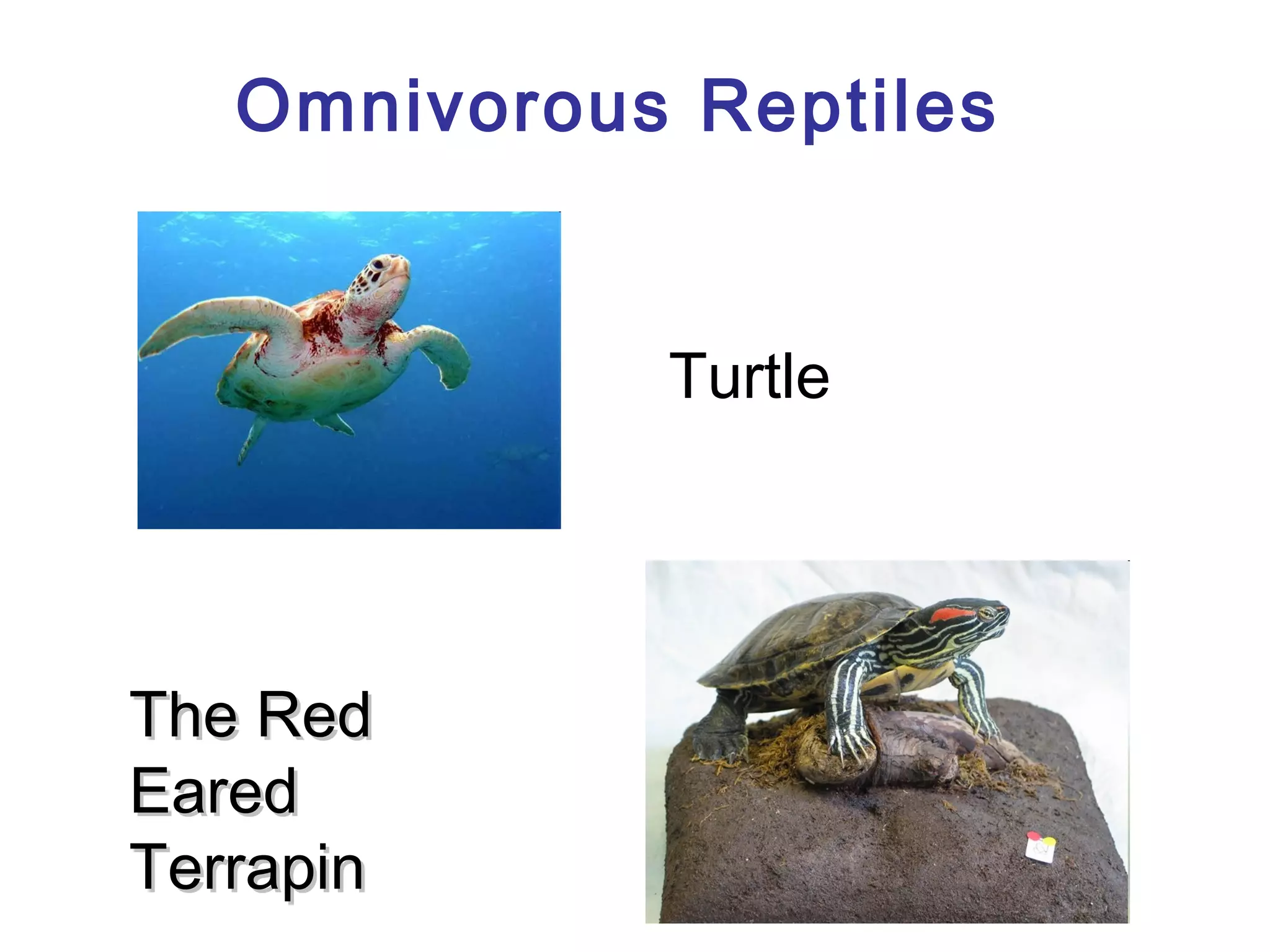
Anaconda
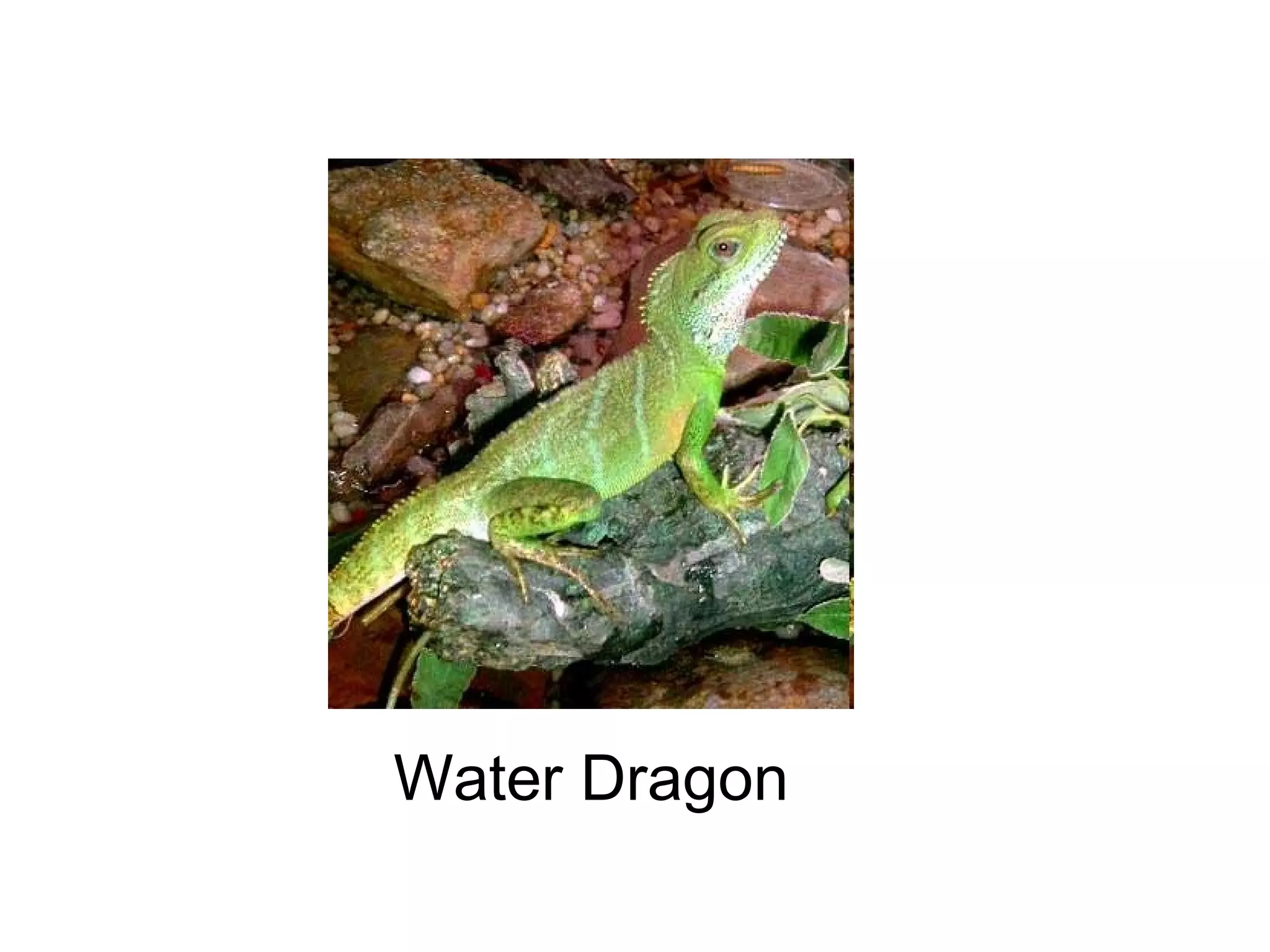
Omnivorous Reptiles

Turtle

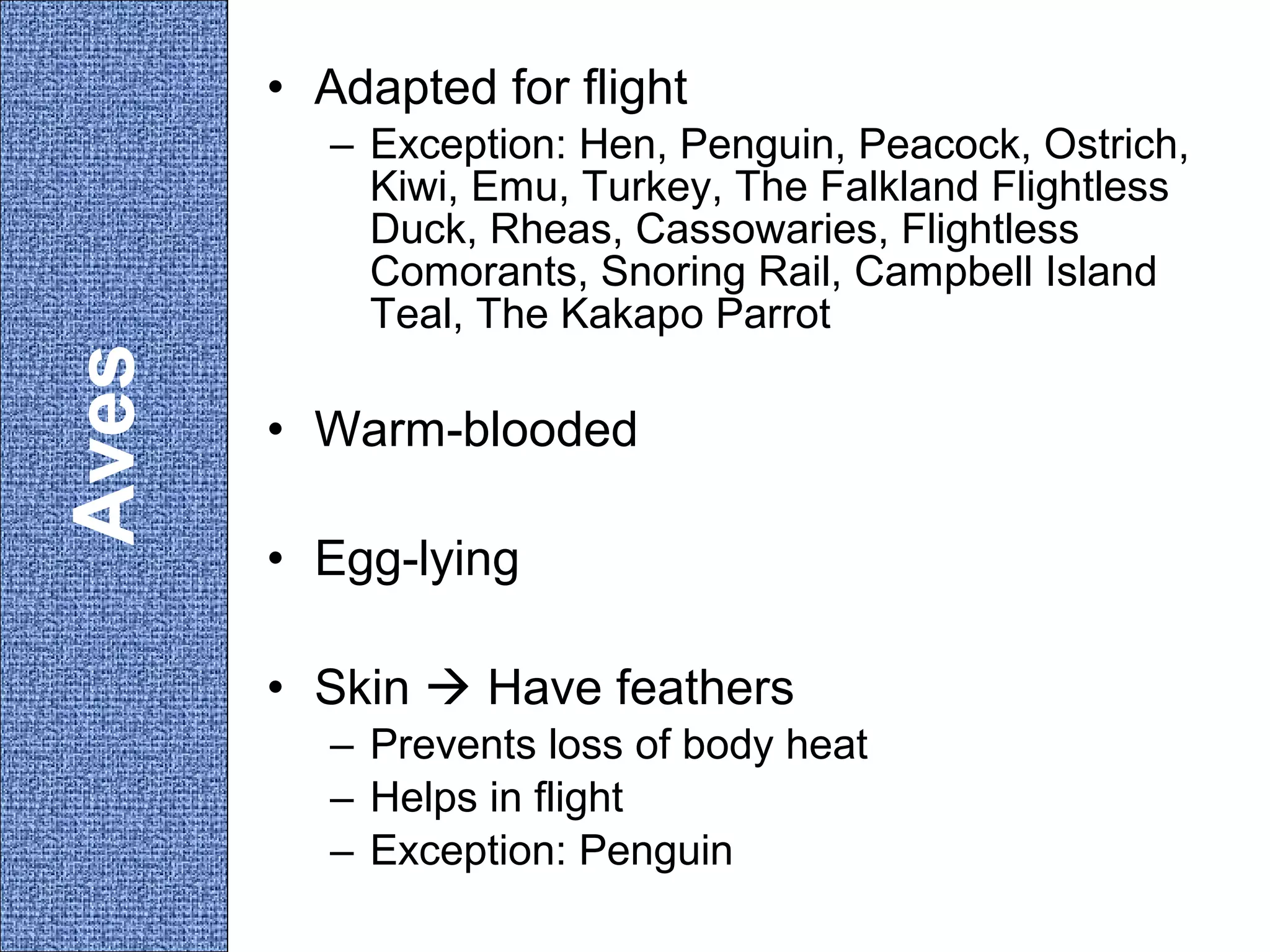
The Red
Eared
Terrapin
Water Dragon
• Adapted for flight

Aves

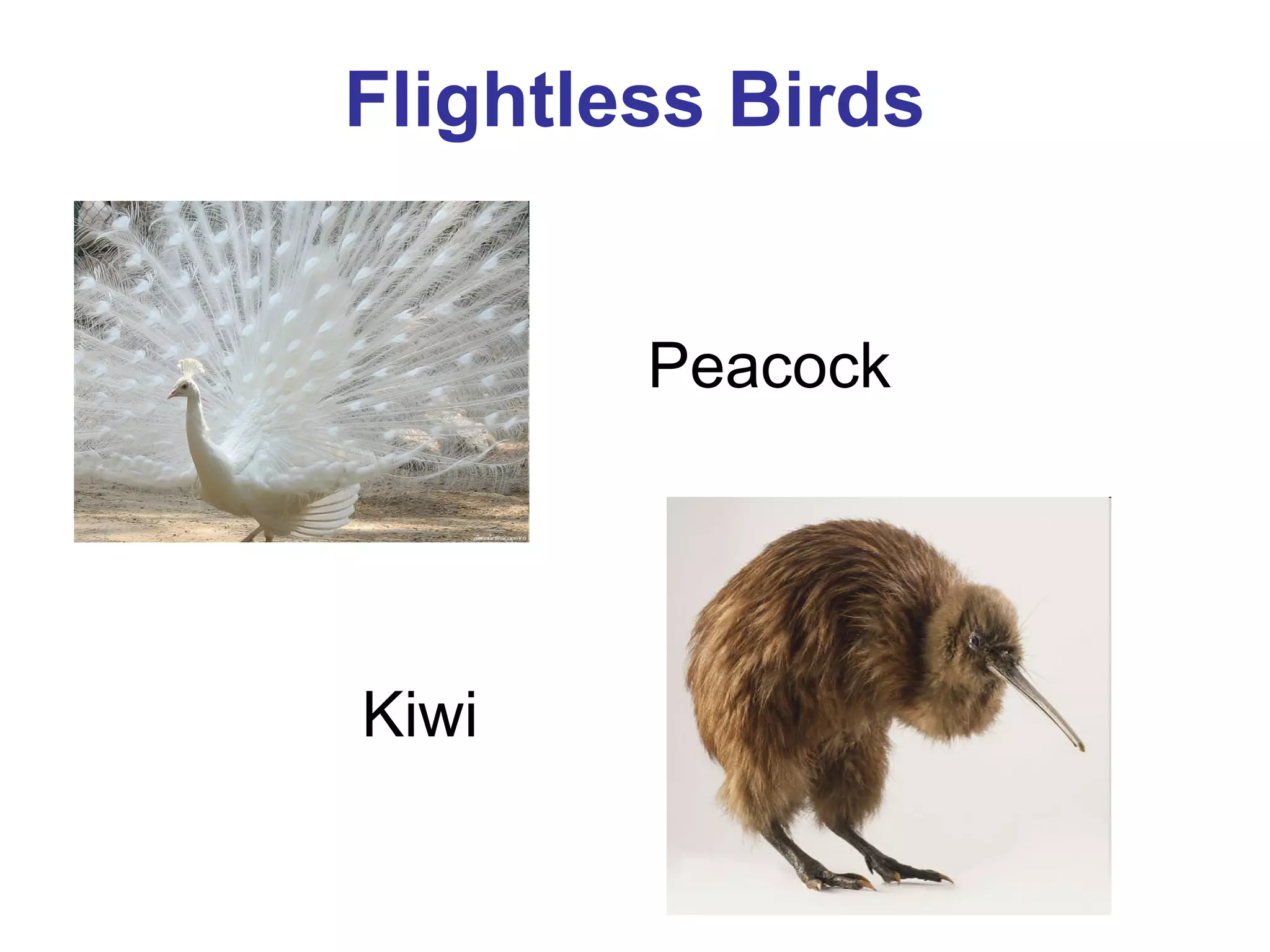
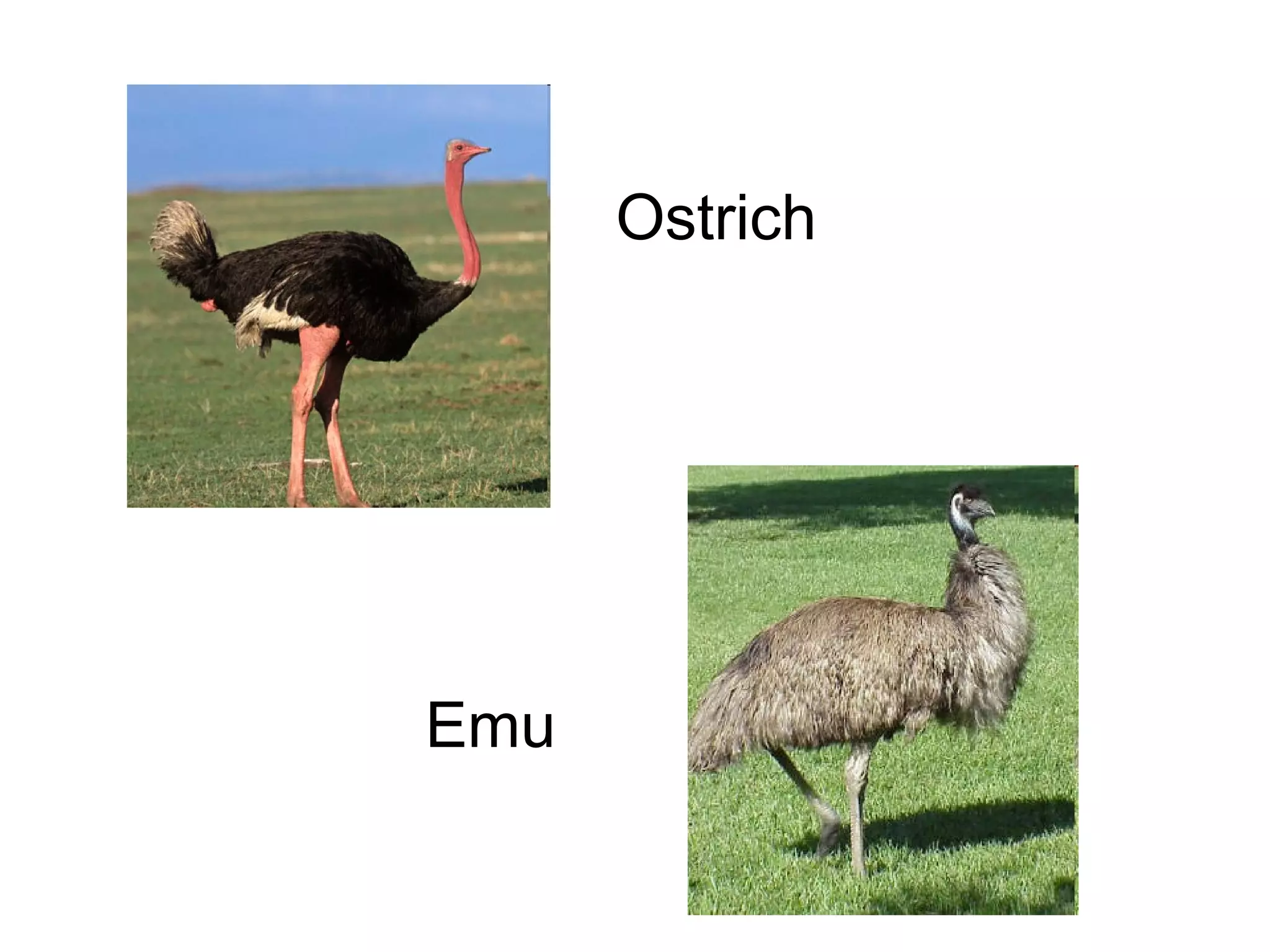
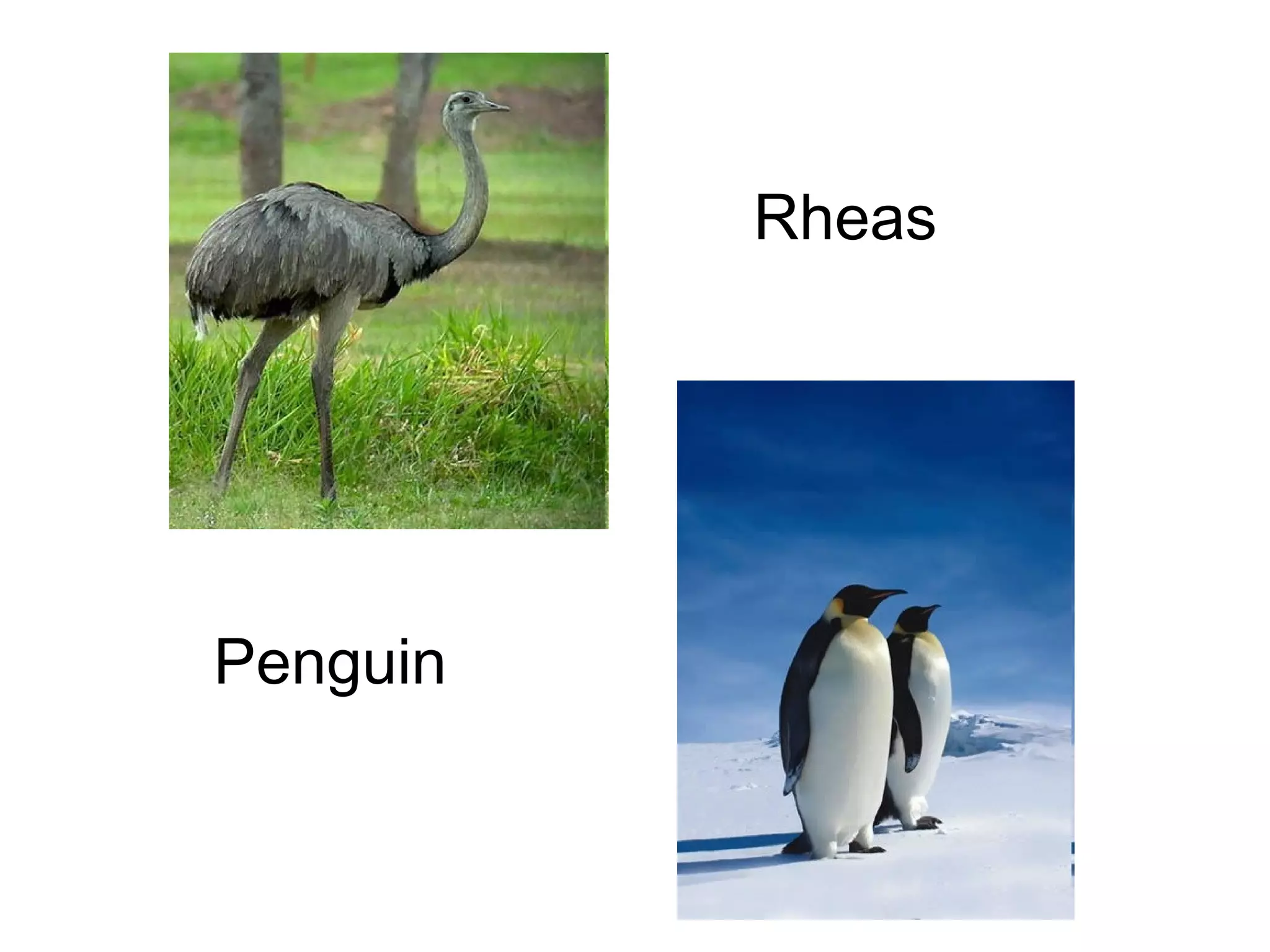
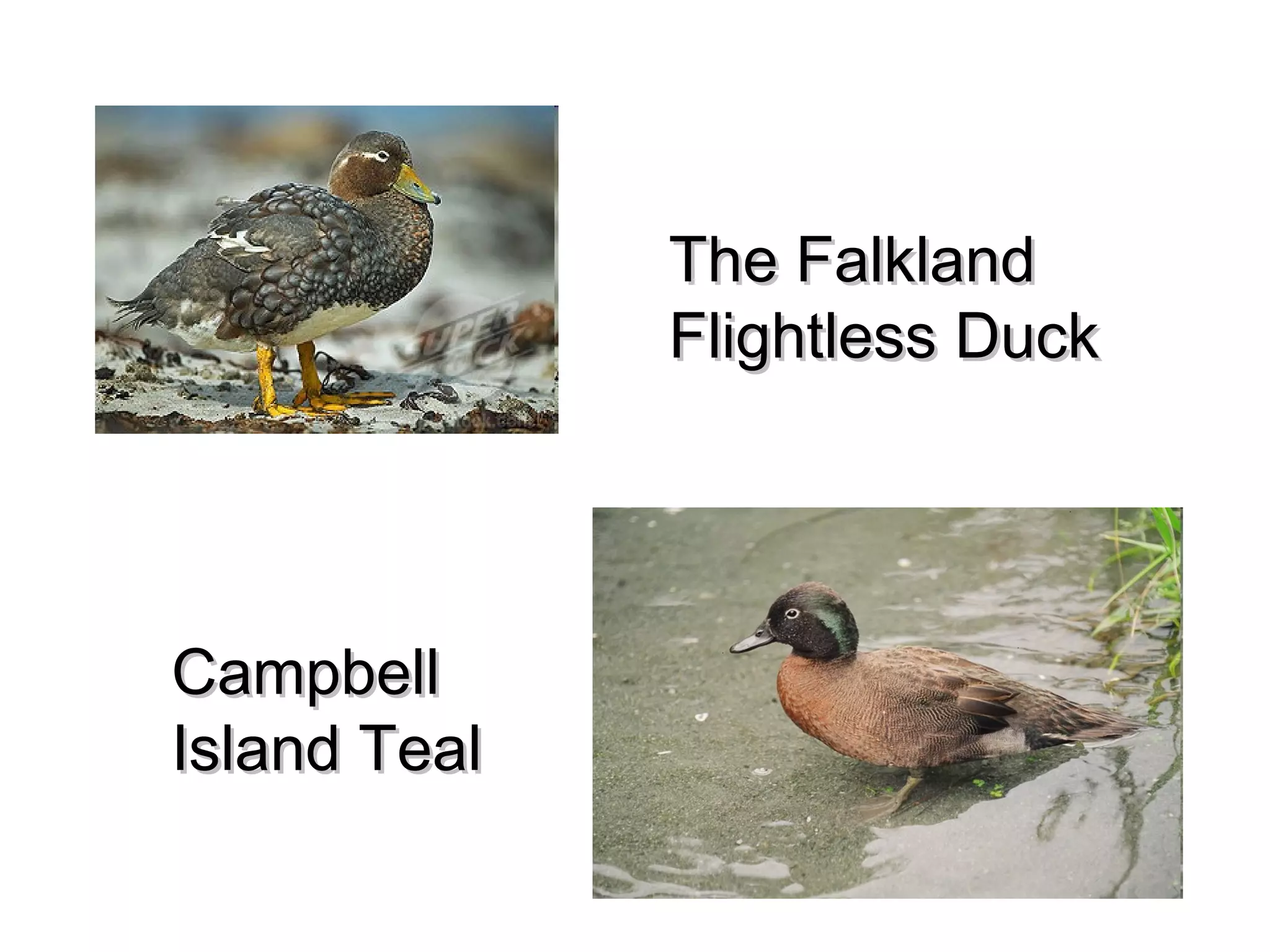
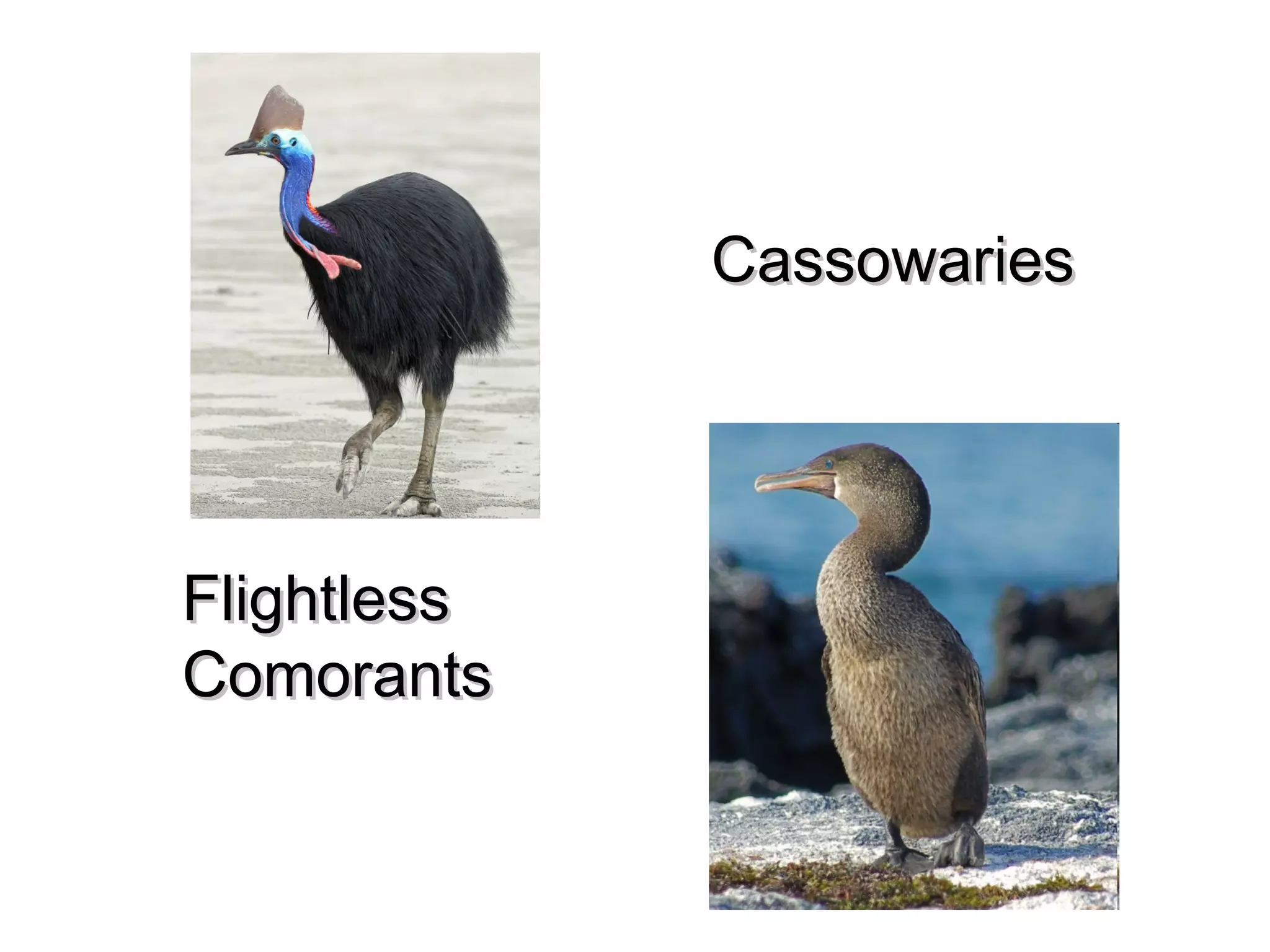
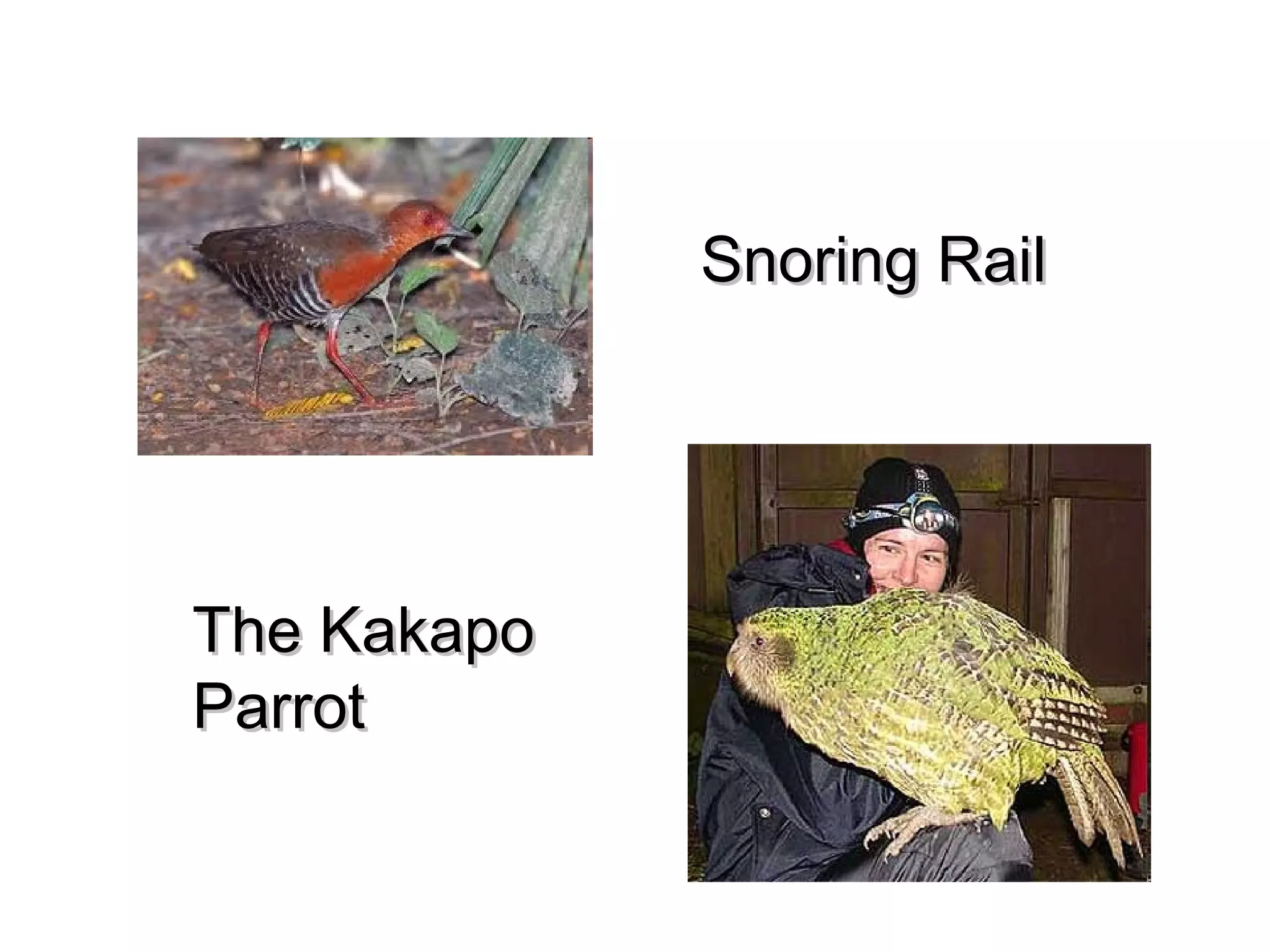
– Exception: Hen, Penguin, Peacock, Ostrich,
Kiwi, Emu, Turkey, The Falkland Flightless
Duck, Rheas, Cassowaries, Flightless
Comorants, Snoring Rail, Campbell Island
Teal, The Kakapo Parrot

• Warm-blooded
• Egg-lying
• Skin  Have feathers
– Prevents loss of body heat
– Helps in flight
– Exception: Penguin
• Hollow bones
– Provide passage for air from lungs, which supply it
direct to all parts of body

• Locomotive organs
– Wings, exception  Penguins
– Legs
– Toes  Adapted for particular purposes

• Hearing organ
– Lack outer ear
– Inner ear
• Mouth  Beak (Adapted for particular
purposes)
• Neck  Flexible
– For wide vision
– Aid feeding
– Helps in sleeping

• Sense of sight  Most important organ
• Habitat  Land, Air, Water
• Migration  Annual and seasonal.
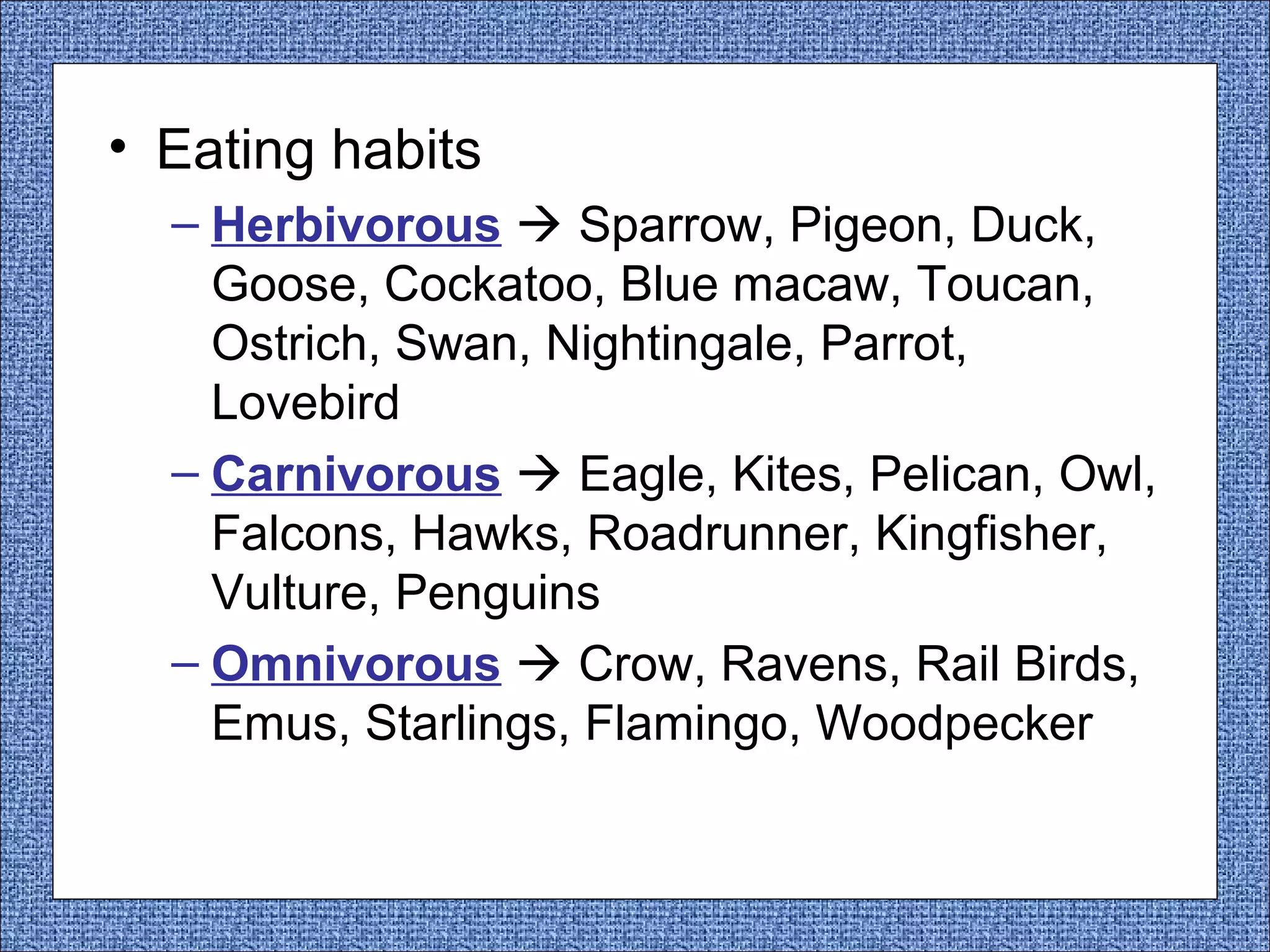
• Eating habits
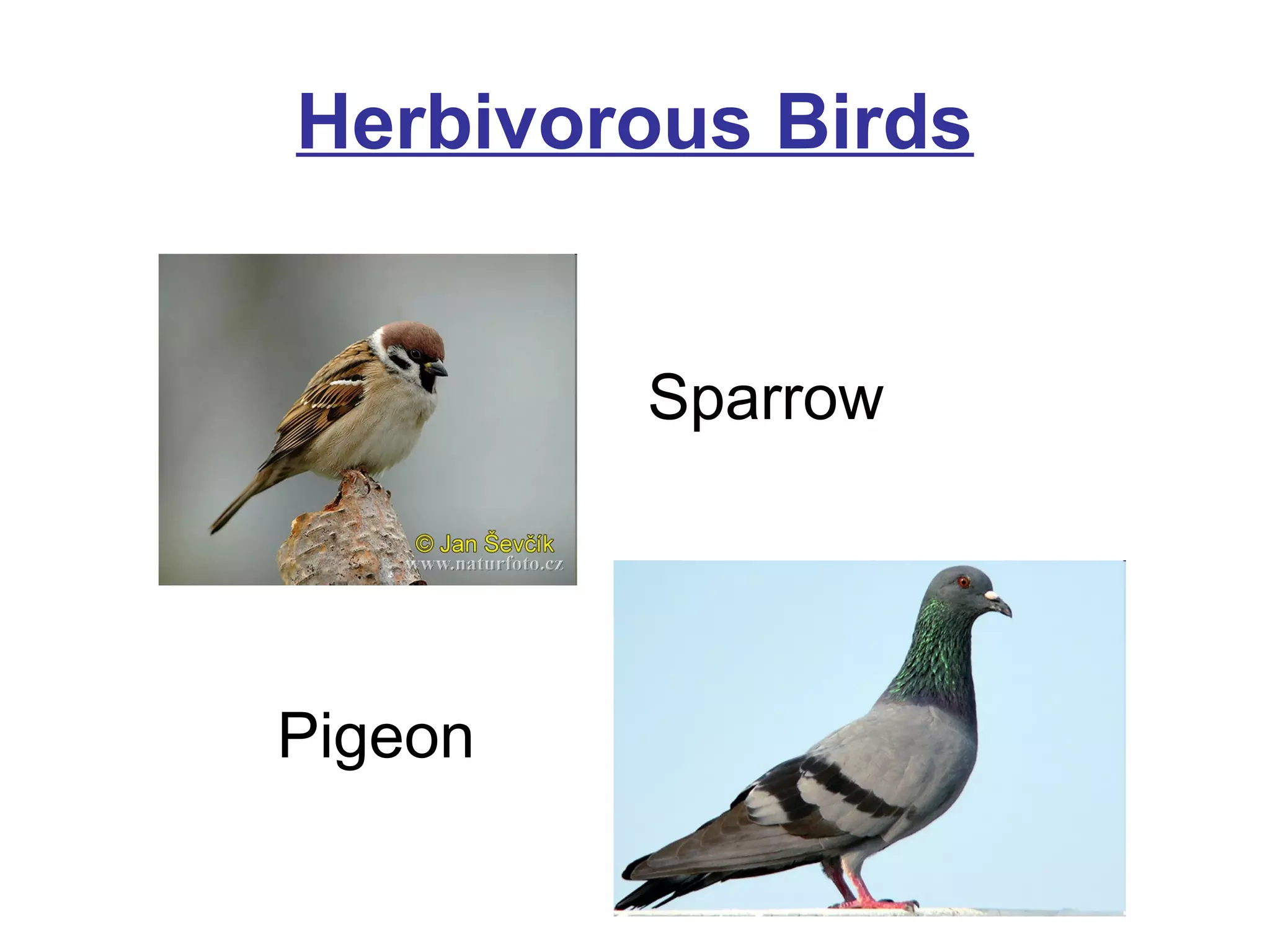
– Herbivorous  Sparrow, Pigeon, Duck,
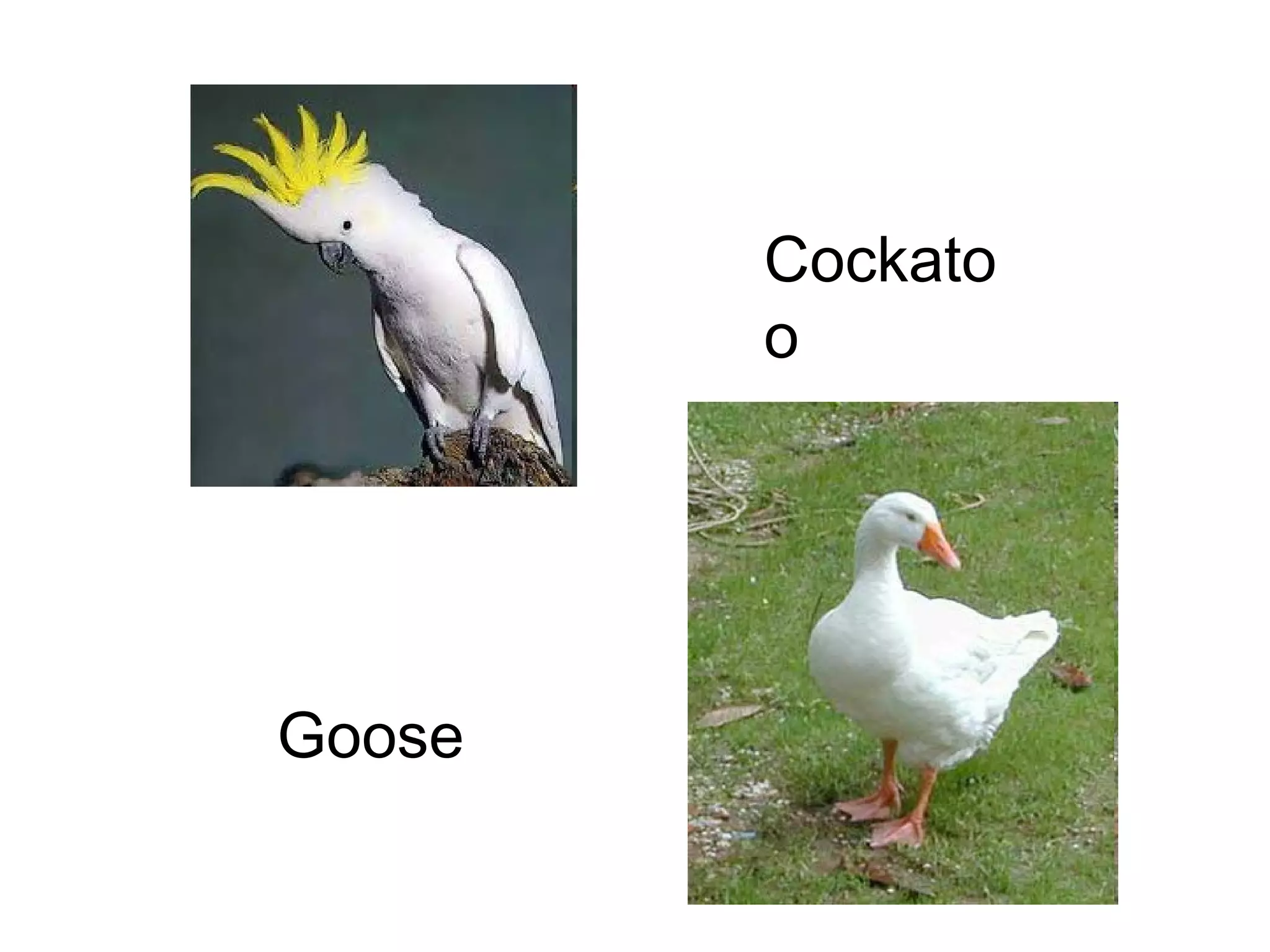
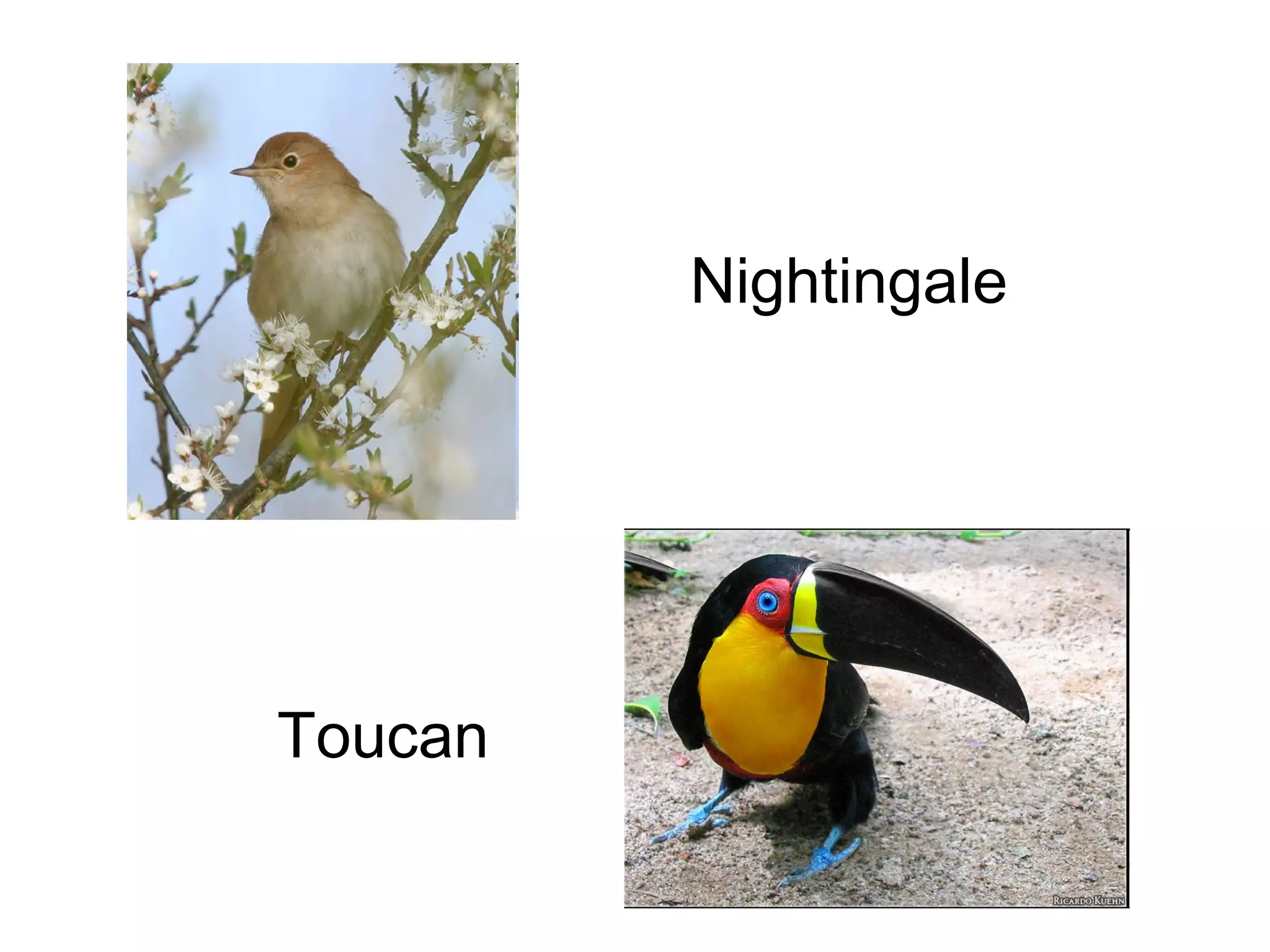
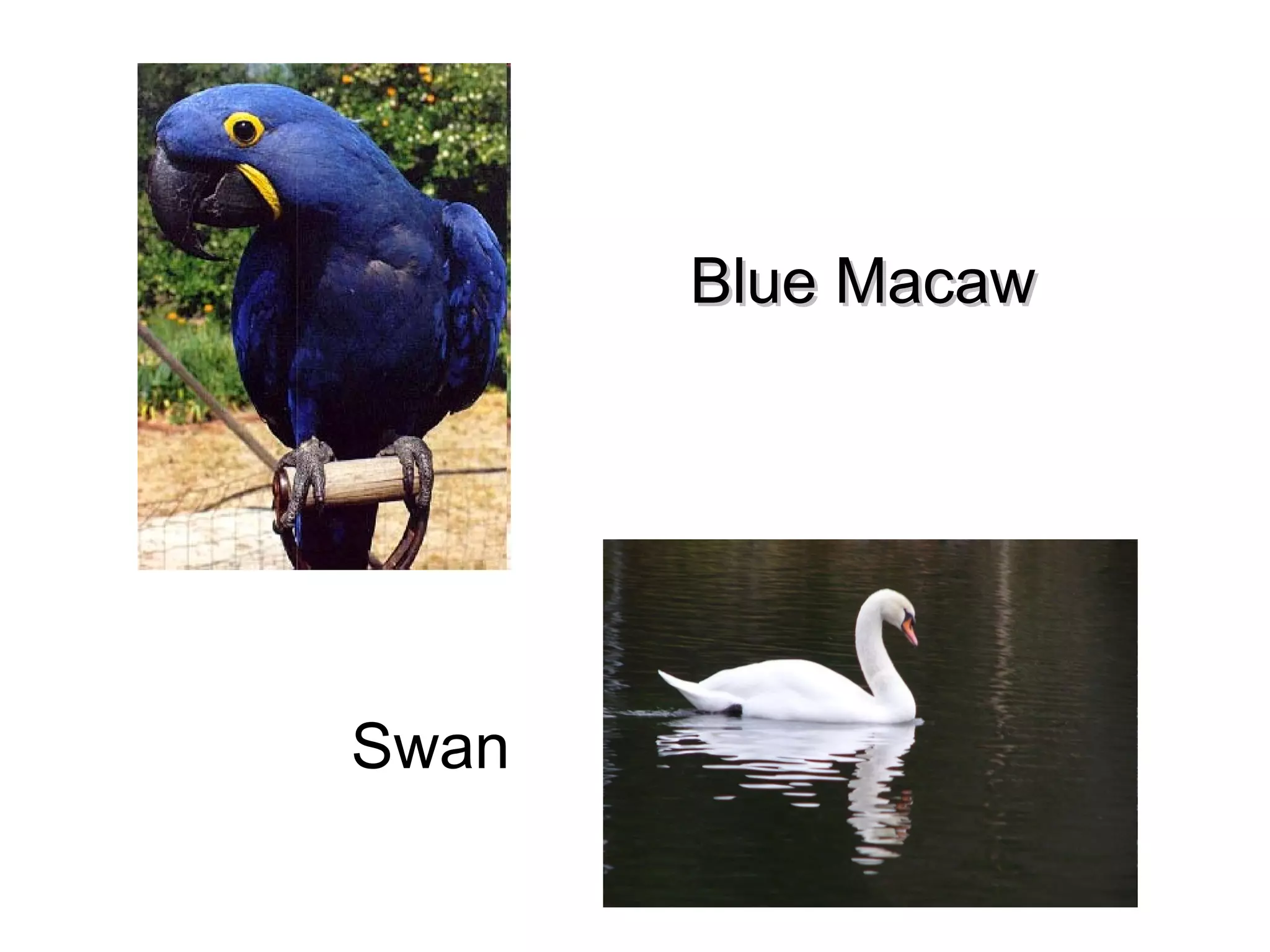
Goose, Cockatoo, Blue macaw, Toucan,
Ostrich, Swan, Nightingale, Parrot,
Lovebird
– Carnivorous  Eagle, Kites, Pelican, Owl,
Falcons, Hawks, Roadrunner, Kingfisher,
Vulture, Penguins
– Omnivorous  Crow, Ravens, Rail Birds,
Emus, Starlings, Flamingo, Woodpecker
Flightless Birds
Peacock

Kiwi
Rooster

Hen
Ostrich

Emu
Rheas

Penguin
The Falkland
Flightless Duck

Campbell
Island Teal
Cassowaries

Flightless
Comorants
Snoring Rail

The Kakapo
Parrot
Herbivorous Birds
Sparrow

Pigeon
Cockato
o

Goose
Nightingale

Toucan
Blue Macaw

Swan

2 hrly gs ch 08 vertebrates part 1