General Science Final
Definition
•Digestion is a process in which un-soluble
large, complex food molecules are broken
down into smaller, simple molecules that can
be absorbed into the bloodstream.
Explanation:
•After ingestion, food must be digested
before it can be absorbed into the cells of
body.
The process of Digestion is completed in following steps:

1.Ingestion:
The process in which animal take in food by swallowing or
absorption is known as ingestion

2. Digestion:
It is a complex process in which a large insoluble food
particles are converted into smaller simple soluble
molecules capable of passing through the membranes.

3. Absorption
The passage of material through the lining of the intestine
into the blood or through a cell membrane into a cell.
4.Assimilation:
Incorporation of nutrients into the cell or It can be
defined as the process in which the absorbed food
material is converted into stored form and stored at
various places in body

5.Egestion:
It is the process in which the undigested food is
removed from the body as a waste product through
anus.
There are basically 2 types of Digestions:
1.Extra Cellular Digestion: Digestion that takes place

outside the cell in a special cavity or tube, after which
the soluble molecules are absorbed into the cells.
2.Intracellular Digestion: Digestion that takes place
within the cell.
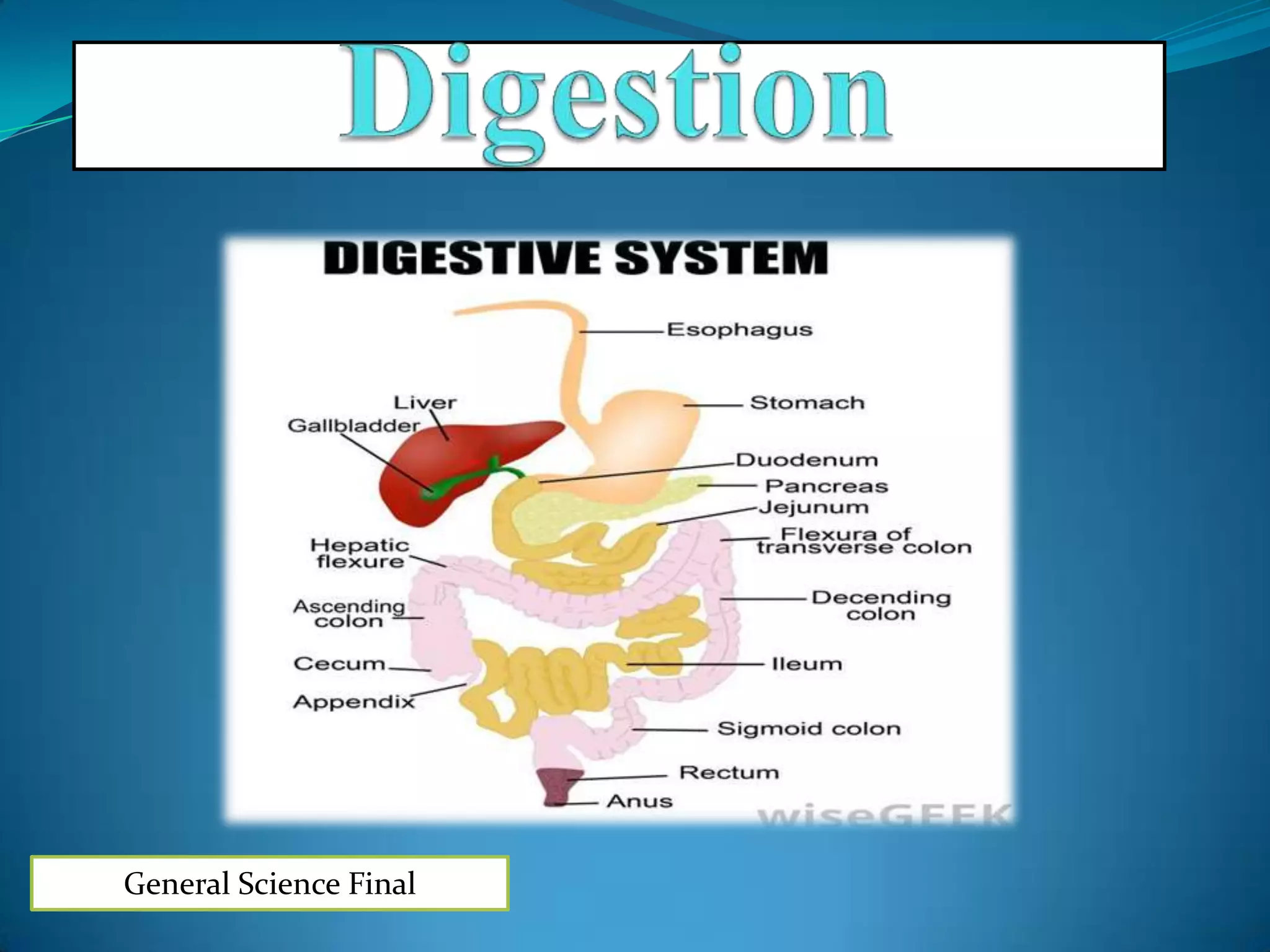
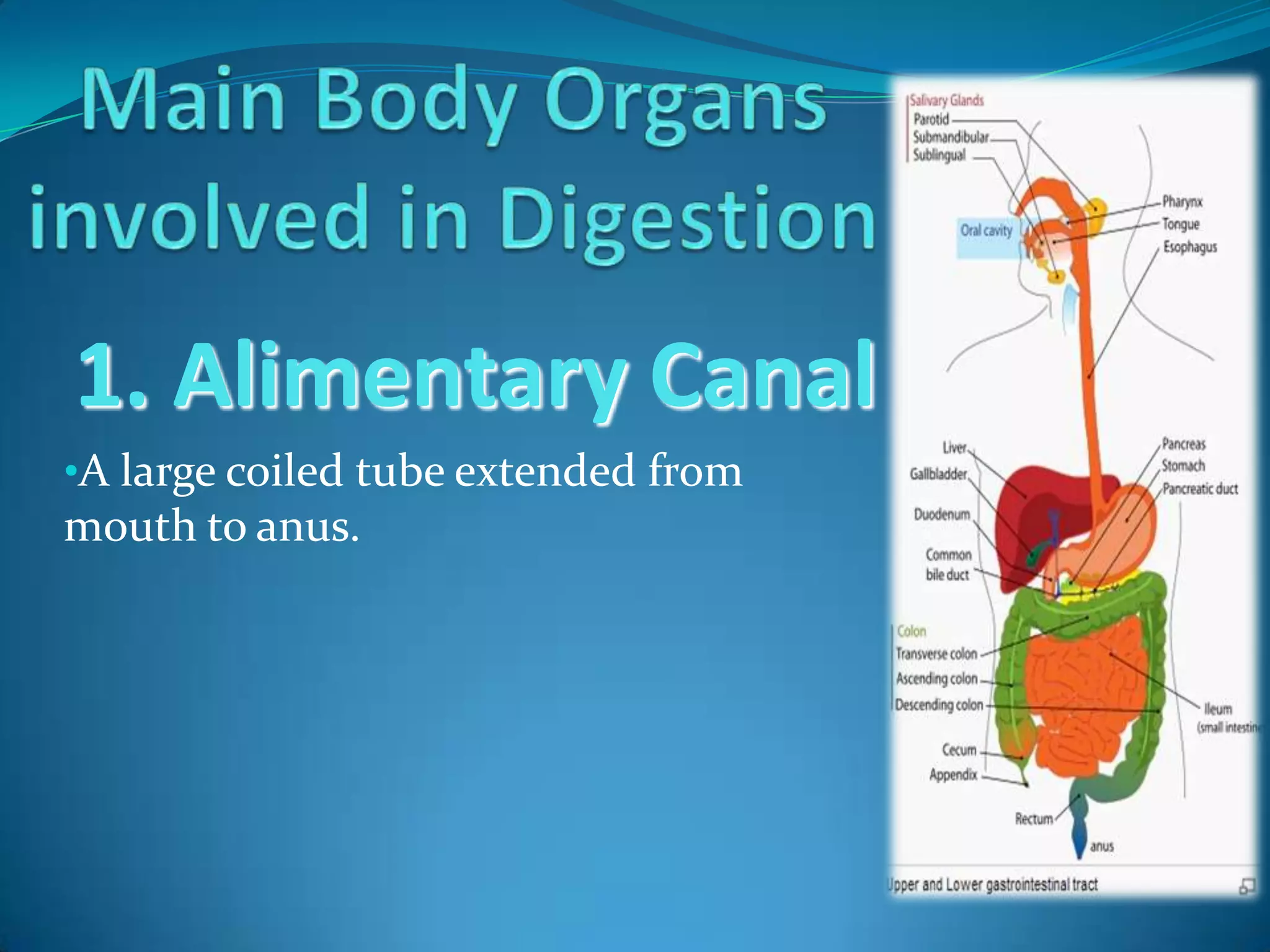
1. Alimentary Canal
•A large coiled tube extended from

mouth to anus.
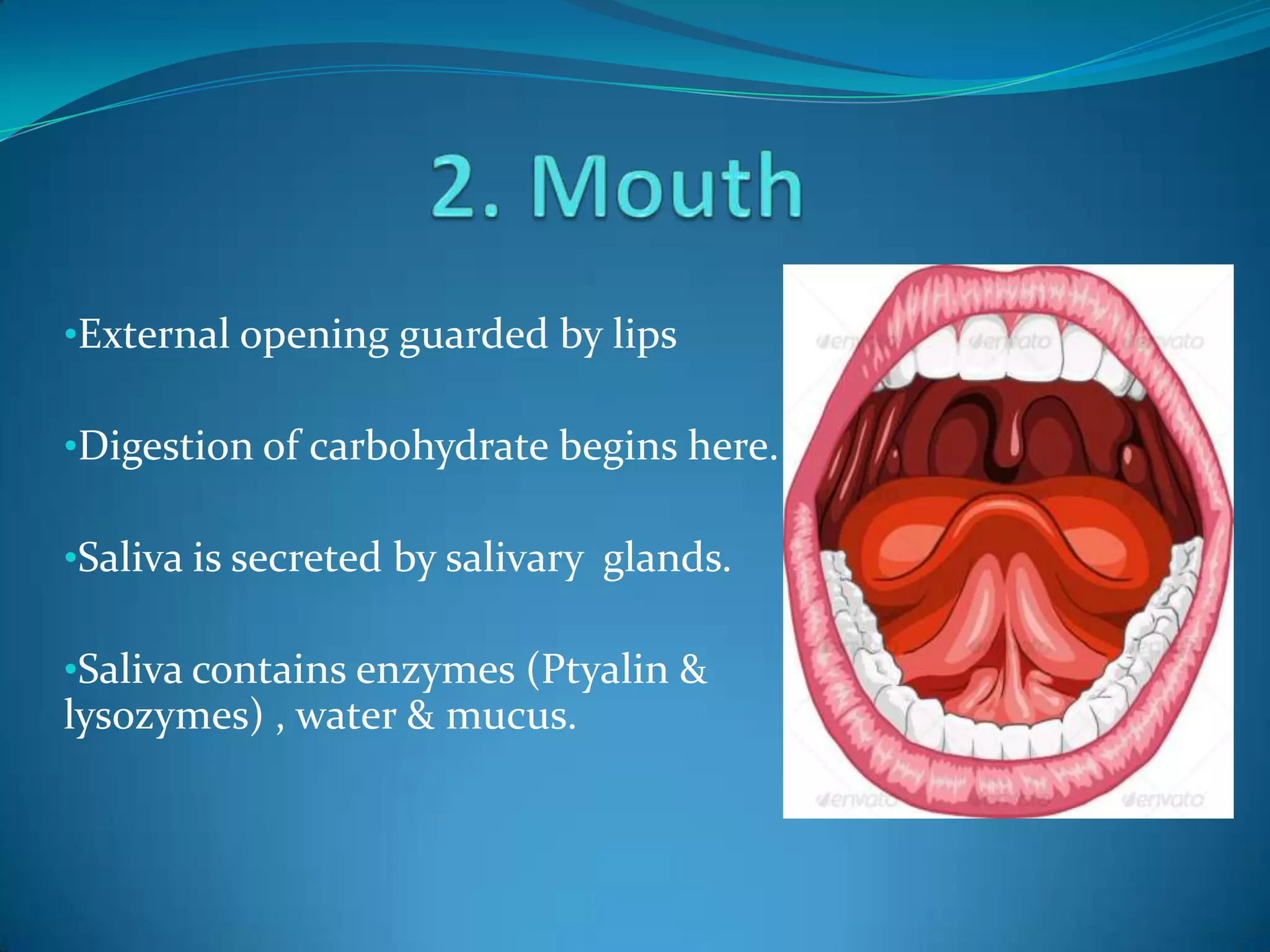
•External opening guarded by lips
•Digestion of carbohydrate begins here.

•Saliva is secreted by salivary glands.
•Saliva contains enzymes (Ptyalin &

lysozymes) , water & mucus.
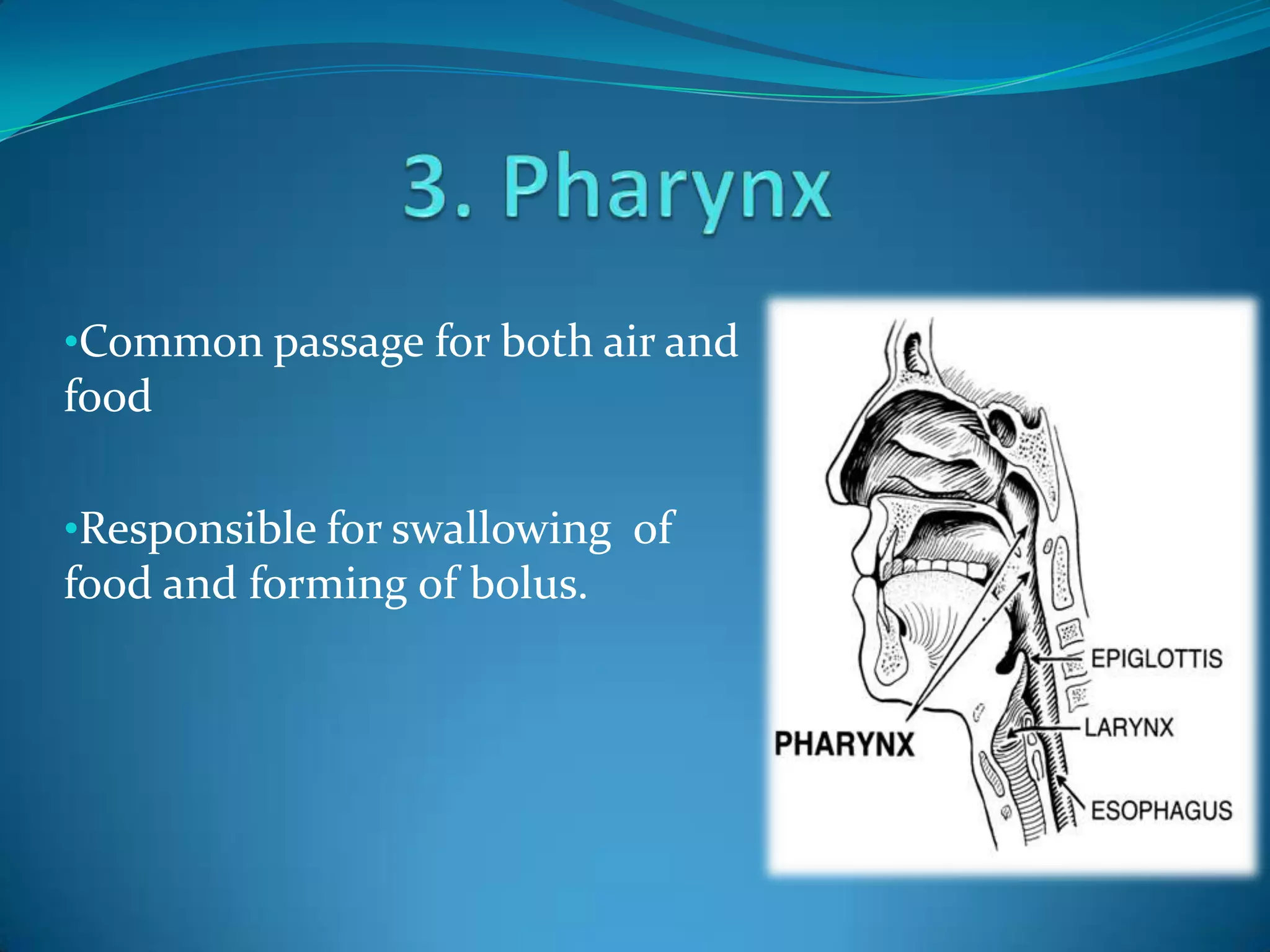
•Common passage for both air and

food
•Responsible for swallowing of

food and forming of bolus.
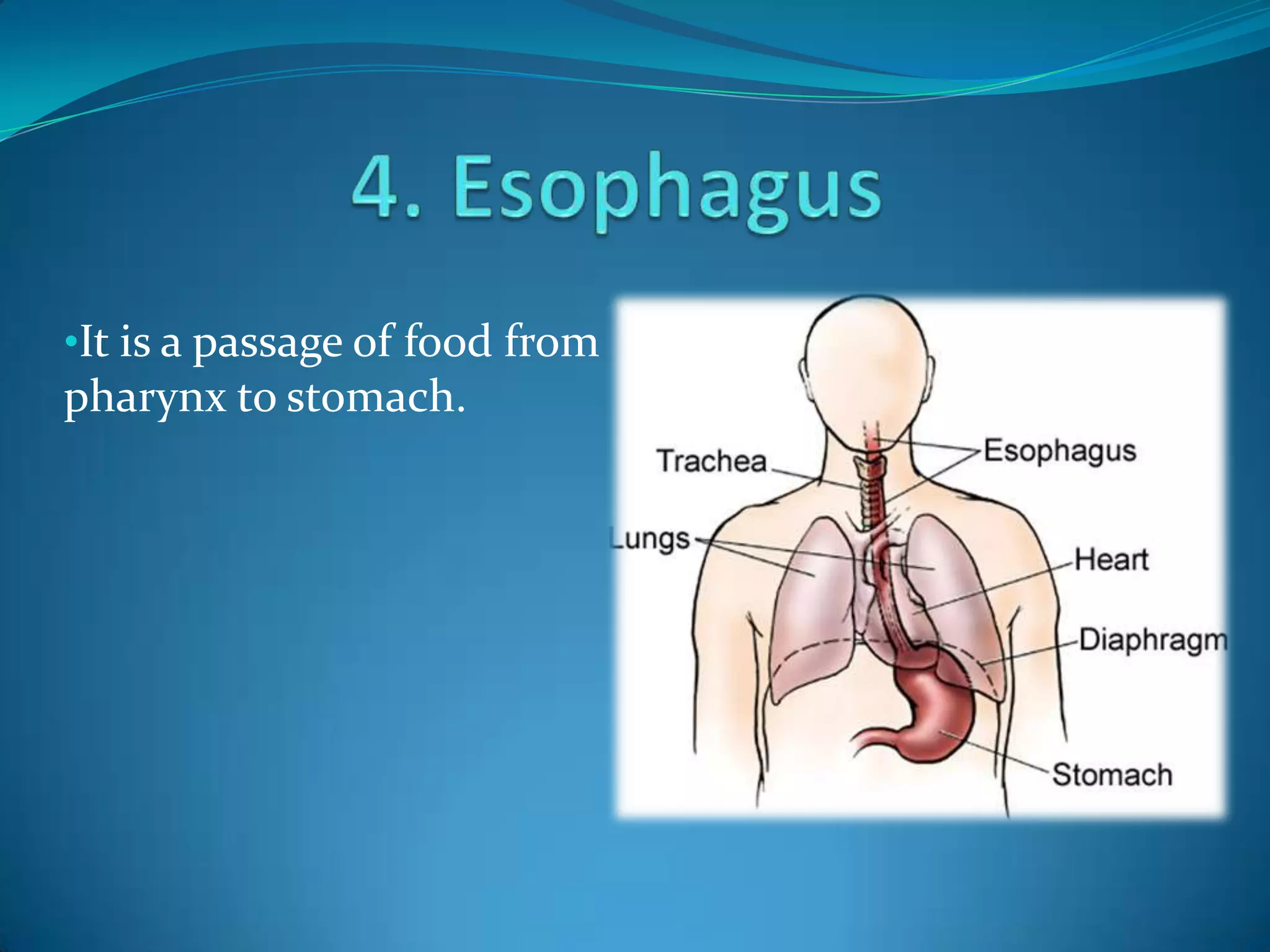
•It is a passage of food from

pharynx to stomach.
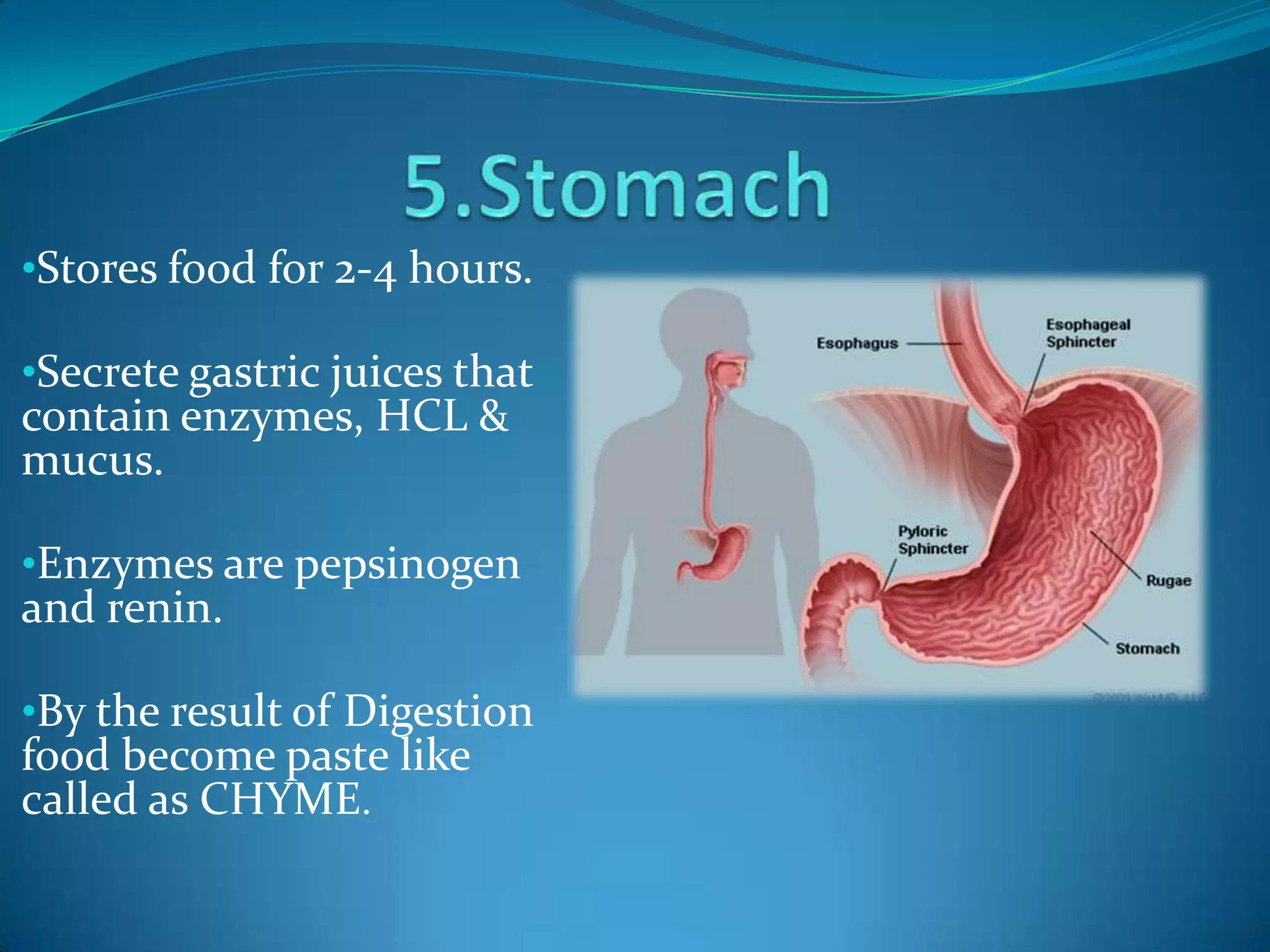
•Stores food for 2-4 hours.
•Secrete gastric juices that

contain enzymes, HCL &
mucus.

•Enzymes are pepsinogen

and renin.

•By the result of Digestion

food become paste like
called as CHYME.
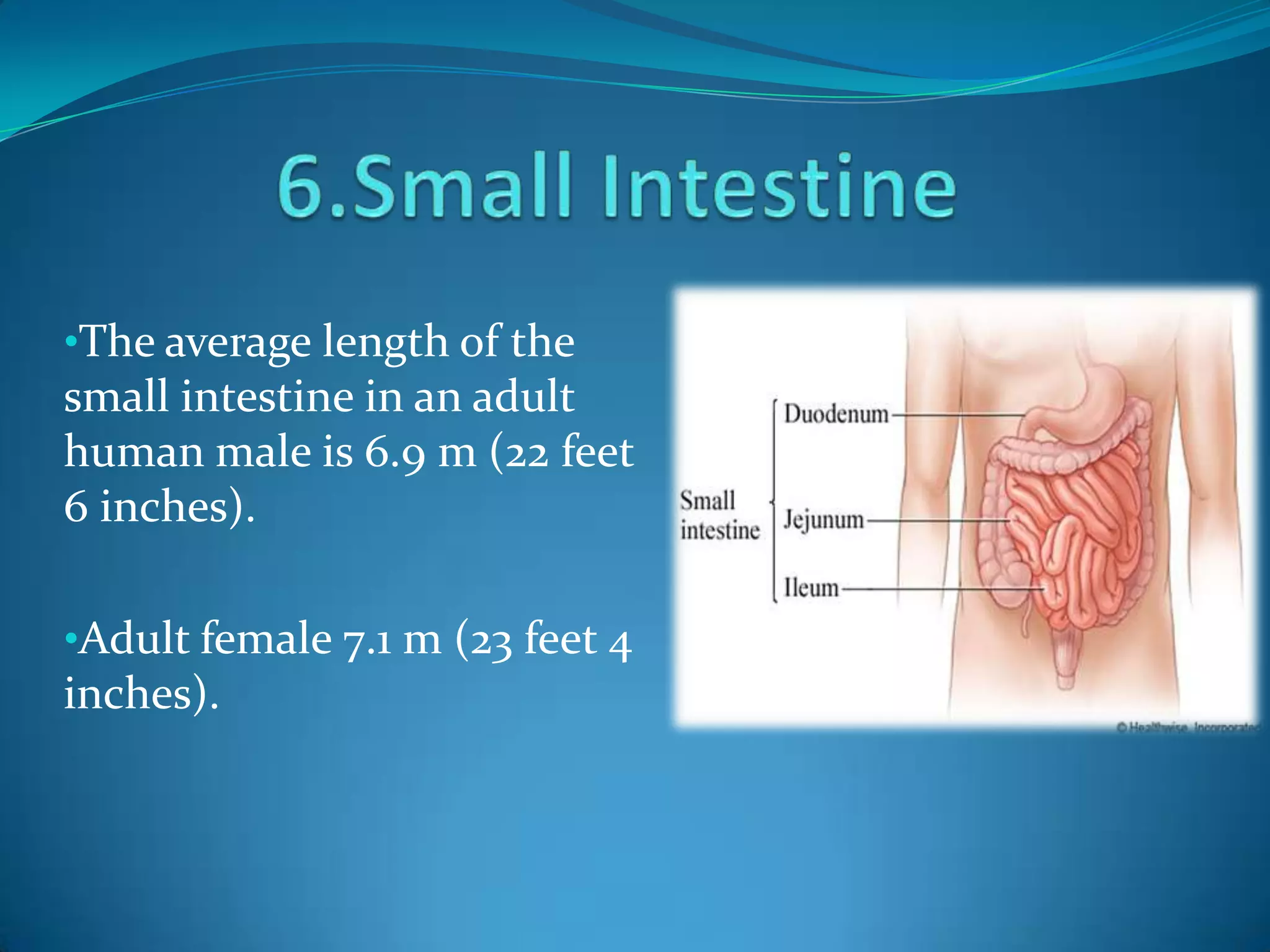
•The average length of the

small intestine in an adult
human male is 6.9 m (22 feet
6 inches).
•Adult female 7.1 m (23 feet 4

inches).
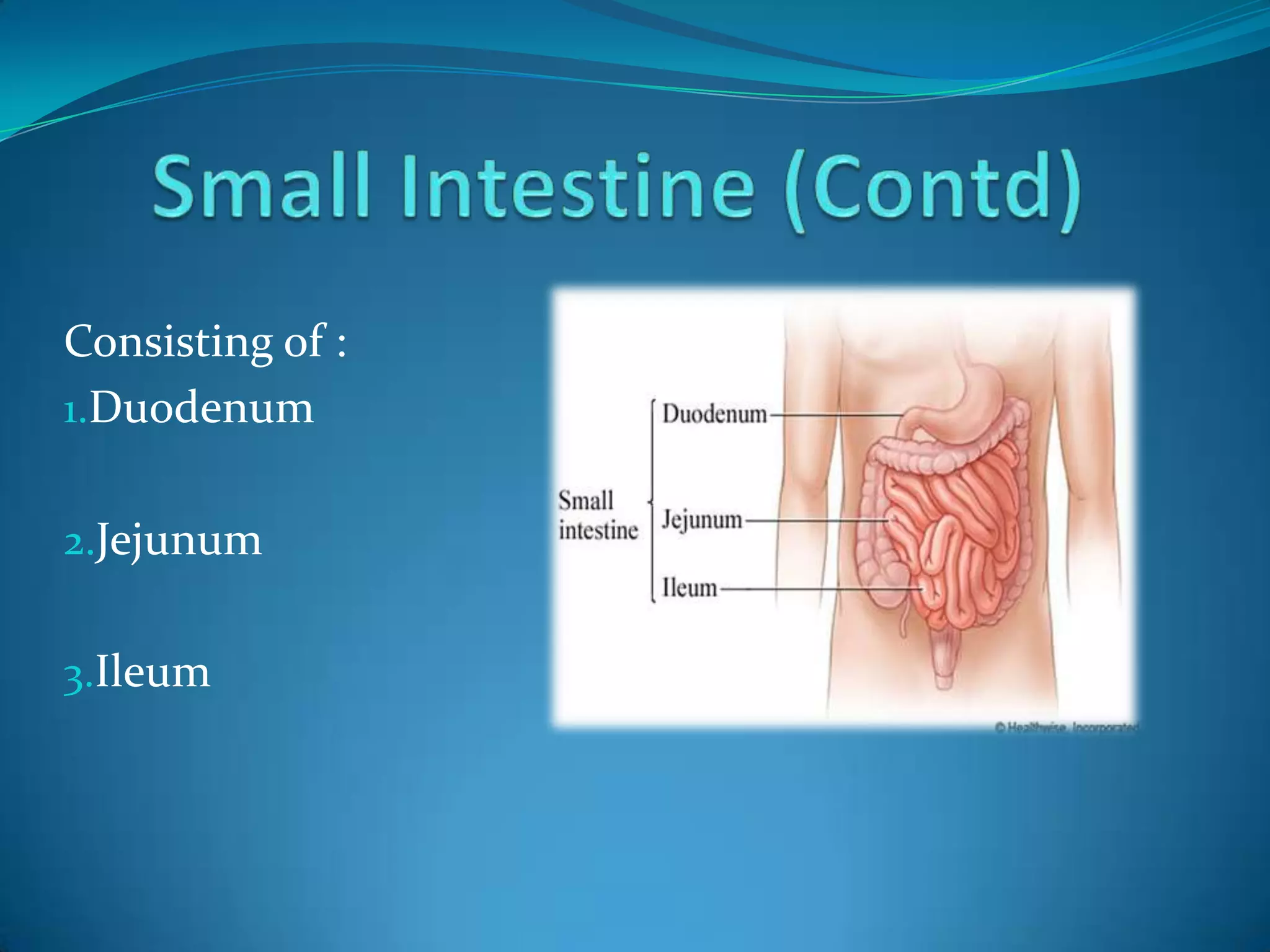
Consisting of :
1.Duodenum
2.Jejunum
3.Ileum
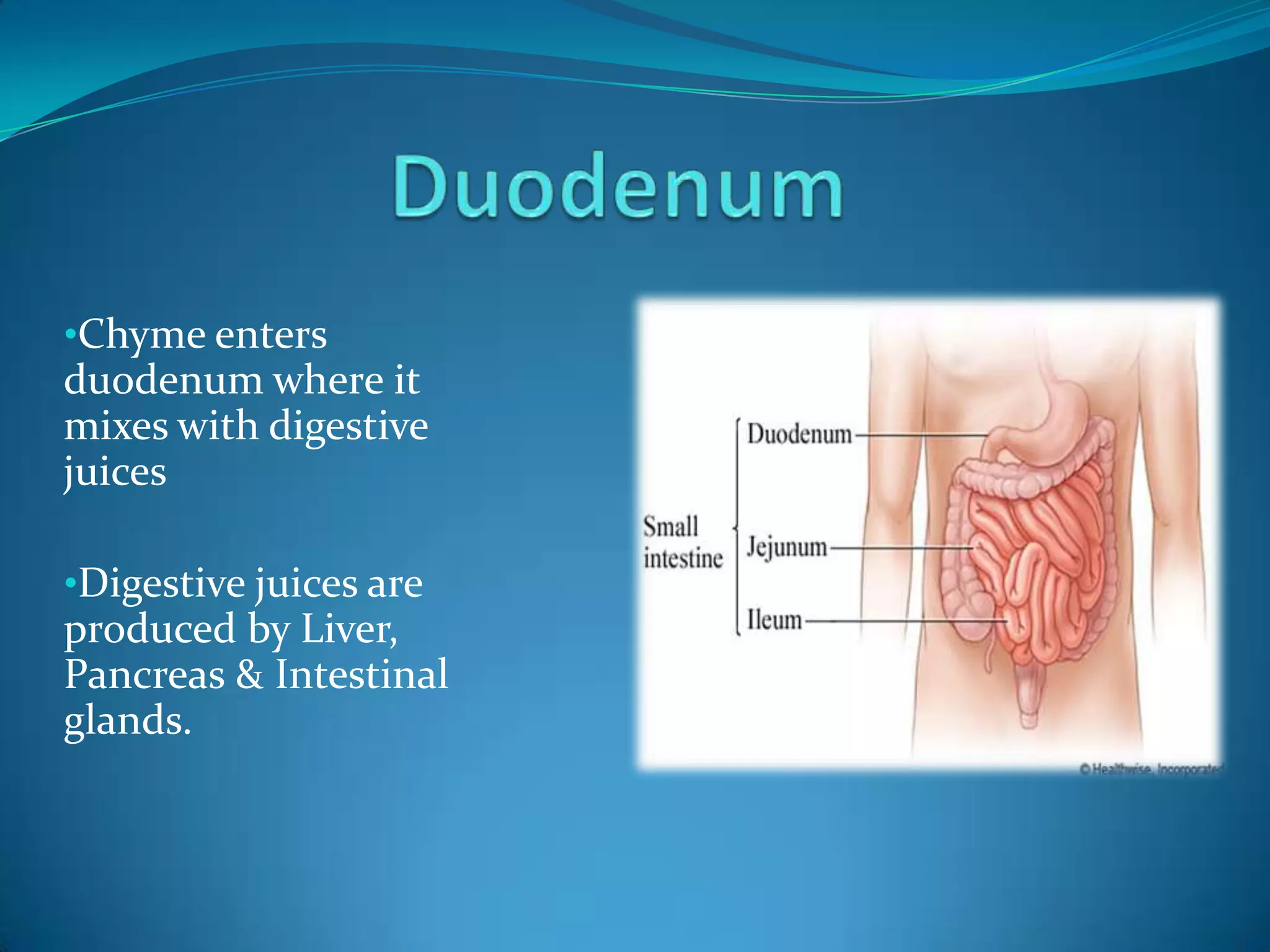
•Chyme enters

duodenum where it
mixes with digestive
juices
•Digestive juices are

produced by Liver,
Pancreas & Intestinal
glands.
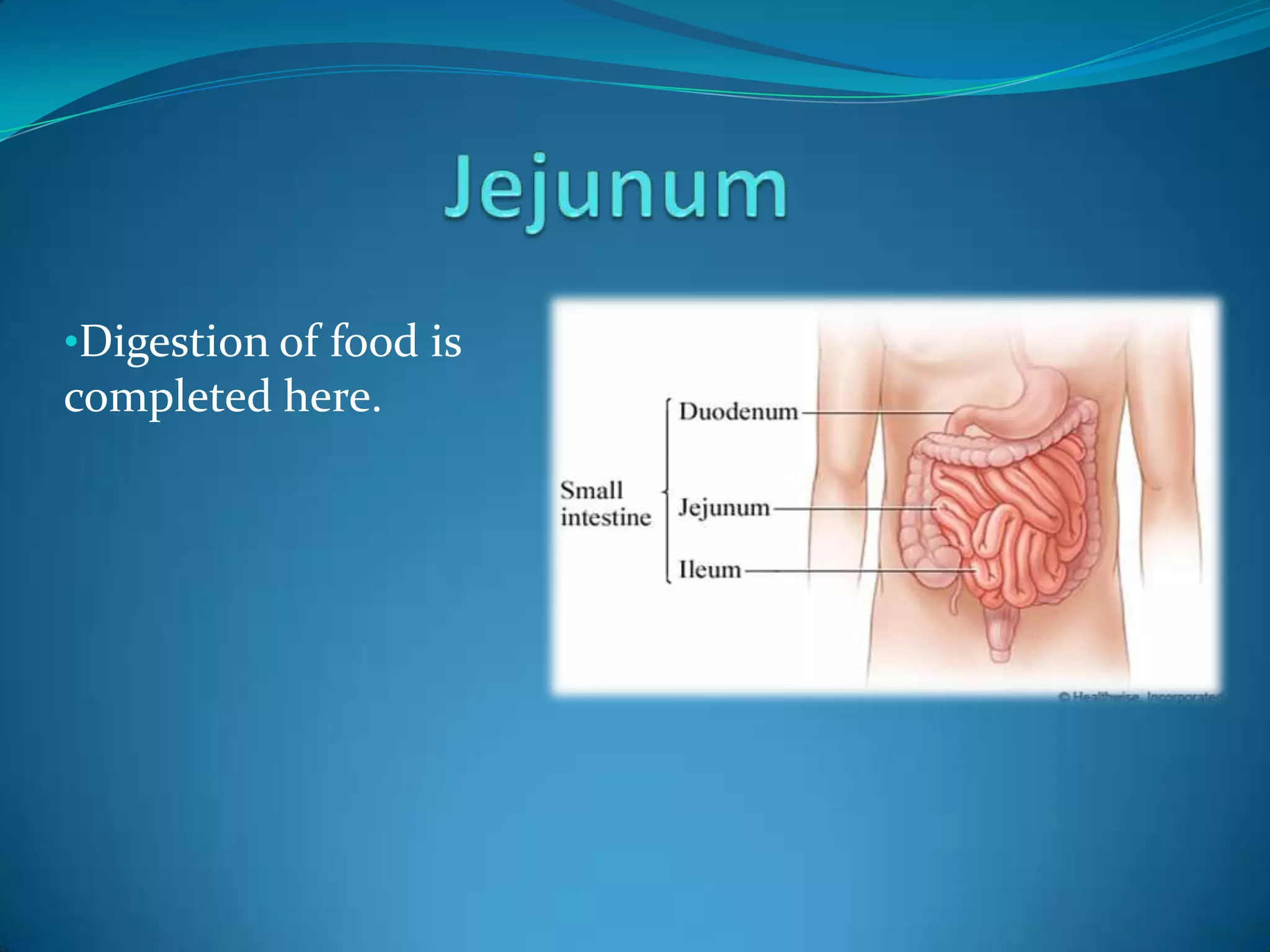
•Digestion of food is

completed here.
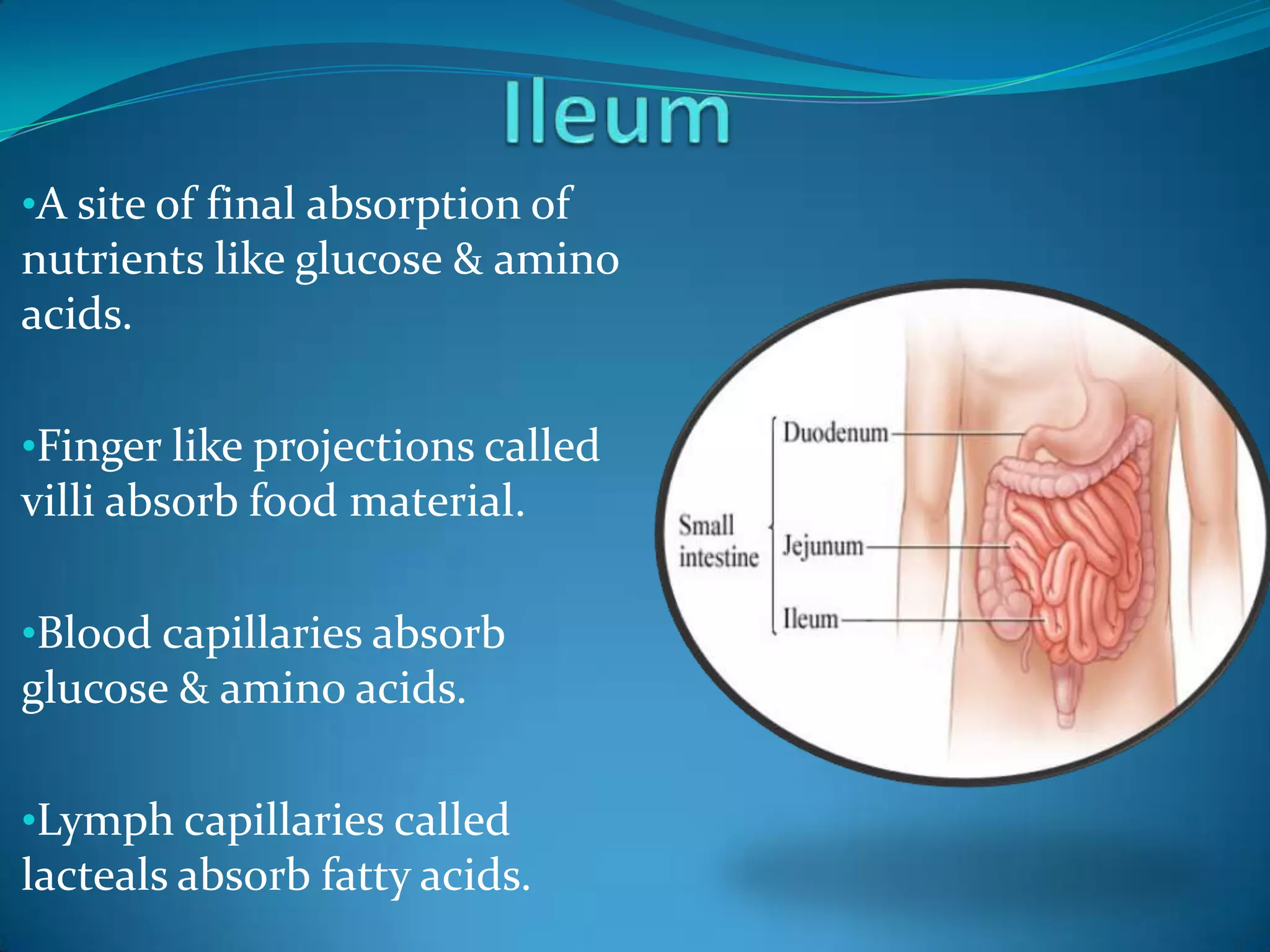
•A site of final absorption of

nutrients like glucose & amino
acids.
•Finger like projections called

villi absorb food material.
•Blood capillaries absorb

glucose & amino acids.
•Lymph capillaries called

lacteals absorb fatty acids.
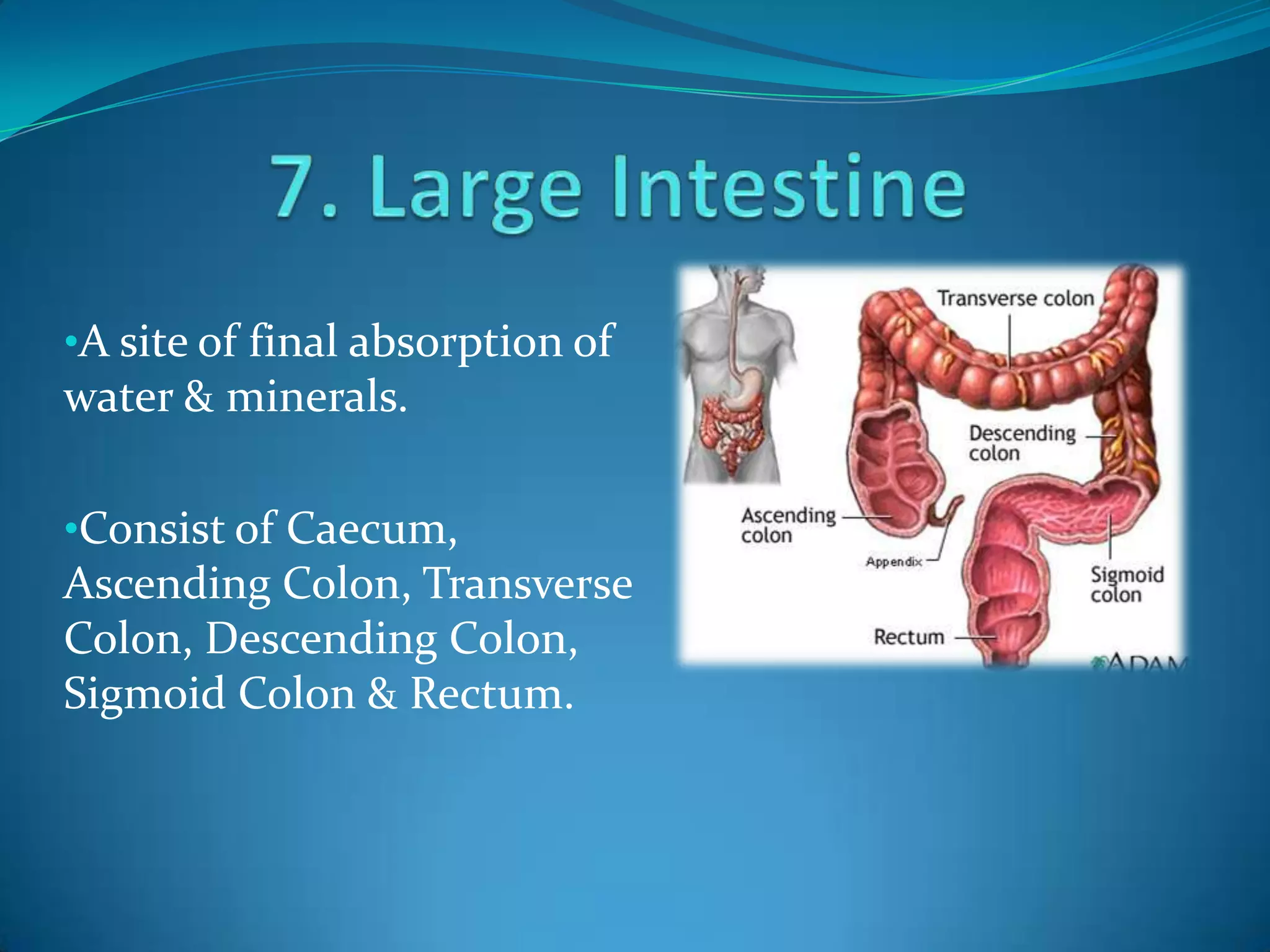
•A site of final absorption of

water & minerals.
•Consist of Caecum,

Ascending Colon, Transverse
Colon, Descending Colon,
Sigmoid Colon & Rectum.
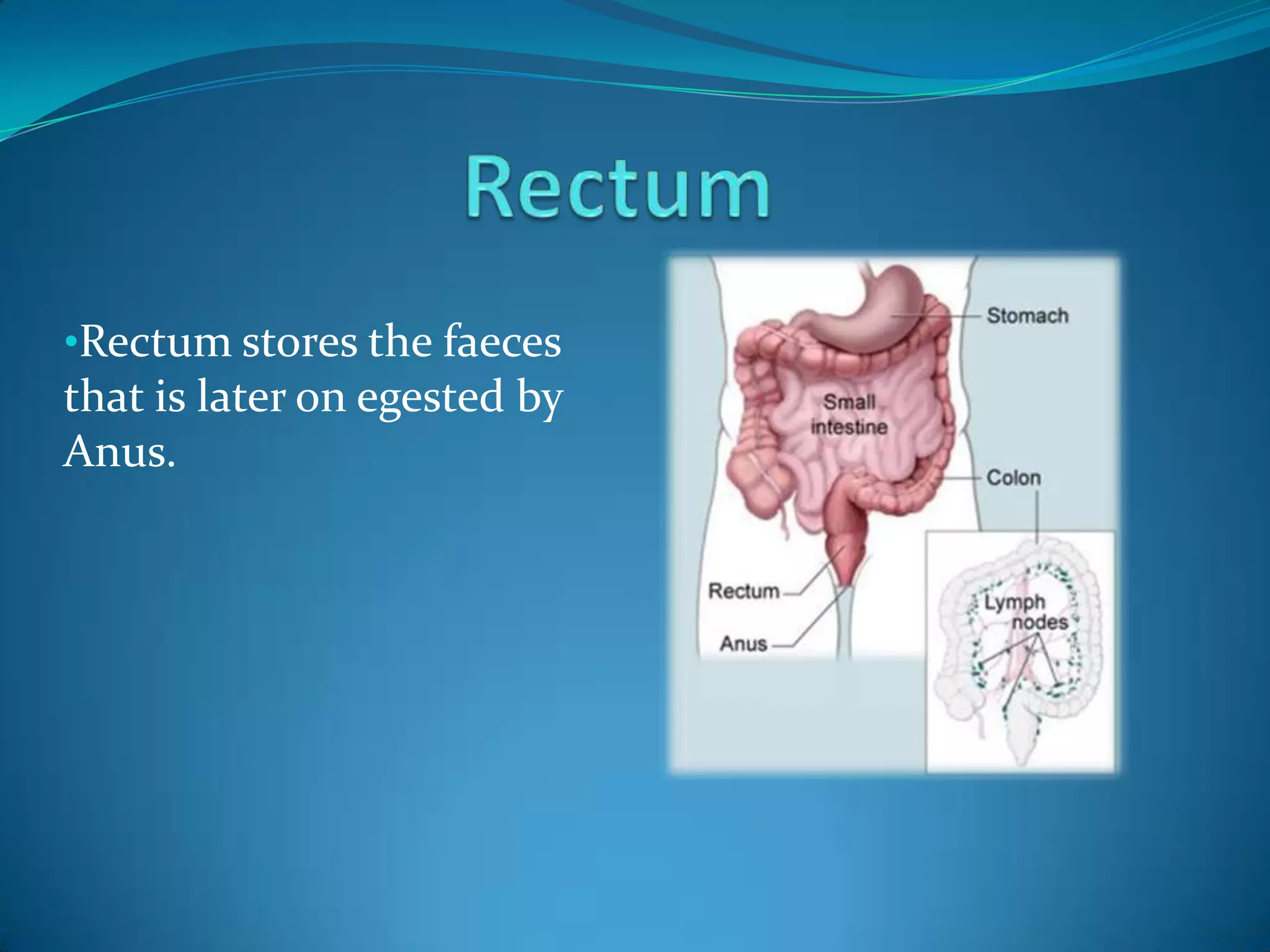
•Rectum stores the faeces

that is later on egested by
Anus.

Final gs ch p digestion

  • 1.
  • 2.
    Definition •Digestion is aprocess in which un-soluble large, complex food molecules are broken down into smaller, simple molecules that can be absorbed into the bloodstream. Explanation: •After ingestion, food must be digested before it can be absorbed into the cells of body.
  • 3.
    The process ofDigestion is completed in following steps: 1.Ingestion: The process in which animal take in food by swallowing or absorption is known as ingestion 2. Digestion: It is a complex process in which a large insoluble food particles are converted into smaller simple soluble molecules capable of passing through the membranes. 3. Absorption The passage of material through the lining of the intestine into the blood or through a cell membrane into a cell.
  • 4.
    4.Assimilation: Incorporation of nutrientsinto the cell or It can be defined as the process in which the absorbed food material is converted into stored form and stored at various places in body 5.Egestion: It is the process in which the undigested food is removed from the body as a waste product through anus.
  • 5.
    There are basically2 types of Digestions: 1.Extra Cellular Digestion: Digestion that takes place outside the cell in a special cavity or tube, after which the soluble molecules are absorbed into the cells. 2.Intracellular Digestion: Digestion that takes place within the cell.
  • 6.
    1. Alimentary Canal •Alarge coiled tube extended from mouth to anus.
  • 7.
    •External opening guardedby lips •Digestion of carbohydrate begins here. •Saliva is secreted by salivary glands. •Saliva contains enzymes (Ptyalin & lysozymes) , water & mucus.
  • 8.
    •Common passage forboth air and food •Responsible for swallowing of food and forming of bolus.
  • 9.
    •It is apassage of food from pharynx to stomach.
  • 10.
    •Stores food for2-4 hours. •Secrete gastric juices that contain enzymes, HCL & mucus. •Enzymes are pepsinogen and renin. •By the result of Digestion food become paste like called as CHYME.
  • 11.
    •The average lengthof the small intestine in an adult human male is 6.9 m (22 feet 6 inches). •Adult female 7.1 m (23 feet 4 inches).
  • 12.
  • 13.
    •Chyme enters duodenum whereit mixes with digestive juices •Digestive juices are produced by Liver, Pancreas & Intestinal glands.
  • 14.
    •Digestion of foodis completed here.
  • 15.
    •A site offinal absorption of nutrients like glucose & amino acids. •Finger like projections called villi absorb food material. •Blood capillaries absorb glucose & amino acids. •Lymph capillaries called lacteals absorb fatty acids.
  • 16.
    •A site offinal absorption of water & minerals. •Consist of Caecum, Ascending Colon, Transverse Colon, Descending Colon, Sigmoid Colon & Rectum.
  • 17.
    •Rectum stores thefaeces that is later on egested by Anus.