Downloaded 21 times


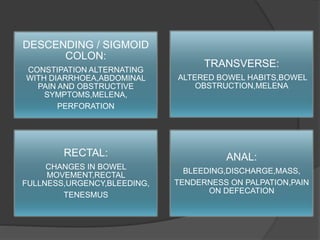





This document summarizes the clinical presentation of colon cancer in three main ways: vague abdominal symptoms and pallor, asymptomatic individuals found through screening, and emergency conditions involving intestinal obstruction, peritonitis, or bleeding. It then describes symptoms according to anatomical site of the cancer in the colon. Advanced cancer may present with abdominal pain, distension, vomiting, constipation, and signs of dehydration or metastasis. Complications include stercoral ulcer, obstruction, perforation, and peritonitis. The cancer can spread locally, hematogenously, or lymphatically to sites like the liver, lungs, bones, and more. A modified Duke's classification stages colon cancers from A to D.


