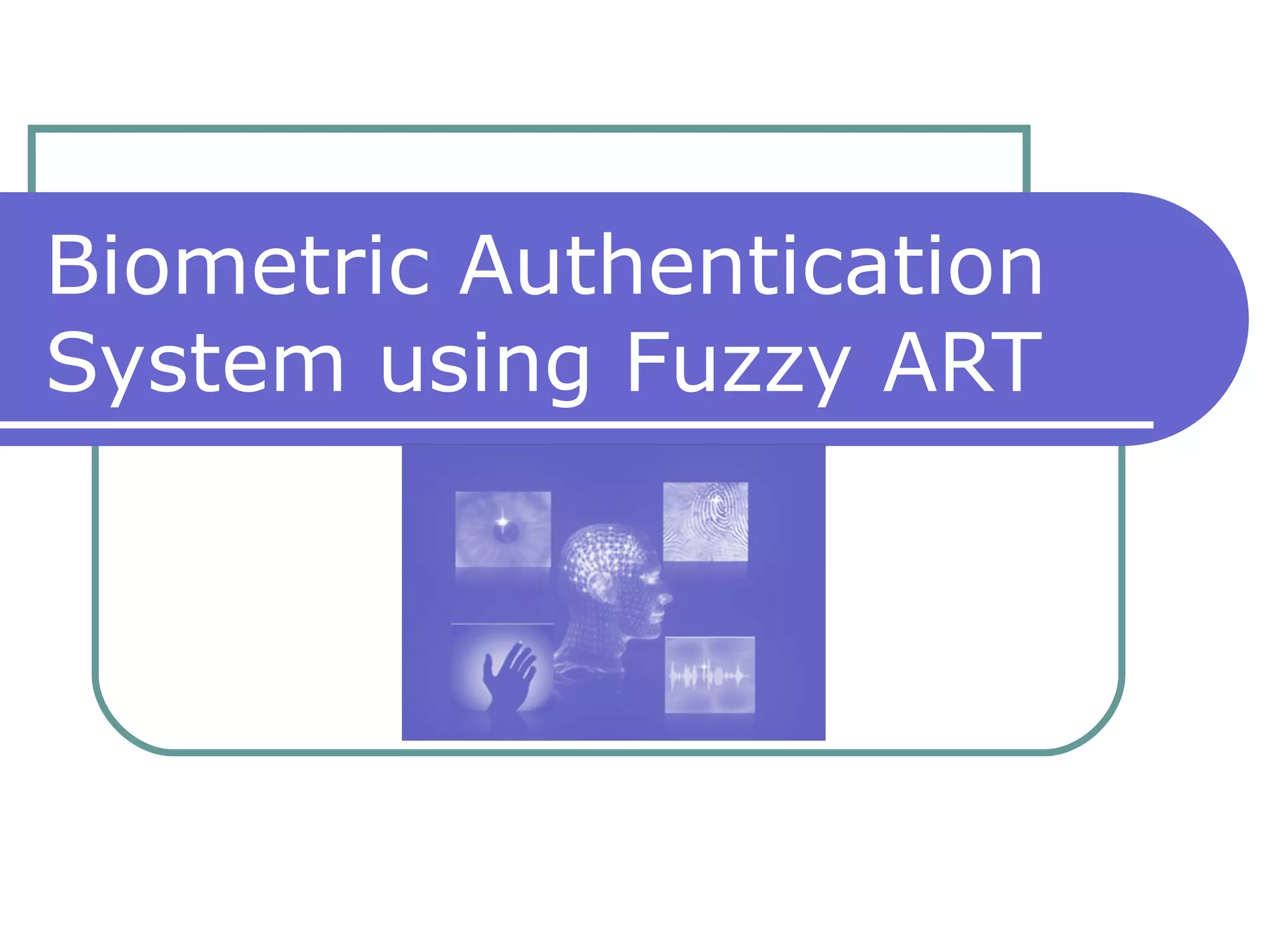
Biometric Authentication System using Fuzzy ART
 
1. INTRODUCTION Authentication :  The process of verifying a person’s identity  is called  as authentication.  Traditional Authentication  Systems: Knowledge -  Password Possession  -  Smart card(ID cards) Biometric  -  Finger Print, Signature
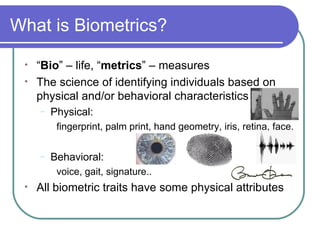
What is Biometrics? “ Bio ” – life, “ metrics ” – measures The science of identifying individuals based on physical and/or behavioral characteristics Physical: fingerprint, palm print, hand geometry, iris, retina, face. Behavioral: voice, gait, signature.. All biometric traits have some physical attributes
Why use Biometrics? Traditionally… What you have –  keys, badges, ID cards. What you know –  username/password, PIN,  personal info. (SSN, DOB, etc.) Biometrics… What you are –  Individual’s  Finger print,Face, Voice,  Hand Geometry, Signature verification.. Uses Body and its characteristics as Password Which are Permanently associated with user..
1.1.Motivation The motivation is from the emerging and upcoming Biometric authentication technologies like gait which are:  Accurate , that is only authorized users have access to data and services. Computationally efficient , which mean that their authentication delay is reasonable and is not complex. Convenient,  in the sense that they can’t be lost and no need for remembering them.. Robust , in the sense that, valid users get access and impostors are rejected. User friendly , in the sense that no additional interaction with the system is needed like typing passwords, striping cards..
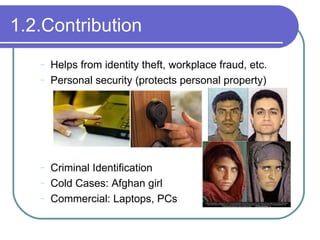
1.2.Contribution Helps from identity theft, workplace fraud, etc. Personal security (protects personal property) Criminal Identification Cold Cases: Afghan girl Commercial: Laptops, PCs
2.Literature Survey.. Adaptive Resonance Theory: -  Adaptive Resonance Theory (ART) was developed by Gross berg (1976) - ART adapts itself by storing input patterns, and tries to match best the input pattern  Origins of Fuzzy Logic/Control: - 1964 - Invented in USA by Lotfi Zadeh (Lotfi Aliaskerzadeh), native of Azerbaijan, also with Russian/Turkish/Iranian ancestry. - 1973 - Application to steam engine control, U.K.  Ebrahim Mamdani. - 1980's - Enthusiastically accepted in Japan, later in Singapore - 1990's - Neuro-fuzzy applications very popular in Asia.    - Fuzzy control applications become widespread in the West -  Later on being employed in various fields including computer science for various implementations like pattern recognitions, biometric systems etc
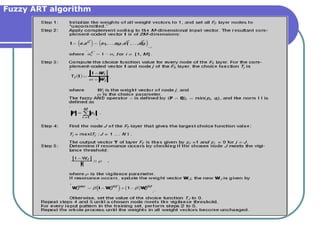
Fuzzy ART algorithm
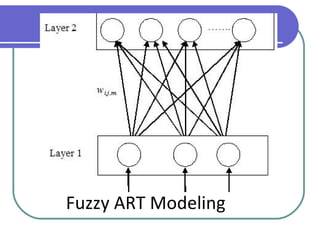
Fuzzy ART Modeling
3.Roles & Responsibility K.Koteshwara Reddy -  Coding Nagarjuna V.S. -  Analysis and  Design
Thanks for Listening… Questions?

1st Review Ppt Biometric Fuzzy

  • 1.
  • 2.
  • 3.
    1. INTRODUCTION Authentication: The process of verifying a person’s identity is called as authentication. Traditional Authentication Systems: Knowledge - Password Possession - Smart card(ID cards) Biometric - Finger Print, Signature
  • 4.
    What is Biometrics?“ Bio ” – life, “ metrics ” – measures The science of identifying individuals based on physical and/or behavioral characteristics Physical: fingerprint, palm print, hand geometry, iris, retina, face. Behavioral: voice, gait, signature.. All biometric traits have some physical attributes
  • 5.
    Why use Biometrics?Traditionally… What you have – keys, badges, ID cards. What you know – username/password, PIN, personal info. (SSN, DOB, etc.) Biometrics… What you are – Individual’s Finger print,Face, Voice, Hand Geometry, Signature verification.. Uses Body and its characteristics as Password Which are Permanently associated with user..
  • 6.
    1.1.Motivation The motivationis from the emerging and upcoming Biometric authentication technologies like gait which are: Accurate , that is only authorized users have access to data and services. Computationally efficient , which mean that their authentication delay is reasonable and is not complex. Convenient, in the sense that they can’t be lost and no need for remembering them.. Robust , in the sense that, valid users get access and impostors are rejected. User friendly , in the sense that no additional interaction with the system is needed like typing passwords, striping cards..
  • 7.
    1.2.Contribution Helps fromidentity theft, workplace fraud, etc. Personal security (protects personal property) Criminal Identification Cold Cases: Afghan girl Commercial: Laptops, PCs
  • 8.
    2.Literature Survey.. AdaptiveResonance Theory: - Adaptive Resonance Theory (ART) was developed by Gross berg (1976) - ART adapts itself by storing input patterns, and tries to match best the input pattern Origins of Fuzzy Logic/Control: - 1964 - Invented in USA by Lotfi Zadeh (Lotfi Aliaskerzadeh), native of Azerbaijan, also with Russian/Turkish/Iranian ancestry. - 1973 - Application to steam engine control, U.K. Ebrahim Mamdani. - 1980's - Enthusiastically accepted in Japan, later in Singapore - 1990's - Neuro-fuzzy applications very popular in Asia. - Fuzzy control applications become widespread in the West - Later on being employed in various fields including computer science for various implementations like pattern recognitions, biometric systems etc
  • 9.
  • 10.
  • 11.
    3.Roles & ResponsibilityK.Koteshwara Reddy - Coding Nagarjuna V.S. - Analysis and Design
  • 12.