

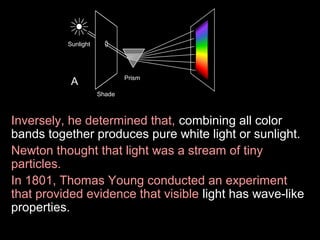
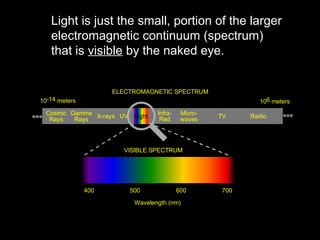
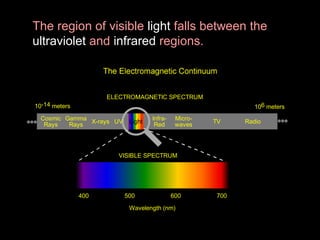
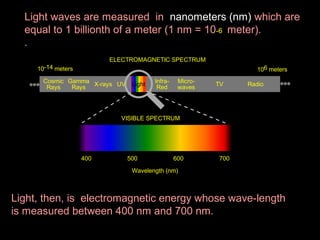
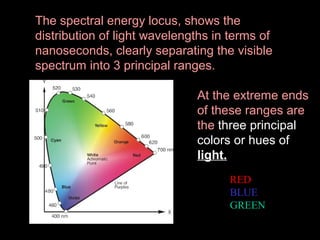

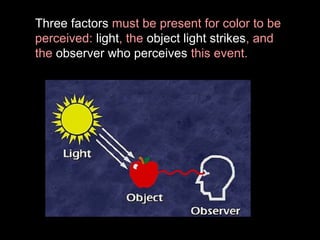
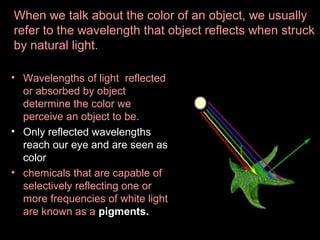
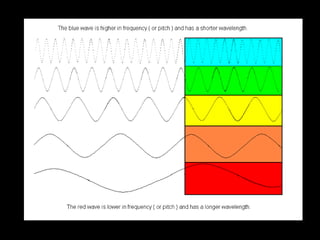
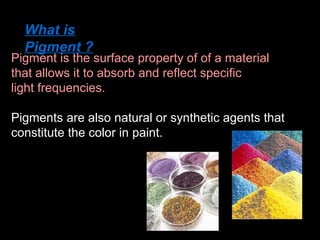
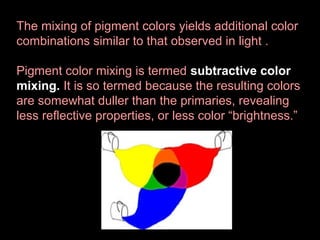
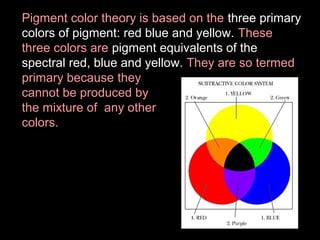
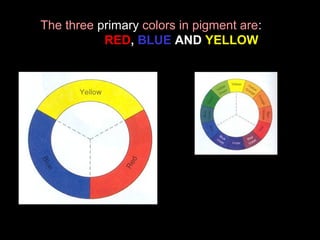
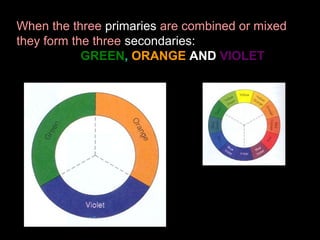
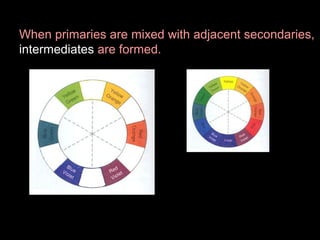
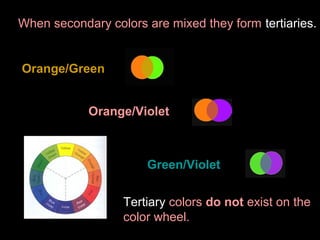
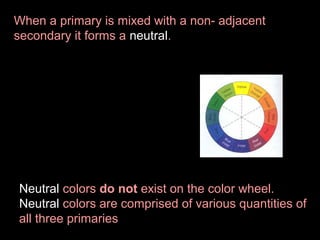
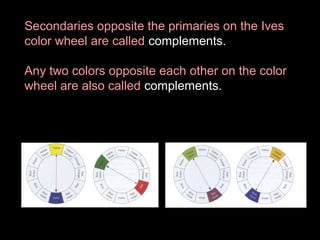
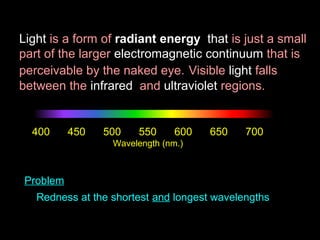
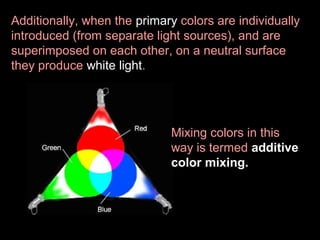
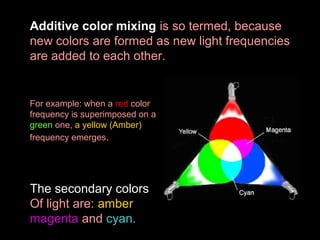
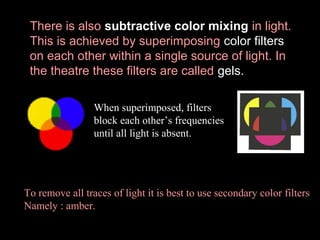
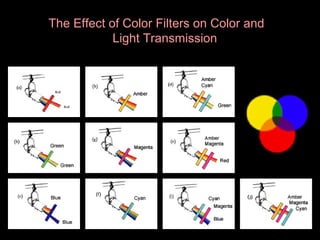
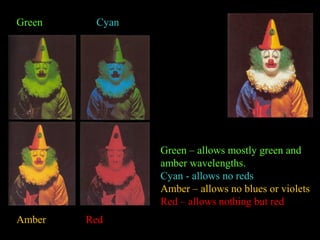


The three key points are: 1. Light is a form of radiant energy that consists of photons behaving in a uniform wave pattern. Visible light is a small portion of the electromagnetic spectrum perceivable by the human eye between 400-700 nm wavelengths. 2. Color is perceived when light strikes an object and is reflected to the eye. The wavelengths reflected or absorbed by the object determine the color perceived. Pigments selectively reflect wavelengths to produce color. 3. In light theory, the primary colors are red, blue, and green, while in pigment theory they are red, yellow, and blue. Additive color mixing combines light wavelengths, while subtractive mixing combines pigments. Both produce different


