Molecular & Cell Biology
S. Rahgozar,PhD
University of Isfahan
Faculty of Science
6. Cytoskeleton and Cell Movement
6.3. Microtubules and Microtubule Motors
1392-93
Treadmiling and the role of GTP in microtubule polymerization
Vincristine and Vinblastine selectively inhibit rapidly dividing cells
by binding β-tubulin and inhibiting microtubule polymerization.
Colchicine and Colcemid have the same effect but do not act
selectively
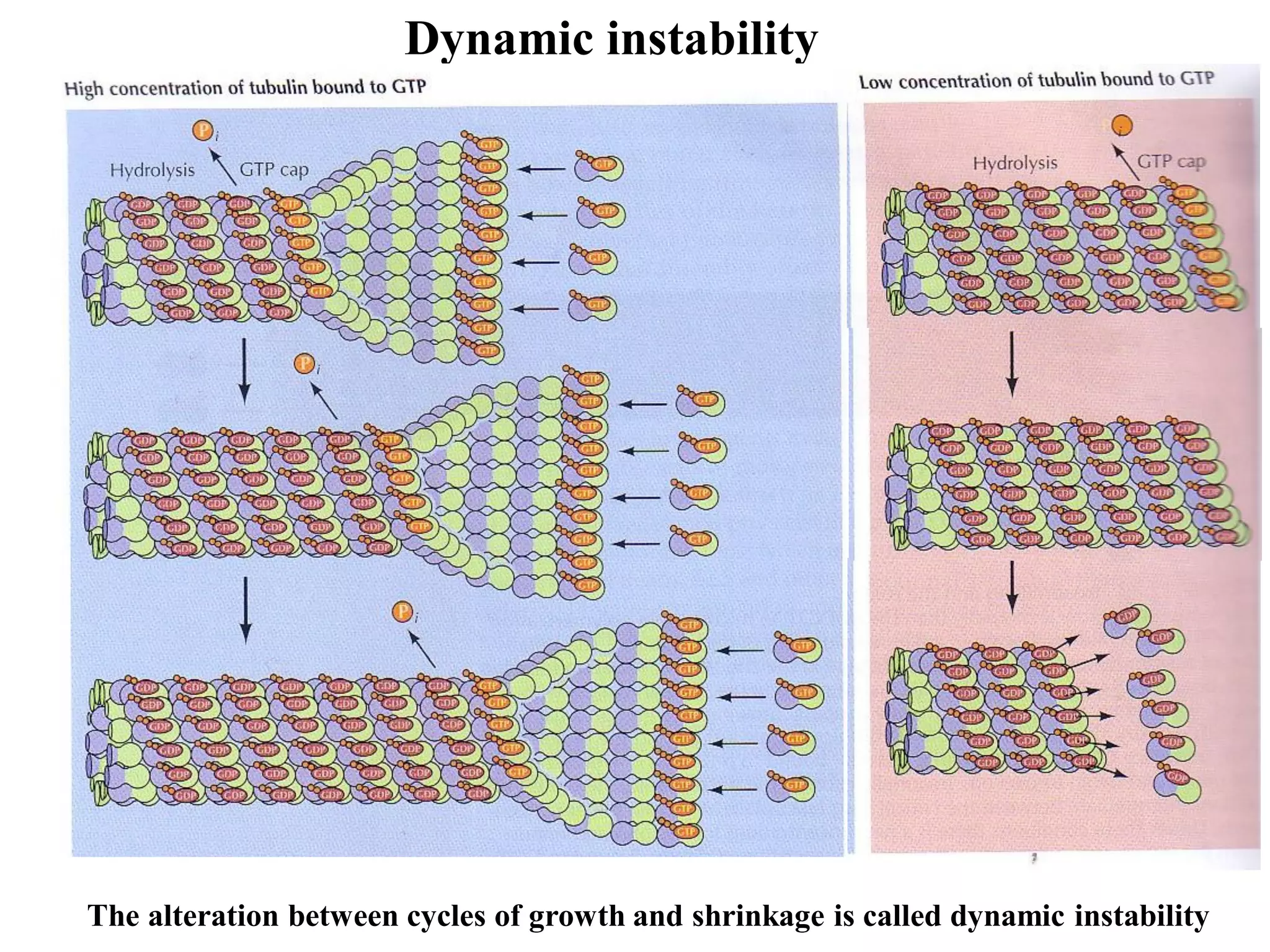
Dynamic instability
The alteration between cycles of growth and shrinkage is called dynamic instability
Assembly of microtubules
In animal cells, microtubules
extend outward from the
centrosome.
Mitotic spindle
The role of centrosome is to
initiate microtubule growth.
Structure of centrosome
CentrioleMicrotubule
Pericentral material
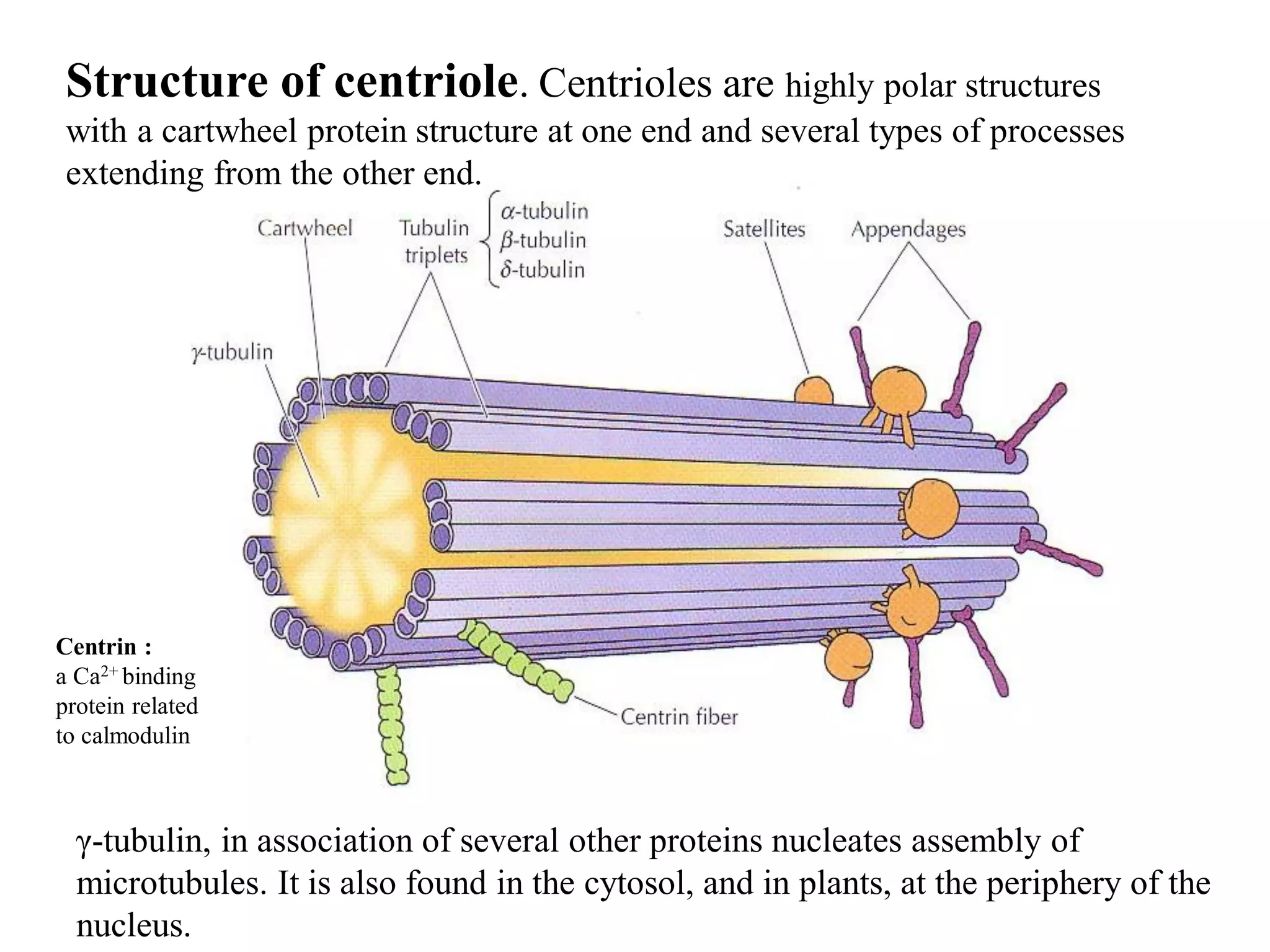
Structure of centriole. Centrioles are highly polar structures
with a cartwheel protein structure at one end and several types of processes
extending from the other end.
γ-tubulin, in association of several other proteins nucleates assembly of
microtubules. It is also found in the cytosol, and in plants, at the periphery of the
nucleus.
Centrin :
a Ca2+ binding
protein related
to calmodulin
Organization of Microtubules
 Microtubule stability is modulated by
 Stable microtubules
determine polarity
Organization of microtubules in nerve cells
o Extensive post-translational modification of tubulin
o Interaction of microtubules with
microtubule-associated
proteins (MAPs). MAPs
may cap the ends, sever
or track growing microtu-
bules toward specific
cellular locations.
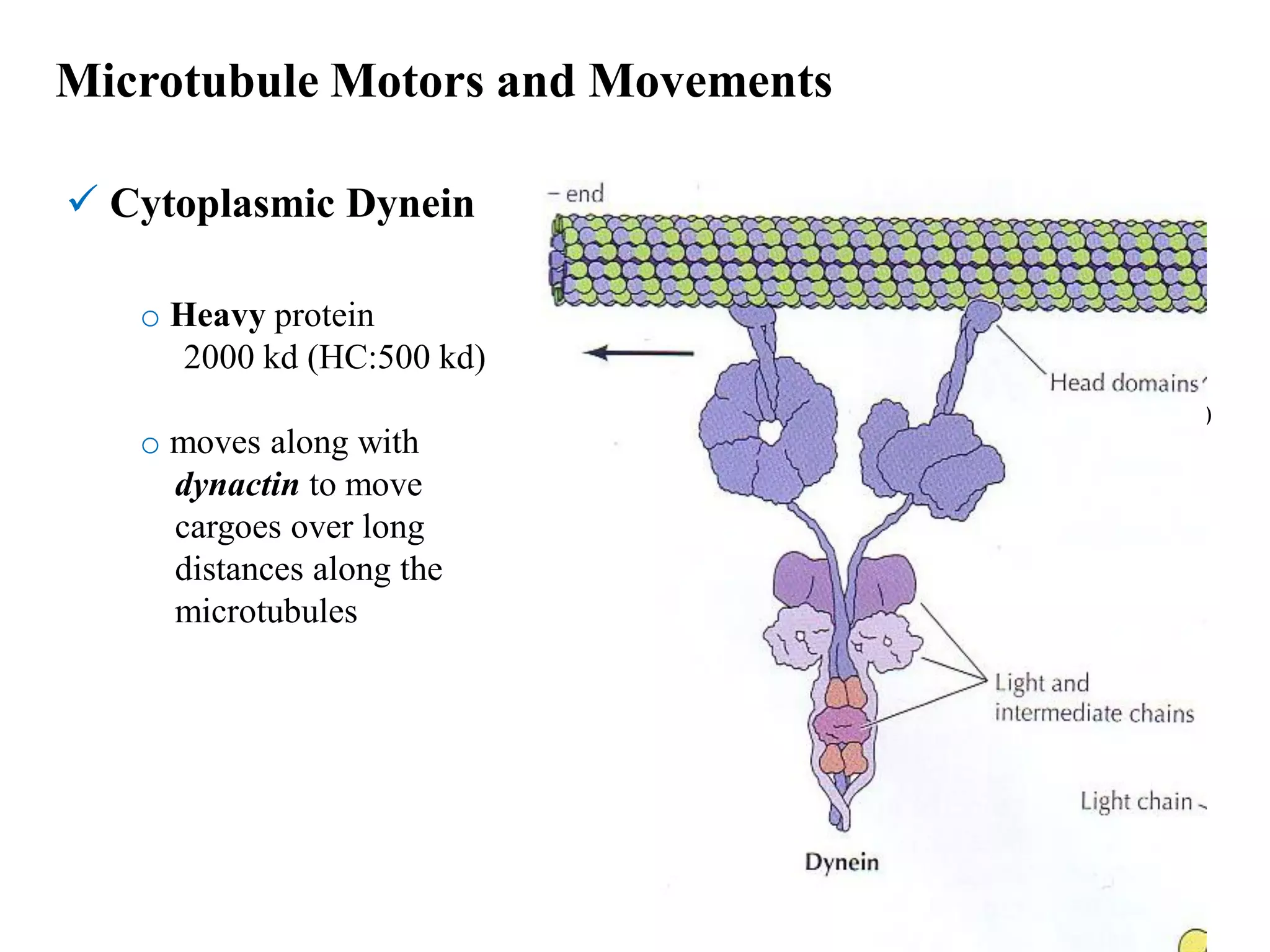
 Cytoplasmic Dynein
Heavy chains
Microtubule Motors and Movements
(Motor domain)
o Heavy protein
2000 kd (HC:500 kd)
o moves along with
dynactin to move
cargoes over long
distances along the
microtubules
(Motor domain)
Heavy chains
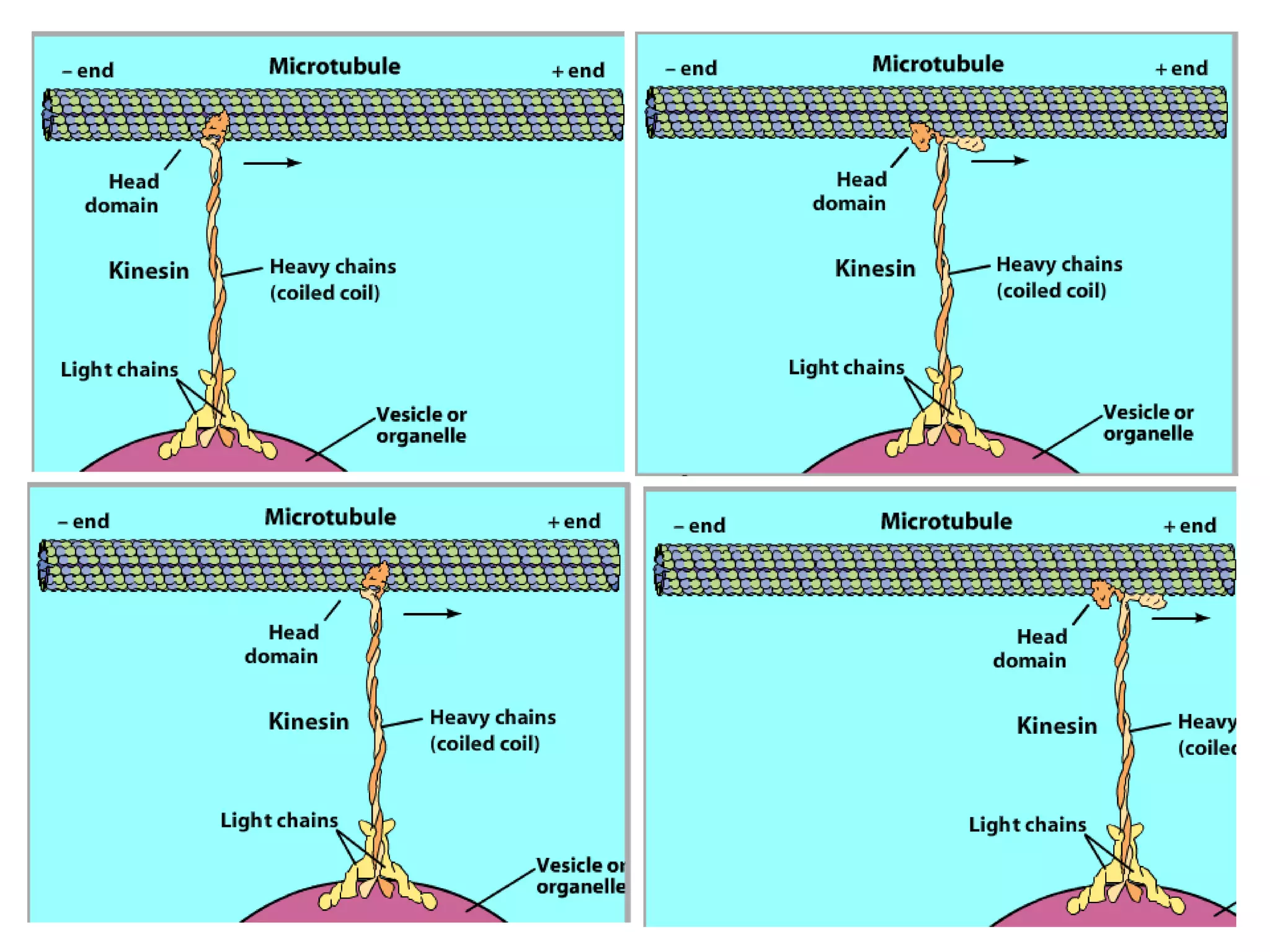
 kinesin
Cargo transport
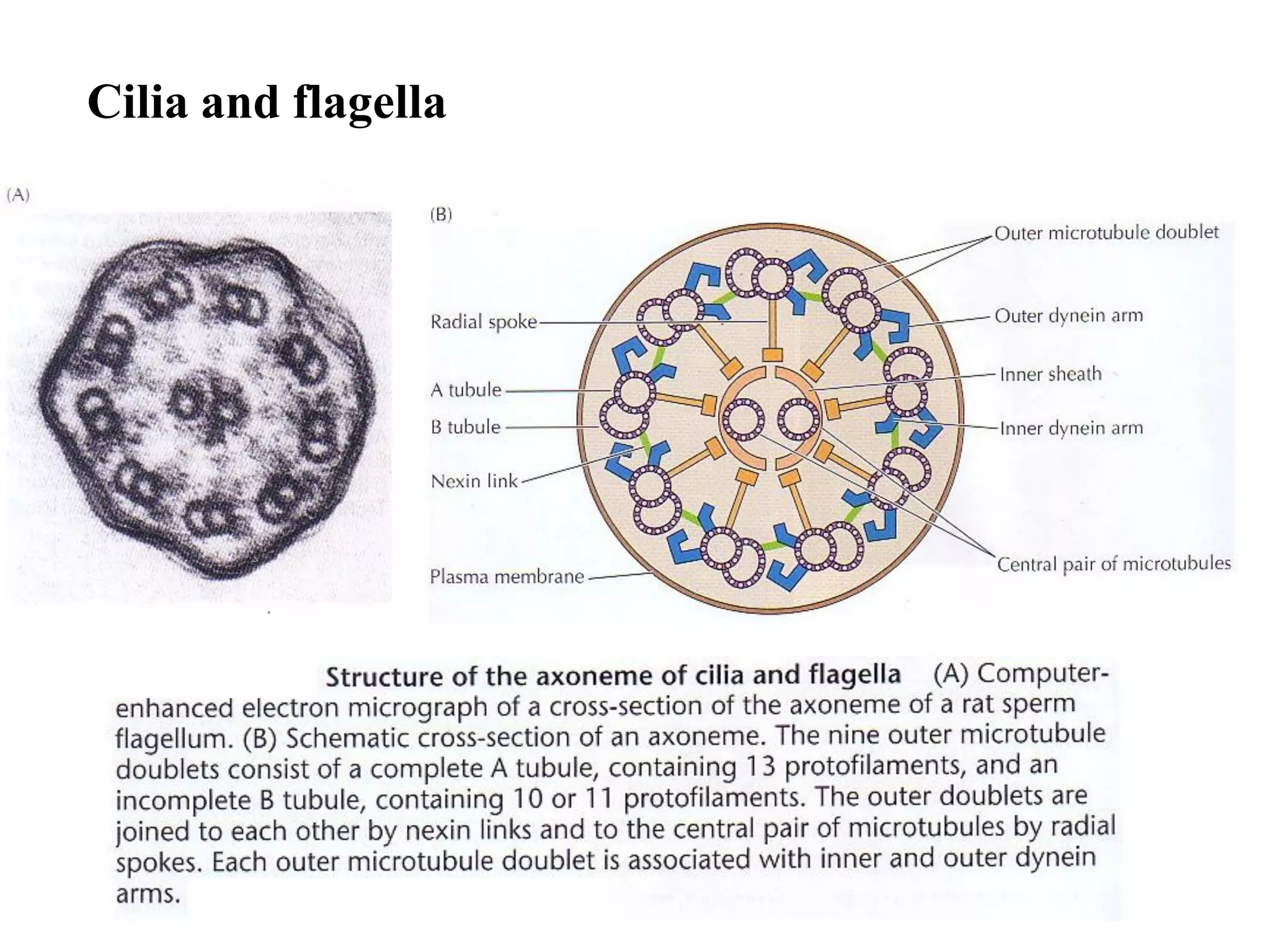
Cilia and flagella
The minus ends of the microtubules of cilia and flagella are anchored
in a basal body, which is similar in structure to a centriole and
contains nine triplets of microtubules.
 Movements of microtubules in cilia and flagella
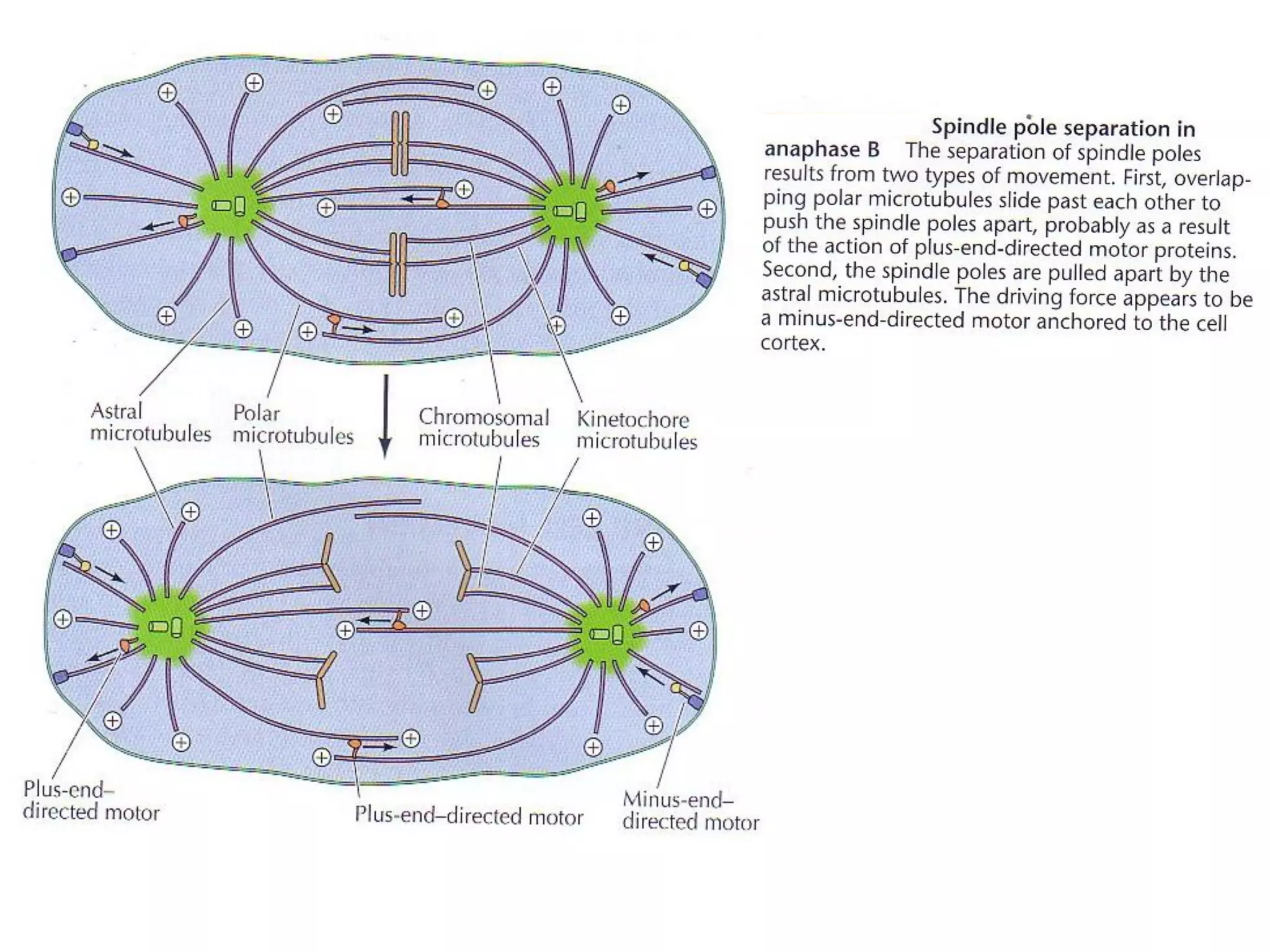
Reorganization of
microtubules during mitosis
Chromosome movement
12. Microtubules - cell biology

12. Microtubules - cell biology

  • 1.
    Molecular & CellBiology S. Rahgozar,PhD University of Isfahan Faculty of Science 6. Cytoskeleton and Cell Movement 6.3. Microtubules and Microtubule Motors 1392-93
  • 3.
    Treadmiling and therole of GTP in microtubule polymerization Vincristine and Vinblastine selectively inhibit rapidly dividing cells by binding β-tubulin and inhibiting microtubule polymerization. Colchicine and Colcemid have the same effect but do not act selectively
  • 4.
    Dynamic instability The alterationbetween cycles of growth and shrinkage is called dynamic instability
  • 5.
    Assembly of microtubules Inanimal cells, microtubules extend outward from the centrosome. Mitotic spindle The role of centrosome is to initiate microtubule growth.
  • 6.
  • 7.
    Structure of centriole.Centrioles are highly polar structures with a cartwheel protein structure at one end and several types of processes extending from the other end. γ-tubulin, in association of several other proteins nucleates assembly of microtubules. It is also found in the cytosol, and in plants, at the periphery of the nucleus. Centrin : a Ca2+ binding protein related to calmodulin
  • 8.
    Organization of Microtubules Microtubule stability is modulated by  Stable microtubules determine polarity Organization of microtubules in nerve cells o Extensive post-translational modification of tubulin o Interaction of microtubules with microtubule-associated proteins (MAPs). MAPs may cap the ends, sever or track growing microtu- bules toward specific cellular locations.
  • 9.
     Cytoplasmic Dynein Heavychains Microtubule Motors and Movements (Motor domain) o Heavy protein 2000 kd (HC:500 kd) o moves along with dynactin to move cargoes over long distances along the microtubules
  • 10.
  • 12.
  • 13.
  • 14.
    The minus endsof the microtubules of cilia and flagella are anchored in a basal body, which is similar in structure to a centriole and contains nine triplets of microtubules.
  • 15.
     Movements ofmicrotubules in cilia and flagella
  • 16.
  • 18.