Launch: 10/22
  Grab your binder and immediately take a seat
  Answer the following two questions in complete
  sentences:
  1.  Why do unstable isotopes go through radioactive
      decay?
  2.  How are nuclear reactions different from chemical
      reactions?
What is a chemical bond?
         Mr. Heffner
         10/22/09
What is a chemical bond?
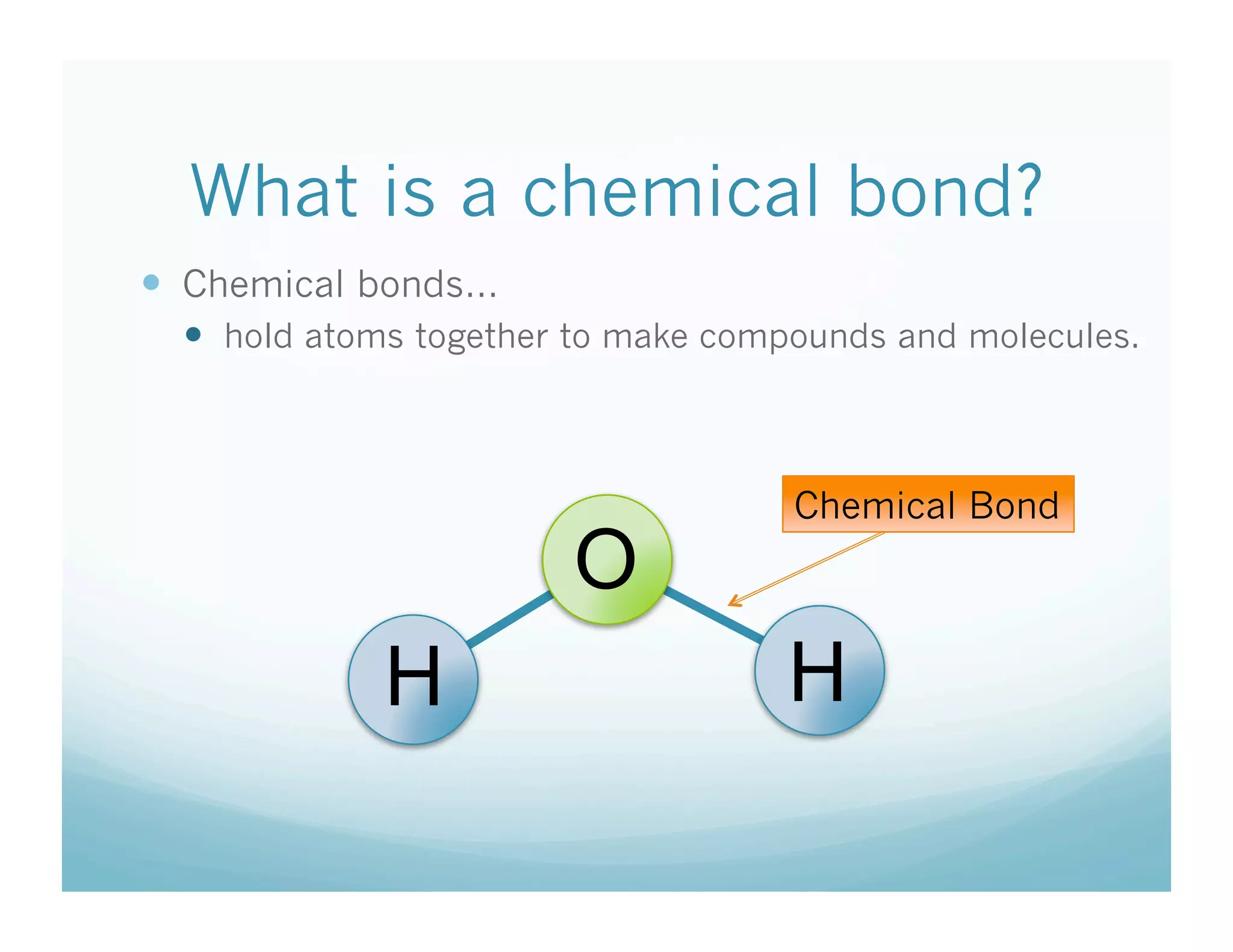
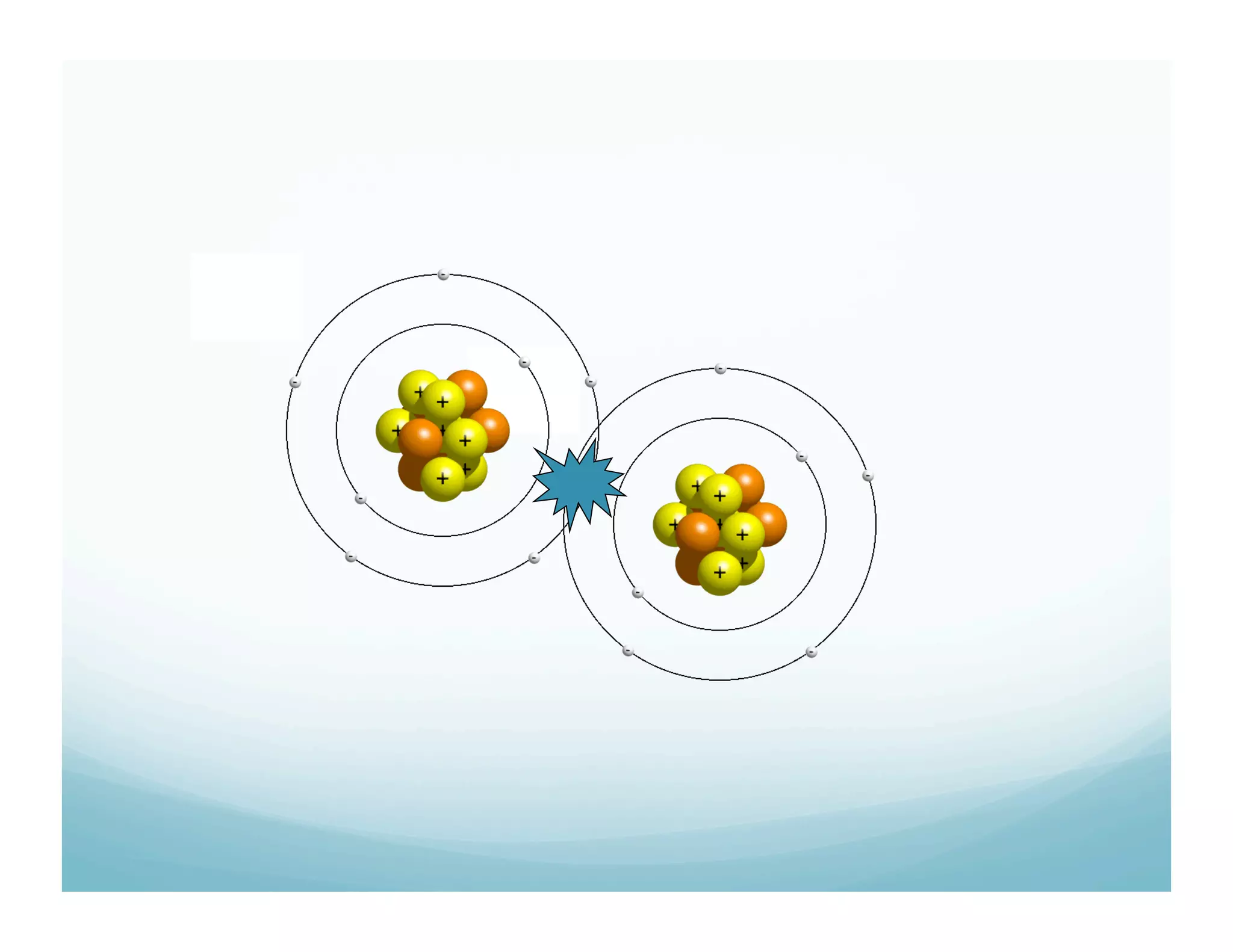
  Chemical bonds…
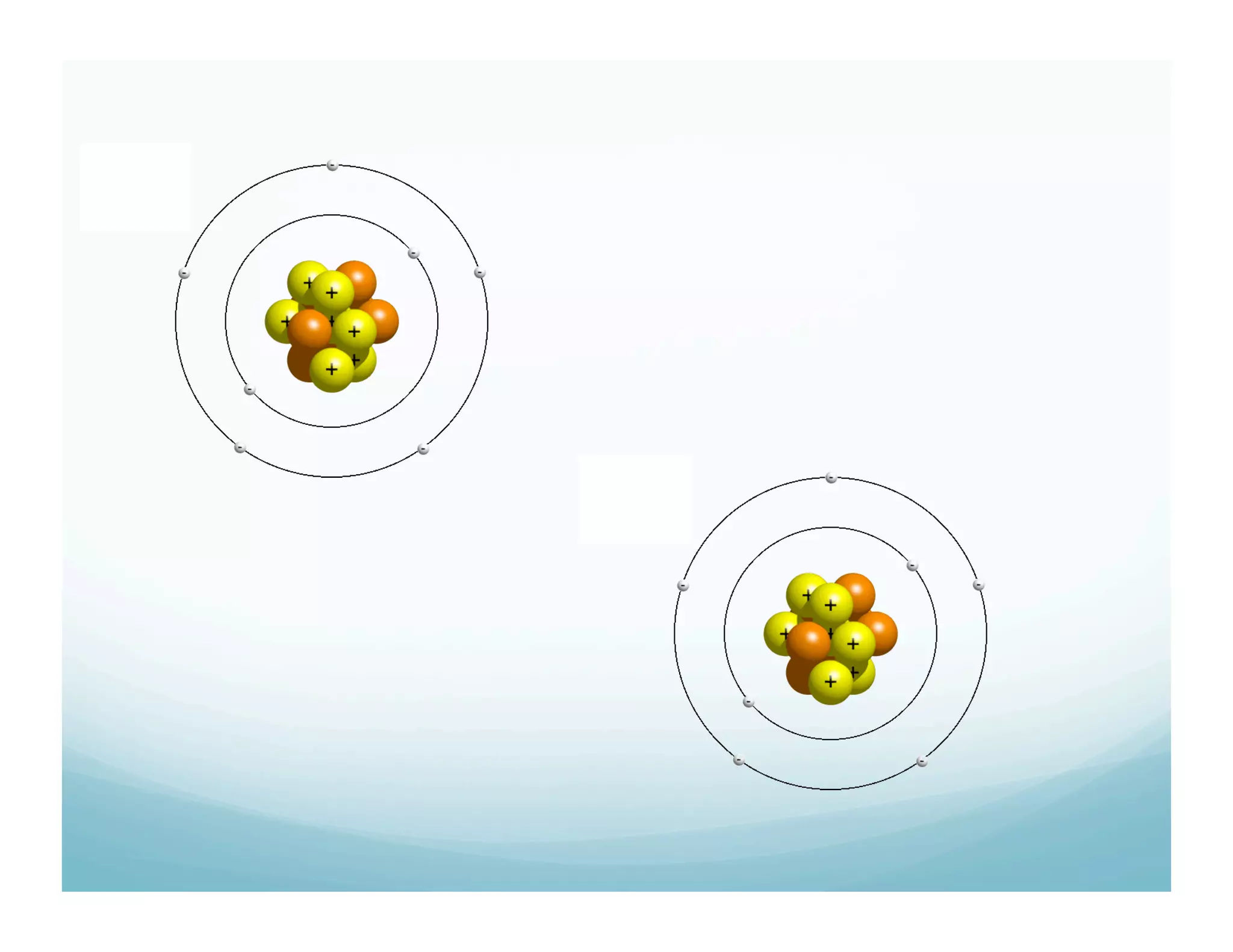
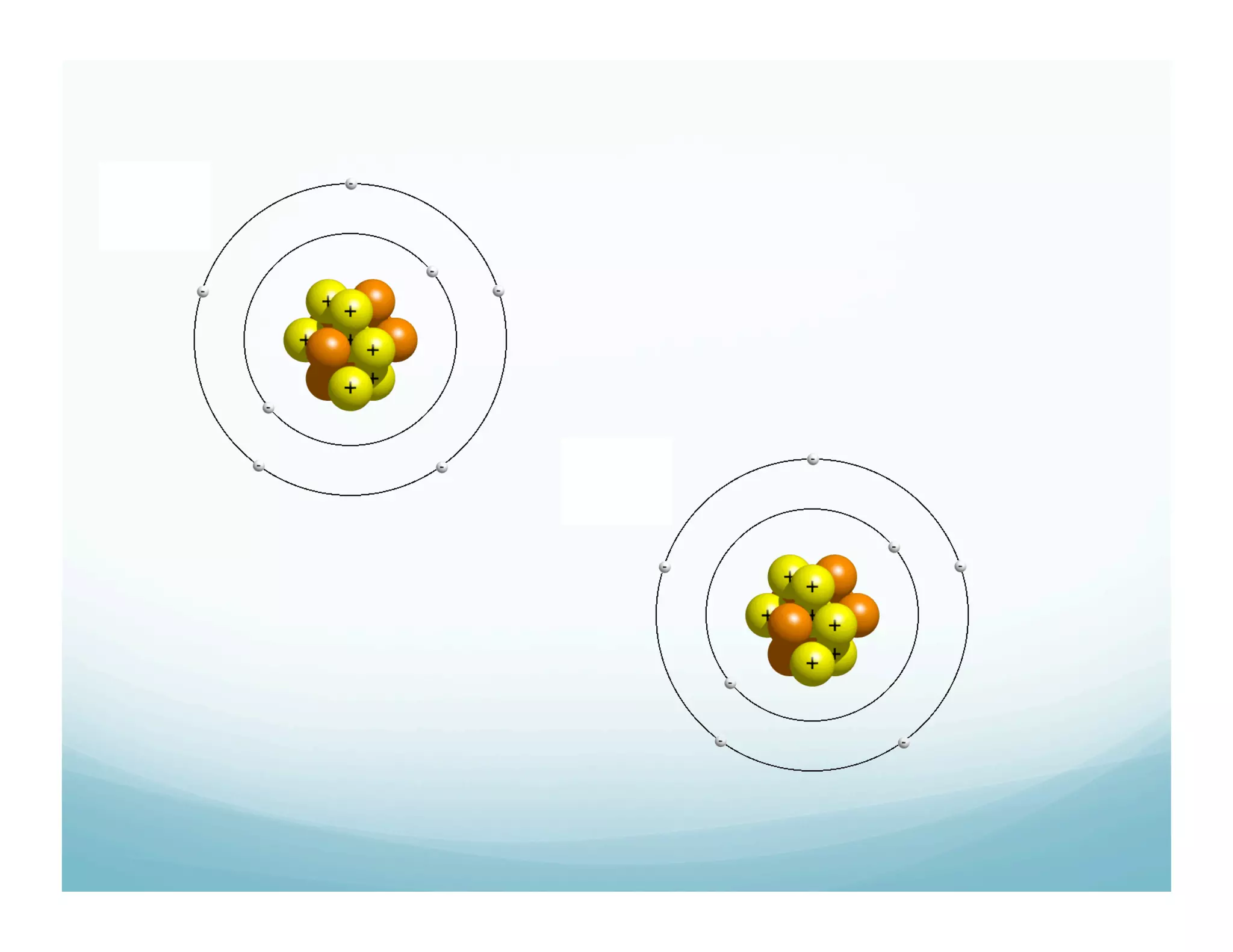
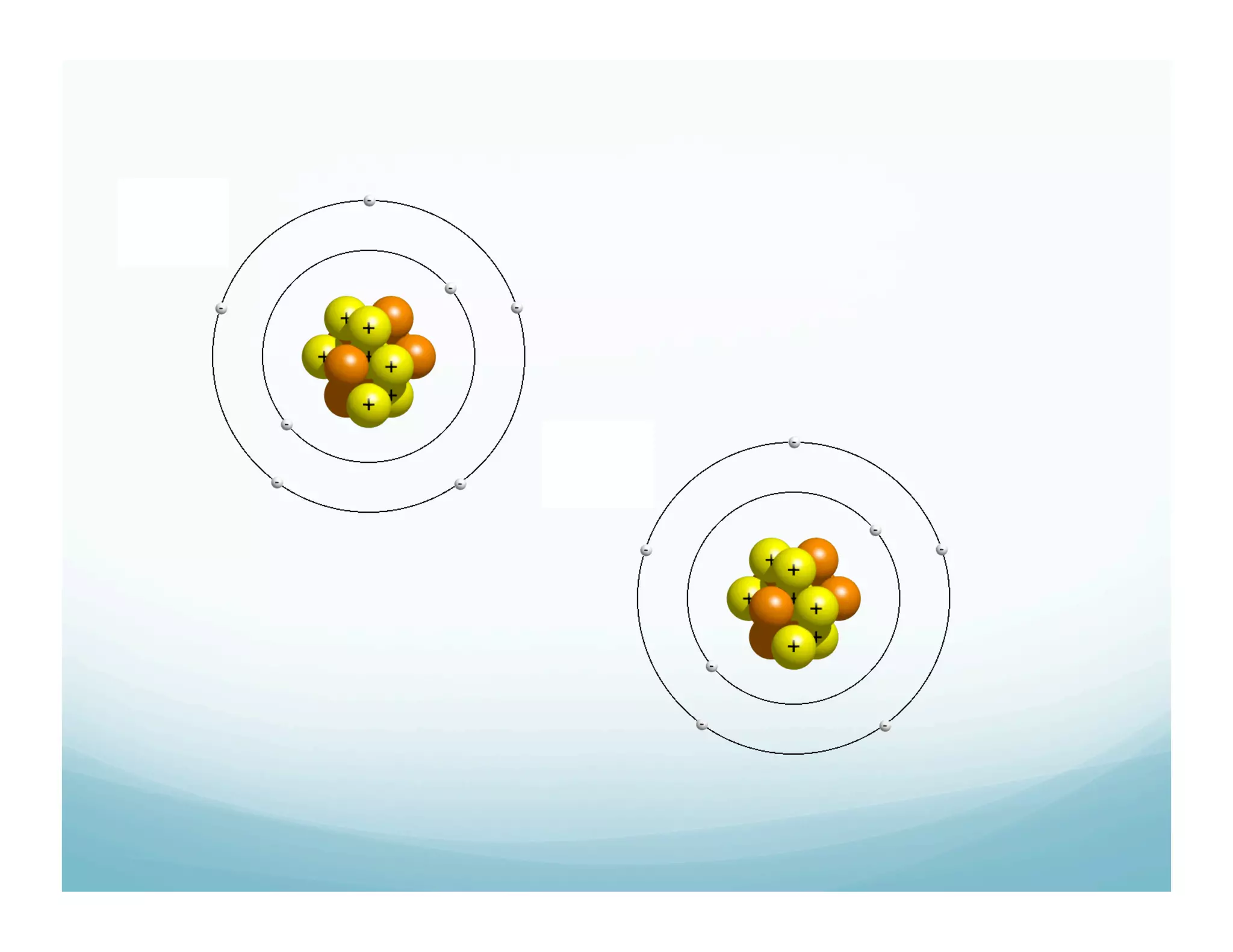
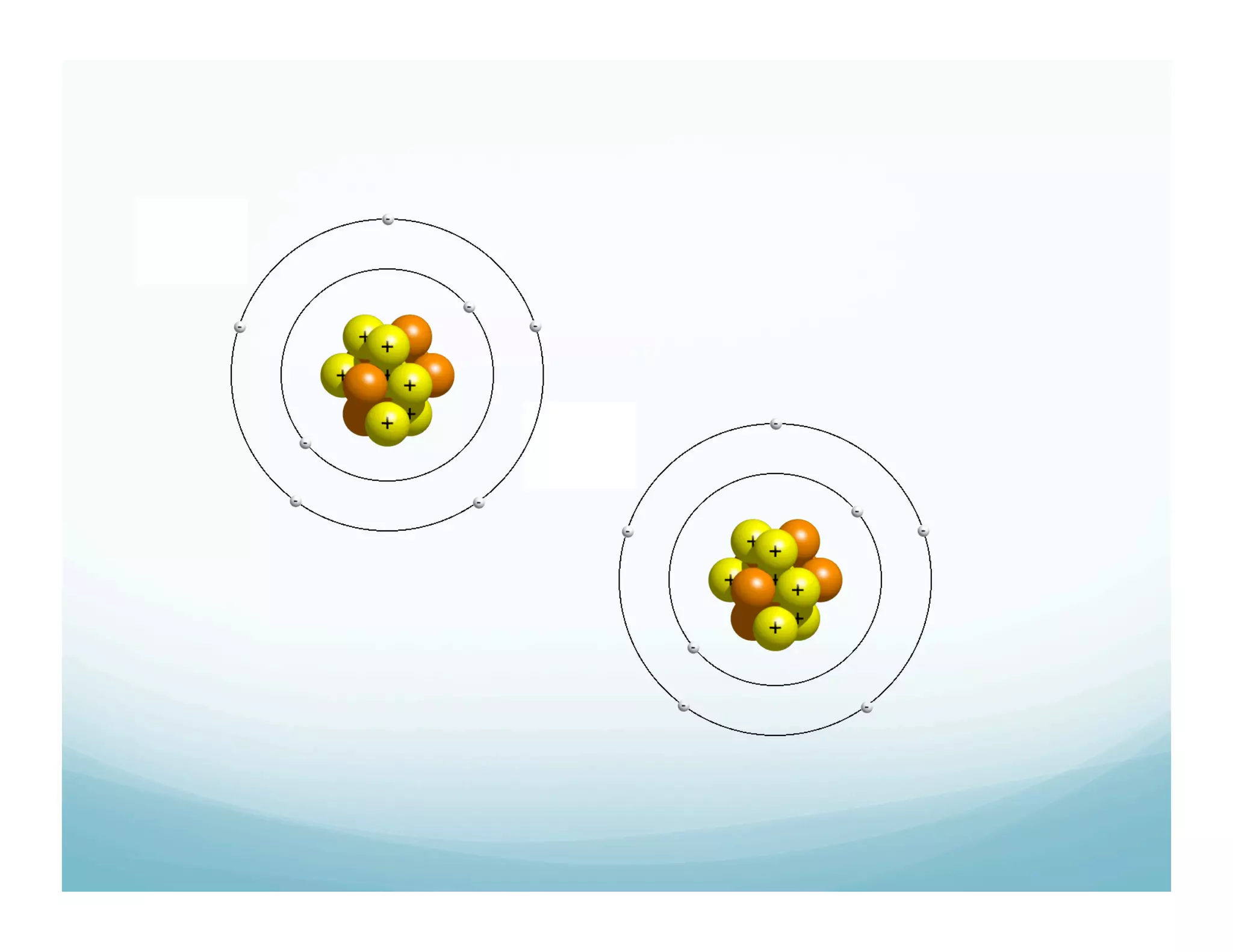
    hold atoms together to make compounds and molecules.


                                     Chemical Bond
                        O
             H                      H
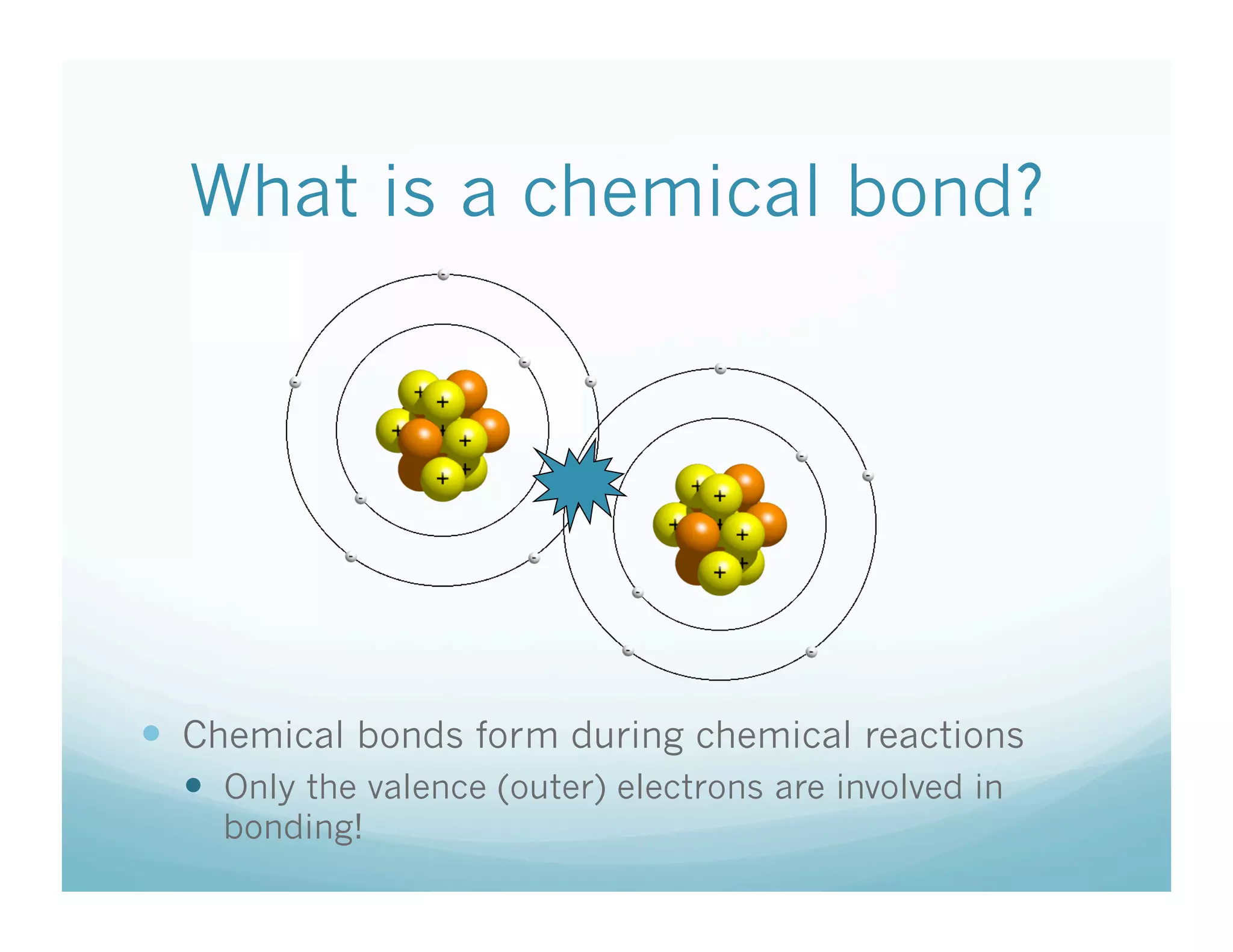
What is a chemical bond?


  Chemical bonds form during chemical reactions
    Only the valence (outer) electrons are involved in
    bonding!
What is a chemical bond?
  Chemical bonds form during chemical reactions
    Bill Nye video
      List 4 chemical reactions from the video.
      What gas was responsible for making our Pop Rockets
      pop?
Why do atoms form bonds?
  Atoms form bonds…
    to become more stable.
  The most stable atoms are the noble gases
    They have 8 valence electrons
    All other atoms want to be like the noble gases
Why do atoms form bonds?
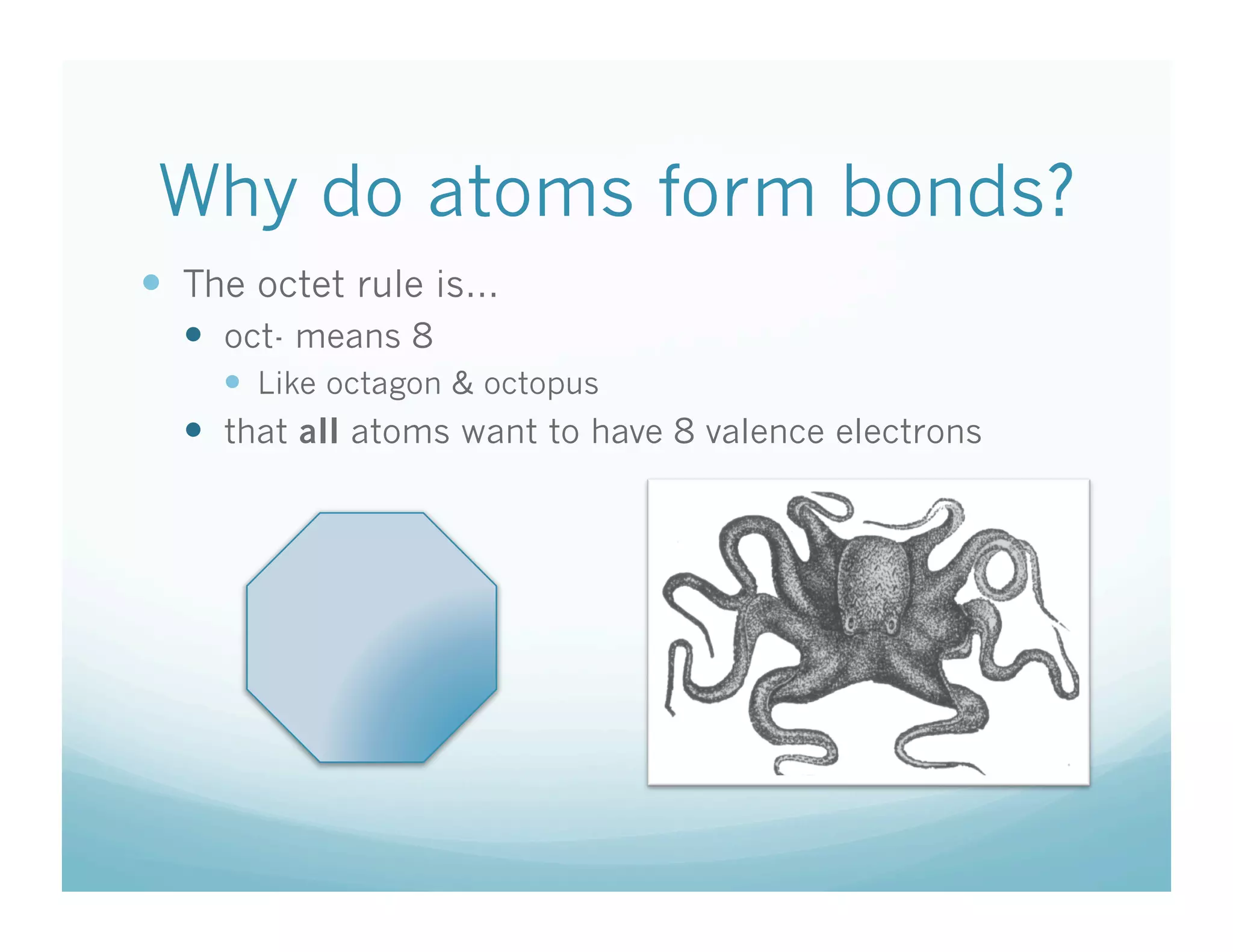
  The octet rule is…
    oct- means 8
       Like octagon & octopus
    that all atoms want to have 8 valence electrons
Foldable
  Fold in half 3X, then fold in windows
  Key terms:
    Chemical bond
    Octet rule
    Valence electrons (include the trick)

  Quiz your partner (2 min)
Practice Questions
  Practice Questions Worksheet
    Answer in complete sentences!
Exit Slip
1.  Chemical bonds
  a.    are always repulsive forces.
  b.    form between atoms to make compounds.
  c.    are not found in certain molecules like H2S.
  d.    take a large amount of energy to form.
Exit Slip
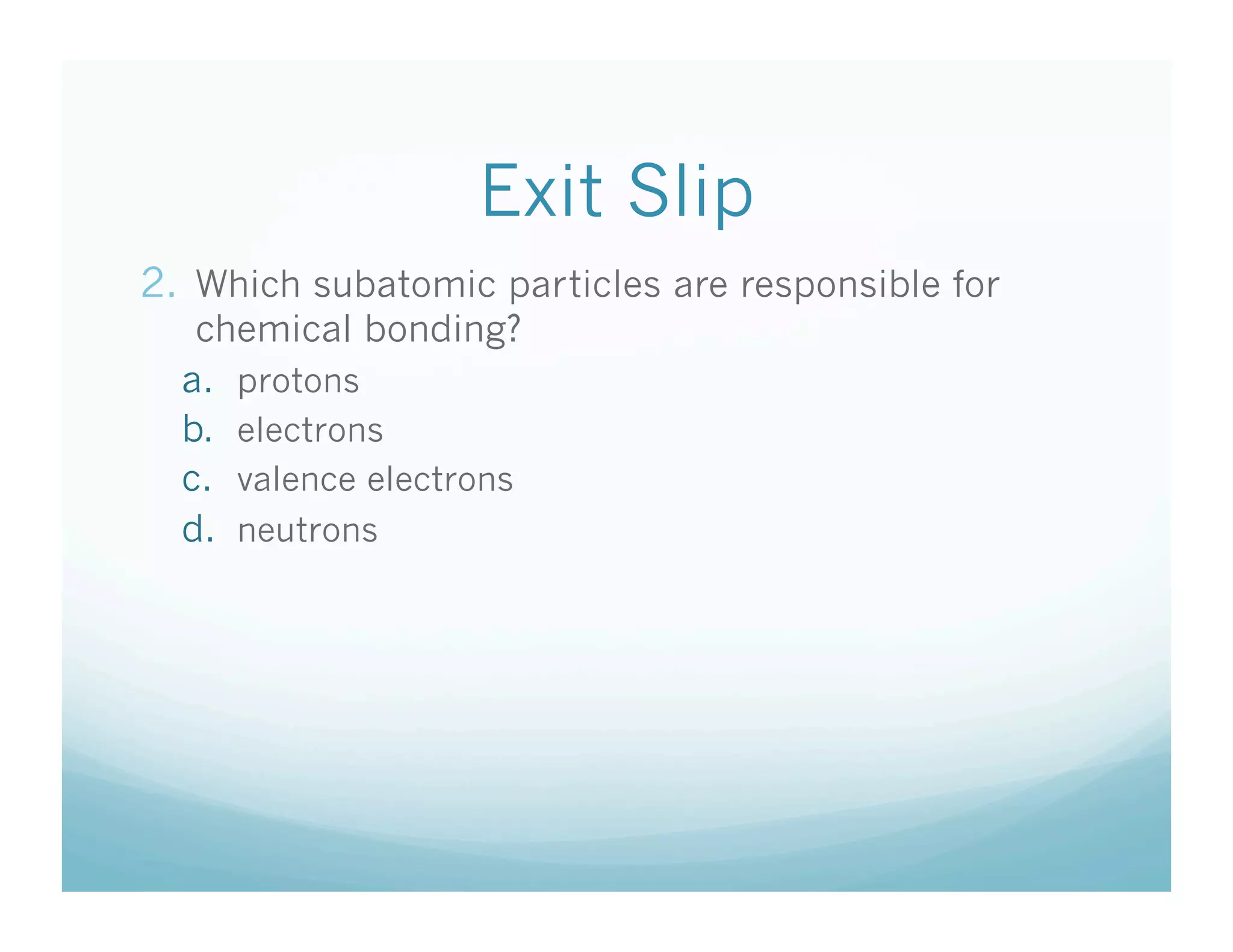
2.  Which subatomic particles are responsible for
   chemical bonding?
  a.  protons
  b.  electrons
  c.  valence electrons
  d.  neutrons
Exit Slip
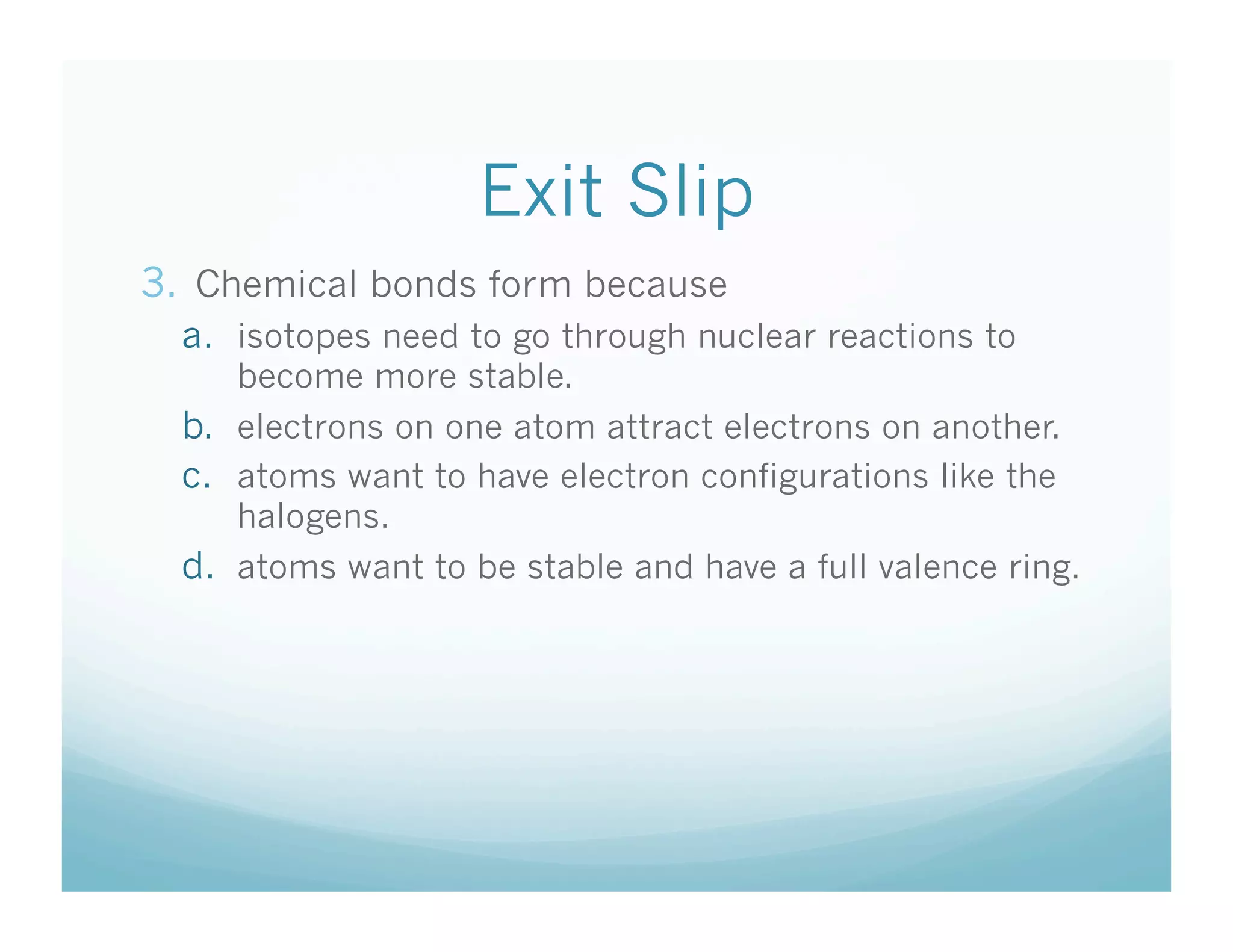
3.  Chemical bonds form because
  a.  isotopes need to go through nuclear reactions to
      become more stable.
  b.  electrons on one atom attract electrons on another.
  c.  atoms want to have electron configurations like the
      halogens.
  d.  atoms want to be stable and have a full valence ring.
Exit Slip
4.  The octet rule states that
  a.    all atoms want to have 8 valence electrons.
  b.    all atoms want to have 18 valence electrons.
  c.    the noble gases are the least stable atoms.
  d.    all atoms want to have 8 protons, 8 neutrons, and 8
        electrons.
Exit Slip
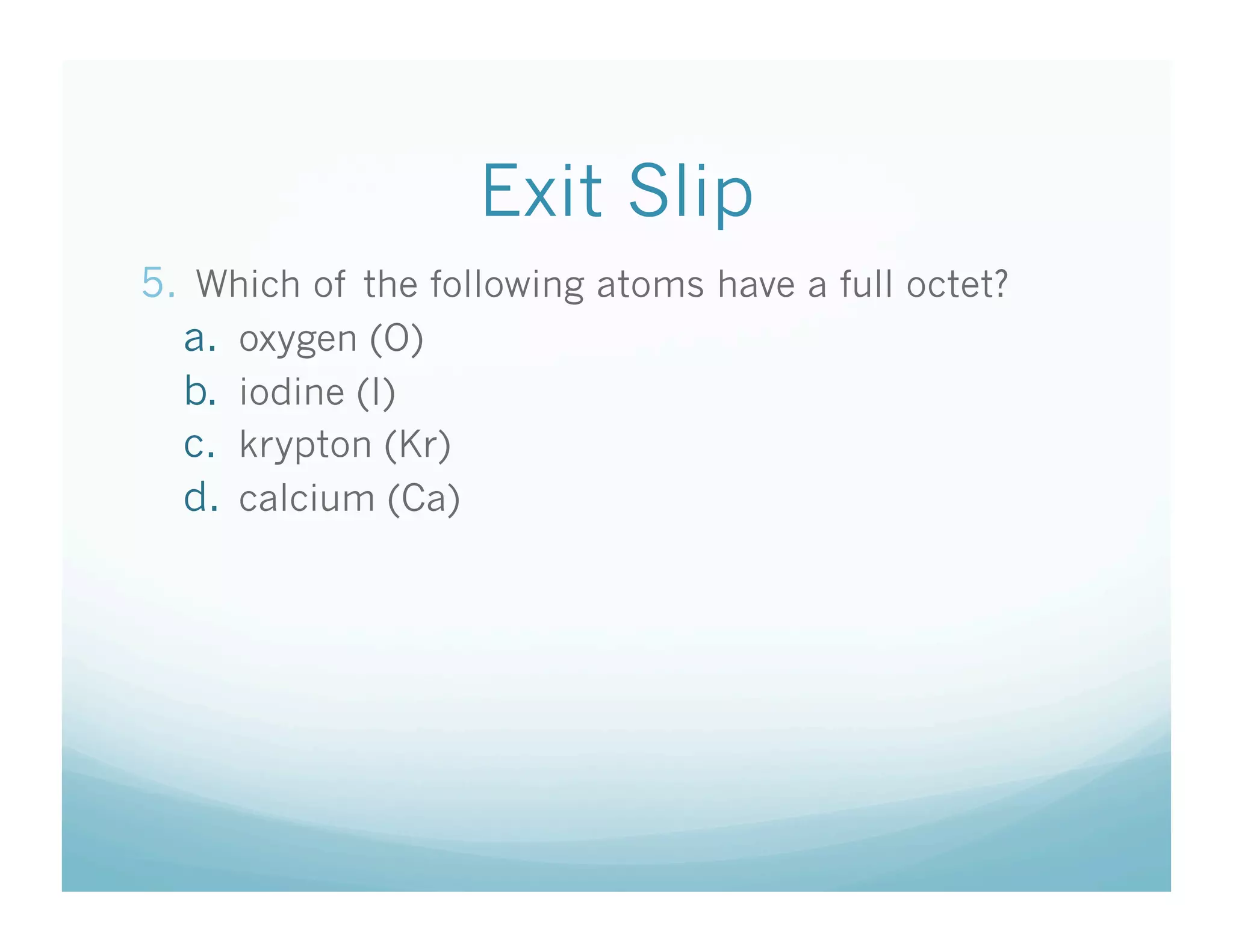
5.  Which of the following atoms have a full octet?
   a.  oxygen (O)
   b.  iodine (I)
   c.  krypton (Kr)
   d.  calcium (Ca)
Homework
  Finish practice questions

10/22 What is a chemical bond?

  • 1.
    Launch: 10/22   Grabyour binder and immediately take a seat   Answer the following two questions in complete sentences: 1.  Why do unstable isotopes go through radioactive decay? 2.  How are nuclear reactions different from chemical reactions?
  • 2.
    What is achemical bond? Mr. Heffner 10/22/09
  • 3.
    What is achemical bond?   Chemical bonds…   hold atoms together to make compounds and molecules. Chemical Bond O H H
  • 12.
    What is achemical bond?   Chemical bonds form during chemical reactions   Only the valence (outer) electrons are involved in bonding!
  • 13.
    What is achemical bond?   Chemical bonds form during chemical reactions   Bill Nye video   List 4 chemical reactions from the video.   What gas was responsible for making our Pop Rockets pop?
  • 14.
    Why do atomsform bonds?   Atoms form bonds…   to become more stable.   The most stable atoms are the noble gases   They have 8 valence electrons   All other atoms want to be like the noble gases
  • 15.
    Why do atomsform bonds?   The octet rule is…   oct- means 8   Like octagon & octopus   that all atoms want to have 8 valence electrons
  • 16.
    Foldable   Fold inhalf 3X, then fold in windows   Key terms:   Chemical bond   Octet rule   Valence electrons (include the trick)   Quiz your partner (2 min)
  • 17.
    Practice Questions   PracticeQuestions Worksheet   Answer in complete sentences!
  • 18.
    Exit Slip 1.  Chemicalbonds a.  are always repulsive forces. b.  form between atoms to make compounds. c.  are not found in certain molecules like H2S. d.  take a large amount of energy to form.
  • 19.
    Exit Slip 2.  Whichsubatomic particles are responsible for chemical bonding? a.  protons b.  electrons c.  valence electrons d.  neutrons
  • 20.
    Exit Slip 3.  Chemicalbonds form because a.  isotopes need to go through nuclear reactions to become more stable. b.  electrons on one atom attract electrons on another. c.  atoms want to have electron configurations like the halogens. d.  atoms want to be stable and have a full valence ring.
  • 21.
    Exit Slip 4.  Theoctet rule states that a.  all atoms want to have 8 valence electrons. b.  all atoms want to have 18 valence electrons. c.  the noble gases are the least stable atoms. d.  all atoms want to have 8 protons, 8 neutrons, and 8 electrons.
  • 22.
    Exit Slip 5.  Whichof the following atoms have a full octet? a.  oxygen (O) b.  iodine (I) c.  krypton (Kr) d.  calcium (Ca)
  • 23.