HIV & Housing: The Urgency of Now
Implementing the National HIV/AIDS Strategy: From Strategy to
Action to Impact, 2011 National HIV Prevention Conference, 8/14/11

David Vos, Director, Office of HIV/AIDS Housing
Housing: Investing in the Future

Housing is a critical component of HIV care and prevention
systems – reducing homelessness

Helping homeless and unstably housed people:
   • enter into supportive housing and remain in care,
   • reduce HIV risk behavior, &
   • adhere to complex treatment regimens

Reduces the risk of HIV transmission to others.

Need to address disparities—seen in retention in care &
delayed entry into care.
Housing: Investing in the Future
[O]ur task is to build on these advances and deliver
scientifically validated interventions…

…treatment and care …is not optimal… [in US] only about
19 percent have a viral load that has been driven to
undetectable levels by combination therapy.

…greater numbers of HIV-infected individuals need to be
identified early… [with] linkage to appropriate care and
antiretroviral treatment.

   Dr. Anthony Fauci, Director, National Institute of Allergy and Infectious Diseases
   Thirty Years of AIDS, Guest Opinion 6/11
Housing: Investing in the Future
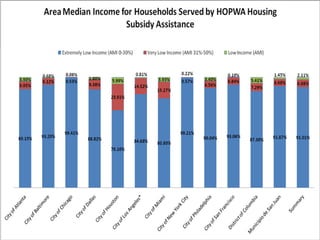
• Stable housing is one of the most cost-effective strategies for driving
  down HIV/AIDS health care costs
       —currently range $20,000 to $34,000 per client per year
       —compared to reliance on emergency care up to $290,000

• Stabilize this medically vulnerable and highly stigmatized population,
  while facilitating and assessing their participation in care.

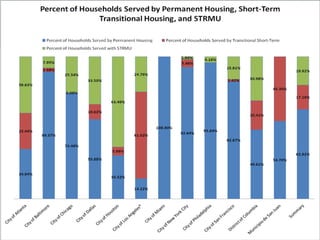
• Investment in a diversity of housing support
    – Rental assistance subsidies and short-term payments &
    – Supportive housing facilities, community residences & projects offering short-term and
      transitional housing to prevent homelessness
    – Client support in service coordination, case management, connecting to care
*
*
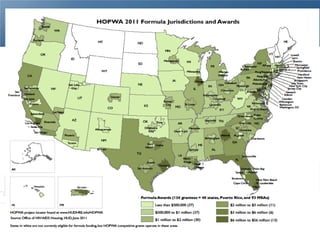
HOPWA: Investing in the Future
HOPWA commitment is a cornerstone of enhanced HUD
  partnership with community efforts on HIV/AIDS

   – HUD is working to engage in better community planning – by
     sharing meaningful data to inform plans & review results

   – To improve leveraging of HIV and homeless efforts with other
     resources to promote access to health care and other services
     needed

   – Making Information technology improvements to reduce
     burdens in system use and reporting, allowing better tracking
     of results and transparency
HOPWA: Investing in the Future
The National HIV/AIDS Strategy establishes three major goals to:
1) reduce HIV infections,
2) increase access to care for persons living with HIV/ AIDS and
    improve health outcomes, and
3) reduce HIV-related disparities.


HUD is leading efforts to:

Developing a plan to shift to HIV/AIDS case reporting as a basis for
   HOPWA formula funding.

Increasing access to housing & non-medical services.
    •   Identify models in coordinating delivery of supportive
    •   innovative case management and other mechanisms.
HOPWA: Investing in the Future
Achieve the NHAS target of increasing the number of Ryan White clients
    with permanent housing from 82% to 86% by 2015

2011 New Projects Competition, as issued May 18, 2011

•   Integrated HIV/AIDS Housing Plans (IHHP)
•   Applications rec’d August 2, 2011 via grants.gov
•   Offering $9.1 million for 6 to 8 awards
•   Seeking new partnerships, inc. Housing Authorities
•   Cross-program approaches to delivery of housing, care and services
•   Baseline of unmet housing needs inc. Ryan White reports
•   Help ID health outcomes that inform housing efforts
HOPWA Information

HOPWA links to documents, profiles, financial
 management training, oversight / desk guide
 and eLearning resources

www.HUDHRE.info/HOPWA section
 on the Homelessness Resource Exchange

  • Find a Local HOPWA Project Info
  • Email to HOPWA@hud.gov
30 years

1 sun 1600 voss 2011 august nhpc cdc event

  • 1.
    HIV & Housing:The Urgency of Now Implementing the National HIV/AIDS Strategy: From Strategy to Action to Impact, 2011 National HIV Prevention Conference, 8/14/11 David Vos, Director, Office of HIV/AIDS Housing
  • 2.
    Housing: Investing inthe Future Housing is a critical component of HIV care and prevention systems – reducing homelessness Helping homeless and unstably housed people: • enter into supportive housing and remain in care, • reduce HIV risk behavior, & • adhere to complex treatment regimens Reduces the risk of HIV transmission to others. Need to address disparities—seen in retention in care & delayed entry into care.
  • 3.
    Housing: Investing inthe Future [O]ur task is to build on these advances and deliver scientifically validated interventions… …treatment and care …is not optimal… [in US] only about 19 percent have a viral load that has been driven to undetectable levels by combination therapy. …greater numbers of HIV-infected individuals need to be identified early… [with] linkage to appropriate care and antiretroviral treatment. Dr. Anthony Fauci, Director, National Institute of Allergy and Infectious Diseases Thirty Years of AIDS, Guest Opinion 6/11
  • 4.
    Housing: Investing inthe Future • Stable housing is one of the most cost-effective strategies for driving down HIV/AIDS health care costs —currently range $20,000 to $34,000 per client per year —compared to reliance on emergency care up to $290,000 • Stabilize this medically vulnerable and highly stigmatized population, while facilitating and assessing their participation in care. • Investment in a diversity of housing support – Rental assistance subsidies and short-term payments & – Supportive housing facilities, community residences & projects offering short-term and transitional housing to prevent homelessness – Client support in service coordination, case management, connecting to care
  • 6.
  • 7.
  • 8.
    HOPWA: Investing inthe Future HOPWA commitment is a cornerstone of enhanced HUD partnership with community efforts on HIV/AIDS – HUD is working to engage in better community planning – by sharing meaningful data to inform plans & review results – To improve leveraging of HIV and homeless efforts with other resources to promote access to health care and other services needed – Making Information technology improvements to reduce burdens in system use and reporting, allowing better tracking of results and transparency
  • 9.
    HOPWA: Investing inthe Future The National HIV/AIDS Strategy establishes three major goals to: 1) reduce HIV infections, 2) increase access to care for persons living with HIV/ AIDS and improve health outcomes, and 3) reduce HIV-related disparities. HUD is leading efforts to: Developing a plan to shift to HIV/AIDS case reporting as a basis for HOPWA formula funding. Increasing access to housing & non-medical services. • Identify models in coordinating delivery of supportive • innovative case management and other mechanisms.
  • 10.
    HOPWA: Investing inthe Future Achieve the NHAS target of increasing the number of Ryan White clients with permanent housing from 82% to 86% by 2015 2011 New Projects Competition, as issued May 18, 2011 • Integrated HIV/AIDS Housing Plans (IHHP) • Applications rec’d August 2, 2011 via grants.gov • Offering $9.1 million for 6 to 8 awards • Seeking new partnerships, inc. Housing Authorities • Cross-program approaches to delivery of housing, care and services • Baseline of unmet housing needs inc. Ryan White reports • Help ID health outcomes that inform housing efforts
  • 11.
    HOPWA Information HOPWA linksto documents, profiles, financial management training, oversight / desk guide and eLearning resources www.HUDHRE.info/HOPWA section on the Homelessness Resource Exchange • Find a Local HOPWA Project Info • Email to HOPWA@hud.gov
  • 12.