
Realizing Benefit of Laptops

Vincent Jansen
QAIS Heads Presentation

April 22, 2012.
Realizing Benefit of Laptops
• Is your school capable of sustaining the benefits of laptop
  or tablet programs for learning?
• Is the school ready for change?
• Is the school prepared to hand learning over to the
  students?
• How do you need to change your lessons?
1. Rules
• What are the simple set of or beliefs, rules or guidelines
  that define teaching and learning in your school?
   –   Need to build consensus
   –   Assign a value to them
   –   Define the drivers for them
   –   Assign leaders to them
• Sample items:
   –   Cooperation
   –   Curriculum
   –   Feedback
   –   Time
   –   Sports
   –   Learning tools (laptops, software…)
2. Design
• What are some of the benefits or using these central
  beliefs embedded in the activities and processes in your
  school?
   – Present a shared vision
   – Supports change when viewed through multiple lenses
   – Links activities and processes back to central beliefs
• Sample items:
   –   Physical space (classroom organization)
   –   Equipment (laptops, desktops, tablets)
   –   Roles and responsibilities
   –   Curriculum documents
   –   Student performance and assessment
   –   Professional development
3. Collaboration
• All members of the school are engaged with creating
  the embedded design of your school.
   –   Student know their roles as learners
   –   Students understand performance measures
   –   Students understand nature of being global citizens
   –   Communication of ideas is clear
   –   Every member plays an active role
• Sample items
   –   Shared curriculum documents
   –   Shared best practice using tools, class management
   –   Open meetings
   –   Faculty growth models
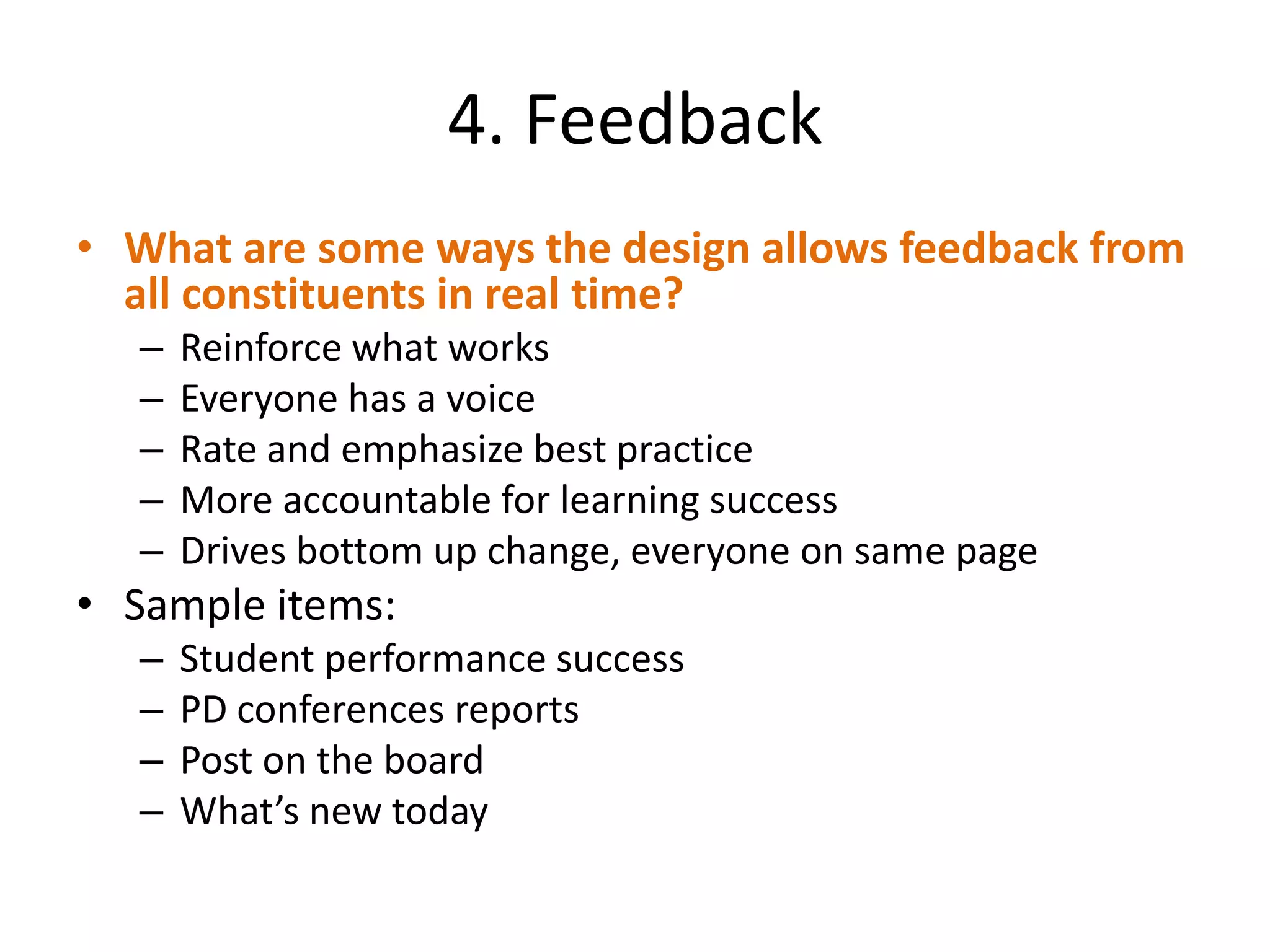
4. Feedback
• What are some ways the design allows feedback from
  all constituents in real time?
  –   Reinforce what works
  –   Everyone has a voice
  –   Rate and emphasize best practice
  –   More accountable for learning success
  –   Drives bottom up change, everyone on same page
• Sample items:
  –   Student performance success
  –   PD conferences reports
  –   Post on the board
  –   What’s new today
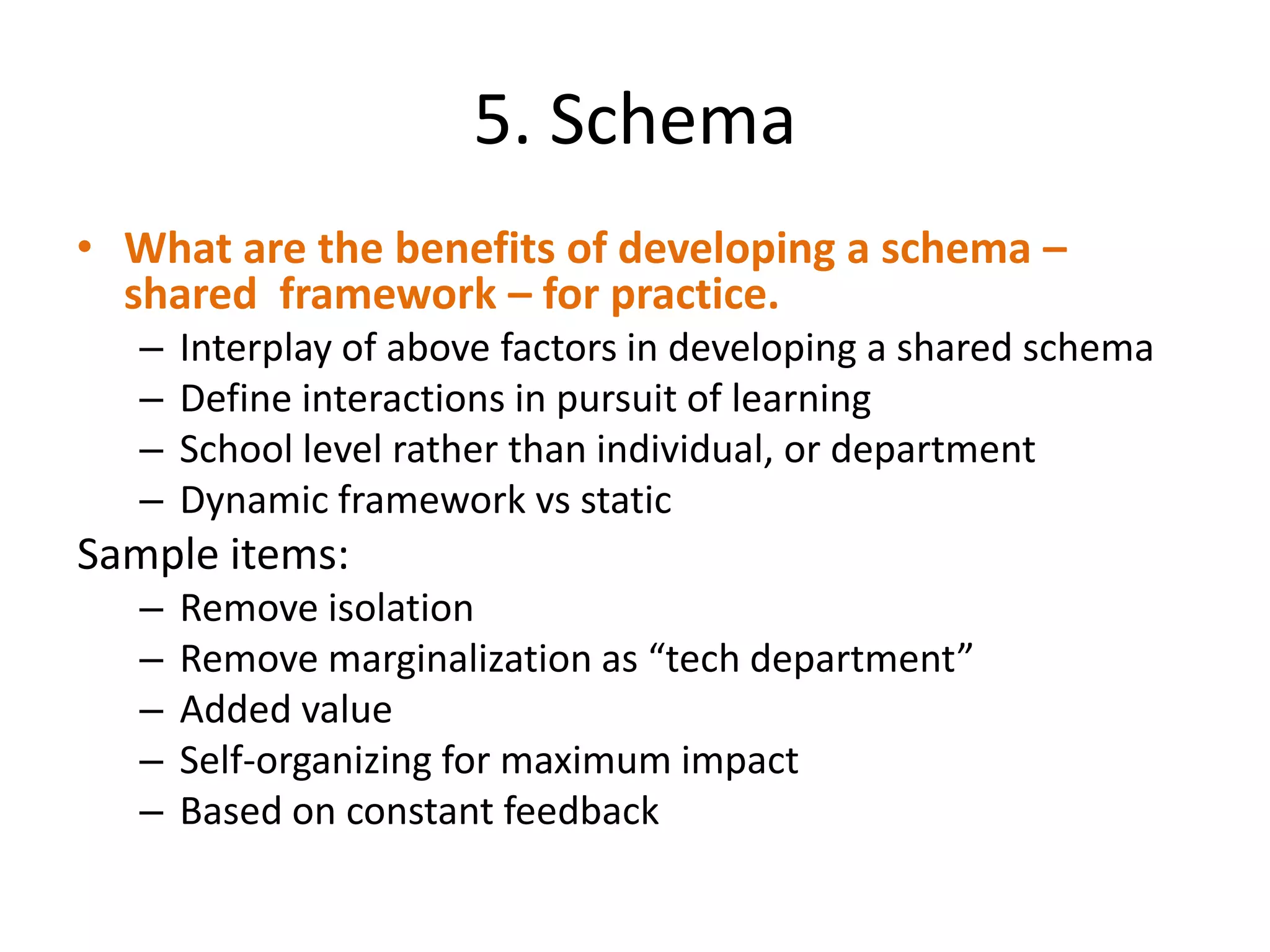
5. Schema
• What are the benefits of developing a schema –
  shared framework – for practice.
   –   Interplay of above factors in developing a shared schema
   –   Define interactions in pursuit of learning
   –   School level rather than individual, or department
   –   Dynamic framework vs static
Sample items:
   –   Remove isolation
   –   Remove marginalization as “tech department”
   –   Added value
   –   Self-organizing for maximum impact
   –   Based on constant feedback
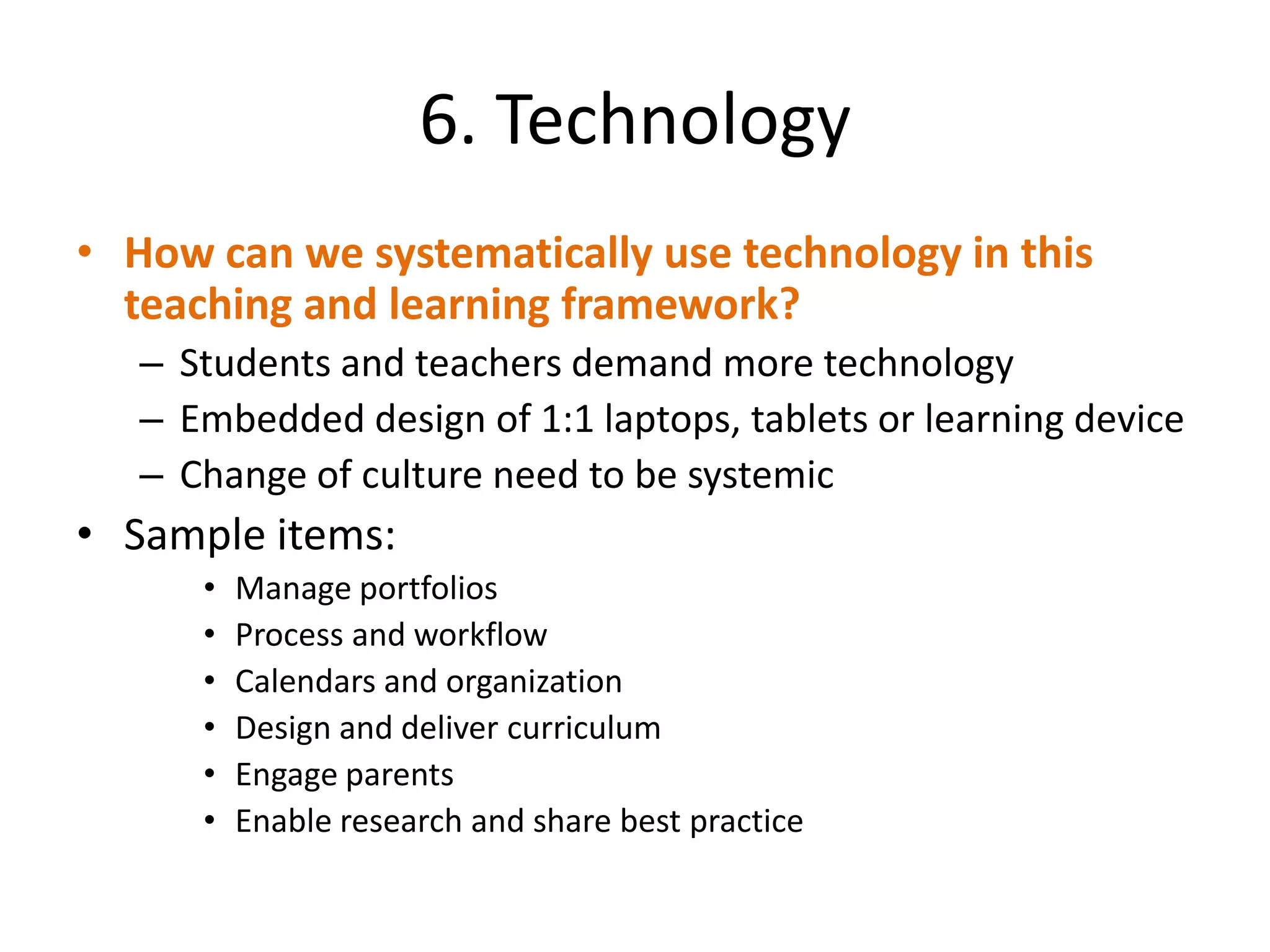
6. Technology
• How can we systematically use technology in this
  teaching and learning framework?
   – Students and teachers demand more technology
   – Embedded design of 1:1 laptops, tablets or learning device
   – Change of culture need to be systemic
• Sample items:
      •   Manage portfolios
      •   Process and workflow
      •   Calendars and organization
      •   Design and deliver curriculum
      •   Engage parents
      •   Enable research and share best practice
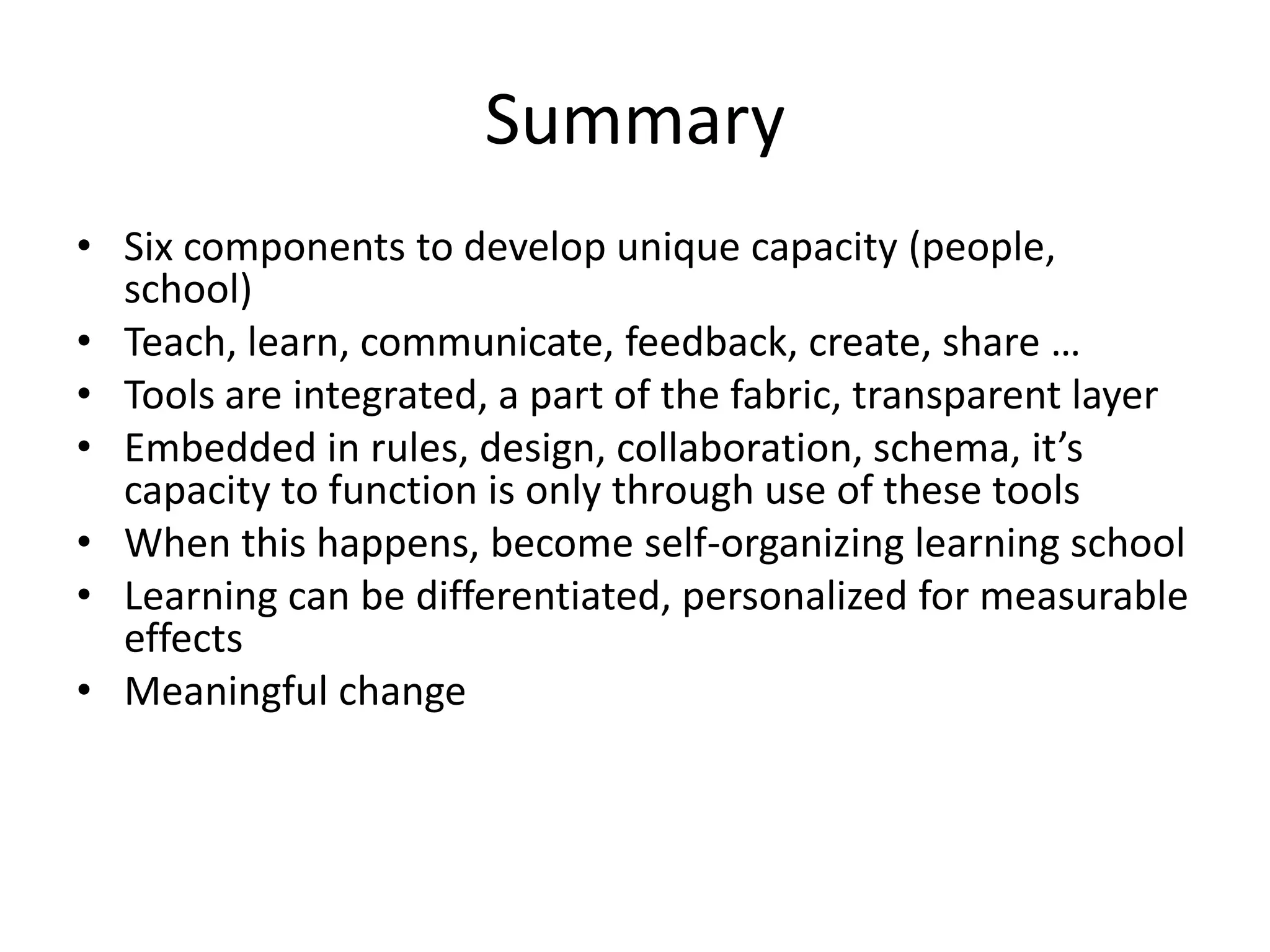
Summary
• Six components to develop unique capacity (people,
  school)
• Teach, learn, communicate, feedback, create, share …
• Tools are integrated, a part of the fabric, transparent layer
• Embedded in rules, design, collaboration, schema, it’s
  capacity to function is only through use of these tools
• When this happens, become self-organizing learning school
• Learning can be differentiated, personalized for measurable
  effects
• Meaningful change

Realizing Benefit of Laptops- qais

  • 1.
    Realizing Benefit ofLaptops Vincent Jansen QAIS Heads Presentation April 22, 2012.
  • 2.
    Realizing Benefit ofLaptops • Is your school capable of sustaining the benefits of laptop or tablet programs for learning? • Is the school ready for change? • Is the school prepared to hand learning over to the students? • How do you need to change your lessons?
  • 3.
    1. Rules • Whatare the simple set of or beliefs, rules or guidelines that define teaching and learning in your school? – Need to build consensus – Assign a value to them – Define the drivers for them – Assign leaders to them • Sample items: – Cooperation – Curriculum – Feedback – Time – Sports – Learning tools (laptops, software…)
  • 4.
    2. Design • Whatare some of the benefits or using these central beliefs embedded in the activities and processes in your school? – Present a shared vision – Supports change when viewed through multiple lenses – Links activities and processes back to central beliefs • Sample items: – Physical space (classroom organization) – Equipment (laptops, desktops, tablets) – Roles and responsibilities – Curriculum documents – Student performance and assessment – Professional development
  • 5.
    3. Collaboration • Allmembers of the school are engaged with creating the embedded design of your school. – Student know their roles as learners – Students understand performance measures – Students understand nature of being global citizens – Communication of ideas is clear – Every member plays an active role • Sample items – Shared curriculum documents – Shared best practice using tools, class management – Open meetings – Faculty growth models
  • 6.
    4. Feedback • Whatare some ways the design allows feedback from all constituents in real time? – Reinforce what works – Everyone has a voice – Rate and emphasize best practice – More accountable for learning success – Drives bottom up change, everyone on same page • Sample items: – Student performance success – PD conferences reports – Post on the board – What’s new today
  • 7.
    5. Schema • Whatare the benefits of developing a schema – shared framework – for practice. – Interplay of above factors in developing a shared schema – Define interactions in pursuit of learning – School level rather than individual, or department – Dynamic framework vs static Sample items: – Remove isolation – Remove marginalization as “tech department” – Added value – Self-organizing for maximum impact – Based on constant feedback
  • 8.
    6. Technology • Howcan we systematically use technology in this teaching and learning framework? – Students and teachers demand more technology – Embedded design of 1:1 laptops, tablets or learning device – Change of culture need to be systemic • Sample items: • Manage portfolios • Process and workflow • Calendars and organization • Design and deliver curriculum • Engage parents • Enable research and share best practice
  • 9.
    Summary • Six componentsto develop unique capacity (people, school) • Teach, learn, communicate, feedback, create, share … • Tools are integrated, a part of the fabric, transparent layer • Embedded in rules, design, collaboration, schema, it’s capacity to function is only through use of these tools • When this happens, become self-organizing learning school • Learning can be differentiated, personalized for measurable effects • Meaningful change