The Four-Pronged Approach 
in 
Reading Instruction 
GROUP 1
The Four-Pronged Approach 
I. GENUINE LOVE FOR READING 
II. CRITICAL THINKING 
III. MASTERY OF THE STRUCTURES OF THE 
(FILIPINO/ENGLISH) LANGUAGE 
IV. TRANSFER STAGE
The Four-Pronged Approach 
I. GENUINE LOVE FOR READING
GENUINE LOVE FOR READING 
teachers have a greater role in motivating the child to 
love reading. The choice of the materials should take 
into consideration suitability to the age, interests and 
vocabulary of the children. 
method of presentation should be encouraging so as 
to create and desire to read.
OBJECTIVES: 
a. to structure experiences so that the child feels 
accepted 
and develops desirable attitudes toward reading and 
self; 
b. to provide for group participation, development of 
verbal 
facility, listening ability, and auditory and visual 
discrimination; 
c. to teach left-to-right sequence; and
ARTS TO READING 
1. Oral Reading 
2. Silent Reading
ARTS TO READING 
1. Oral Reading 
– in which a child reads aloud in order to convey 
information or pleasure to an audience. 
2. Silent Reading 
– in which listening while following the text, sight-reading 
to a coach or with partners, rehearsing and 
reading aloud for an audience.
DEVELOPING READING COMPREHENSION 
- comprehension is a creative, multifaceted process in which 
students engage with the text. 
FACTORS THAT INFLUENCE COMPREHENSION 
1. Background Knowledge 
2. Text 
3. Purpose
1. Background Knowledge 
- readers bring to the reading process influence 
how 
they understand the text. 
2. Text 
- author’s ideas and how the ideas are organized 
and 
presented also affect comprehension. 
3. Purpose 
- readers vary the way they read according to
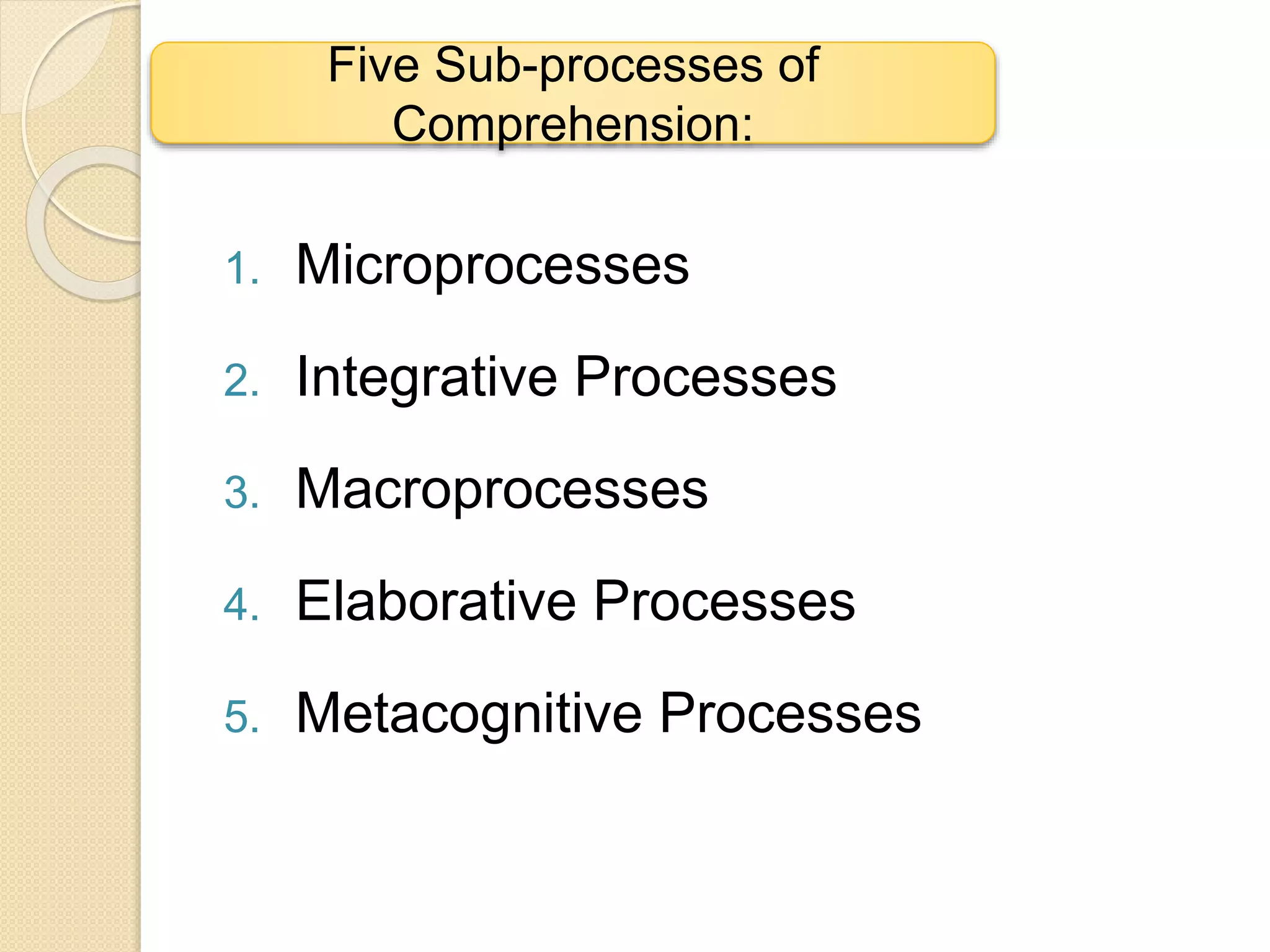
Five Sub-processes of 
Comprehension: 
1. Microprocesses 
2. Integrative Processes 
3. Macroprocesses 
4. Elaborative Processes 
5. Metacognitive Processes
Microprocesses 
- chunk ideas into phrases and select what is 
important from the sentence to keep in short-term 
memory. 
Integrative Processes 
- deal with the semantic and syntactic 
connections and relationships among sentences.
Macroprocesses 
- recognizing the structure of text and selecting 
the most important information to remember. 
Elaborative Processes 
- to activate their background knowledge and 
make connections with the book they are reading or 
listening to as it is read aloud.
Metacognitive Processes 
- both readers and writers use metacognitive 
strategies to monitor and evaluate their comprehension.
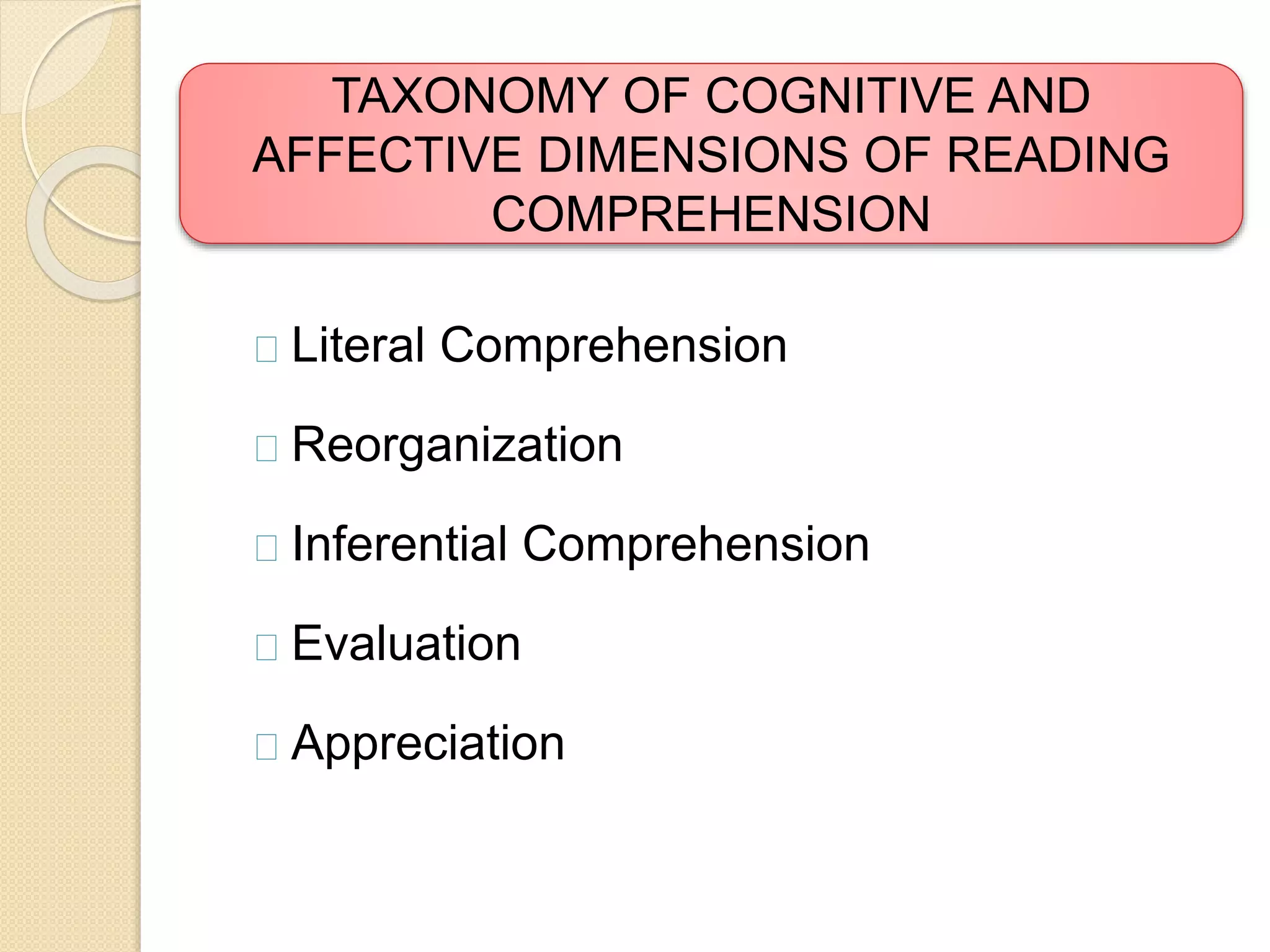
TAXONOMY OF COGNITIVE AND 
AFFECTIVE DIMENSIONS OF READING 
COMPREHENSION 
Literal Comprehension 
Reorganization 
Inferential Comprehension 
Evaluation 
Appreciation
Literal Comprehension 
- focuses on ideas and information which are 
explicitly stated in the selection. 
Reorganization 
- requires to analyze, synthesize and/or organize 
ideas or information explicitly stated in the selection. 
Inferential Comprehension 
- demonstrated by a student when we use the 
ideas and information explicitly stated in the selection.
Evaluation 
- requires responses by the student which indicate 
that he has made an evaluating judgment by comparing 
ideas presented in the selection with external criteria. 
Appreciation 
- involves all the previously sited cognitive 
dimensions of reading for it deals with the psychological 
and aesthetic impact of the selection on the reader.
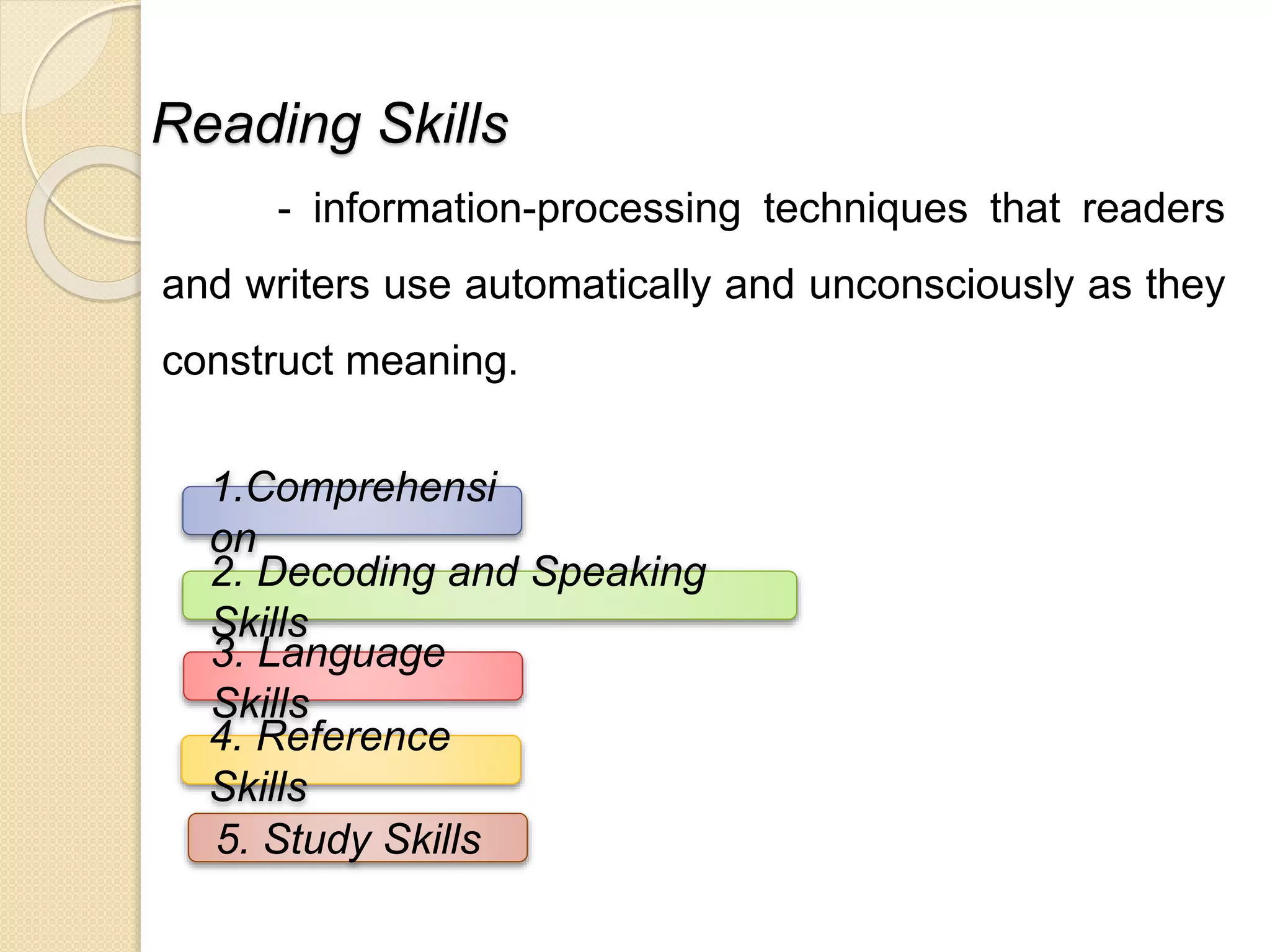
Reading Skills 
- information-processing techniques that readers 
and writers use automatically and unconsciously as they 
construct meaning. 
1.Comprehensi 
on 
2. Decoding and Speaking 
Skills 
3. Language 
Skills 
4. Reference 
Skills 
5. Study Skills
Comprehension 
- in conjunction with reading and writing 
strategies. 
- used when are reading in order to understand 
and 
summarize. 
Decoding and Speaking Skills 
- identify words when reading and many of the 
same skills 
to spell words when writing.
Language Skills 
- focus on particular words during word study 
activities 
and their knowledge influences reading and writing. Reference 
Skills 
- they read informational books, do research 
and 
write reports and other types of expository 
wSrittiungd.y Skills 
- they review and prepare for tests.
The four pronged approach

The four pronged approach

  • 1.
    The Four-Pronged Approach in Reading Instruction GROUP 1
  • 2.
    The Four-Pronged Approach I. GENUINE LOVE FOR READING II. CRITICAL THINKING III. MASTERY OF THE STRUCTURES OF THE (FILIPINO/ENGLISH) LANGUAGE IV. TRANSFER STAGE
  • 3.
    The Four-Pronged Approach I. GENUINE LOVE FOR READING
  • 4.
    GENUINE LOVE FORREADING teachers have a greater role in motivating the child to love reading. The choice of the materials should take into consideration suitability to the age, interests and vocabulary of the children. method of presentation should be encouraging so as to create and desire to read.
  • 5.
    OBJECTIVES: a. tostructure experiences so that the child feels accepted and develops desirable attitudes toward reading and self; b. to provide for group participation, development of verbal facility, listening ability, and auditory and visual discrimination; c. to teach left-to-right sequence; and
  • 6.
    ARTS TO READING 1. Oral Reading 2. Silent Reading
  • 7.
    ARTS TO READING 1. Oral Reading – in which a child reads aloud in order to convey information or pleasure to an audience. 2. Silent Reading – in which listening while following the text, sight-reading to a coach or with partners, rehearsing and reading aloud for an audience.
  • 8.
    DEVELOPING READING COMPREHENSION - comprehension is a creative, multifaceted process in which students engage with the text. FACTORS THAT INFLUENCE COMPREHENSION 1. Background Knowledge 2. Text 3. Purpose
  • 9.
    1. Background Knowledge - readers bring to the reading process influence how they understand the text. 2. Text - author’s ideas and how the ideas are organized and presented also affect comprehension. 3. Purpose - readers vary the way they read according to
  • 10.
    Five Sub-processes of Comprehension: 1. Microprocesses 2. Integrative Processes 3. Macroprocesses 4. Elaborative Processes 5. Metacognitive Processes
  • 11.
    Microprocesses - chunkideas into phrases and select what is important from the sentence to keep in short-term memory. Integrative Processes - deal with the semantic and syntactic connections and relationships among sentences.
  • 12.
    Macroprocesses - recognizingthe structure of text and selecting the most important information to remember. Elaborative Processes - to activate their background knowledge and make connections with the book they are reading or listening to as it is read aloud.
  • 13.
    Metacognitive Processes -both readers and writers use metacognitive strategies to monitor and evaluate their comprehension.
  • 14.
    TAXONOMY OF COGNITIVEAND AFFECTIVE DIMENSIONS OF READING COMPREHENSION Literal Comprehension Reorganization Inferential Comprehension Evaluation Appreciation
  • 15.
    Literal Comprehension -focuses on ideas and information which are explicitly stated in the selection. Reorganization - requires to analyze, synthesize and/or organize ideas or information explicitly stated in the selection. Inferential Comprehension - demonstrated by a student when we use the ideas and information explicitly stated in the selection.
  • 16.
    Evaluation - requiresresponses by the student which indicate that he has made an evaluating judgment by comparing ideas presented in the selection with external criteria. Appreciation - involves all the previously sited cognitive dimensions of reading for it deals with the psychological and aesthetic impact of the selection on the reader.
  • 17.
    Reading Skills -information-processing techniques that readers and writers use automatically and unconsciously as they construct meaning. 1.Comprehensi on 2. Decoding and Speaking Skills 3. Language Skills 4. Reference Skills 5. Study Skills
  • 18.
    Comprehension - inconjunction with reading and writing strategies. - used when are reading in order to understand and summarize. Decoding and Speaking Skills - identify words when reading and many of the same skills to spell words when writing.
  • 19.
    Language Skills -focus on particular words during word study activities and their knowledge influences reading and writing. Reference Skills - they read informational books, do research and write reports and other types of expository wSrittiungd.y Skills - they review and prepare for tests.