Hemodynamic Disorders
 Edema
 Edema
 Hyperemia and Congestion
 Hemorrhage
 Hemorrhage
 Hemostasis and Thrombosis
 Embolism
 Embolism
 Infarction
 Infarction
 Shock
 Shock
1

Dr. Krishna Tadepalli, MD, www.mletips.com
Definitions
Definitions
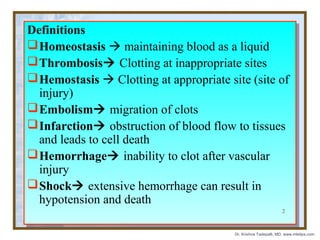
 Homeostasis  maintaining blood as a liquid
 Thrombosis Clotting at inappropriate sites
 Hemostasis  Clotting at appropriate site (site of
injury)
injury)
 Embolism migration of clots
 Infarction obstruction of blood flow to tissues
and leads to cell death
 Hemorrhage inability to clot after vascular
injury
injury
 Shock extensive hemorrhage can result in
hypotension and death
2

Dr. Krishna Tadepalli, MD, www.mletips.com
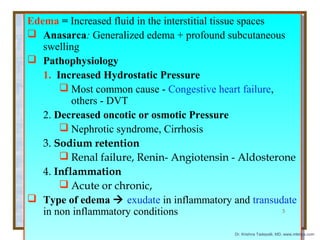
Edema = Increased fluid in the interstitial tissue spaces
 Anasarca: Generalized edema + profound subcutaneous
swelling
swelling
 Pathophysiology
 Pathophysiology
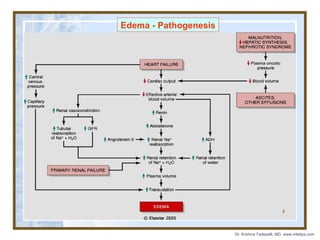
1. Increased Hydrostatic Pressure
 Most common cause --Congestive heart failure,
 Most common cause Congestive heart failure,
others --DVT
others DVT
2. Decreased oncotic or osmotic Pressure
 Nephrotic syndrome, Cirrhosis
3. Sodium retention
3. Sodium retention
 Renal failure, Renin- Angiotensin --Aldosterone
 Renal failure, Renin- Angiotensin Aldosterone
4. Inflammation
4. Inflammation
 Acute or chronic,
 Acute or chronic,
 Type of edema  exudate in inflammatory and transudate
3
in non inflammatory conditions
Dr. Krishna Tadepalli, MD, www.mletips.com
Edema - Pathogenesis

4

Dr. Krishna Tadepalli, MD, www.mletips.com
Edema
Edema
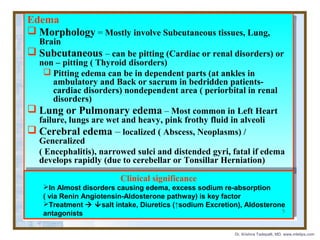
 Morphology = Mostly involve Subcutaneous tissues, Lung,
Brain
Brain

 Subcutaneous ––can be pitting (Cardiac or renal disorders) or
 Subcutaneous can be pitting (Cardiac or renal disorders) or

non ––pitting ((Thyroid disorders)
non pitting Thyroid disorders)
 Pitting edema can be in dependent parts (at ankles in
ambulatory and Back or sacrum in bedridden patientsambulatory and Back or sacrum in bedridden patientscardiac disorders) nondependent area ((periorbital in renal
cardiac disorders) nondependent area periorbital in renal
disorders)
disorders)
 Lung or Pulmonary edema ––Most common in Left Heart
 Lung or Pulmonary edema Most common in Left Heart
failure, lungs are wet and heavy, pink frothy fluid in alveoli
 Cerebral edema – localized ((Abscess, Neoplasms) //
 Cerebral edema – localized Abscess, Neoplasms)
Generalized
Generalized
((Encephalitis), narrowed sulci and distended gyri, fatal if edema
Encephalitis), narrowed sulci and distended gyri, fatal if edema
develops rapidly (due to cerebellar or Tonsillar Herniation)
Clinical significance

In Almost disorders causing edema, excess sodium re-absorption
via Renin Angiotensin-Aldosterone pathway) is key factor
( (via Renin Angiotensin-Aldosterone pathway) is key factor
Treatment  salt intake, Diuretics (↑sodium Excretion), Aldosterone
5
antagonists
antagonists
Dr. Krishna Tadepalli, MD, www.mletips.com
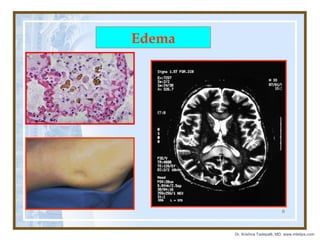
Edema

6

Dr. Krishna Tadepalli, MD, www.mletips.com
Edema = Increased fluid in the interstitial tissue spaces
 Anasarca: Generalized edema + profound subcutaneous
swelling
swelling
 Pathophysiology
 Pathophysiology
1. Increased Hydrostatic Pressure
 Most common cause --Congestive heart failure,
 Most common cause Congestive heart failure,
others --DVT
others DVT
2. Decreased oncotic or osmotic Pressure
 Nephrotic syndrome, Cirrhosis
3. Sodium retention
3. Sodium retention
 Renal failure, Renin- Angiotensin --Aldosterone
 Renal failure, Renin- Angiotensin Aldosterone
4. Inflammation
4. Inflammation
 Acute or chronic,
 Acute or chronic,
 Type of edema  exudate in inflammatory and transudate
7
in non inflammatory conditions
Dr. Krishna Tadepalli, MD, www.mletips.com

1. edema; hemodynamic disorders

  • 1.
    Hemodynamic Disorders Hemodynamic Disorders Edema  Edema  Hyperemia and Congestion  Hyperemia and Congestion  Hemorrhage  Hemorrhage  Hemostasis and Thrombosis  Hemostasis and Thrombosis  Embolism  Embolism  Infarction  Infarction  Shock  Shock 1 Dr. Krishna Tadepalli, MD, www.mletips.com
  • 2.
    Definitions Definitions  Homeostasis maintaining blood as a liquid  Homeostasis  maintaining blood as a liquid  Thrombosis Clotting at inappropriate sites  Thrombosis Clotting at inappropriate sites  Hemostasis  Clotting at appropriate site (site of  Hemostasis  Clotting at appropriate site (site of injury) injury)  Embolism migration of clots  Embolism migration of clots  Infarction obstruction of blood flow to tissues  Infarction obstruction of blood flow to tissues and leads to cell death and leads to cell death  Hemorrhage inability to clot after vascular  Hemorrhage inability to clot after vascular injury injury  Shock extensive hemorrhage can result in  Shock extensive hemorrhage can result in hypotension and death hypotension and death 2 Dr. Krishna Tadepalli, MD, www.mletips.com
  • 3.
    Edema = Increasedfluid in the interstitial tissue spaces Edema = Increased fluid in the interstitial tissue spaces  Anasarca: Generalized edema + profound subcutaneous  Anasarca: Generalized edema + profound subcutaneous swelling swelling  Pathophysiology  Pathophysiology 1. Increased Hydrostatic Pressure 1. Increased Hydrostatic Pressure  Most common cause --Congestive heart failure,  Most common cause Congestive heart failure, others --DVT others DVT 2. Decreased oncotic or osmotic Pressure 2. Decreased oncotic or osmotic Pressure  Nephrotic syndrome, Cirrhosis  Nephrotic syndrome, Cirrhosis 3. Sodium retention 3. Sodium retention  Renal failure, Renin- Angiotensin --Aldosterone  Renal failure, Renin- Angiotensin Aldosterone 4. Inflammation 4. Inflammation  Acute or chronic,  Acute or chronic,  Type of edema  exudate in inflammatory and transudate  Type of edema  exudate in inflammatory and transudate 3 in non inflammatory conditions in non inflammatory conditions Dr. Krishna Tadepalli, MD, www.mletips.com
  • 4.
    Edema - Pathogenesis 4 Dr.Krishna Tadepalli, MD, www.mletips.com
  • 5.
    Edema Edema  Morphology =Mostly involve Subcutaneous tissues, Lung,  Morphology = Mostly involve Subcutaneous tissues, Lung, Brain Brain  Subcutaneous ––can be pitting (Cardiac or renal disorders) or  Subcutaneous can be pitting (Cardiac or renal disorders) or non ––pitting ((Thyroid disorders) non pitting Thyroid disorders)  Pitting edema can be in dependent parts (at ankles in  Pitting edema can be in dependent parts (at ankles in ambulatory and Back or sacrum in bedridden patientsambulatory and Back or sacrum in bedridden patientscardiac disorders) nondependent area ((periorbital in renal cardiac disorders) nondependent area periorbital in renal disorders) disorders)  Lung or Pulmonary edema ––Most common in Left Heart  Lung or Pulmonary edema Most common in Left Heart failure, lungs are wet and heavy, pink frothy fluid in alveoli failure, lungs are wet and heavy, pink frothy fluid in alveoli  Cerebral edema – localized ((Abscess, Neoplasms) //  Cerebral edema – localized Abscess, Neoplasms) Generalized Generalized ((Encephalitis), narrowed sulci and distended gyri, fatal if edema Encephalitis), narrowed sulci and distended gyri, fatal if edema develops rapidly (due to cerebellar or Tonsillar Herniation) develops rapidly (due to cerebellar or Tonsillar Herniation) Clinical significance Clinical significance In Almost disorders causing edema, excess sodium re-absorption In Almost disorders causing edema, excess sodium re-absorption via Renin Angiotensin-Aldosterone pathway) is key factor ( (via Renin Angiotensin-Aldosterone pathway) is key factor Treatment  salt intake, Diuretics (↑sodium Excretion), Aldosterone Treatment  salt intake, Diuretics (↑sodium Excretion), Aldosterone 5 antagonists antagonists Dr. Krishna Tadepalli, MD, www.mletips.com
  • 6.
    Edema 6 Dr. Krishna Tadepalli,MD, www.mletips.com
  • 7.
    Edema = Increasedfluid in the interstitial tissue spaces Edema = Increased fluid in the interstitial tissue spaces  Anasarca: Generalized edema + profound subcutaneous  Anasarca: Generalized edema + profound subcutaneous swelling swelling  Pathophysiology  Pathophysiology 1. Increased Hydrostatic Pressure 1. Increased Hydrostatic Pressure  Most common cause --Congestive heart failure,  Most common cause Congestive heart failure, others --DVT others DVT 2. Decreased oncotic or osmotic Pressure 2. Decreased oncotic or osmotic Pressure  Nephrotic syndrome, Cirrhosis  Nephrotic syndrome, Cirrhosis 3. Sodium retention 3. Sodium retention  Renal failure, Renin- Angiotensin --Aldosterone  Renal failure, Renin- Angiotensin Aldosterone 4. Inflammation 4. Inflammation  Acute or chronic,  Acute or chronic,  Type of edema  exudate in inflammatory and transudate  Type of edema  exudate in inflammatory and transudate 7 in non inflammatory conditions in non inflammatory conditions Dr. Krishna Tadepalli, MD, www.mletips.com