Creative Writing 
Learning Intention 
 To be able to recognise the 
elements needed to 
produce a piece of creative 
writing. 
 To be able to use these 
elements to produce your 
own piece of creative 
writing. 
Success Criteria 
 I can list the elements of 
creative writing. 
 I can define creative 
writing. 
 I understand the 
importance of creative 
writing.
What is creative writing? 
 Any writing, fiction, poetry, or non-fiction, that goes 
outside the bounds of normal professional, 
journalistic, academic, and technical forms of 
literature. 
 Works which fall into this category include novels, 
epics, short stories, and poems. 
 Writing for the screen and stage, screenwriting and 
playwriting respectively, typically have their own 
programs of study, but fit under the creative writing 
category as well.
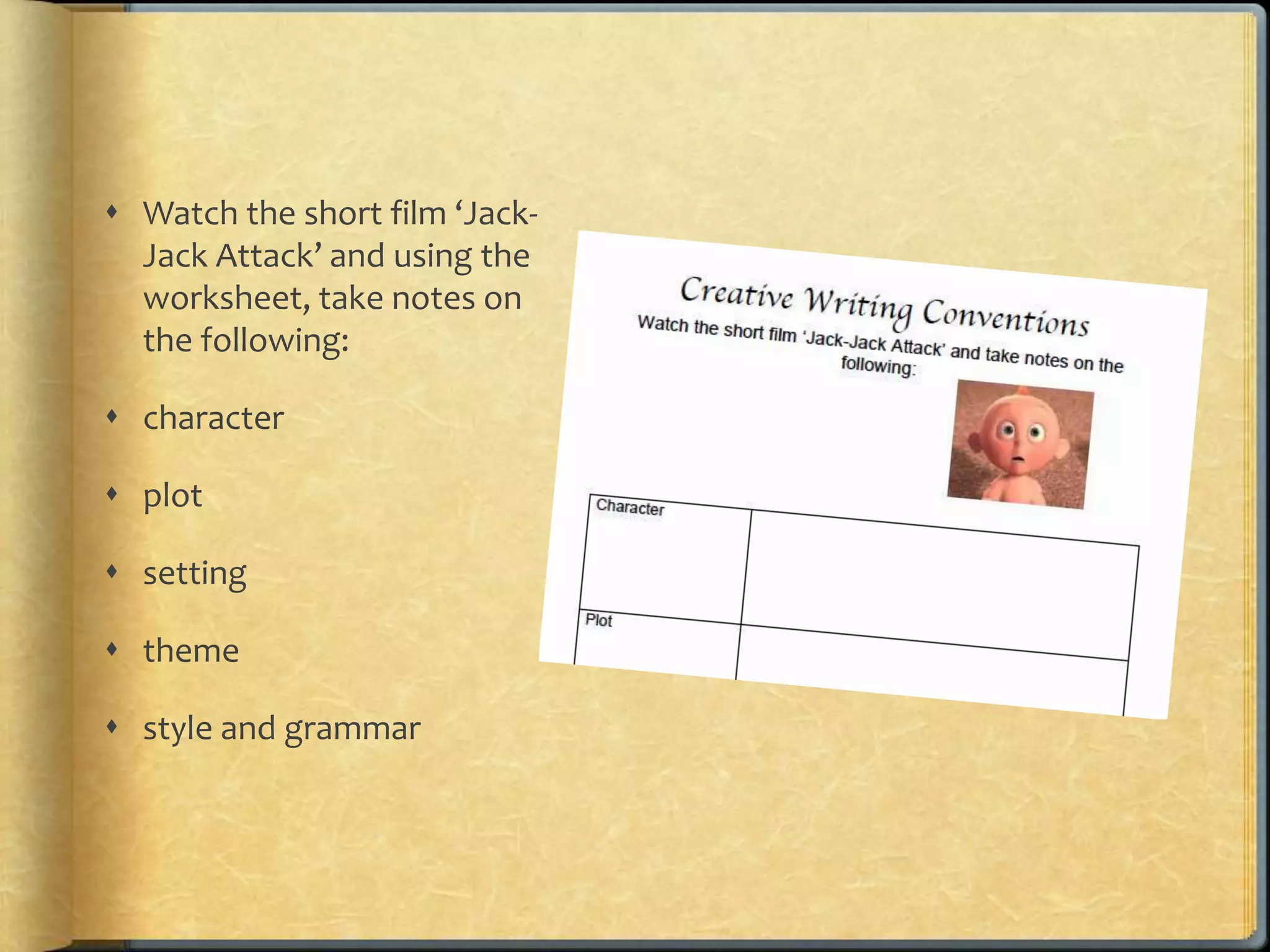
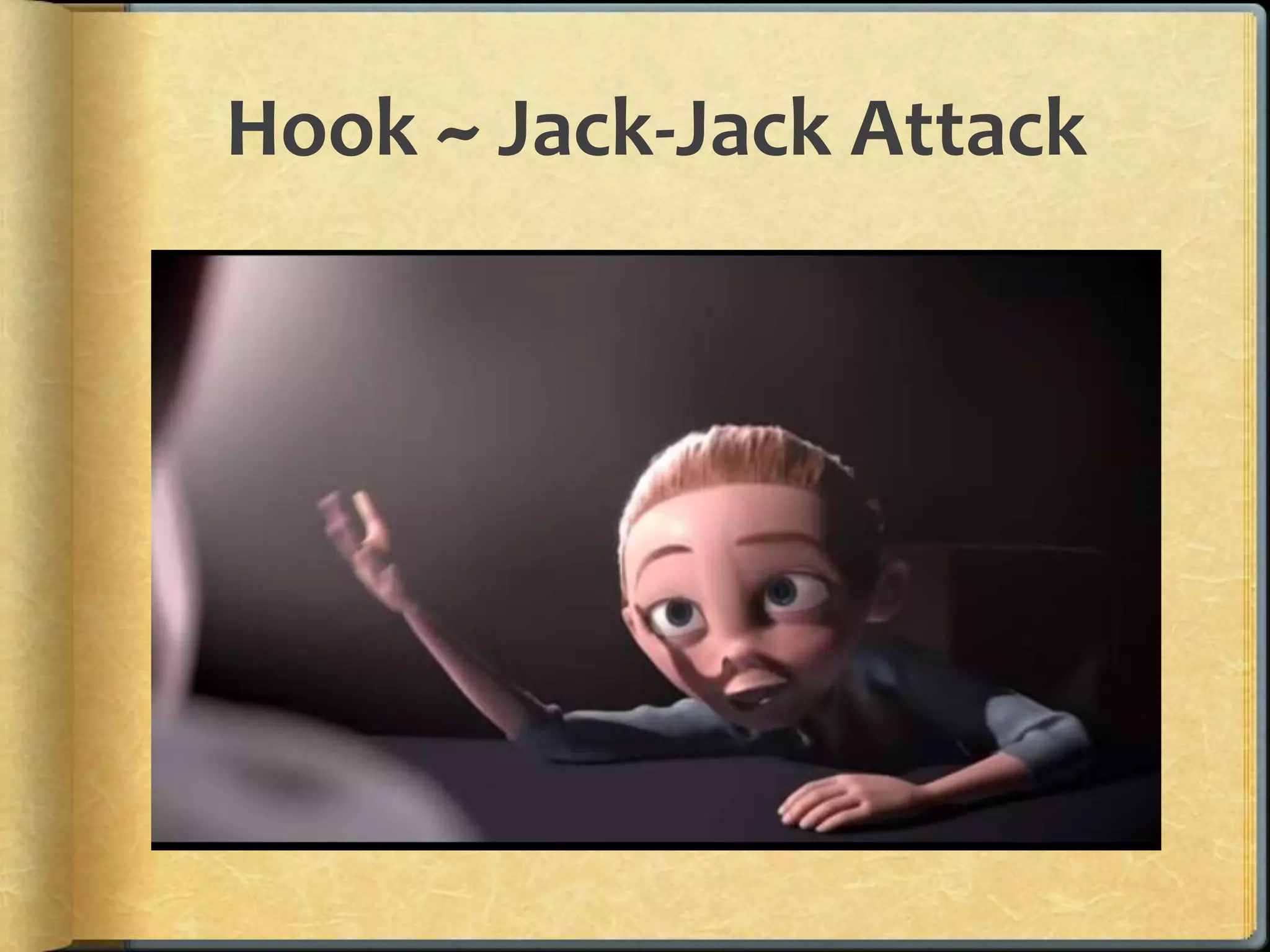
 Watch the short film ‘Jack- 
Jack Attack’ and using the 
worksheet, take notes on 
the following: 
 character 
 plot 
 setting 
 theme 
 style and grammar
Hook ~ Jack-Jack Attack
GKR 
In table groups, think about 
the short film and list the 
conventions you can think of 
that are part of creative 
writing. 
Think about the characters: 
1. What characters did you 
like/dislike? 
2. What made you 
like/dislike them? 
What does 
the title tell 
me? 
What do I 
predict the 
text will be 
about? 
What can 
the pictures 
tell me? 
What do I 
already know 
about this 
topic? 
What 
words do 
I expect 
to see? 
What 
images come 
to mind? 
What will I 
do as I 
read?
Key Vocabulary 
 character 
 plot 
 sub plots 
 conflict 
 setting 
 theme 
 style 
 grammar
Creative Writing Conventions
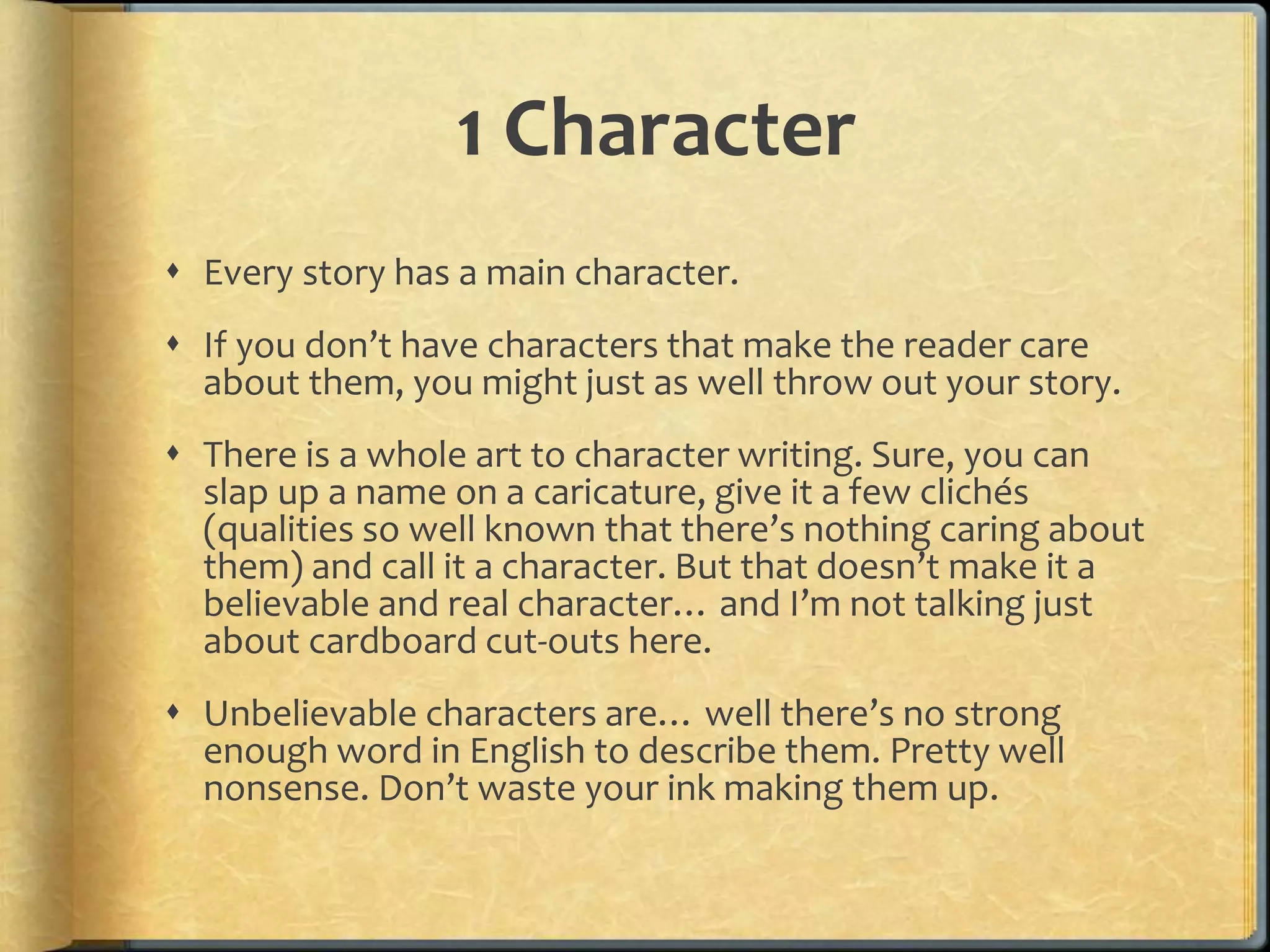
1 Character 
 Every story has a main character. 
 If you don’t have characters that make the reader care 
about them, you might just as well throw out your story. 
 There is a whole art to character writing. Sure, you can 
slap up a name on a caricature, give it a few clichés 
(qualities so well known that there’s nothing caring about 
them) and call it a character. But that doesn’t make it a 
believable and real character… and I’m not talking just 
about cardboard cut-outs here. 
 Unbelievable characters are… well there’s no strong 
enough word in English to describe them. Pretty well 
nonsense. Don’t waste your ink making them up.
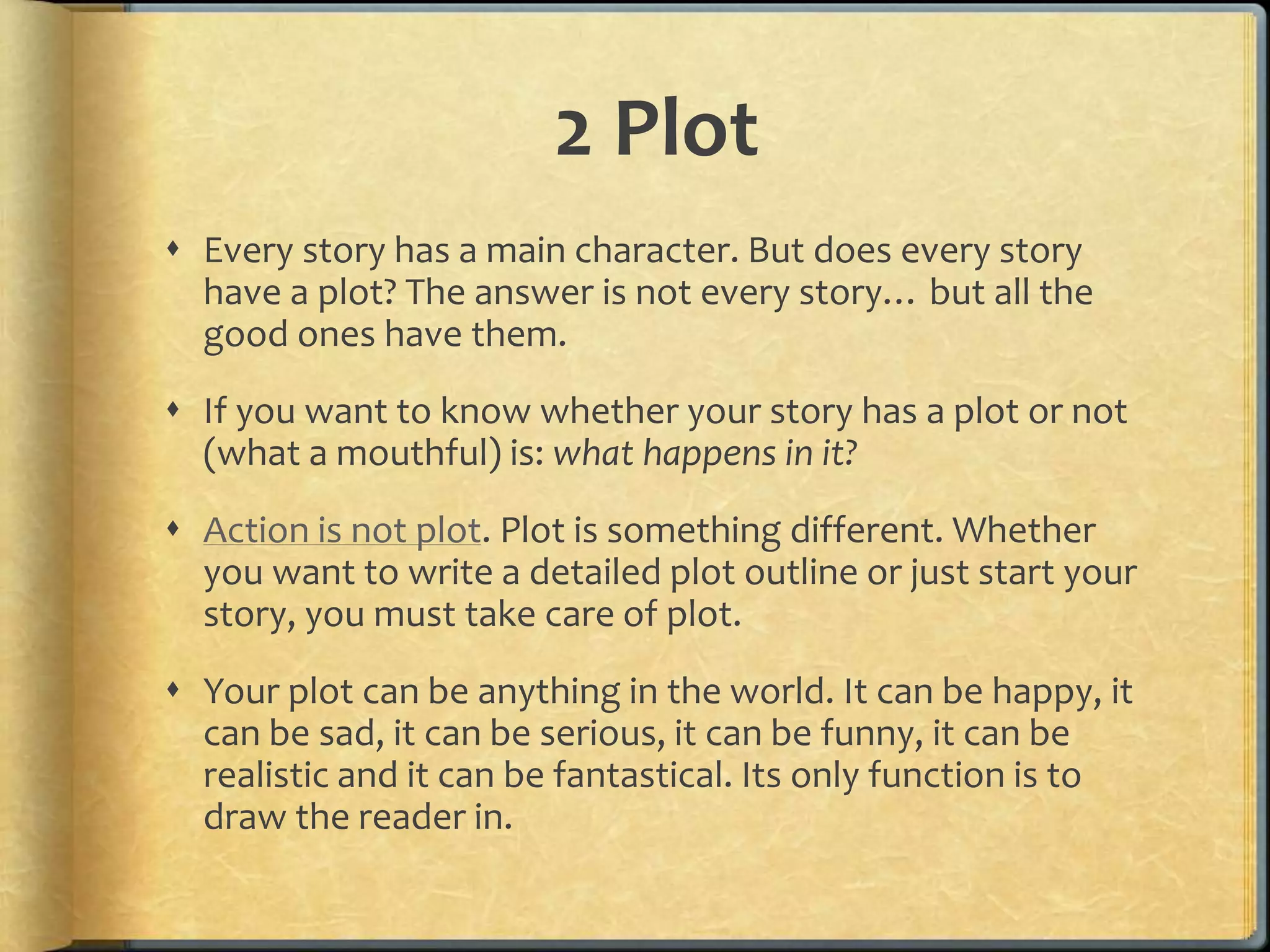
2 Plot 
 Every story has a main character. But does every story 
have a plot? The answer is not every story… but all the 
good ones have them. 
 If you want to know whether your story has a plot or not 
(what a mouthful) is: what happens in it? 
 Action is not plot. Plot is something different. Whether 
you want to write a detailed plot outline or just start your 
story, you must take care of plot. 
 Your plot can be anything in the world. It can be happy, it 
can be sad, it can be serious, it can be funny, it can be 
realistic and it can be fantastical. Its only function is to 
draw the reader in.
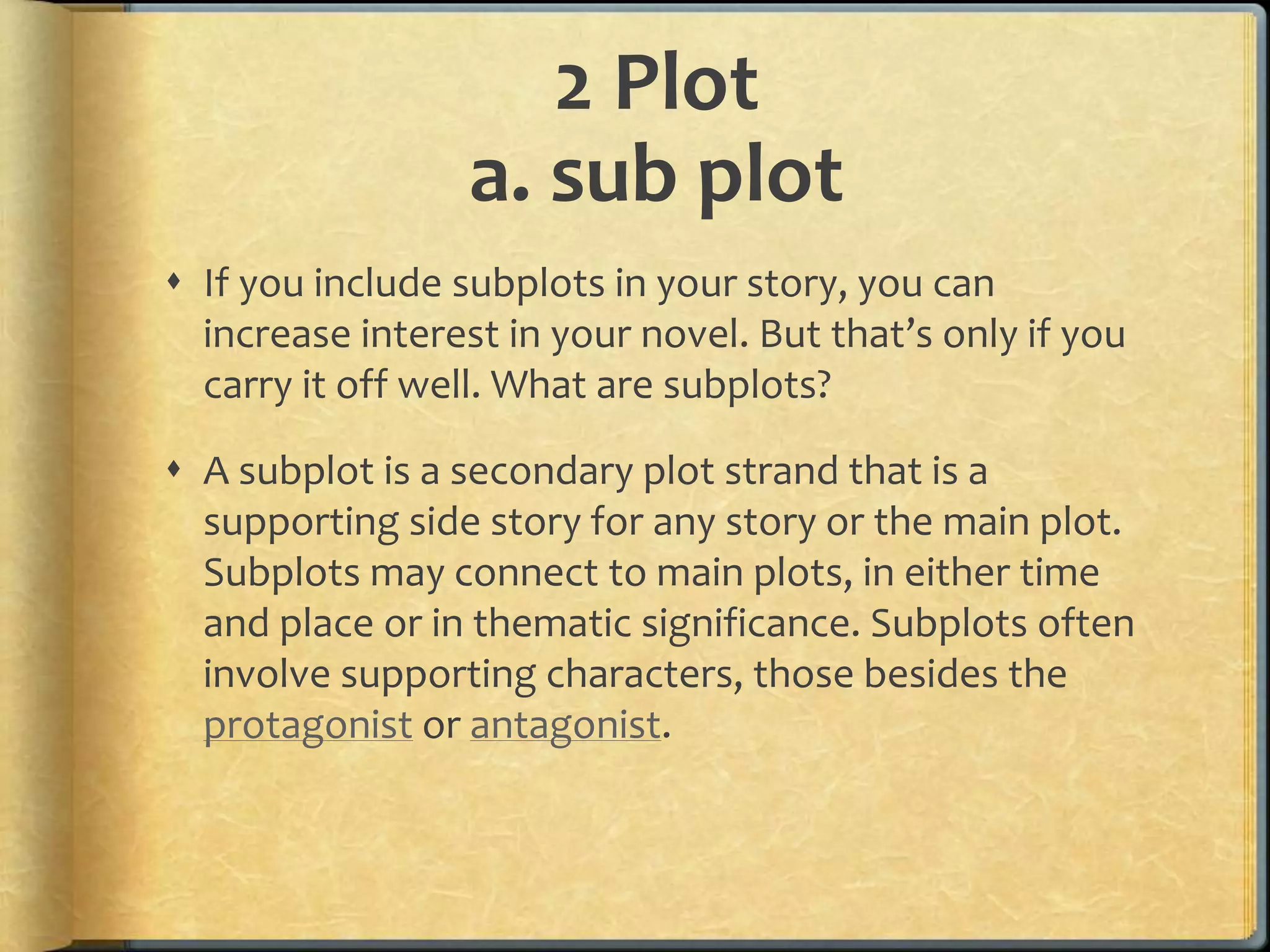
2 Plot 
a. sub plot 
 If you include subplots in your story, you can 
increase interest in your novel. But that’s only if you 
carry it off well. What are subplots? 
 A subplot is a secondary plot strand that is a 
supporting side story for any story or the main plot. 
Subplots may connect to main plots, in either time 
and place or in thematic significance. Subplots often 
involve supporting characters, those besides the 
protagonist or antagonist.
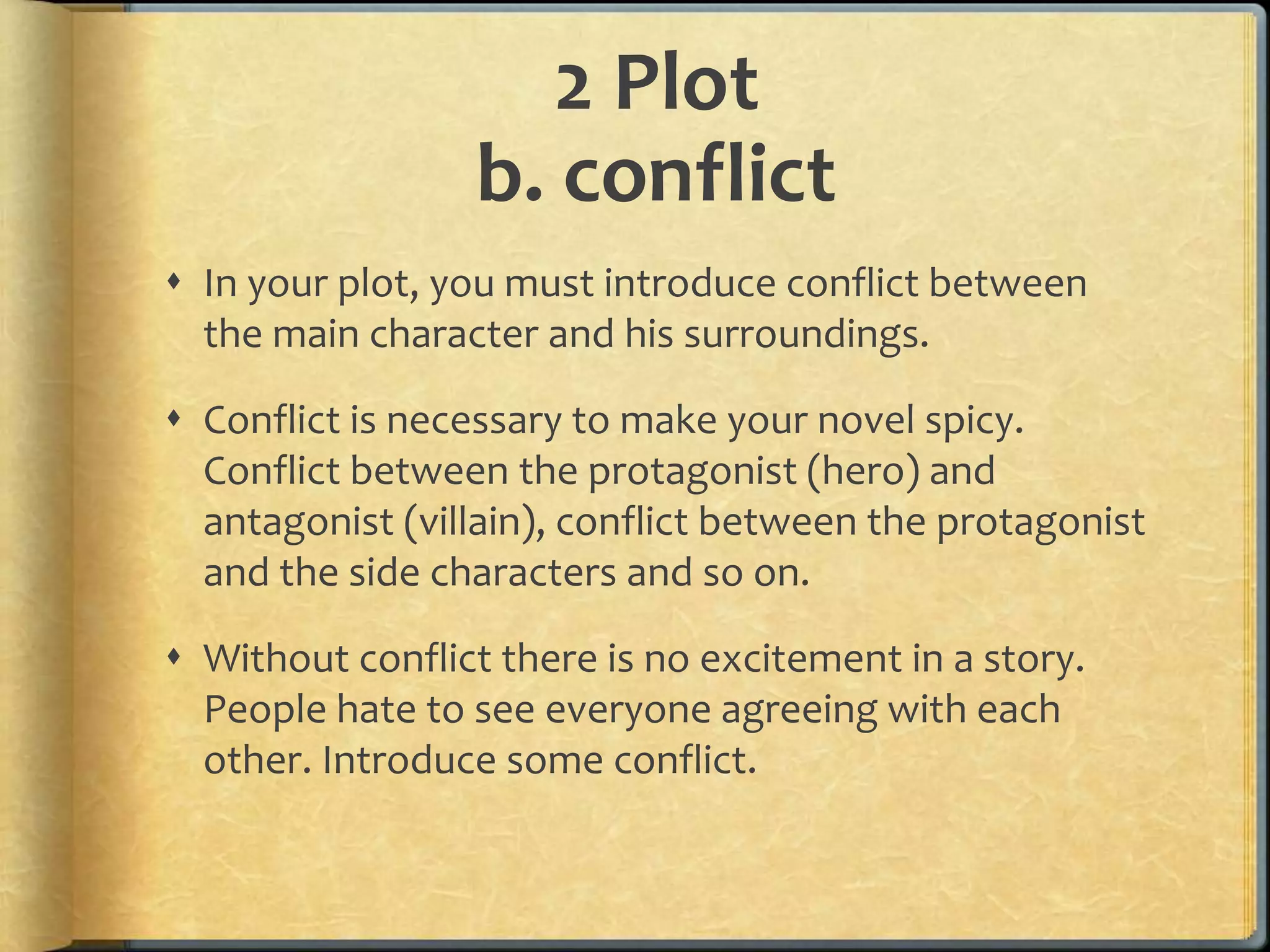
2 Plot 
b. conflict 
 In your plot, you must introduce conflict between 
the main character and his surroundings. 
 Conflict is necessary to make your novel spicy. 
Conflict between the protagonist (hero) and 
antagonist (villain), conflict between the protagonist 
and the side characters and so on. 
 Without conflict there is no excitement in a story. 
People hate to see everyone agreeing with each 
other. Introduce some conflict.
3 Setting 
 Where is your novel set? 
 It might be set in modern age India, it might be set 
in ancient Europe, it might be set in a fantasy world 
such as Middle Earth. 
 Wherever, it doesn’t matter. But it must be 
believable.
4 Theme 
 What is your novel about? 
 Is it about crime, about politics, about realism or 
about fantasy? What is the theme of the story? 
 How will readers feel after reading it? 
 If you answer these questions, you have a theme.
5 Style and Grammar 
 Writing voice, point of view, style and grammar 
matter. 
 If you break the rules, sometimes it’s for the better. 
But it’s always better to know them before breaking 
them. 
 If you make a spelling mistake, be sure to correct it 
with proof-reading. 
 Nothing gives away the amateurishness of a writer 
more than a spelling mistake.
Review 
 3 conventions of creative 
writing 
 2 ideas I have for my own 
writing 
 1 question I have about the 
task

1 Creative Writing Intro - Updated

  • 2.
    Creative Writing LearningIntention  To be able to recognise the elements needed to produce a piece of creative writing.  To be able to use these elements to produce your own piece of creative writing. Success Criteria  I can list the elements of creative writing.  I can define creative writing.  I understand the importance of creative writing.
  • 3.
    What is creativewriting?  Any writing, fiction, poetry, or non-fiction, that goes outside the bounds of normal professional, journalistic, academic, and technical forms of literature.  Works which fall into this category include novels, epics, short stories, and poems.  Writing for the screen and stage, screenwriting and playwriting respectively, typically have their own programs of study, but fit under the creative writing category as well.
  • 4.
     Watch theshort film ‘Jack- Jack Attack’ and using the worksheet, take notes on the following:  character  plot  setting  theme  style and grammar
  • 5.
  • 6.
    GKR In tablegroups, think about the short film and list the conventions you can think of that are part of creative writing. Think about the characters: 1. What characters did you like/dislike? 2. What made you like/dislike them? What does the title tell me? What do I predict the text will be about? What can the pictures tell me? What do I already know about this topic? What words do I expect to see? What images come to mind? What will I do as I read?
  • 7.
    Key Vocabulary character  plot  sub plots  conflict  setting  theme  style  grammar
  • 8.
  • 9.
    1 Character Every story has a main character.  If you don’t have characters that make the reader care about them, you might just as well throw out your story.  There is a whole art to character writing. Sure, you can slap up a name on a caricature, give it a few clichés (qualities so well known that there’s nothing caring about them) and call it a character. But that doesn’t make it a believable and real character… and I’m not talking just about cardboard cut-outs here.  Unbelievable characters are… well there’s no strong enough word in English to describe them. Pretty well nonsense. Don’t waste your ink making them up.
  • 10.
    2 Plot Every story has a main character. But does every story have a plot? The answer is not every story… but all the good ones have them.  If you want to know whether your story has a plot or not (what a mouthful) is: what happens in it?  Action is not plot. Plot is something different. Whether you want to write a detailed plot outline or just start your story, you must take care of plot.  Your plot can be anything in the world. It can be happy, it can be sad, it can be serious, it can be funny, it can be realistic and it can be fantastical. Its only function is to draw the reader in.
  • 11.
    2 Plot a.sub plot  If you include subplots in your story, you can increase interest in your novel. But that’s only if you carry it off well. What are subplots?  A subplot is a secondary plot strand that is a supporting side story for any story or the main plot. Subplots may connect to main plots, in either time and place or in thematic significance. Subplots often involve supporting characters, those besides the protagonist or antagonist.
  • 12.
    2 Plot b.conflict  In your plot, you must introduce conflict between the main character and his surroundings.  Conflict is necessary to make your novel spicy. Conflict between the protagonist (hero) and antagonist (villain), conflict between the protagonist and the side characters and so on.  Without conflict there is no excitement in a story. People hate to see everyone agreeing with each other. Introduce some conflict.
  • 13.
    3 Setting Where is your novel set?  It might be set in modern age India, it might be set in ancient Europe, it might be set in a fantasy world such as Middle Earth.  Wherever, it doesn’t matter. But it must be believable.
  • 14.
    4 Theme What is your novel about?  Is it about crime, about politics, about realism or about fantasy? What is the theme of the story?  How will readers feel after reading it?  If you answer these questions, you have a theme.
  • 15.
    5 Style andGrammar  Writing voice, point of view, style and grammar matter.  If you break the rules, sometimes it’s for the better. But it’s always better to know them before breaking them.  If you make a spelling mistake, be sure to correct it with proof-reading.  Nothing gives away the amateurishness of a writer more than a spelling mistake.
  • 16.
    Review  3conventions of creative writing  2 ideas I have for my own writing  1 question I have about the task

Editor's Notes

  • #4 Paraphrase as a class to create our own definition.
  • #6 Jack-Jack Attack https://www.youtube.com/watch?v=0dQpFu8uRP0
  • #8 Students record key vocab in glossary
  • #10 http://www.writerstreasure.com/fiction-writing-101/ Students paraphrase to create their own condensed definition.
  • #11 http://www.writerstreasure.com/fiction-writing-101/ Students paraphrase to create their own condensed definition.
  • #12 http://www.writerstreasure.com/fiction-writing-101/ Students paraphrase to create their own condensed definition.
  • #13 http://www.writerstreasure.com/fiction-writing-101/ Students paraphrase to create their own condensed definition.
  • #14 http://www.writerstreasure.com/fiction-writing-101/ Students paraphrase to create their own condensed definition.
  • #15 http://www.writerstreasure.com/fiction-writing-101/ Students paraphrase to create their own condensed definition.
  • #16 http://www.writerstreasure.com/fiction-writing-101/ Students paraphrase to create their own condensed definition.