Lahore Leads University
Topic: Importance of Creative Writing
Presented by
Tehmeena Mushtaq And Nadir Abbas
BS(English)
3rd Semester
Submit to
Mam Nadia Fareed
Importance of
Creative Writing
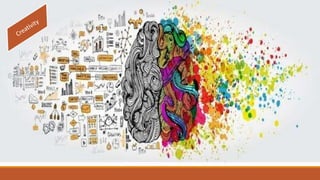
CREATIVITYCreativity
According to Albert Einstein, “Creativity is intelligence having fun”
And he also said, “The true sign of intelligence is not knowledge but imagination”
According to Mary Lou Cook, “Creativity is inventing, experimenting, growing, taking risk,
breaking rules, making mistakes and having fun”
Creativity is the ability to produce original ideas.
Creativity is the use of imagination to create inventiveness.
It is the act of turning new ideas into reality.
Creativity involves two processes: thinking, then producing.
It requires passion.
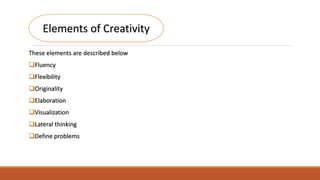
These elements are described below
Fluency
Flexibility
Originality
Elaboration
Visualization
Lateral thinking
Define problems
Elements of Creativity
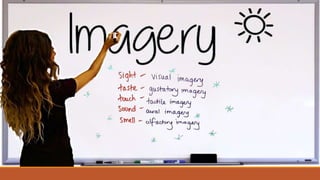
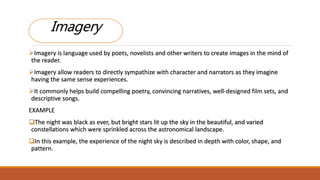
Imagery is language used by poets, novelists and other writers to create images in the mind of
the reader.
Imagery allow readers to directly sympathize with character and narrators as they imagine
having the same sense experiences.
It commonly helps build compelling poetry, convincing narratives, well-designed film sets, and
descriptive songs.
EXAMPLE
The night was black as ever, but bright stars lit up the sky in the beautiful, and varied
constellations which were sprinkled across the astronomical landscape.
In this example, the experience of the night sky is described in depth with color, shape, and
pattern.
Imagery
Also known as the art of making things up.
Creative writing is a vital part of modern society.
The invention of reality
The improvement of reality
The confrontation with reality; facing reality
An escape from reality
A magnification of reality
An inborn talent
Creative Writing
The purpose of creative writing is to both entertain and share human experience, like love or
loss.
Writers attempt to get at a truth about humanity through poetics and storylines.
In creative writing, you are trying to express a feeling or a thought, the first step is to use your
imagination.
The Purpose
The Creative Writing Process
 Activate Knowledge
 Take in Information
 Generate Ideas
 Organize / Reorganize
 Publish
Types of Creative
Writing
 Short stories
 Songs
 Scripts of ads
 Screenplays
 Novel
 Poetry
Character development
Plot development
Point of view
Dialogue
Metaphors and similes
Figure of speech
Imaginative language
Techniques used in Creative
Writing
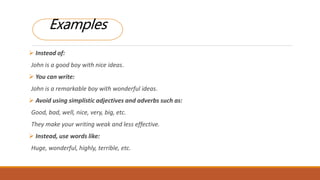
 Instead of:
John is a good boy with nice ideas.
 You can write:
John is a remarkable boy with wonderful ideas.
 Avoid using simplistic adjectives and adverbs such as:
Good, bad, well, nice, very, big, etc.
They make your writing weak and less effective.
 Instead, use words like:
Huge, wonderful, highly, terrible, etc.
Examples
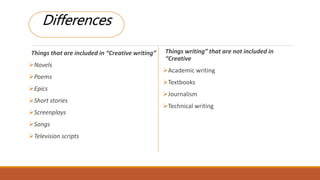
Things that are included in “Creative writing”
Novels
Poems
Epics
Short stories
Screenplays
Songs
Television scripts
Things writing” that are not included in
“Creative
Academic writing
Textbooks
Journalism
Technical writing
Differences
Thank You

Importance of creative writing

  • 1.
    Lahore Leads University Topic:Importance of Creative Writing Presented by Tehmeena Mushtaq And Nadir Abbas BS(English) 3rd Semester Submit to Mam Nadia Fareed
  • 2.
  • 4.
    CREATIVITYCreativity According to AlbertEinstein, “Creativity is intelligence having fun” And he also said, “The true sign of intelligence is not knowledge but imagination” According to Mary Lou Cook, “Creativity is inventing, experimenting, growing, taking risk, breaking rules, making mistakes and having fun” Creativity is the ability to produce original ideas. Creativity is the use of imagination to create inventiveness. It is the act of turning new ideas into reality. Creativity involves two processes: thinking, then producing. It requires passion.
  • 5.
    These elements aredescribed below Fluency Flexibility Originality Elaboration Visualization Lateral thinking Define problems Elements of Creativity
  • 7.
    Imagery is languageused by poets, novelists and other writers to create images in the mind of the reader. Imagery allow readers to directly sympathize with character and narrators as they imagine having the same sense experiences. It commonly helps build compelling poetry, convincing narratives, well-designed film sets, and descriptive songs. EXAMPLE The night was black as ever, but bright stars lit up the sky in the beautiful, and varied constellations which were sprinkled across the astronomical landscape. In this example, the experience of the night sky is described in depth with color, shape, and pattern. Imagery
  • 8.
    Also known asthe art of making things up. Creative writing is a vital part of modern society. The invention of reality The improvement of reality The confrontation with reality; facing reality An escape from reality A magnification of reality An inborn talent Creative Writing
  • 9.
    The purpose ofcreative writing is to both entertain and share human experience, like love or loss. Writers attempt to get at a truth about humanity through poetics and storylines. In creative writing, you are trying to express a feeling or a thought, the first step is to use your imagination. The Purpose
  • 10.
    The Creative WritingProcess  Activate Knowledge  Take in Information  Generate Ideas  Organize / Reorganize  Publish
  • 11.
    Types of Creative Writing Short stories  Songs  Scripts of ads  Screenplays  Novel  Poetry
  • 12.
    Character development Plot development Pointof view Dialogue Metaphors and similes Figure of speech Imaginative language Techniques used in Creative Writing
  • 13.
     Instead of: Johnis a good boy with nice ideas.  You can write: John is a remarkable boy with wonderful ideas.  Avoid using simplistic adjectives and adverbs such as: Good, bad, well, nice, very, big, etc. They make your writing weak and less effective.  Instead, use words like: Huge, wonderful, highly, terrible, etc. Examples
  • 14.
    Things that areincluded in “Creative writing” Novels Poems Epics Short stories Screenplays Songs Television scripts Things writing” that are not included in “Creative Academic writing Textbooks Journalism Technical writing Differences
  • 15.