Copy Reading
Copy reading
Headline Writing
By TIRZO B. ZAPATA, JR.
Abra State Institute of Sciences and
Technology, Main Campus
Copy reading
What is a COPY?
 A copy is a material sent to
the typist to be typeset.
 It may be a news story, a
feature article, an
editorial, or a literary
piece, etc.
THE COPY READER
 Butcher / mutilator
 Known as the most cruel staff member
 He creates more enemies then friends among the
reporters/ writers.
“Editing is the same as quarreling with writers -- same thing exactly.”
Harold Wallace Ross
 The copy reader is a newspaper man who has no
heart and imagination.
 He is a newspaper man who occupies a seat on
the news desk.
 The copy reader goes over the story and makes the
necessary corrections and revisions in the copy to
improve it.
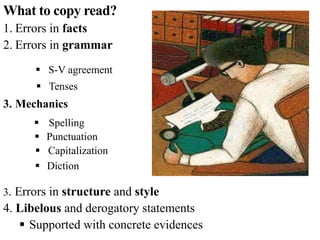
What to copy read?
1. Errors in facts
2. Errors in grammar
3. Mechanics
3. Errors in structure and style
4. Libelous and derogatory statements
 Supported with concrete evidences
 Punctuation
 Capitalization
 S-V agreement
 Tenses
 Spelling
 Diction
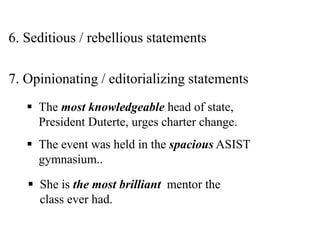
6. Seditious / rebellious statements
7. Opinionating / editorializing statements
 The most knowledgeable head of state,
President Duterte, urges charter change.
 The event was held in the spacious ASIST
gymnasium..
 She is the most brilliant mentor the
class ever had.
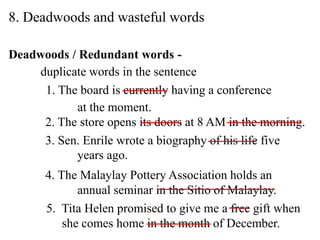
8. Deadwoods and wasteful words
Deadwoods / Redundant words -
duplicate words in the sentence
1. The board is currently having a conference
at the moment.
2. The store opens its doors at 8 AM in the morning.
3. Sen. Enrile wrote a biography of his life five
years ago.
4. The Malaylay Pottery Association holds an
annual seminar in the Sitio of Malaylay.
5. Tita Helen promised to give me a free gift when
she comes home in the month of December.
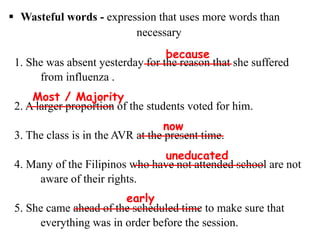
 Wasteful words - expression that uses more words than
necessary
1. She was absent yesterday for the reason that she suffered
from influenza .
2. A larger proportion of the students voted for him.
3. The class is in the AVR at the present time.
4. Many of the Filipinos who have not attended school are not
aware of their rights.
5. She came ahead of the scheduled time to make sure that
everything was in order before the session.
because
Most / Majority
now
uneducated
early
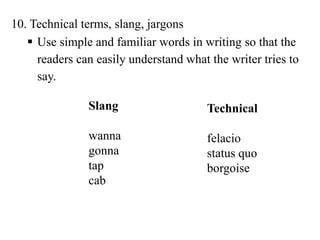
10. Technical terms, slang, jargons
 Use simple and familiar words in writing so that the
readers can easily understand what the writer tries to
say.
Slang
wanna
gonna
tap
cab
Technical
felacio
status quo
borgoise
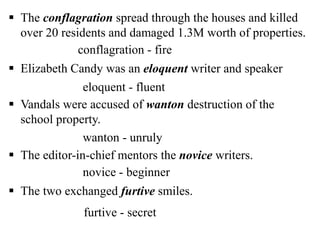
 The conflagration spread through the houses and killed
over 20 residents and damaged 1.3M worth of properties.
 Elizabeth Candy was an eloquent writer and speaker
 Vandals were accused of wanton destruction of the
school property.
 The editor-in-chief mentors the novice writers.
 The two exchanged furtive smiles.
conflagration - fire
eloquent - fluent
wanton - unruly
novice - beginner
furtive - secret
Qualities of a Good Copyreader:
1. Pioneer writer
2. Empathy
What is it they want? What do they need?
3. Self-confidence.
Don’t be ruled by the readers; it’s your job to know
what they need and deliver it to them.
4. Fearless
5. Stamina
- both physical and intellectual stamina.
- if you take it seriously, then you’re probably
working a lot of overtime
6. Know sensational copy when you see it
somebody delivers something truly kick-ass, it’s your
job to recognize it and make sure everyone else does, too.
7. Smart staff
Top-notch editors know what they don’t know, and
they’re not afraid to admit it. That’s why they surround
themselves with people who can fill the gaps in their own
knowledge.
8. Friends with Mr. Webster
9. Be a mentor
Editors are teachers as well as journalists. They
develop a staff of sharp writers, independent thinkers and
risk takers
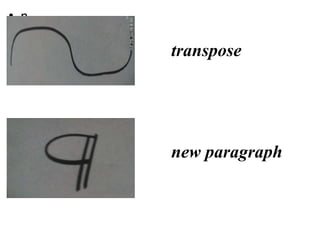
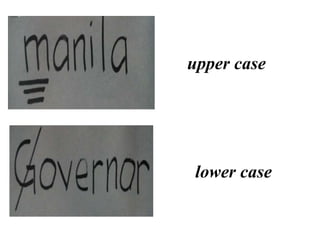
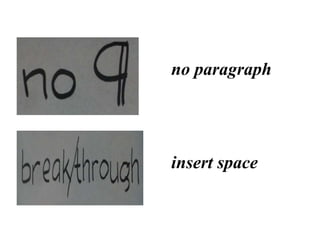
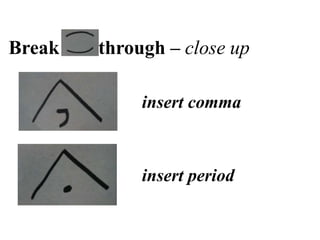
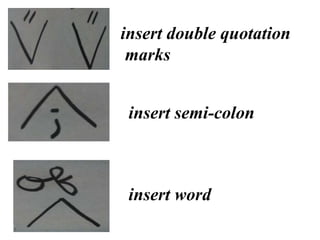
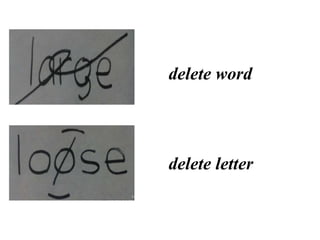
Common Symbols
used in Copy reading
• n
transpose
new paragraph
upper case
lower case
no paragraph
insert space
Break through – close up
insert comma
insert period
insert double quotation
marks
insert semi-colon
insert word
delete word
delete letter
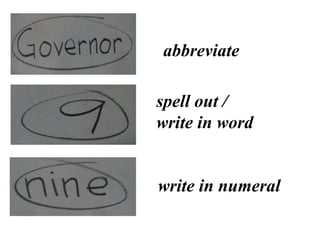
abbreviate
write in numeral
spell out /
write in word
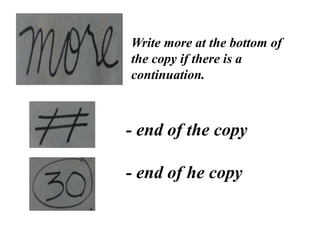
Write more at the bottom of
the copy if there is a
continuation.
- end of the copy
- end of he copy
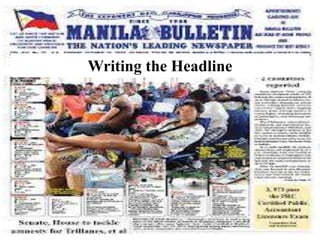
Writing the Headline
HEADLINE
 HEADLINE is the title of every story.
 The HEADLINE in printed type is much bigger and
bolder than its body which is the story itself.
 The HEADLINE of the number one story on the first
page is called a BANNER HEADLINE. If it runs
across the page, it may also be called a STREAMER.
 It capsulizes the story.
 It summarizes the lead.
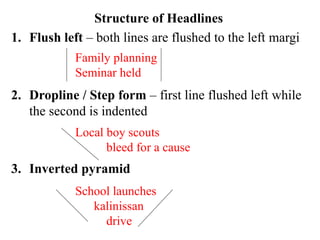
Structure of Headlines
1. Flush left – both lines are flushed to the left margi
2. Dropline / Step form – first line flushed left while
the second is indented
3. Inverted pyramid
Family planning
Seminar held
Local boy scouts
bleed for a cause
School launches
kalinissan
drive
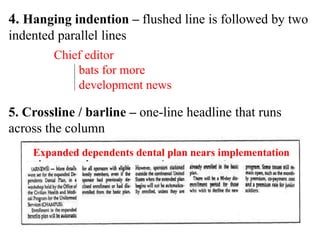
4. Hanging indention – flushed line is followed by two
indented parallel lines
5. Crossline / barline – one-line headline that runs
across the column
Chief editor
bats for more
development news
Expanded dependents dental plan nears implementation
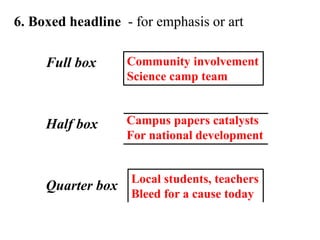
6. Boxed headline - for emphasis or art
Full box
Half box
Quarter box
Community involvement
Science camp team
Campus papers catalysts
For national development
Local students, teachers
Bleed for a cause today
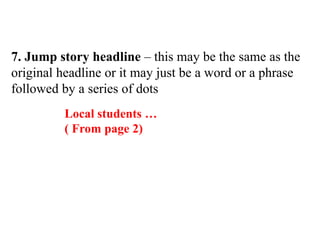
7. Jump story headline – this may be the same as the
original headline or it may just be a word or a phrase
followed by a series of dots
Local students …
( From page 2)
Types of headlines :
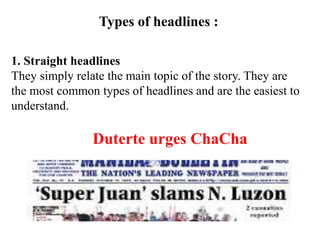
1. Straight headlines
They simply relate the main topic of the story. They are
the most common types of headlines and are the easiest to
understand.
Duterte urges ChaCha
2. Headlines that ask
Most question headlines are not really typical
questions at all. They are statements followed by a
question mark. These question marks are used when:
o The headline reports a future possibility
Example:
o There is some doubt about the truth or accuracy of
the story.
Example:
Are hotels in shape for games?
Hidden Treasures In Your safe-Deposit Box?
Marcos - Aquino reconciliation?
3. Headlines that contain a quotation
A quoted speech is used in headlines.
It’s another way to begin a story with an unproven
statement.
Example:
Quotation marks are used also to show a word is being
used outside its normal meaning.
Example:
Mounties shot in Arctic ‘had no enemies at all’
Microsoft divulges e-mail adds unless patrons
‘opt out’
4. Feature headlines
Headlines for some unusual or amusing stories don’t give
a complete meaning. It’s often necessary to read the story
to understand the headline.
Example:
5. Double headlines
They are two-part headlines of the same story. They are
often used for major events.
Example:
Two shot dead at U.S. school
An experiment in simplicity
I WANT A LIFE
The language of newspaper headlines
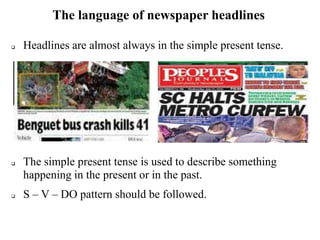
 Headlines are almost always in the simple present tense.
 The simple present tense is used to describe something
happening in the present or in the past.
 S – V – DO pattern should be followed.
Dos in Writing Headlines
 Make sure that the headline answers as many Ws as
possible.
 The headline should summarize the story. It should
not contain anything which is not found in the story.
 Positive headlines are preferable than the negative ones.
School physician allays flu fear
Flu epidemic not rampant in city
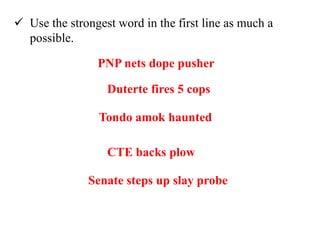
 Use the strongest word in the first line as much a
possible.
PNP nets dope pusher
Duterte fires 5 cops
Tondo amok haunted
CTE backs plow
Senate steps up slay probe
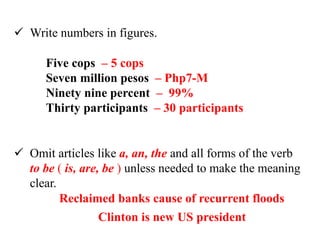
 Write numbers in figures.
 Omit articles like a, an, the and all forms of the verb
to be ( is, are, be ) unless needed to make the meaning
clear.
Reclaimed banks cause of recurrent floods
Clinton is new US president
Five cops – 5 cops
Seven million pesos – Php7-M
Ninety nine percent – 99%
Thirty participants – 30 participants
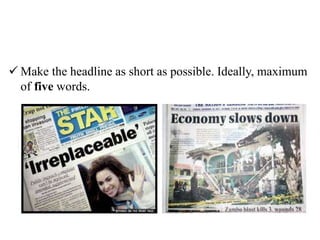
 Make the headline as short as possible. Ideally, maximum
of five words.
End
Good luck !

Copy Reading & Headline Eriting

  • 1.
    Copy Reading Copy reading HeadlineWriting By TIRZO B. ZAPATA, JR. Abra State Institute of Sciences and Technology, Main Campus
  • 2.
  • 3.
    What is aCOPY?  A copy is a material sent to the typist to be typeset.  It may be a news story, a feature article, an editorial, or a literary piece, etc.
  • 4.
    THE COPY READER Butcher / mutilator  Known as the most cruel staff member  He creates more enemies then friends among the reporters/ writers. “Editing is the same as quarreling with writers -- same thing exactly.” Harold Wallace Ross  The copy reader is a newspaper man who has no heart and imagination.  He is a newspaper man who occupies a seat on the news desk.  The copy reader goes over the story and makes the necessary corrections and revisions in the copy to improve it.
  • 5.
    What to copyread? 1. Errors in facts 2. Errors in grammar 3. Mechanics 3. Errors in structure and style 4. Libelous and derogatory statements  Supported with concrete evidences  Punctuation  Capitalization  S-V agreement  Tenses  Spelling  Diction
  • 6.
    6. Seditious /rebellious statements 7. Opinionating / editorializing statements  The most knowledgeable head of state, President Duterte, urges charter change.  The event was held in the spacious ASIST gymnasium..  She is the most brilliant mentor the class ever had.
  • 7.
    8. Deadwoods andwasteful words Deadwoods / Redundant words - duplicate words in the sentence 1. The board is currently having a conference at the moment. 2. The store opens its doors at 8 AM in the morning. 3. Sen. Enrile wrote a biography of his life five years ago. 4. The Malaylay Pottery Association holds an annual seminar in the Sitio of Malaylay. 5. Tita Helen promised to give me a free gift when she comes home in the month of December.
  • 8.
     Wasteful words- expression that uses more words than necessary 1. She was absent yesterday for the reason that she suffered from influenza . 2. A larger proportion of the students voted for him. 3. The class is in the AVR at the present time. 4. Many of the Filipinos who have not attended school are not aware of their rights. 5. She came ahead of the scheduled time to make sure that everything was in order before the session. because Most / Majority now uneducated early
  • 9.
    10. Technical terms,slang, jargons  Use simple and familiar words in writing so that the readers can easily understand what the writer tries to say. Slang wanna gonna tap cab Technical felacio status quo borgoise
  • 10.
     The conflagrationspread through the houses and killed over 20 residents and damaged 1.3M worth of properties.  Elizabeth Candy was an eloquent writer and speaker  Vandals were accused of wanton destruction of the school property.  The editor-in-chief mentors the novice writers.  The two exchanged furtive smiles. conflagration - fire eloquent - fluent wanton - unruly novice - beginner furtive - secret
  • 11.
    Qualities of aGood Copyreader: 1. Pioneer writer 2. Empathy What is it they want? What do they need? 3. Self-confidence. Don’t be ruled by the readers; it’s your job to know what they need and deliver it to them.
  • 12.
    4. Fearless 5. Stamina -both physical and intellectual stamina. - if you take it seriously, then you’re probably working a lot of overtime 6. Know sensational copy when you see it somebody delivers something truly kick-ass, it’s your job to recognize it and make sure everyone else does, too.
  • 13.
    7. Smart staff Top-notcheditors know what they don’t know, and they’re not afraid to admit it. That’s why they surround themselves with people who can fill the gaps in their own knowledge. 8. Friends with Mr. Webster 9. Be a mentor Editors are teachers as well as journalists. They develop a staff of sharp writers, independent thinkers and risk takers
  • 14.
  • 15.
  • 16.
  • 17.
  • 18.
    Break through –close up insert comma insert period
  • 19.
  • 20.
  • 21.
  • 22.
    Write more atthe bottom of the copy if there is a continuation. - end of the copy - end of he copy
  • 23.
  • 24.
    HEADLINE  HEADLINE isthe title of every story.  The HEADLINE in printed type is much bigger and bolder than its body which is the story itself.  The HEADLINE of the number one story on the first page is called a BANNER HEADLINE. If it runs across the page, it may also be called a STREAMER.  It capsulizes the story.  It summarizes the lead.
  • 25.
    Structure of Headlines 1.Flush left – both lines are flushed to the left margi 2. Dropline / Step form – first line flushed left while the second is indented 3. Inverted pyramid Family planning Seminar held Local boy scouts bleed for a cause School launches kalinissan drive
  • 26.
    4. Hanging indention– flushed line is followed by two indented parallel lines 5. Crossline / barline – one-line headline that runs across the column Chief editor bats for more development news Expanded dependents dental plan nears implementation
  • 27.
    6. Boxed headline- for emphasis or art Full box Half box Quarter box Community involvement Science camp team Campus papers catalysts For national development Local students, teachers Bleed for a cause today
  • 28.
    7. Jump storyheadline – this may be the same as the original headline or it may just be a word or a phrase followed by a series of dots Local students … ( From page 2)
  • 29.
    Types of headlines: 1. Straight headlines They simply relate the main topic of the story. They are the most common types of headlines and are the easiest to understand. Duterte urges ChaCha
  • 30.
    2. Headlines thatask Most question headlines are not really typical questions at all. They are statements followed by a question mark. These question marks are used when: o The headline reports a future possibility Example: o There is some doubt about the truth or accuracy of the story. Example: Are hotels in shape for games? Hidden Treasures In Your safe-Deposit Box? Marcos - Aquino reconciliation?
  • 31.
    3. Headlines thatcontain a quotation A quoted speech is used in headlines. It’s another way to begin a story with an unproven statement. Example: Quotation marks are used also to show a word is being used outside its normal meaning. Example: Mounties shot in Arctic ‘had no enemies at all’ Microsoft divulges e-mail adds unless patrons ‘opt out’
  • 32.
    4. Feature headlines Headlinesfor some unusual or amusing stories don’t give a complete meaning. It’s often necessary to read the story to understand the headline. Example: 5. Double headlines They are two-part headlines of the same story. They are often used for major events. Example: Two shot dead at U.S. school An experiment in simplicity I WANT A LIFE
  • 33.
    The language ofnewspaper headlines  Headlines are almost always in the simple present tense.  The simple present tense is used to describe something happening in the present or in the past.  S – V – DO pattern should be followed.
  • 34.
    Dos in WritingHeadlines  Make sure that the headline answers as many Ws as possible.  The headline should summarize the story. It should not contain anything which is not found in the story.  Positive headlines are preferable than the negative ones. School physician allays flu fear Flu epidemic not rampant in city
  • 35.
     Use thestrongest word in the first line as much a possible. PNP nets dope pusher Duterte fires 5 cops Tondo amok haunted CTE backs plow Senate steps up slay probe
  • 36.
     Write numbersin figures.  Omit articles like a, an, the and all forms of the verb to be ( is, are, be ) unless needed to make the meaning clear. Reclaimed banks cause of recurrent floods Clinton is new US president Five cops – 5 cops Seven million pesos – Php7-M Ninety nine percent – 99% Thirty participants – 30 participants
  • 37.
     Make theheadline as short as possible. Ideally, maximum of five words.
  • 38.