Marketing: Managing Profitable Customer Relationships
Some interpretations about marketing A  specialized function  within the organization that co-exists with other functions such as HR, Finance and Operations A  collection of activities  such as marketing research, advertising, public relations, etc. An  organizational mindset Which view is correct and why so?
What Is Marketing? Simple Definition: Marketing is managing profitable customer relationships. Goals:  Attract new customers by promising superior value.  Keep and grow current customers by delivering satisfaction.
Marketing Old vs. New Old view of marketing: Making a sale  --  “Telling and Selling” New view of marketing: Satisfying customer needs
Marketing Defined A social and managerial process by which individuals and groups obtain what they need and want through creating and exchanging products and value with others.
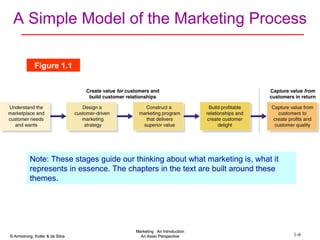
A Simple Model of the Marketing Process Note: These stages guide our thinking about what marketing is, what it represents in essence. The chapters in the text are built around these themes. Figure 1.1
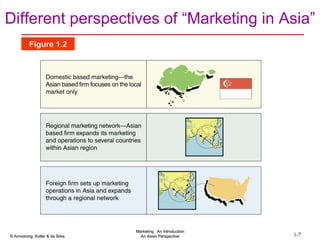
Different perspectives of “Marketing in Asia” Figure 1.2
Needs, Wants, & Demands Need: State of felt deprivation including physical, social, and individual needs. Physical: Food, clothing, shelter, safety Social: Belonging, affection Individual: Learning, knowledge, self-expression
Wants: Form that a human need takes, as shaped by culture and individual personality. Wants + Buying Power = Demand Needs, Wants, & Demands
Need / Want Fulfillment Needs and Wants Fulfilled through a  Marketing Offer   : Some combination of products, services, information, or experiences offered to a market to satisfy a need or want.
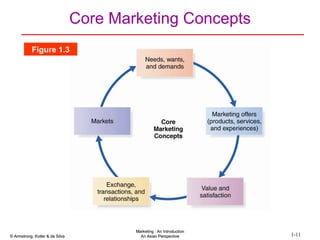
Core Marketing Concepts Figure 1.3
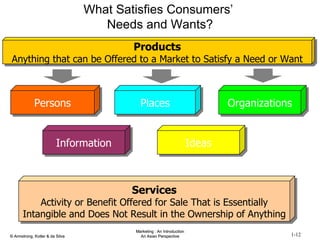
What Satisfies Consumers’  Needs and Wants? Products Anything that can be Offered to a Market to Satisfy a Need or Want Persons Places Organizations Ideas Information Services Activity or Benefit Offered for Sale That is Essentially Intangible and Does Not Result in the Ownership of Anything
Marketing Myopia Sellers pay more attention to the specific products they offer than to the benefits and experiences produced by the products. They focus on the “wants” and lose sight of the “needs”
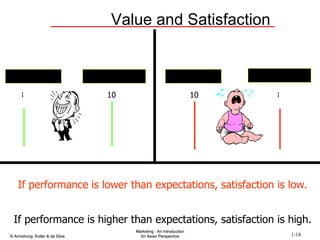
Value and Satisfaction If performance is lower than expectations, satisfaction is low. If performance is higher than expectations, satisfaction is high. Expectation Performance 8 10 Expectation Performance 10 8
Exchange vs. Transaction Exchange: Act of obtaining a desired object from someone by offering something in return . Transaction : A trade of values between two parties. One party gives X to another party and gets Y in return.  Can include cash, credit, or check.
What is a Market? The set of actual and potential buyers of a product. These people share a need or want that can be satisfied through exchange relationships.
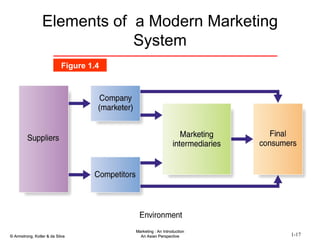
Elements of  a Modern Marketing System Figure 1.4
Marketing Management The art and science of choosing target markets and building profitable relationships with them. Questions to ask: What customers will we serve? What is our target market? How can we best serve these customers? What is our value proposition?
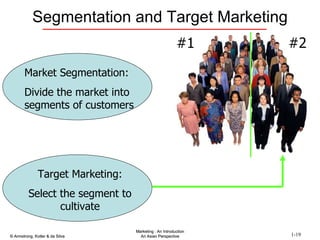
Segmentation and Target Marketing #1 #2 Market Segmentation: Divide the market into segments of customers Target Marketing: Select the segment to cultivate
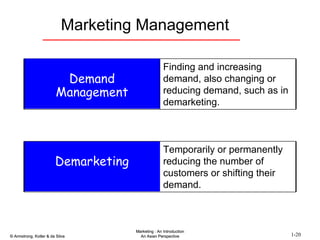
Marketing Management Finding and increasing demand, also changing or reducing demand, such as in demarketing. Demand Management Temporarily or permanently reducing the number of customers or shifting their demand. Demarketing
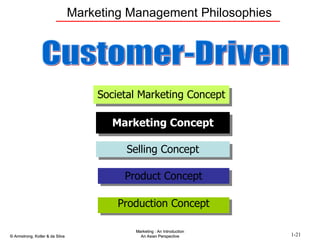
Marketing Management Philosophies Production Concept Product Concept Selling Concept Marketing Concept Societal Marketing Concept Customer-Driven
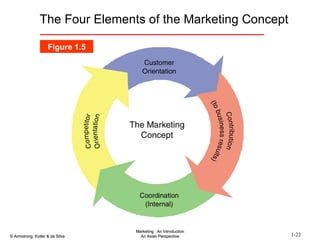
Figure 1.5 The Four Elements of the Marketing Concept
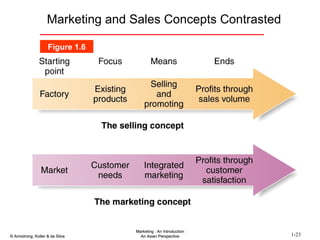
Marketing and Sales Concepts Contrasted Figure 1.6
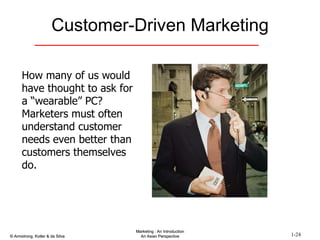
Customer-Driven Marketing How many of us would have thought to ask for a “wearable” PC?  Marketers must often understand customer needs even better than customers themselves do.
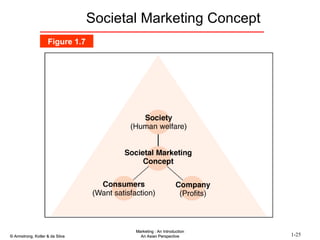
Societal Marketing Concept Figure 1.7
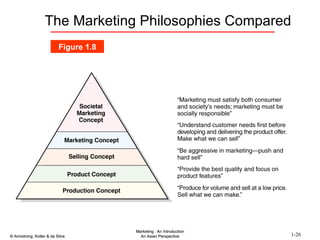
The Marketing Philosophies Compared Figure 1.8
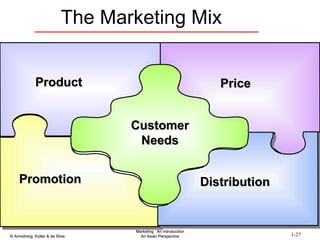
The Marketing Mix Customer Needs Product Price Promotion Distribution
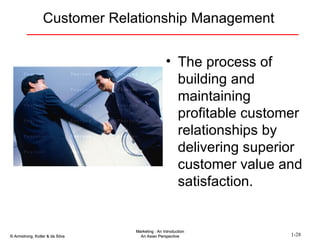
Customer Relationship Management The process of building and maintaining profitable customer relationships by delivering superior customer value and satisfaction.
Customer Perceived Value Customer’s evaluation of the difference between all the benefits and all the costs of a marketing offer relative to those of competing offers.
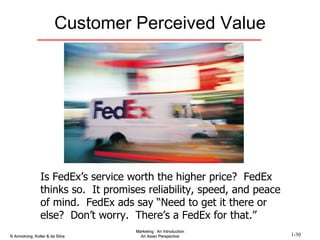
Customer Perceived Value Is FedEx’s service worth the higher price?  FedEx thinks so.  It promises reliability, speed, and peace of mind.  FedEx ads say “Need to get it there or else?  Don’t worry.  There’s a FedEx for that.”
Customer Satisfaction Dependent on the product’s perceived performance relative to a buyer’s expectations.
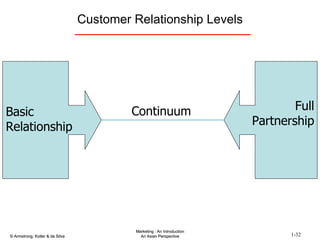
Customer Relationship Levels Basic Relationship Full Partnership Continuum
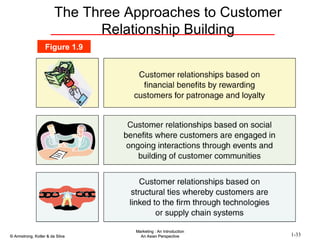
The Three Approaches to Customer Relationship Building Figure 1.9
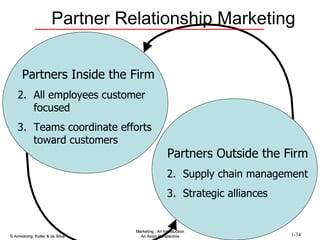
Partner Relationship Marketing Partners Outside the Firm Supply chain management Strategic alliances Partners Inside the Firm All employees customer focused Teams coordinate efforts toward customers
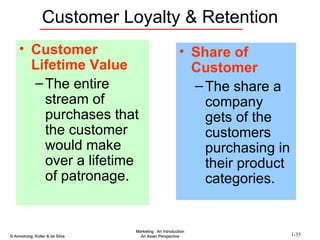
Customer Lifetime Value The entire stream of purchases that the customer would make over a lifetime of patronage. Share of Customer The share a company gets of the customers purchasing in their product categories. Customer Loyalty & Retention
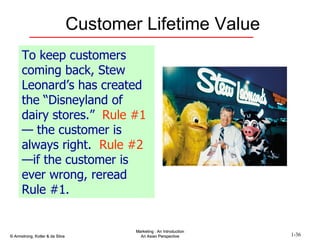
Customer Lifetime Value To keep customers coming back, Stew Leonard’s has created the “Disneyland of dairy stores.”  Rule #1 — the customer is always right.  Rule #2  —if the customer is ever wrong, reread Rule #1.
Customer Equity Customer equity is the total combined customer lifetime values of all the company’s customers.
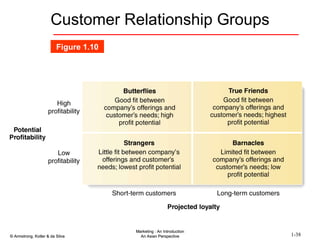
Customer Relationship Groups Figure 1.10
The Internet The  Internet  has been hailed as the technology behind a New Economy. Marketing applications include: “ Click-and-mortar” companies “ Click-only” companies Business-to-business e-commerce Business-to-business transactions online are expected to reach $4.3 trillion in 2005. By 2005, 500,000 companies will use the Internet to do business.
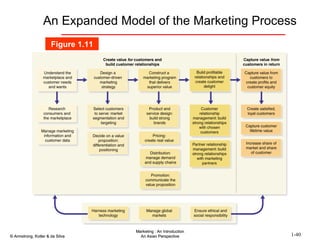
Figure 1.11 An Expanded Model of the Marketing Process

MARKETING-CH1

  • 1.
    Marketing: Managing ProfitableCustomer Relationships
  • 2.
    Some interpretations aboutmarketing A specialized function within the organization that co-exists with other functions such as HR, Finance and Operations A collection of activities such as marketing research, advertising, public relations, etc. An organizational mindset Which view is correct and why so?
  • 3.
    What Is Marketing?Simple Definition: Marketing is managing profitable customer relationships. Goals: Attract new customers by promising superior value. Keep and grow current customers by delivering satisfaction.
  • 4.
    Marketing Old vs.New Old view of marketing: Making a sale -- “Telling and Selling” New view of marketing: Satisfying customer needs
  • 5.
    Marketing Defined Asocial and managerial process by which individuals and groups obtain what they need and want through creating and exchanging products and value with others.
  • 6.
    A Simple Modelof the Marketing Process Note: These stages guide our thinking about what marketing is, what it represents in essence. The chapters in the text are built around these themes. Figure 1.1
  • 7.
    Different perspectives of“Marketing in Asia” Figure 1.2
  • 8.
    Needs, Wants, &Demands Need: State of felt deprivation including physical, social, and individual needs. Physical: Food, clothing, shelter, safety Social: Belonging, affection Individual: Learning, knowledge, self-expression
  • 9.
    Wants: Form thata human need takes, as shaped by culture and individual personality. Wants + Buying Power = Demand Needs, Wants, & Demands
  • 10.
    Need / WantFulfillment Needs and Wants Fulfilled through a Marketing Offer : Some combination of products, services, information, or experiences offered to a market to satisfy a need or want.
  • 11.
  • 12.
    What Satisfies Consumers’ Needs and Wants? Products Anything that can be Offered to a Market to Satisfy a Need or Want Persons Places Organizations Ideas Information Services Activity or Benefit Offered for Sale That is Essentially Intangible and Does Not Result in the Ownership of Anything
  • 13.
    Marketing Myopia Sellerspay more attention to the specific products they offer than to the benefits and experiences produced by the products. They focus on the “wants” and lose sight of the “needs”
  • 14.
    Value and SatisfactionIf performance is lower than expectations, satisfaction is low. If performance is higher than expectations, satisfaction is high. Expectation Performance 8 10 Expectation Performance 10 8
  • 15.
    Exchange vs. TransactionExchange: Act of obtaining a desired object from someone by offering something in return . Transaction : A trade of values between two parties. One party gives X to another party and gets Y in return. Can include cash, credit, or check.
  • 16.
    What is aMarket? The set of actual and potential buyers of a product. These people share a need or want that can be satisfied through exchange relationships.
  • 17.
    Elements of a Modern Marketing System Figure 1.4
  • 18.
    Marketing Management Theart and science of choosing target markets and building profitable relationships with them. Questions to ask: What customers will we serve? What is our target market? How can we best serve these customers? What is our value proposition?
  • 19.
    Segmentation and TargetMarketing #1 #2 Market Segmentation: Divide the market into segments of customers Target Marketing: Select the segment to cultivate
  • 20.
    Marketing Management Findingand increasing demand, also changing or reducing demand, such as in demarketing. Demand Management Temporarily or permanently reducing the number of customers or shifting their demand. Demarketing
  • 21.
    Marketing Management PhilosophiesProduction Concept Product Concept Selling Concept Marketing Concept Societal Marketing Concept Customer-Driven
  • 22.
    Figure 1.5 TheFour Elements of the Marketing Concept
  • 23.
    Marketing and SalesConcepts Contrasted Figure 1.6
  • 24.
    Customer-Driven Marketing Howmany of us would have thought to ask for a “wearable” PC? Marketers must often understand customer needs even better than customers themselves do.
  • 25.
  • 26.
    The Marketing PhilosophiesCompared Figure 1.8
  • 27.
    The Marketing MixCustomer Needs Product Price Promotion Distribution
  • 28.
    Customer Relationship ManagementThe process of building and maintaining profitable customer relationships by delivering superior customer value and satisfaction.
  • 29.
    Customer Perceived ValueCustomer’s evaluation of the difference between all the benefits and all the costs of a marketing offer relative to those of competing offers.
  • 30.
    Customer Perceived ValueIs FedEx’s service worth the higher price? FedEx thinks so. It promises reliability, speed, and peace of mind. FedEx ads say “Need to get it there or else? Don’t worry. There’s a FedEx for that.”
  • 31.
    Customer Satisfaction Dependenton the product’s perceived performance relative to a buyer’s expectations.
  • 32.
    Customer Relationship LevelsBasic Relationship Full Partnership Continuum
  • 33.
    The Three Approachesto Customer Relationship Building Figure 1.9
  • 34.
    Partner Relationship MarketingPartners Outside the Firm Supply chain management Strategic alliances Partners Inside the Firm All employees customer focused Teams coordinate efforts toward customers
  • 35.
    Customer Lifetime ValueThe entire stream of purchases that the customer would make over a lifetime of patronage. Share of Customer The share a company gets of the customers purchasing in their product categories. Customer Loyalty & Retention
  • 36.
    Customer Lifetime ValueTo keep customers coming back, Stew Leonard’s has created the “Disneyland of dairy stores.” Rule #1 — the customer is always right. Rule #2 —if the customer is ever wrong, reread Rule #1.
  • 37.
    Customer Equity Customerequity is the total combined customer lifetime values of all the company’s customers.
  • 38.
  • 39.
    The Internet The Internet has been hailed as the technology behind a New Economy. Marketing applications include: “ Click-and-mortar” companies “ Click-only” companies Business-to-business e-commerce Business-to-business transactions online are expected to reach $4.3 trillion in 2005. By 2005, 500,000 companies will use the Internet to do business.
  • 40.
    Figure 1.11 AnExpanded Model of the Marketing Process