065 FERMENTATION (ALCOHOLIC) 
To demonstrate how yeast converts sugars into carbon dioxide and ethanol 
MATERIALS REQUIRED 
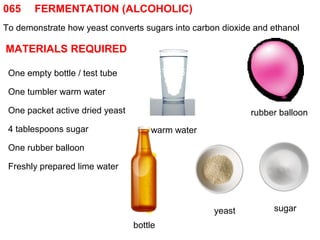
One empty bottle / test tube 
One tumbler warm water 
One packet active dried yeast 
4 tablespoons sugar 
One rubber balloon 
Freshly prepared lime water 
warm water 
bottle 
rubber balloon 
yeast sugar
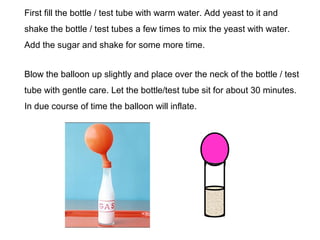
First fill the bottle / test tube with warm water. Add yeast to it and 
shake the bottle / test tubes a few times to mix the yeast with water. 
Add the sugar and shake for some more time. 
Blow the balloon up slightly and place over the neck of the bottle / test 
tube with gentle care. Let the bottle/test tube sit for about 30 minutes. 
In due course of time the balloon will inflate.
Carefully remove the expanded balloon from the bottle / test tube 
with great care so as not to release the carbon dioxide; 
Release the gas trapped in the balloon into a test tube containing 
fresh lime water; 
If the lime water turns milky it is confirmed that the gas in the balloon 
is carbon dioxide 
lime water 
turns milky
As the yeast consumes the sugar, it produces carbon dioxide. The gas 
initially fills the bottle/test tube and with no place to go but up, this gas 
slowly fills the balloon thereby expanding it. 
The same mechanism occurs while baking bread. The yeast releases the 
carbon dioxide gas which expands and makes many small holes in the 
bread. This makes the bread light and fluffy. Baker’s yeast is 
Saccharomyces cerevisiae

065 fermentation (alcoholic)

  • 1.
    065 FERMENTATION (ALCOHOLIC) To demonstrate how yeast converts sugars into carbon dioxide and ethanol MATERIALS REQUIRED One empty bottle / test tube One tumbler warm water One packet active dried yeast 4 tablespoons sugar One rubber balloon Freshly prepared lime water warm water bottle rubber balloon yeast sugar
  • 2.
    First fill thebottle / test tube with warm water. Add yeast to it and shake the bottle / test tubes a few times to mix the yeast with water. Add the sugar and shake for some more time. Blow the balloon up slightly and place over the neck of the bottle / test tube with gentle care. Let the bottle/test tube sit for about 30 minutes. In due course of time the balloon will inflate.
  • 3.
    Carefully remove theexpanded balloon from the bottle / test tube with great care so as not to release the carbon dioxide; Release the gas trapped in the balloon into a test tube containing fresh lime water; If the lime water turns milky it is confirmed that the gas in the balloon is carbon dioxide lime water turns milky
  • 4.
    As the yeastconsumes the sugar, it produces carbon dioxide. The gas initially fills the bottle/test tube and with no place to go but up, this gas slowly fills the balloon thereby expanding it. The same mechanism occurs while baking bread. The yeast releases the carbon dioxide gas which expands and makes many small holes in the bread. This makes the bread light and fluffy. Baker’s yeast is Saccharomyces cerevisiae