KEY
Technologies created specifically
for learning
=
=
Circle sizes indicate the prominence
in common usage for learning
Technologies adapted for learning
purposes
=
The Continuous Learning Technology Stack
Enablers
Devices
Standards
Culture
Capabilities
EXPER
IENCE ENVIRO
NMENT
EXPO
SURE
EDUC
ATION
Professional
Social
Networks
Electronic
Expertise
Directories
Social
Learning
Platforms
Video
Content
Platforms
Blogging
Software &
Sites
Social
Networks
Aggregator
Apps &
Newsfeeds
Virtual
Meeting
Sofware
Media
Libraries
Search
Software
IM &
Texting
Tools
VOIP &
Video Chat
Tools
Electronic
Job Aids
Help
Software
Business
Performance
Dashboards
Learning
Aggregators or
Marketplace
Wikis
Mentoring /
Coaching
Platforms
Collaboration
Tools
Online
Chat or
Sharing
Simulation
Software
Performance
Support
Platforms
Note-taking
Software
Crowdsourcing
Platforms
External
Content
Libraries
LMS
MOOCs
Platforms
A/V
Production
Tools e-Learning
Authoring
Tools
Adaptive
Learning
PlatformsApp
Development
Platforms
Content
Capture
Software
Assessment
Software
Polling
Software
Standard
Office
Tools
eBooks
Virtual
Classroom
Platforms
Gamification
Platforms
Reporting &
Analytics
Tools
Learning
Portals
Mobile
Platforms
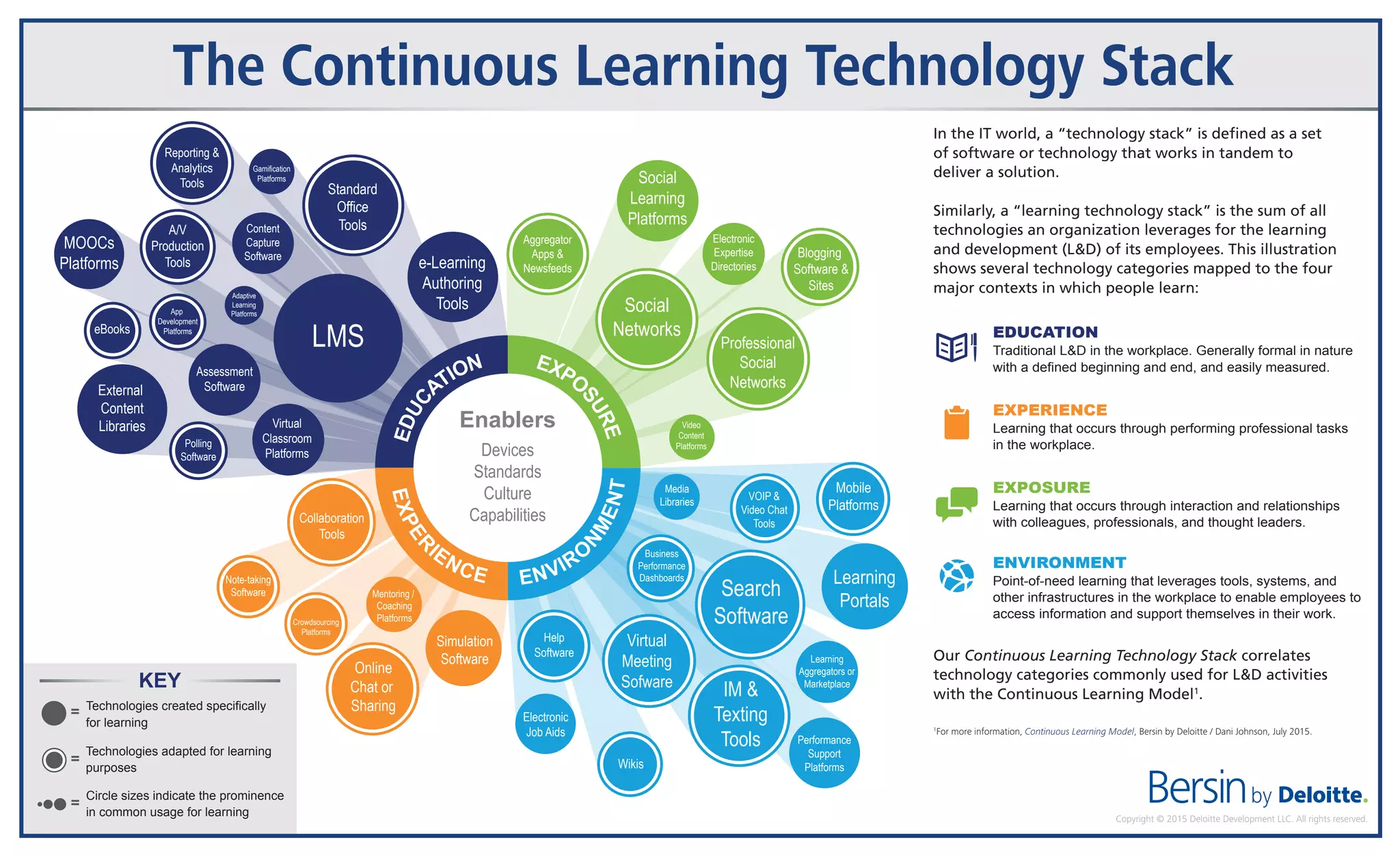
In the IT world, a “technology stack” is defined as a set
of software or technology that works in tandem to
deliver a solution.
Similarly, a “learning technology stack” is the sum of all
technologies an organization leverages for the learning
and development (L&D) of its employees. This illustration
shows several technology categories mapped to the four
major contexts in which people learn:
Traditional L&D in the workplace. Generally formal in nature
with a defined beginning and end, and easily measured.
EDUCATION
ENVIRONMENT
Point-of-need learning that leverages tools, systems, and
other infrastructures in the workplace to enable employees to
access information and support themselves in their work.
EXPOSURE
Learning that occurs through interaction and relationships
with colleagues, professionals, and thought leaders.
EXPERIENCE
Learning that occurs through performing professional tasks
in the workplace.
Our Continuous Learning Technology Stack correlates
technology categories commonly used for L&D activities
with the Continuous Learning Model1
.
Copyright © 2015 Deloitte Development LLC. All rights reserved.
http://insights.bersin.com/research/?docid=17450
1
For more information, Continuous Learning Model, Bersin by Deloitte / Dani Johnson, July 2015.

051415 info learning_technologytechstack_dj_final

  • 1.
    KEY Technologies created specifically forlearning = = Circle sizes indicate the prominence in common usage for learning Technologies adapted for learning purposes = The Continuous Learning Technology Stack Enablers Devices Standards Culture Capabilities EXPER IENCE ENVIRO NMENT EXPO SURE EDUC ATION Professional Social Networks Electronic Expertise Directories Social Learning Platforms Video Content Platforms Blogging Software & Sites Social Networks Aggregator Apps & Newsfeeds Virtual Meeting Sofware Media Libraries Search Software IM & Texting Tools VOIP & Video Chat Tools Electronic Job Aids Help Software Business Performance Dashboards Learning Aggregators or Marketplace Wikis Mentoring / Coaching Platforms Collaboration Tools Online Chat or Sharing Simulation Software Performance Support Platforms Note-taking Software Crowdsourcing Platforms External Content Libraries LMS MOOCs Platforms A/V Production Tools e-Learning Authoring Tools Adaptive Learning PlatformsApp Development Platforms Content Capture Software Assessment Software Polling Software Standard Office Tools eBooks Virtual Classroom Platforms Gamification Platforms Reporting & Analytics Tools Learning Portals Mobile Platforms In the IT world, a “technology stack” is defined as a set of software or technology that works in tandem to deliver a solution. Similarly, a “learning technology stack” is the sum of all technologies an organization leverages for the learning and development (L&D) of its employees. This illustration shows several technology categories mapped to the four major contexts in which people learn: Traditional L&D in the workplace. Generally formal in nature with a defined beginning and end, and easily measured. EDUCATION ENVIRONMENT Point-of-need learning that leverages tools, systems, and other infrastructures in the workplace to enable employees to access information and support themselves in their work. EXPOSURE Learning that occurs through interaction and relationships with colleagues, professionals, and thought leaders. EXPERIENCE Learning that occurs through performing professional tasks in the workplace. Our Continuous Learning Technology Stack correlates technology categories commonly used for L&D activities with the Continuous Learning Model1 . Copyright © 2015 Deloitte Development LLC. All rights reserved. http://insights.bersin.com/research/?docid=17450 http://insights.bersin.com/research/?docid=17450 1 For more information, Continuous Learning Model, Bersin by Deloitte / Dani Johnson, July 2015.