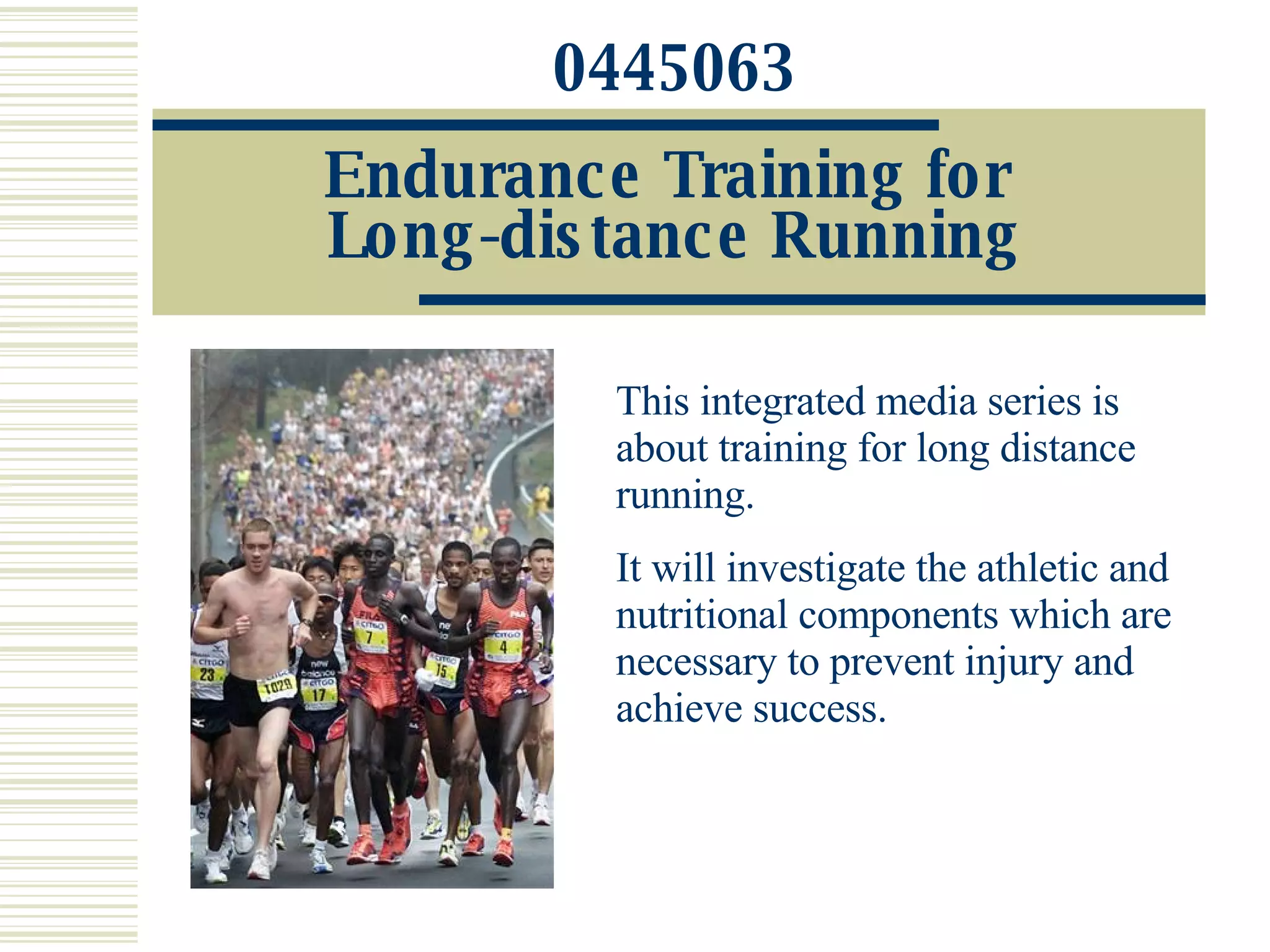
0445063 Endurance Training for  Long-distance Running This integrated media series is about training for long distance running.  It will investigate the athletic and nutritional components which are necessary to prevent injury and achieve success.
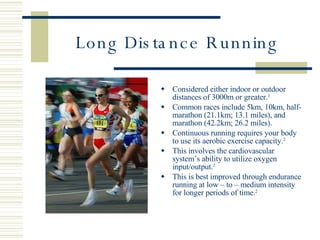
Long Distance Running Considered either indoor or outdoor distances of 3000m or greater. 1 Common races include 5km, 10km, half-marathon (21.1km; 13.1 miles), and marathon (42.2km; 26.2 miles). Continuous running requires your body to use its aerobic exercise capacity. 2 This involves the cardiovascular system’s ability to utilize oxygen input/output. 2 This is best improved through endurance running at low – to – medium intensity for longer periods of time. 2
 
Aerobic  Activity Exercise which requires oxygen consumption. 3 Aerobic activities utilize large muscle groups, and occur in a continuous, rhythmic motion. 3 Examples include long-distance running, cycling, cross-country skiing, dancing These activities cause your cardiovascular system to work harder. The respiratory rate increases and the heart beats faster, which provides the body with much-needed oxygen. 3 Our muscles run on the oxygen provided by the cardiovascular system. 3   Oxygen plays a key role in breaking down the glycogen and fat stores needed for energy use. 3 A person’s aerobic capacity increases as the cardiovascular system becomes stronger and the muscles’ ability to consume oxygen improves. Thus providing the body with more energy for exercise of heightened duration and intensity. 3
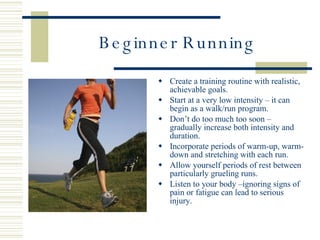
Beginner Running Create a training routine with realistic, achievable goals. Start at a very low intensity – it can begin as a walk/run program. Don’t do too much too soon – gradually increase both intensity and duration.  Incorporate periods of warm-up, warm-down and stretching with each run. Allow yourself periods of rest between particularly grueling runs. Listen to your body –ignoring signs of pain or fatigue can lead to serious injury.
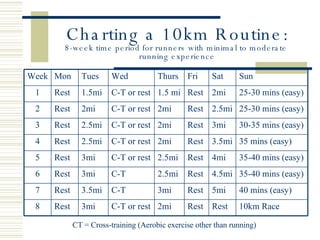
Charting a 10km Routine: 8-week time period for runners with minimal to moderate  running experience CT = Cross-training (Aerobic exercise other than running) 10km Race Rest Rest 2mi C-T or rest 3mi Rest 8 40 mins (easy) 5mi Rest 3mi C-T 3.5mi Rest 7 35-40 mins (easy) 4.5mi Rest 2.5mi C-T 3mi Rest 6 35-40 mins (easy) 4mi Rest 2.5mi C-T or rest 3mi Rest 5 35 mins (easy) 3.5mi Rest 2mi C-T or rest 2.5mi Rest 4 30-35 mins (easy) 3mi Rest 2mi C-T or rest 2.5mi Rest 3 25-30 mins (easy) 2.5mi Rest 2mi C-T or rest 2mi Rest 2 25-30 mins (easy) 2mi Rest 1.5 mi C-T or rest 1.5mi Rest 1 Sun Sat Fri Thurs Wed Tues Mon Week
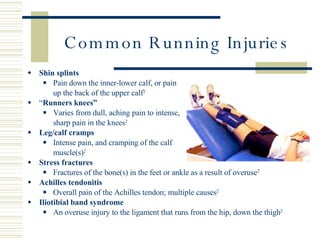
Common Running Injuries Shin splints Pain down the inner-lower calf, or pain  up the back of the upper calf 2 “ Runners knees” Varies from dull, aching pain to intense,  sharp pain in the knees 2 Leg/calf cramps Intense pain, and cramping of the calf  muscle(s) 2 Stress fractures Fractures of the bone(s) in the feet or ankle as a result of overuse 2 Achilles tendonitis Overall pain of the Achilles tendon; multiple causes 2 Iliotibial  b and syndrome An overuse injury to the ligament that runs from the hip, down the thigh 2
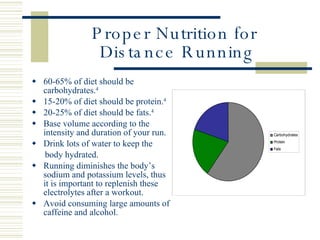
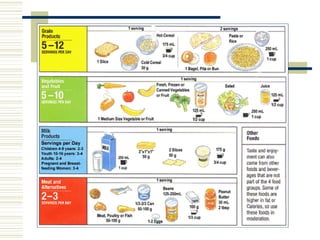
Proper Nutrition for  Distance Running 60-65% of diet should be carbohydrates. 4 15-20% of diet should be protein. 4 20-25% of diet should be fats. 4 Base volume according to the intensity and duration of your run. Drink lots of water to keep the body hydrated. Running diminishes the body’s sodium and potassium levels, thus  it is important to replenish these electrolytes after a workout. Avoid consuming large amounts of caffeine and alcohol.
 
Sources: 1 -   http://www.thecanadianencyclopedia.com/index.cfm?PgNm=TCE   &Params=A1ARTA0004755 2  -   http://www.best-running-tips.com/running-training.html 3 -   http://www. medicinenet .com/aerobic_exercise 4 -   http://running.about.com/ od / nutritionandhydration /a/ runnersdiet . htm Chart: Slide -  http://running.about.com/od/racetraining/a/10Kbeginner.htm Photo: Slide 1  -  www. msnbc .msn.com/id/7491948/ Photo: Slide 2 -  news. bbc .co. uk /.../ newsid _3201000/3201926. stm Photo: Slide 3 -  http://www.sportstoursinternational.co.uk/running/ing-new-york-city-marathon-2008-overview Photo: Slide 5 -  http://womensrunningcentral.com/library/Running. jpg   Photo Slide 7 –  http://www.sportmed.ucalgary.ca/sportmed/node/121 Photo Slide 8 -  http://hrsbstaff.ednet.ns.ca/mstoilov/Health/canadafoodguide.htm

0445063

  • 1.
    0445063 Endurance Trainingfor Long-distance Running This integrated media series is about training for long distance running. It will investigate the athletic and nutritional components which are necessary to prevent injury and achieve success.
  • 2.
    Long Distance RunningConsidered either indoor or outdoor distances of 3000m or greater. 1 Common races include 5km, 10km, half-marathon (21.1km; 13.1 miles), and marathon (42.2km; 26.2 miles). Continuous running requires your body to use its aerobic exercise capacity. 2 This involves the cardiovascular system’s ability to utilize oxygen input/output. 2 This is best improved through endurance running at low – to – medium intensity for longer periods of time. 2
  • 3.
  • 4.
    Aerobic ActivityExercise which requires oxygen consumption. 3 Aerobic activities utilize large muscle groups, and occur in a continuous, rhythmic motion. 3 Examples include long-distance running, cycling, cross-country skiing, dancing These activities cause your cardiovascular system to work harder. The respiratory rate increases and the heart beats faster, which provides the body with much-needed oxygen. 3 Our muscles run on the oxygen provided by the cardiovascular system. 3 Oxygen plays a key role in breaking down the glycogen and fat stores needed for energy use. 3 A person’s aerobic capacity increases as the cardiovascular system becomes stronger and the muscles’ ability to consume oxygen improves. Thus providing the body with more energy for exercise of heightened duration and intensity. 3
  • 5.
    Beginner Running Createa training routine with realistic, achievable goals. Start at a very low intensity – it can begin as a walk/run program. Don’t do too much too soon – gradually increase both intensity and duration. Incorporate periods of warm-up, warm-down and stretching with each run. Allow yourself periods of rest between particularly grueling runs. Listen to your body –ignoring signs of pain or fatigue can lead to serious injury.
  • 6.
    Charting a 10kmRoutine: 8-week time period for runners with minimal to moderate running experience CT = Cross-training (Aerobic exercise other than running) 10km Race Rest Rest 2mi C-T or rest 3mi Rest 8 40 mins (easy) 5mi Rest 3mi C-T 3.5mi Rest 7 35-40 mins (easy) 4.5mi Rest 2.5mi C-T 3mi Rest 6 35-40 mins (easy) 4mi Rest 2.5mi C-T or rest 3mi Rest 5 35 mins (easy) 3.5mi Rest 2mi C-T or rest 2.5mi Rest 4 30-35 mins (easy) 3mi Rest 2mi C-T or rest 2.5mi Rest 3 25-30 mins (easy) 2.5mi Rest 2mi C-T or rest 2mi Rest 2 25-30 mins (easy) 2mi Rest 1.5 mi C-T or rest 1.5mi Rest 1 Sun Sat Fri Thurs Wed Tues Mon Week
  • 7.
    Common Running InjuriesShin splints Pain down the inner-lower calf, or pain up the back of the upper calf 2 “ Runners knees” Varies from dull, aching pain to intense, sharp pain in the knees 2 Leg/calf cramps Intense pain, and cramping of the calf muscle(s) 2 Stress fractures Fractures of the bone(s) in the feet or ankle as a result of overuse 2 Achilles tendonitis Overall pain of the Achilles tendon; multiple causes 2 Iliotibial b and syndrome An overuse injury to the ligament that runs from the hip, down the thigh 2
  • 8.
    Proper Nutrition for Distance Running 60-65% of diet should be carbohydrates. 4 15-20% of diet should be protein. 4 20-25% of diet should be fats. 4 Base volume according to the intensity and duration of your run. Drink lots of water to keep the body hydrated. Running diminishes the body’s sodium and potassium levels, thus it is important to replenish these electrolytes after a workout. Avoid consuming large amounts of caffeine and alcohol.
  • 9.
  • 10.
    Sources: 1 - http://www.thecanadianencyclopedia.com/index.cfm?PgNm=TCE &Params=A1ARTA0004755 2 - http://www.best-running-tips.com/running-training.html 3 - http://www. medicinenet .com/aerobic_exercise 4 - http://running.about.com/ od / nutritionandhydration /a/ runnersdiet . htm Chart: Slide - http://running.about.com/od/racetraining/a/10Kbeginner.htm Photo: Slide 1 - www. msnbc .msn.com/id/7491948/ Photo: Slide 2 - news. bbc .co. uk /.../ newsid _3201000/3201926. stm Photo: Slide 3 - http://www.sportstoursinternational.co.uk/running/ing-new-york-city-marathon-2008-overview Photo: Slide 5 - http://womensrunningcentral.com/library/Running. jpg Photo Slide 7 – http://www.sportmed.ucalgary.ca/sportmed/node/121 Photo Slide 8 - http://hrsbstaff.ednet.ns.ca/mstoilov/Health/canadafoodguide.htm