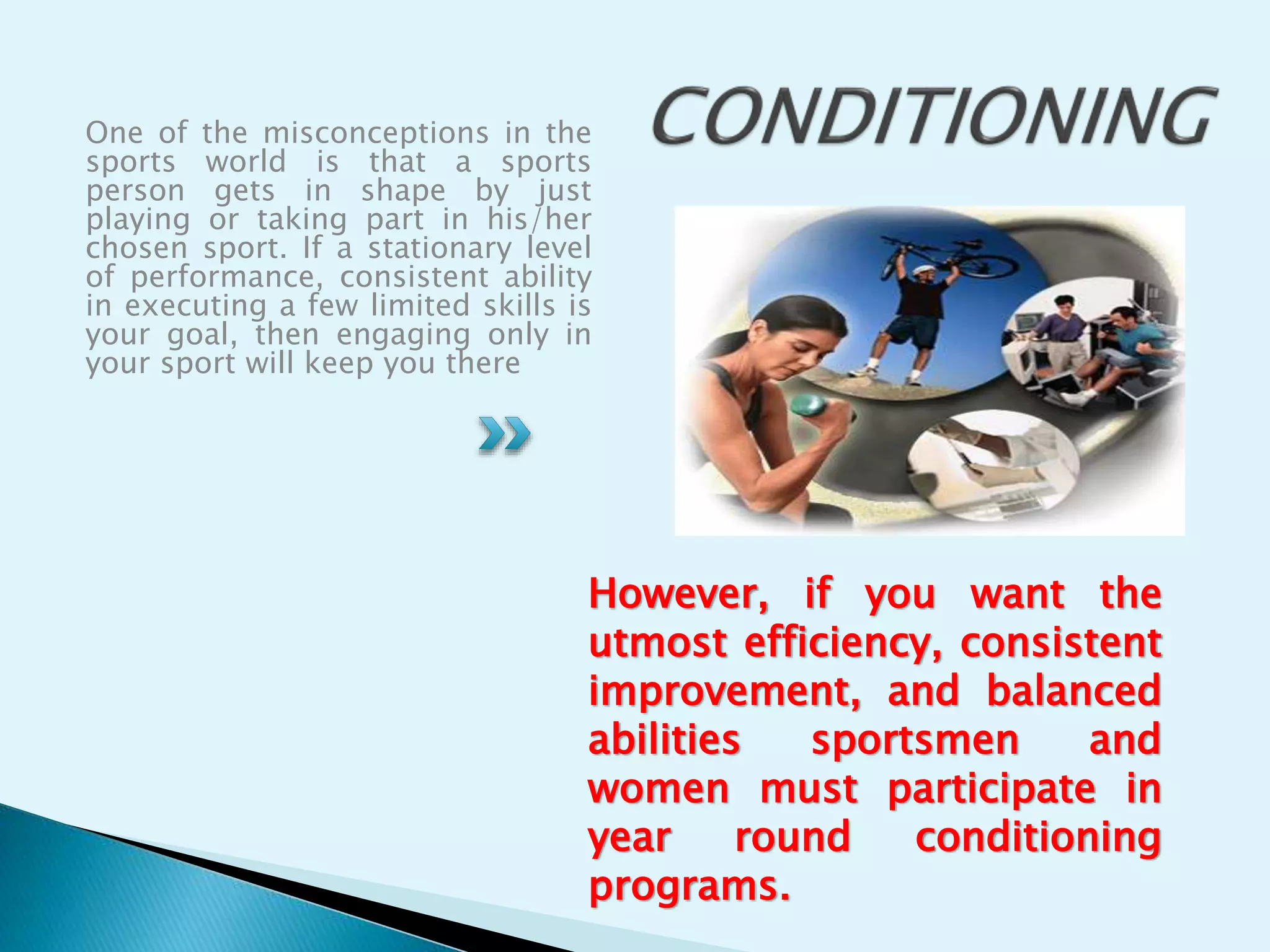
However, if you want the
utmost efficiency, consistent
improvement, and balanced
abilities sportsmen and
women must participate in
year round conditioning
programs.
One of the misconceptions in the
sports world is that a sports
person gets in shape by just
playing or taking part in his/her
chosen sport. If a stationary level
of performance, consistent ability
in executing a few limited skills is
your goal, then engaging only in
your sport will keep you there
THE COMPONENTS OF
FITNESS
Basic fitness can
be classified in four
main components:
• STRENGTH.
• SPEED.
• STAMINA.
• AND
FLEXIBILITY.
• Strength - the extent to which muscles can exert force by
contracting against resistance (e.g. holding or restraining
an object or person)
• Power - the ability to exert maximum muscular
contraction instantly in an explosive burst of movements.
The two components of power are strength and speed.
(e.g. jumping or a sprint start)
• Agility - the ability to perform a series of explosive power
movements in rapid succession in opposing directions
(e.g. Zig Zag running or cutting movements)
• Balance - the ability to control the body's position, either
stationary (e.g. a handstand) or while moving (e.g. a
gymnastics stunt)
• Flexibility - the ability to achieve an extended range of
motion without being impeded by excess tissue, i.e. fat or
muscle (e.g. executing a leg split)
• Local Muscle Endurance - a single muscle's ability to
perform sustained work (e.g. rowing or cycling)
• Cardiovascular Endurance - the heart's ability to deliver
blood to working muscles and their ability to use it (e.g.
running long distances)
• Strength Endurance - a muscle's ability to perform a
maximum contraction time after time (e.g. continuous
explosive rebounding through an entire basketball game)
• Co-ordination- the ability to integrate the above listed
components so that effective movements are achieved.
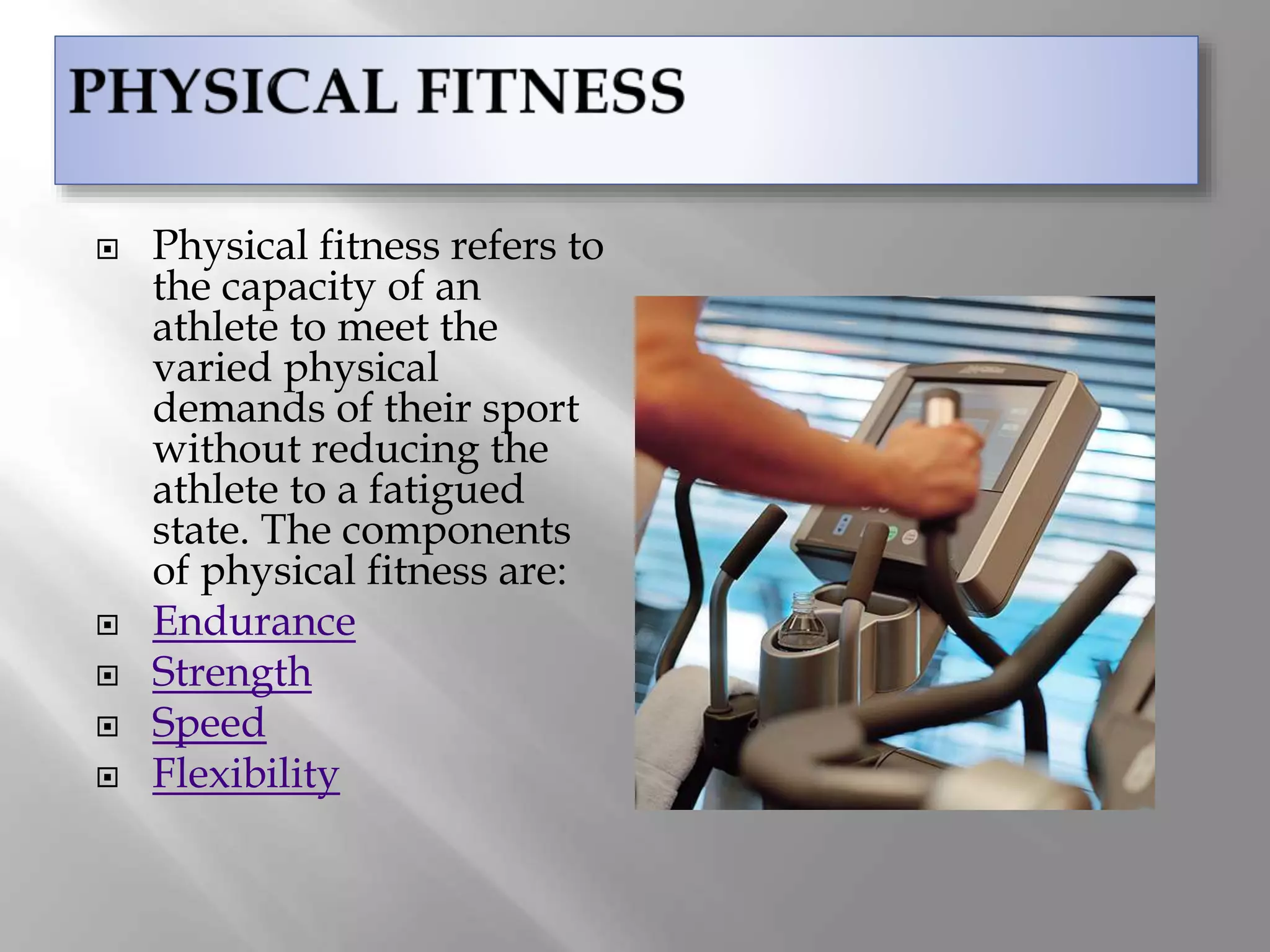
 Physical fitness refers to
the capacity of an
athlete to meet the
varied physical
demands of their sport
without reducing the
athlete to a fatigued
state. The components
of physical fitness are:
 Endurance
 Strength
 Speed
 Flexibility
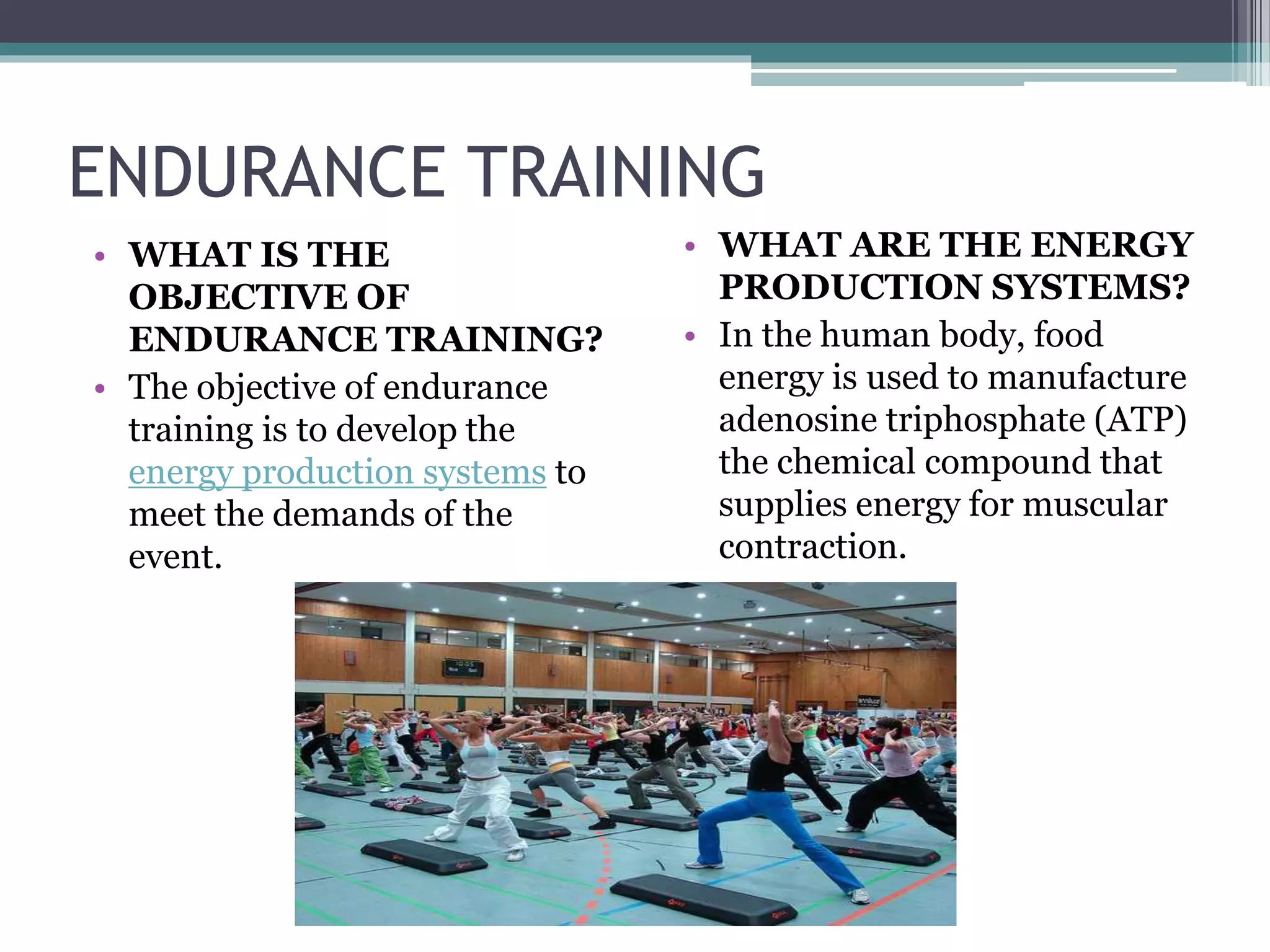
ENDURANCE TRAINING
• WHAT IS THE
OBJECTIVE OF
ENDURANCE TRAINING?
• The objective of endurance
training is to develop the
energy production systems to
meet the demands of the
event.
• WHAT ARE THE ENERGY
PRODUCTION SYSTEMS?
• In the human body, food
energy is used to manufacture
adenosine triphosphate (ATP)
the chemical compound that
supplies energy for muscular
contraction.
WHAT TYPES OF ENDURANCE ARE
THERE?
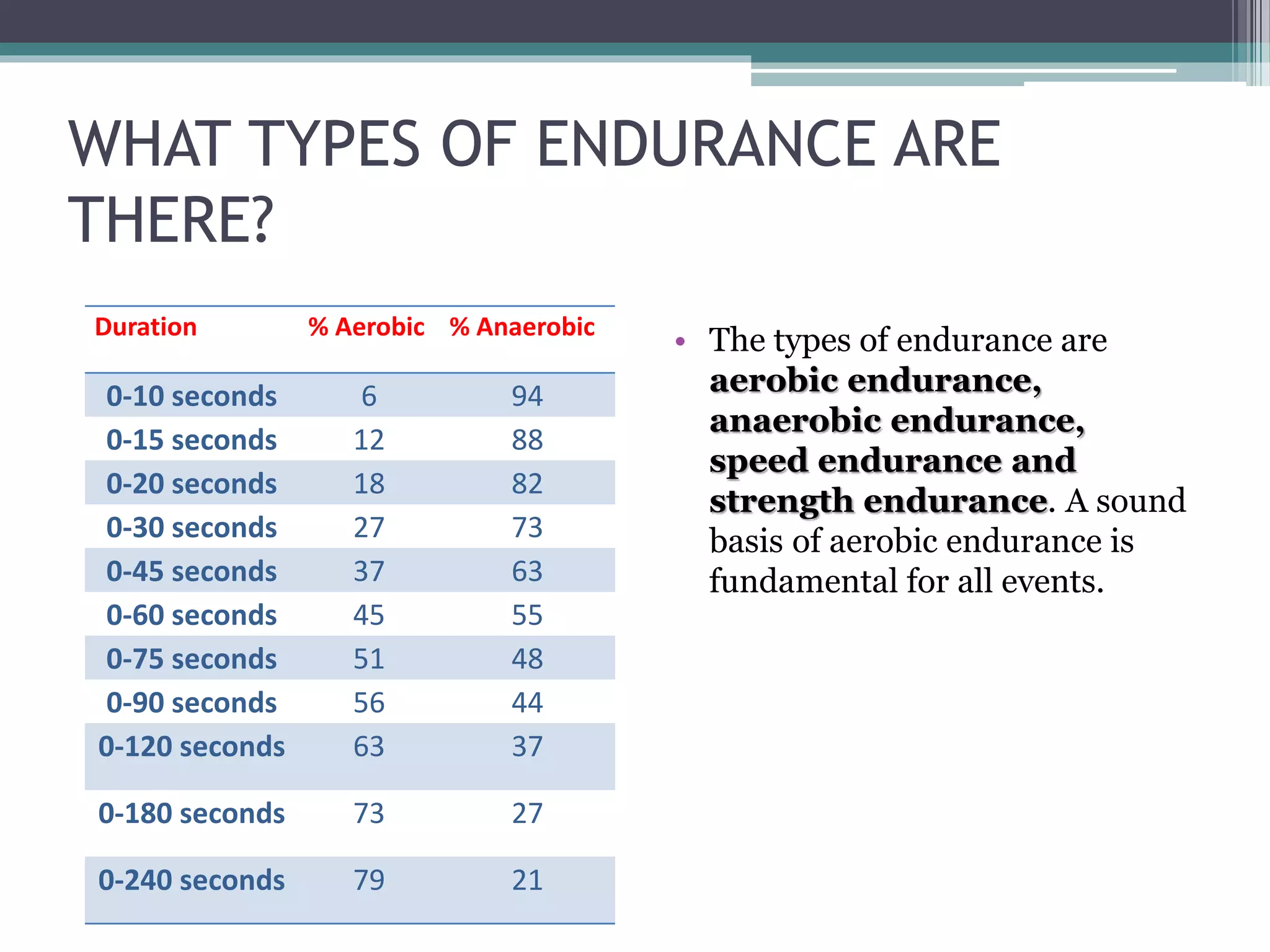
Duration % Aerobic % Anaerobic
0-10 seconds 6 94
0-15 seconds 12 88
0-20 seconds 18 82
0-30 seconds 27 73
0-45 seconds 37 63
0-60 seconds 45 55
0-75 seconds 51 48
0-90 seconds 56 44
0-120 seconds 63 37
0-180 seconds 73 27
0-240 seconds 79 21
• The types of endurance are
aerobic endurance,
anaerobic endurance,
speed endurance and
strength endurance. A sound
basis of aerobic endurance is
fundamental for all events.
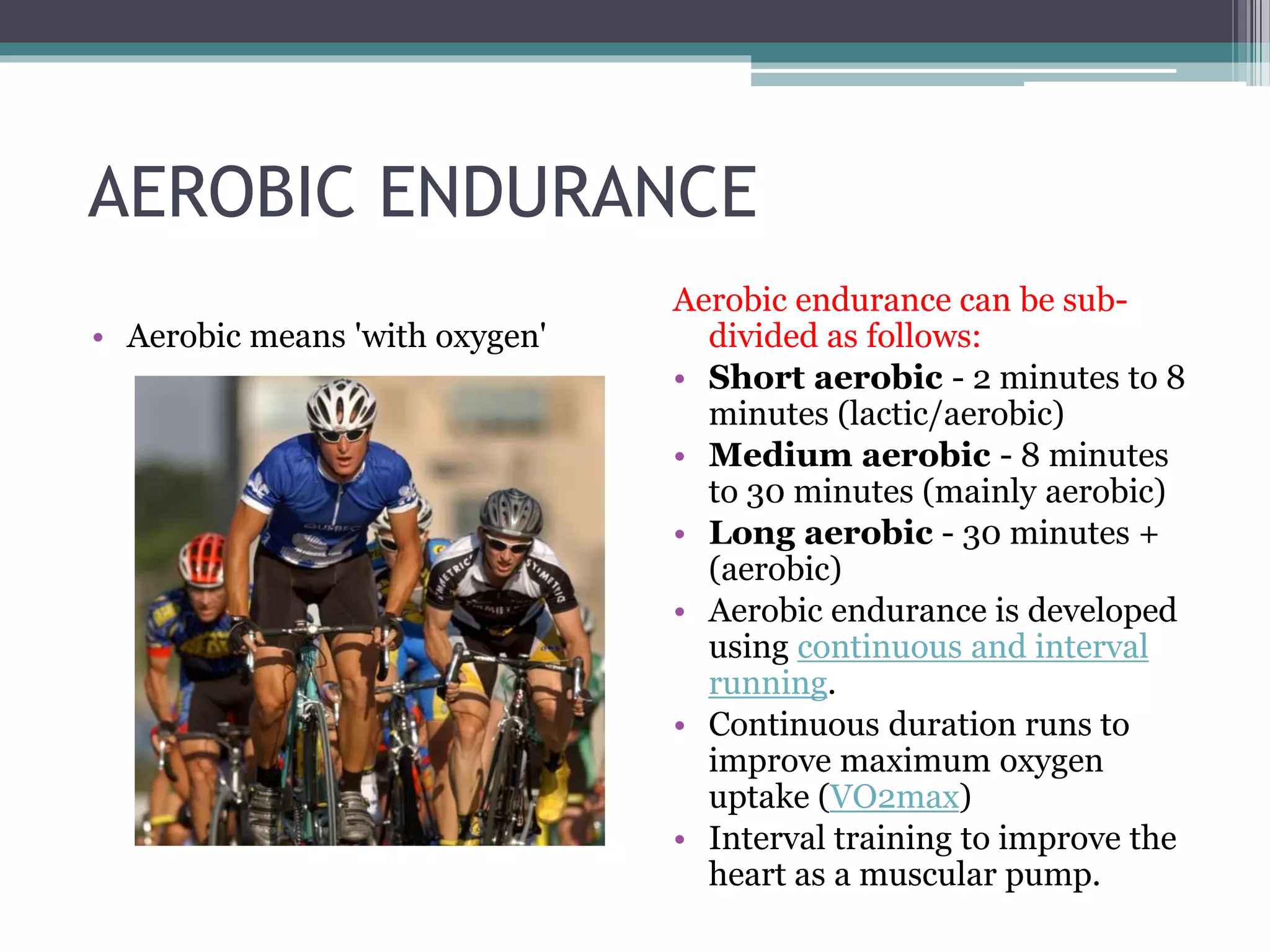
AEROBIC ENDURANCE
• Aerobic means 'with oxygen'
Aerobic endurance can be sub-
divided as follows:
• Short aerobic - 2 minutes to 8
minutes (lactic/aerobic)
• Medium aerobic - 8 minutes
to 30 minutes (mainly aerobic)
• Long aerobic - 30 minutes +
(aerobic)
• Aerobic endurance is developed
using continuous and interval
running.
• Continuous duration runs to
improve maximum oxygen
uptake (VO2max)
• Interval training to improve the
heart as a muscular pump.
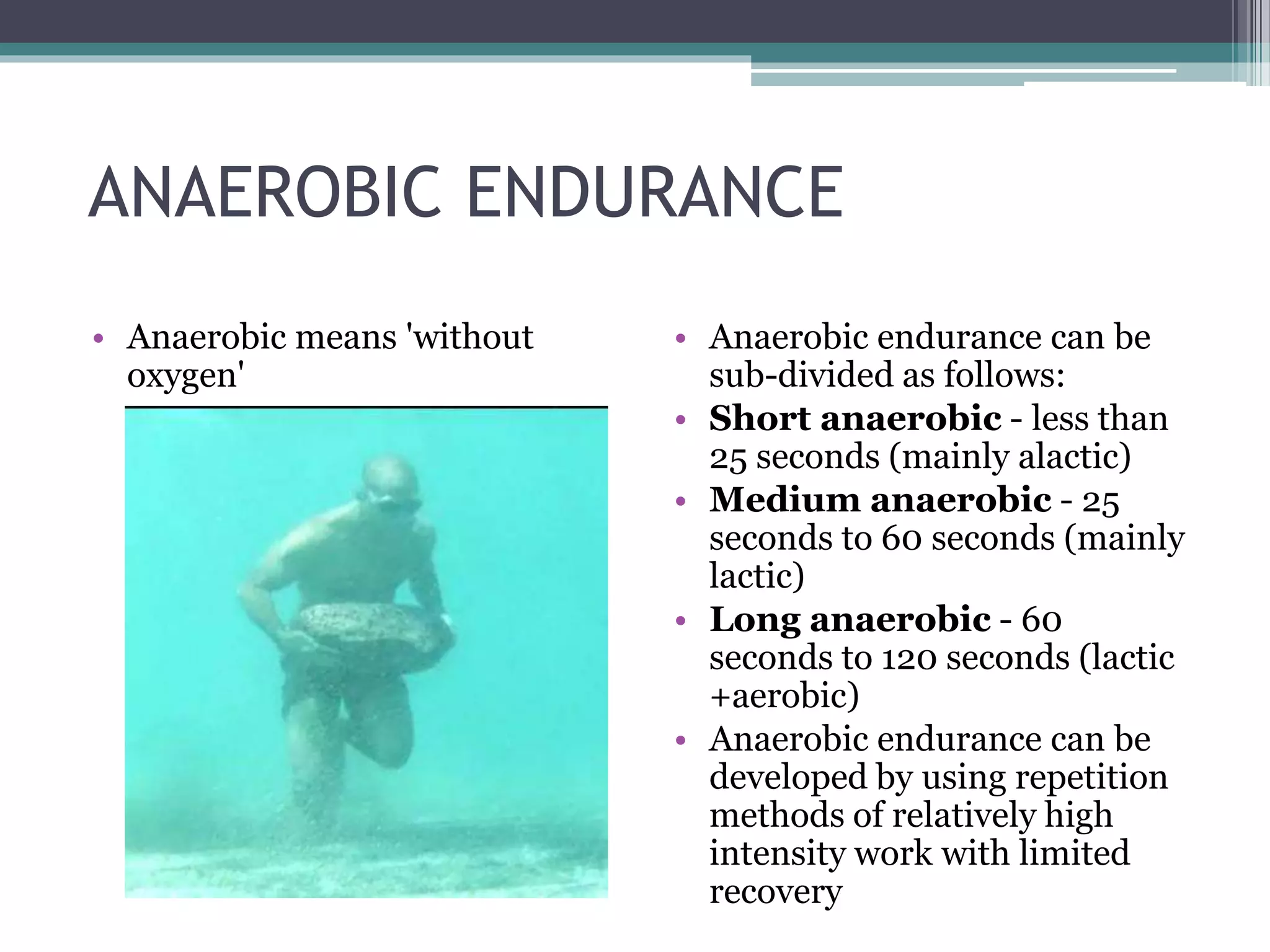
ANAEROBIC ENDURANCE
• Anaerobic means 'without
oxygen'
• Anaerobic endurance can be
sub-divided as follows:
• Short anaerobic - less than
25 seconds (mainly alactic)
• Medium anaerobic - 25
seconds to 60 seconds (mainly
lactic)
• Long anaerobic - 60
seconds to 120 seconds (lactic
+aerobic)
• Anaerobic endurance can be
developed by using repetition
methods of relatively high
intensity work with limited
recovery
AEROBICTHRESHOLDANAEROBICTHRESHOLD
 The aerobic threshold, point at which
anaerobic energy pathways start to
operate, is around 65% of maximum heart
rate. This is approximately 40 beats lower
than the anaerobic threshold.
 The anaerobic threshold, the point at which
lactic acid starts to accumulates in the
muscles, is considered to be somewhere
between 85% and 90% of your maximum
heart rate. This is approximately 40 beats
higher than the aerobic threshold. Your
anaerobic threshold can be determined with
anaerobic threshold testing.
ENDURANCE
SPEED ENDURANCE STRENGTH ENDURANCE
• Speed endurance is used to
develop the co-ordination of
muscle contraction. Repetition
methods are used with a high
number of sets, low number of
repetitions per set and
intensity greater than 85%
with distances covered from
60% to 120% of racing
distance. Competition and
time trials can be used in the
development of speed
endurance
• Strength endurance is used to
develop the athlete's capacity
to maintain the quality of their
muscles' contractile force. All
athletes need to develop a
basic level of strength
endurance. Examples of
activities to develop strength
endurance are - circuit
training, weight training, hill
running, harness running,
Fartlek etc
EFFECT ON THE HEART
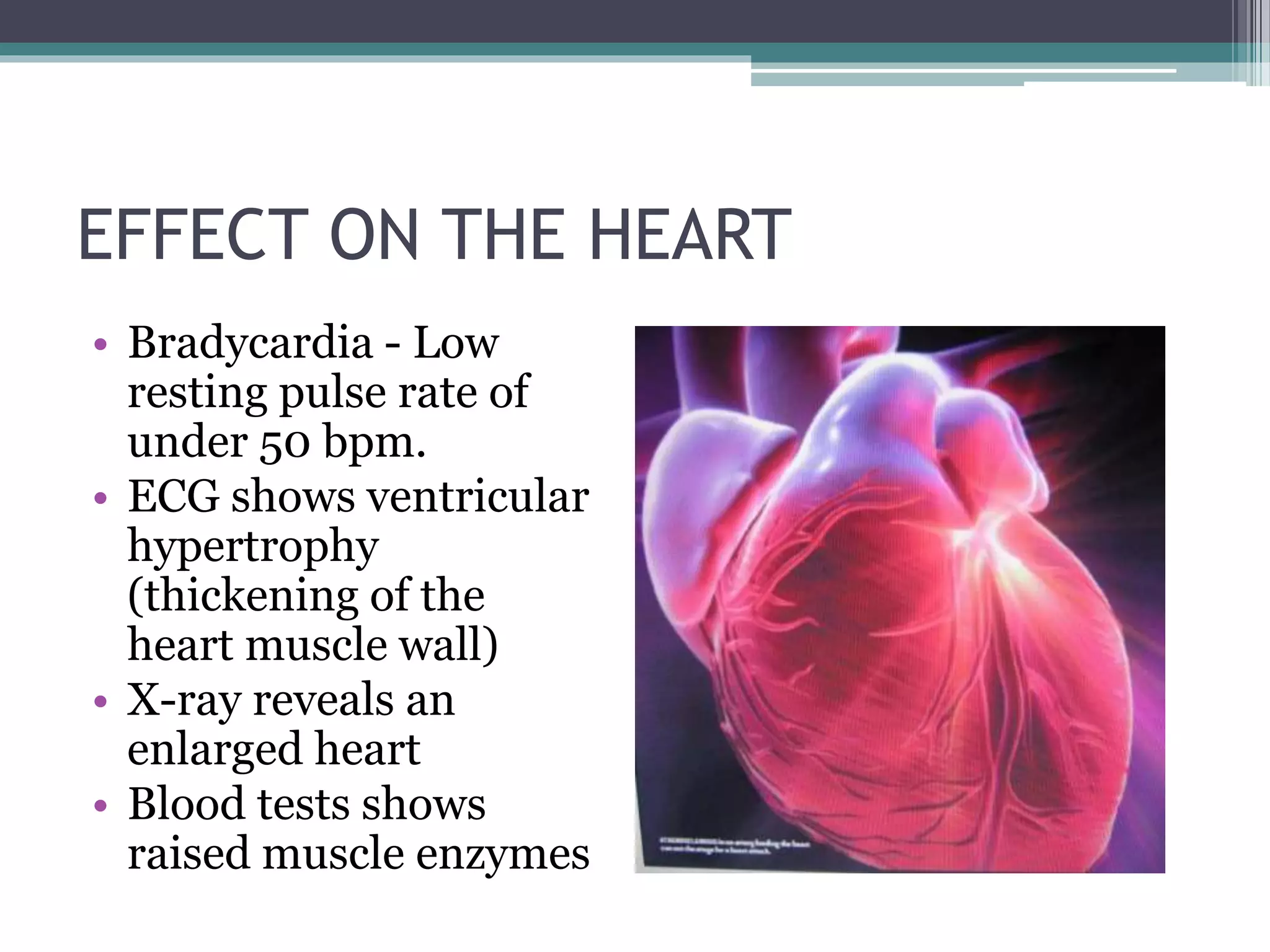
• Bradycardia - Low
resting pulse rate of
under 50 bpm.
• ECG shows ventricular
hypertrophy
(thickening of the
heart muscle wall)
• X-ray reveals an
enlarged heart
• Blood tests shows
raised muscle enzymes
STRENGHT
The common definition is "the
ability to exert a force against a
resistance"
WHAT ARE THE CLASSIFICATIONS OF
STRENGTH?
• Maximum strength - the
greatest force that is
possible in a single
maximum contraction
• Elastic strength - the
ability to overcome a
resistance with a fast
contraction
• Strength endurance -
the ability to express force
many times over
ABSOLUTE AND RELATIVE STRENGTH
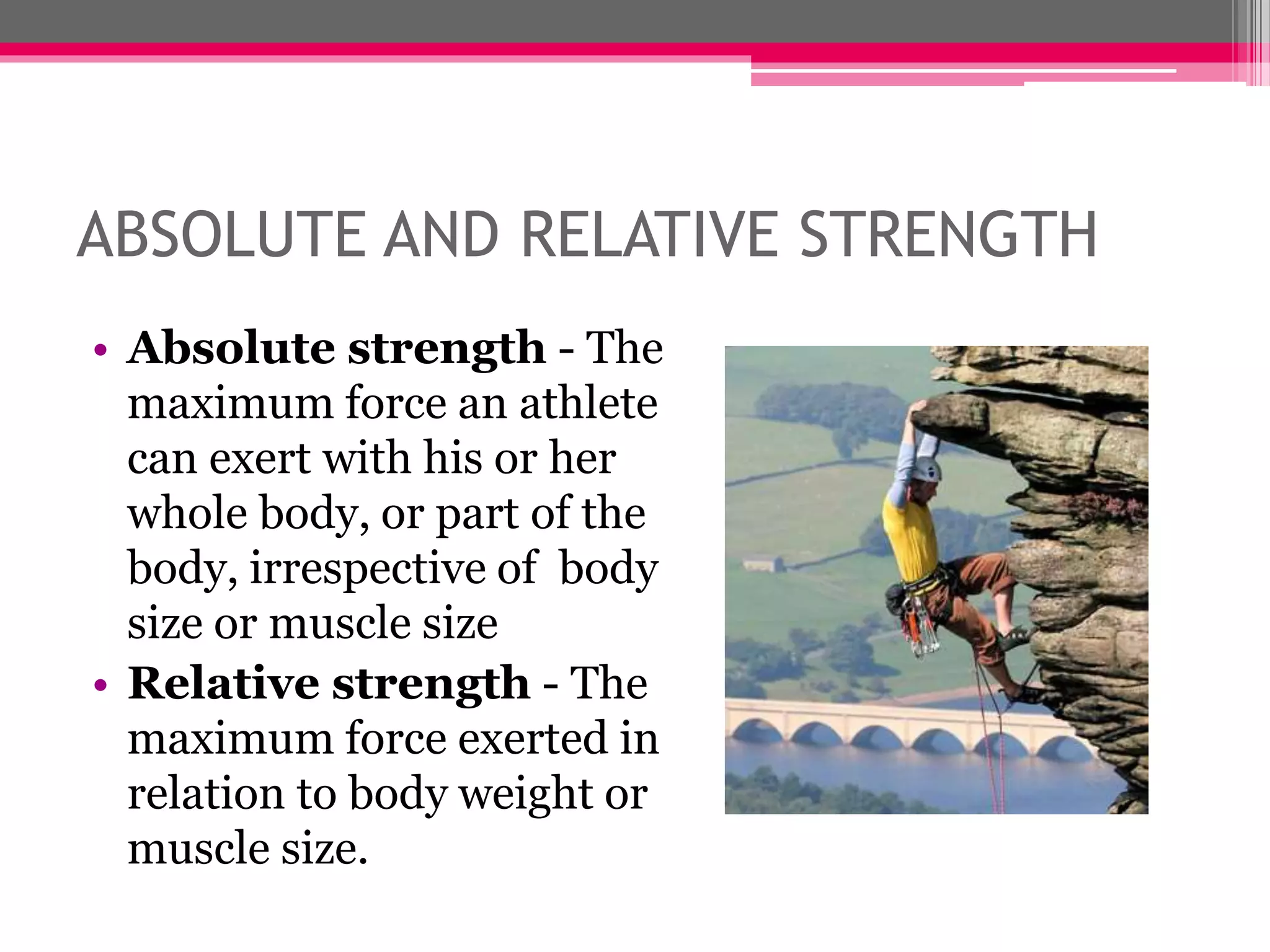
• Absolute strength - The
maximum force an athlete
can exert with his or her
whole body, or part of the
body, irrespective of body
size or muscle size
• Relative strength - The
maximum force exerted in
relation to body weight or
muscle size.
HOW DO WE GET STRONG?
• A muscle will only strengthen
when it is worked beyond its
normal operation - it is
overloaded. Overload can be
progressed by increasing the:
1. number of repetitions of an
exercise.
2. number of sets of the
exercise.
3. intensity by reduced
recover time.
HOW DO WE DEVELOP STRENGTH?
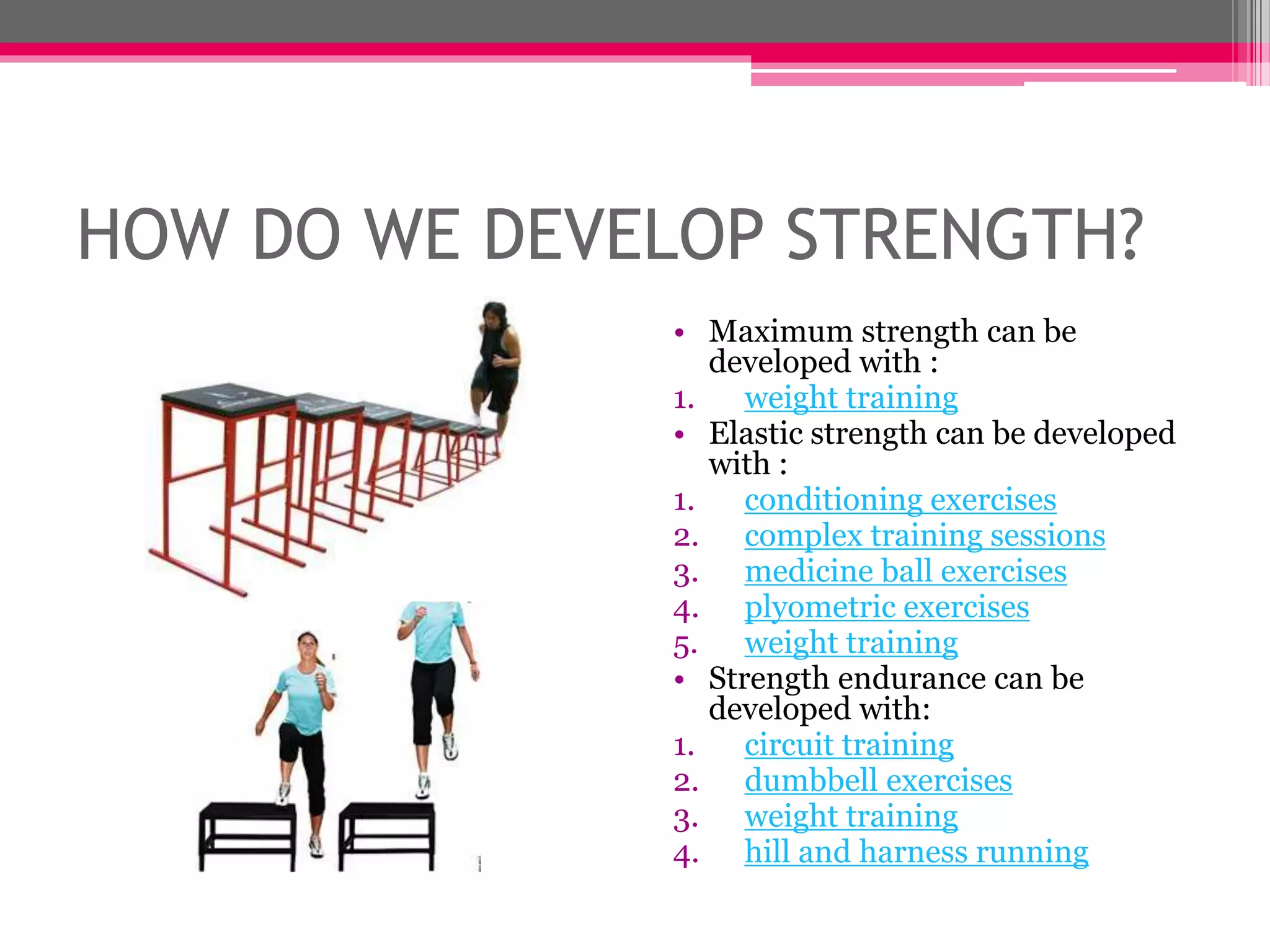
• Maximum strength can be
developed with :
1. weight training
• Elastic strength can be developed
with :
1. conditioning exercises
2. complex training sessions
3. medicine ball exercises
4. plyometric exercises
5. weight training
• Strength endurance can be
developed with:
1. circuit training
2. dumbbell exercises
3. weight training
4. hill and harness running
THE EFFECTS OF STRENGTH TRAINING
MYOGENIC CHANGES NEUROGENIC CHANGES
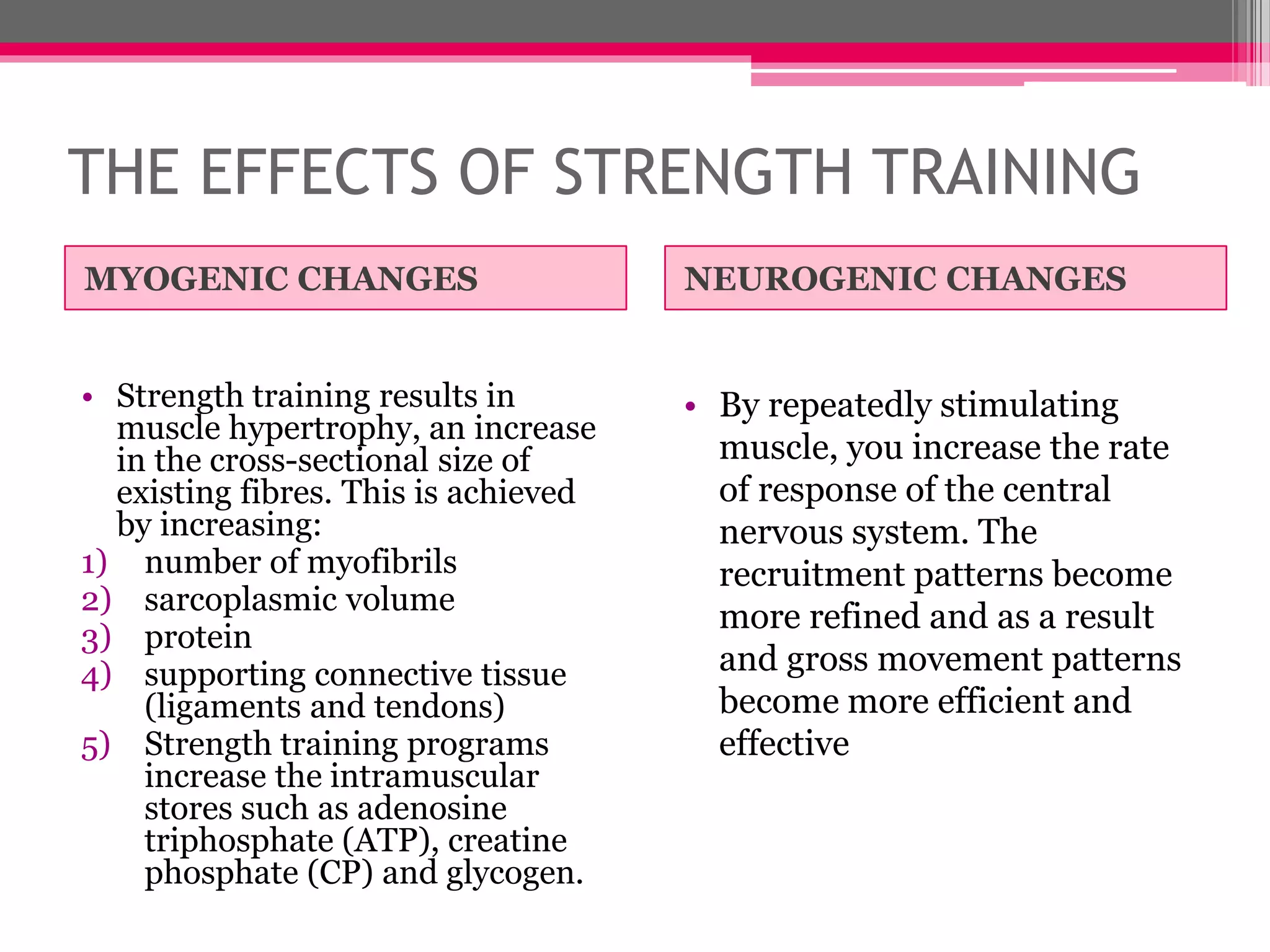
• Strength training results in
muscle hypertrophy, an increase
in the cross-sectional size of
existing fibres. This is achieved
by increasing:
1) number of myofibrils
2) sarcoplasmic volume
3) protein
4) supporting connective tissue
(ligaments and tendons)
5) Strength training programs
increase the intramuscular
stores such as adenosine
triphosphate (ATP), creatine
phosphate (CP) and glycogen.
• By repeatedly stimulating
muscle, you increase the rate
of response of the central
nervous system. The
recruitment patterns become
more refined and as a result
and gross movement patterns
become more efficient and
effective
Remember:
In women, the potential for hypertrophy is
not as great as men due mainly to the
lower levels of testosterone in women.
Speed is the quickness of movement of a limb, whether
this is the legs of a runner or the arm of the shot putter.
Speed is an integral part of every sport and can be
expressed as any one of, or combination of, the following:
maximum speed, elastic strength (power) and speed
endurance.
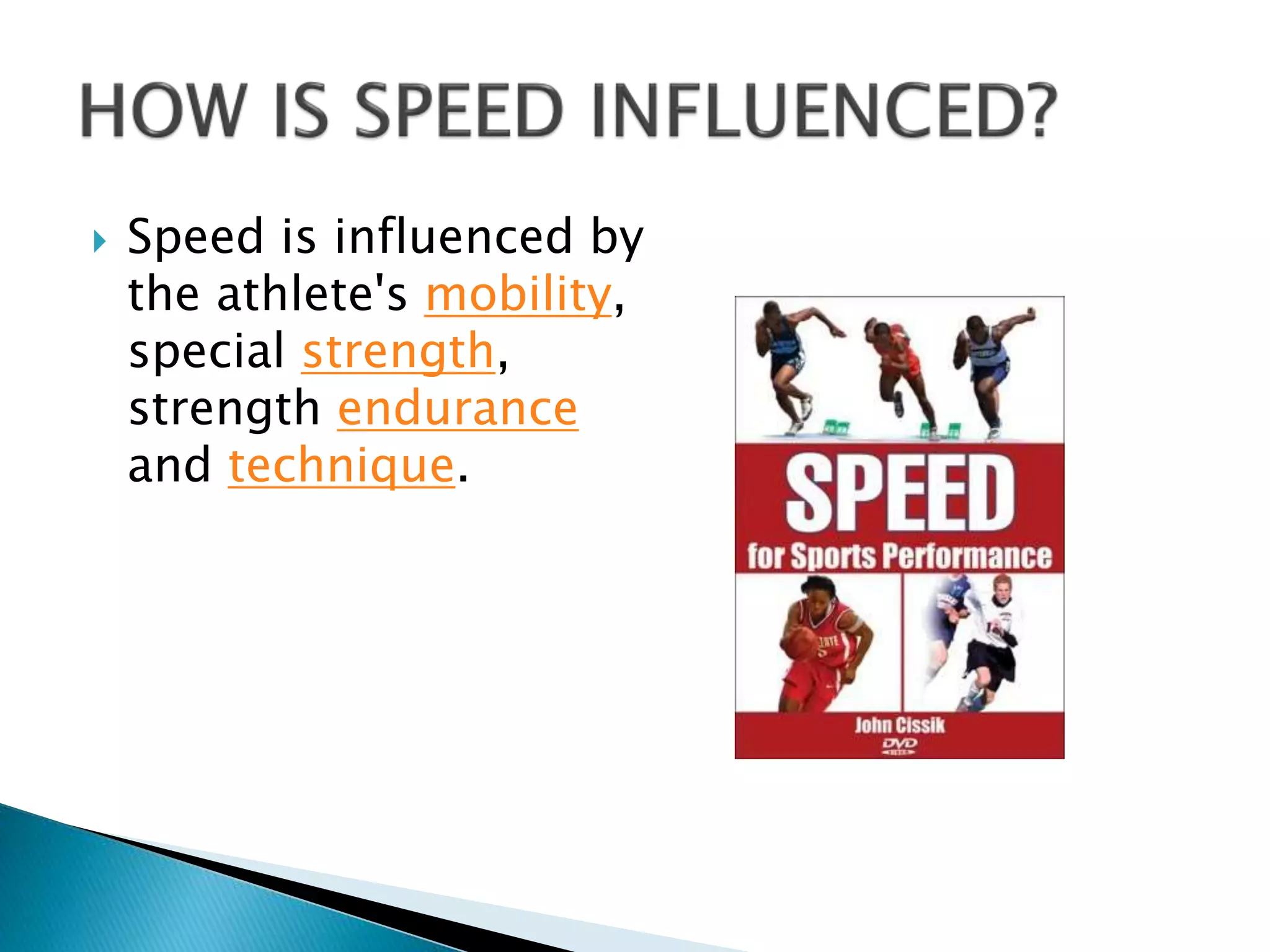
 Speed is influenced by
the athlete's mobility,
special strength,
strength endurance
and technique.
 Energy for absolute speed is supplied by the
anaerobic alactic pathway
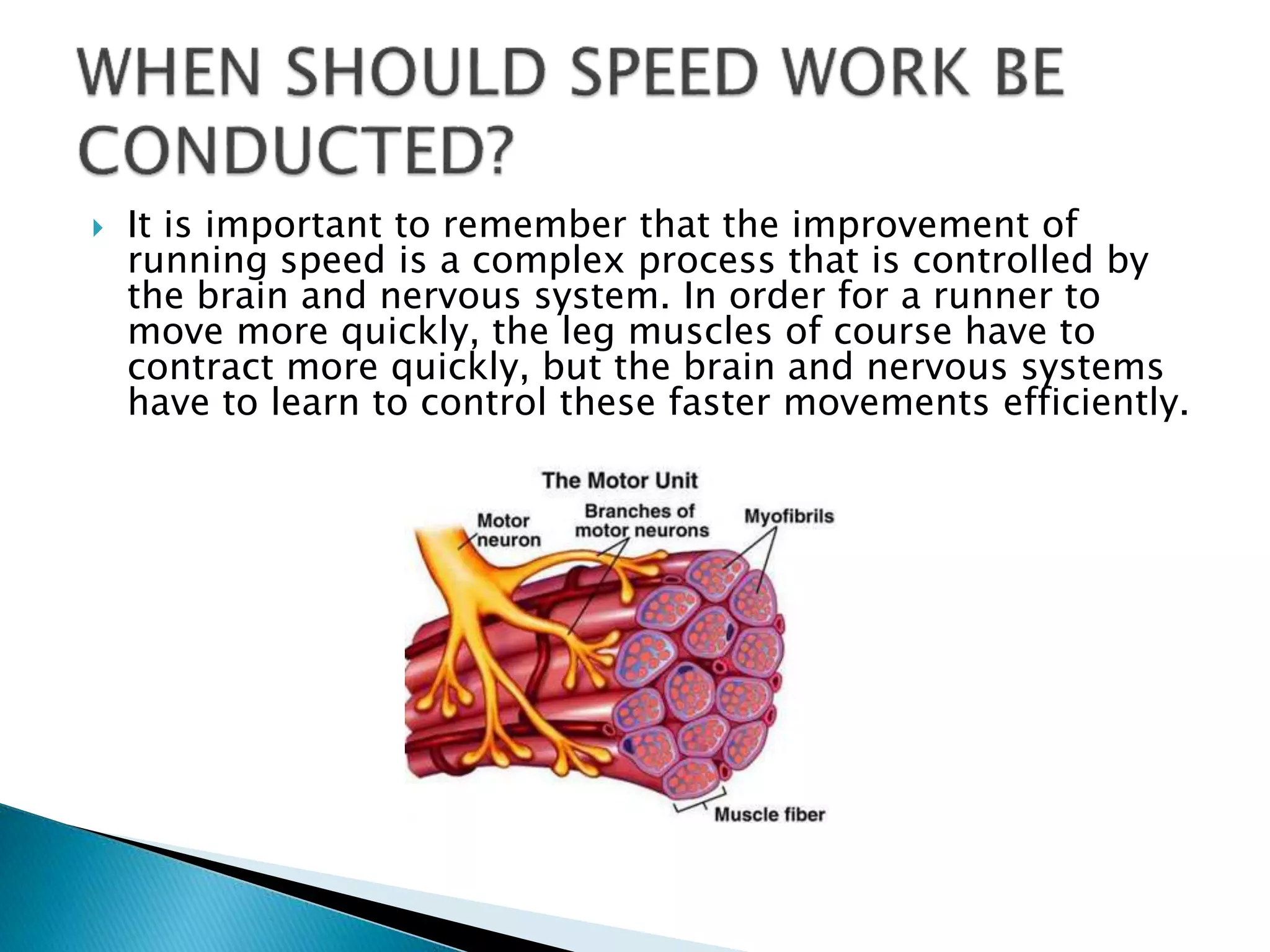
 It is important to remember that the improvement of
running speed is a complex process that is controlled by
the brain and nervous system. In order for a runner to
move more quickly, the leg muscles of course have to
contract more quickly, but the brain and nervous systems
have to learn to control these faster movements efficiently.
 Reaction Speed Drill
 The athletes start in a variety of different positions - lying face down, lying on their backs, in a push up
or sit up position, kneeling or seated. The coach standing some 30 metres from the group then gives a
signal for everyone to jump up and run towards him/her at slightly faster than race pace. Repeat using
various starting positions and with the coach standing in different places so that the athletes have to
change directions quickly once they begin to run. Speed reaction drills can also be conducted whilst
controlling an item (e.g. football, basketball, hockey ball) with an implement (e.g. feet, hands, hockey
stick).
 Acceleration Training
 Greek researchers looked at weighted sledge training and their effect on sprint acceleration [J Sports
Med Phys Fitness, 2005 Sep;45(3):284-90] and they concluded that training with a weighted sledge will
help improve the athlete's acceleration phase. The session used in the research was 4 x 20m and 4 x
50m maximal effort runs.
 Australian researchers [Strength Cond Res., 2003 Nov;17(4):760-7] investigated the effects of various
loadings and concluded that when using a sledge a light weight of approx. 10-15% of body weight
should be used so that the dynamics of the acceleration technique are not negatively effected.
 Starts over 10-20 metres performed on a slight incline of around five degrees have an important
conditioning effect on the calf, thigh and hip muscles (they have to work harder because of the incline
to produce movement) that will improve sprint acceleration.
 Sprinting Speed
 Downhill sprinting is a method of developing sprinting speed following the acceleration phase. A hill
with a maximum of a 15° decline is most suitable. Use 40 metres to 60 metres to build up to full speed
and then maintain the speed for a further 30 metres. A session could comprise of 2 to 3 sets of 3 to 6
repetitions. The difficulty with this method is to find a suitable hill with a safe surface.
 WHAT IS FLEXIBILITY?
“Flexibility, mobility and
suppleness all mean the range
of limb movement around
Joints”.
Any movement there are two
groups of muscles at work:
1. Protagonist muscles which cause
the movement to take place and
2. Opposing the movement and
determining the amount of
flexibility are the antagonistic
muscles.
OBJECTIVE BENEFITS
 The objective of
flexibility training is to
improve the range of
movement of the
antagonistic muscles.
 Flexibility plays an
important part in the
preparation of athletes
by developing a range
of movement to allow
technical development
and assisting in the
prevention of injury
 Static stretching
 Ballistic stretching
 Dynamic stretching
 Active stretching
 Passive stretching
 Isometric stretching
 Assisted stretching
 Partner stretches
 PNF technique
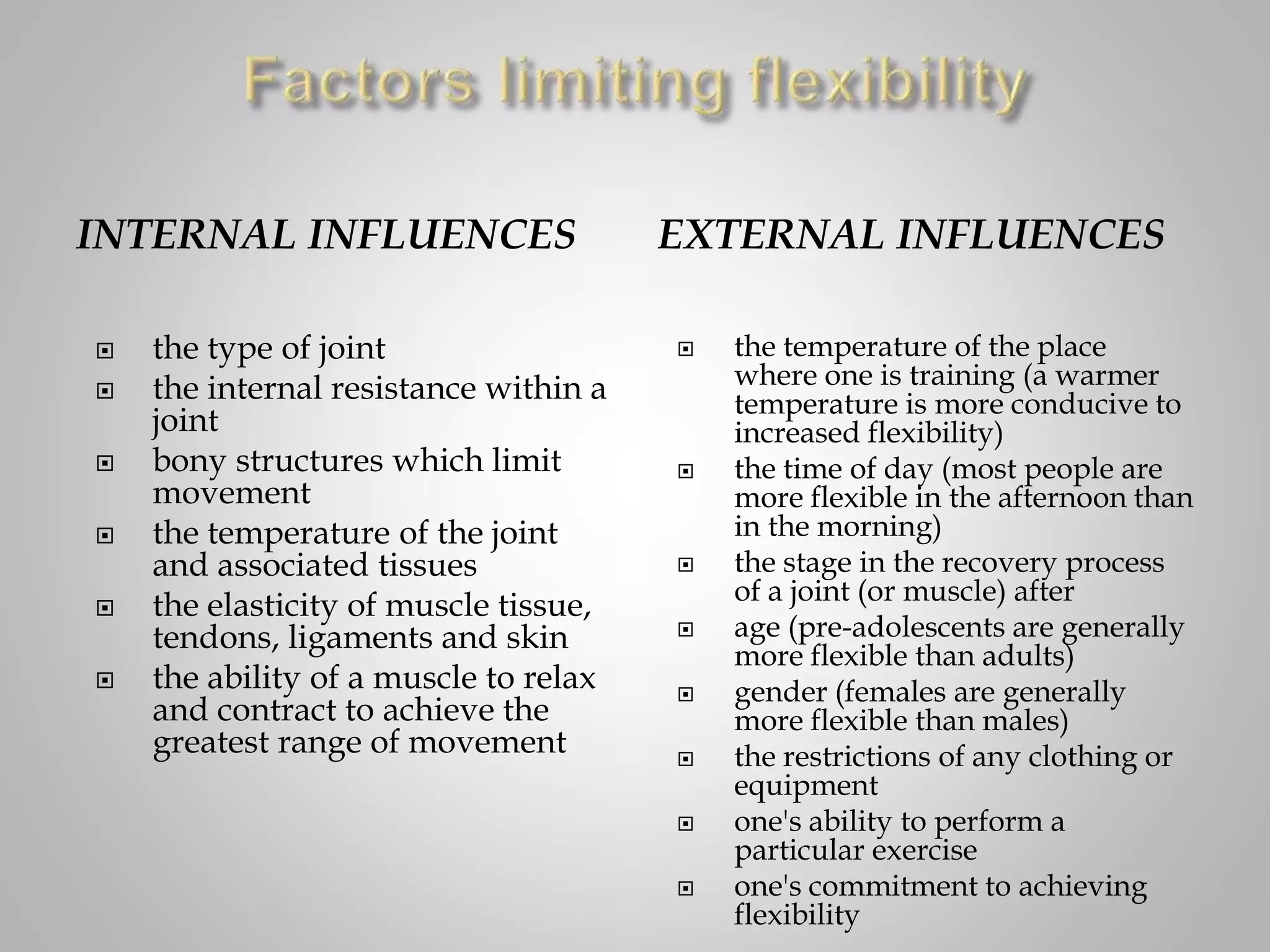
INTERNAL INFLUENCES EXTERNAL INFLUENCES
 the type of joint
 the internal resistance within a
joint
 bony structures which limit
movement
 the temperature of the joint
and associated tissues
 the elasticity of muscle tissue,
tendons, ligaments and skin
 the ability of a muscle to relax
and contract to achieve the
greatest range of movement
 the temperature of the place
where one is training (a warmer
temperature is more conducive to
increased flexibility)
 the time of day (most people are
more flexible in the afternoon than
in the morning)
 the stage in the recovery process
of a joint (or muscle) after
 age (pre-adolescents are generally
more flexible than adults)
 gender (females are generally
more flexible than males)
 the restrictions of any clothing or
equipment
 one's ability to perform a
particular exercise
 one's commitment to achieving
flexibility
Physical condition, Physical skills and ways to improve them

Physical condition, Physical skills and ways to improve them

  • 2.
    However, if youwant the utmost efficiency, consistent improvement, and balanced abilities sportsmen and women must participate in year round conditioning programs. One of the misconceptions in the sports world is that a sports person gets in shape by just playing or taking part in his/her chosen sport. If a stationary level of performance, consistent ability in executing a few limited skills is your goal, then engaging only in your sport will keep you there
  • 3.
    THE COMPONENTS OF FITNESS Basicfitness can be classified in four main components: • STRENGTH. • SPEED. • STAMINA. • AND FLEXIBILITY. • Strength - the extent to which muscles can exert force by contracting against resistance (e.g. holding or restraining an object or person) • Power - the ability to exert maximum muscular contraction instantly in an explosive burst of movements. The two components of power are strength and speed. (e.g. jumping or a sprint start) • Agility - the ability to perform a series of explosive power movements in rapid succession in opposing directions (e.g. Zig Zag running or cutting movements) • Balance - the ability to control the body's position, either stationary (e.g. a handstand) or while moving (e.g. a gymnastics stunt) • Flexibility - the ability to achieve an extended range of motion without being impeded by excess tissue, i.e. fat or muscle (e.g. executing a leg split) • Local Muscle Endurance - a single muscle's ability to perform sustained work (e.g. rowing or cycling) • Cardiovascular Endurance - the heart's ability to deliver blood to working muscles and their ability to use it (e.g. running long distances) • Strength Endurance - a muscle's ability to perform a maximum contraction time after time (e.g. continuous explosive rebounding through an entire basketball game) • Co-ordination- the ability to integrate the above listed components so that effective movements are achieved.
  • 4.
     Physical fitnessrefers to the capacity of an athlete to meet the varied physical demands of their sport without reducing the athlete to a fatigued state. The components of physical fitness are:  Endurance  Strength  Speed  Flexibility
  • 5.
    ENDURANCE TRAINING • WHATIS THE OBJECTIVE OF ENDURANCE TRAINING? • The objective of endurance training is to develop the energy production systems to meet the demands of the event. • WHAT ARE THE ENERGY PRODUCTION SYSTEMS? • In the human body, food energy is used to manufacture adenosine triphosphate (ATP) the chemical compound that supplies energy for muscular contraction.
  • 6.
    WHAT TYPES OFENDURANCE ARE THERE? Duration % Aerobic % Anaerobic 0-10 seconds 6 94 0-15 seconds 12 88 0-20 seconds 18 82 0-30 seconds 27 73 0-45 seconds 37 63 0-60 seconds 45 55 0-75 seconds 51 48 0-90 seconds 56 44 0-120 seconds 63 37 0-180 seconds 73 27 0-240 seconds 79 21 • The types of endurance are aerobic endurance, anaerobic endurance, speed endurance and strength endurance. A sound basis of aerobic endurance is fundamental for all events.
  • 7.
    AEROBIC ENDURANCE • Aerobicmeans 'with oxygen' Aerobic endurance can be sub- divided as follows: • Short aerobic - 2 minutes to 8 minutes (lactic/aerobic) • Medium aerobic - 8 minutes to 30 minutes (mainly aerobic) • Long aerobic - 30 minutes + (aerobic) • Aerobic endurance is developed using continuous and interval running. • Continuous duration runs to improve maximum oxygen uptake (VO2max) • Interval training to improve the heart as a muscular pump.
  • 8.
    ANAEROBIC ENDURANCE • Anaerobicmeans 'without oxygen' • Anaerobic endurance can be sub-divided as follows: • Short anaerobic - less than 25 seconds (mainly alactic) • Medium anaerobic - 25 seconds to 60 seconds (mainly lactic) • Long anaerobic - 60 seconds to 120 seconds (lactic +aerobic) • Anaerobic endurance can be developed by using repetition methods of relatively high intensity work with limited recovery
  • 9.
    AEROBICTHRESHOLDANAEROBICTHRESHOLD  The aerobicthreshold, point at which anaerobic energy pathways start to operate, is around 65% of maximum heart rate. This is approximately 40 beats lower than the anaerobic threshold.  The anaerobic threshold, the point at which lactic acid starts to accumulates in the muscles, is considered to be somewhere between 85% and 90% of your maximum heart rate. This is approximately 40 beats higher than the aerobic threshold. Your anaerobic threshold can be determined with anaerobic threshold testing.
  • 10.
    ENDURANCE SPEED ENDURANCE STRENGTHENDURANCE • Speed endurance is used to develop the co-ordination of muscle contraction. Repetition methods are used with a high number of sets, low number of repetitions per set and intensity greater than 85% with distances covered from 60% to 120% of racing distance. Competition and time trials can be used in the development of speed endurance • Strength endurance is used to develop the athlete's capacity to maintain the quality of their muscles' contractile force. All athletes need to develop a basic level of strength endurance. Examples of activities to develop strength endurance are - circuit training, weight training, hill running, harness running, Fartlek etc
  • 11.
    EFFECT ON THEHEART • Bradycardia - Low resting pulse rate of under 50 bpm. • ECG shows ventricular hypertrophy (thickening of the heart muscle wall) • X-ray reveals an enlarged heart • Blood tests shows raised muscle enzymes
  • 12.
    STRENGHT The common definitionis "the ability to exert a force against a resistance"
  • 13.
    WHAT ARE THECLASSIFICATIONS OF STRENGTH? • Maximum strength - the greatest force that is possible in a single maximum contraction • Elastic strength - the ability to overcome a resistance with a fast contraction • Strength endurance - the ability to express force many times over
  • 14.
    ABSOLUTE AND RELATIVESTRENGTH • Absolute strength - The maximum force an athlete can exert with his or her whole body, or part of the body, irrespective of body size or muscle size • Relative strength - The maximum force exerted in relation to body weight or muscle size.
  • 15.
    HOW DO WEGET STRONG? • A muscle will only strengthen when it is worked beyond its normal operation - it is overloaded. Overload can be progressed by increasing the: 1. number of repetitions of an exercise. 2. number of sets of the exercise. 3. intensity by reduced recover time.
  • 16.
    HOW DO WEDEVELOP STRENGTH? • Maximum strength can be developed with : 1. weight training • Elastic strength can be developed with : 1. conditioning exercises 2. complex training sessions 3. medicine ball exercises 4. plyometric exercises 5. weight training • Strength endurance can be developed with: 1. circuit training 2. dumbbell exercises 3. weight training 4. hill and harness running
  • 17.
    THE EFFECTS OFSTRENGTH TRAINING MYOGENIC CHANGES NEUROGENIC CHANGES • Strength training results in muscle hypertrophy, an increase in the cross-sectional size of existing fibres. This is achieved by increasing: 1) number of myofibrils 2) sarcoplasmic volume 3) protein 4) supporting connective tissue (ligaments and tendons) 5) Strength training programs increase the intramuscular stores such as adenosine triphosphate (ATP), creatine phosphate (CP) and glycogen. • By repeatedly stimulating muscle, you increase the rate of response of the central nervous system. The recruitment patterns become more refined and as a result and gross movement patterns become more efficient and effective
  • 18.
    Remember: In women, thepotential for hypertrophy is not as great as men due mainly to the lower levels of testosterone in women.
  • 19.
    Speed is thequickness of movement of a limb, whether this is the legs of a runner or the arm of the shot putter. Speed is an integral part of every sport and can be expressed as any one of, or combination of, the following: maximum speed, elastic strength (power) and speed endurance.
  • 20.
     Speed isinfluenced by the athlete's mobility, special strength, strength endurance and technique.
  • 21.
     Energy forabsolute speed is supplied by the anaerobic alactic pathway
  • 22.
     It isimportant to remember that the improvement of running speed is a complex process that is controlled by the brain and nervous system. In order for a runner to move more quickly, the leg muscles of course have to contract more quickly, but the brain and nervous systems have to learn to control these faster movements efficiently.
  • 23.
     Reaction SpeedDrill  The athletes start in a variety of different positions - lying face down, lying on their backs, in a push up or sit up position, kneeling or seated. The coach standing some 30 metres from the group then gives a signal for everyone to jump up and run towards him/her at slightly faster than race pace. Repeat using various starting positions and with the coach standing in different places so that the athletes have to change directions quickly once they begin to run. Speed reaction drills can also be conducted whilst controlling an item (e.g. football, basketball, hockey ball) with an implement (e.g. feet, hands, hockey stick).  Acceleration Training  Greek researchers looked at weighted sledge training and their effect on sprint acceleration [J Sports Med Phys Fitness, 2005 Sep;45(3):284-90] and they concluded that training with a weighted sledge will help improve the athlete's acceleration phase. The session used in the research was 4 x 20m and 4 x 50m maximal effort runs.  Australian researchers [Strength Cond Res., 2003 Nov;17(4):760-7] investigated the effects of various loadings and concluded that when using a sledge a light weight of approx. 10-15% of body weight should be used so that the dynamics of the acceleration technique are not negatively effected.  Starts over 10-20 metres performed on a slight incline of around five degrees have an important conditioning effect on the calf, thigh and hip muscles (they have to work harder because of the incline to produce movement) that will improve sprint acceleration.  Sprinting Speed  Downhill sprinting is a method of developing sprinting speed following the acceleration phase. A hill with a maximum of a 15° decline is most suitable. Use 40 metres to 60 metres to build up to full speed and then maintain the speed for a further 30 metres. A session could comprise of 2 to 3 sets of 3 to 6 repetitions. The difficulty with this method is to find a suitable hill with a safe surface.
  • 24.
     WHAT ISFLEXIBILITY? “Flexibility, mobility and suppleness all mean the range of limb movement around Joints”. Any movement there are two groups of muscles at work: 1. Protagonist muscles which cause the movement to take place and 2. Opposing the movement and determining the amount of flexibility are the antagonistic muscles.
  • 25.
    OBJECTIVE BENEFITS  Theobjective of flexibility training is to improve the range of movement of the antagonistic muscles.  Flexibility plays an important part in the preparation of athletes by developing a range of movement to allow technical development and assisting in the prevention of injury
  • 26.
     Static stretching Ballistic stretching  Dynamic stretching  Active stretching  Passive stretching  Isometric stretching  Assisted stretching  Partner stretches  PNF technique
  • 27.
    INTERNAL INFLUENCES EXTERNALINFLUENCES  the type of joint  the internal resistance within a joint  bony structures which limit movement  the temperature of the joint and associated tissues  the elasticity of muscle tissue, tendons, ligaments and skin  the ability of a muscle to relax and contract to achieve the greatest range of movement  the temperature of the place where one is training (a warmer temperature is more conducive to increased flexibility)  the time of day (most people are more flexible in the afternoon than in the morning)  the stage in the recovery process of a joint (or muscle) after  age (pre-adolescents are generally more flexible than adults)  gender (females are generally more flexible than males)  the restrictions of any clothing or equipment  one's ability to perform a particular exercise  one's commitment to achieving flexibility