Introduction to Extractables 
and Leachables 
Shreekant Deshpande 
Senior Scientist 
Eutech Sci Ser Inc
Definitions 
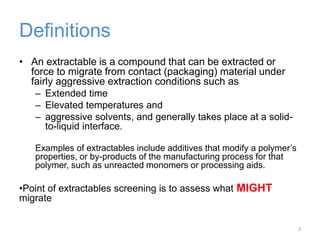
• An extractable is a compound that can be extracted or 
force to migrate from contact (packaging) material under 
fairly aggressive extraction conditions such as 
– Extended time 
– Elevated temperatures and 
– aggressive solvents, and generally takes place at a solid-to- 
liquid interface. 
Examples of extractables include additives that modify a polymer’s 
properties, or by-products of the manufacturing process for that 
polymer, such as unreacted monomers or processing aids. 
•Point of extractables screening is to assess what MIGHT 
migrate 
2
Definitions contd.. 
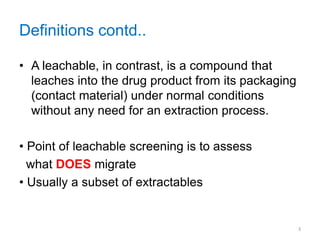
• A leachable, in contrast, is a compound that 
leaches into the drug product from its packaging 
(contact material) under normal conditions 
without any need for an extraction process. 
• Point of leachable screening is to assess 
what DOES migrate 
• Usually a subset of extractables 
3
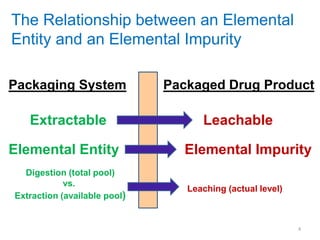
The Relationship between an Elemental 
Entity and an Elemental Impurity 
Packaging System Packaged Drug Product 
Extractable 
Elemental Entity 
Leachable 
Elemental Impurity 
Digestion (total pool) 
vs. 
Extraction (available pool) 
Leaching (actual level) 
4
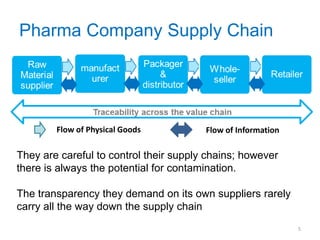
Pharma Company Supply Chain 
Flow of Physical Goods Flow of Information 
They are careful to control their supply chains; however 
there is always the potential for contamination. 
The transparency they demand on its own suppliers rarely 
carry all the way down the supply chain 
5
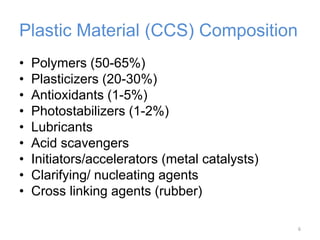
Plastic Material (CCS) Composition 
• Polymers (50-65%) 
• Plasticizers (20-30%) 
• Antioxidants (1-5%) 
• Photostabilizers (1-2%) 
• Lubricants 
• Acid scavengers 
• Initiators/accelerators (metal catalysts) 
• Clarifying/ nucleating agents 
• Cross linking agents (rubber) 
6
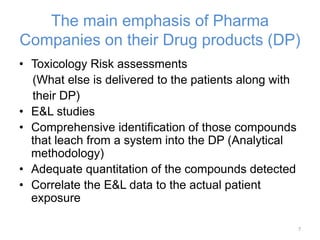
The main emphasis of Pharma 
Companies on their Drug products (DP) 
• Toxicology Risk assessments 
(What else is delivered to the patients along with 
their DP) 
• E&L studies 
• Comprehensive identification of those compounds 
that leach from a system into the DP (Analytical 
methodology) 
• Adequate quantitation of the compounds detected 
• Correlate the E&L data to the actual patient 
exposure 
7
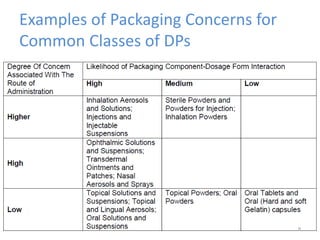
Examples of Packaging Concerns for 
Common Classes of DPs 
8
Regulatory Bodies 
• USP and FDA Guidelines 
• ICH and EP 
• ISO guidelines for medical devices 
• EMEA and CHMP on OINDPs PODP 
• PQRI: Product Quality Research Institute 
9
USP & FDA Practice regarding E/L 
• Risk Based approach for OINDP and 
PODP 
• Compendial References 
– USP<87> Biological Reactivity 
– USP<661>Containers-plastics 
– USP<1031>Biocompatibility of Materials 
• Take into account patient population, route 
of administration, and potential interaction 
between formulation and CCS 
10
Ground rules for the study 
• Polar and Nonpolar matrices 
• Solvents Varying in Polarity for extraction with varying 
Time and Temp (PQRI, BPOG, USP, ISO) 
• Polar (DI Water) 
- Some suggest varying pH 
• Non Polar (Hexane, Heptane, Myglyol) 
• Mixed Polarity(Ethanolic/water, IPA/water) 
• Times and Temperatures (Vary and agreed upon based 
on use) 
11
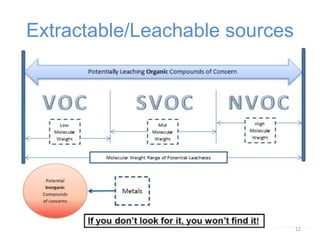
Extractable/Leachable sources 
12
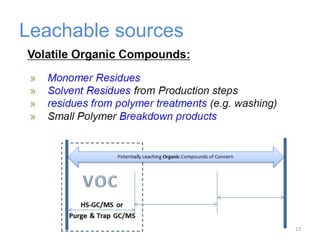
Leachable sources 
13
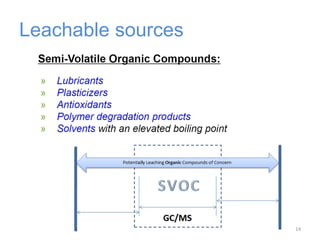
Leachable sources 
14
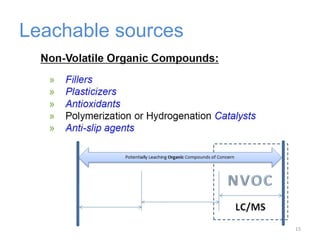
Leachable sources 
15
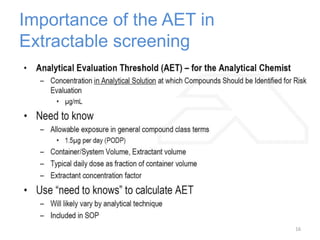
Importance of the AET in 
Extractable screening 
16
Tylenol recall points to pallets 
• Trace amounts of a chemical that treats wooden 
pallets used to transport and store the drug’s 
packaging shoulders the blame, according to one 
source. 
• Packaging took a punch to the gut during the holiday 
season when television news reports noted that some 
consumers had reported a “musty” smell and 
gastrointestinal problems from McNeil Consumer 
Healthcare’s Tylenol Arthritis Pain caplets. 
• In-Pharma Technologist.com reports that McNeil has 
recalled all lots of 100-count bottles, attributing the 
odor to “trace amounts of 2,4,6-tribromoanisole, a 
chemical used to treat the wooden pallets that 
transport and store the drug’s packaging.” 
17
Real examples 
18
19 
Leachable issues in the news… 
Froot Loops 
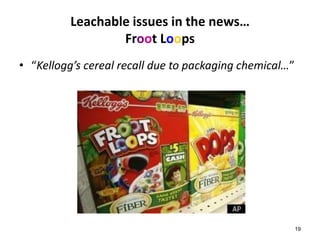
• “Kellogg’s cereal recall due to packaging chemical…”
20 
Leachables in the news… 
Froot Loops 
• Kellogg’s said that higher than normal amounts of certain 
chemicals in the package liners caused an unusual smell and 
flavor that prompted a recall of 28 million boxes. 
• Consumers reported the cereal smelled or tasted waxy, similar 
to that of metal or soap or just seemed stale. 
• Five consumers reported nausea and vomiting.
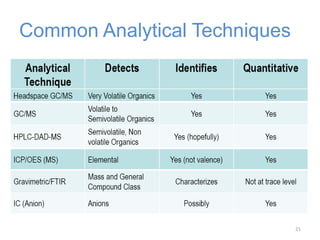
Common Analytical Techniques 
21
Thank you! 
22

Extractables-Leachables-An Intro

  • 1.
    Introduction to Extractables and Leachables Shreekant Deshpande Senior Scientist Eutech Sci Ser Inc
  • 2.
    Definitions • Anextractable is a compound that can be extracted or force to migrate from contact (packaging) material under fairly aggressive extraction conditions such as – Extended time – Elevated temperatures and – aggressive solvents, and generally takes place at a solid-to- liquid interface. Examples of extractables include additives that modify a polymer’s properties, or by-products of the manufacturing process for that polymer, such as unreacted monomers or processing aids. •Point of extractables screening is to assess what MIGHT migrate 2
  • 3.
    Definitions contd.. •A leachable, in contrast, is a compound that leaches into the drug product from its packaging (contact material) under normal conditions without any need for an extraction process. • Point of leachable screening is to assess what DOES migrate • Usually a subset of extractables 3
  • 4.
    The Relationship betweenan Elemental Entity and an Elemental Impurity Packaging System Packaged Drug Product Extractable Elemental Entity Leachable Elemental Impurity Digestion (total pool) vs. Extraction (available pool) Leaching (actual level) 4
  • 5.
    Pharma Company SupplyChain Flow of Physical Goods Flow of Information They are careful to control their supply chains; however there is always the potential for contamination. The transparency they demand on its own suppliers rarely carry all the way down the supply chain 5
  • 6.
    Plastic Material (CCS)Composition • Polymers (50-65%) • Plasticizers (20-30%) • Antioxidants (1-5%) • Photostabilizers (1-2%) • Lubricants • Acid scavengers • Initiators/accelerators (metal catalysts) • Clarifying/ nucleating agents • Cross linking agents (rubber) 6
  • 7.
    The main emphasisof Pharma Companies on their Drug products (DP) • Toxicology Risk assessments (What else is delivered to the patients along with their DP) • E&L studies • Comprehensive identification of those compounds that leach from a system into the DP (Analytical methodology) • Adequate quantitation of the compounds detected • Correlate the E&L data to the actual patient exposure 7
  • 8.
    Examples of PackagingConcerns for Common Classes of DPs 8
  • 9.
    Regulatory Bodies •USP and FDA Guidelines • ICH and EP • ISO guidelines for medical devices • EMEA and CHMP on OINDPs PODP • PQRI: Product Quality Research Institute 9
  • 10.
    USP & FDAPractice regarding E/L • Risk Based approach for OINDP and PODP • Compendial References – USP<87> Biological Reactivity – USP<661>Containers-plastics – USP<1031>Biocompatibility of Materials • Take into account patient population, route of administration, and potential interaction between formulation and CCS 10
  • 11.
    Ground rules forthe study • Polar and Nonpolar matrices • Solvents Varying in Polarity for extraction with varying Time and Temp (PQRI, BPOG, USP, ISO) • Polar (DI Water) - Some suggest varying pH • Non Polar (Hexane, Heptane, Myglyol) • Mixed Polarity(Ethanolic/water, IPA/water) • Times and Temperatures (Vary and agreed upon based on use) 11
  • 12.
  • 13.
  • 14.
  • 15.
  • 16.
    Importance of theAET in Extractable screening 16
  • 17.
    Tylenol recall pointsto pallets • Trace amounts of a chemical that treats wooden pallets used to transport and store the drug’s packaging shoulders the blame, according to one source. • Packaging took a punch to the gut during the holiday season when television news reports noted that some consumers had reported a “musty” smell and gastrointestinal problems from McNeil Consumer Healthcare’s Tylenol Arthritis Pain caplets. • In-Pharma Technologist.com reports that McNeil has recalled all lots of 100-count bottles, attributing the odor to “trace amounts of 2,4,6-tribromoanisole, a chemical used to treat the wooden pallets that transport and store the drug’s packaging.” 17
  • 18.
  • 19.
    19 Leachable issuesin the news… Froot Loops • “Kellogg’s cereal recall due to packaging chemical…”
  • 20.
    20 Leachables inthe news… Froot Loops • Kellogg’s said that higher than normal amounts of certain chemicals in the package liners caused an unusual smell and flavor that prompted a recall of 28 million boxes. • Consumers reported the cereal smelled or tasted waxy, similar to that of metal or soap or just seemed stale. • Five consumers reported nausea and vomiting.
  • 21.
  • 22.

Editor's Notes

  • #3 Compounds that can be forced to migrate from the contact material under fairly aggressive extraction conditions such as extended time, elevated temperature, different solvents. •Point of extractables screening is to assess what MIGHT migrate
  • #4 Compound that migrate from the contact material into a sink of concern (pharmaceutical, food, body, etc.) under normal conditions of use.
  • #10 There are several regulatory bodies to monitor E&Ls CHMP: Committee for Medicinal Products for Human Use
  • #12 Myglyol: Oil derived caprylic fatty acids with glycerol and propylene glycol