Downloaded 148 times

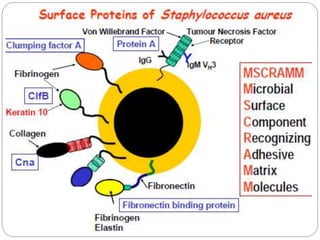
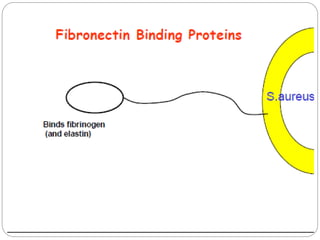
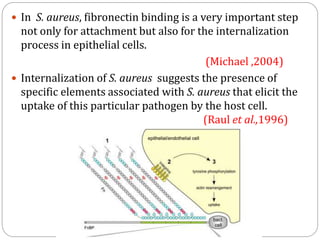
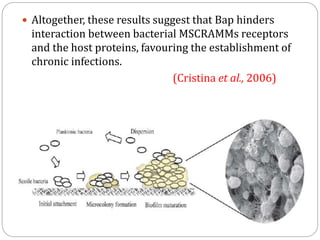
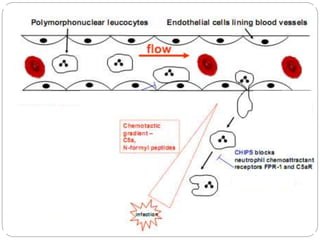
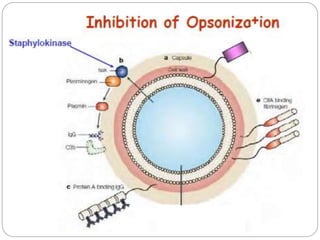
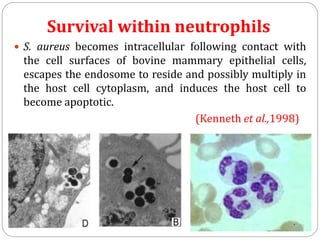
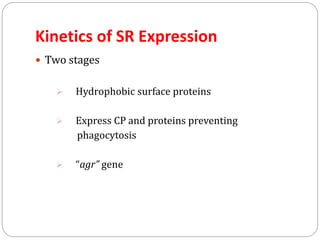
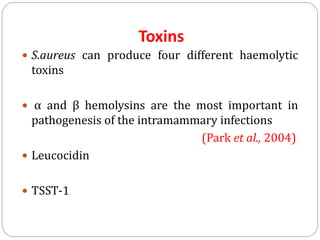
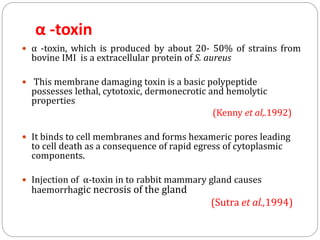
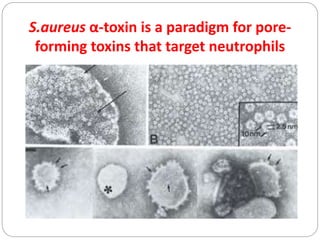
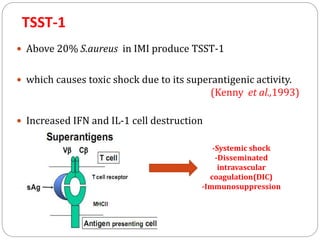
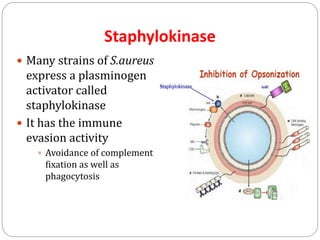
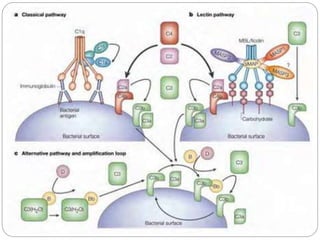
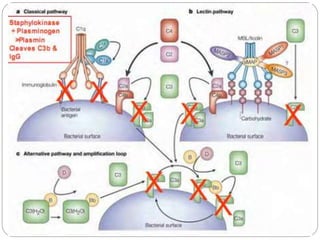
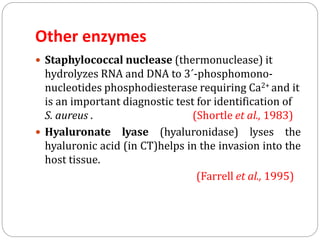
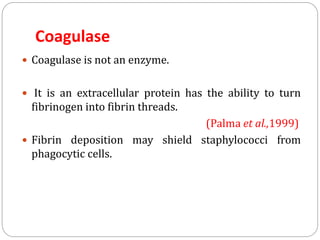
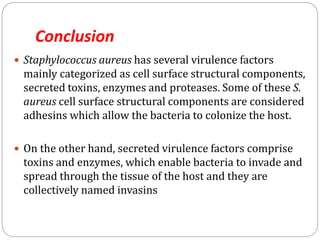
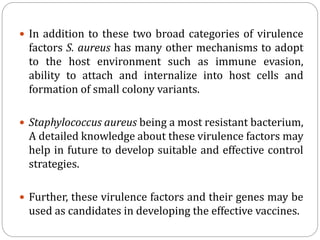


This document discusses the virulence factors of Staphylococcus aureus associated with bovine mastitis. It begins by introducing S. aureus as a common cause of bovine mastitis. It then describes several virulence factors that allow S. aureus to colonize and infect the mammary gland, including adhesins that help it adhere to epithelial cells, such as fibronectin binding proteins; toxins that damage tissue and immune cells, like alpha-toxin; and antiphagocytic factors that help it evade the immune system, like capsular polysaccharides. The document stresses that the combined action of these various surface proteins, toxins, and enzymes enable the pathogenicity of S. aureus in bovine mastitis.


![ONFH[AVN HIP] -TRIPLE REGIME -A NOVAL SURGICAL CONCEPT .pptx](https://cdn.slidesharecdn.com/ss_thumbnails/onfhavnhip2026koaconcalicutdrgokuldevdrmashraf-260210064517-213ec005-thumbnail.jpg?width=640&height=640&fit=bounds)


