Presented by-
SHARATH S
01JST16PAE013
CONTENTS
 Classification of Heat Engine
 Definition of an IC engine
 Classification of an IC engine
 Components of an IC engine
 4-stroke and 2-stroke petrol engine working principle
 4-stroke and 2-stroke diesel engine working principle
 Difference between 4 & 2 stroke engine
 Difference between petrol and diesel engine
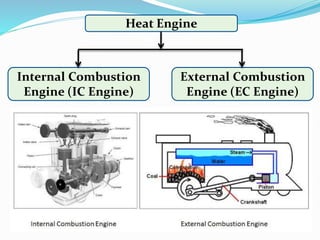
Heat Engine
Internal Combustion
Engine (IC Engine)
External Combustion
Engine (EC Engine)
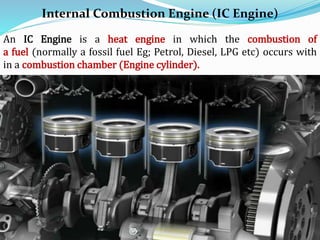
Internal Combustion Engine (IC Engine)
An IC Engine is a heat engine in which the combustion of
a fuel (normally a fossil fuel Eg; Petrol, Diesel, LPG etc) occurs with
in a combustion chamber (Engine cylinder).
The internal combustion engines (IC Engines) are classified
depending upon
 Nature of Thermodynamic Cycle
 Type of Fuel
 Number of Strokes
 Type of Ignition
 Number of Cylinders
 Position of the Cylinder
 Type of Cooling
Classification of IC Engines
The internal combustion engines (IC Engines) are classified
depending upon
 Nature of Thermodynamic Cycle
i. Otto Cycle Engine
ii. Diesel Cycle Engine
iii. Dual Combustion Cycle Engine
Classification of IC Engines
The internal combustion engines (IC Engines) are classified
depending upon
 Type of Fuel
i. Petrol Engine
ii. Diesel Engine
iii. Gas Engine ( CNG or LPG or biogas or Hydrogen etc)
 Number of Strokes
i. 2 – Stroke Engines
ii. 4 – Stroke Engines
Classification of IC Engines
The internal combustion engines (IC Engines) are classified
depending upon
 Type of Ignition
i. Spark Ignition (SI Engine)
ii. Compression Ignition (CI Engine)
 Number of Cylinders
i. Single Cylinder
ii. Multi-cylinder
Classification of IC Engines
The internal combustion engines (IC Engines) are classified
depending upon
 Position of the Cylinder
i. Horizontal Engine
ii. Vertical Engine
iii. Radial Engine
iv. V – Engine
v. Opposite Cylinder Engine
 Type of Cooling
i. Air-Cooled Engine
ii. Water Cooled Engine
Classification of IC Engines
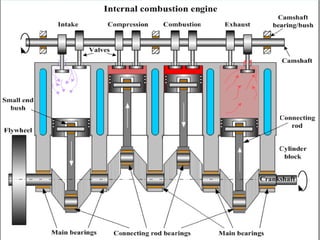
Components of an IC Engine
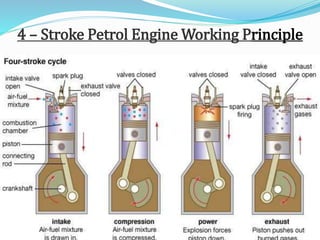
4 – Stroke Petrol Engine Working Principle
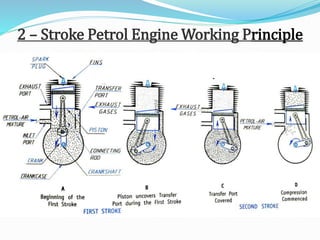
2 – Stroke Petrol Engine Working Principle
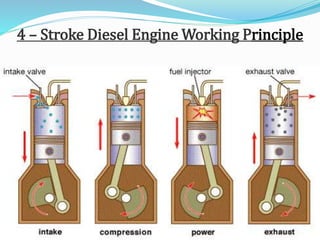
4 – Stroke Diesel Engine Working Principle
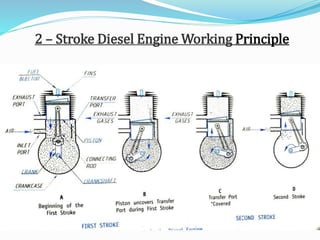
2 – Stroke Diesel Engine Working Principle
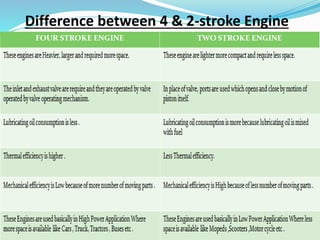
Difference between 4 & 2-stroke Engine
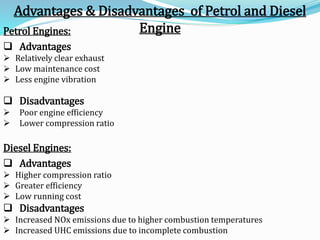
Petrol Engines:
 Advantages
 Relatively clear exhaust
 Low maintenance cost
 Less engine vibration
 Disadvantages
 Poor engine efficiency
 Lower compression ratio
Diesel Engines:
 Advantages
 Higher compression ratio
 Greater efficiency
 Low running cost
 Disadvantages
 Increased NOx emissions due to higher combustion temperatures
 Increased UHC emissions due to incomplete combustion
Advantages & Disadvantages of Petrol and Diesel
Engine

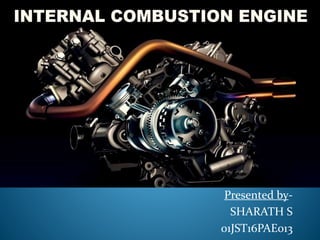
INTERNAL COMBUSTION ENGINE

  • 1.
  • 2.
    CONTENTS  Classification ofHeat Engine  Definition of an IC engine  Classification of an IC engine  Components of an IC engine  4-stroke and 2-stroke petrol engine working principle  4-stroke and 2-stroke diesel engine working principle  Difference between 4 & 2 stroke engine  Difference between petrol and diesel engine
  • 3.
    Heat Engine Internal Combustion Engine(IC Engine) External Combustion Engine (EC Engine)
  • 4.
    Internal Combustion Engine(IC Engine) An IC Engine is a heat engine in which the combustion of a fuel (normally a fossil fuel Eg; Petrol, Diesel, LPG etc) occurs with in a combustion chamber (Engine cylinder).
  • 5.
    The internal combustionengines (IC Engines) are classified depending upon  Nature of Thermodynamic Cycle  Type of Fuel  Number of Strokes  Type of Ignition  Number of Cylinders  Position of the Cylinder  Type of Cooling Classification of IC Engines
  • 6.
    The internal combustionengines (IC Engines) are classified depending upon  Nature of Thermodynamic Cycle i. Otto Cycle Engine ii. Diesel Cycle Engine iii. Dual Combustion Cycle Engine Classification of IC Engines
  • 7.
    The internal combustionengines (IC Engines) are classified depending upon  Type of Fuel i. Petrol Engine ii. Diesel Engine iii. Gas Engine ( CNG or LPG or biogas or Hydrogen etc)  Number of Strokes i. 2 – Stroke Engines ii. 4 – Stroke Engines Classification of IC Engines
  • 8.
    The internal combustionengines (IC Engines) are classified depending upon  Type of Ignition i. Spark Ignition (SI Engine) ii. Compression Ignition (CI Engine)  Number of Cylinders i. Single Cylinder ii. Multi-cylinder Classification of IC Engines
  • 9.
    The internal combustionengines (IC Engines) are classified depending upon  Position of the Cylinder i. Horizontal Engine ii. Vertical Engine iii. Radial Engine iv. V – Engine v. Opposite Cylinder Engine  Type of Cooling i. Air-Cooled Engine ii. Water Cooled Engine Classification of IC Engines
  • 10.
  • 12.
    4 – StrokePetrol Engine Working Principle
  • 13.
    2 – StrokePetrol Engine Working Principle
  • 14.
    4 – StrokeDiesel Engine Working Principle
  • 15.
    2 – StrokeDiesel Engine Working Principle
  • 16.
    Difference between 4& 2-stroke Engine
  • 17.
    Petrol Engines:  Advantages Relatively clear exhaust  Low maintenance cost  Less engine vibration  Disadvantages  Poor engine efficiency  Lower compression ratio Diesel Engines:  Advantages  Higher compression ratio  Greater efficiency  Low running cost  Disadvantages  Increased NOx emissions due to higher combustion temperatures  Increased UHC emissions due to incomplete combustion Advantages & Disadvantages of Petrol and Diesel Engine