3 STAGES

• 1. Collection of evidence
• 2. Pre-interrogation interview
  • Non-accusatorial interview
  • Determine whether the suspect is lying
• 3. Interrogation
  • Only guilty suspects


                                             1
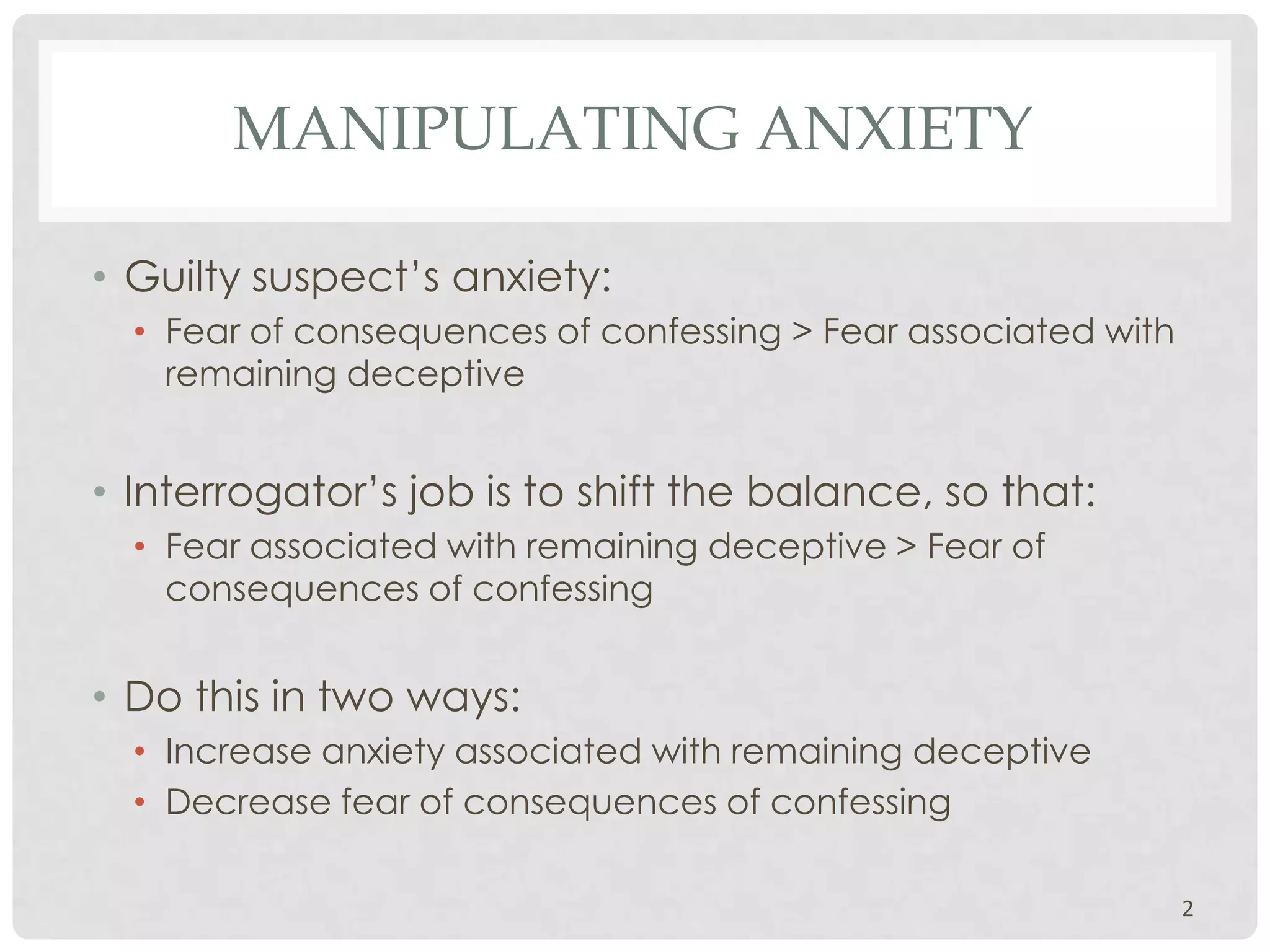
MANIPULATING ANXIETY

• Guilty suspect’s anxiety:
  • Fear of consequences of confessing > Fear associated with
    remaining deceptive


• Interrogator’s job is to shift the balance, so that:
  • Fear associated with remaining deceptive > Fear of
    consequences of confessing


• Do this in two ways:
  • Increase anxiety associated with remaining deceptive
  • Decrease fear of consequences of confessing

                                                                2
INTERROGATION: 9 PRINCIPLES
• 1. Confront suspect with (fake) evidence.

• 2. Develop themes to excuse the crime.

• 3. Interrupt denials.

• 4. Suspect becomes quiet and withdrawn.

• 5. Reduce distance.

• 6. Sympathy and understanding.

• 7. Offer face-saving explanations.

• 8. Develop admission into full confession.

• 9. Suspect writes and signs full confession.


                                                 3
INTERROGATION: 9 PRINCIPLES
• 1. Confront suspect with (fake) evidence.
   • MAXIMISATION
• 2. Develop themes to excuse the crime.
   • MINIMISATION
• 3. Interrupt denials.

• 4. Suspect becomes quiet and withdrawn.

• 5. Reduce distance.
   • MAXIMISATION
• 6. Sympathy and understanding.
   • MINIMISATION
• 7. Offer face-saving explanations.
   • MINIMISATION
• 8. Develop admission into full confession.

• 9. Suspect writes and signs full confession.


                                                 4

Reid technique

  • 1.
    3 STAGES • 1.Collection of evidence • 2. Pre-interrogation interview • Non-accusatorial interview • Determine whether the suspect is lying • 3. Interrogation • Only guilty suspects 1
  • 2.
    MANIPULATING ANXIETY • Guiltysuspect’s anxiety: • Fear of consequences of confessing > Fear associated with remaining deceptive • Interrogator’s job is to shift the balance, so that: • Fear associated with remaining deceptive > Fear of consequences of confessing • Do this in two ways: • Increase anxiety associated with remaining deceptive • Decrease fear of consequences of confessing 2
  • 3.
    INTERROGATION: 9 PRINCIPLES •1. Confront suspect with (fake) evidence. • 2. Develop themes to excuse the crime. • 3. Interrupt denials. • 4. Suspect becomes quiet and withdrawn. • 5. Reduce distance. • 6. Sympathy and understanding. • 7. Offer face-saving explanations. • 8. Develop admission into full confession. • 9. Suspect writes and signs full confession. 3
  • 4.
    INTERROGATION: 9 PRINCIPLES •1. Confront suspect with (fake) evidence. • MAXIMISATION • 2. Develop themes to excuse the crime. • MINIMISATION • 3. Interrupt denials. • 4. Suspect becomes quiet and withdrawn. • 5. Reduce distance. • MAXIMISATION • 6. Sympathy and understanding. • MINIMISATION • 7. Offer face-saving explanations. • MINIMISATION • 8. Develop admission into full confession. • 9. Suspect writes and signs full confession. 4