Download as PDF, PPTX

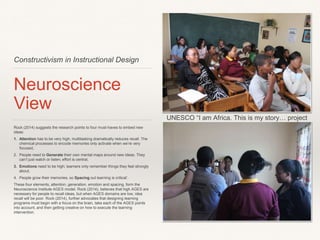
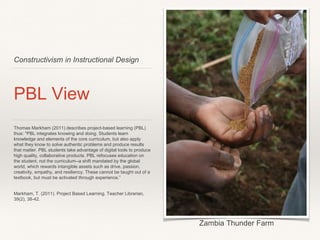
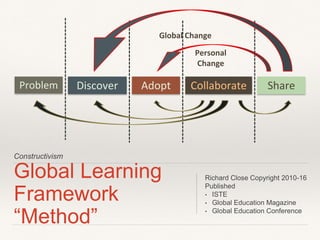
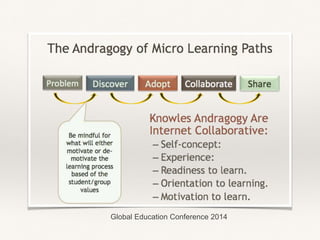
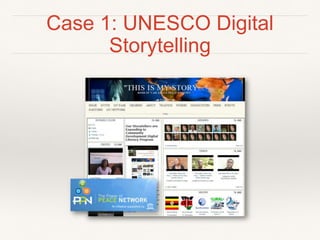
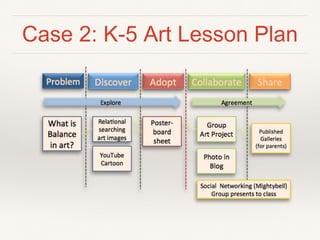

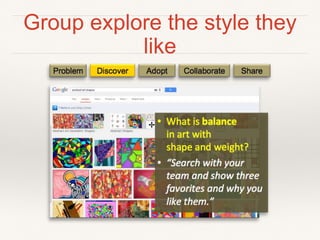
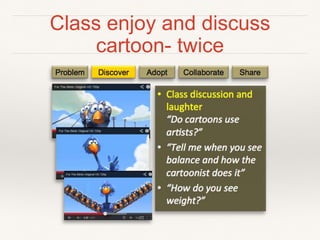
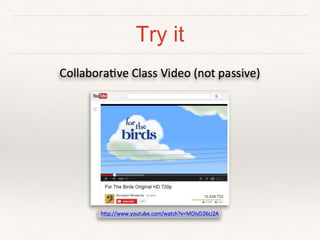
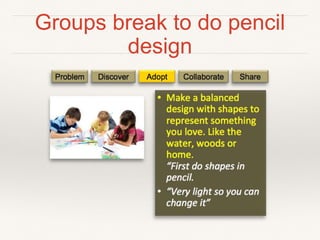
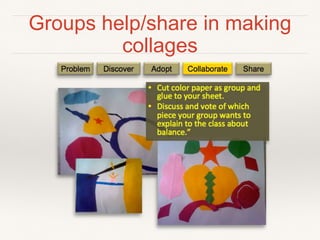
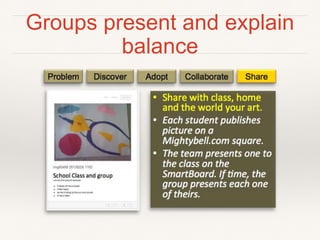
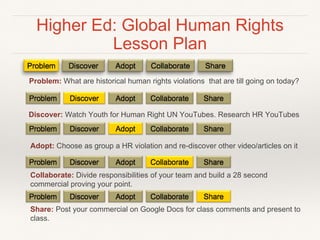
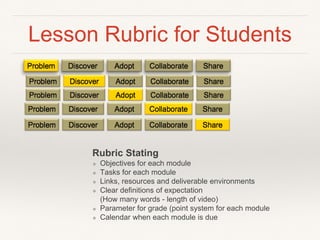
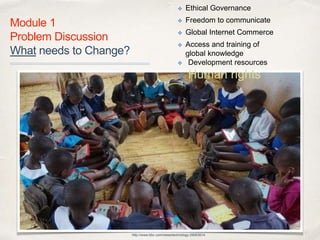

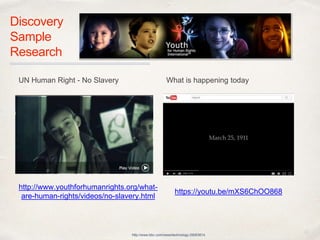


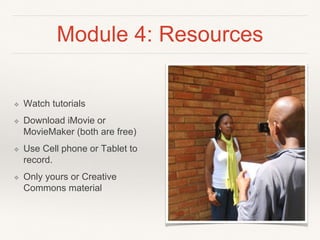



This document discusses constructivism and digital storytelling methods. It provides background on constructivist learning theories including Dewey's view that learning is student-centered and experience-based. It also discusses the neuroscience view that attention, generation, emotion and spacing are key to embedding new ideas. Project-based learning is described as integrating knowledge and skills to solve authentic problems. The document then presents examples of applying constructivist methods including a K-5 art lesson, an UNESCO digital storytelling case, and a college sociology human rights lesson. Resources and frameworks for constructivist instructional design are also referenced.


