MANUFACTURING
TECHNOLOGY – I
CRAFTED BY:
RAMESH KUMAR A
Assistant Professor
Sona College of Technology
Salem
07-02-2019 05:44 1
SHEET METAL PROCESSES
07-02-2019 05:44 2
SHEET METAL PROCESSES
07-02-2019 05:44 3
 Sheet metal is metal formed by an
industrial process into thin, flat
pieces
 It is one of the fundamental forms
used in metalworking and it can be
cut and bent into a variety of
shapes
 Countless everyday objects are
fabricated from sheet metal
 Thicknesses can vary significantly;
extremely thin thicknesses are
considered foil or leaf, and pieces
thicker than 6 mm (0.25 in) are
considered plate
 Sheet metal materials:
 Galvanized iron
 Copper and its alloys
 Aluminium and its alloys
 Stainless steel
 Brass
 Bronzes
 Lead
 Tin
 Zinc
SHEET METAL CHARACTERISTICS
07-02-2019 05:44 4
SHEET METAL CHARACTERISTICS
07-02-2019 05:44 5
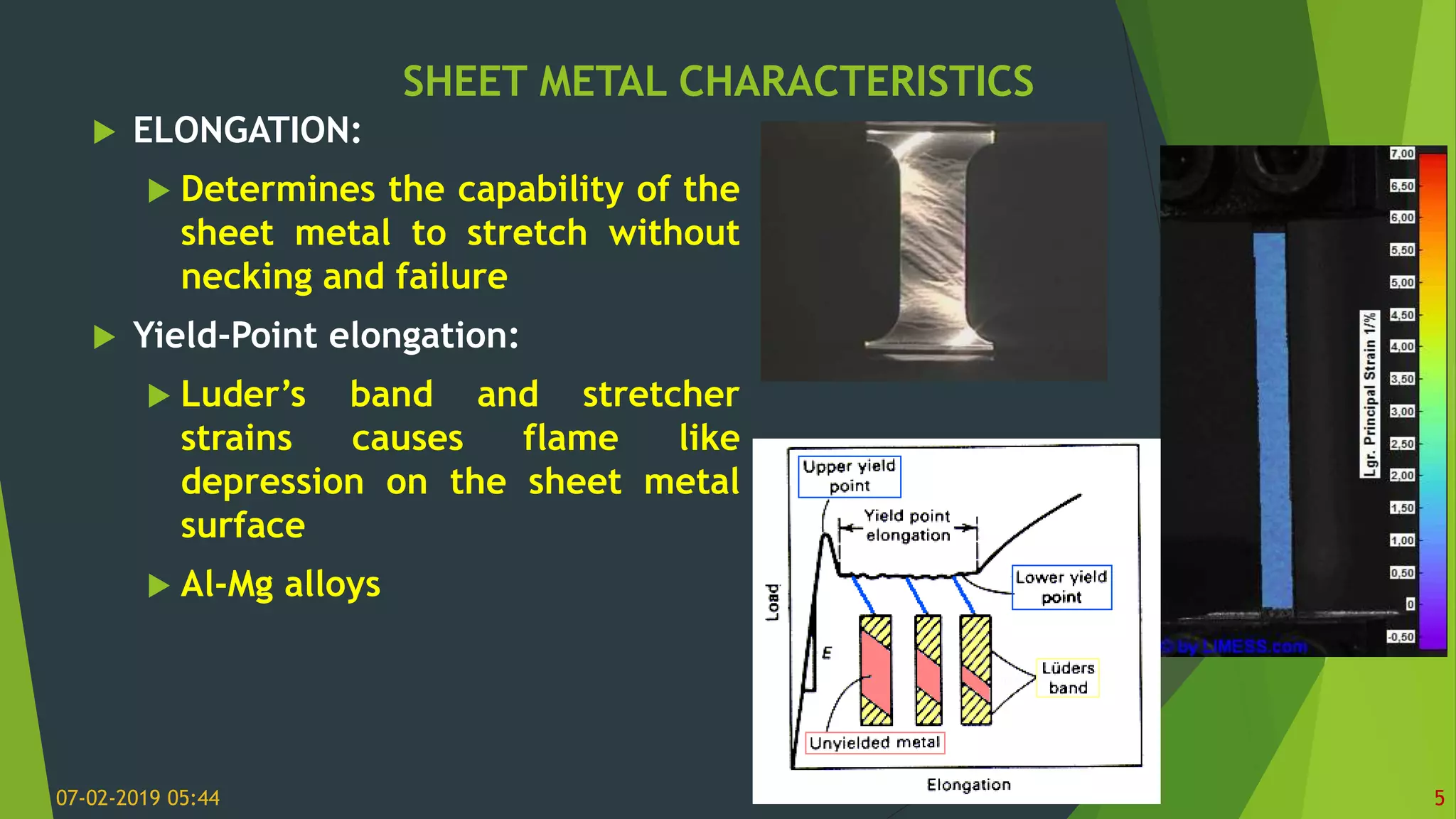
 ELONGATION:
 Determines the capability of the
sheet metal to stretch without
necking and failure
 Yield-Point elongation:
 Luder’s band and stretcher
strains causes flame like
depression on the sheet metal
surface
 Al-Mg alloys
SHEET METAL CHARACTERISTICS…
07-02-2019 05:44 6
 Anisotropy (planar):
 Exhibits different behavior in
different planar directions
 Anisotropy (normal):
 Determines thinning behavior of
sheet metals during stretching
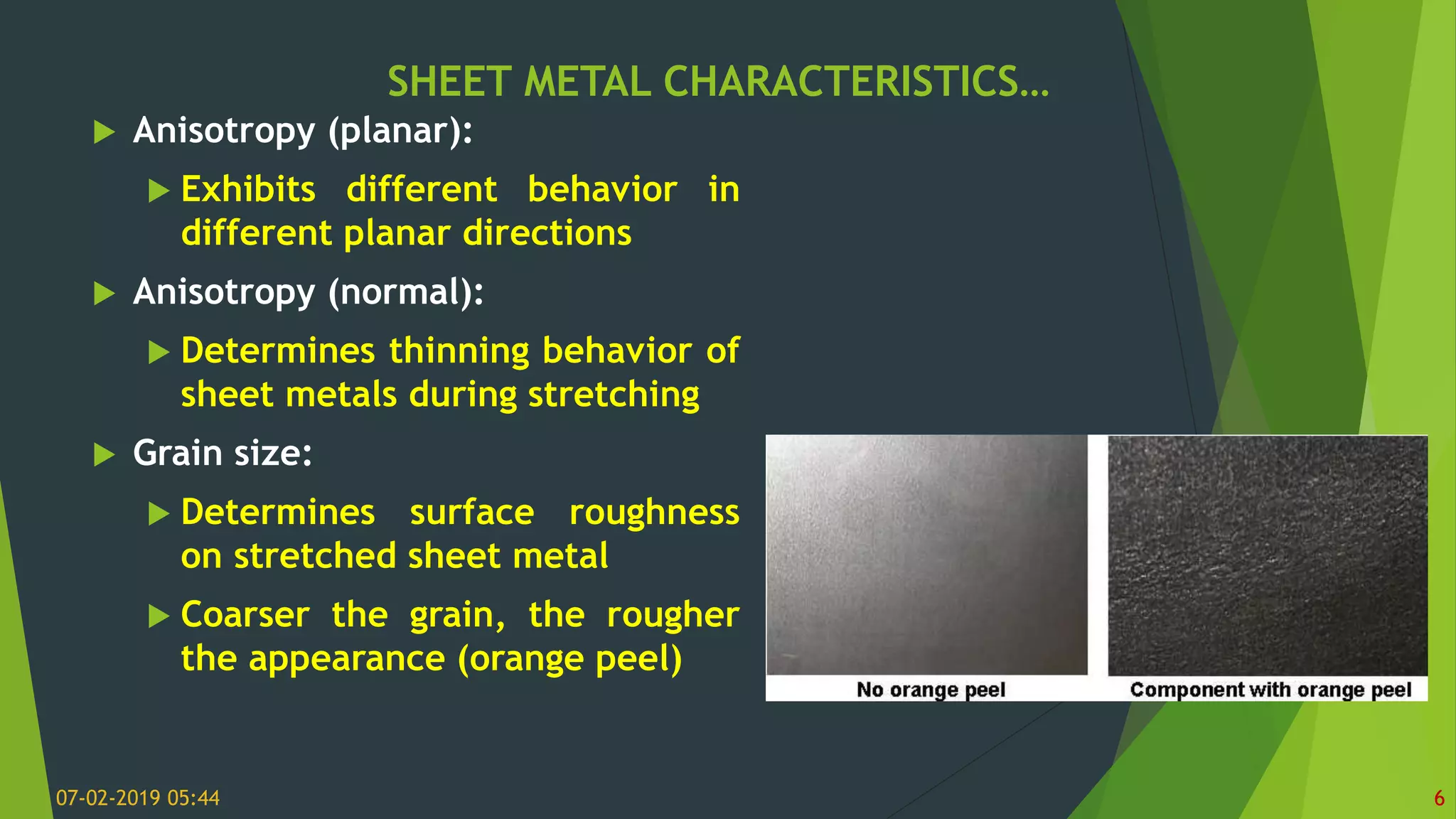
 Grain size:
 Determines surface roughness
on stretched sheet metal
 Coarser the grain, the rougher
the appearance (orange peel)
SHEET METAL CHARACTERISTICS…
07-02-2019 05:44 7
 Residual stresses:
 Caused by non uniform
deformation during forming; causes
part distortion when sectioned and
can lead to stress-corrosion;
reduced for eliminated by stress
relieving
 Surface condition of sheet:
 Depends on rolling practice;
important in sheet forming as it
can cause tearing and poor surface
quality
SHEET METAL OPERATION
07-02-2019 05:44 8
 Shearing
 Bending
 Drawing
 Deep drawing
 Blanking
 Punching (Piercing)
 Stamping
 Embossing
 Spinning
 Roll forming
SHEARING
07-02-2019 05:44 9
SHEARING
07-02-2019 05:44 10
 Several cutting processes exist that
utilize shearing force to cut sheet
metal
 However, the term "shearing" by itself
refers to a specific cutting process
that produces straight line cuts to
separate a piece of sheet metal
 Most commonly, shearing is used to
cut a sheet parallel to an existing edge
which is held square, but angled cuts
can be made as well
FACTORS AFFECTING SHEARING OPERATION
07-02-2019 05:44 11
 Shape and material of punch
 Die, speed of punching, lubrication
 Clearance between punch and die
STAGES IN SHEARING
07-02-2019 05:44 12
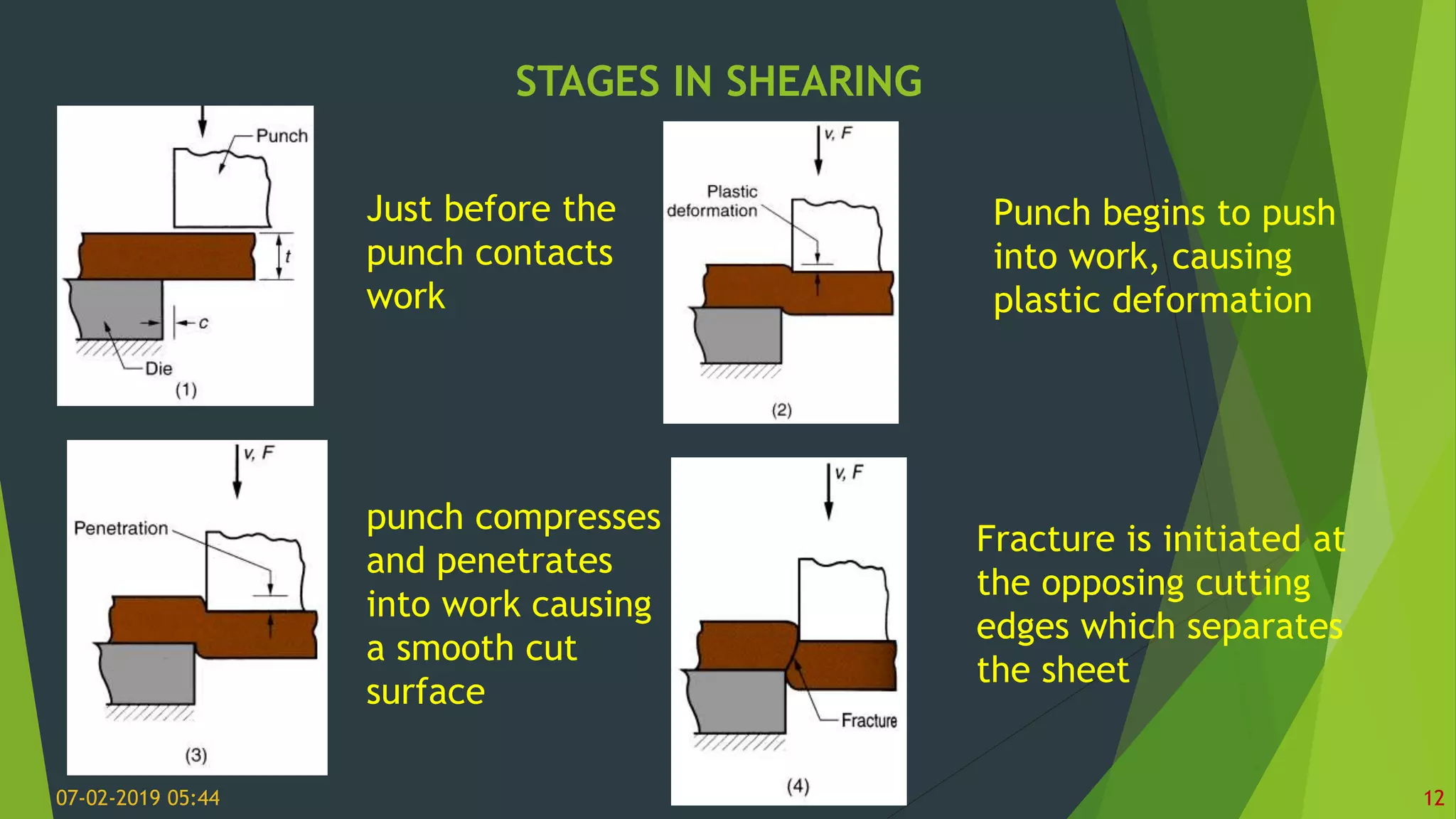
Just before the
punch contacts
work
Punch begins to push
into work, causing
plastic deformation
punch compresses
and penetrates
into work causing
a smooth cut
surface
Fracture is initiated at
the opposing cutting
edges which separates
the sheet
SHEARING OPERATIONS
07-02-2019 05:44 13
BLANKING AND PUNCHING
07-02-2019 05:44 14
 Blanking - sheet metal
cutting to separate
piece (called a blank)
from surrounding stock
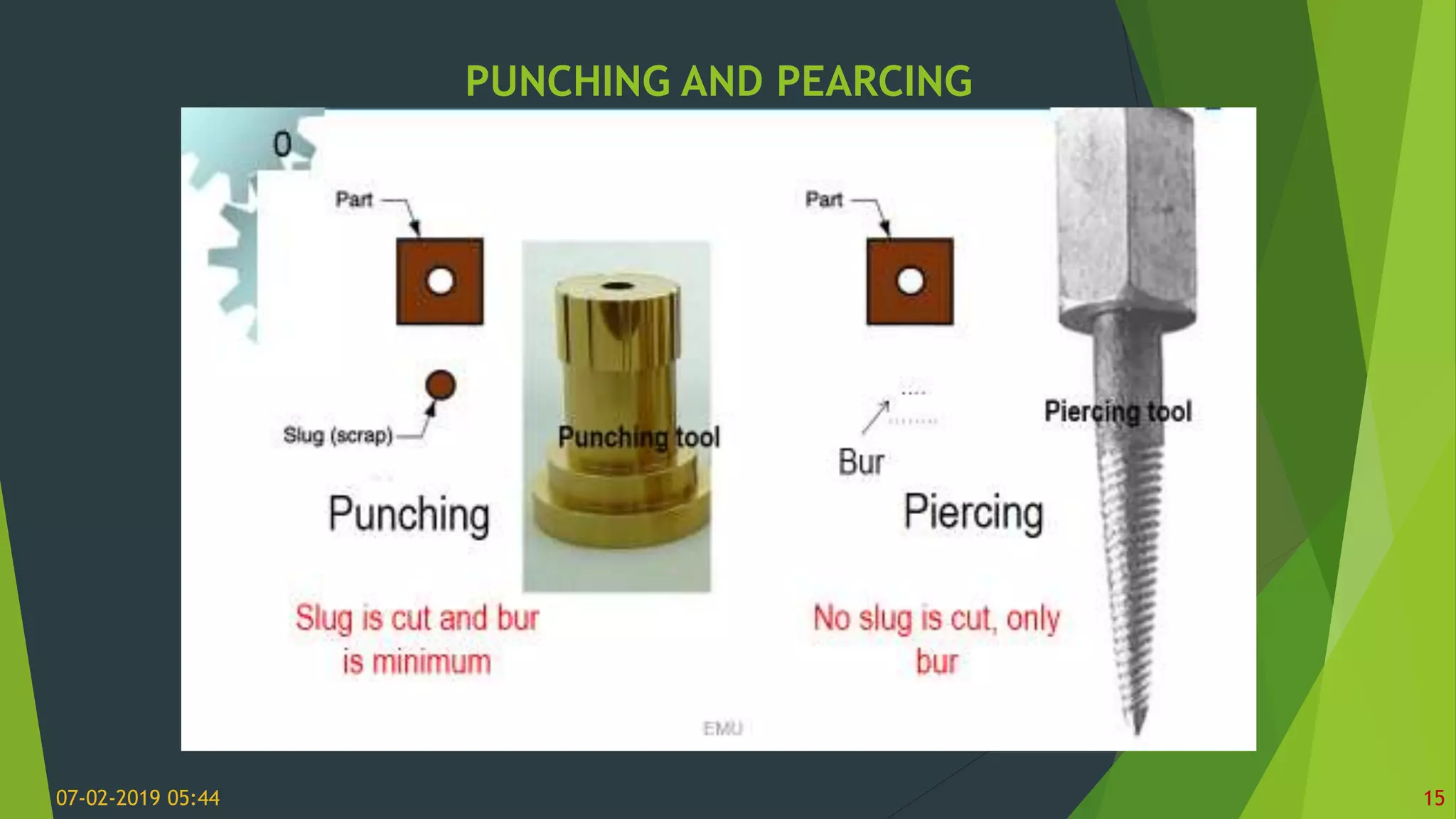
 Punching - similar to
blanking except cut
piece is scrap, called a
slug
PUNCHING AND PEARCING
07-02-2019 05:44 15
SLOTTING
07-02-2019 05:44 16
 A punching operation that forms
rectangular holes in the sheet.
PERFORATING
07-02-2019 05:44 17
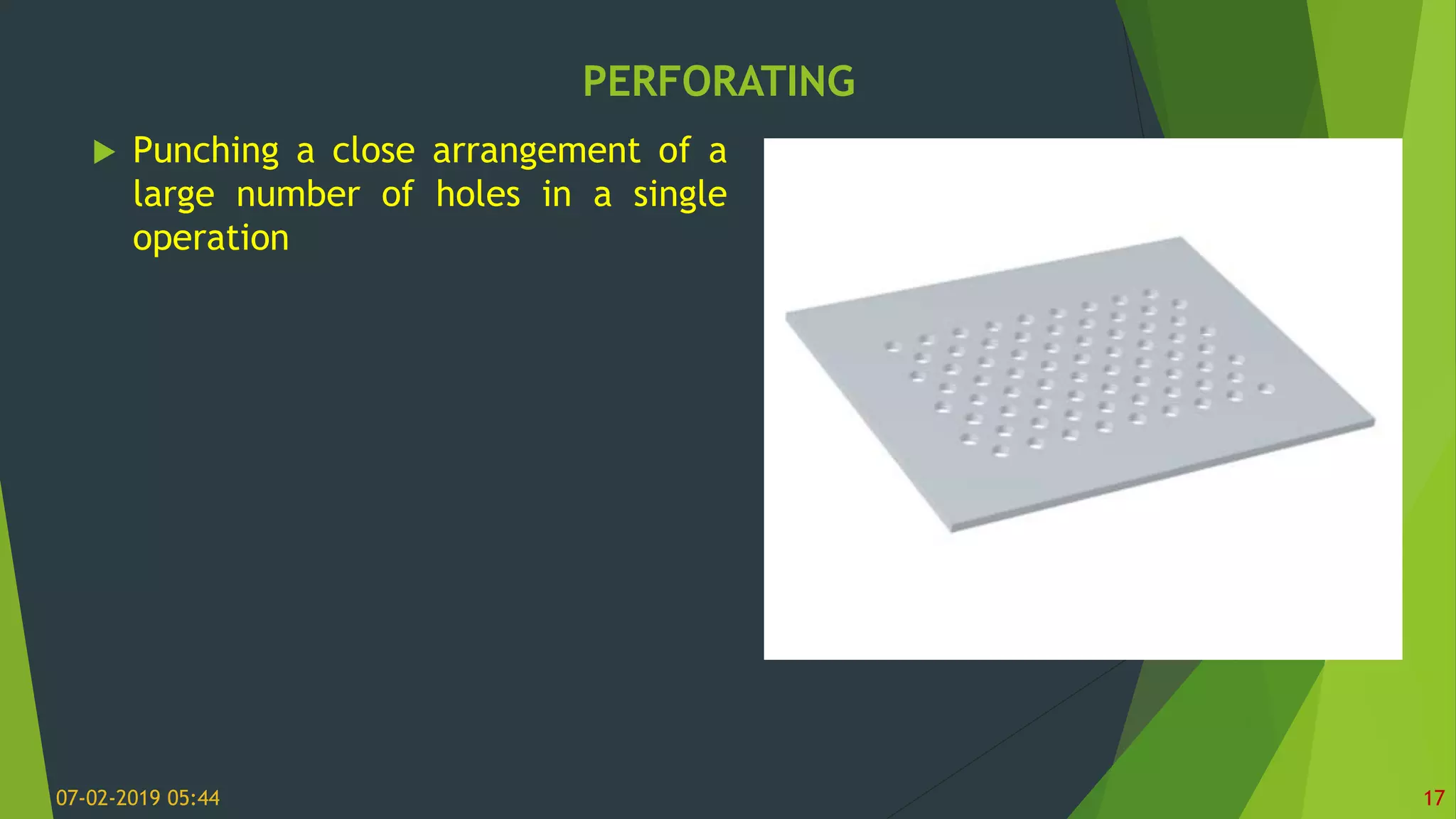
 Punching a close arrangement of a
large number of holes in a single
operation
NOTCHING
07-02-2019 05:44 18
 Punching the edge of a sheet,
forming a notch in the shape of a
portion of the punch
NIBBLING
07-02-2019 05:44 19
 Punching a series of small
overlapping slits or holes along a
path to cut out a larger contoured
shape
 This eliminates the need for a
custom punch and die but will
require secondary operations to
improve the accuracy and finish of
the feature
LANCING
07-02-2019 05:44 20
 Creating a partial cut in the sheet,
so that no material is removed.
 The material is left attached to be
bent and form a shape, such as a
tab, vent, or louver
SLITTING
07-02-2019 05:44 21
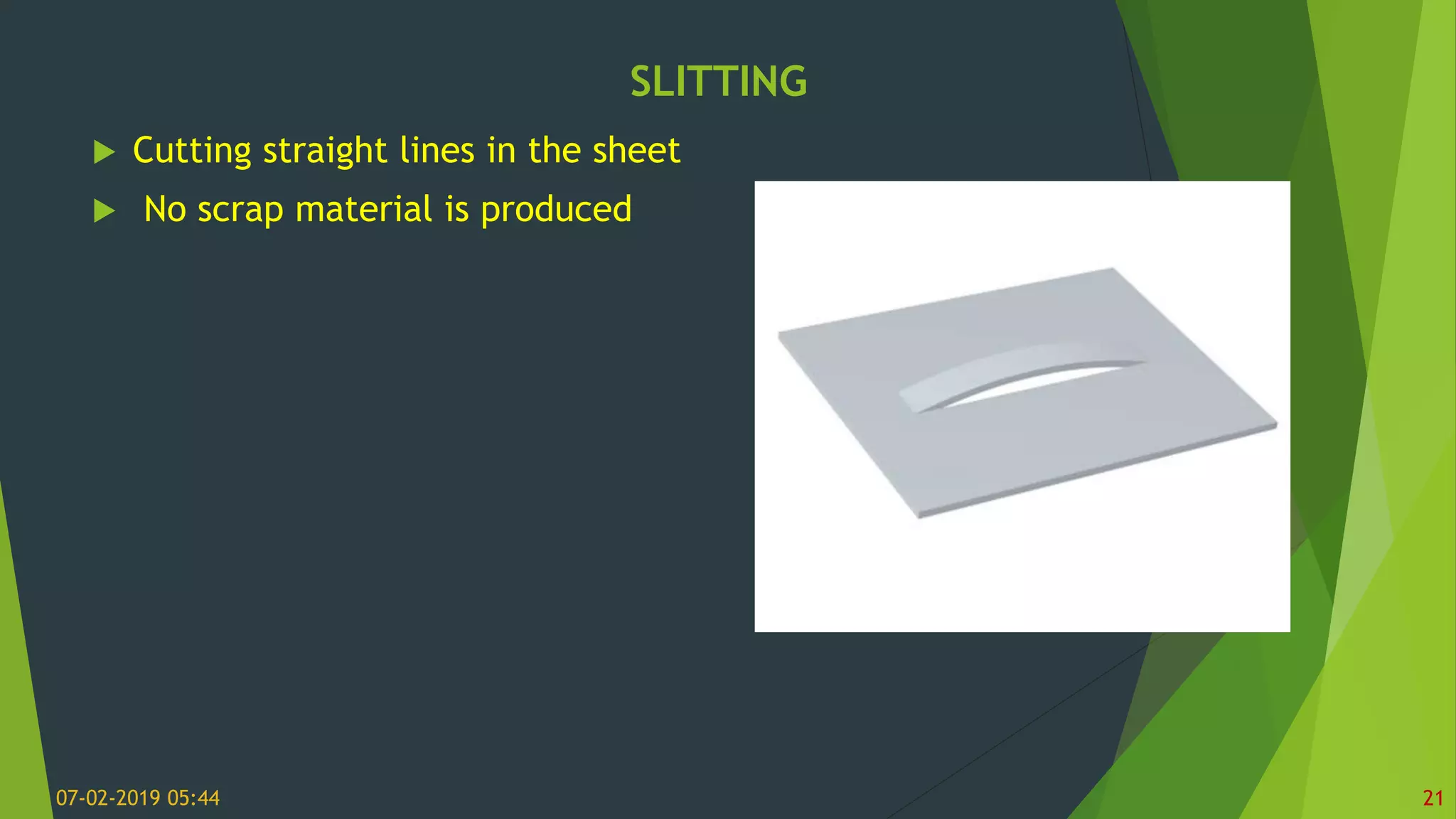
 Cutting straight lines in the sheet
 No scrap material is produced
PARTING
07-02-2019 05:44 22
 Separating a part from the
remaining sheet, by punching away
the material between parts
CUTOFF
07-02-2019 05:44 23
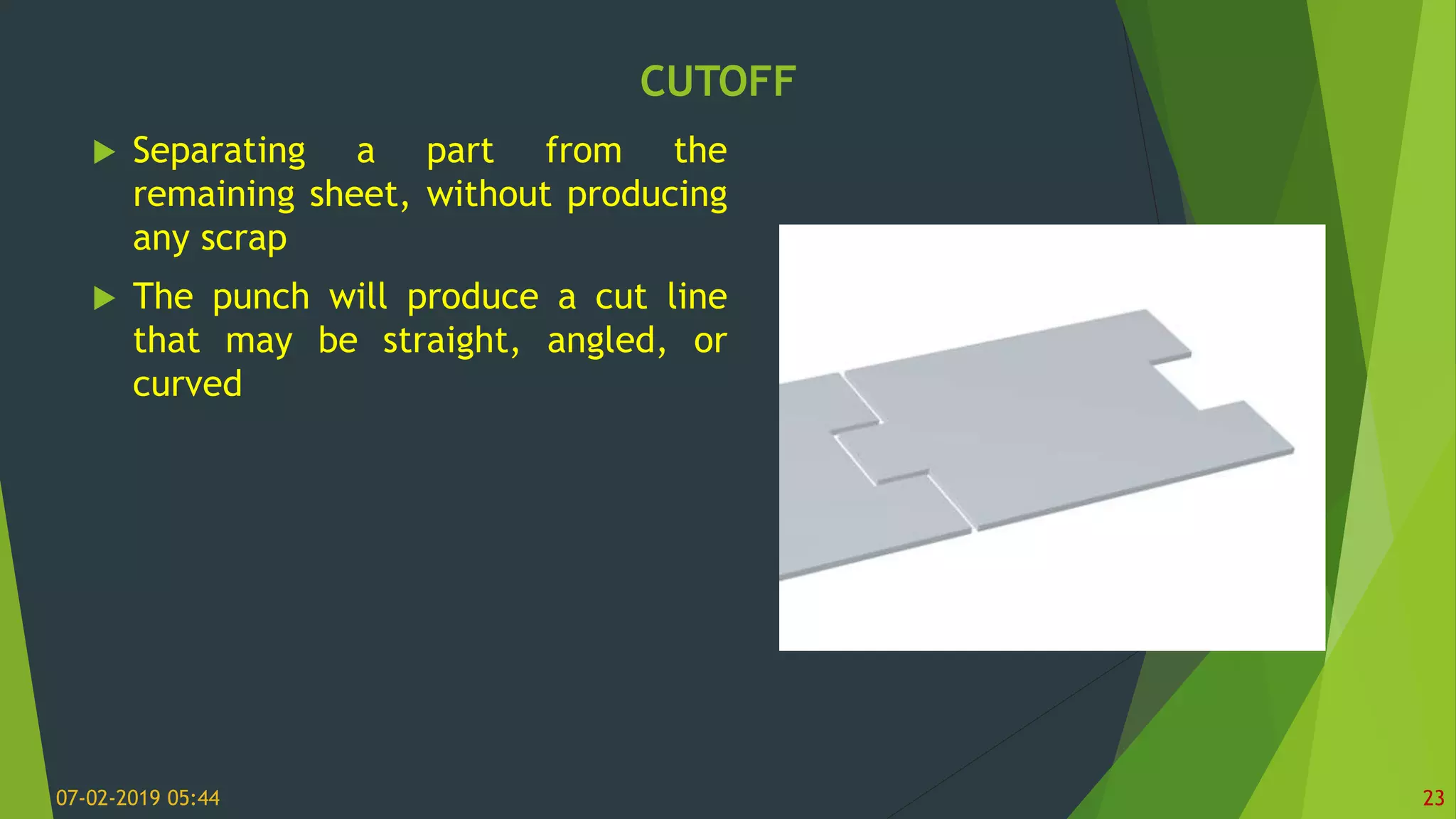
 Separating a part from the
remaining sheet, without producing
any scrap
 The punch will produce a cut line
that may be straight, angled, or
curved
TRIMMING
07-02-2019 05:44 24
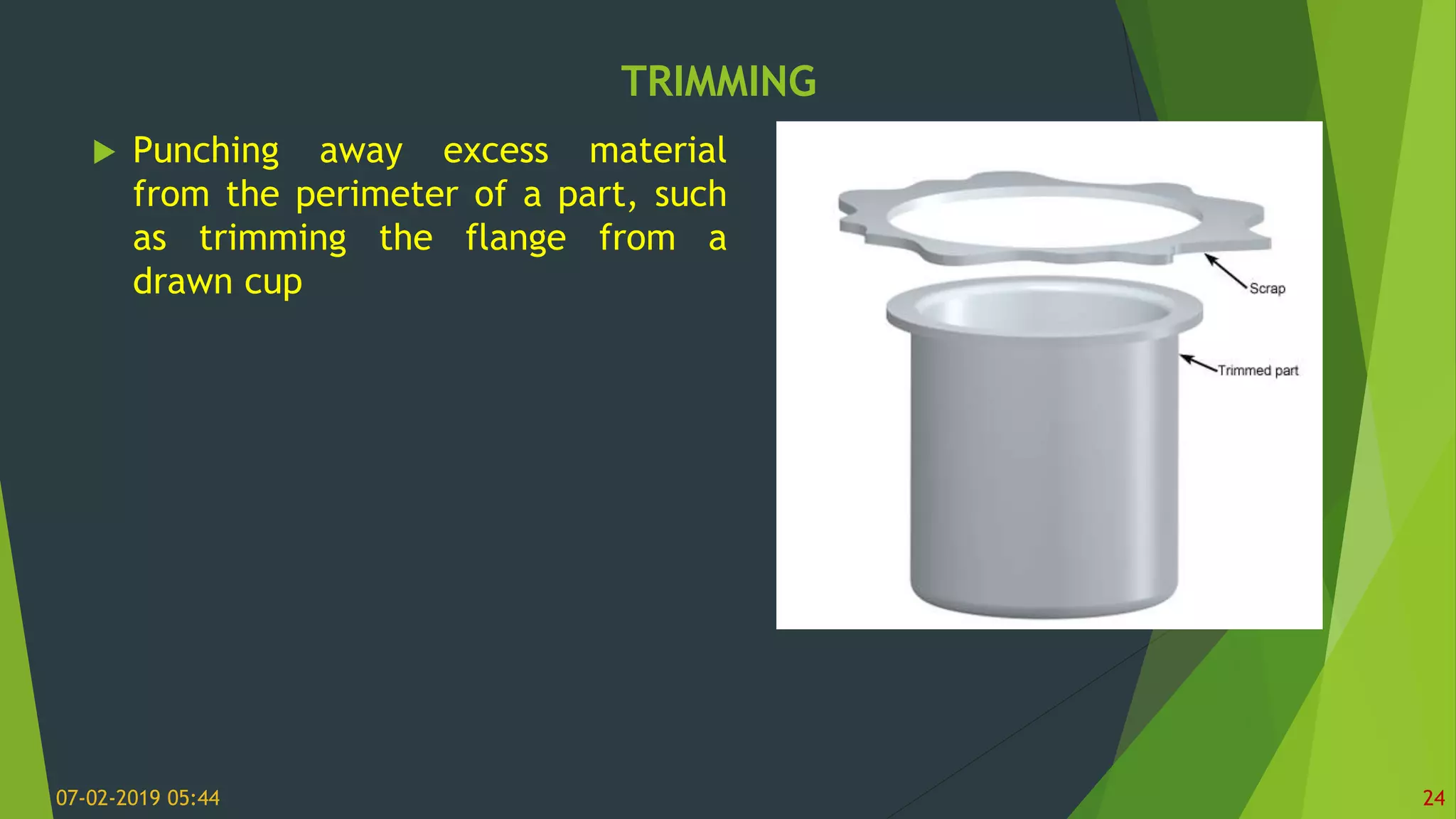
 Punching away excess material
from the perimeter of a part, such
as trimming the flange from a
drawn cup
SHAVING
07-02-2019 05:44 25
 Shearing away minimal material
from the edges of a feature or part,
using a small die clearance
 Used to improve accuracy or finish
THANK YOU!!!
07-02-2019 05:44 26

Sheet metal processes - shearing

  • 1.
    MANUFACTURING TECHNOLOGY – I CRAFTEDBY: RAMESH KUMAR A Assistant Professor Sona College of Technology Salem 07-02-2019 05:44 1
  • 2.
  • 3.
    SHEET METAL PROCESSES 07-02-201905:44 3  Sheet metal is metal formed by an industrial process into thin, flat pieces  It is one of the fundamental forms used in metalworking and it can be cut and bent into a variety of shapes  Countless everyday objects are fabricated from sheet metal  Thicknesses can vary significantly; extremely thin thicknesses are considered foil or leaf, and pieces thicker than 6 mm (0.25 in) are considered plate  Sheet metal materials:  Galvanized iron  Copper and its alloys  Aluminium and its alloys  Stainless steel  Brass  Bronzes  Lead  Tin  Zinc
  • 4.
  • 5.
    SHEET METAL CHARACTERISTICS 07-02-201905:44 5  ELONGATION:  Determines the capability of the sheet metal to stretch without necking and failure  Yield-Point elongation:  Luder’s band and stretcher strains causes flame like depression on the sheet metal surface  Al-Mg alloys
  • 6.
    SHEET METAL CHARACTERISTICS… 07-02-201905:44 6  Anisotropy (planar):  Exhibits different behavior in different planar directions  Anisotropy (normal):  Determines thinning behavior of sheet metals during stretching  Grain size:  Determines surface roughness on stretched sheet metal  Coarser the grain, the rougher the appearance (orange peel)
  • 7.
    SHEET METAL CHARACTERISTICS… 07-02-201905:44 7  Residual stresses:  Caused by non uniform deformation during forming; causes part distortion when sectioned and can lead to stress-corrosion; reduced for eliminated by stress relieving  Surface condition of sheet:  Depends on rolling practice; important in sheet forming as it can cause tearing and poor surface quality
  • 8.
    SHEET METAL OPERATION 07-02-201905:44 8  Shearing  Bending  Drawing  Deep drawing  Blanking  Punching (Piercing)  Stamping  Embossing  Spinning  Roll forming
  • 9.
  • 10.
    SHEARING 07-02-2019 05:44 10 Several cutting processes exist that utilize shearing force to cut sheet metal  However, the term "shearing" by itself refers to a specific cutting process that produces straight line cuts to separate a piece of sheet metal  Most commonly, shearing is used to cut a sheet parallel to an existing edge which is held square, but angled cuts can be made as well
  • 11.
    FACTORS AFFECTING SHEARINGOPERATION 07-02-2019 05:44 11  Shape and material of punch  Die, speed of punching, lubrication  Clearance between punch and die
  • 12.
    STAGES IN SHEARING 07-02-201905:44 12 Just before the punch contacts work Punch begins to push into work, causing plastic deformation punch compresses and penetrates into work causing a smooth cut surface Fracture is initiated at the opposing cutting edges which separates the sheet
  • 13.
  • 14.
    BLANKING AND PUNCHING 07-02-201905:44 14  Blanking - sheet metal cutting to separate piece (called a blank) from surrounding stock  Punching - similar to blanking except cut piece is scrap, called a slug
  • 15.
  • 16.
    SLOTTING 07-02-2019 05:44 16 A punching operation that forms rectangular holes in the sheet.
  • 17.
    PERFORATING 07-02-2019 05:44 17 Punching a close arrangement of a large number of holes in a single operation
  • 18.
    NOTCHING 07-02-2019 05:44 18 Punching the edge of a sheet, forming a notch in the shape of a portion of the punch
  • 19.
    NIBBLING 07-02-2019 05:44 19 Punching a series of small overlapping slits or holes along a path to cut out a larger contoured shape  This eliminates the need for a custom punch and die but will require secondary operations to improve the accuracy and finish of the feature
  • 20.
    LANCING 07-02-2019 05:44 20 Creating a partial cut in the sheet, so that no material is removed.  The material is left attached to be bent and form a shape, such as a tab, vent, or louver
  • 21.
    SLITTING 07-02-2019 05:44 21 Cutting straight lines in the sheet  No scrap material is produced
  • 22.
    PARTING 07-02-2019 05:44 22 Separating a part from the remaining sheet, by punching away the material between parts
  • 23.
    CUTOFF 07-02-2019 05:44 23 Separating a part from the remaining sheet, without producing any scrap  The punch will produce a cut line that may be straight, angled, or curved
  • 24.
    TRIMMING 07-02-2019 05:44 24 Punching away excess material from the perimeter of a part, such as trimming the flange from a drawn cup
  • 25.
    SHAVING 07-02-2019 05:44 25 Shearing away minimal material from the edges of a feature or part, using a small die clearance  Used to improve accuracy or finish
  • 26.