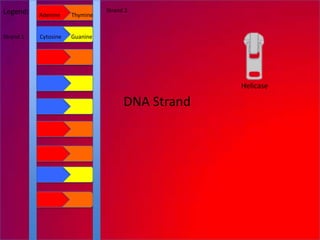
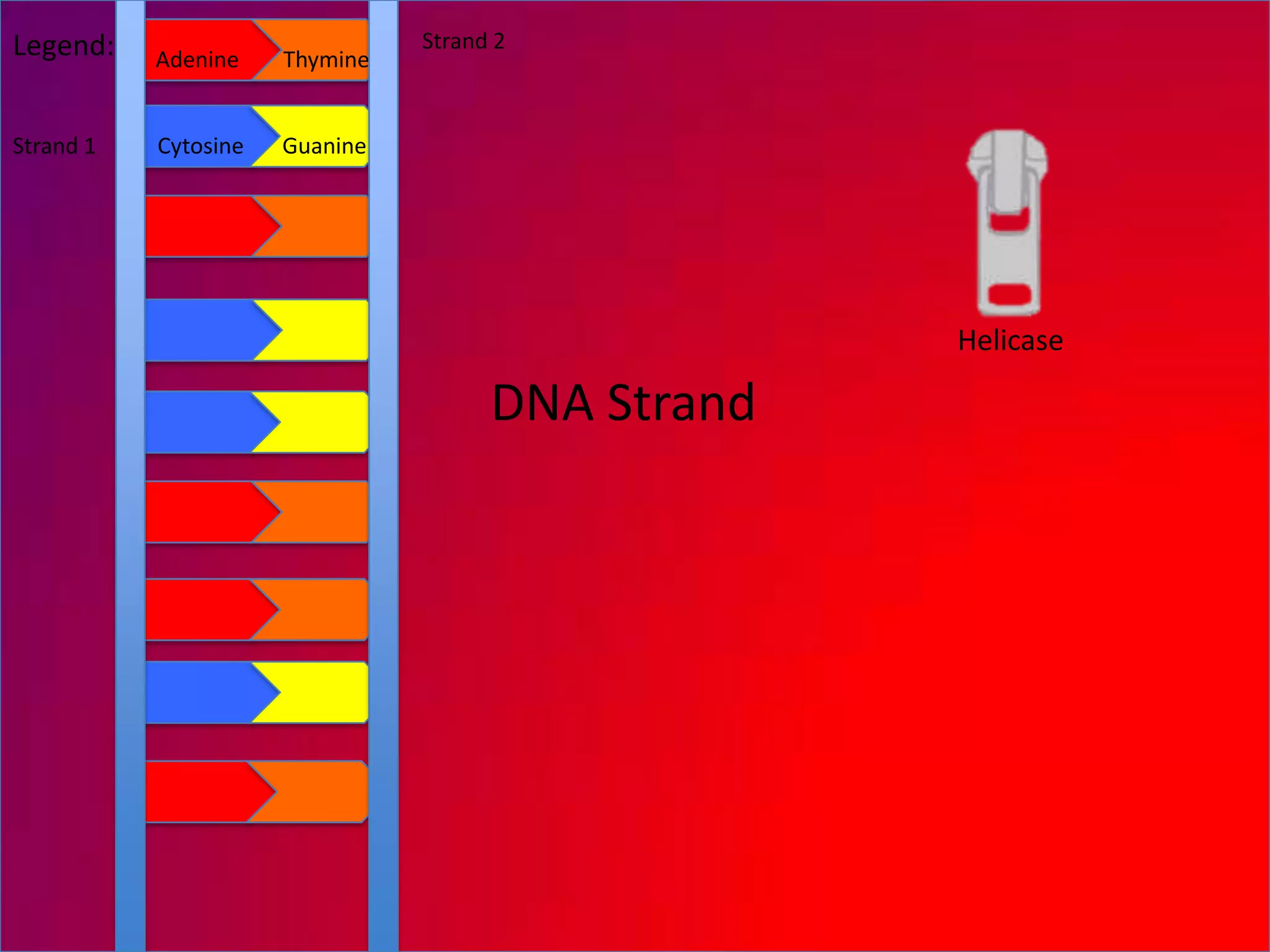
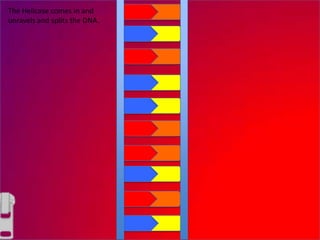
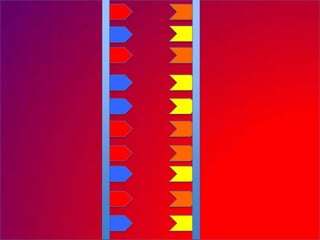
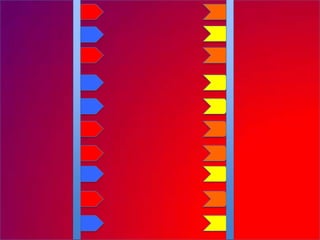
Legend:                         Strand 2
           Adenine    Thymine


Strand 1   Cytosine   Guanine


                                                   Helicase

                                      DNA Strand
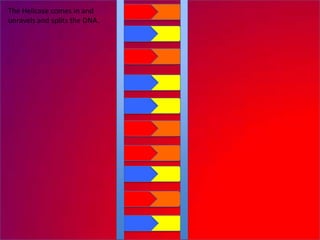
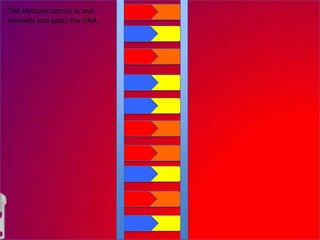
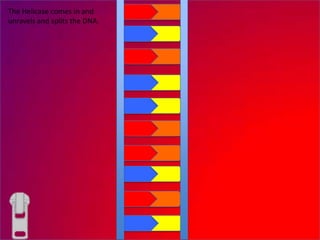
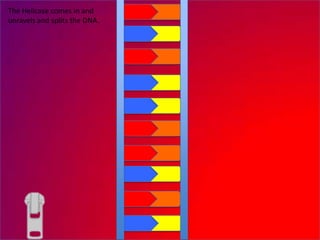
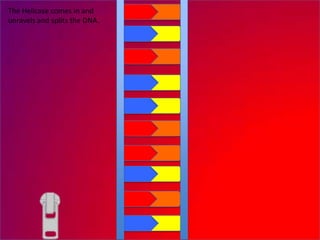
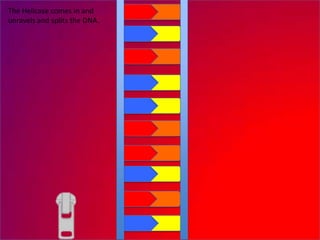
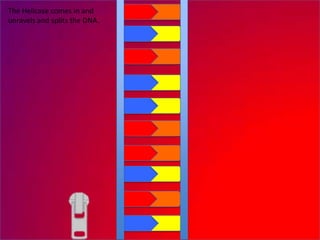
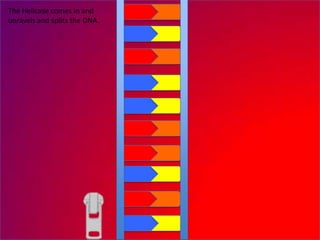
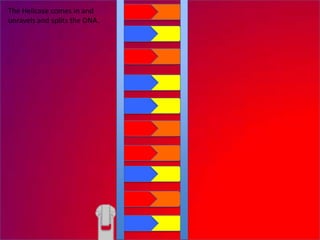
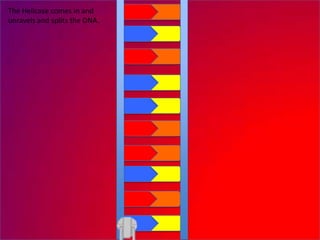
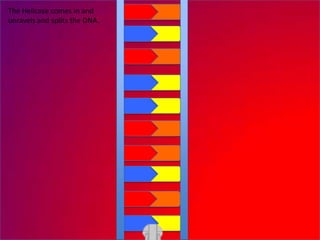
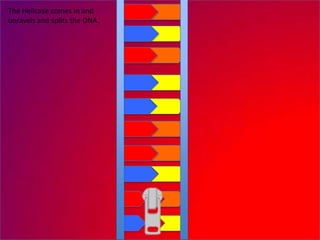
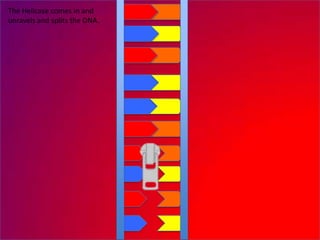
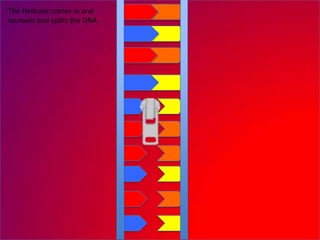
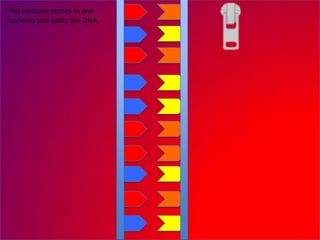
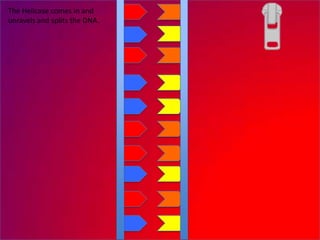
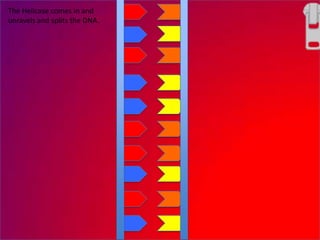
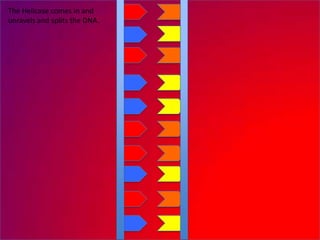
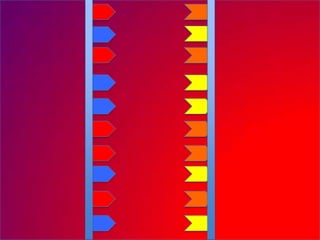
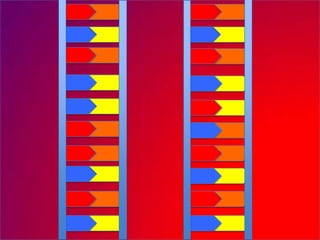
The Helicase comes in and
unravels and splits the DNA.
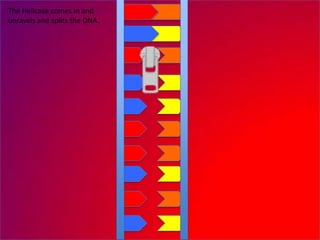
The Helicase comes in and
unravels and splits the DNA.
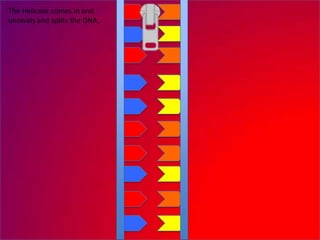
The Helicase comes in and
unravels and splits the DNA.
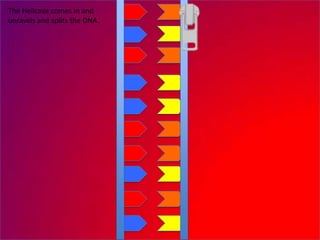
The Helicase comes in and
unravels and splits the DNA.
The Helicase comes in and
unravels and splits the DNA.
The Helicase comes in and
unravels and splits the DNA.
The Helicase comes in and
unravels and splits the DNA.
The Helicase comes in and
unravels and splits the DNA.
The Helicase comes in and
unravels and splits the DNA.
The Helicase comes in and
unravels and splits the DNA.
The Helicase comes in and
unravels and splits the DNA.
The Helicase comes in and
unravels and splits the DNA.
The Helicase comes in and
unravels and splits the DNA.
The Helicase comes in and
unravels and splits the DNA.
The Helicase comes in and
unravels and splits the DNA.
The Helicase comes in and
unravels and splits the DNA.
The Helicase comes in and
unravels and splits the DNA.
The Helicase comes in and
unravels and splits the DNA.
The Helicase comes in and
unravels and splits the DNA.
The Helicase comes in and
unravels and splits the DNA.
The Helicase comes in and
unravels and splits the DNA.
The Helicase comes in and
unravels and splits the DNA.
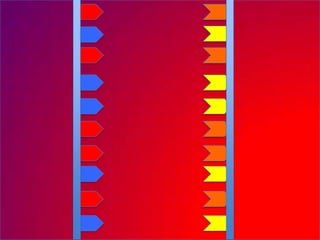
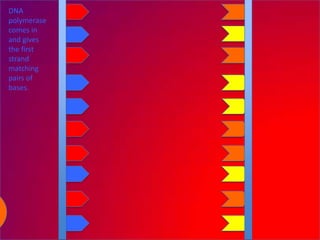
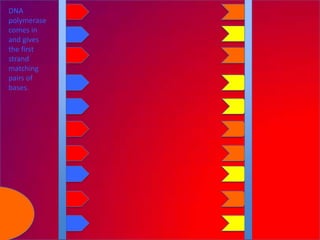
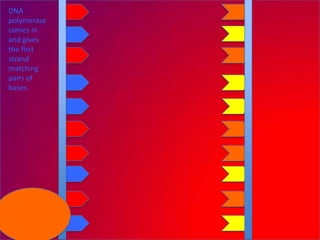
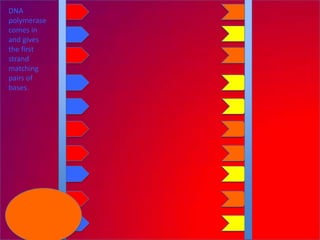
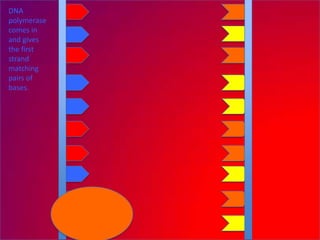
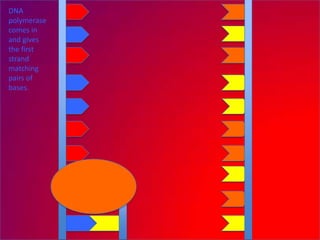
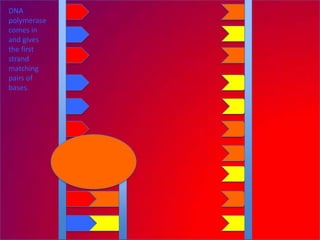
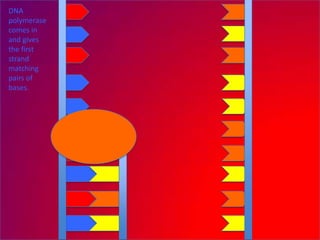
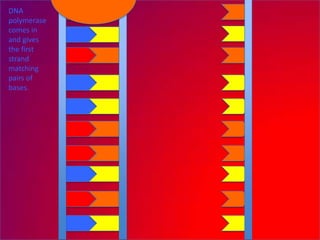
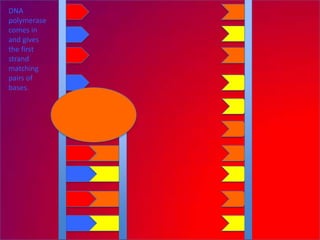
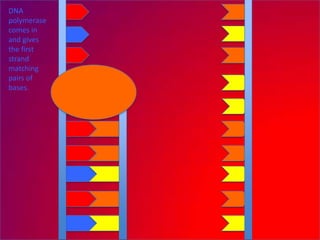
DNA
polymerase
comes in
and gives
the first
strand
matching
pairs of
bases.
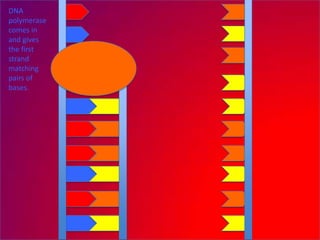
DNA
polymerase
comes in
and gives
the first
strand
matching
pairs of
bases.
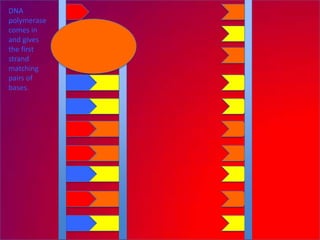
DNA
polymerase
comes in
and gives
the first
strand
matching
pairs of
bases.
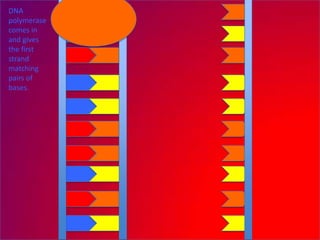
DNA
polymerase
comes in
and gives
the first
strand
matching
pairs of
bases.
DNA
polymerase
comes in
and gives
the first
strand
matching
pairs of
bases.
DNA
polymerase
comes in
and gives
the first
strand
matching
pairs of
bases.
DNA
polymerase
comes in
and gives
the first
strand
matching
pairs of
bases.
DNA
polymerase
comes in
and gives
the first
strand
matching
pairs of
bases.
DNA
polymerase
comes in
and gives
the first
strand
matching
pairs of
bases.
DNA
polymerase
comes in
and gives
the first
strand
matching
pairs of
bases.
DNA
polymerase
comes in
and gives
the first
strand
matching
pairs of
bases.
DNA
polymerase
comes in
and gives
the first
strand
matching
pairs of
bases.
DNA
polymerase
comes in
and gives
the first
strand
matching
pairs of
bases.
DNA
polymerase
comes in
and gives
the first
strand
matching
pairs of
bases.
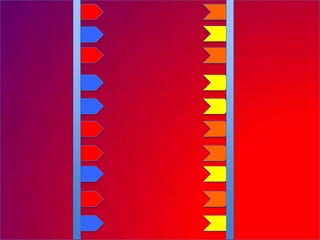
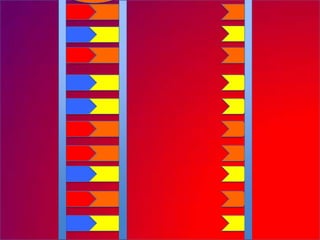
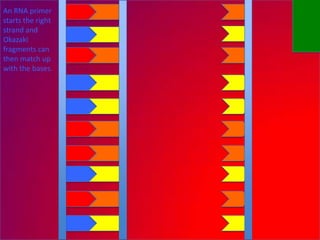
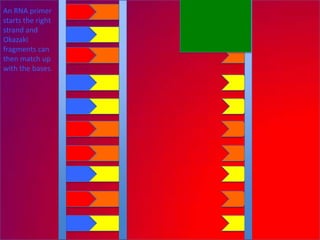
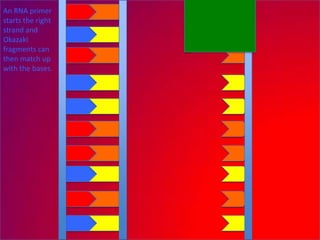
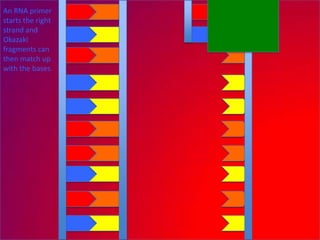
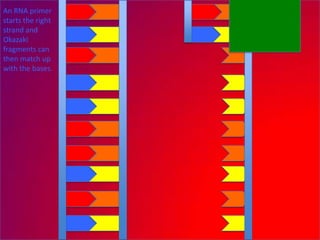
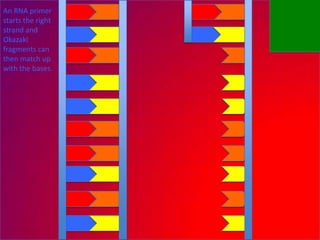
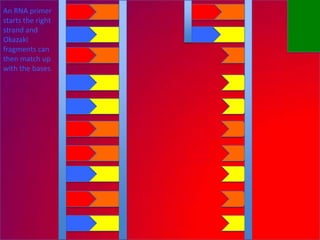
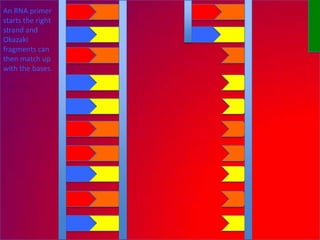
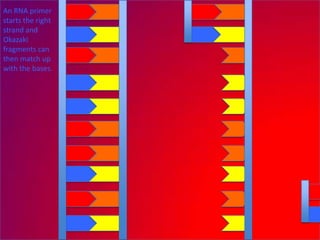
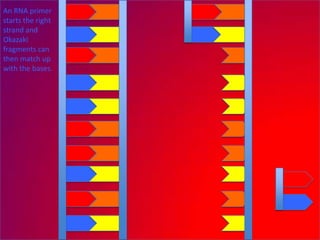
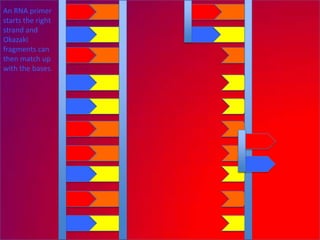
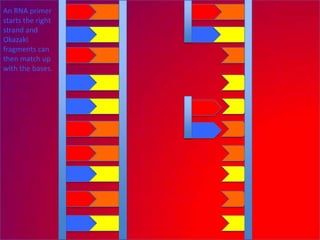
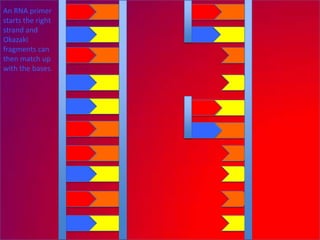
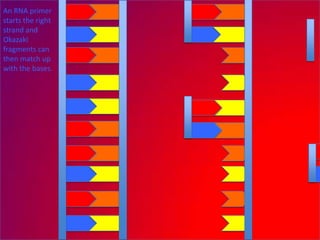
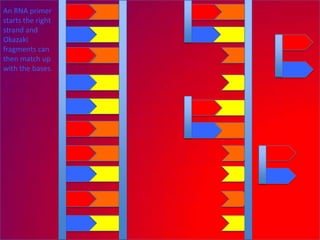
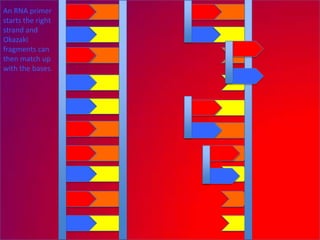
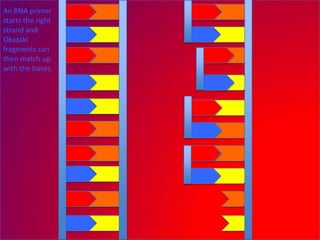
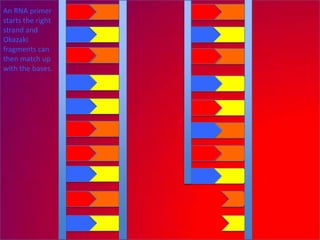
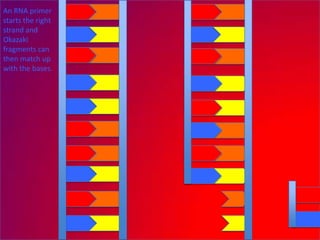
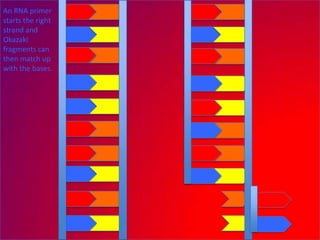
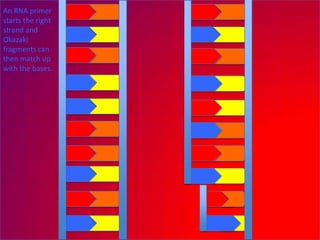
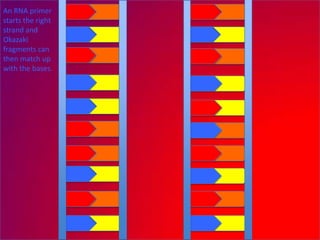
An RNA primer
starts the right
strand and
Okazaki
fragments can
then match up
with the bases.
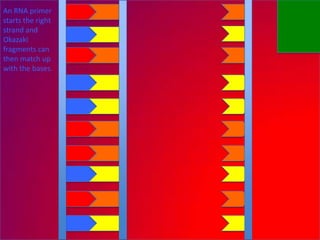
An RNA primer
starts the right
strand and
Okazaki
fragments can
then match up
with the bases.
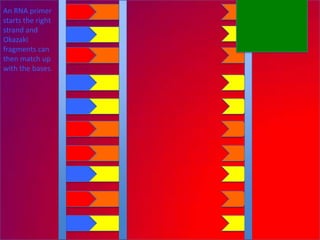
An RNA primer
starts the right
strand and
Okazaki
fragments can
then match up
with the bases.
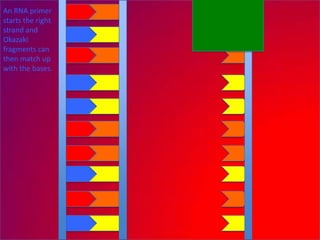
An RNA primer
starts the right
strand and
Okazaki
fragments can
then match up
with the bases.
An RNA primer
starts the right
strand and
Okazaki
fragments can
then match up
with the bases.
An RNA primer
starts the right
strand and
Okazaki
fragments can
then match up
with the bases.
An RNA primer
starts the right
strand and
Okazaki
fragments can
then match up
with the bases.
An RNA primer
starts the right
strand and
Okazaki
fragments can
then match up
with the bases.
An RNA primer
starts the right
strand and
Okazaki
fragments can
then match up
with the bases.
An RNA primer
starts the right
strand and
Okazaki
fragments can
then match up
with the bases.
An RNA primer
starts the right
strand and
Okazaki
fragments can
then match up
with the bases.
An RNA primer
starts the right
strand and
Okazaki
fragments can
then match up
with the bases.
An RNA primer
starts the right
strand and
Okazaki
fragments can
then match up
with the bases.
An RNA primer
starts the right
strand and
Okazaki
fragments can
then match up
with the bases.
An RNA primer
starts the right
strand and
Okazaki
fragments can
then match up
with the bases.
An RNA primer
starts the right
strand and
Okazaki
fragments can
then match up
with the bases.
An RNA primer
starts the right
strand and
Okazaki
fragments can
then match up
with the bases.
An RNA primer
starts the right
strand and
Okazaki
fragments can
then match up
with the bases.
An RNA primer
starts the right
strand and
Okazaki
fragments can
then match up
with the bases.
An RNA primer
starts the right
strand and
Okazaki
fragments can
then match up
with the bases.
An RNA primer
starts the right
strand and
Okazaki
fragments can
then match up
with the bases.
An RNA primer
starts the right
strand and
Okazaki
fragments can
then match up
with the bases.
An RNA primer
starts the right
strand and
Okazaki
fragments can
then match up
with the bases.
An RNA primer
starts the right
strand and
Okazaki
fragments can
then match up
with the bases.
An RNA primer
starts the right
strand and
Okazaki
fragments can
then match up
with the bases.
• Telomeres- A compound structure at the end of a
  chromosome.
• Okazaki fragments- a section of complementary strand
• DNA ligase-It plays a role in repairing single-strand breaks in
  duplex DNA in living organisms
• Telomerase- an enzyme that adds telomere repeat sequences
  to the 3' end of DNA strands
• Cancer- The disease caused by an uncontrolled division of
  abnormal cells in a part of the body
• Transplanted cells-a procedure that replaces unhealthy stem
  cells with healthy ones.
• Cloning-a procedure for producing multiple copies of
  genetically identical organisms or cells or of individual genes.
• Aging-a consequence of unrepaired accumulation of naturally
  occurring DNA damages.
• DNA replication happens in the synthesis stage, or the third
  stage.

Animation dna