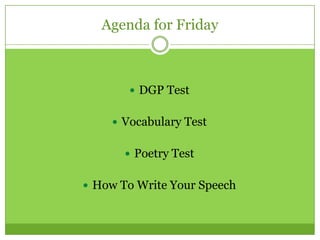
ThursdayMarch 17, 2011DGPVocabularyTCAP ReviewThe GiverTools to deliver an effective Speech
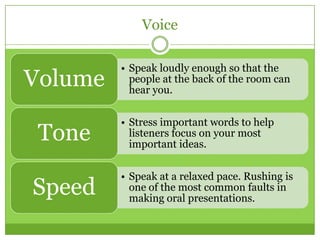
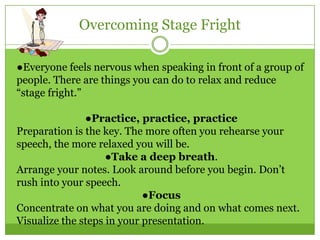
Essential Tools What tools can you use to convey your knowledge, skills, or ideas in a speech?How can you communicate meaning with your voice and your body language?How do you overcome stage fright?
Visual Aids Visual aids are essential tools that will allow you to captivate your audience.Visual aids will not only enhance your presentation, but also help you to remember key points and keep you and your audience focused.Visual aids will support your argument and increase the audience’s understanding of the main points. This is because the mind better remembers picture information rather than word information. A visual presentation willenhance your credibility and it may even help you with your nerves.
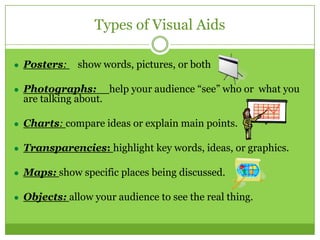
Types of Visual AidsPosters: 	show words, pictures, or both
Photographs:     help your audience “see” who or  what you are talking about.
Charts: compare ideas or explain main points.
Transparencies: highlight key words, ideas, or graphics.
Maps: show specific places being discussed.
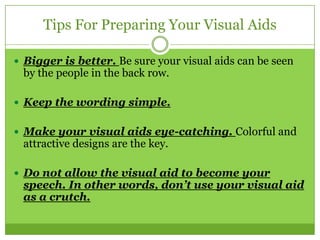
Objects: allow your audience to see the real thing.Tips For Preparing Your Visual AidsBigger is better. Be sure your visual aids can be seen by the people in the back row.Keep the wording simple. Make your visual aids eye-catching. Colorful and attractive designs are the key.Do not allow the visual aid to become your speech. In other words, don’t use your visual aid as a crutch.
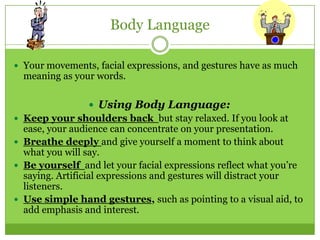
Body LanguageYour movements, facial expressions, and gestures have as much meaning as your words.Using Body Language:Keep your shoulders back  but stay relaxed. If you look at ease, your audience can concentrate on your presentation.Breathe deeplyand give yourself a moment to think about what you will say.Be yourself and let your facial expressions reflect what you’re saying. Artificial expressions and gestures will distract your listeners.Use simple hand gestures, such as pointing to a visual aid, to add emphasis and interest.

Speech visual aids

  • 1.
    ThursdayMarch 17, 2011DGPVocabularyTCAPReviewThe GiverTools to deliver an effective Speech
  • 2.
    Essential Tools Whattools can you use to convey your knowledge, skills, or ideas in a speech?How can you communicate meaning with your voice and your body language?How do you overcome stage fright?
  • 3.
    Visual Aids Visualaids are essential tools that will allow you to captivate your audience.Visual aids will not only enhance your presentation, but also help you to remember key points and keep you and your audience focused.Visual aids will support your argument and increase the audience’s understanding of the main points. This is because the mind better remembers picture information rather than word information. A visual presentation willenhance your credibility and it may even help you with your nerves.
  • 4.
    Types of VisualAidsPosters: show words, pictures, or both
  • 5.
    Photographs: help your audience “see” who or what you are talking about.
  • 6.
    Charts: compare ideasor explain main points.
  • 7.
    Transparencies: highlight keywords, ideas, or graphics.
  • 8.
    Maps: show specificplaces being discussed.
  • 9.
    Objects: allow youraudience to see the real thing.Tips For Preparing Your Visual AidsBigger is better. Be sure your visual aids can be seen by the people in the back row.Keep the wording simple. Make your visual aids eye-catching. Colorful and attractive designs are the key.Do not allow the visual aid to become your speech. In other words, don’t use your visual aid as a crutch.
  • 10.
    Body LanguageYour movements,facial expressions, and gestures have as much meaning as your words.Using Body Language:Keep your shoulders back but stay relaxed. If you look at ease, your audience can concentrate on your presentation.Breathe deeplyand give yourself a moment to think about what you will say.Be yourself and let your facial expressions reflect what you’re saying. Artificial expressions and gestures will distract your listeners.Use simple hand gestures, such as pointing to a visual aid, to add emphasis and interest.