CONSUMER BEHAVIOR 
Assignment: Consumer Behavior 
Subject : Advance Marketing Management 
Presented by: 
Nadeem Ahmed Siddiqui 
2452-412024 MBA
CONSUMER BEHAVIOR
CONSUMER BEHAVIOR 
• Consumer behavior is the study of how people 
buy, what they buy, when they buy and why they 
buy. It attempts to understand the buyer 
decision making process, both individually and 
in groups. It studies characteristics of individual 
consumers such as demographics, 
psychographics, and behavioural variables in an 
attempt to understand peoples wants.
STAGES OF THE CONSUMER BUYING 
PROCESS 
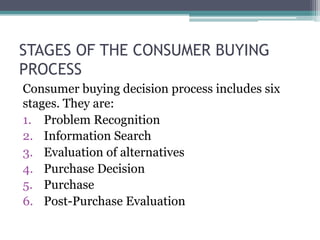
Consumer buying decision process includes six 
stages. They are: 
1. Problem Recognition 
2. Information Search 
3. Evaluation of alternatives 
4. Purchase Decision 
5. Purchase 
6. Post-Purchase Evaluation
1. PROBLEM RECOGNITION : 
Difference between the desired state and the 
actual condition. 
Example: 
By seeing a commercial for a new pair of shoes, 
stimulates your recognition that you need a new 
pair of shoes. 
Hunger stimulates your need to eat.
1. PROBLEM RECOGNITION :
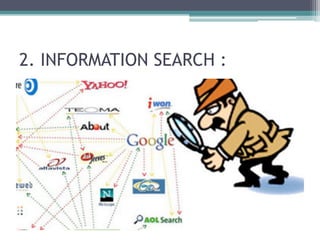
2. INFORMATION SEARCH : 
Internal Search: --- Memory 
External Search: --- Friends and Relatives A 
successful information search leaves a buyer with 
possible alternatives, the evoked set. 
Example: 
Hungry, want to go out and eat, evoked set is, 
Chinese food , Indian food & Burger king .
2. INFORMATION SEARCH :
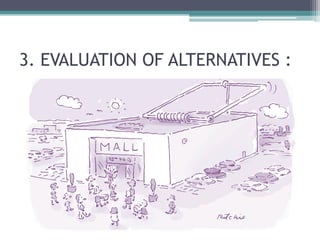
3. EVALUATION OF ALTERNATIVES : 
Need to establish criteria for evaluation, features 
the buyer wants or does not want. Rank/weight 
alternatives. 
Example: 
If you want to eat something spicy, then Indian 
food gets the highest rank etc…
3. EVALUATION OF ALTERNATIVES :
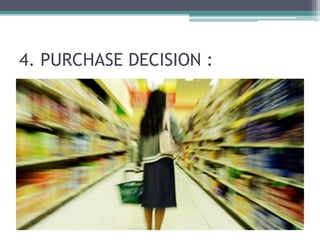
4. PURCHASE DECISION : 
• Choose buying alternative, includes product, 
package, store, method of purchase etc.
4. PURCHASE DECISION :
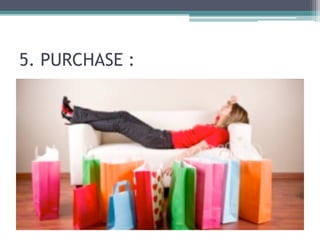
5. PURCHASE : 
• May differ from decision, time lapse between 
purchase decision and the actual purchase, 
product availability.
5. PURCHASE :
6. POST-PURCHASE EVALUATION : 
It is the outcome Satisfaction or Dissatisfaction. 
This can be reduced by warranties, after sales 
communication etc. 
Example: 
After eating an Indian meal, you may think that 
really you wanted a Chinese meal instead.
TYPES OF CONSUMER BUYING 
BEHAVIOR : 
There are four types of consumer buying behavior, 
they are : 
1. Routine Response/Programmed Behavior 
2. Limited Decision Making 
3. Extensive Decision Making 
4. Impulse buying
1. ROUTINE RESPONSE/PROGRAMME D 
BEHAVIOR 
Buying low involvement, frequently purchased, 
low cost items. 
Examples: 
Soft drinks, snack foods, milk etc.
2. LIMITED DECISION MAKING 
Buying product occasionally. 
That is when you need to obtain information 
about unfamiliar brand in a familiar product 
category. 
Example: 
Clothes--know product class but not the brand.
3.EXTENSIVE DECISION MAKING : 
Complex high involvement, unfamiliar, expensive 
and infrequently bought products. Spend a lot of 
time seeking information and deciding. High 
degree of risk. 
Example: 
Cars, homes, computers, education.
4. IMPULSE BUYING : 
No conscious planning. The purchase of the same 
product does not always elicit the same Buying 
Behavior. Product can shift from one category to the 
next. 
Example: 
Going out for dinner for one person may be extensive 
decision making (for someone that does not go out 
often at all), but limited decision making for someone 
else. The reason for the dinner, whether it is an 
anniversary celebration, or a meal with a couple of 
friends will also determine the extent of the decision 
making.
CONSUMER BEHAVIOR
CONSUMER BEHAVIOR

CONSUMER BEHAVIOR

  • 1.
    CONSUMER BEHAVIOR Assignment:Consumer Behavior Subject : Advance Marketing Management Presented by: Nadeem Ahmed Siddiqui 2452-412024 MBA
  • 2.
  • 3.
    CONSUMER BEHAVIOR •Consumer behavior is the study of how people buy, what they buy, when they buy and why they buy. It attempts to understand the buyer decision making process, both individually and in groups. It studies characteristics of individual consumers such as demographics, psychographics, and behavioural variables in an attempt to understand peoples wants.
  • 5.
    STAGES OF THECONSUMER BUYING PROCESS Consumer buying decision process includes six stages. They are: 1. Problem Recognition 2. Information Search 3. Evaluation of alternatives 4. Purchase Decision 5. Purchase 6. Post-Purchase Evaluation
  • 6.
    1. PROBLEM RECOGNITION: Difference between the desired state and the actual condition. Example: By seeing a commercial for a new pair of shoes, stimulates your recognition that you need a new pair of shoes. Hunger stimulates your need to eat.
  • 7.
  • 8.
    2. INFORMATION SEARCH: Internal Search: --- Memory External Search: --- Friends and Relatives A successful information search leaves a buyer with possible alternatives, the evoked set. Example: Hungry, want to go out and eat, evoked set is, Chinese food , Indian food & Burger king .
  • 9.
  • 10.
    3. EVALUATION OFALTERNATIVES : Need to establish criteria for evaluation, features the buyer wants or does not want. Rank/weight alternatives. Example: If you want to eat something spicy, then Indian food gets the highest rank etc…
  • 11.
    3. EVALUATION OFALTERNATIVES :
  • 12.
    4. PURCHASE DECISION: • Choose buying alternative, includes product, package, store, method of purchase etc.
  • 13.
  • 14.
    5. PURCHASE : • May differ from decision, time lapse between purchase decision and the actual purchase, product availability.
  • 15.
  • 16.
    6. POST-PURCHASE EVALUATION: It is the outcome Satisfaction or Dissatisfaction. This can be reduced by warranties, after sales communication etc. Example: After eating an Indian meal, you may think that really you wanted a Chinese meal instead.
  • 18.
    TYPES OF CONSUMERBUYING BEHAVIOR : There are four types of consumer buying behavior, they are : 1. Routine Response/Programmed Behavior 2. Limited Decision Making 3. Extensive Decision Making 4. Impulse buying
  • 20.
    1. ROUTINE RESPONSE/PROGRAMMED BEHAVIOR Buying low involvement, frequently purchased, low cost items. Examples: Soft drinks, snack foods, milk etc.
  • 22.
    2. LIMITED DECISIONMAKING Buying product occasionally. That is when you need to obtain information about unfamiliar brand in a familiar product category. Example: Clothes--know product class but not the brand.
  • 24.
    3.EXTENSIVE DECISION MAKING: Complex high involvement, unfamiliar, expensive and infrequently bought products. Spend a lot of time seeking information and deciding. High degree of risk. Example: Cars, homes, computers, education.
  • 26.
    4. IMPULSE BUYING: No conscious planning. The purchase of the same product does not always elicit the same Buying Behavior. Product can shift from one category to the next. Example: Going out for dinner for one person may be extensive decision making (for someone that does not go out often at all), but limited decision making for someone else. The reason for the dinner, whether it is an anniversary celebration, or a meal with a couple of friends will also determine the extent of the decision making.