BIOTRANSFORMATION/
DETOXIFICATION
REACTIONS
METABOLISM OF XENOBIOTICS


 Biochemistry for Medics

 http://www.namrata.co/
Xenobiotics
A xenobiotic (Gk xenos "stranger") is a
compound that is foreign to the body.
Xenobiotics can produce a variety of biological
effects including-
Pharmacological     responses
Toxicity

Immunological   responses
Cancers
Xenobiotics
Xenobiotics can be-
a)   Exogenous- The foreign molecules which are not
     normally ingested or utilized by the organism but
     they gain entry through dietary food stuffs, or in the
     form of certain medicines/ drugs used for a
     therapeutic cause or are inhaled through
     environment .
     Examples- Drugs, food
     additives, pollutants, insecticides, chemical
     carcinogens etc.
Xenobiotics
Xenobiotics can be-
b) Endogenous – Though they are not foreign
  substances but have effects similar to exogenous
  xenobiotics. These are synthesized in the body or
  are produced as metabolites of various processes
  in the body.
  Examples-Bilirubin, Bile
  acids, Steroids, Eicosanoids and certain fatty
  acids.
Metabolism of Xenobiotics
 Metabolism of xenobiotics occurs in two phases-
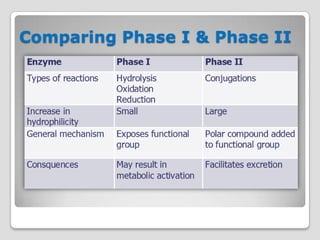
 Phase 1, the major reaction involved is hydroxylation. In
 addition to hydroxylation, a wide range of reactions also take
 place including-
 Deamination,

 Dehalogenation,

 Desulfuration,

 Epoxidation,

 Peroxygenation,   and
    Reduction
Metabolism of Xenobiotics
Phase 2, the hydroxylated or other compounds produced
in phase 1 are converted by specific enzymes to various
polar metabolites by conjugation with-
   Glucuronic acid,
   Sulfate, acetate,
   Glutathione, or
   Certain amino acids, or
   By methylation.
Biotransformation/
Detoxification Reactions
All   the biochemical reactions involved in the conversion of
foreign, toxic and water insoluble molecules to non toxic, water
soluble and excretable forms are called Detoxification /
Biotransformation reactions
The    overall purpose of the two phases of metabolism of
xenobiotics is to increase their water solubility (polarity) and
thus excretion from the body.
   In certain situations these reactions may instead increase the
toxicity of a foreign compound, then these are
called, Entoxification reactions
Biotransformation reactions

   Purpose
    ◦ Converts lipophilic to hydrophilic compounds
    ◦ Facilitates excretion
   Consequences
    ◦ Changes in solubility characteristics
    ◦ Detoxification
    ◦ Metabolic activation
Role of Liver
    Main organ involved
    Hepatocytes contain wide variety of enzymes to process
 xenobiotics
    Enzymes are present in cytosol, endoplasmic reticulum
 and to lesser extent in other organelles
    Each enzyme represents a large family of gene product
    Each gene product may be induced by different
 xenobiotics
Overview of biotransformation
reactions
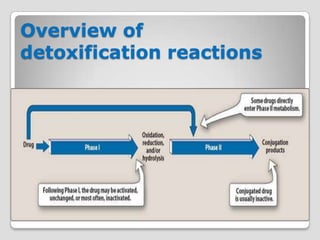
   Phase 1 reactions can limit the toxicity of a drug.
   Phase 1 reactions can also convert xenobiotics from
    inactive to biologically active compounds (Metabolic
    activation). In these instances, the original xenobiotics
    are referred to as "prodrugs" or "procarcinogens.“
   Phase 2/conjugation reactions can convert the active
    products of phase 1 reactions to less active or inactive
    species, which are subsequently excreted in the urine or
    bile.
   In a very few cases, conjugation may actually increase the
    biologic activity of a xenobiotic (Metabolic activation).
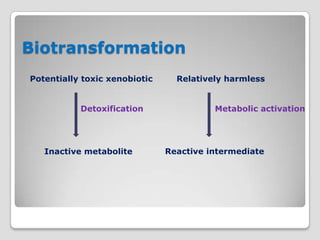
Biotransformation
Potentially toxic xenobiotic     Relatively harmless


           Detoxification                Metabolic activation


   Inactive metabolite         Reactive intermediate
Overview of
detoxification reactions
Comparing Phase I & Phase II
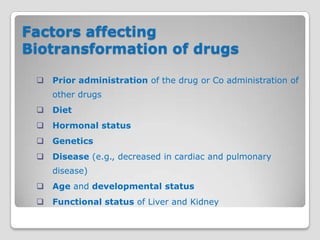
Factors affecting
Biotransformation of drugs

    Prior administration of the drug or Co administration of
     other drugs
    Diet
    Hormonal status
    Genetics
    Disease (e.g., decreased in cardiac and pulmonary
     disease)
    Age and developmental status
    Functional status of Liver and Kidney
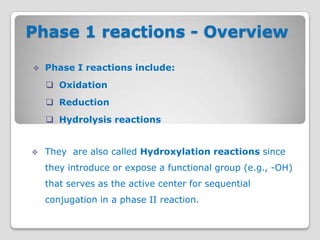
Phase 1 reactions - Overview

   Phase I reactions include:
     Oxidation
     Reduction
     Hydrolysis reactions


   They are also called Hydroxylation reactions since
    they introduce or expose a functional group (e.g., -OH)
    that serves as the active center for sequential
    conjugation in a phase II reaction.
A) Oxidation
A large number of foreign substances are destroyed by
oxidation in the body.
Examples-
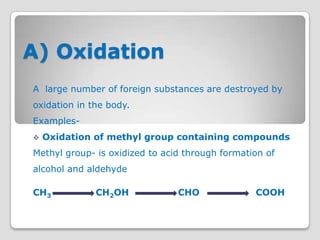
   Oxidation of methyl group containing compounds
Methyl group- is oxidized to acid through formation of
alcohol and aldehyde

CH3           CH2OH             CHO              COOH
A) Oxidation
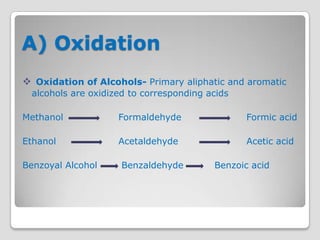
 Oxidation of Alcohols- Primary aliphatic and aromatic
 alcohols are oxidized to corresponding acids

Methanol            Formaldehyde                Formic acid

Ethanol             Acetaldehyde                Acetic acid

Benzoyal Alcohol     Benzaldehyde        Benzoic acid
Methanol toxicity
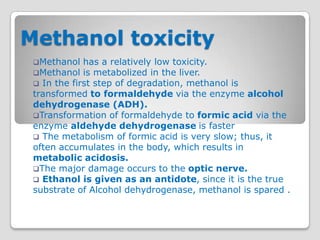
 Methanol   has a relatively low toxicity.
 Methanol is metabolized in the liver.
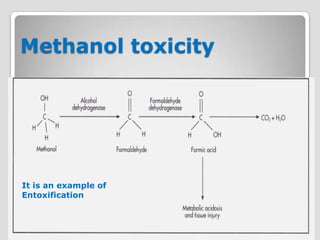
  In the first step of degradation, methanol is
 transformed to formaldehyde via the enzyme alcohol
 dehydrogenase (ADH).
 Transformation of formaldehyde to formic acid via the
 enzyme aldehyde dehydrogenase is faster
  The metabolism of formic acid is very slow; thus, it
 often accumulates in the body, which results in
 metabolic acidosis.
 The major damage occurs to the optic nerve.
  Ethanol is given as an antidote, since it is the true
 substrate of Alcohol dehydrogenase, methanol is spared .
Methanol toxicity


It is an example of
Entoxification
A) Oxidation
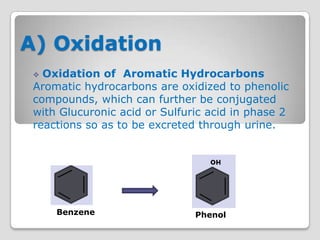
  Oxidation of Aromatic Hydrocarbons
 Aromatic hydrocarbons are oxidized to phenolic
 compounds, which can further be conjugated
 with Glucuronic acid or Sulfuric acid in phase 2
 reactions so as to be excreted through urine.


     Benzene                   Phenol
A) Oxidation
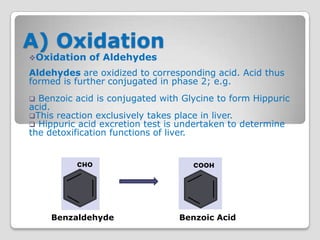
Oxidation   of Aldehydes
Aldehydes are oxidized to corresponding acid. Acid thus
formed is further conjugated in phase 2; e.g.
 Benzoic acid is conjugated with Glycine to form Hippuric
acid.
This reaction exclusively takes place in liver.
 Hippuric acid excretion test is undertaken to determine
the detoxification functions of liver.


    Benzaldehyde                 Benzoic Acid
A) Oxidation
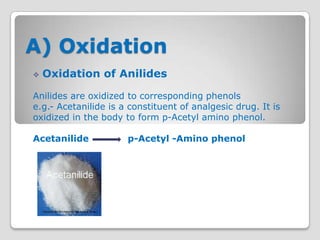
   Oxidation of Anilides

Anilides are oxidized to corresponding phenols
e.g.- Acetanilide is a constituent of analgesic drug. It is
oxidized in the body to form p-Acetyl amino phenol.

Acetanilide           p-Acetyl -Amino phenol
A) Oxidation
   Oxidation of Amines

Many primary aliphatic amines undergo oxidation to form
the corresponding acids and nitrogen is converted to
urea.

Benzyl amine               Benzoic acid + Urea

Aromatic amines like Aniline is oxidized to
corresponding phenol.
A) Oxidation
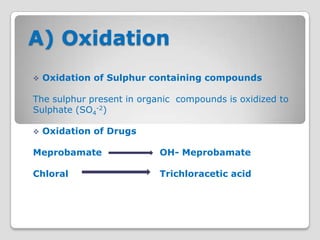
   Oxidation of Sulphur containing compounds

The sulphur present in organic compounds is oxidized to
Sulphate (SO4-2)

   Oxidation of Drugs

Meprobamate                OH- Meprobamate

Chloral                    Trichloracetic acid
A) Oxidation
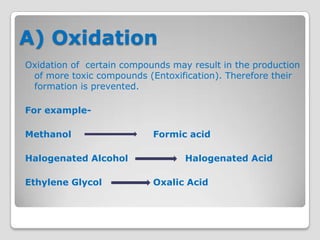
Oxidation of certain compounds may result in the production
 of more toxic compounds (Entoxification). Therefore their
 formation is prevented.

For example-

Methanol                   Formic acid

Halogenated Alcohol               Halogenated Acid

Ethylene Glycol            Oxalic Acid
B) Reduction
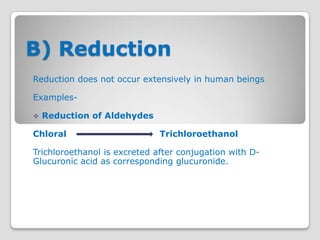
Reduction does not occur extensively in human beings

Examples-

   Reduction of Aldehydes

Chloral                       Trichloroethanol

Trichloroethanol is excreted after conjugation with D-
Glucuronic acid as corresponding glucuronide.
B) Reduction
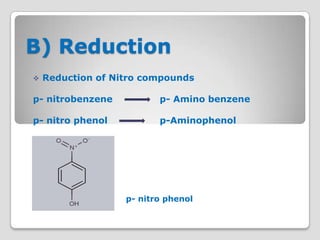
   Reduction of Nitro compounds

p- nitrobenzene           p- Amino benzene

p- nitro phenol           p-Aminophenol


                   p- nitro phenol
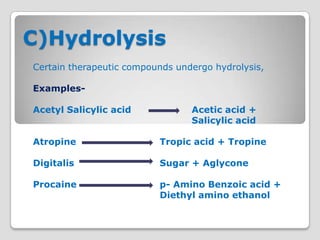
C)Hydrolysis
Certain therapeutic compounds undergo hydrolysis,

Examples-

Acetyl Salicylic acid            Acetic acid +
                                 Salicylic acid

Atropine                  Tropic acid + Tropine

Digitalis                 Sugar + Aglycone

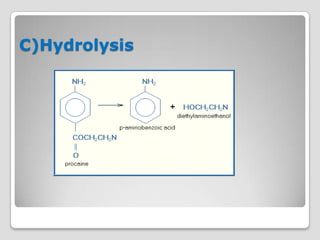
Procaine                  p- Amino Benzoic acid +
                          Diethyl amino ethanol
C)Hydrolysis
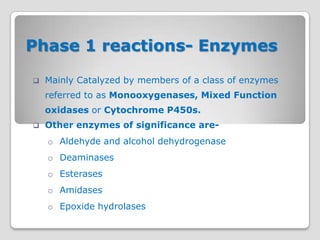
Phase 1 reactions- Enzymes

   Mainly Catalyzed by members of a class of enzymes
    referred to as Monooxygenases, Mixed Function
    oxidases or Cytochrome P450s.
   Other enzymes of significance are-
    o Aldehyde and alcohol dehydrogenase
    o Deaminases
    o Esterases
    o Amidases
    o Epoxide hydrolases
Cytochrome P450
Enzyme system
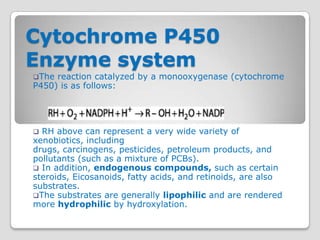
The reaction catalyzed by a monooxygenase (cytochrome
P450) is as follows:


 RH above can represent a very wide variety of
xenobiotics, including
drugs, carcinogens, pesticides, petroleum products, and
pollutants (such as a mixture of PCBs).
 In addition, endogenous compounds, such as certain
steroids, Eicosanoids, fatty acids, and retinoids, are also
substrates.
The substrates are generally lipophilic and are rendered
more hydrophilic by hydroxylation.
Properties of Human
Cytochrome P450s
 Involved in phase I of the metabolism of innumerable
xenobiotics
 Involved in the metabolism of many endogenous
compounds
 All are haemoproteins
 Exhibit broad substrate specificity, thus act on many
compounds
 Extremely versatile catalysts, perhaps catalyze about
60 types of reactions
 Basically they catalyze reactions involving
introduction of one atom of oxygen into the
substrate and one into water
Properties of Human
Cytochrome
P450s(Contd.)
  Liver contains highest amounts, but found in most if not
all tissues, including small intestine, brain, and lung
 Located in the smooth endoplasmic reticulum or in
mitochondria (steroidogenic hormones)
 In some cases, their products are mutagenic or
carcinogenic
 Many have a molecular mass of about 55 kDa
 Many are inducible, resulting in one cause of drug
interactions
 Many are inhibited by various drugs or their metabolic
products, providing another cause of drug interactions
 Some exhibit genetic polymorphisms, which can
result in atypical drug metabolism
Phase 2 - Conjugation
   Conjugation is a process by which the foreign molecules and
their metabolites are coupled with a conjugating agent and are
converted to soluble, non toxic derivatives which are easily
excreted in urine
   Conjugation reactions can occur independently or can
follow phase 1(hydroxylation) reactions
   Conjugation takes place primarily in liver but can occur in
kidney also
   After conjugation the products are generally rendered non
toxic but in certain conditions they are left unchanged or
become more toxic.
Types of Phase 2 Reactions
1.   Glucuronidation
2.   Sulfation
3.   Acetylation
4.   Methylation
5.   Conjugation with Amino acids
6.   Conjugation with G-SH
1) Glucuronidation
Glucuronidation is the most frequent conjugation
reaction.

  UDP-glucuronic acid , is the Glucuronyl donor, which
is formed in the uronic acid pathway of Glucose
metabolism

 Glucuronosyl transferases, present in both the
endoplasmic reticulum and cytosol, are the catalysts.

Theglucuronide may be attached to
oxygen, nitrogen, or sulfur groups of the substrates.
1) Glucuronidation
Compounds conjugated with Glucuronic acid are-

1)   Bilirubin
2)   Aromatic acids- Benzoic acid
3)   Phenols, Secondary and Tertiary aliphatic alcohols
4)   Antibiotics like Chloramphenicol
5)   Hormones- Thyroid hormone, derivatives of
     corticosteroids and sex hormone metabolites
6)   2-Acetylaminofluorene (a carcinogen)
7)   Aniline
8)   Meprobamate (a tranquilizer)
Glucuronidation
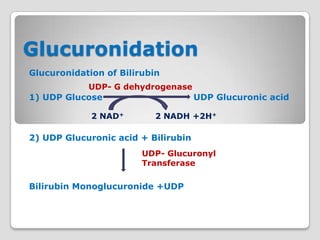
Glucuronidation of Bilirubin
            UDP- G dehydrogenase
1) UDP Glucose                       UDP Glucuronic acid

             2 NAD+        2 NADH +2H+

2) UDP Glucuronic acid + Bilirubin
                        UDP- Glucuronyl
                        Transferase

Bilirubin Monoglucuronide +UDP
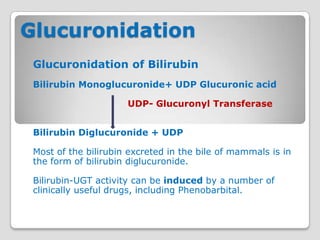
Glucuronidation
 Glucuronidation of Bilirubin
 Bilirubin Monoglucuronide+ UDP Glucuronic acid

                      UDP- Glucuronyl Transferase


 Bilirubin Diglucuronide + UDP

 Most of the bilirubin excreted in the bile of mammals is in
 the form of bilirubin diglucuronide.

 Bilirubin-UGT activity can be induced by a number of
 clinically useful drugs, including Phenobarbital.
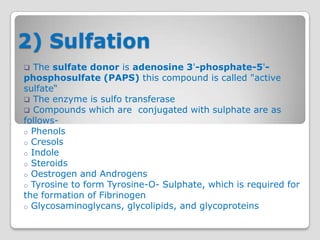
2) Sulfation
  The sulfate donor is adenosine 3'-phosphate-5'-
phosphosulfate (PAPS) this compound is called "active
sulfate―
 The enzyme is sulfo transferase
 Compounds which are conjugated with sulphate are as
follows-
o Phenols
o Cresols
o Indole
o Steroids
o Oestrogen and Androgens
o Tyrosine to form Tyrosine-O- Sulphate, which is required for
the formation of Fibrinogen
o Glycosaminoglycans, glycolipids, and glycoproteins
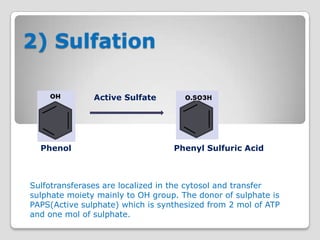
2) Sulfation

               Active Sulfate


  Phenol                          Phenyl Sulfuric Acid


Sulfotransferases are localized in the cytosol and transfer
sulphate moiety mainly to OH group. The donor of sulphate is
PAPS(Active sulphate) which is synthesized from 2 mol of ATP
and one mol of sulphate.
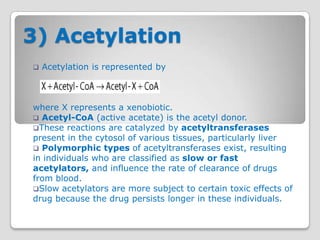
3) Acetylation
   Acetylation is represented by


where X represents a xenobiotic.
 Acetyl-CoA (active acetate) is the acetyl donor.
These reactions are catalyzed by acetyltransferases
present in the cytosol of various tissues, particularly liver
 Polymorphic types of acetyltransferases exist, resulting
in individuals who are classified as slow or fast
acetylators, and influence the rate of clearance of drugs
from blood.
Slow acetylators are more subject to certain toxic effects of
drug because the drug persists longer in these individuals.
3) Acetylation
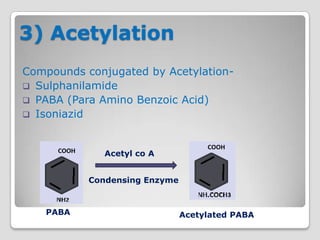
Compounds conjugated by Acetylation-
 Sulphanilamide
 PABA (Para Amino Benzoic Acid)
 Isoniazid


              Acetyl co A


           Condensing Enzyme


   PABA                        Acetylated PABA
4) Methylation

    Methylation is limited in the body
    S- Adenosyl Methionine (Active Methionine )acts as a
 Methyl group donor
    Reactions are called Transmethylation reactions
    Enzymes catalyzing the reactions are Methyl
 transferases
4) Methylation
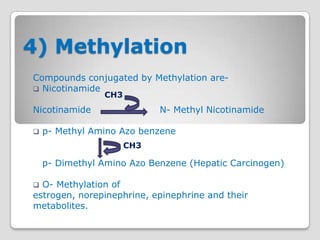
Compounds conjugated by Methylation are-
 Nicotinamide
                CH3
Nicotinamide                N- Methyl Nicotinamide

   p- Methyl Amino Azo benzene
                      CH3

    p- Dimethyl Amino Azo Benzene (Hepatic Carcinogen)

 O- Methylation of
estrogen, norepinephrine, epinephrine and their
metabolites.
5) Conjugation with
Amino acids
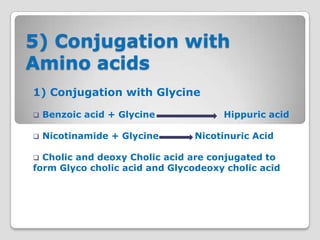
1) Conjugation with Glycine

   Benzoic acid + Glycine           Hippuric acid

   Nicotinamide + Glycine      Nicotinuric Acid

 Cholic and deoxy Cholic acid are conjugated to
form Glyco cholic acid and Glycodeoxy cholic acid
5) Conjugation with
Amino acids
2) Conjugation with Cysteine
A few aromatic compounds are conjugated with Cysteine in
the presence of Acetic acid to form Mercapturic acid

Bromo    Benzene + Cysteine + Acetic acid


 Bromo phenyl Mercapturic acid

   Naphthalene + Cysteine + Acetic Acid


    Naphthyl Mercapturic acid
5) Conjugation with
Amino acids
3) Conjugation with Glutamine

Phenyl Acetic acid + Glutamine


Phenyl Acetyl Glutamine

This reaction is important in patients of Phenyl
ketonuria, since excess of Phenyl acetyl glutamine is
excreted in urine, that imparts a mousy odor to the urine.
6)Conjugation with
Glutathione
Glutathione  (Υ-glutamyl-cysteinylglycine) is a tripeptide
consisting of glutamic acid, cysteine, and glycine
 Glutathione is commonly abbreviated GSH (because of
the sulfhydryl group of its cysteine, which is the business
part of the molecule).
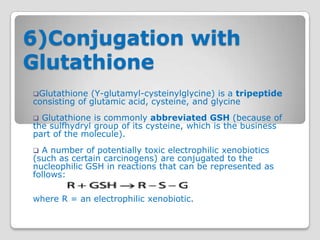
 A number of potentially toxic electrophilic xenobiotics
(such as certain carcinogens) are conjugated to the
nucleophilic GSH in reactions that can be represented as
follows:

where R = an electrophilic xenobiotic.
6)Conjugation with
Glutathione reactions are called
 The enzymes catalyzing these
 
 glutathione S-transferases
 A variety of glutathione S-transferases are present in
 human tissue. They exhibit different substrate specificities
 and can be separated by electrophoretic and other
 techniques.
 Ifthe potentially toxic xenobiotics were not conjugated to
 GSH, they would be free to combine covalently with
 DNA, RNA, or cell protein and could thus lead to serious cell
 damage.
 GSH  is therefore an important defense mechanism
 against certain toxic compounds, such as some drugs and
 carcinogens.
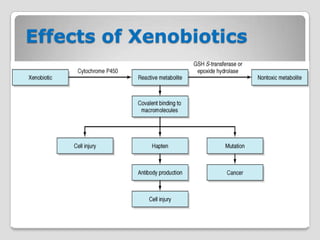
Effects of Xenobiotics
Metabolism     of a xenobiotic can result in cell
injury, immunologic damage, or cancer.
 Cell injury (cytotoxicity), can be severe enough to
result in cell death.
These macromolecular targets include DNA, RNA, and
protein.
The reactive species of a xenobiotic may bind to a
protein, altering its antigenicity
The resulting antibodies can then damage the cell by
several immunologic mechanisms that grossly perturb
normal cellular biochemical processes.
Effects of Xenobiotics
Reactions  of activated species of chemical carcinogens
with DNA are of great importance in chemical
carcinogenesis
 Some chemicals (eg, benzo[α]pyrene) require
activation by monooxygenases in the endoplasmic
reticulum to become carcinogenic (they are thus called
indirect carcinogens).
 The products of the action of certain monooxygenases
on some procarcinogen substrates are epoxides.
 Epoxides are highly reactive and mutagenic or
carcinogenic or both.
 Epoxide hydrolase—like cytochrome P450acts on these
compounds, converting them into much less reactive
dihydrodiols.
Summary
Xenobiotics   are chemical compounds foreign to the
body, such as drugs, food additives, and environmental
pollutants
 Xenobiotics are metabolized in two phases. The major
reaction of phase 1 is hydroxylation catalyzed by a variety
of monooxygenases, also known as the cytochrome
P450s. In phase 2, the hydroxylated species are
conjugated with a variety of hydrophilic compounds such
as glucuronic acid, sulfate, or glutathione. The combined
operation of these two phases renders lipophilic
compounds into water-soluble compounds that can be
eliminated from the body.
 Xenobiotics can produce a variety of biologic
effects, including pharmacologic
responses, toxicity, immunologic reactions, and cancer.

Xenobiotics

  • 1.
    BIOTRANSFORMATION/ DETOXIFICATION REACTIONS METABOLISM OF XENOBIOTICS Biochemistry for Medics http://www.namrata.co/
  • 2.
    Xenobiotics A xenobiotic (Gkxenos "stranger") is a compound that is foreign to the body. Xenobiotics can produce a variety of biological effects including- Pharmacological responses Toxicity Immunological responses Cancers
  • 3.
    Xenobiotics Xenobiotics can be- a) Exogenous- The foreign molecules which are not normally ingested or utilized by the organism but they gain entry through dietary food stuffs, or in the form of certain medicines/ drugs used for a therapeutic cause or are inhaled through environment . Examples- Drugs, food additives, pollutants, insecticides, chemical carcinogens etc.
  • 4.
    Xenobiotics Xenobiotics can be- b)Endogenous – Though they are not foreign substances but have effects similar to exogenous xenobiotics. These are synthesized in the body or are produced as metabolites of various processes in the body. Examples-Bilirubin, Bile acids, Steroids, Eicosanoids and certain fatty acids.
  • 5.
    Metabolism of Xenobiotics Metabolism of xenobiotics occurs in two phases- Phase 1, the major reaction involved is hydroxylation. In addition to hydroxylation, a wide range of reactions also take place including- Deamination, Dehalogenation, Desulfuration, Epoxidation, Peroxygenation, and  Reduction
  • 6.
    Metabolism of Xenobiotics Phase2, the hydroxylated or other compounds produced in phase 1 are converted by specific enzymes to various polar metabolites by conjugation with-  Glucuronic acid,  Sulfate, acetate,  Glutathione, or  Certain amino acids, or  By methylation.
  • 7.
    Biotransformation/ Detoxification Reactions All the biochemical reactions involved in the conversion of foreign, toxic and water insoluble molecules to non toxic, water soluble and excretable forms are called Detoxification / Biotransformation reactions The overall purpose of the two phases of metabolism of xenobiotics is to increase their water solubility (polarity) and thus excretion from the body.  In certain situations these reactions may instead increase the toxicity of a foreign compound, then these are called, Entoxification reactions
  • 8.
    Biotransformation reactions  Purpose ◦ Converts lipophilic to hydrophilic compounds ◦ Facilitates excretion  Consequences ◦ Changes in solubility characteristics ◦ Detoxification ◦ Metabolic activation
  • 9.
    Role of Liver  Main organ involved  Hepatocytes contain wide variety of enzymes to process xenobiotics  Enzymes are present in cytosol, endoplasmic reticulum and to lesser extent in other organelles  Each enzyme represents a large family of gene product  Each gene product may be induced by different xenobiotics
  • 10.
    Overview of biotransformation reactions  Phase 1 reactions can limit the toxicity of a drug.  Phase 1 reactions can also convert xenobiotics from inactive to biologically active compounds (Metabolic activation). In these instances, the original xenobiotics are referred to as "prodrugs" or "procarcinogens.“  Phase 2/conjugation reactions can convert the active products of phase 1 reactions to less active or inactive species, which are subsequently excreted in the urine or bile.  In a very few cases, conjugation may actually increase the biologic activity of a xenobiotic (Metabolic activation).
  • 11.
    Biotransformation Potentially toxic xenobiotic Relatively harmless Detoxification Metabolic activation Inactive metabolite Reactive intermediate
  • 12.
  • 13.
  • 14.
    Factors affecting Biotransformation ofdrugs  Prior administration of the drug or Co administration of other drugs  Diet  Hormonal status  Genetics  Disease (e.g., decreased in cardiac and pulmonary disease)  Age and developmental status  Functional status of Liver and Kidney
  • 15.
    Phase 1 reactions- Overview  Phase I reactions include:  Oxidation  Reduction  Hydrolysis reactions  They are also called Hydroxylation reactions since they introduce or expose a functional group (e.g., -OH) that serves as the active center for sequential conjugation in a phase II reaction.
  • 16.
    A) Oxidation A largenumber of foreign substances are destroyed by oxidation in the body. Examples-  Oxidation of methyl group containing compounds Methyl group- is oxidized to acid through formation of alcohol and aldehyde CH3 CH2OH CHO COOH
  • 17.
    A) Oxidation  Oxidationof Alcohols- Primary aliphatic and aromatic alcohols are oxidized to corresponding acids Methanol Formaldehyde Formic acid Ethanol Acetaldehyde Acetic acid Benzoyal Alcohol Benzaldehyde Benzoic acid
  • 18.
    Methanol toxicity Methanol has a relatively low toxicity. Methanol is metabolized in the liver.  In the first step of degradation, methanol is transformed to formaldehyde via the enzyme alcohol dehydrogenase (ADH). Transformation of formaldehyde to formic acid via the enzyme aldehyde dehydrogenase is faster  The metabolism of formic acid is very slow; thus, it often accumulates in the body, which results in metabolic acidosis. The major damage occurs to the optic nerve.  Ethanol is given as an antidote, since it is the true substrate of Alcohol dehydrogenase, methanol is spared .
  • 19.
    Methanol toxicity It isan example of Entoxification
  • 20.
    A) Oxidation Oxidation of Aromatic Hydrocarbons Aromatic hydrocarbons are oxidized to phenolic compounds, which can further be conjugated with Glucuronic acid or Sulfuric acid in phase 2 reactions so as to be excreted through urine. Benzene Phenol
  • 21.
    A) Oxidation Oxidation of Aldehydes Aldehydes are oxidized to corresponding acid. Acid thus formed is further conjugated in phase 2; e.g.  Benzoic acid is conjugated with Glycine to form Hippuric acid. This reaction exclusively takes place in liver.  Hippuric acid excretion test is undertaken to determine the detoxification functions of liver. Benzaldehyde Benzoic Acid
  • 22.
    A) Oxidation  Oxidation of Anilides Anilides are oxidized to corresponding phenols e.g.- Acetanilide is a constituent of analgesic drug. It is oxidized in the body to form p-Acetyl amino phenol. Acetanilide p-Acetyl -Amino phenol
  • 23.
    A) Oxidation  Oxidation of Amines Many primary aliphatic amines undergo oxidation to form the corresponding acids and nitrogen is converted to urea. Benzyl amine Benzoic acid + Urea Aromatic amines like Aniline is oxidized to corresponding phenol.
  • 24.
    A) Oxidation  Oxidation of Sulphur containing compounds The sulphur present in organic compounds is oxidized to Sulphate (SO4-2)  Oxidation of Drugs Meprobamate OH- Meprobamate Chloral Trichloracetic acid
  • 25.
    A) Oxidation Oxidation ofcertain compounds may result in the production of more toxic compounds (Entoxification). Therefore their formation is prevented. For example- Methanol Formic acid Halogenated Alcohol Halogenated Acid Ethylene Glycol Oxalic Acid
  • 26.
    B) Reduction Reduction doesnot occur extensively in human beings Examples-  Reduction of Aldehydes Chloral Trichloroethanol Trichloroethanol is excreted after conjugation with D- Glucuronic acid as corresponding glucuronide.
  • 27.
    B) Reduction  Reduction of Nitro compounds p- nitrobenzene p- Amino benzene p- nitro phenol p-Aminophenol p- nitro phenol
  • 28.
    C)Hydrolysis Certain therapeutic compoundsundergo hydrolysis, Examples- Acetyl Salicylic acid Acetic acid + Salicylic acid Atropine Tropic acid + Tropine Digitalis Sugar + Aglycone Procaine p- Amino Benzoic acid + Diethyl amino ethanol
  • 29.
  • 30.
    Phase 1 reactions-Enzymes  Mainly Catalyzed by members of a class of enzymes referred to as Monooxygenases, Mixed Function oxidases or Cytochrome P450s.  Other enzymes of significance are- o Aldehyde and alcohol dehydrogenase o Deaminases o Esterases o Amidases o Epoxide hydrolases
  • 31.
    Cytochrome P450 Enzyme system Thereaction catalyzed by a monooxygenase (cytochrome P450) is as follows:  RH above can represent a very wide variety of xenobiotics, including drugs, carcinogens, pesticides, petroleum products, and pollutants (such as a mixture of PCBs).  In addition, endogenous compounds, such as certain steroids, Eicosanoids, fatty acids, and retinoids, are also substrates. The substrates are generally lipophilic and are rendered more hydrophilic by hydroxylation.
  • 32.
    Properties of Human CytochromeP450s  Involved in phase I of the metabolism of innumerable xenobiotics  Involved in the metabolism of many endogenous compounds  All are haemoproteins  Exhibit broad substrate specificity, thus act on many compounds  Extremely versatile catalysts, perhaps catalyze about 60 types of reactions  Basically they catalyze reactions involving introduction of one atom of oxygen into the substrate and one into water
  • 33.
    Properties of Human Cytochrome P450s(Contd.)  Liver contains highest amounts, but found in most if not all tissues, including small intestine, brain, and lung  Located in the smooth endoplasmic reticulum or in mitochondria (steroidogenic hormones)  In some cases, their products are mutagenic or carcinogenic  Many have a molecular mass of about 55 kDa  Many are inducible, resulting in one cause of drug interactions  Many are inhibited by various drugs or their metabolic products, providing another cause of drug interactions  Some exhibit genetic polymorphisms, which can result in atypical drug metabolism
  • 34.
    Phase 2 -Conjugation  Conjugation is a process by which the foreign molecules and their metabolites are coupled with a conjugating agent and are converted to soluble, non toxic derivatives which are easily excreted in urine  Conjugation reactions can occur independently or can follow phase 1(hydroxylation) reactions  Conjugation takes place primarily in liver but can occur in kidney also  After conjugation the products are generally rendered non toxic but in certain conditions they are left unchanged or become more toxic.
  • 35.
    Types of Phase2 Reactions 1. Glucuronidation 2. Sulfation 3. Acetylation 4. Methylation 5. Conjugation with Amino acids 6. Conjugation with G-SH
  • 36.
    1) Glucuronidation Glucuronidation isthe most frequent conjugation reaction.  UDP-glucuronic acid , is the Glucuronyl donor, which is formed in the uronic acid pathway of Glucose metabolism  Glucuronosyl transferases, present in both the endoplasmic reticulum and cytosol, are the catalysts. Theglucuronide may be attached to oxygen, nitrogen, or sulfur groups of the substrates.
  • 37.
    1) Glucuronidation Compounds conjugatedwith Glucuronic acid are- 1) Bilirubin 2) Aromatic acids- Benzoic acid 3) Phenols, Secondary and Tertiary aliphatic alcohols 4) Antibiotics like Chloramphenicol 5) Hormones- Thyroid hormone, derivatives of corticosteroids and sex hormone metabolites 6) 2-Acetylaminofluorene (a carcinogen) 7) Aniline 8) Meprobamate (a tranquilizer)
  • 38.
    Glucuronidation Glucuronidation of Bilirubin UDP- G dehydrogenase 1) UDP Glucose UDP Glucuronic acid 2 NAD+ 2 NADH +2H+ 2) UDP Glucuronic acid + Bilirubin UDP- Glucuronyl Transferase Bilirubin Monoglucuronide +UDP
  • 39.
    Glucuronidation Glucuronidation ofBilirubin Bilirubin Monoglucuronide+ UDP Glucuronic acid UDP- Glucuronyl Transferase Bilirubin Diglucuronide + UDP Most of the bilirubin excreted in the bile of mammals is in the form of bilirubin diglucuronide. Bilirubin-UGT activity can be induced by a number of clinically useful drugs, including Phenobarbital.
  • 40.
    2) Sulfation  The sulfate donor is adenosine 3'-phosphate-5'- phosphosulfate (PAPS) this compound is called "active sulfate―  The enzyme is sulfo transferase  Compounds which are conjugated with sulphate are as follows- o Phenols o Cresols o Indole o Steroids o Oestrogen and Androgens o Tyrosine to form Tyrosine-O- Sulphate, which is required for the formation of Fibrinogen o Glycosaminoglycans, glycolipids, and glycoproteins
  • 41.
    2) Sulfation Active Sulfate Phenol Phenyl Sulfuric Acid Sulfotransferases are localized in the cytosol and transfer sulphate moiety mainly to OH group. The donor of sulphate is PAPS(Active sulphate) which is synthesized from 2 mol of ATP and one mol of sulphate.
  • 42.
    3) Acetylation  Acetylation is represented by where X represents a xenobiotic.  Acetyl-CoA (active acetate) is the acetyl donor. These reactions are catalyzed by acetyltransferases present in the cytosol of various tissues, particularly liver  Polymorphic types of acetyltransferases exist, resulting in individuals who are classified as slow or fast acetylators, and influence the rate of clearance of drugs from blood. Slow acetylators are more subject to certain toxic effects of drug because the drug persists longer in these individuals.
  • 43.
    3) Acetylation Compounds conjugatedby Acetylation-  Sulphanilamide  PABA (Para Amino Benzoic Acid)  Isoniazid Acetyl co A Condensing Enzyme PABA Acetylated PABA
  • 44.
    4) Methylation  Methylation is limited in the body  S- Adenosyl Methionine (Active Methionine )acts as a Methyl group donor  Reactions are called Transmethylation reactions  Enzymes catalyzing the reactions are Methyl transferases
  • 45.
    4) Methylation Compounds conjugatedby Methylation are-  Nicotinamide CH3 Nicotinamide N- Methyl Nicotinamide  p- Methyl Amino Azo benzene CH3 p- Dimethyl Amino Azo Benzene (Hepatic Carcinogen)  O- Methylation of estrogen, norepinephrine, epinephrine and their metabolites.
  • 46.
    5) Conjugation with Aminoacids 1) Conjugation with Glycine  Benzoic acid + Glycine Hippuric acid  Nicotinamide + Glycine Nicotinuric Acid  Cholic and deoxy Cholic acid are conjugated to form Glyco cholic acid and Glycodeoxy cholic acid
  • 47.
    5) Conjugation with Aminoacids 2) Conjugation with Cysteine A few aromatic compounds are conjugated with Cysteine in the presence of Acetic acid to form Mercapturic acid Bromo Benzene + Cysteine + Acetic acid Bromo phenyl Mercapturic acid  Naphthalene + Cysteine + Acetic Acid Naphthyl Mercapturic acid
  • 48.
    5) Conjugation with Aminoacids 3) Conjugation with Glutamine Phenyl Acetic acid + Glutamine Phenyl Acetyl Glutamine This reaction is important in patients of Phenyl ketonuria, since excess of Phenyl acetyl glutamine is excreted in urine, that imparts a mousy odor to the urine.
  • 49.
    6)Conjugation with Glutathione Glutathione (Υ-glutamyl-cysteinylglycine) is a tripeptide consisting of glutamic acid, cysteine, and glycine  Glutathione is commonly abbreviated GSH (because of the sulfhydryl group of its cysteine, which is the business part of the molecule).  A number of potentially toxic electrophilic xenobiotics (such as certain carcinogens) are conjugated to the nucleophilic GSH in reactions that can be represented as follows: where R = an electrophilic xenobiotic.
  • 50.
    6)Conjugation with Glutathione reactionsare called The enzymes catalyzing these  glutathione S-transferases A variety of glutathione S-transferases are present in human tissue. They exhibit different substrate specificities and can be separated by electrophoretic and other techniques. Ifthe potentially toxic xenobiotics were not conjugated to GSH, they would be free to combine covalently with DNA, RNA, or cell protein and could thus lead to serious cell damage. GSH is therefore an important defense mechanism against certain toxic compounds, such as some drugs and carcinogens.
  • 51.
  • 52.
    Effects of Xenobiotics Metabolism of a xenobiotic can result in cell injury, immunologic damage, or cancer.  Cell injury (cytotoxicity), can be severe enough to result in cell death. These macromolecular targets include DNA, RNA, and protein. The reactive species of a xenobiotic may bind to a protein, altering its antigenicity The resulting antibodies can then damage the cell by several immunologic mechanisms that grossly perturb normal cellular biochemical processes.
  • 53.
    Effects of Xenobiotics Reactions of activated species of chemical carcinogens with DNA are of great importance in chemical carcinogenesis  Some chemicals (eg, benzo[α]pyrene) require activation by monooxygenases in the endoplasmic reticulum to become carcinogenic (they are thus called indirect carcinogens).  The products of the action of certain monooxygenases on some procarcinogen substrates are epoxides.  Epoxides are highly reactive and mutagenic or carcinogenic or both.  Epoxide hydrolase—like cytochrome P450acts on these compounds, converting them into much less reactive dihydrodiols.
  • 54.
    Summary Xenobiotics are chemical compounds foreign to the body, such as drugs, food additives, and environmental pollutants  Xenobiotics are metabolized in two phases. The major reaction of phase 1 is hydroxylation catalyzed by a variety of monooxygenases, also known as the cytochrome P450s. In phase 2, the hydroxylated species are conjugated with a variety of hydrophilic compounds such as glucuronic acid, sulfate, or glutathione. The combined operation of these two phases renders lipophilic compounds into water-soluble compounds that can be eliminated from the body.  Xenobiotics can produce a variety of biologic effects, including pharmacologic responses, toxicity, immunologic reactions, and cancer.