BCG ,DPT ,POLIO
VACCINES
Dr M.Sanjeevappa
Designated Associate Professor
Dept of Paediatrics
GMC ,Anantapur
BCG VACCINE
 Tuberculosis occurs most commonly in
children less than 5 years.
-PTB : 60 – 70 %
-Extrapulmonary : 30–40%
 In 2016, an estimated 253,000 children died
of TB and 52,000 of them are HIV-infected
children.
BCG VACCINE
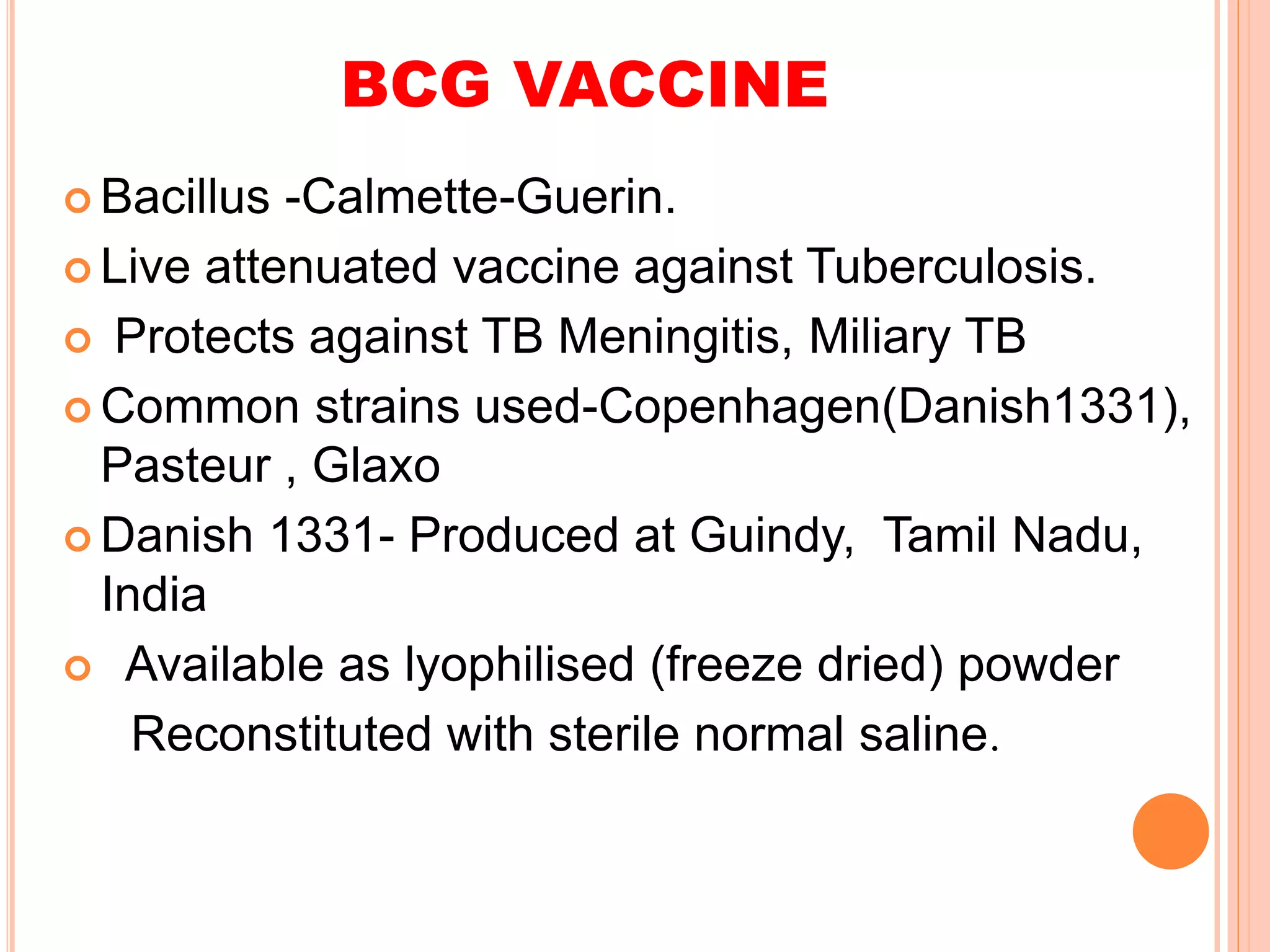
 Bacillus -Calmette-Guerin.
 Live attenuated vaccine against Tuberculosis.
 Protects against TB Meningitis, Miliary TB
 Common strains used-Copenhagen(Danish1331),
Pasteur , Glaxo
 Danish 1331- Produced at Guindy, Tamil Nadu,
India
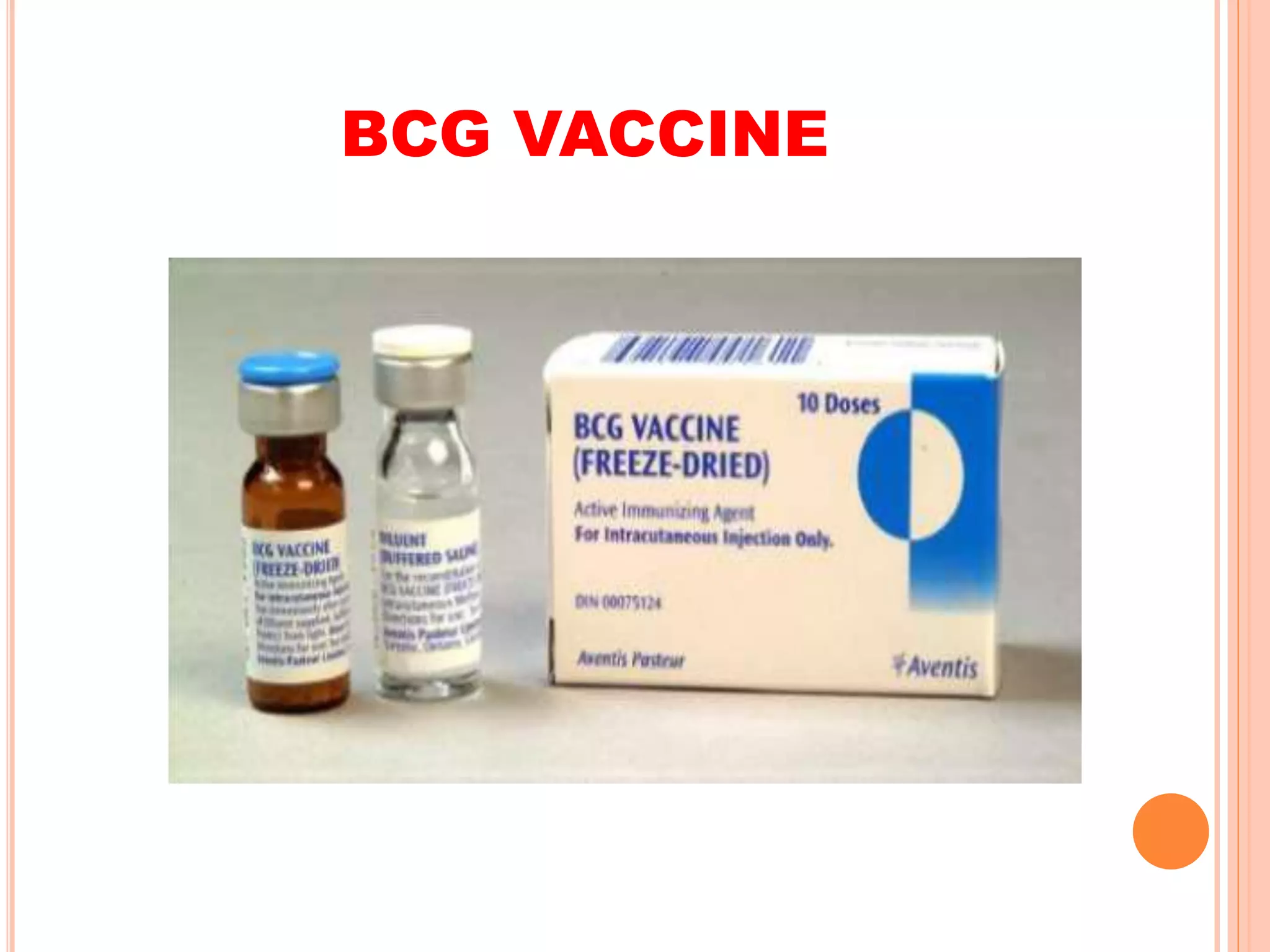
 Available as lyophilised (freeze dried) powder
Reconstituted with sterile normal saline.
BCG VACCINE
BCG VACCINE
 Dose – 0.05ml (neonates) , 0.1ml (infants and
children)
 Route of administration – intradermal (26G needle)
 Site – left upper arm at insertion of deltoid.
BCG VACCINE
 Papule at site of injection (2-3 weeks)
 Breaks into shallow ulcer with crust
 Permanent tiny round scar 4-8mm diameter.
 Healing occurs (6-12 weeks)
 Increases size with diameter of 4-8mm (5-6
weeks)
BCG VACCINE
SCHEDULE
National Immunization Program
 At birth
 Catch up till 1 yr
IAP 2016
 At birth
 Catch up till 5 yr
BCG VACCINE
CONTRAINDICATION
 Immunodeficiency (HIV, leukemia, lymphoma)
 Generalized eczema
 Infective dermatosis
 Hypogammaglobinemia
STORAGE
 2-8°C
 Sensitive to heat and light
 Discard unused vaccine after 4hours of
reconstitution
DPT VACCINE
EPIDEMIOLOGY
 Diphtheria : 2,599 cases and 176 deaths in 2016.
5,293 cases and 148 deaths in 2017.
 Pertusis : 39,091 cases in 2011.
23,779 cases and 6 deaths in 2017.
 Tetanus : 23,356 cases in 1990
4,702 cases in 2017.
 Neonatal tetanus : 588 cases in 2012
295 cases with 9 deaths in 2017
DPT VACCINE
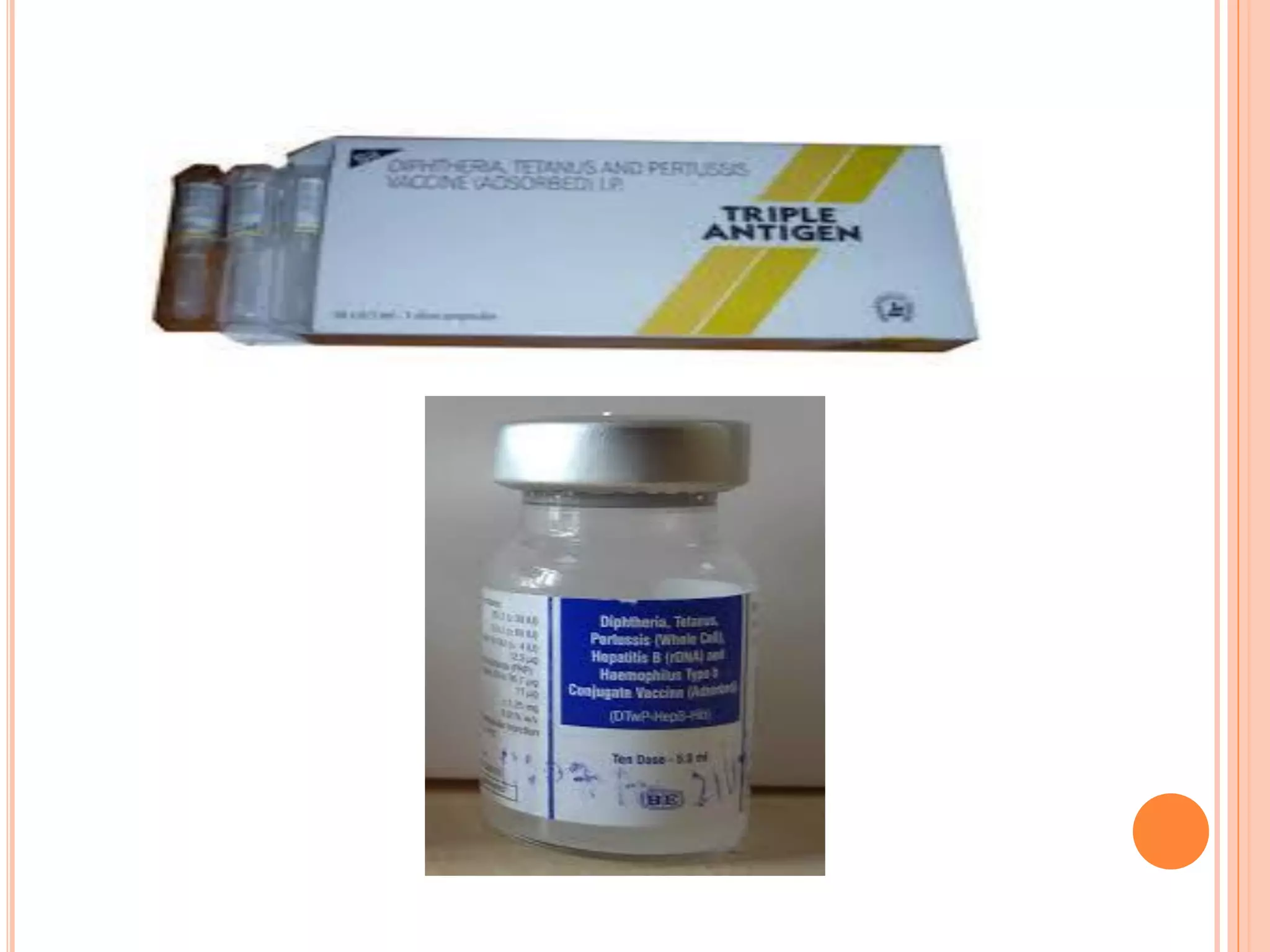
COMPONENTS :
 Tetanus toxoid : from 20 Lf to 30 Lf units.
 Diphtheria toxoid : from 5 Lf to 25 Lf units.
 Killed whole-cell pertussis (wP) bacilli.
 Adsorbed on insoluble aluminum salts which act as
adjuvants
DPT VACCINE
EFFICACY
 The efficacy against diphtheria and
tetanus exceeds 95%.
 The efficacy of wP vaccine against pertussis
in children is 78%
 The efficacy of combination DTwP vaccines
ranged from 46% to 92%
DPT VACCINE
ADVERSE EFFECTS
Serious adverse effects :
 fever more than 40.5°C – 0.2 – 4.4 /1000 doses
 persistent crying - 4–8.8 /1000 doses
 hypotonic hyporesponsive episodes (HHEs)- 0.06–
0.8/1000 doses
 seizures 0.16–0.39 /1000 doses
 Encephalopathy- 0.007/ 1000 doses
Minor adverse effects :
 pain, swelling, and redness at the local site,
 fever,
 fussiness,
 anorexia, and vomiting are reported in almost half the
vaccinees after any of the three primary doses.
DPT VACCINE
ABSOLUTE CONTRAINDICATIONS :
 History of anaphylaxis or
 Development of encephalopathy within 7 days
following previous DTwP vaccination.
RELATIVE CONTRAINDICATION :
 Progressive or evolving neurological illnesses.
DPT VACCINE
RECOMMENDATIONS FOR USE :
 Standard schedule :
primary doses at 6, 10, and 14 weeks
two boosters at 15–18 months and 4–5 years.
 Catch-up vaccination :
three doses at 0, 1, and 6 months.
 DTwP is not recommended in children beyond 7
years of age due to increased risk of side-effects.
DPT VACCINE
COLD CHAIN AND ADMINISTRATION :
 Stored at 2–8°C.
 Never be frozen,
if frozen accidentally, should be discarded.
 The dose is 0.5 ml intramuscularly(IM).
 the preferred site is the anterolateral aspect of
the thigh.
DPT VACCINE
DTaP :
 These vaccines contain ≥1 of the separately
purified antigens :
pertussis toxin (PT).
filamentous hemagglutinin(FHA).
pertactin (PRN).
fimbrial hemagglutinins 1, 2, and 3.
POLIO VACCINES
EPIDEMIOLOGY :
 Poliomyelitis is an acute infection by three poliovirus
serotypes 1, 2, or 3, and was the leading cause of
permanent disability in children in the past.
 In 1988, more than 125 countries had WPV transmission
with 350,000 of paralytic polio cases.
 As of November 2019 only 2 countries—Afghanistan (20)
and Pakistan (82) remain endemic.
 The last case of poliomyelitis caused by WPV type 2
(WPV2) was recorded in India in 1999.
 Global eradication of WPV2 was certified in 2015.
POLIO VACCINE
 IPV first developed and licensed in 1955.
 mOPV vaccine was licensed in 1961.
 tOPV was licensed in 1963.
 bOPV licensed and used in some settings
since December 2009.
 Following the global switch from tOPV to bOPV
in April 2016, tOPV will no longer be available
and will be replaced by bOPV.
ORAL POLIO VACCINE
Included in
 Pulse Polio Immunization
 Supplementary immunization activities.
 National Polio Surveillance Project.
 National Immunization program
ORAL POLIO VACCINE
DEVELOPMENT OF IMMUNITY
Administration of vaccine
Infect intestinal mucosa
Multiplication in mucosal cells (take)
Provides local as well as systemic immunity
ORAL POLIO VACCINE
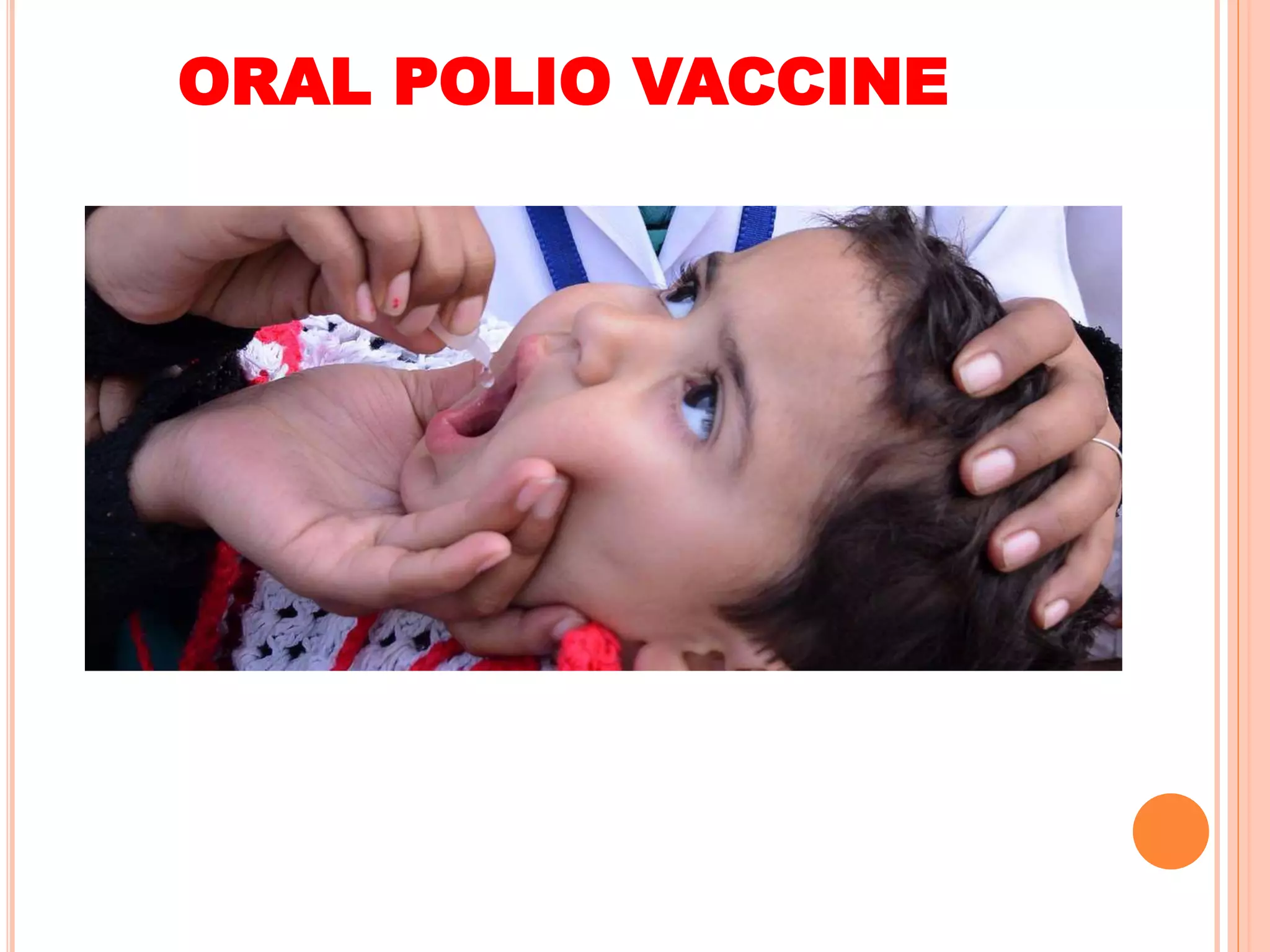
 Dose – 2 drops.
 Route of administration – Oral’
 Method of administration :
Tilt the child’s back and gently squeeze the
cheeks or pinch the nose to make the mouth
open. Let the drops fall from the dropper onto
the child’s tongue. Repeat the process if child
spits out the vaccine.
ORAL POLIO VACCINE
ORAL POLIO VACCINE
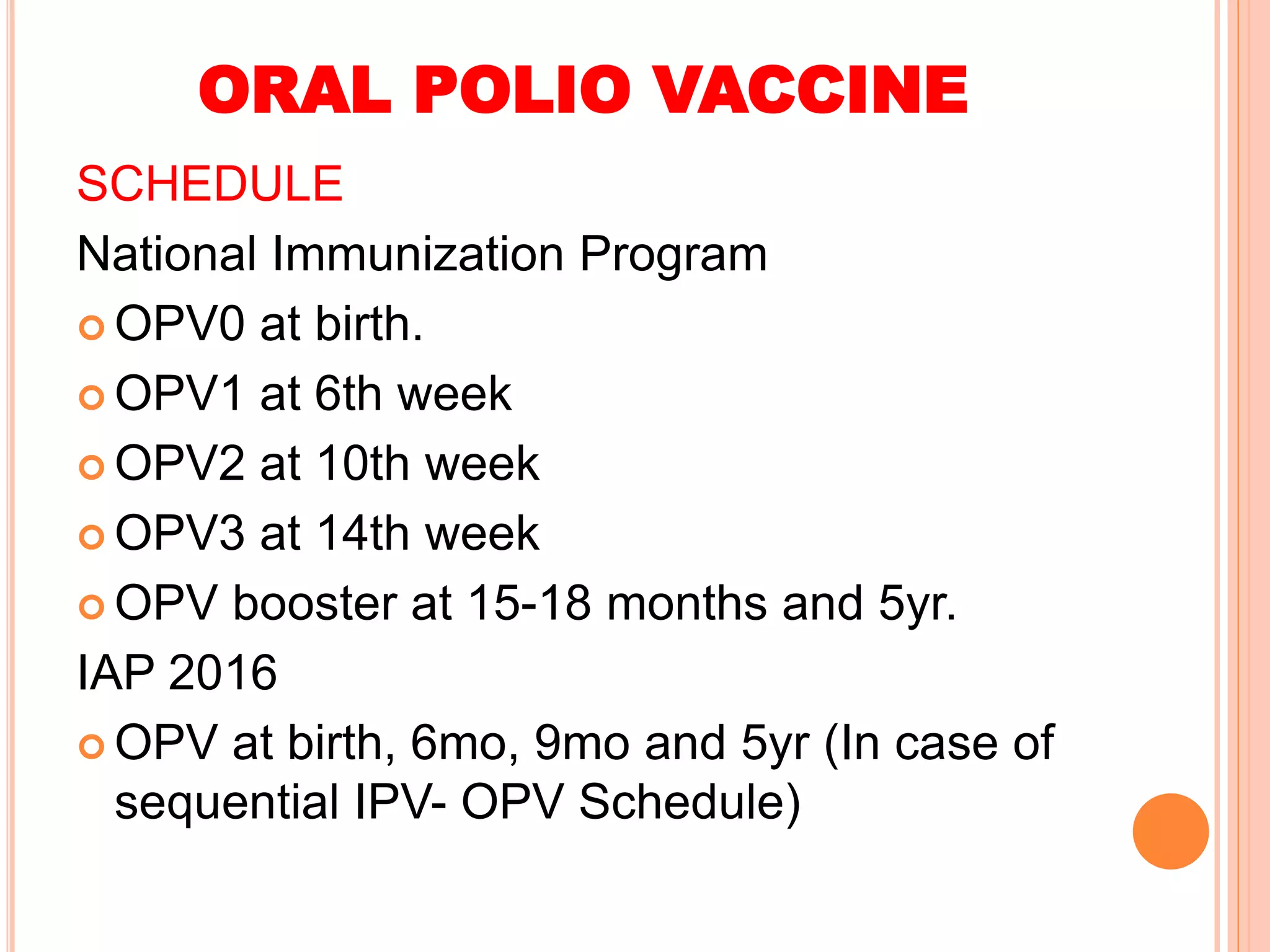
SCHEDULE
National Immunization Program
 OPV0 at birth.
 OPV1 at 6th week
 OPV2 at 10th week
 OPV3 at 14th week
 OPV booster at 15-18 months and 5yr.
IAP 2016
 OPV at birth, 6mo, 9mo and 5yr (In case of
sequential IPV- OPV Schedule)
ORAL POLIO VACCINE
ADVERSE REACTIONS :
 Vaccine associated paralytic polio(VAPP)
 Vaccine derived poliovirus (VDPV)
ORAL POLIO VACCINE
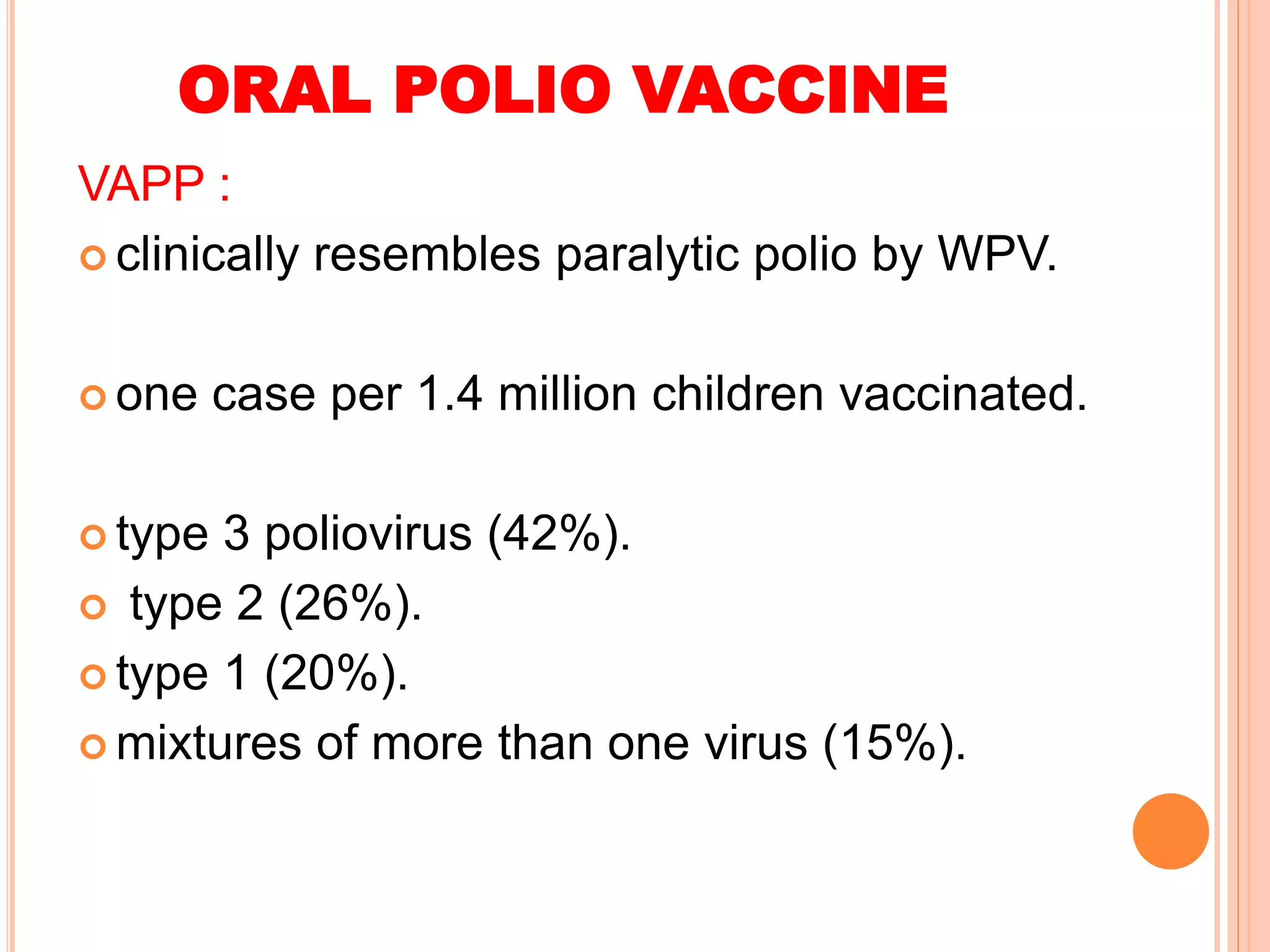
VAPP :
 clinically resembles paralytic polio by WPV.
 one case per 1.4 million children vaccinated.
 type 3 poliovirus (42%).
 type 2 (26%).
 type 1 (20%).
 mixtures of more than one virus (15%).
ORAL POLIO VACCINE
VDPV
 The attenuated viruses in live OPV vaccines
may reacquire neurovirulence and
transmission capacity through replication and
genetic divergence effect.
 Three categories:
(1) cVDPVs.
(2) iVDPVs.
(3)aVDPVs.
ORAL POLIO VACCINE
Immunogenicity and Effectiveness :
 In developed countries :
100% for all three poliovirus types.
 In developing countries :
73%, 90%, and 70% to poliovirus type 1, 2,
and 3, respectively.
ORAL POLIO VACCINE
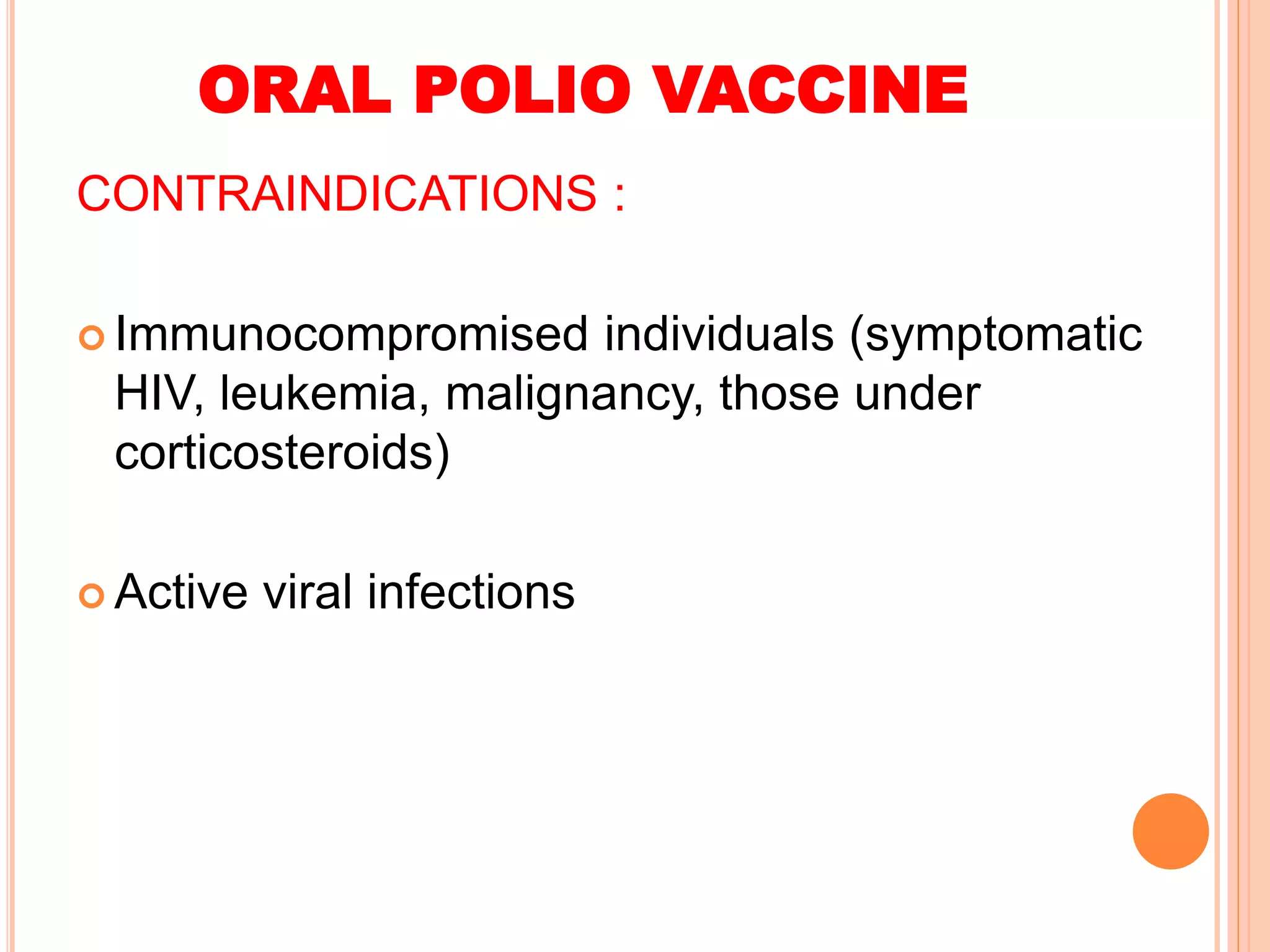
CONTRAINDICATIONS :
 Immunocompromised individuals (symptomatic
HIV, leukemia, malignancy, those under
corticosteroids)
 Active viral infections
ORAL POLIO VACCINE
STORAGE :
 Stable at 4-8°C for 3-4 months.
 -20degree C for a year.
 Potency drops rapidly with temperature
fluctuations , Potency monitored using Vaccine
Vial Monitor (VVM).
 Vaccine discarded if color of inner square in
vvm is as dark as or darker than color of outer
circle
ORAL POLIO VACCINE
INACTIVATED POLIO VACCINE
 Developed by Salk
 Suspension of formaldehyde killed poliovirus
grown in monkey kidney, human diploid or vero
cell culture
 Induces humoral immune response and gives
protection from paralysis
 Does not induce local immunity
 Vaccine potency measured by ‘D’ antigen
 Currently used Enhanced potency IPV (eIPV)
contain 40D, 8D, 32D units of types 1, 2, 3
polioviruses.
INACTIVATED POLIO VACCINE
 Highly immunogenic.
 Seroconversion – 90-95% in infants beyond
8 weeks age administered of two doses of
IPV 2months apart.
 99% of those given 3 doses 4 weeks apart.
INACTIVATED POLIO VACCINE
 Dose – 0.5ml
 Route of administration – intramuscular or
subcutaneous
INACTIVATED POLIO VACCINE
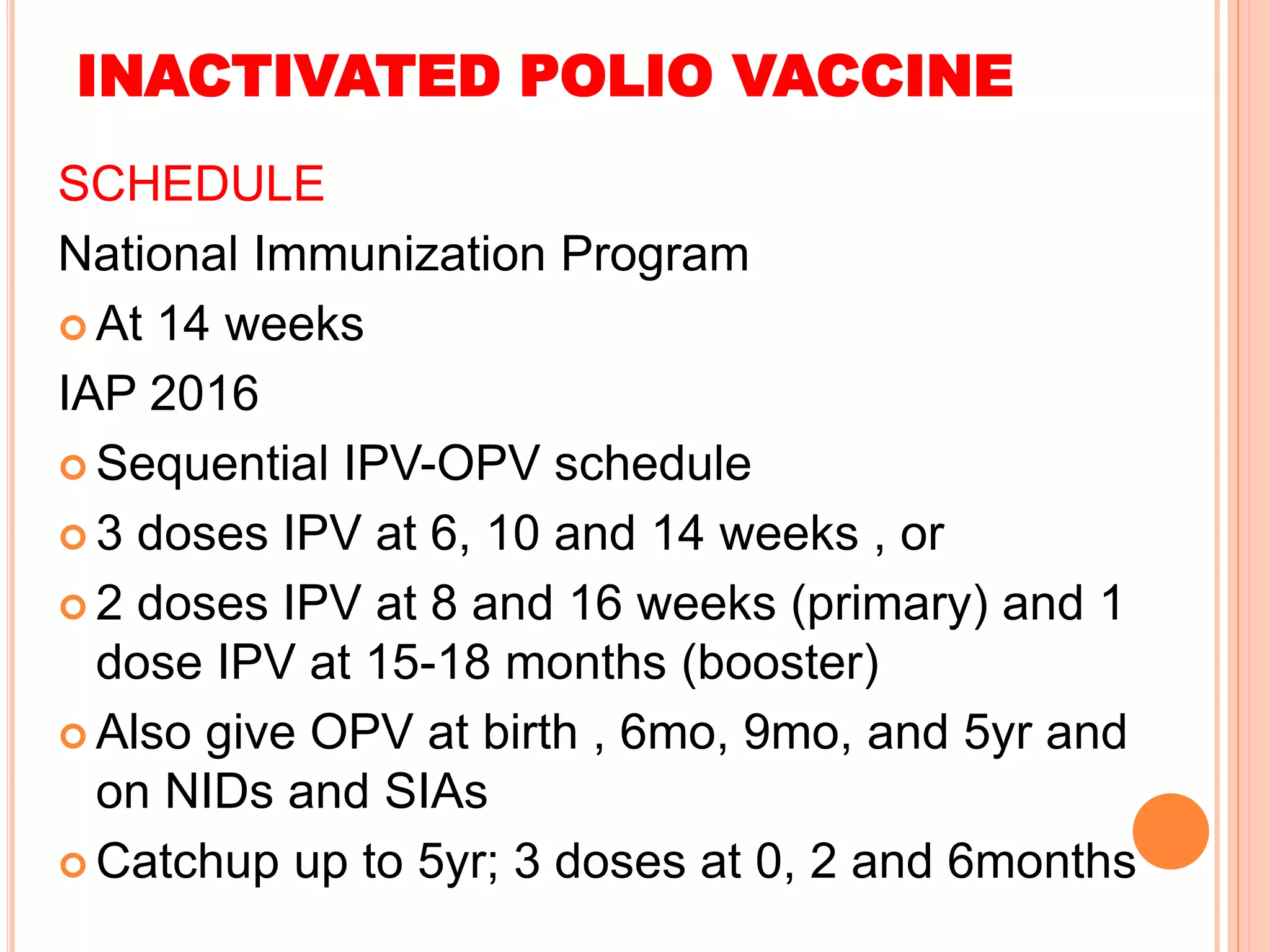
SCHEDULE
National Immunization Program
 At 14 weeks
IAP 2016
 Sequential IPV-OPV schedule
 3 doses IPV at 6, 10 and 14 weeks , or
 2 doses IPV at 8 and 16 weeks (primary) and 1
dose IPV at 15-18 months (booster)
 Also give OPV at birth , 6mo, 9mo, and 5yr and
on NIDs and SIAs
 Catchup up to 5yr; 3 doses at 0, 2 and 6months
INACTIVATED POLIO VACCINE
ADVANTAGES :
 Efficacy of IPV in preventing poliomyelitis is
excellent.
 Does not cause Vaccine associated paralytic
poliomyelitis.
 Vaccine of choice in patients with
immunodeficiency.
 Can be administered to pregnant women.
INACTIVATED POLIO VACCINE
DISADVANTAGE :
 Immunity not rapidly achieved.
 Injections during epidemic can precipitate
paralysis.
 Does not produce local immunity , virus can
multiply in gut and can be a source of infection
to others.
INACTIVATED POLIO VACCINE
ADVERSE REACTIONS :
 No serious adverse reactions.
 Minor local erythema, induration, swelling and
tenderness.
CONTRAINDICATIONS
 Any known allergy
STORAGE
 2-8°C
 Sensitive to light
THANK YOU

BCG ,DPT ,OPV

  • 1.
    BCG ,DPT ,POLIO VACCINES DrM.Sanjeevappa Designated Associate Professor Dept of Paediatrics GMC ,Anantapur
  • 2.
    BCG VACCINE  Tuberculosisoccurs most commonly in children less than 5 years. -PTB : 60 – 70 % -Extrapulmonary : 30–40%  In 2016, an estimated 253,000 children died of TB and 52,000 of them are HIV-infected children.
  • 3.
    BCG VACCINE  Bacillus-Calmette-Guerin.  Live attenuated vaccine against Tuberculosis.  Protects against TB Meningitis, Miliary TB  Common strains used-Copenhagen(Danish1331), Pasteur , Glaxo  Danish 1331- Produced at Guindy, Tamil Nadu, India  Available as lyophilised (freeze dried) powder Reconstituted with sterile normal saline.
  • 4.
  • 5.
    BCG VACCINE  Dose– 0.05ml (neonates) , 0.1ml (infants and children)  Route of administration – intradermal (26G needle)  Site – left upper arm at insertion of deltoid.
  • 6.
    BCG VACCINE  Papuleat site of injection (2-3 weeks)  Breaks into shallow ulcer with crust  Permanent tiny round scar 4-8mm diameter.  Healing occurs (6-12 weeks)  Increases size with diameter of 4-8mm (5-6 weeks)
  • 7.
    BCG VACCINE SCHEDULE National ImmunizationProgram  At birth  Catch up till 1 yr IAP 2016  At birth  Catch up till 5 yr
  • 8.
    BCG VACCINE CONTRAINDICATION  Immunodeficiency(HIV, leukemia, lymphoma)  Generalized eczema  Infective dermatosis  Hypogammaglobinemia STORAGE  2-8°C  Sensitive to heat and light  Discard unused vaccine after 4hours of reconstitution
  • 9.
    DPT VACCINE EPIDEMIOLOGY  Diphtheria: 2,599 cases and 176 deaths in 2016. 5,293 cases and 148 deaths in 2017.  Pertusis : 39,091 cases in 2011. 23,779 cases and 6 deaths in 2017.  Tetanus : 23,356 cases in 1990 4,702 cases in 2017.  Neonatal tetanus : 588 cases in 2012 295 cases with 9 deaths in 2017
  • 10.
    DPT VACCINE COMPONENTS : Tetanus toxoid : from 20 Lf to 30 Lf units.  Diphtheria toxoid : from 5 Lf to 25 Lf units.  Killed whole-cell pertussis (wP) bacilli.  Adsorbed on insoluble aluminum salts which act as adjuvants
  • 11.
    DPT VACCINE EFFICACY  Theefficacy against diphtheria and tetanus exceeds 95%.  The efficacy of wP vaccine against pertussis in children is 78%  The efficacy of combination DTwP vaccines ranged from 46% to 92%
  • 12.
    DPT VACCINE ADVERSE EFFECTS Seriousadverse effects :  fever more than 40.5°C – 0.2 – 4.4 /1000 doses  persistent crying - 4–8.8 /1000 doses  hypotonic hyporesponsive episodes (HHEs)- 0.06– 0.8/1000 doses  seizures 0.16–0.39 /1000 doses  Encephalopathy- 0.007/ 1000 doses Minor adverse effects :  pain, swelling, and redness at the local site,  fever,  fussiness,  anorexia, and vomiting are reported in almost half the vaccinees after any of the three primary doses.
  • 13.
    DPT VACCINE ABSOLUTE CONTRAINDICATIONS:  History of anaphylaxis or  Development of encephalopathy within 7 days following previous DTwP vaccination. RELATIVE CONTRAINDICATION :  Progressive or evolving neurological illnesses.
  • 14.
    DPT VACCINE RECOMMENDATIONS FORUSE :  Standard schedule : primary doses at 6, 10, and 14 weeks two boosters at 15–18 months and 4–5 years.  Catch-up vaccination : three doses at 0, 1, and 6 months.  DTwP is not recommended in children beyond 7 years of age due to increased risk of side-effects.
  • 15.
    DPT VACCINE COLD CHAINAND ADMINISTRATION :  Stored at 2–8°C.  Never be frozen, if frozen accidentally, should be discarded.  The dose is 0.5 ml intramuscularly(IM).  the preferred site is the anterolateral aspect of the thigh.
  • 16.
    DPT VACCINE DTaP : These vaccines contain ≥1 of the separately purified antigens : pertussis toxin (PT). filamentous hemagglutinin(FHA). pertactin (PRN). fimbrial hemagglutinins 1, 2, and 3.
  • 18.
    POLIO VACCINES EPIDEMIOLOGY : Poliomyelitis is an acute infection by three poliovirus serotypes 1, 2, or 3, and was the leading cause of permanent disability in children in the past.  In 1988, more than 125 countries had WPV transmission with 350,000 of paralytic polio cases.  As of November 2019 only 2 countries—Afghanistan (20) and Pakistan (82) remain endemic.  The last case of poliomyelitis caused by WPV type 2 (WPV2) was recorded in India in 1999.  Global eradication of WPV2 was certified in 2015.
  • 19.
    POLIO VACCINE  IPVfirst developed and licensed in 1955.  mOPV vaccine was licensed in 1961.  tOPV was licensed in 1963.  bOPV licensed and used in some settings since December 2009.  Following the global switch from tOPV to bOPV in April 2016, tOPV will no longer be available and will be replaced by bOPV.
  • 20.
    ORAL POLIO VACCINE Includedin  Pulse Polio Immunization  Supplementary immunization activities.  National Polio Surveillance Project.  National Immunization program
  • 21.
    ORAL POLIO VACCINE DEVELOPMENTOF IMMUNITY Administration of vaccine Infect intestinal mucosa Multiplication in mucosal cells (take) Provides local as well as systemic immunity
  • 22.
    ORAL POLIO VACCINE Dose – 2 drops.  Route of administration – Oral’  Method of administration : Tilt the child’s back and gently squeeze the cheeks or pinch the nose to make the mouth open. Let the drops fall from the dropper onto the child’s tongue. Repeat the process if child spits out the vaccine.
  • 23.
  • 24.
    ORAL POLIO VACCINE SCHEDULE NationalImmunization Program  OPV0 at birth.  OPV1 at 6th week  OPV2 at 10th week  OPV3 at 14th week  OPV booster at 15-18 months and 5yr. IAP 2016  OPV at birth, 6mo, 9mo and 5yr (In case of sequential IPV- OPV Schedule)
  • 25.
    ORAL POLIO VACCINE ADVERSEREACTIONS :  Vaccine associated paralytic polio(VAPP)  Vaccine derived poliovirus (VDPV)
  • 26.
    ORAL POLIO VACCINE VAPP:  clinically resembles paralytic polio by WPV.  one case per 1.4 million children vaccinated.  type 3 poliovirus (42%).  type 2 (26%).  type 1 (20%).  mixtures of more than one virus (15%).
  • 27.
    ORAL POLIO VACCINE VDPV The attenuated viruses in live OPV vaccines may reacquire neurovirulence and transmission capacity through replication and genetic divergence effect.  Three categories: (1) cVDPVs. (2) iVDPVs. (3)aVDPVs.
  • 28.
    ORAL POLIO VACCINE Immunogenicityand Effectiveness :  In developed countries : 100% for all three poliovirus types.  In developing countries : 73%, 90%, and 70% to poliovirus type 1, 2, and 3, respectively.
  • 29.
    ORAL POLIO VACCINE CONTRAINDICATIONS:  Immunocompromised individuals (symptomatic HIV, leukemia, malignancy, those under corticosteroids)  Active viral infections
  • 30.
    ORAL POLIO VACCINE STORAGE:  Stable at 4-8°C for 3-4 months.  -20degree C for a year.  Potency drops rapidly with temperature fluctuations , Potency monitored using Vaccine Vial Monitor (VVM).  Vaccine discarded if color of inner square in vvm is as dark as or darker than color of outer circle
  • 31.
  • 32.
    INACTIVATED POLIO VACCINE Developed by Salk  Suspension of formaldehyde killed poliovirus grown in monkey kidney, human diploid or vero cell culture  Induces humoral immune response and gives protection from paralysis  Does not induce local immunity  Vaccine potency measured by ‘D’ antigen  Currently used Enhanced potency IPV (eIPV) contain 40D, 8D, 32D units of types 1, 2, 3 polioviruses.
  • 33.
    INACTIVATED POLIO VACCINE Highly immunogenic.  Seroconversion – 90-95% in infants beyond 8 weeks age administered of two doses of IPV 2months apart.  99% of those given 3 doses 4 weeks apart.
  • 34.
    INACTIVATED POLIO VACCINE Dose – 0.5ml  Route of administration – intramuscular or subcutaneous
  • 35.
    INACTIVATED POLIO VACCINE SCHEDULE NationalImmunization Program  At 14 weeks IAP 2016  Sequential IPV-OPV schedule  3 doses IPV at 6, 10 and 14 weeks , or  2 doses IPV at 8 and 16 weeks (primary) and 1 dose IPV at 15-18 months (booster)  Also give OPV at birth , 6mo, 9mo, and 5yr and on NIDs and SIAs  Catchup up to 5yr; 3 doses at 0, 2 and 6months
  • 36.
    INACTIVATED POLIO VACCINE ADVANTAGES:  Efficacy of IPV in preventing poliomyelitis is excellent.  Does not cause Vaccine associated paralytic poliomyelitis.  Vaccine of choice in patients with immunodeficiency.  Can be administered to pregnant women.
  • 37.
    INACTIVATED POLIO VACCINE DISADVANTAGE:  Immunity not rapidly achieved.  Injections during epidemic can precipitate paralysis.  Does not produce local immunity , virus can multiply in gut and can be a source of infection to others.
  • 38.
    INACTIVATED POLIO VACCINE ADVERSEREACTIONS :  No serious adverse reactions.  Minor local erythema, induration, swelling and tenderness. CONTRAINDICATIONS  Any known allergy STORAGE  2-8°C  Sensitive to light
  • 39.